“Where in your voice
did I lose myself?”
— Iranian poet Masoud Ahmadi
from “This Craving and this Me.”
Translated by Alireza Abiz
(from indigenousdialogues)

08 Wednesday May 2013
Posted in Poetry, Translation
≈ Comments Off on where in your voice
“Where in your voice
did I lose myself?”
— Iranian poet Masoud Ahmadi
from “This Craving and this Me.”
Translated by Alireza Abiz
(from indigenousdialogues)
17 Wednesday Apr 2013
Posted in Armenia, Poetry, Translation
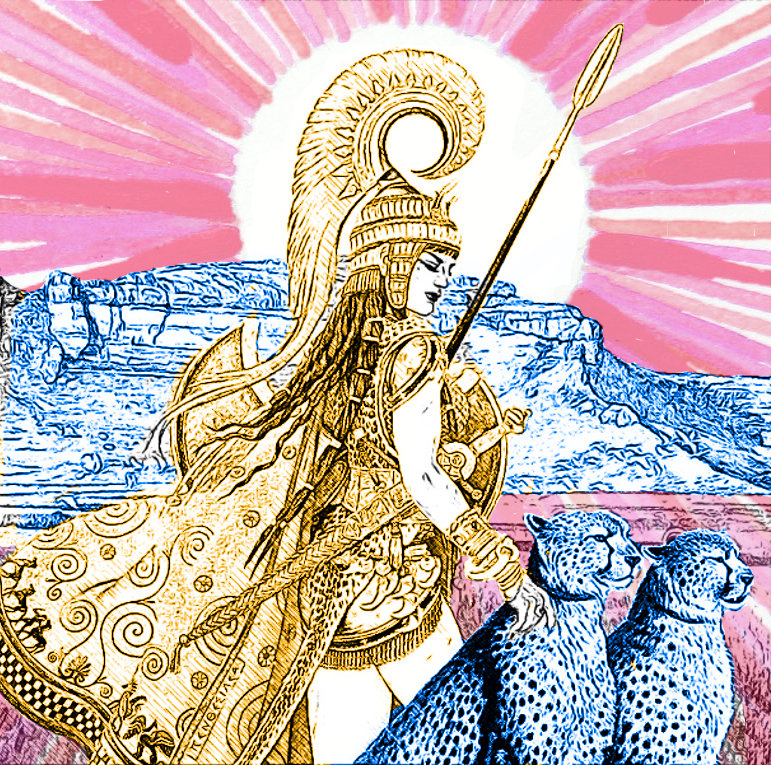
Ես սիրում
եմ քանդել
հիմարների
երազանքները:
.
I liketo destroy
the dreams
of fools.
note:
This isn’t really a poem, more of a phrase I found in my grammar book. And who doesn’t like thwarting the unworthy now and then? It’s the only time I get to use the word dastardly, which you have to admit really needs to be brought into circulation.
14 Sunday Apr 2013
Posted in Armenia, Poetry, sonnet, Translation
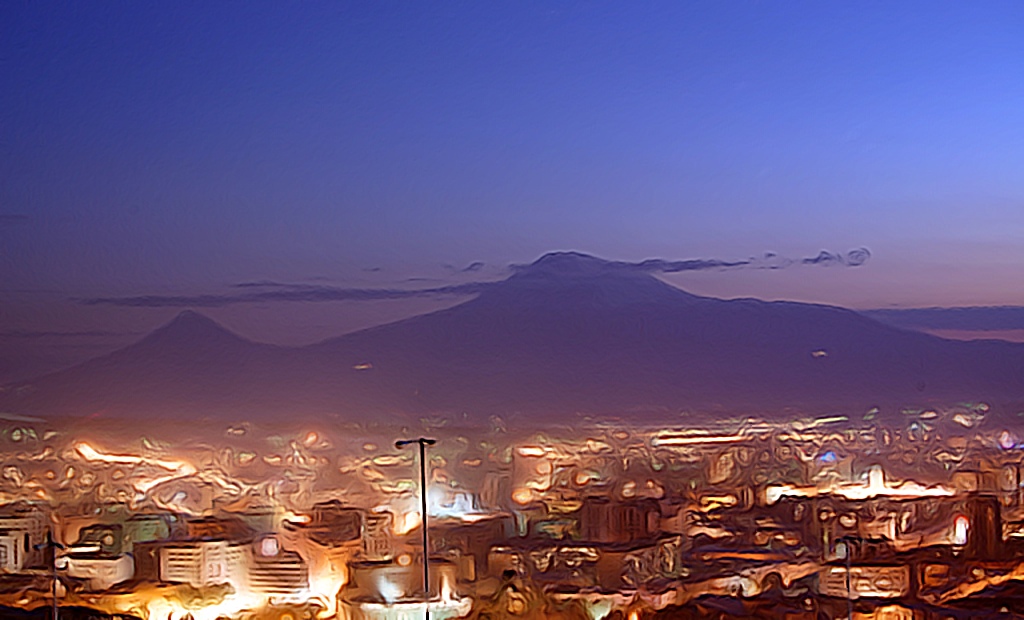
Արարատ Լեռ
.
«ընկերներ բաժանվում են ընդմիշտ — անզուսպ սագը մոլորված ամպերի մէջ» — Բաշօ
.
Բոլոր սովորածս բառերը կարող էին տեղ տալ մի
ափի մէջ ու նրանց բոլորի իմաստն էր տուն վերադառնալ: Առավոտ
ու ես հագվում էի այս խորը արեվի երկրում
եւ խորը սարերի: Հագվում կէս չհարբած, քայլում
դէպե Փոլիթեքնիք սովորելու նոր բառեր:
Միշտ բառեր: Միշտ այդ ընդարձակ կապոյտ սարը
դիտում. կանչում իր զավակները: Այնքան աբզուրդ
որքան կէտաձկի կանչը: Բայց ավելի մեծ քան
այդ, այնքան մի մեծ ձայն որ արտասանվում էր համր
լռութեան մեջ, ոսկոռի եւ ճանկի լեզվով, այբուբենի
գաղտնի տնքալով: Կարծես ասելով «եկեք տուն, զավակներս, եկեք»
Ոչ: Ես ոչ մէկի զավակը չեմ եւ ոչ մէկը
գնում է տուն: Ոչ: Ոչ այս զավակը: Ոչ իրականում:’
.
.
Mt. Ararat
“friends part forever — wild geese lost in cloud” — Basho
.
All the words I learned could be held in one
hand and they all meant going home. Morning
and I would dress in this land of deep sun
and deep mountains. Dress half sober, walking
to the Polytechnic to learn new words.
Always words. Always that long blue mountain
watching, calling her children. As absurd
as a whale’s call. But so much bigger than
that, a call so big that it spoke in dumb
silence, tongue of bone and claw, alphabet’s
secret groan. As if to say, “come to me,
child.” As if to say,“come home, my child, come.”
No. I’m no one’s child and no one gets
to go home. No. Not this child. Not really.
13 Saturday Apr 2013
Posted in Armenia, Poetry, Translation
Tags

Էւրէդըսիի հայացքը նորաձեւ փավիլեոնից
Նախ դու նրան տեսնում ես որպես
Մետաքս’ փաթթված հիւսված դարպասին:
Նրա փավիլեոնը
կագնած դաշտի մեջ, փոքր մի կղզի
ցուցաբերելով եւ ոչ մի փասիոն: Հետո
նա բարցրանում է, ծածկված գիշերանոցով ու ցեխով
— շաղատար կոշիկներ, գիշերամաշ գծեր
դեմքի վրա, իր երկար ու պայծառ լուսապսակը
լուսավորելով
իւր փավիլեոնի շլացուցիչ խնջոյքը:
Ասելով «ծծիր
արշալոյսի լոյսը իմ
ճակատի –» Ասելով
«Հետապնդիր տերողորմեաները
նվիրվածութեան –» Ասելով «այլապես’
ես քեզ կը լսամ մի այլ տեղ –»
[Translations by Tatoul Badalian]
.
Eurydice’s View from a Modish Pavilion
First you will see her as
silk tied to a woven gateway.
Her pavilion
stands in the field, islet
experiencing no passion. Then
she rises, clad in nightgown and mud
-spattered boots, night-worn lines on
her face, her long bright halo
illuminating the
pavilion’s dazzling banquet.
Saying: “suck early
morning light from my
forehead—” Saying:
“Follow these atonements
of devotion—” Saying: “Otherwise
I will hear you elsewhere—”
13 Saturday Apr 2013
Posted in Armenia, Poetry, Translation
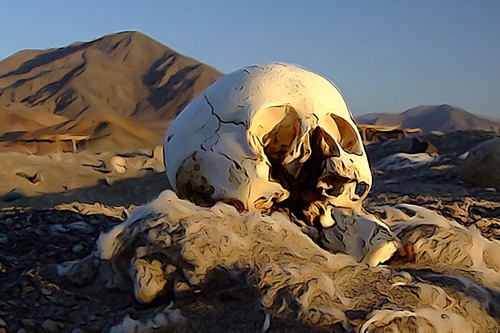
the Syrian desert called Der ez Zor, site of the Armenian genocide
* * *
Կորած ուրվական.
Ես որոնում եմ ձեր գանգի:
Տէր Զօր.
* * *
Lost ghost.
I search for your skull.
Der ez Zor.
11 Thursday Apr 2013
Երբ մենք համբուրել, քայքայում ավերում.
Այրում վիշապաճանճում, իմ բերանին.
When we kiss, havoc.
A dragonfly burning in my mouth.
10 Wednesday Apr 2013
Posted in Armenia, Poetry, Translation
Tags
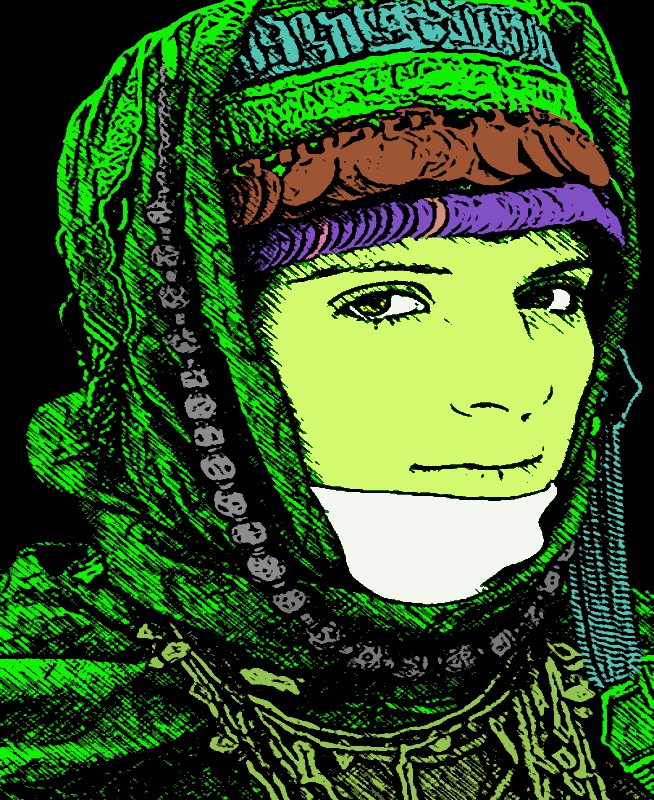
Աստվածուհին սիրո եւ վերջին սերը.
Աստղիկ, ես մենակ եմ.
Ուղարկիր ինձ իմ ցանկություն.
Բեր ինձ ցանկամոլություն.
Սապփո, որ Աֆրոդիտեի դուստրը.
Ես ուզում եմ ձեզ հիմա, իմ մուգ մայրը.
.
Goddess of love and last love.
Astghik, I‘m alone.
Send me my wish.
Bring me my desire.
Sappho was Aphrodite’s daughter.
I need you now, my dark mother.
.
note:
Astghik, besides being a popular Armenian girl’s name, is one of the old gods that lived in the Caucasus mountains before Armenia became the first Christian nation in the world. She was, and is, a love goddess, the protector of young girls and the guardian of fresh water. The Greek poet Sappho wrote a hymn to Aphrodite. This is my hymn for Astghik.
And once again I must apologize for my poor skills in Armenian. I am slowly learning the grammar, but it is a slow process when you are teaching yourself. One day I hope to be able to write the poems I dream about writing in Armenian, but until then I will keep on trying.
09 Tuesday Apr 2013
Posted in Armenia, Erotic, Poetry, Translation
Tags
Armenian, Pablo Neruda, poem, Sappho, translation, Walt Whitman
Ուիթմեն. Սապփո. Ներուդա.
Տաղ. Հնչեակ. Վիպերգ.
Ես գրում եմ իմ բանաստեղծությունները վրա ձեր ծլիկ.
Whitman. Sappho. Neruda.
Ode. Sonnet. Ballad.
I write my poems on your clit.
* * *
Notes:
As far as I know these are the correct spellings in Armenian of these poets’ names. Պաբլո Ներուդա (Pablo Neruda), Ուոլթ Ուիթմեն (Walt Whitman) and Սապփո (Sappho).
Writing, as they say, is a gamble. We put our art out for the world to see, and then hope the reader enjoys it enough to write back. Some people find their audience right away and some never do. I have no idea where the audience for this poem is, but I am willing to take the chance that once I send it out into the void that is the Internet it will, slowly, find its way to the one who it’s intended for. And who knows? That person might even help me with my grammar, since my ability to write in Armenian is շատ վատ (very bad). Cheers!
22 Friday Mar 2013
Posted in Armenia, drama, Illustration and art, Translation
≈ Comments Off on RUIN: a retelling of euripides’ “trojan women”

RUIN «ՍՆԱՆԿԱՆԱԼ»[1]
SETTING: Ottoman Turkey, summer. 1915.
CHARACTERS
. Anahit (wife of a village baker)[2]
. Astghik (her neighbor)
. Narine (Anahit’s oldest daughter)
. Kevser (Narine’s Turkish friend)
. Bagmasti (Anahit’s youngest daughter)
. Razmik (Astghik’s infant son)
The Chorus of Village Women:
. Keran
. Satenik
. Gayane
. Tamar
. Ivedik Bey (a low ranking Young Turk officer)
. Several non-speaking Ottoman Soldiers, Kurds, Slaves, etc.
* * *
PROLOGUE:
[TOTAL DARKNESS. SLOWLY DUDUK MUSIC BEGINS, A DRONING LAMENTATION FROM A DOUBLE-REED WOODEN PIPE. IT SOUNDS LIKE MOUNTAINS CRYING IF MOUNTAINS COULD CRY. FROM OUT OF THE DARK THE VOICE OF A WOMAN, CROONING A LULLABY]
“Oror, Oror, you are sleeping.
With fallen leaves I will cover you.
The wild wolf will give you milk.
She will give you a little milk, darling.
The sun is your father.
The moon is your mother.
The tree is your cradle.”[3]
[AS THE SONG FADES THE MOON RISES FROM THE DARK, SLOWLY ILLUMINATING A SMALL PATCH OF DIRT. A YOUNG WOMAN CROUCHES IN THE DARK, ARMS OVER HER HEAD AS IF WARDING OFF A BLOW. THIS IS NARINE. SHE IS DRESSED IN RAGS, ONCE A NUN’S HABIT, NOW BAREFOOT, FERAL, HALF NAKED. SHE WAS NOT SINGING BUT SHE KNOWS THE WORDS AND SILENTLY MOUTHS THEM. SHE RAISES HER HEAD WHEN SHE REALIZES SHE IS UNABLE TO MAKE ANY NOISE AT ALL. THIS FRUSTRATES HER. SHE TRIES TO WET HER MOUTH TO SPEAK BUT CAN’T. TRIES TO SPIT BUT HER MOUTH IS BONE DRY. FINALLY SHE GRABS A HANDFUL OF DIRT, BITES INTO IT AND SPITS IT OUT. SHE WIPES HER MOUTH WITH THE BACK OF HER HAND AND SPEAKS]
How can I start this? What should I say?
With my own hands I dug the earth up and covered my mother’s body with it – with dirt, with dirt and tears and dirt. This desert, Der Zor,[4] is unkind to all of us who bury our mothers, our fathers, aunts, brothers, sisters, uncles, nieces in it … who bury our memories. I dug with my own hands. My nails cracked. I dug with my own hands. My nails bled. With my own hands I dug the earth up and covered my mother’s face with dirt, with dirt and tears and blood. I buried her with my blood still on her face, her hair, her lips, everywhere I touched her I buried her with my blood. My mother’s grave is red. My mother’s grave is red. My mother’s grave is red.
Der Zor. It’s hardly even a sound. The salt dust rose up and consumed us. For weeks we moved forward and walked through walls of sand. We had been moving forward for days, for weeks, for years. Then they stopped us. Here. Everywhere we look the air sings with grit, it fills our lungs, it burns our tongues with its bitter, bitter song.
Der Zor. They drove us out of the Kaçkar Mountains. They drove us out of the Nur Mountains, out of our highlands and Strandzha and the Yalnızçam Mountains. Anywhere they found us they drove us south. Out of our cities, out of our towns and villages. Always south. They drove us all in long lines, in caravans, in groups of hundreds and thousands. We were told to bring what we could carry on our backs. Men and women and children groaning under the weight of books and linen and clothes and rugs and … we left everything on the side of the road. We left everything behind.
Maybe you’ll find yourself slogging through the hills and nearby is a soldier, what we called a Gendarmi,[5] trudging along side you and you might ask him the reasoning behind this whole endeavor and of course he will know nothing because he is a child dressed in a uniform, a boy looking just as exhausted and miserable as the lines of citizens he is guarding. Remember that. We were citizens. We were part of the greatest empire on the planet; the Osmanyan Kaysroutyoun; the Ad-Dawlat al-ˤĀlī al-ˤUthmānī; The Sublime and Eternal Ottoman State.
Remember that.
What happened to us
happened when the Sublime
turned on itself. Goya’s “Saturn
Devouring His Son,”[6] Dairjan’s “Le Massacre
Des Innocents.”[7] it happened everywhere
and all at once. Remember.
[THE MOON FADES. DARKNESS]
* * *
ACT 1:
SCENE: Day. Gayagab Karakolu,[8] a Relocation Settlement lost somewhere in the endless salt-flats of the Der ez Zor. It is a huge open-air compound heavily guarded with scrawny, malnourished Ottoman soldiers. They look miserable in the heat but nothing compared to the prisoners, Armenian women in rags like Narine, who sit or squat in the dirt. A few tents are visible here and there but the vast majority of women live without shelter, subsiding on boiled grass. Behind the camp is a line of mountains and behind the mountains rise columns of smoke, as if the world is on fire just over the horizon.
[AS THE LIGHTS COME UP THE DUDUK OF THE PROLOGUE IS REPLACED WITH HOWLING WIND. NO ONE MOVES EXCEPT WHEN SOMEONE COVERS HER EYES FROM THE STINGING SAND. THE WIND FADES. PAUSE]
Anahit[9] [LITERALLY RISING UP OUT OF THE SAND, SPITTING A MOUTHFUL OUT IN DISGUST, WHIMPERS]: Tongue? Tongue! [FINDS VOICE AND WITH VOICE COURAGE] Sisters! O, sisters. Come, come, you miserable plunder[10] Come. You are on your knees. Lift your head from the sand. Stretch out your necks! Stretch!
[SHE STANDS, A HOODED FIGURE, LETTING SAND POUR FROM HER ROBES AND IN A DAZE TURNS AND WITNESSES THE SMOKE RISING BEHIND THE TENTS]
Look! Look! Erzurum[11] is no more! Zeitun[12] is no more! Urfa,[13] Sivas,[14] Erzinjan[15] are no more! Our towns, our cities, our farms, our villages. Gone! Hold tight, Anahit. Stay strong while fate plays its game. Be still. Be impassive. Self-pity only brings you closer to grief. [PAUSE, MUTTERING]
Grief? I moan — I moan — How can I not moan
when I think of all I have lost? Everything.
My people, my children, my husband! The holy
mountain! Our language, the glory
of our wealth, passed down to us
over the generations — all of it, vanished.
Now I am robbed of my words.
What words am I forbidden
to speak aloud? What words
am I forced say by others?
What words will allow me
to mourn? How heavy are my words!
[SHE RETURNS TO THE SPOT SHE ERUPTED FROM, LOOKING DOWN INTO THE HOLE]
Where is my husband? Why are my eyes
still in my head? I saw them bleed him
in the doorway to our hut. I saw
his blood flower — no, flow — no.
I saw his blood. [PAUSE] And my sons?
And my daughters? I shall sing them all
a lullaby for the unfortunate!
A lullaby to mourn misfortune.
[BEGINS TO SING]
Oror, Oror, you are sleeping …
[STOPS. QUICKLY TURNS, LOOKS AT THE SMOKE ONE MORE TIME, SLOWLY RETURNS TO STARE BACK INTO THE HOLE, MUTTERING]
Chattel, chattel. The most loyal of millet
for the House of Osman[16] And still it fell.
And still it fell. [PAUSE] I talk too much.
I should chew my tongue to stub. Be still.
Be impassive. Words only bring you closer
to grief. Words cannot keep my silence.
[PULLS OFF HER CLOAK TO REVEAL HER NEAR BALD HEAD, HER LONG HAIR NOW NOTHING BUT STUBBLE, SHOUTS]
I am a slave! Torn from my people, my hair shaved short in double-dyed grief. Hold tight, Anahit. I am now a slave — a slave. Hold tight. I am now part of a butcher’s miserable blood money.
[SHE TURNS TOWARDS THE TENTS AND CALLS OUT]
Come out, you women of Hayk![17] Come out and weep with me! Come, you wives of farmers! Wives of ditch diggers! Wives of bankers! Wives of merchants! Wives of school teachers! The Sultan’s most loyal of millet! Come out and weep, you unfortunate women of Hayk! Unfortunate in the blood that runs through your veins! Come!
[THE CHORUS SLOWLY BEGINS TO ENTER FROM THEIR TENTS]
Keran:[18]
You called, Anahit, we answered. What is it? What are you saying?
Satenik:[19]
I could hear you wailing from my tent.
Gayane:[20]
What are you trying to tell us?
Tamar:[21]
We all wail here, huddled out under the sun, Anahit. We all wail.
Anahit:
Look out across this vast desert. What do you see?
[EACH MEMBER OF THE CHORUS STANDS AT A CARDINAL POINT AND PEERS OUT THROUGH THE HEAT AND SMOKE]
Keran:
From here I see the empty wastes of Der Zor desert.
Satenik:
From here I see the villages of our people burning in the mountains.
Gayane:
From here I see the armies of the Young Turks being beaten this way and that, being washed head-on against the rocks of the Tzar’s Russian army.
Tamar:
From out of the empty wastes of Der Zor desert I see a long caravan of women being marched by soldiers. They are coming this way.
Keran:
What? Another? Why? What will they do with all of us? Why do they insist on bring us out here?
Satenik:
The sand fills my mouth! I choke, I gag. Water, give me water!
Gayane:
Is there not a single pious woman left in all of Turkey? Have they dragged all of us — aunts, mothers, sisters, daughters, grandmothers — out to this god-awful wilderness?
Anahit:
I don’t know, sisters, but I sense the worst.
[NARINE HEARD LAUGHING OFF STAGE]
Anahit:
Child? Child, child, child! Someone, please, find my daughter. Do not let them bring my daughter out here. Leave her in the tent. She is seized by one of her manic fits. She is not right in the head. Poor, unfortunate child! What Turk will drag you to his bed? The time of prophecies is over.[22]
Tamar: [TURNING TO POINT BEYOND THE TENTS]
And the soldiers over there, what are they doing?
Anahit:
Sister, can’t you see? They are drawing up lots to see who you’ll be sold to.
Keran:
Have the Turks made up their minds so quickly?
Anahit:
Your lot will be announced any moment now.
Satenik:
Christ, will I be given to some old man for his amusement? A man with moldy teeth?
Gayane:
I hear the Kurds use women only for one night and then slit their throats because there are so many of us to choose from.
Tamar:
I hear they are forcing us to convert.
Keran:
Rape … the thought of what my body might be forced to do causes me to shiver in dread.[23]
Anahit:
Look! Look at this underworld, this infernal region, this hell. Der Zor! We are like ghosts. Who will be my master? And where? What will I be doing? Will I be waiting on foreign guests in a foreign house or will I be a wet nurse for some overlord’s brats?[24]
Satenik:
What lament would do justice to your pain, Anahit?
Gayane:
Or to mine?
Anahit:
I will no longer spin Turkish wool. I will no longer send a shuttlecock up and down a Turkish loom.[25] I will not longer craft the designs in the carpets that a tyrant orders of me.
Tamar:
Look! There! This is the last time I can look upon the corpse of my son. Shadows! Shadows against the sun, vultures circling.
Keran:
Worse! This is not over yet.
Satenik:
Dragged by the hair to the bed of a Kurd!
Gayane:
Dragged by the throat to the bed of a Turk!
Tamar:
Better to slit my throat and leave me in the desert for carrion. A curse upon such a fate!
Keran:
Never to see the copper-red banks of the Euphrates[26] again!
Satenik:
Never to see olive-green reeds of the Tigris again!
Gayane:
Never to see the purple-black waters of Lake Van[27] again!
Tamar:
Never to see the twin snow-capped peaks of Mount Ararat again!
[SUDDEN DARKNESS]
Voice of Narine from out of the dark:
What should I say? No – no, I will not start this way. I will tell you a love story instead. Everyone adores a love story since there is nothing at risk in it. It is just matters of the heart, after all, and we live in a world where you can buy any heart you want.
[THE MOON RISES. NARINE IS SITTING IN THE DIRT AS BEFORE. SHE SHIFTS AROUND, TRYING TO GET COMFORTABLE. BEGINS TALKING, ABSENTMINDEDLY PLAYING IN THE SAND]
It is so simple. There is a man. Let us make him dashing and tall with a trimmed mustache and a brilliant fez and the dapper clothing of a banker. It doesn’t really matter what he does because in love stories we are told the rich and poor are alike. Love can overcome everything, we are told. So we’ll make the man a True Believer, a good Muslim and a citizen of this Empire. But a love story cannot work without some tangles in it, without some cockamamie misunderstandings and perhaps even a little risk. We like to think our love is worth the risk, don’t we? So he is married, but not to another True Believer, but to a woman of low caste, a Dhimmi, as everyone calls us. I won’t say it never happened but there is a reason behind this story, this love story where love overcomes everything and nothing is really ever at risk.
We will call the man Ahmet, because it means praiseworthy and we want this man to know we have no hard feelings toward him. No bad blood after all this time because, after all, it is just history we’re talking about. His wife will be named Agnesa, which means chaste. This is a world that can’t imagine a woman as anything but. And the date will be April 24, 1915.[28] In June the year before the Archduke Ferdinand was assassinated on the streets of Sarajevo and so, less than a year later, all of this began to happen.
Ahmet has come to visit his wife in jail. He is not poor or crafty or ignorant. He feels he was born into honor. But the war, the Great War, has made changes in his life. Compromises, let us call them. For almost a year the newspapers have been talking about The Dhimmi Question, The Armenian Question. What do you do with heathens and spies and traitors who live among you? What, indeed, and now it has come to this.
[GETS UP, BRUSHES HANDS OFF. BEGINS MIMING THE STORY SHE IS TELLING]
The cell she is in is small, nothing more than a cot and chamber pot. Ahmet has been allowed to bring in a chair in which he sits. Agnesa stands by the wall, looking at her feet.
“Darling,” Ahmet says, “you have been quiet for some time, what are you thinking?”
“I do not understand what is happening. There feels like a great stillness in the air beating against my heart, my brain, confusing me.”
Ahmet shrugs: “It has been a strange day.”
“I have been told they arrested my father and two of my brothers.”
“They were dangerous, we both knew that.” Ahmet tries to smile. “They had mixed loyalties. You cannot be an Osmanli[29] and an Armenian at the same time. This Ottoman Relocation Order[30] won’t be permanent. You’ll come back home soon. It is for the best.”
“But they are my father and my brothers!”
“And your sympathies for them will only get you into more trouble.”
“How can you say that?”
“Darling, I know you are upset, but look at it from my point of view. These are peculiar times. We’ll be fine when the war is over. You can come back to live with me and all of this will be forgotten.”
“How are you going to protect me if you are not with me?”
“With my love. I’ll bribe the guards, make sure you are well looked after.”
“…”
“I am sorry but don’t look at me that way. I am not to blame for what is happening.”
“Who is to blame then?”
“The war.”
“The war? Not our soldiers rounding up my people? Not the Young Turks passing law after law restricting what I can do? But the war?”
“I told you not to take that tone with me. I am doing what I can for you because I love you. There are over a million Armenians in this empire that pose a threat to our security. You have to see that.”
“Armenians? But they are citizens, like you and me. We are all Ottoman citizens.”
“They are a threat.”
“Husband, look at me. I was born in Constantinople. I have lived there all my life. Do I look like a threat to you?”
“No, no, you are different. I know you. I love you. I am sorry for all the injustices of the world and if I were rich enough I’d fix each and every one.”
“This is not something money can fix.”
“What then? What do you want me to do?”
“Call it remaining honorable. Call it being brave for me.”
“Bravery? Of course I am brave. I am an Osmanli. Wait until this war is over and then you’ll be allowed to come home and we’ll put all this behind us, like it never happened.”
“Do you really think it will work that way?”
“History is fickle. Look out your window. Do you hear the Babylonians crying because of what the Romans did to them? In a hundred years from now no one will remember any of this ever happened.”
“Do you think so?”
“The Sublime and Eternal Ottoman Empire is the greatest nation in the world! The Sultans have been around for a thousand years and the Young Turks will be around for a thousand more to come. Mark my word, wife. Life is about honor and glory and a man cannot be called a man if he does not have pride.”
“What about me and my people? Where do the Armenians fit into this?”
Ahmet shrugs.
Do you get it now? It is not a matter of how I can start telling you this. It is not a matter of what I should say. There were orders given not to bury our dead. There were orders that our corpses were to be left out on the wastelands for the windstorms to consume. So that we should rot away into nothing, leaving bones so bleached that even the carrion-eaters would turn away in disgust. As a lesson. As a lesson. As a lesson to my mother’s wandering soul, alone and afraid in the empty wastes of Der Zor.
There were words I must say. As the wind screamed about us, rose out of my throat. I had no choice. I was screaming over her body like a thing, not a beast, not a witch, a thing. Ripped-lungs on my hands and knees throwing dirt on her face with my hair whirling about my head, ugly child, ugly wind storm. I had no choice. Spitting. Screaming. Snot covered face. No where to go. Nothing to return to. Rising up — O heart, O heart, O risky, risky heart. I had no choice.
[FREEZES]
* * *
ACT 2
[NARINE BREAKS FROM HER MIMING TO GO AND SQUAT BACK DOWN IN THE DIRT. SHE WATCHES IT SIFT THROUGH HER FINGERS FOR A FEW MOMENTS AND SIGHS]
Kevser.
Let me start with Kevser. My friend. It was from her that I first hear the rumors as to what was about to happen.
[LIGHTS GO UP. THE SCENE HAS BEEN TRANSFORMED SINCE THIS IS A MEMORY. THE CAMP IS STILL THERE AS BEFORE BUT A CRUDE CURTAIN HAS BEEN ERECTED, PAINTED TO RESEMBLE THE INTERIOR OF A TURKISH BATHHOUSE. WOODEN BENCHES HAVE BEEN BROUGHT IN. THERE IS STEAM, THE SOUND OF HOT WATER, THE LAUGHTER OF WOMEN IN TURKISH, KURDISH, ARMENIAN, GREEK. THE CHORUS OF VILLAGE WOMEN HAVE WRAPPED TOWELS AROUND THEMSELVES AND SIT AT THE BENCHES, WASHING EACH OTHERS’ BACK. POURING IMAGINARY WATER OVER THEIR HAIR. THE WHOLE MOOD IS FESTIVE, LIKE A PICNIC. NARINE STANDS AND WRAPS A TOWEL AROUND HERSELF]
We were in the village bathhouse hanging our clothing on wooden pegs, wrapped in our towels with dozens of little bells sewn around the edges, making our way into the steam room. The smooth tile walls echoed with the laugh-talk of the bathers. Some knelt, stepping into large tubs of sweet smelling water while others, half-naked ghosts in the steam, moved slowly about.
[NARINE SITS DOWN NEXT TO HER TURKISH FRIEND, KEVSER, WHOSE TOWEL IS NOT COVERED IN BELLS. DURING THIS CONVERSATION NARINE IS CONSTANTLY BREAKING THE 4TH WALL TO EXPLAIN THINGS TO THE AUDIENCE]
Kevser:
Nara-jan, I have big news. I have heard things!
Narine:
Oh, my dear Kevser-jan, you are always hearing things. Probably something to do with your Abu? [TO AUDIENCE] I use an Arabic term for father, big man, patriarch.
Kevser:
My Abu says a whole army of Hamideye soldiers is coming. They will be here soon.
Narine: [TO AUDIENCE]
She uses the term for the Sultan’s private army, the mercenaries, the shock troop. [TO KEVSER] Probably for our protection against the Russians.
Kevser:
My Abu keeps getting telegrams from Constantinople, but he won’t tell me what they say.
Narine:
Probably nothing important.
Kevser:
No. I know they are important. When my Abu wasn’t looking I peeked. They say they are going to start sending Dhimmi away.
Narine: [STARTLED]
What? Why? You must be wrong.
Kevser:
No. My Abu says they are getting more and more Kurdish horsemen together. He said they will need them if they are going to do what the Sultan wants.
Narine:
Kevser-jan, you are my best friend. My family has lived next to yours for years. This village was built by Armenians. There have always been Armenians here, there always will be.
Kevser:
You think so?
Narine: [BEGINNING TO PANIC A LITTLE]
What do you mean? What do you know I don’t? What’s going to happen when the Hamideye get here?
Kevser: [SHRUGS]
I don’t know. But my Abu says it will be for your own good.
[SUDDEN DARKNESS]
* * *
[THE SCENE SHIFTS, NARINE VANISHES AND WE ARE BACK IN THE CAMP OF GAYAGAB KARAKOLU. BLINDING SUN. THE WOMEN SIT ABOUT DEJECTEDLY]
Satenik: [NOTICES IVEDIK BEY APPROACHING]
Sisters, O, look! I can see a messenger, heading from the Turkish command post.
Tamar:
I wonder what message he’ll be delivering to us.
Keran:
He’ll probably say which of us are now slaves to the Kurds.
[ENTER IVEDIK BEY WITH TWO GUARDS]
Ivedik Bey:
Dhimmi women. You know who I am. I’ve made numerous trips from Constantinople to see you are treated fairly since you are Dhimmi and traitors. You know me. I have reported to the Red Cross. To the American missionaries. That’s why I came in person to deliver to you this new edict.
Anahit:
O! It is here, it is here! The news we’ve been expecting! Here it is.
Ivedik Bey:
Yes, I suppose it is. [HOLDS UP A SMALL NOTEBOOK] Your masters have made up their minds and the lots have been drawn. Was the news you were terrified of?
Anahit:
Where are we to go?
Ivedik Bey:
“We?” No, you’re all each given to a different man. You will be separated.
Anahit:
Tell me, then, Ivedik Bey, who is taking my Narine, my miserable daughter?
Ivedik Bey: [CONSULTS NOTEBOOK]
She is Colonel Topal Osman Bey’s[31] special prize.
Tamar:
That man? He would never take a low-born wife. So she will be converted? Made into a Muslim wife?
Ivedik Bey: [CHUCKLES, AS IF HE WERE SHARING A JOKE]
No, probably not converted, per se, but I know he will use her well. [MAKES OBSCENE GESTURE WITH FIST]
Anahit:
What are you saying? My daughter? She is a nun![32] God himself has granted her the gift of a virgin’s life!
Ivedik Bey:
Well, I am sure that either your God will swoop in and rescue her or she will be needing to find another profession in a hurry.
Anahit:
Oh, dear child! Throw away the holy keys to the church and take down the sacred veils that adorn your head!
Ivedik Bey:
Men must have their concubines.
Anahit:
And my other? My youngest daughter you took from me? What has become of her?
Ivedik Bey:
Who do you mean? Bagmasti?[33] or do you have an even younger one?
Anahit:
Yes, my Bagmasti. Who has drawn her name?
Ivedik Bey:
Muhammad.
Anahit:
Which one?
Ivedik Bey:
There is but only one. Muhammad ibn ‘Abdullah.
Anahit:
I don’t understand. My daughter? To be given to Muhammad? Is this some sort of obscure Turkish custom or some sort of new law?
Ivedik Bey:
Our Imam thought it for the best. Just be happy for your daughter. We have given her … shelter.[34] That’s all you need to know.
Anahit:
“We have given her shelter?” What do you mean by that? She is only 8 years old! Where is she?
Ivedik Bey:
She’s in the hands of the first Prophet of God and that is for the best.
Anahit:
And what of me? What will become of me? As a child I tended sheep in my father’s pasture. As a girl I learned the language of my people. As a wife I took care of my husband Tigranes.[35] As a mother I raised my children. All for this? All for this? Whose slave will I be?
Ivedik Bey:
You’ll be serving Etci Mehmed Bey,[36] commandant of this camp and governor of this district.
Anahit:
O! loathsome man — lawless and poisonous! His double tongue turns the world upside-down! It silences generations! It erases whole races off the planet. O, poor Anahit! Come, you women of Hayk! Mourn for my fate, lament for my passing. I am destroyed. What God rules over me? I have drawn a calamitous card!
Satenik:
You know your fate, Anahit but what about mine?
Gayane:
Who’s got my fate in his hands, a Kurd?
Tamar:
A Turk?
Ivedik Bey:
Come, come, Dhimmi! It’s time for you to bring out Anahit’s daughter! Make haste, women! I must take her to our Colonel before I take the rest of you lot to your new lords.
[FREEZES, SUDDEN DARKNESS. NARINE STEPS FROM BEHIND THE TENTS INTO A SINGLE SPOTLIGHT. SHE HOLDS AN UNLIT TORCH IN HER HANDS]
Narine:
Let me start with what I believe in. One night I sat watching the dark move beyond the window of my bedroom in the village I grew up in. I watched the line of the woods darken against the night sky. The moon was breaking through the clouds and its light increased, minute by minute, the outline of the mountains, the oaks standing here and there and away to the west the little valley fed by a pussy-willow choked river with its vast slab of stone. A shrine dating so far back into the past that it had been a hushed legend long before the Armenian people even took up Christianity, the Altar of Tsovinar.
Tsovinar![37]
The silence of rocks can frighten some people and the Osmanli who lived in our village had inscribed to the rock all sorts of gruesome fancies, that we heathen Christians over the centuries had taken our Muslim neighbors and sacrificed them in the old days, a vein of iron in the great slab had become the bloodstain of True Believers slaughtered to a mountain goddess.
The stone was old even before the Mongolians rode out from the east and set everything aflame. It pre-dates the Romans and the Babylonians and the warring tribes that fought constantly over these fertile valleys and farms. Ringing each side, cut into the rock, one can read our ancient language. Whoever had worshiped Tsovinar had left for us all Her numerous poems and prayers, chants and songs, all for the glory of the One who Ruled the Water and appeared as a tongue of flame whenever She walked among Her people.
I would take you there now if I could. Everyone in the house being asleep, all the better to let us make our way to the back door and out into the night.
The chill wet air helps to clear my head as we strike out across a field. Behind us the farm house is dark. Before us lay the storm clouds that rush by over head and now the winds have helped raise the moon and the world is wet with rocky earth smells.
I would take you across the field if I could. At a noise we stop … one might think that some child was crying, a ghost lost in the forest ahead of us, but it is the yip-yip of a fox, the cry of a little creature in pain, caught in a trap. I can make out the replies of its mate. We have no means of freeing the animal without being bitten but all the same, it is wrong to leave a small creature in pain, so we head in the direction of the trees, entering the woods by a path that leads through a grove of oaks.
Step with me into the clearing. Here is the Altar of Tsovinar. Along with the ancient craftsmen who had built the monument other hands have been hard at work in this valley over the centuries as well. Here and there are scattered the stone crosses, the Khachkars,[38] covered in chiseled rosettes and flower designs. It is a curious world, one I cannot help entering into and feeling as if I am treading into something not meant for me to witness. It is a mystery, but what its question might be I cannot guess.
Our neighbors, our Osmanli neighbors, believed my people live with one foot in the world of spirits and they claimed we could see all sorts of odd things that proper people should never have to look at. In my mind, though, what the Altar allows me to do is focus on those vague and wandering wisps of memory that live in the back of my mind. The ghosts of some other life I normally cannot get back to. Perhaps the fox had succeeded in freeing itself from the trap? It’s hard to know. Its cries ceased, cut off all of a sudden, just like how swamp lights, fox fire, disappear before us.
[SHE SITS DOWN AND BEGINS TO PREPARE A FIRE USING THE UNLIT TORCH]
I wrap myself in my cloak and sit with elbows on knees and chin in the palms of my hands, under the lee of a Khachkar when suddenly I start and turn. Someone has called my name: “Narine-jan!”
[SHE JUMPS UP, USING THE NOW LIT TORCH TO PEER ABOUT. SHE RUNS TO ONE SIDE OF THE STAGE, THEN THE OTHER, CAUSING THE TORCH TO LEAVE TRAILS OF LIGHT BEHIND HER IN THE DARK. SHE DISAPPEARS BEHIND THE TENTS AND SPEAKS HER LINES AS ONLY A GLOWING BALL OF LIGHT SEEN ON THE OTHER SIDE OF THE CANVAS]
For a moment I think that it is a real voice and then I think that it is only one of those sounds a person hears when they are half asleep. I resume my way, hurrying along the path back to the village with the memory of that voice nipping at my shadow: “Narine!” and my shadow fleeing in front of me.
[SUDDENLY THE LIGHTS GO UP AND IVEDIK TURNS, POINTING AT THE TORCH SWINGING MADLY ABOUT]
Ivedik Bey:
What’s this? Firelight? Are the Dhimmi women setting themselves on fire because they’ll be taken to Turkish beds? Do they prefer death to life? [TO THE GUARDS] Quick! Stop any of these laughable females from setting themselves on fire! I do not want any embarrassing suicides on my hands. Do you hear me? Go and bring out this mad torch of a woman.
Anahit:
O, my daughter!
[NARINE BURSTS FROM THE TENTS WAVING HER TORCH, NOW IN A STATE OF DELIRIUM, RUNNING ABOUT AS IF SHE LOST SOMETHING. SHE HAS PUT ON THE REMAINS OF SEVEN VEILS AND A CROSS, ALL THAT IS LEFT OF THE SYMBOLS OF HER PROFESSION]
Narine:
May this fire,[39] this tame fire,
rising slow, dancing blithely,
lifting up the impulsive night,
standing up under the harsh
desert air. Christ,
Lord God, bless
the union that it makes
and grant that I, who am
a virgin married to my Father,
shall burn
like this flame
the night I lie under some new lord.
[TO ANAHIT]
Hold this torch, Mother,
sing to me the wedding hymns.
What’s wrong?
Why are you crying?
Because of my father?
Because of my brothers?
Because of my sisters?
It is too late to grieve for them
for I am to be married, your tears
should be of joy! Here, take it!
[SHE SHAKES THE TORCH AT HER MOTHER]
You will not sing? Very well,
my own voice shall honor
my wedding night and carry
this flame to the holy bed
where some Young Turk is to find me.
[HANDS A TORCH TO KERAN AND KNEELS IN THE DIRT, BEGINS TO PRAY]
For even if the Mother of the Lord burns up
all her stars and and sets the entrails
of the heavens on fire
I will not have enough light
to do what I must.
Keran:
Madness! Anahit, hold your daughter. Her ecstasy will destroy us all!
Narine: [STANDS, HER DELIRIUM SUDDENLY VANISHED]
You think that I’m mad? Listen, Mother, I tell you. You should rejoice at this betrothal. As ever aunt, mother, sister, daughter and grandmother that is dragged off to bed. For once there we will turn these Turkish marriage beds into tombs. How many soldiers did Enver Pasha lose at Sarikamis? 60,000? More? A trifle. We shall do even worse to them. We will be their doom. Through us, because of us, they shall think themselves accursed and hold their manhoods cheap[40] if any speak of what they have done. So now is not the time to weep unless it is tears of joy and laugh as the wind laughs, let there be a firestorm of laughter for I swear on my father’s and my brothers’ and my sisters’ graves that we all shall be revenged.
Keran:
She is mad! How you laugh in the face of such misfortune?
Satenik:
She is mad! We have no people left to raise a hand in our defense.
Gayane:
She is mad! We have no armies. We have no land. We are wives of farmers — wives of ditch diggers — wives of bankers — wives of merchants — We are the Sultan’s most loyal of millet —
Tamar:
She is mad! How can you prophesy things that cannot happen?
Anahit:
My flesh! O, my flesh, what is this you are saying? You are a slave. Worse, you are a daughter of a slave. We have lost.
Narine:
Lost? We have lost nothing. We should be grateful to the Turks for their kindness. Yesterday we were farmers, ditch diggers, bankers, merchants and today we are revolutionaries! From this day on the world shall look upon us and know that such a grave wrong has been done to us that there is no forgiving. Today the world shall look at the Young Turks and know that they are butchers, cursed as Cain was cursed. They might try and silence us for a hundred years but the world shall know. The world shall know! [SUDDEN DARKNESS]
* * *
ACT 3
[TOTAL DARKNESS. SLOWLY DUDUK MUSIC BEGINS AS BEFORE. FROM OUT OF THE DARK THE SAME VOICE OF THE WOMAN, CROONING A NEW LULLABY]
“C’tesut’yun, C’tesut’yun, goodbye, goodbye.
Do not cry, Mother, I am the one who must cry.
Do not sigh, wind, I am the one who must sigh.
Do not tremble, silver leaves, I am the one who is trembling.
Do not leave, sky, I am the one who must go.”
[BUT UNLIKE BEFORE THIS TIME THE MUSIC AND SINGING ARE CUT OFF SHARPLY. PAUSE. THE MOON RISES FROM THE DARK, SLOWLY ILLUMINATING THE SAME SMALL PATCH OF DIRT. NARINE CROUCHES AS BEFORE, ARMS OVER HER HEAD. WHEN SHE STANDS WE SEE SOMETHING TERRIBLE HAS OCCURRED. SHE IS SOAKED IN BLOOD, HER NECK SLICED OPEN. A GHOST LOST IN THE ENDLESS DESERT NIGHT OF DER EZ ZOR]
Narine: [TRYING TO TELL THE STORY AS BEFORE, FALTERING]
Orders … Orders … Relocation order … We had been told we were to pack everything and leave but our household was quiet with grief. No one knew what to do. My mother sat in bed all day, staring out the window, watching the swallows dart and swim in the sky.
I try to help with odd chores, anything to keep busy. We sat at the table, drinking bitter coffee from tiny cups. When I would finish mine I’d turn the cup upside down on its saucer. Slowly Mother would drag the saucer over to her and turn the cup clockwise three times and tap the bottom once. We both would stare at the cup as we watched the coffee grounds cool. We had been doing this forever, it felt like, reading coffee stains, trying to see the future. Finally my Mother would lift the cup off the saucer and stare at its curious stains, a coded message only she could read.
[A SECOND SPOTLIGHT ILLUMINATES ANAHIT. SINCE THIS TOO IS A MEMORY SHE TURNS TO NARINE AND SPEAKS]
Anahit:
You know, I use to do this all the time back when we would have friends over to laugh and gossip. If the cup stuck to the plate, everyone ooh’ed and aah’ed. I always told them it meant good luck, good luck with their husbands, their friends, their lives. All the women in the room would lean forward on their elbows trying to see what I could see.
Narine:
Everyone said your predictions were always good.
Anahit:
“Always good?” None of them were good. Nothing was good if something like this has happened. Why claim you can see the future if you can’t see what is in your own neighborhood? I use to say, “Ah, Akhchik-jan,[41] you will receive a message from a handsome stranger.” Or, “you are about to go on a long voyage.” Any foolish idea that would pop into my head.
Narine:
They weren’t foolish. You were just trying to say what people wanted to hear.
Anahit:
“Wanted to hear?” No. That’s no good. Did I once, just once, say what they needed to hear? At any time at all did I say “take your family and flee”? Did I ever mention, you know, as a way to start a conversation, that your own countrymen will shoot and kill your husband for no reason, just because he was a Dhimmi? Did a hint of what is happening now ever enter into my mind?
Narine:
Please, Mother, you are being too hard on yourself. No one could have predicted this.
Anahit: [BITTERLY]
Yes, my point exactly.
[THE BRIGHT LIGHTS SUDDENLY SWITCH ON. INSTEAD OF VANISHING OFF STAGE AS SHE HAD DONE BEFORE, NARINE SIMPLY STANDS IN THE MIDDLE OF THE COMPOUND, SLOWLY UNSPOOLING, LOOKING AROUND HERSELF. NOBODY NOTICES ONE MORE GHOST UNDER THE BRUTAL SUN. IT IS AS IF SHE NEVER EXISTED. SLOWLY SHE MAKES HER WAY TO ONE SIDE OF THE STAGE TO SIT AND WATCH AS HER ATOMS DISPERSE ON THE WIND]
Satenik:
O!
Tamar:
Look to Anahit!
[ALL HEADS TURN. ANAHIT LAYS IN A CRUMPLED HEAP IN THE CENTER OF THE STAGE, AS IF ALL HER BONES WERE BROKEN]
Keran:
Christ, what happened?
Satenik:
She fell and not a word from her!
Gayane:
Quickly, pick her up!
Tamar:
Give me a hand.
[THE WOMEN TRY TO PICK HER UP BUT ANAHIT RECOILS WHEN TOUCHED]
Keran:
What? Will you lie there on the ground, you terrible women!
Satenik:
Come on, pick her up!
Anahit: [STILL ON THE GROUND]
No, let me stay here. Let me lie here. Be quiet.
Gayane:
Silence will betray us.
Anahit: [STILL CRUMPLED]
Then sing and dance for all I care. O, God! I am calling for you! I am calling for your help![42] I did nothing. I was married to a baker. I had children. I raised a family. My grandmother taught me to read. These are crimes! For that I saw every child of mine die! I have cut my hair off in grief. A handful of our men protest in Constantinople and the Young Turks set all Anatolia on fire. The Kurds burn our villages and when we protest they say we are spies for the Tzar. We ask for protection and must witness the destruction of our whole people. And my daughters, the women I raised who were my pride and joy, holy upon holy, they were all taken from me, joy of my breast, to be the wives of the dead. The dead! [PAUSE. WITHOUT BOTHERING TO GET UP] Sisters, look out across this vast desert. What do you see?
[EACH MEMBER OF THE CHORUS STANDS AT A CARDINAL POINT AS BEFORE]
Keran:
From here I see the empty wastes of Der Zor desert.
Satenik:
From here I see the villages of our people burning in the mountains.
[ANAHIT STANDS]
Tamar:
From out of the empty wastes of Der Zor desert I see a long caravan of women being marched by soldiers. They are coming this way.
[ANAHIT AND THE CHORUS STEP ASIDE AS THE CARAVAN OF A DOZEN WOMEN IN CHAINS MARCH ACROSS STAGE. IN THE MIDDLE IS A WAGON BEING PULLED BY TWO MALE SLAVES. THEY ARE FOLLOWED BY KURDS IN TRIBAL OUTFITS, RIFLES SLUNG OVER THEIR SHOULDERS, LAUGHING AND TALKING SOFTLY AMONG THEMSELVES. THROUGH THIS ENTIRE CONVERSATION THEY DO NOT REACT TO ANYTHING SAID OR DONE, AS IF THE ARMENIAN WOMEN WERE ALREADY GHOSTS FOR THEM]
Satenik: [SHE SUDDENLY SEES ASTGHIK IN THE WAGON CRADLING THE BABY RAZMIK]
Anahit, look! Look there! It is Astghik.[43]
Gayane:
She is a prisoner in that wagon.
Tamar:
She is with her beloved son, poor little Razmik![44]
[THE WAGON PAUSES IN FRONT OF ANAHIT]
Satenik:
Astghik-jan, you poor woman!
Gayane:
Where are they taking you and all these women?
Astghik: [DULLY]
Our Kurdish masters are taking us away.
Anahit:
O, my beloved sister!
Astghik:
Why groan for me, Anahit?
Anahit:
O, my sister!
Astghik: [SHRUGS]
This is my lot, Anahit!
Anahit:
O, Lord, Christ!
Astghik:
O yes, calamity.
Anahit:
O, my child! My Razmik!
Astghik:
All gone now.
Anahit:
One vile fate after another!
Astghik:
Vile, indeed.
Anahit: [TURNING TO POINT AT THE DISTANT SMOKE AS IF NO ONE ELSE HAS SEEN IT]
The smoke is still choking our mountains! Everything still burns!
Astghik:
Ah yes. Fire. Where would we be without fire?
Look at us, sister. Both of us are so unfortunate,
both of us beaten by one disaster after another.
Our village was destroyed, our banks
and printing presses and universities
and theaters all gone.
Anahit-jan, do know why?
Because God was angry
with at us for being good with finances
and numbers. For paying taxes and not
arguing. For supporting our Sultan
when he needed our sons for his wars.
For having small dreams and not
asking for more. All this God punished
us for. For the bloodied corpses
of our men who are now strewn
about the Taurus Mountains,
naked plunder for the vultures.
That is our dowry.
[FREEZES, SUDDEN DARKNESS. NARINE STAGGERS INTO THE SPOTLIGHT. SHE IS EVEN GORIER THAN BEFORE, IF THAT IS POSSIBLE, AND LOOKS AS IF A STRONG WIND WOULD BLOW HER AWAY FOREVER]
Narine:
Dowry … Future … Inheritance … My father disappeared this morning.
[MUCH LIKE THE STORY OF AHMET AND AGNESA, SHE BEGINS TO MIME THE ACTION BUT BECAUSE SHE IS DEAD NARINE CANNOT HOLD HER MEMORIES TOGETHER. SHE BEGINS TO SLOWLY DISINTEGRATE. HER MOVEMENTS ARE A STIFF PARODY OF THE LIVING]
My mother and I found Markrid.[45] a cousin, waiting for us in on the doorstep of our farm house as we returned from market.
“Oh! Oh! Anahit-jan! Anahit-jan!” The woman runs to my mother, cries and flutters her hands like a bird. “They came to the bakery, they took Tigranes and my Haroutyoun[46] to the village jail!”
I watch my mother stagger and put her hand against the garden wall.
“How? Why? What have we done?”
“We’ve done nothing,” Markrid can hardly talk she is sobbing so much. “But they’re rounding up all the men between fifteen and seventy years of age!”
“This must be some kind of mistake!” My mother gestures down the street. “We’ll go, come, we’ll go and talk some sense into these people.”
The three of us hurry down to the Committee of Union and Progress building where the assistant deputy to the region dabs at his face with his handkerchief and mutters. The building functions as the village’s city hall, courthouse and jail all in one. It is full of hundreds of glum and dejected men, all waiting to be processed. As we enter the large main room, I stand on tiptoes and stretch my neck to see over the others. There, behind bars in a corner of the room, I finally spot my father. He looks tired and his clothes are dirty and rumpled as if he had been roughed up.
“Father! Father!” I begin. “Over here, it’s us!”
“Hush! Don’t make so much noise.” My mother pinches my arm. “We don’t want the guards to see us.”
Our eyes are drawn to the center of the room where six or seven burly Osmanli soldiers sit, billy clubs at their sides, lazily watching the prisoners. Slowly my father makes his way over to the bars and sticks his hand through so I can hold onto him. My mother runs her fingers over his face, touching a small purple bruise.
“They came this morning. Osmanli soldiers.” He begins. “They searched the store. They said we had guns hidden somewhere. They took all Haroutyoun’s money and burned his accounting books and stole all the bread in the store-house. Just like that.”
“Your poor face!” My mother whispers. “What are we going to do?”
“I do not know. They told me they only want to frighten us by keeping us in jail overnight. They told me that I would be released tomorrow morning.”
“Should we trust them? Why are they dong this? We’ve always been friends.”
My father stares at my mother for a moment.
“Friends? No, we haven’t always been friends. We’ve simply … lived together. For hundred of years we’ve lived together, but while we’ve prospered in business, science, education, the arts, what have they been doing? They think we have everything and they have nothing.”
“But that is absurd!” She retorts. “That is insane.”
“Yes, that is insane and these are insane times. There have always been Armenians in the empire. But this time tomorrow, I am told, all that will be a memory. As if none of this ever happened.”
“You talk as if — no, I do not believe it! You will be released tomorrow morning.”
My father smiles.
“You think so?”
“What do you mean? What do you know I don’t? What’s going to happen in the morning?”
[PAUSE. NARINE GRASPS AT THE AIR BEFORE FINISHING]
“No, you are right,” he draws a long breath. “Nothing is going to happen. Go home, my dear Anahit-jan.”
And that. [BUT HERE SHE TOUCHES THE BLOOD AT HER NECK, LOOKING AT IT AND CHUCKLING AS IF SHE STILL CAN’T BELIEVE SHE IS DEAD] And that …
[SUDDEN DARKNESS]
* * *
ACT 4
[SAME AS BEFORE, CAMP OF GAYAGAB KARAKOLU. BLINDING SUN. ASTGHIK HAS CLIMBED OUT OF THE CART, STILL HOLDING HER CHILD. THE KURDS ARE IN THE BACKGROUND, STILL TALKING AMONGST THEMSELVES]
Astghik: [INDICATING HER PLIGHT]
Look, here, Anahit! Look at me and look at my son! My son and I are being carried away like nothing more than spoils of war. Ottoman-born like the rest of you, now turned into slaves. God must hate us so. [PAUSE] Where is your girl, Anahit? Your oldest, Narine?
[ANAHIT LOOKS AROUND AS IF EXPECTING TO SEE NARINE’S GHOST SITTING SOMEWHERE. NARINE IS MISSING]
Anahit:
Gone– gone– gone–
Astghik:
O soul! And now you have more worries to deal with.
Anahit:
Worries! Worries competing with other…
Astghik: [INTERRUPTING]
Anahit-jan, sister, your daughter… your daughter, Bagmasti. The Turks have cut her throat and left her on the salt flats for the vultures. They say she is now serving Muhammad in the only way she knows how.
Anahit:
My Bagmasti! I am a weakling, a coward, a craven. Ivedik Bey told me they were sheltering her but I did not understand. I did not understand. Now she can only see the sky and her ghost will wander this wilderness until Judgment Day.
Satenik:
Will she never find peace?
Astghik:
I saw her out there with my own eyes. They took twenty of our girls … and when they were done … and when they were done I got down off this cart and put a cloak over her corpse. Then I stayed there and lamented all their deaths with my grief.
Anahit:
Wicked … ungodly[47] …
Astghik:
Ungodly or not, Bagmasti-jan is dead and we are alive and there is no escape.
Anahit:
Don’t say that, sister. If there is hope there is escape. If there is faith there is salvation.
Astghik: [LAUGHS]
Salvation?
Anahit:
Salvation.
Astghik:
No. Sister, no. Salvation doesn’t mean anything.
It’s just a word people use when they are comfortable
and safe and happy. Salvation?
I still suffer and I know I will keep suffering.
So what if I was a good wife and devoted mother?
It doesn’t matter how a woman behaves.
The world thinks the worst of us
and slanders us if we give it half a chance.
I didn’t give it that chance. I stayed
at home where the gossips
couldn’t get at me. I was happy
devoting myself wholly to family. But
you see, sister, my virtuous life
has been my undoing and my reputation
for being chaste backfires. For it is that
chastity that makes me so appealing
to these Kurdish men. How long
do you think I will survive
in these mountains?
A week?
A day? Less
than one night?
I am frightened.
I am frightened and I am to be broken.
They will break me and all the nights
I found pleasure in this body and my husband’s,
in the bodies of my children and my family
and friends, all the pleasure
that I ever enjoyed will be gone
when another who murdered my husband
and my children and my family lays
on top of me and forces himself inside
me and breaks me open. Anahit, Anahit-jan,
you wail for yourself but look at me. You
speak of hope. There is no hope. I am alive
and I have no hope and when I die I will not
be given a proper burial and even in death
I will have no hope.
Gayane:
Your calamity, Astghik-jan, is similar to ours and as you speak of your fate, you speak of ours at the same time.
Keran:
All of ours.
Anahit:
Stop this blaspheme at once! You have a child, a fine son. Razmik will grow into a man. The tree of Hayk is not dead. As long as you live your child will live and you will have hope.
[SHE NOTICES IVEDIK BEY APPROACHING IN THE DISTANCE]
Ah, but one worry leads to another. I wonder what new disaster this Turkish lackey brings to us now?
[ENTER IVEDIK AND SOLDIERS]
Ivedik Bey:
Astghik, I have bad news for you.[48] but I have been ordered to give it, against my wishes.
[ASTGHIK SAYS NOTHING. SHE STARES AT IVEDIK AND THEN AT THE GUARDS WITH THEIR RIFLES]
Ivedik Bey:
It concerns your son, Astghik.
Astghik:
My child? Will he be separated from me?
Ivedik Bey:
In a manner of speaking, yes.
Astghik:
Will he be given to another Kurd?
Ivedik Bey:
No. No Kurd will ever be his master.
Astghik:
What? Have you decided to leave him behind as well? Will all the children of Hayk be left in this god-forsaken desert as ghosts?
Ivedik Bey:
Yes.
Astghik:
Yes?
Ivedik Bey:
Yes. It was the camp commandant’s, Etci Mehmed Bey’s, decisions.
[ASTGHIK STARES BLANKLY AT THE MEN]
Ivedik Bey: [BECOMING IRRITATED AT THIS DELAY]
Etci Mehmed decreed that we should not let the son of an Armenian grow into a man and there’s nothing else you can do. Neither your people nor your husband can protect you now since neither exist anymore. Now come along, be good about this. Don’t be silly. Do I have to tear him from you? By the Prophet’s beard, can’t you see you won’t gain anything by trying my patience or making my solders angry? If you hand him over we’ll let you bury him. That’s what you Christians all want, isn’t it? The keys to the Kingdom of Heaven? Let me help and make sure he’ll be waiting for you there.
[ASTGHIK TRIES TO BLINK, TO SHAKE HER HEAD, TO LOOK SURPRISED. SHE SWAYS A BIT. SHE LOOKS AT IVEDIK BEY EXPRESSIONLESSLY. SHE LOOKS DOWN AT HER CHILD. SLOWLY SHE SINKS TO THE FLOOR. THE GUARDS APPROACH HER. SHE LOOKS UP. THEY STOP]
Anahit: [STUNNED]
You men — You men with your — judgment.
Astghik:
Anahit-jan.
Anahit: [TURNING]
Yes?
[INSTEAD OF ANSWERING SHE HOLDS OUT RAZMIK TO HER NEIGHBOR. ANAHIT TAKES THE CHILD. ASTGHIK SLOWLY CRAWLS TO HER FEET. SHE LIMPS OVER AND STARES INTO ANAHIT’S EYES. PAUSE. SHE RECLAIMS RAZMIK AND HOBBLES OVER TO IVEDIK]
Astghik:
Here we are, take us. Kill us. Do whatever you men do. We’re yours. I can’t protect my child. I can’t protect myself. What are you waiting for? Slit our throats. Hit me with an ax. Bash my boy’s head against a wall. Throw us in a fire. Whatever you men do.
Ivedik Bey: [STARING AT ASTGHIK FOR AN EQUALLY LONG PAUSE]
No matter.
[SIGNALING THE GUARDS, IVEDIK LEADS ASTGHIK OFF STAGE CARRYING RAZMIK]
Anahit:
O
[THE KURDS, WHO HAVE BEEN CHATTING MERRILY TO THEMSELVES, AS IF NOTHING HAS HAPPENED, NOW GET READY TO DEPART. THEY LOOK AROUND, NOTICE THEY ARE ONE WOMAN SHORT. ONE OF THEM SHRUGS, GOES UP TO THE CHORUS AND RANDOMLY PULLS SATENIK FROM THE CROWD. THE VILLAGE WOMAN DOESN’T EVEN LOOK AROUND AS THEY PUT HER IN THE CART. THEY THEN, STILL CHATTING, BEGIN MOVING OFF STAGE. ANAHIT AND THE REMAINING CHORUS SILENTLY WATCH HER DEPART]
Anahit:
What a blessing blindness would be.
Gayane:
What a blessing deafness would be.
Tamar:
What a blessing silence would be.
Keran:
What a blessing burning my memory out of my skull would be. Like pulling a worm from a rotting apple.
Anahit:
They have taken our parents, our walls, our roof beams.
Gayane:
They have taken our children, our astronomy, our schools.
Tamar:
They have taken our elderly fathers, our soft laughter, our casual ease.
Keran:
They have taken our grandchildren, our markets, our bath houses.
Anahit:
They have taken our sons. They have taken our daughters. There is nothing left. There is nothing left.
Gayane:
There is nothing left.
Tamar:
There is nothing left of all our churches and the lush fragrance of all the burnt offerings inside them.
Keran:
There is nothing left of the Holy Cathedral of Akhtamar,[49] on the island in Lake Van where our holy Catholicos[50] reigned.
Anahit:
There is nothing left of the golden wheat valleys of Ararat, nourished by the rolling waters of the melting snow rushing down from her peaks.[51]
Tamar:
There is nothing left of Ararat’s twin peaks, the first spot Noah descended from after the Flood. Earth’s most sacred boundary.
Keran:
There is nothing left of all the books, written in gold.
Anahit: [LOOKS AROUND, THERE ARE ONLY A FEW WOMEN LEFT ON THE STAGE. HER WORDS ARE FOR NEITHER THE SURVIVORS NOR THE CONQUERORS NOR GOD. THEY ARE JUST WORDS]
Why? Of all the ways you could have handled this, of all
the things you could have done, you thought this …
this … was the best of all possible solutions?
Why? Did we not mumble our obeisances loud enough?
Did one of us forget to pay our taxes on time?
[MOCKINGLY] “There’s a reason Allah does not
favor you.” “The loyal Millet has gone rotten, we must cut
it out.” “The Armenians pose an internal risk
if they side with the Tzar.” Really? I never knew
my little Bagmasti was such a threat to you Young Turks.
[AS IF ON CUE IVEDIK BEY AND HIS GUARDS REAPPEAR. THEY STAND TO ONE SIDE SILENTLY LISTENING. ANAHIT CONTINUES, OBLIVIOUS THEY ARE THERE, OBLIVIOUS OF HER SURROUNDINGS]
Look! Look what you have done and even now
you smirk at us. You lick your lips over human misery
and call it justice. But I tell you, this time
you have made a mistake: you should have killed
every single one of us if you wanted to sweep us
out of the way. If you’d done that nobody would have remembered
the Armenians ever again. Come on then, what are you waiting for?
Have you run out of bullets? Bored with stabbing pregnant girls
in the stomach to see if the baby is a boy or girl?
And still … And still we’re stronger than you.
We held out against the whole of Turkey and if
we were beaten it was because you had tanks
and bombs and armies and we had rifles so old
even shepherds would be ashamed of using them.
We had rocks and sticks and hope. You open
your mouth to condemned me? Me, the lowly Dhimmi?
Now this Dhimmi will condemn you: when you walk
the streets people will see you and know you are cowards.
When you talk of pride people will shake their heads
and know you have none. When you raise your children
the whole world will know that a race of butchers
is simply begatting more butchers for the slaughter.
For such a smart people you really are lost, aren’t you?
Who will sing your praises? Are you so fucking blind
you don’t even see what you have done?
Two thousand years from now our courage
will still be remembered …
… and so will your cruelty.
Ivedik Bey: [WALKING INTO THE CENTER OF THE STAGE SMARTLY]
You think so? Such a tall tale, indeed. My orders are to destroy anything left behind in this camp. [TO ONE OF THE GUARDS] When those damn Russians get here I don’t want one bone on the ground to show that we’ve been here. Burn everything. [TO ANOTHER] Round all the women up. We march south at first light. Anyone who is too old or tired or sick to move, shoot them.
[SUDDEN DARKNESS]
* * *
EPILOGUE:
[A GRASS HILLY UNDER THE ENDLESS STARS. CRICKETS CAN BE HEARD. ANAHIT’S DAUGHTERS ARE STILL ALIVE. NARINE SLEEPS NEARBY BUT BAGMASTI LAYS CURLED UP IN THE CROOK OF ANAHIT’S ARM, LOOKING UP AT HER. WE DON’T KNOW WHERE THEY ARE BUT AT SOME BEGINNING POINT OF THEIR DOOMED MARCH SOUTH. ALL AROUND THEM SLEEP THE OTHER WOMEN, CURLED IN TWOS AND THREES. THE SILHOUETTE OF AN OTTOMAN SOLDIER CAN BE SEEN OFF TO ONE SIDE. DESPITE THE TERRIBLENESS OF THE SITUATION IT APPEARS PEACEFUL]
Bagmasti:
Mother?
Anahit:
Yes?
Bagmasti:
Are you awake?
Anahit:
Yes, dear, I am awake.
Bagmasti:
Why aren’t you sleeping? Narine is asleep. All the women who were behind us are asleep. All the women and children who were marching ahead of us are asleep. You need to sleep.
Anahit:
Need? Hmm, no, not “need.” I am awake because I am looking at the stars.
Bagmasti:
The stars are all milky tonight.
Anahit:
Yes, dear. That is why they call it the Milky Way.
Bagmasti:
Do they?
Anahit:
Of course, haven’t you ever looked up at the sky before?
Bagmasti:
During the day, sure. Mother, how come you know so much about the sky?
Anahit:
I don’t, I’m just looking at it, that is all. Look, I can see a thousand or more stars, I can see two planets, I can see that wonderful spiraling, milky galaxy.
Bagmasti:
No, you do know stuff. I know you know names.
Anahit:
Names? Yes, I know some names. Funny, I spent a whole life being alive and I only know some names.
Bagmasti:
Do you know names for the stars?
Anahit:
Yes, I know the names for the stars.
Bagmasti:
You really know the names of the stars?
Anahit:
Your Mother just said so, didn’t she?
Bagmasti:
OK, what’s the name of Mars?
Anahit:
Mars isn’t a star, silly girl. I thought you told me you had gone to school.
Bagmasti:
School, schmool. So what’s the name of Mars?
Anait:
Mars.
Bagmasti: [GIGGLING QUIETLY]
No, in our language. In Armenian.
Anahit:
H’rat.
Bagmasti:
H’rat? Really?
Anahit:
I just said it, didn’t I?
Bagmasti:
That’s a silly name. Um, how about Mercury?
Anahit:
Pailatsu.
Bagmasti:
Huh. Jupiter?
Anahit:
Lusentak.
Bagmasti:
Saturn?
Anahit:
Yeryevak.
Bagmasti:
The Goat?
Anahit:
Ohven.
Bagmasti:
The Lion?
Anahit:
Ariuts.
Bagmasti:
Um, the Bull?
Anahit:
Aitsyeghjur.
Bagmasti:
And the Fish?
Anahit:
Dzuk.
Bagmasti:
Dzuk? I like that name, Dzuk. My birthday is in Dzuk.
Anahit:
I know.
Bagmasti:
Mother?
Anahit:
Yes, child?
Bagmasti:
Did you always know all the names for all the stars?
Anahit:
In Armenian?
Bagmasti:
Yeah, Armenian.
Anahit:
My mother, who you never knew, taught me the names when I was your age. And her father taught her, he was something of a star gazer himself, I am told.
Bagmasti:
My great-great grandfather? Did they have names for stars back then?
Anahit:
Child, our people mapped out the stars before the Egyptians did. In the city of Metsamor[52] far to the east our scientists were teaching the Romans when Rome was brand new.
Bagmasti:
Huh. [PAUSE] We did? Rome?
Anahit:
Yes, there is a circle of stones[53] up in the mountains I was taken to when I was very small.
Bagmasti:
A circle of stones?
Anahit:
Yes, near the mountain of Aragats.[54] Our people used it to map out the stars, gave them all names, recorded where they were.
Bagmasti:
Really?
Anahit:
Yes.
Bagmasti:
Mother?
Anahit:
Yes, child of my heart?
Bagmasti:
Are you going to miss me when we are dead?
Anahit:
Bagmasti! Bagmasti … I will always be with you. Deep in my heart I believe we will always be together. Don’t you?
Bagmasti:
Hmm. No. Not really. I was just wondering. [PAUSE] What do you think?
Anahit [SILENT FOR A MOMENT, THEN SHE BEGINS TO SING THE SAME LULLABY SHE ONCE SANG FOR NARINE SINCE, SOMETIMES, ALL WE CAN DO IS BEAR WITNESS]
“Oror, Oror, you are sleeping.
With fallen leaves I will cover you.
The wild wolf will give you milk.
She will give you a little milk, darling.
The sun is your father.
The moon is your mother.
The tree is your cradle.”
[DARKNESS. FINI]
NOTES:
[1] Armenian is a difficult language so I try to use words sparingly and always try to transliterate. “Snan’kanal,” is the word “RUIN” in Armenian. return
[2] Anahit (Armenian: «ԱՆԱՀԻՏ») As a goddess she was first of war, later became the embodiment of fertility and healing, wisdom and water in Armenian mythology. By the 3rd century BC she was the main deity in Armenian pantheon, similar to the Assyrian and Babylonian Ishtar and the Sumerian Inanna. return
[3] The version of “Oror, Oror” I am using is a combination of several different Armenian folk lullabies. Translations by Diana Der-Hovanessian and Hasmik Harutyunyan. return
[4] Also spelled Dayr az-Zawr, Deir al-Zur and Ter ez Zor. («ՏԷՐ ԶՕՐ» in Armenian). The name of a town, a Turkish district and a desert, as well as the terminus for the the Ottoman-Armenians. Dubbed “Relocation Settlements,” they ended up in outdoor camps, set up in various parts of the desert spanning what is now Northern Syria and Southern Turkey. “Those who survived the long journey south were herded into huge open-air concentration camps, the grimmest of which was Deir-ez-Zor … No provision was made for their journey or exile … when the refugees reached Deir ez-Zor, they cooked grass, ate dead birds … A small number escaped through the secret protection of friendly Arabs from villages in Northern Syria.” (George, 164) The name Der Zor bears the same weight as that of Auschwitz. return
[5] A Gendarmerie is simply a military group charged with police duties among civilian populations. The members of such a group are called Gendarmes. return
[6] A painting by the Spanish artist Francisco Goya depicting the myth of the Cronus (or Saturn), who, fearing that his children would overthrow him, ate each one upon their birth, painted directly onto the walls of his house sometime between 1819 and 1823. return
[7] While the original work, said to have been in a private collection in Constantinople as late as 1910, has been lost, versions on the theme of “Le Massacre des Innocents” have been done by Nicolas Poussin (painting, around 1628-1629), Eugene Demolder (painting, 1891), Michel de Ghelderode (play for marionettes, 1926), Maurice Maeterlinck (novel, 1914) as well as the Sant’Anna di Stazzema Massacre Memorial (sculpture for the 560 Italian villagers and refugees executed on August 12, 1944 by the 16th SS Division Reichsführer-SS). return
[8] Gayagab Karakolu is the name of one of the Relocation Settlements [Author note: “For the sake of clarification this drama could take place in any of the listed camps. The name was picked at random.”] return
[9] Author’s note: “The idea that this blighted desert resembles the classical idea of Hell isn’t much of a stretch. Bleak is bleak, regardless of the location. Whether or not the stage is filled with enough sand to have Anahit burst forth like Orpheus escaping from Hades is a rather moot point as well. Anyone who has been caught in a sandstorm knows every inch of skin not protected is caked with grit and, in Anahit’s case, the tongue, the tool most effective in bearing witness.” return
[10] This reference to her fellow prisoners comes from Theodoridis’ text where Hecuba refers to herself as “Part of the conquerors’ miserable plunder.” (line 141) return
[11] Erzurum (Armenian: «ԿԱՐԻՆ») City in eastern Anatolia. The name derives from “Arz-e Rûm” (“The Land of the Romans” in Persian). It was known in Roman and subsequently Byzantine times as Theodosiopolis, acquiring its present name after its conquest by the Seljuk Turks following the Battle of Manzikert in 1071. It was also one of the cites of the Hamidian massacres (1894–1896) where much of the Armenian population of the city were slaughtered. (Arakelyan, 232) return
[12] Armenian name for the town of Süleymanlı (Armenian: «ԶԵՅԹՈՒՆ») located in the Kahramanmaraş Province. The Armenian militia of Hunchaks (a political organization whose full name is Social Democrat Hunchakian Party) engaged in armed resistance against the Young Turks, first between August 30-December 1, 1914 and again on March 25, 1915. return
[13] «ՈՒՌՀԱ» in Armenian, also known as Şanlıurfa, located near the Euphrates river in southeast Turkey. Cite of a massacre that claimed around 5000 lives. return
[14] Also known as Sebasteia (Armenian: «ՍԵԲԱՍՏԻԱ») the provincial capital of Sivas Province. The city in the broad valley of the Kızılırmak river. Not only the location of The Kemalist Sivas Congress (Heyet-i Temiliye) which, along with the arrival of Mustafa Kemal Atatürk (1881–1938), the founder of the Turkish Republic, is considered a turning point in the formation of the Turkish Republic, but also the cite where the entire Armenian population of Sivas was deported (5 July 1915). Birth place of Saint Blaise, Armenian saint and bishop. (Kévorkian, 543) return
[15] Known in Byzantine times as Celtzene and Acilisene to the Romans (Armenian: «ԵՐԶՆԿԱ»), the capital of Erzincan Province in eastern Anatolia. The city is noted for the Battle of Erzincan, where, in 1916, the Turkish Third Army, commanded by Kerim Pasha, was routed by the Tzarist General Nikolai Yudenich and the Russian Caucasus Army who captured the city on June 25. (Author’s note: “It is also birth place of Varaztad Kazanjian, an Armenian-American dentist who was one of the pioneers of plastic surgery, but that has little to do with this story.”) (Arakelyan, 233) return
[16] According to sources, “Millet” was an Ottoman term for a legally protected religious minority (Jews, Assyrians, Greeks, for example) and so it is similar to the concept of Dhimmitude. The word comes from the Arabic word “millah” and literally means nation. Until the 19th century Armenian texts refer to themselves as “the most loyal of millet for the House of Osman” [the Ottoman Empire]. (Yeór, 119–29) return
[17] Hayk (Armenian: «ՀԱՅԿ») The legendary patriarch and founder of the Armenian nation. return
[18] Named after Queen Keran (died in 1285), wife of Leo II. Daughter of Prince Hethum of Lampron. Later in life called Kir Anna (Lady Anna). According to legend she had fifteen children after which she became a nun and entered the Monastery of Drazark, assuming the name of Theophania. return
[19] The epic Medieval poem, “Artashes et Satenik,” details the relationship between the princess Satenik (Artaxias in Western Armenian) and Artashes I. The historian Movses Khorenatsi, in his History of Armenia, explains that Artashes was from a small nomadic tribe, the Alanians, and the Armenian king, upon seeing her beauty, went to war against her people in order to win her heart. Failing in this he decided to abduct Satenik since “bride abductions were considered more honorable during that period than formal acquiescence” (Anon., 140) return
[20] Inspired by Saint Gayane. The 5th century Armenian historian, Agathangelos, describes how a Roman girl, Gayane, led Hrip’sime and others to Valarshapat [the ancient Armenian kingdom] to escape persecution from the tyrant Diocletian. It was the subsequent martyrdom of Hripsime, Gayane and the other women in her group that help lead to the conversion of Armenia to Christianity in 301 AD. The name Agathangelos, in Old Armenian, «ԱԳԱԹԱՆԳԵՂՈՍ», translates as “the bearer of good news.” return
[21] According to Georgian mythology Tamar was a sky goddess who controlled the weather and rode through the air on a serpent with a golden saddled and bridle. Other references include the Hebrew name meaning, “Date Palm,” as well as appearing in Genesis, married to Er and then, when widowed, to his younger brother, Onan. return
[22] In Euripide’s drama Cassandra is apparently driven insane from being able to foretell futures no one will believe in. This appears to be more embarrassing to Hecuba than anything else, with Theodoridis translating the line as: “Don’t bring my daughter out here!/ She will be seized by one of her frenzied attacks again and she will embarrass me in front of all the Greek soldiers.” (lines 178-9) Narine, of course, has no such divine gifts. return
[23] It is odd that no translation of Trojan Women ever uses the word “rape,” even though that is very obviously what is about to happen (and has happened) to these prisoners. The closest we get is with Sartre’s translation of the line, “The thought of what my body may do/ Makes me loath each limb of it” (15) which is vague. return
[24] Compare this to Sartre’s lines “Or [will I] have to squat night and day/ Outside somebody’s door/ at their beck and call;/ As nurse to some Greek matron’s brats …” (14) return
[25] Euripides actually gives this line to one of the unnamed Chorus members: “Chorus 3: I will no longer send the shuttle up and down a Trojan loom!” (Theodoridis, line 199) But I liked the power of the line so I gave it to Anahit. return
[26] The longest and one of the more historically one of the most important rivers in Southwest Asia. Together with the Tigris it is one of the two defining rivers of Mesopotamia. It originates in eastern Anatolia and flows through Syria and Iraq to join the Tigris in the Shatt al-Arab, flowing into the Persian Gulf. return
[27] In Turkish: Van Gölü and in Kurdish: Behra Wanê. It is the largest lake in Turkey (74 miles across), located in the far east of the country in Van district of Anatolia. (Author’s note: “The Lake Van region is also home to a rare Van Kedisi-breed of cat noted for among other things its unusual fascination with water, but that too doesn’t enter into the story we are telling.”) (Hewsen, 1-17) return
[28] Armenian Martyrs’ Day. The date that 250 Armenian intellectuals and community leaders were arrested and executed by orders of the Young Turks. Considered the start of the Armenian Genocide. return
[29] Term for the Ottoman ruling class. return
[30] The Young Turks’ edict to officially resettle the Ottoman-Armenian population. return
[31] By contemporary standards, a war criminal. Topal Osman was commander of Atatürk’s special bodyguard regiment and a supporter of Enver Pasha’s “Pan-Turk” plan of removing the Dhimmi by force from the Empire. In 1923 he was executed by his own troops for extreme cruelty and his body hung in front of the Turkish Parliament. (Akçam, 341-2) return
[32] Cassandra was the high priestess of Apollo, a divine virgin. At the fall of Troy, she sought shelter in the temple of Athena, where she was violently abducted and raped by Ajax the Lesser. It was this act that, in the Prologue of Trojan Women, turns Athena against the Greeks and why she declares she will curse them at some future point. return
[33] The name of an ancient Armenian goddess. She was worshiped at Mirzazin in Ararat. Her temple, together with that of Haldi was plundered and burned by Sargon II, warlord of Assyria. return
[34] The Greek messenger Talthybios tells Hecuba that her youngest daughter, Polyxena, will serve as a handmaiden for Achilles, who is, of course, dead. Euripides implies that she will be a human sacrifice to which Hecuba replies, “What strange customs you Greeks have” (Sartre, 19) To be fair to Ottoman Turkish customs, I have never heard of anyone being sacrificed in 1915 to the Prophet Muhammad. On the other hand, considering the horrendous number of women that were murdered, being sacrificed to the Prophet or to a grand Pan-Turkish vision seems to be a moot point. return
[35] Named after Emperor Tigranes II (140 – 55 BC) who conquered most of Asia Minor and held off the might of the Roman army through superior military strategies. His name literally means, “King of Kings.” return
[36] The title Etci in Turkish translates as “The Butcher,” often given to military leaders. return
[37] Her name («ՏՍՈՎԻՆԱՐ») means “Nar on the Sea.” (Author’s note: My patron saint, Tsovinar is the pre-Christian goddess of water, sea and rain. She walked the mountains as a creature of fire who forced the rain and hail to fall from the heavens with her fury.) return
[38] Looking like a highly ornate tombstone, the Khachkar («ԽԱՉՔԱՐ») is a carved stone memorial, “a stele covered with rosettes and botanical motifs … One of the early functions … [was] as grave markers,” (Thierry, 3) and they are still found all over modern-day Armenia, each being highly individualistic depending on function and location. return
[39] This speech of Narine’s makes more sense in the context of Cassandra, who is preparing herself for a traditional Trojan wedding (at least according to Euripides). She uses the lit torch to call upon various Gods of marriage to bless being taken away by Agamemnon: “May Hymen bless the union that it makes/ And grant that I, who was a virgin of the sun,/ Shall its full quietus make, as I lie beside/ the King” (Sartre, 23). (Author’s note: “Of the few Armenian weddings I have had the honor of attending none use lit torches and yet, to keep the continuity of the drama, I kept it in because, who knows?, perhaps in some remote village of the Taurus Mountains, now lost to time and history, someone once did call upon the lit flame to bless what was about to happen.”) return
[40] Taken from Shakespeare’s Henry V: “And gentlemen in England now a-bed/ Shall think themselves accursed they were not here,/ And hold their manhoods cheap whiles any speaks/ That fought with us upon Saint Crispin’s day.” (Act III) Shame is a powerful tool. return
[41] Akhchik simply translates as “girl,” with the suffix “-jan” added it is a term of affection. return
[42] Author’s note: “I loved the lines Theodoridis translated: ‘Unsolicited kindness is not kindness at all, my girls. Leave me be./ The body knows its proper place. It is here, on the ground./ Because of what I have suffered, because of what I am suffering and because of what I am about to suffer, this is its rightful place’ (lines 464-467) but chose not to use it in the end. Euripide’s Hecuba spends a lot of time personally complaining about the wrongs done to her, versus The Chorus’ complaints about the state of Troy. Even as a fallen Queen I tried to tone down such complaining for Anahit. We know she’s suffering. It’s called showing, not telling.” return
[43] Her name is taken from a pre-Christian Armenian goddess of fertility and love. Astghik is the diminutive of the Armenian «ԱՍՏՂ» Astġ, meaning “star.” Shrines to her can still be found in Ashtishat (Taron), located to the North of Mush, in the mountains of Palaty, as well as around Artamet, 12 km from Van. (Artsruni, 107) return
[44] Means “Little Soldier.” return
[45] Armenian form of Margaret, meaning “pearl.” return
[46] Means “Resurrection.” return
[47] Euripides gives his Hecuba some very choice words to level against the Greeks: “You! Barbarians! Greeks! The evil things you do!” (Theodoridis, line 765) She is constantly reminding the audience the Greeks are evil. There are no shades of gray, no doubt. If she had the power should would wipe them off the face of the planet without hesitation. Anahit is not given these lines. Her grief is just as great and the wrongs done against her and her people just as ghastly as what has been done against the Trojan women but the word “evil” will not be spoken here. That is not in my power to utter. return
[48] Author’s note: “In all the translations I’ve read this part of the play feels unbelievable. Every time Talthybius shows up on stage terrible things happen. Here he says he doesn’t know how to break some more bad news to Andromache. She replies, “You show a good heart to try and soften the blow of bad news” (Theodoridis, line 716) to which he replies they’re going to throw her baby child off the tallest tower since Odysseus is a complete bastard and apparently gave these sorts of order for the hell of it. At this point Andromache gives a monologue lamenting her sorry state and whether the Greeks would obey such decrees if it was their own children. This doesn’t sound, to me, like a parent who was just informed that their child is to be brutally murdered. She then gives up her son and is taken off to the waiting Greek ships without ever finding out what actually happens to her child nor remaining behind long enough to bury him (which is the deal Talthybius originally made with her). Perhaps I am missing something in my reading of the scene but I have a hard time imagining any flesh and blood parent saying or acting this way. It’s why the shell shocked Astghik says nothing and when the order is give chooses to perish with her child. In a 2005 interview, Steven Spielberg stated that he made “Close Encounters of the Third Kind” (1977) when he did not have children of his own and if he were making it today “[he] would never have had Roy Neary leave his family and go on the mothership” (Morton, 16). That, in a very different way, is Astghik’s choice as well.”
return
[49] The Armenian Cathedral of the Holy Cross (Armenian: «ՍՈՒՐԲ ԽԱՉ»), located on Akhtamar Island, in Lake Van, was a cathedral which served as a royal church to the Vaspurakan Kingdom. Vaspurakan («ՎԱՍՊՈՒՐԱԿԱՆ») meaning the “Land of Princes,” was first a province and then a kingdom of Greater Armenia during the Middle Ages. (Harutyunyan, 381-384; Hewsen, 126) return
[50] The Catholicos of All Armenians is the chief bishop of Armenia’s national church, the Armenian Apostolic Church. return
[51] This is almost a direct quote from: “Chorus 3: And the ivy-growing valleys of Ida, nourished by the rolling waters of the melting snow, rushing down from her peak!” (Theodoridis, line 1069) return
[52] Metsamor («ՄԵԾԱՄՈՐ») a city in the Armavir Province of modern day Armenia. According to Kiesling it is home to the “Metsamor Museum, marking the location of a Bronze-age settlement … There is a row of phallus stones just outside the front entrance of the museum. The stones were created as part of a fertility rite. Excavations at the site demonstrate that there had been a vibrant cultural center here from roughly 4,000 to 3,000 BC, and many artifacts are housed in the museum. The settlement persisted through the Middle Ages.” (Kiesling, 37) return
[53] The reference is to a pre-historic observatory, Zorats Karer («ԶՈՐԱՑ ՔԱՐԵՐ»), also called Karahunj or Carahunge. Located near the city of Sisian in the Syunik province of Armenia, it contains 223 large stone tombs. “A necropolis from the Middle Bronze Age to the Iron Age,” according to researchers from the University of Munich. “About 80 of the stones feature a circular hole, although only about 50 of the stones survive. They have been of interest to Russian and Armenian archaeoastronomists who have suggested that they could have been used for astronomical observation. This was prompted by four of the holes pointing towards the point where the sun rises on midsummer’s day and four others at the point where the sun sets on the same day.” (Ruggles, 65–67) return
[54] Mount Aragats («ԱՐԱԳԱԾ») is the highest point in modern day Armenia, located in the province of Aragatsotn, northwest of Yerevan. Located on its slopes are the Byurakan Observatory and the medieval Fortress of Amberd. (Author’s note: When I lived in Gyumri I was told a story of how Saint Gregory, the Illuminator, prayed one day on Mount Aragats and a miraculous ever-burning lantern hanging from the heavens came down to shed light on him. I climbed to the summit of the mountain with a team of Greek doctors from Medecins Sans Frontiers, but unfortunately I didn’t see any lanterns.) return
* * *
WORKS CITED:
Agathangelos. “History of the Armenians.” Translated by Robert W. Thomson. New York: State University of New York Press. (1974)
Ahnert, Margaret Ajemian. The Knock at the Door. 1st edition. New York: Beaufort Books. (2007)
Akçam, Taner. A Shameful Act: The Armenian Genocide and the Question of Turkish Responsibility. New York: Metropolitan Books (2006)
Ann, Martha and Imel, Dorothy Myers. Goddesses in World Mythology. ABC-CLIO. (1993)
Anonymous. «ԱՐՏԱՇԵՍ ԵՒ ՍԱԹԵՆԻԿ» “Artashes and Satenik.” Soviet Armenian Encyclopedia. vol. ii. Yerevan, Armenian SSR: Armenian Academy of Sciences. (1976)
Arakelyan, Babken N. «ՀԱՅԱՍՏԱՆԻ ԽՈՇՈՐ ՔԱՂԱՔՆԵՐԸ» “The Great Cities of Armenia.” History of the Armenian People. vol. iii. Yerevan: Armenian Academy of Sciences. (1976)
Artsruni, Gagik. The Pantheon of Armenian Pagan Deities. Yerevan. (2003)
George, Joan. Merchants in Exile: The Armenians in Manchester, England, 1835-1935. London: Gomidas Institute. (2002)
Green, David and Richmond Lattimore (editors). Greek Tragedies, vol ii., 2nd ed. Chicago: University of Chicago Press (1960)
Harutyunyan, Varazdat M. «ՃԱՐՏԱՐԱՊԵՏՈՒԹՅՈՒՆ»“Architecture.” History of the Armenian People. vol. iii. Yerevan: Armenian Academy of Sciences. (1976)
Hewsen, Robert H. “The Geography of Armenia” in Richard G. Hovannisian’s The Armenian People From Ancient to Modern Times, vol. 1. New York: St. Martin’s Press. (1997)
Kévorkian, Raymond. Le Génocide des Arméniens. Paris: Odile Jacob. (2006)
Khorenatsi, Moses. «ՊԱՏՄՈՒԹՅՈՒՆ ՀԱՅՈՑ» “History of Armenia.” Facsimile edition. Introduction by R. W. Thomson. Tiflis: Caravan Books (1981)
Kiesling, Brady and Raffi Kojian. Rediscovering Armenia. 2nd edition. Yerevan, Washington DC: Matit. (2005)
Liddell Hart, B.H. Scipio Africanus: Greater Than Napoleon. London: W Blackwood and Sons. (1926)
Morton, Ray. “Close Encounters of the Third Kind: The Making of Steven Spielberg’s Classic Film.” Applause Theatre and Cinema Books. (November 1, 2007)
Murray, Gilbert. The Trojan Women of Euripides. Translated into English rhyming verse, with explanatory notes. Oxford, New York: Oxford University Press. (1915)
Ruggles, Clive. Ancient Astronomy. ABC-CLIO (2005)
Sartre, Jean-Paul (adapted). Euripides’ The Trojan Women. English translation by Ronald Duncan. New York: Knopf. (1967)
Scullard, H.H. Scipio Africanus: Soldier and Politician. London: Thames and Hudson. (1970)
Shapiro, Alan (translated). Trojan Women by Euripides. With introduction and notes by Peter Burian. Oxford, New York: Oxford University Press. (2009)
Theodoridis, George (translation). Euripides’ Trojan Women. (2008)
www. poetryintranslation.com/theodoridisgtrojanwomen.htm
Thierry, Jean-Michel. Armenian Art. New York: Harry N. Abrams. (1989)
Yeór, Bat. The Dhimmi: Jews and Christians under Islam. New Jersey: Cranbury. (1985)
22 Friday Mar 2013
Posted in Translation
≈ Comments Off on ΤΡΩΆΔΕΣ: EURIPIDES’ TROJAN WOMEN [part III and IV]
Tags
Translator’s Notes:
Here are the last two parts of Euripides’ tragedy. The reason I sat down to hash out a new version of this story goes something like this:
Two years ago I was trying to write a story about the Armenian Genocide. Poetry is my first love but it is hard to get one’s message out to a wider audience if the only way you can tell it is in iambic pentameter. The only problem I had was I’m not very good at writing fiction. The only thing worse than not doing something is doing it poorly. So I began looking around to see if I could find a story or play whose structure I could adapt to my own purposes. That was when I discovered Trojan Women, which seemed perfect. However, as they say, the path to hell is paved with good intentions. What I soon discovered was that out of all my friends and family I showed the finished product to none of them had any idea what the story of Trojan Women was and didn’t like what they read. I was told the play seemed “unrealistic” and was offered several suggestions as to how the ending could be “fixed” to make it more upbeat and positive. That this was retelling of Euripides’ work was lost, somehow, on them.
This is why I am publishing the source material first before re-blogging my Armenian version of Trojan Women; to show the reading audience where the ideas came from. I think that might clear up a lot of the troubles my friends first encountered when trying to get what the play was all about. We shall see. Either way it has been an interesting ride and thank you for coming along with me on it. Cheers!
* * *
ACT III:
ENTER MENELAOS WITH GUARD.
MENELAOS:
What a glorious day, this is! Finally I shall be holding my wife, Helen! I – Menelaos – I and all the Greeks have suffered a great deal. I come to bury Troy, not to praise it; not because of a single woman but because I wished to punish the men who treated my hospitality with contempt, the men who deceived me; stole my wife from within my own palace walls! Bah! That man and all his land have now been punished. We Greeks saw to that. So now I have come for her. I have come for … eh, I get no pleasure in uttering her name, that woman who, I admit, once was my wife. She’s here, in these huts, among all the other Trojan slaves. The soldiers who have suffered so much fighting on her account left it to me to either kill her here or, if I wanted, to take her back to Greece alive. I’ve decided not to kill her here but to take her back and punish her at home. Hah! Guards, go inside and drag the murderous beast out by the hair. Bring her here where the winds are favorable for revenge.
GUARDS ENTER ONE OF THE HUTS.
HECUBA:
Zeus! You who can do what you is impossible for mortals to do. Hear my prayer, my lord; whether your ways are silent or scream in rage, Zeus, you drive all human stories towards justice!
MENELAOS:
Eh? What do you mean by this asinine complaint?
HECUBA:
I praise to you, O Menelaos, for wanting to kill your wife. Let not her eyes fall upon your, or she will tempt your passions. Yes, her eyes! Her eyes can enslave any man, she can burn any city; set all their houses on fire. You know those eyes very well.
ENTER THE GUARDS FORCING HELEN OUT OF THE HUT. SHE IS WEARING EXPENSIVE, GLITTERING, SHOWY CLOTHES … A STARK CONTRAST TO THE HUMBLE, DIRTY CLOTHES WORN BY THE QUEEN AND THE CHORUS.
HELEN:
This is a horrendous start to a new play, Menelaos! Your thugs have dragged me out here — in front of these huts and against my will! Yes, yes, I know you hate me. I have no doubt about that … so tell me, what future do you Greeks have for me?
MENELAOS:
No, no major discussion have been made about you. The army has decided that since it was me you’ve hurt, I should have the power to save or kill you.
HELEN:
To kill me? La! Would I, by any chance, be allowed to make my case against this decision, to try at least show that such a punishment would be unjust?
MENELAOS:
No, I’m not here to argue with you, Helen my dear, but to kill you.
HECUBA:
Let her speak, Menelaos. Let her not die without doing this but let me be the one who’ll put to her the other side of the argument. You, conquering Greek, know nothing of the true measure of Troy’s suffering. Let me speak! I can assure you that my story will result in her death.
MENELAOS:
A waste of time, woman! Still, let her speak, if she wants. I give her my permission, not because she has asked for it but because of you, Queen Hecuba, because you have asked for it.
HELEN: (TO MENELAOS)
In that case, since you see me as your enemy, you won’t respond to my arguments, even if they are just. So, all I can do is argue against the accusations I think you’ll be making against me. (TO HECUBA) First of all, it was she, this Hecuba, who gave birth to Paris. That was then when our troubles began. The destruction of Troy came about because of Priam, her husband, who should have killed Paris while still in the womb cravenly did not. He should have murdered the baby as the gods decreed. But listen to what followed after the birth of Paris. It was this man who judged the three goddesses in a beauty contest. Palas Athena bribed him by promising him that he would head the Trojan army against Greece and destroy them utterly. Hera’s promise, on the other hand, was that he should be made ruler of all Asia. Aphrodite, who admired my beauty, told him that if he declared her the most beautiful of the goddesses she would give me to him. With no nay or yea on my part. So, now listen to what happened after that. Aphrodite, of course, won the contest and you, for some strange reason, went against the gods’ will to try and reclaim me. You were neither beaten by a foreign army nor were you conquered by a foreign king. You benefited from my misfortune. Because of my beauty I was made a slave by a goddess. But that’s not good enough for you, is it? Now you treat me with disdain as if I had done all this myself. You don’t turn your rage upon the goddess Aphrodite, oh no, who was with Paris when he stole me from your walls. It was much easier, you despicable man, to blame me than to cross Aphrodite. Ten years of war could have been avoided if you weren’t such a little worm, Menelaos. Because if you must punish anyone, Menelaos, then punish the gods! Come, are you strong enough to do that? Punish the goddess who stole me! Go on! Punish her! This is where you say something wise. You could say that since Paris is dead the guilt of my god-driven abduction has been forgiven. You could say, my husband, that after all I have survived and after all that has been done to me that you should be giving me an award for bravery instead of trying to kill me. Bah! Another man made me his slave. And you don’t even argue against the will of the gods? If that’s what you want to do then you are a cuckold and a fool.
THE CHORUS:
Come now, my Queen, defend your dead children, speak up, save your country!
THE CHORUS:
Her speech was strong, persuasive, forceful, even, I think, eloquent.
THE CHORUS:
You must destroy her words because she is guilty of all our destruction!
HECUBA:
First, let me represent the goddess; at the same time, prove that this woman is a liar. There’s no way that Hera or the virgin Athena would have lost their minds to such an extend that the first one would sell Greece to the barbarians; the second would subjugate the Athenians to the Trojans. Nor have they ever gone to Ida to engage in some silly beauty contest. Why would they want to do a thing like that? Why would the mother of all the gods, the Mighty Hera, suddenly be overwhelmed by such a silly desire to boast about her beauty? She’s a fucking goddess! And Athena? What was her motivation in such a stupid tale? Marriage with a mortal? She ran away from her marriage bed by asking her father to grant her eternal virginity! Think about it. No, if you’re trying to make the goddesses look stupid by dressing them up with human flaws that’s your fault not theirs. This will not persuade anyone with a bit of sense. Then you say that the mighty Aphrodite was swayed by my own son? Ha! How ridiculous that is! Laughable! Why would she want to come down all the way from the Olympus to do that? Why should she even bother? The truth is that Helen found in my son, Paris, a handsome man. She took one look at him and head spun. Aphrodite’s lust? Ha! Rather she thought Greece was far too meager in her wealth so she decided to leave Sparta and come over here to where the gold overflows. Menelaos’ palace didn’t quite meet the needs of her lavish debauchery. All right, so be it. Be that as it may you also say that Paris took her away by force. So say now that he kidnapped you? Really, golden hair? Did you scream for help at all? Did any other other soul hear you? So you came racing over here with the Greeks following right behind you. Then the war started in all its deadly rage and whenever you got news that Menelaos was winning you would sing his praises everywhere! I lived with for ten years, I know everything you think and do. And when the news declared that the Trojans were winning, ha, well then, it was as if Menelaos didn’t exist! Your morals, Helen, followed the wind rather than any sort of virtue. You also claim to have tried escaping Troy by lowering yourself over the walls with ropes because, you said, you were kept here against your will. Well, tell me, then, has anyone ever caught you tying a noose around your neck or trying to sharpen a knife to gut yourself? Now that’s what a brave woman would have done, if she really loved her husband! Not only that but how many times have I, personally, advised you to leave Troy and end this war? “Come, daughter,” I said to you, “Come, my son will find another wife. Let me take you secretly to the Greek ships so that this will put an end to the war.” But, of course, you didn’t like that advice since never followed it. Ten years is a long time to be anyone’s slave. No, while you were in Paris’ bed you could do as you pleased. You loved all the attention that your barbarian slaves lavished upon you. That was the thing, wasn’t it? All those slaves milling about you! Now look at you! Look still wear rich Trojan clothes! Vulgar woman! You should be spat upon! You should have come out here dressed in humble, ragged clothes, shaking with fear. You should have shaved your head like I did, humiliated because of the evil deeds you’ve done. You should be behaving with decency, not with such crass hauteur of a goddess. (TURNING TO MENELAOS) So, little man, listen to what I have to say. They are directed at you. I say, kill her! She deserves death!
THE CHORUS:
Lord Menelaos, do justice to your ancestors. Do justice to your house.
THE CHORUS:
Punish Helen in a way that will show your nobility in the eyes of your enemies.
THE CHORUS:
Prove that you are not a cuckold.
MENELAOS:
Hmm. So you say that Helen has fled my house of her own volition, jumping into the bed of an interloper? That Aphrodite had nothing to do it? That Helen introduced the goddess into her tale merely to boast? Hmm. Go now, Helen! Go to the men who will stone you to death. It will be a swift death. A swift payment for the evils you’ve committed. That will teach you to defile my name.
HELEN: (FALLS BEFORE MENELAOS, PUTS HER ARMS AROUND HIS KNEES)
No, Menelaos! I beg you! Don’t kill me for something that was caused by the gods! Forgive me!
HECUBA:
Don’t listen to her, Menelaos. Don’t betray the dead who were killed for her sake. I beg you, on their behalf, on behalf of all my sons!
MENELAOS:
That’s enough, old woman. I don’t care at all about what happens to her. (TO HIS SOLDIERS) Greeks, take her to our ships. We’ll send her off to Sparta.
HECUBA:
In that case, Menelaos, don’t let her get aboard the same ship as yours.
MENELAOS: (LAUGHING)
O, why is that? Has she gained that much weight?
HECUBA:
No, but there’s no lover who can’t justify committing evil for love’s sake.
MENELAOS:
Perhaps but it depends upon the heart of the loved one. In any case, I shall do as you say. We won’t put her on board the same ship with me. You’re quite right about that. Once we get to Greece, one way or another, she will serve justice.
EXIT MENELAOS, HELEN AND THE SOLDIERS.
* * *
ACT IV:
THE CHORUS:
Hark us, Zeus! This is your work. You have surrendered your Trojan temple to the Greeks.
THE CHORUS:
The sacred ethereal flame of the burning myrrh.
THE CHORUS:
The holy citadel of Pergamon.
THE CHORUS:
The ivy growing valleys of Ida, nourished by the rolling waters of the melting snow, rushing down from her peaks!
THE CHORUS:
Ida’s peaks, the first to catch the light of the Sun god. Earth’s most sacred boundary.
THE CHORUS:
Hark us, Zeus! Your sacrifices are all wasted!
THE CHORUS:
The joyful songs of your dancers!
THE CHORUS:
All the night long vigils for all the gods!
THE CHORUS:
All the statues, wrought in gold.
THE CHORUS:
The twelve sacred Trojan breads baked in the full of the moon.
THE CHORUS:
Hark us, Zeus! I want to know if you thought about all this?
THE CHORUS:
Sitting as you are on your heavenly throne.
THE CHORUS:
Can you see my city now?
THE CHORUS:
It’s a city destroyed by blazing fire!
HECUBA:
O, my dear husband! Your soul is wandering about. Your corpse is left unburied. Deprived of the burial bath.
THE CHORUS:
Oh, may the gods burn the ships that carry us!
THE CHORUS:
Oh, Zeus! Burn Menelaos’ ship with a dreadful lightning bolt! Burn it just as it sails through the Aegean waves.
HECUBA:
Burn it, Lord Zeus, as it takes me from my Trojan home. They are taking me into exile as a slave!
THE CHORUS:
Your daughter, Zeus! Lady Helen! will hold up a golden mirror!
THE CHORUS:
A golden mirror! What a delightful toy that is for girls!
THE CHORUS:
I hope she never reaches her father’s home in Sparta!
THE CHORUS:
Or Menelaos! I hope she never gets to the city of Pitana; nor return to the temple of Athena of the golden doors.
THE CHORUS:
Menelaos, husband of the most shameful woman in Greece, hear us!
THE CHORUS:
Helen, who brought great grief; destruction to the rivers of Simois!
ENTER TALTHYBIUS WITH FOUR SOLDIERS, TWO OF WHOM ARE CARRYING THE BODY OF ASTYANAX ON A HUGE, BRONZE SHIELD. HECUBA AND THE CHORUS IMMEDIATELY RUSH IN HORROR TO LOOK AT THE BODY.
HECUBA:
Oh! Oh!
THE CHORUS:
Despicable act!
THE CHORUS:
Despicable fate!
THE CHORUS:
One disaster falling upon another!
THE CHORUS:
Look upon the corpse of Astyanax!
HECUBA::
Murdered by the Greeks!
THE CHORUS:
They’ve hurled him down from the walls!
TALTHYBIUS:
Hecuba, there’s only one ship left in the harbor now. It’s heading for Thessaly. On it are the rest of the spoils that belong to Achilles’ son, Neoptolemus. This child, Hector’s son, will be buried here. This child breathed his last after he was hurled down from the towers. Andromache begged that the boy’s corpse be handed to you, personally, so that you may look after it appropriately. Wrap it up with a shroud and put garlands over it. Andromache couldn’t bury the poor child herself since her master had to leave in such a hurry. Hurry now; obey these orders. Oh, I’ve taken care of one little task for you. As I was crossing the Scamander river, I stopped; washed the child’s corpse; cleaned its wounds. Now you must dig a grave for him. We should work together to make the task easier for us both. The sooner we finish, the sooner we’ll sail for home.
EXIT TALTHYBIUS WITH HIS TWO SOLDIERS
HECUBA: (TO THE SOLDIERS CARRYING THE BODY)
Here! Put this bronze shield down here! Oh, what a dreadful sight! Oh, child! My eyes can’t bear what they see! Such a bitter sight! Greeks! So frightened of this little boy! So frightened that you had to murder him! Why? What were you afraid of? That he would rebuild his devastated city? That he would resurrect Troy in his lifetime? Well, let me tell you why you are afraid, Greeks! You are afraid of a little boy because you are nothing! You have killed Hector who fought gloriously with thousands of other Trojans; you have burnt our city. You have killed thousands of brave men and yet you were afraid of this little boy! Ha! Fear! Fear without a reason is not what the brave feel!
SHE KNEELS BY ASTYANAX’S CORPSE. THE SOLDIERS MOVE BACK.
HECUBA:
O, my darling! Had you been killed in a battle defending your country, my boy, had you grown up; married; become a king, equal to the gods, you would have been blessed. But no, my darling. The beautiful locks on your head! Locks that your mother fondled so often, so lovingly! How she kissed those locks! Now! What they have done to your poor, beautiful head! The tumbled down walls of your father’s city, my child, the walls that Apollo himself built, they were the cause of your death. O! O! I can’t utter the words! Here, through these crushed little bones, I see the smile of death! Death, this bloody gash on your face, screams out! O, these little arms! Broken. And your lips! The things you used to say! You used to jump into my bed; saying, “Grandmother, when you die, I’ll cut lots of my curls for you; I shall come over to your grave and sing for your our blessings!” But child, I am an old woman without a city. What an unlucky corpse I must bury! What will the poet write upon your tombstone, my boy? “Here lies a child killed by the Greeks because they were afraid of him!” (TO THE GREEK SOLDIERS) What a shameful epitaph for the Greeks! (BACK TO THE BODY) You’ve lost all of your father’s inheritance. (SHE RAISES HERSELF UP, ADDRESSING THE CHORUS) Come now, Trojan women, adorn this poor little corpse! Bring whatever you have. Whatever our ill fortune allows us. (TO THE CORPSE) From me, too, my son, I’ll give you all I’ve got left. Only foolish men rejoice in their prosperity, thinking it is everlasting. Fortune behaves like a crazy man, jumping now this way and that. No fortunate man is fortunate forever.
VARIOUS WOMEN COME OUT OF THE HUTS; FROM BEHIND THE WALLS CARRYING FLOWERS. OTHER ADORNMENTS WHICH THEY OFFER TO HECUBA.
THE CHORUS:
Oh, child! How you’ve touched my heart! How you’ve touched my heart, dear child!
THE CHORUS:
You are Astyanax! You are the lord of a ghost city!
HECUBA: (LIFTING UP A CLOAK)
Here, little child! This is the fine cloak you’d be wearing on your wedding day. Here! I’m wrapping your dead little body with it now. (PICKS UP A GARLAND) You who my son, Hector, loved so much! Accept now this garland from my hands. You will enter the underworld but you will not die.
THE CHORUS:
O! O, my child!
THE CHORUS:
What bitter grief that the dark earth will receive this sweet child!
HECUBA:
O! My lost little boy!
THE CHORUS:
Cry, mother, cry the dirge of the dead!
HECUBA:
My boy! My poor little boy!
THE CHORUS:
Poor old woman! Unbearable grief, grief that will stay with you evermore.
HECUBA: (TEARING STRIPS OF CLOTH FROM HER DRESS AND USING THEM AS BANDAGES)
Let me bandage your wounds with these strips, my child! Your father will take care of you better, my child, when you meet him in the underworld.
THE CHORUS: (BEATING THEIR HEADS AND BREASTS)
Beat your heads, Trojan women!
THE CHORUS: (BEATING THEIR HEADS AND BREASTS)
Beat your breasts, Trojan girls!
THE CHORUS: (BEATING THEIR HEADS AND BREASTS)
Beat your heads, Trojan women!
HECUBA LIFTS HERSELF UP. SUDDENLY THE LOUD LAMENT STOPS. A TENSE MOMENT OF QUIET. AGITATED, YET SUBDUED BY SOME INNER-THOUGHT, HER ACTION IS SOMEWHAT EVOCATIVE OF HER DAUGHTER CASSANDRA’S EARLIER.
HECUBA: (WHISPERING)
Dear friends (PAUSE) My dear friends (PAUSE) My dear (TRAILS OFF INTO SILENCE)
THE CHORUS:
What is it, Hecuba? You are whispering.
THE CHORUS:
What are you thinking about, Hecuba?
THE CHORUS:
Tell us, Hecuba, we are your dearest friends!
THE CHORUS:
We are with you!
HECUBA:
It’s obvious now, my friends. The gods, my friends! The gods had only one thing in mind when they caused all this: to bring dark fame to my city! By bringing more hatred to Troy than to any other city on Earth! All our sacrifices were of no use, my friends. Still, there is some good in this because if the gods did not turn everything upside down then the world would not have heard of us. The world would not be singing about us. The Muses would have no cause to sing about us to the coming generations of mortals. (TO THE SOLDIERS) Ha! Go on, you Greeks! Take this child; bury him in his poor grave! What difference does it make for the dead if they have a rich funeral or a poor one? Wealth for the dead is a hollow display for the sake of the living.
THE SOLDIERS APPROACH, PICK UP THE BODY; LEAVE. SOON OTHER SOLDIERS APPEAR WALL. THEY ARE HOLDING LIT TORCHES.
THE CHORUS:
O, poor child! Your poor, unfortunate mother!
THE CHORUS:
Poor Andromache! All her dreams about you have been turned into ashes.
THE CHORUS:
So blessed with a princely son so horribly murdered!
THE CHORUS: (NOTICES THE SOLDIERS NEAR THE WALL)
Look there! Who are these men over there?
THE CHORUS:
They are waving lit torches about!
THE CHORUS:
Is this a new disaster for Troy?
TALTHYBIUS: (SHOUTS FROM WITHIN)
You, captains! You’ve been ordered to burn down Priam’s city to the ground, so don’t just stand there with the torches lazily. Burn the place!
TALTHYBIUS: (ENTERING WITH SOLDIERS, STILL SHOUTING AT THOSE ON THE WALL)
The quicker you burn this place the quicker we can set sail for home! (TO THE CHORUS) As for you, daughters of Troy, let me say two things for you: Be ready, so that when the captains sound their trumpet we can leave this damned place. You, you poor old wretch, you follow me. Odysseus has sent these men here to take you to him. Luck of the draw, old woman. You’ll be his slave in his country.
HECUBA:
This then is the crown of misery? They’re burning my city; they’re taking me far away from my land. Come old feet! Move a little faster. (TO TALTHYBIUS) Wait. Wait. Wait. Let me say goodbye to Troy. My Troy! So glorious in the days! So glorious among the barbarians! Soon, the glory of Troy will be forgotten! Gods! Gods! Hear me, gods! (PAUSE) But why am I calling upon them now? They didn’t come when we had dire need. They didn’t listen.
TALTHYBIUS: (TO HIS SOLDIERS)
Come on, men, come; take her away quickly. Take her to Odysseus. She is his prize.
HECUBA:
Zeus! Son of Cronos, can you see this? Can you see the our suffering?
THE CHORUS:
Of course he can, Hecuba! Of course he sees it all but our great city, our great Troy (PAUSE) is gone!
THE CHORUS:
Our Troy no longer exists!
HUGE CRASHING NOISE FOLLOWED BY THE ROAR OF RAISING FLAMES BEHIND THE WALLS.
HECUBA:
O, look there! Look there! All the houses, all the houses; all the city’s towers are ablaze!
THE CHORUS:
Just like smoke, billowing upon the wind, our city falls apart.
THE CHORUS:
Land, palaces; men, all have fallen!
HECUBA:
My land, my land! Nurse of my children! This is your mother’s voice. Do you not know it?
THE CHORUS:
Your sad voice is calling the dead, Hecuba!
ALL THE WOMEN KNEEL DOWN; BEAT THE GROUND WITH HER HANDS. THEIR VOICES ARE DIRECTED AT THE UNDERWORLD
HECUBA:
The dead! The dead! I bend my aged legs! I fall upon my knees! I beat the earth with both my hands! The dead! The dead!
THE CHORUS:
We, too, beat the earth with our hands. We, too, call out to our dead husbands beneath the soil!
THE CHORUS:
My husband!
THE CHORUS:
My son!
THE CHORUS:
My love!
HECUBA:
They are taking us away!
THE CHORUS:
These are the voices of grief!
HECUBA:
They are taking us to be slaves!
THE CHORUS:
Slaves in another land!
HECUBA:
Priam! My Priam, poor husband! You are gone, my dear husband! No grave for you Priam! If only you knew of my misery!
THE CHORUS:
A black death has covered our eyes.
THEY GET UP. HECUBA LOOKS AROUND HER FOR THE LAST TIME.
HECUBA:
All the temples of the gods destroyed, my beloved city!
THE CHORUS:
Ruined!
HECUBA:
Ruined by the murderous fire.
THE CHORUS:
Our beloved Troy!
THE CHORUS:
Soon you will crash down upon our beloved earth.
HECUBA: (POINTS AT THE SMOKE RAISING BEHIND THE WALLS)
Just like smoke, the dust will raise to the sky.
THE CHORUS:
Our city is be gone!
THE CHORUS:
There will be no Troy for us any more.
A LOUD CRASH FROM BEHIND THE WALLS.
HECUBA:
O! Did you not hear that?
THE CHORUS:
Yes, yes! All the towers are falling!
MORE LOUD CRASHING. THE END OF THE WORLD.
HECUBA:
The whole earth is trembling! The whole city! O! Help me! I’m shaking. I cannot walk. Help me, my friends! Come, my friends, let us enter together this fate called slavery!
THE CHORUS: (RUNS TO HELP HER)
O Queen! O! Our poor city!
THE CHORUS:
Pathetic Troy!
THE CHORUS:
Come then, let us all go to the ships of the Greeks!
EXIT ALL. FINI.
 memories of my ghost sista