what a muslim feminist looks like

Tags

, , , , , , , , , , , , , , , , , ,

muslim feminist 1

muslim feminist 2

muslim feminist 3

muslim feminist 4

muslim feminist 5

muslim feminist 6

muslim feminist 7

][][

[the biography] Elizabeth Cady Stanton: An American Life, states that although Stanton is well-known for her involvement in the women’s rights movement, she descended to some rather ugly racist rhetoric along the lines of, ‘Only we educated, virtuous white women are more worthy of the vote’ … That is where my disagreement with Stanton is strongest: Whose rights are you going to put down in the process of demanding your own?”
—-Lori Ginzberg

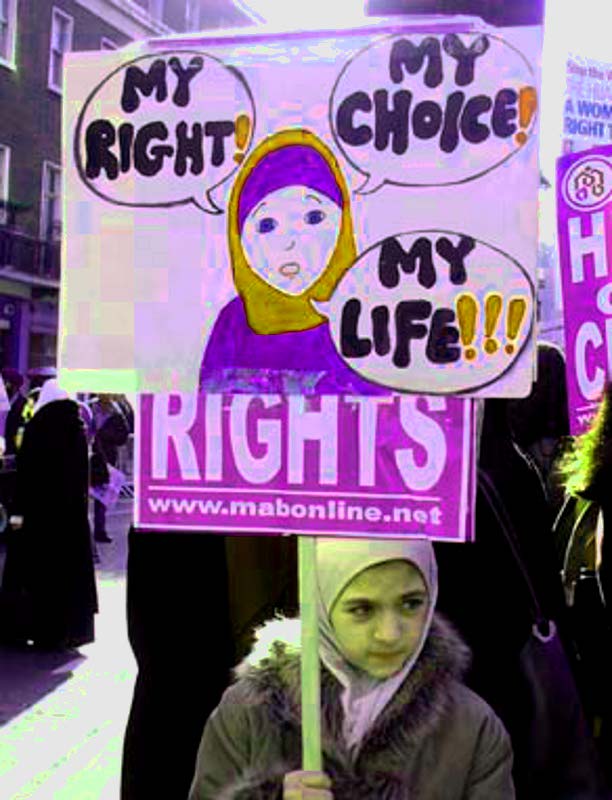
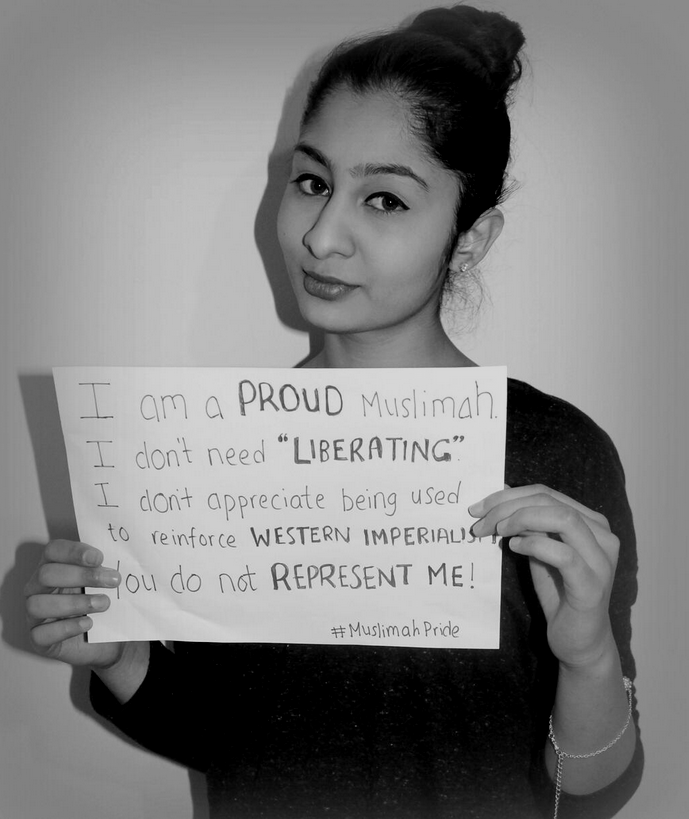
There has always been racism within the various mainstream Feminist movements. From Suffragettes like Elizabeth Cady Stanton, who spent a lifetime advocating that black women should never have the same Constitutional rights as white women, all the way up to our modern age with Sarkozy’s France and FEMEN claiming that Muslim women should not have the right to choose how to dress themselves as they see fit.

I focus here on the debate over the hijab, the Islamic head-cloth that many Muslim women choose to wear, because for me it has direct parallels to the same logic and reasoning found in many Pro-Choice and Sexual Rights movements operating today; that is, that every woman should have the freedom to choose what they want to do with their bodies. Control over her body and the freedom to decide the course of her own life is critical not just to woman’s civil rights but all human rights as well. The fact that the people—-who seem blind to their own racial privileges and use xenophobia and Islamophobia to support their cause—-just happen to be women does not strengthen their arguments, it simply shows that we still live in a time and place where the dominate culture feels that it has the right to declare who gets to be called a Feminist and what a Feminist should look like.

Writing in her essay, Does Your Lifestyle Make You Unworthy of Feminism? Noor Al-Sibai says:

The term “Lifestyle Feminism” became a buzzword in the second wave of Feminism during the 1960’s and 70’s (in the Western-centric view of “Waves” of Feminism). The term, as defined by influential writer Bell Hooks in Feminism is For Everybody, is “the notion that there could be as many versions of Feminism as there were women”. It is the recognition—-or rather, the lack thereof—-of the fact that there is as much plurality within Feminism as there are Feminists that’s been troubling me recently. Many Feminists of all flavors (queer, fat, etc.) seem to be engaged in policing who can and can’t identify as a Feminist based purely on their own preferences and lifestyle choices. While this sort of internal division and conflict is nothing new (like when Black Feminism and Womanism split from mainstream Feminism, or the Feminist Sex/Porn wars of the 80’s and 90’s), it has reached a peculiar pinnacle when it comes to specific lifestyle choices such as the decision to engage in sex work (defined broadly as anything from webcam porn to stripping to escorting), or the decision to be a Muslim and wear a hijab …

I find the disassociation between fighting for the right of women to have freedom of choice over their own bodies when it comes to sexual reproduction but not when it comes to faith, fashion or lifestyle utterly bizarre. The fact that in 2013 there are still Feminists who are not only attacked and silenced by the larger “White Imperial Patriarchal culture,” as Bell Hooks points out, but also by members within their own struggle disastrous on all levels. I am not Muslim but as long as there are women in this world who choose to wear a hijab then I will help fight for their right to do so. That is, after all, what freedom of choice is all about.

][][

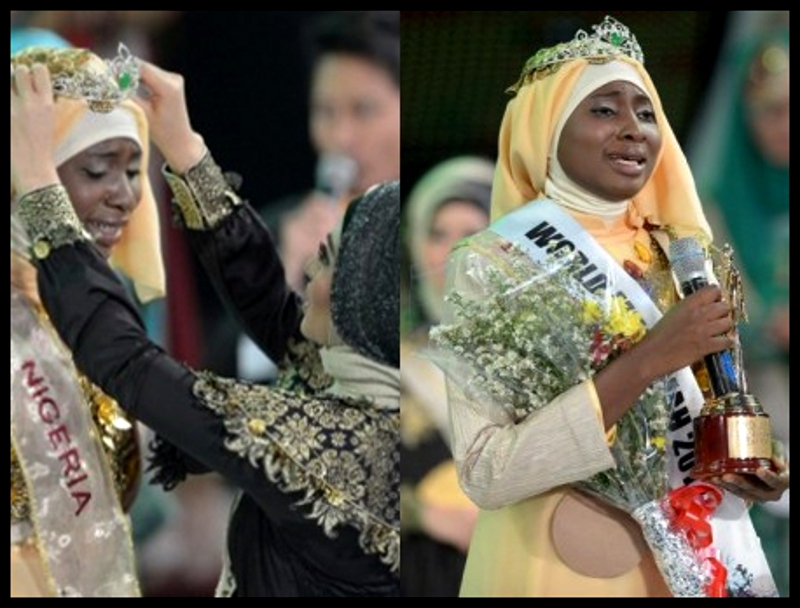
The photos I use here were taken from various Muslim Feminist websites I read as I was writing this essay. The last, of the woman wearing the tiara, is Obabiyi Aishah Ajibola, from Nigeria, who was crowned 2013 World Muslimah in Jakarta.

the path into purgatory

Tags

, , , , , , , , , , , , ,

… at the midpoint of the journey of life, I found myself in a dark forest, for the clear path was lost.
—Dante Alighieri, Inferno

All roads to Hell start like this, Dante tells
us. The path into purgatory, though,
the ghost realm, is much more difficult. Hell’s
Nine Circles are sick and flash, we all know
Hellz da bomb. Limbo, though, is a bus ride.
We wound through the farms on the Hrazdan,
then north, near Aragats. I had no guide,
no blessed Virgil. I could not speak more than
baby-words. But, as the bus turned the last
mountain pass, there it was spread out below:
empty, vast, flat. A gray valley so vast
it was all horizon. But there—a glow
on the edge—ghost ruin that had survived
the ’88 earthquake—I had arrived.

notes:

Inferno is the first part of Dante’s epic poem Divine Comedy. It is an allegory telling of the journey Dante took through Hell, guided by the soul of the Roman poet, Virgil.

Hrazdan is a river that flows through the Ararat valley, irrigating many apricot orchards and farmland. It divides the city of Yerevan in half. Once, during a very drunken party, a bunch of us Americans went skinny dipping in the river because what’s the point of having a river in your city if you can’t strip off all your clothes and jump in it now and then?

Mt. Aragats is the highest peak in Armenia, forming part of a mountain chain that separates Gyumri from Yerevan. To travel between the two cities required me taking a big red autobus that traveled roughly 15 miles an hour, it felt like, worming its way up and down high mountain roads. The city I refer to at the end of the poem is Gyumri, which in 1988 was totally destroyed in an earthquake that killed 25,000 people. When I arrived seven years later it was still rubble, looking like something out of a war movie.

shadows follow

Tags

, , , , , , ,

Most people think that shadows follow, precede or surround beings or objects. The truth is that they also surround words, ideas, desires, deeds, impulses and memories.
— Elie Wiesel

If my memories could have only slept
in Yerevan; if I would have never
faced the sky’s worrisome slackness, windswept
spirits swept between mountains and further
rocks; if the swifts and skylarks had only
saved me; then telling you of what happened
would be utterable. My skull’s memory
feels like an oak-beam ripped in two, opened
by force. Hesitantly I step forward.
I want to tell you how this all began
but pain is potent and drives everything
away. There is no magic, no numbered
spell to ease this. No. I left Yerevan
and went north, which was all my undoing.

wreckage’s fate

Tags

, , , , , , ,

Was there enough time to know the wreckage
that I soon would be facing? There were swifts,
skylarks, over Republic Square. Savage
small things. I would sit at a cafe, the gifts
from home—letters—spread out on the table
before me, drinking surch and garejur.
Find me a story teller or fable
maker, someone who doesn’t need liqueur
to help forget. Is it wreckage’s fate
to be wreckage? Savage words and bright birds
and I still have nightmares—all in a row.
But still … to have time to sit, watch and wait.
That’s a gift. To have time to write down words
of our fall; to have time enough to know.

][][

notes:

The Republic Square, or Hanrapetu’tyan Hraparak (Հանրապետության հրապարակ) as it is called in Armenian, is the large central square in the heart of Yerevan. It is intersected by Abovyan, Nalbandyan, Vazgen Sargsyan and Amiryan streets as well as Tigran Mets avenue. During my summer training (1995) in Peace Corps I would sit at a little cafe outside the National Gallery and History Museum, drinking coffee, surch (սուրճ) and beer, garejur (գարեջուր) and watching the skylarks circle in the sky far over head. I liked that particular cafe partly because it was fun to people watch (everyone passes through the square at some point) but also because the layout of the square gives anyone sitting at the cafe an obscured view of Mt. Ararat, which is always a nice thing.

mountain mountain mountain

Tags

, , , , , , , , , ,

But stay tender. Stay enchanted. Mountain,
mountain, mountain. I drank you like vodka,
so you weren’t useless like a grave. Heathen
women prayed for you and so did Noah.
We flew in during the city’s blackout.
I didn’t realize just how you dazzled
until I fell in love with your devout
colors: blue hues cut into deep purple.
Everywhere I went that summer I spied
you. Then, when Turkish gunships attacked
Kurdish towns, smoke darkened your eastern side.
People still pray to you. We build abstract
myths then tear them down. There’s nothing cryptic
about how this wayfarer is homesick.

disgrace

Tags

, , , , , , , ,

These memories, these harsh memories, marred
with the stink of self-hatred and hard drink.
Meager flowers. Petals. Sparse leaf. A shard
I still cannot dislodge. I use to think
that time would dull them; to think that time’s cure
would make them all fade. Then I tried to write.
But what words are there for the dead? What poor
sequence or meager spell would ease the spite
I feel for myself? P.T.S.D. … they
said. Survivor’s guilt. A world with no lust.
Let me write my erotica, pretend
that the spiritual life is the best, pray
that this shard will loosen one day. It must.
I must. I must begin. I must begin.

][][

notes

P.T.S.D., Post-traumatic stress disorder, is a severe psychological condition that might develop after a person is exposed to a traumatic event. This diagnosis may be given when a group of symptoms occur, such as disturbing recurring flashbacks and nightmares, avoidance or numbing of memories of the event, or a high level of anxiety continuing for a long period of time after the event happened.

I was diagnosed with it after I returned home in disgrace from Peace Corps.

achilles’s bane

Tags

, , , , , , , ,

Mother of war, an ice blue flame flutters
on the hill, wild violets, Achilles’s bane,
fragile on their stalks. All the warriors
who fell before you have given their name
to rocks and flowers, but your name is scorned.
If I were a mother with bronze daughters
of my very own I would have you mourned
in the proper way. The violet honors
you, a star with blue edged of fire, but I am poor.
There are some things more fragile than agates.
I have walked these dunes all morning, the wind
on the hill sings your song. Mother of war,
since I cannot find your grave these violets
must do what I started but will not end.

][][

notes:

Penthesilea was the daughter of Orithia and the god Ares. She was known for her bravery, her skill in weapons and her wisdom. During a wild hunt, she accidentally killed her own sister, Hippolyte the Lesser. She was so filled with grief that she set out to liberate Troy, but Greek myth claims Achilles later retook it. During the battle, since she was the daughter of the god of war she killed many high ranking Greek warriors, including Machaon and the Achilles the Greater. Her name means “She Who Compels Men to Mourn.”