• hopilavayi: an erotic dictionary

memories of my ghost sista

~ the dead are never satisfied

memories of my ghost sista

Category Archives: Translation

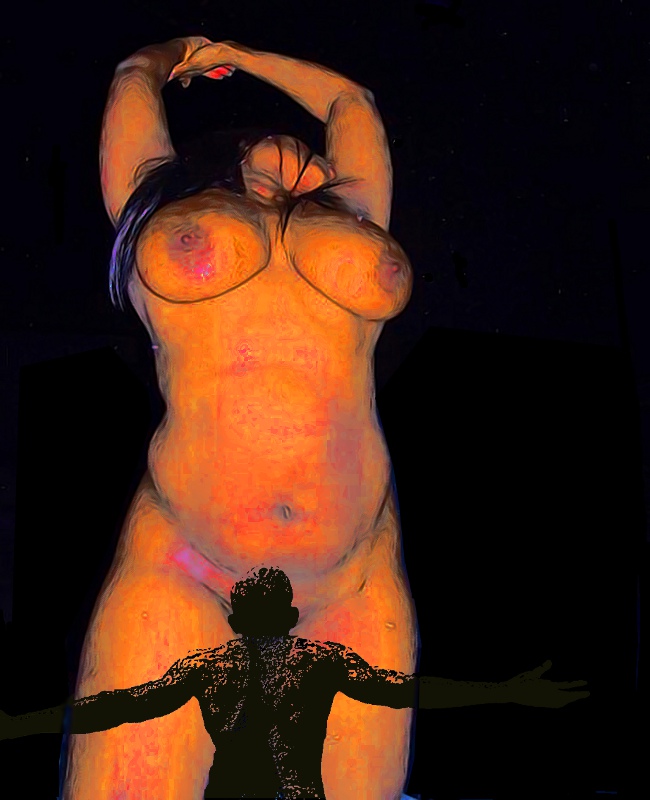
baudelaire’s la géante

05 Tuesday Nov 2013

Posted by babylon crashing in French, Translation

≈ Comments Off on baudelaire’s la géante

Tags

art, Charles Baudelaire, French translation, la géante, poem, Poetry, The Giantess, translation

giantess 1

giantess 2

giantess 3

giantess 4

giantess 5

giantess 6

][][

La Géante

Du temps que la Nature en sa verve puissante
Concevait chaque jour des enfants monstrueux,
J’eusse aimé vivre auprès d’une jeune géante,
Comme aux pieds d’une reine un chat voluptueux.

J’eusse aimé voir son corps fleurir avec son âme
Et grandir librement dans ses terribles jeux;
Deviner si son coeur couve une sombre flamme
Aux humides brouillards qui nagent dans ses yeux;

Parcourir à loisir ses magnifiques formes;
Ramper sur le versant de ses genoux énormes,
Et parfois en été, quand les soleils malsains,

Lasse, la font s’étendre à travers la campagne,
Dormir nonchalamment à l’ombre de ses seins,
Comme un hameau paisible au pied d’une montagne.

— Charles Baudelaire

][][

The Giantess

In those times when Nature in powerful zest
Conceived each day monstrous children,
I would have loved to live near a young giantess,
A voluptuous cat at the feet of a queen.

I would have loved to see her body flower with her soul,
To grow up freely in her prodigious play;
To find if her heart bred some dark flame
Amongst the humid mists swimming in her eyes;

To run leisurely over her marvelous lines;
To creep along the slopes of her enormous knees,
And sometimes in summer, when impure suns

Made her wearily stretch out across the countryside,
To sleep carelessly in the shadow of her breasts,
Like a peaceful village at the foot of a mountain.

— Geoffrey Wagner, Selected Poems of Charles Baudelaire (NY: Grove Press, 1974)

][][

The Giantess

In times when Nature, lusty to excess,
Bred monstrous children, would that I had been
Living beside a youthful giantess,
Like a voluptuous cat beside a queen;
To see her soul and body gain full size
Blossoming freely in her fearsome games,
And by the damp mists swimming in her eyes
To watch her heart nursing what somber flames!

To roam her mighty form at my sweet ease,
To crawl along the slopes of her vast knees,
And, summers, when the sun’s unhealthy heats
Made her sprawl, tired, across the countryside
To sleep at leisure, shaded by her teats,
Like a calm hamlet by the mountainside.

— Jacques LeClercq, Flowers of Evil (Mt Vernon, NY: Peter Pauper Press, 1958)

][][

The Giantess

Of old when Nature, in her verve defiant,
Conceived each day some birth of monstrous mien,
I would have lived near some young female giant
Like a voluptuous cat beside a queen;

To see her body flowering with her soul
Freely develop in her mighty games,
And in the mists that through her gaze would roll
Guess that her heart was hatching sombre flames;

To roam her mighty contours as I please,
Ramp on the cliff of her tremendous knees,
And in the solstice, when the suns that kill

Make her stretch out across the land and rest,
To sleep beneath the shadow of her breast
Like a hushed village underneath a hill.

— Roy Campbell, Poems of Baudelaire (New York: Pantheon Books, 1952)

][][

The Giantess

In those days when Nature’s overwhelming Lust
Engendered infant-monsters day by day
I’d love to have lived with a young giantess.
Like a lazy cat at the foot of my queen I’d lay.

I’d watch her grow into her gruesome games,
As I observed her body blossom with her soul.
And in the misty pools of her great eyes I’d try
To spy some secret flame, ominous and cold.

Her magnificent forms, I’d cuddle lazily,
Climbing the slopes of her gigantic knees.
And when she tired of the sick mid-summer suns
And stretched across the land to take her rest,
Like a peaceful hamlet at the foot of the hills,
I’d sleep serenely there in the shadow of her breast.

— James W. Underhill

the country doctor, by franz kafka

27 Sunday Oct 2013

Posted by babylon crashing in German, Prose

≈ Comments Off on the country doctor, by franz kafka

Tags

Ein Landarzt, Franz Kafka, German translation, Happy Halloween, short story, surreal dreams, The Country Doctor, ZJC

I was in great confusion: I had to start upon an urgent journey—-a seriously ill patient was waiting for me in a village 10 miles off—-a thick blizzard of snow filled all the wide spaces between us—-I had a cart, a little cart with big wheels, exactly right for our country roads—-muffled in furs, my bag of instruments in my hand, I was in the courtyard all ready for the journey—-but there was no horse to be had, no horse at all. My own horse had died in the night, worn out by the tortures of this terrible winter—-my servant girl was now running around the village trying to borrow one—-but it was impossible, I knew it, I stood there hopelessly, with the snow gathering heavier, thickly upon me, heavier, unable to move. In the gateway the girl appeared, alone, waved the lantern—-of course, who would lend a horse at this time of night for such a journey? I strode through the courtyard at once—-I could see no way out—-in my confused state I kicked at the broken-down door of the year-long empty pigsty. It flew open, flapped back and forth on its hinges. A foul smell, just like that of horses, came out from it. A dim stable lantern was swinging inside from a rope. A man, crouching on his hands and knees in that low space, stared back at me with an open blue-eyed face. “Want me to yoke up?” he asked, crawling about on all fours. I did not know what to say, merely stooped down to see what else was in the sty. The servant girl was standing beside me. “You never know what you’re going to find in your own home,” she said. We both laughed. “Hey there, Brother, hey there, Sister!” called the groom, bringing out two horses. They were enormous creatures, with powerful flanks, one after the other, their legs tucked close to their bodies, each well-shaped camel head lowered. By sheer strength of massive buttocks they squeezed out through the door hole, which they filled entirely. But at once they were standing up, their long legs, their bodies steaming like blood thickly. “Give him a hand,” I ordered. The willing girl hurried out to help the groom with the harnesses. Suddenly, she wasn’t even next to him, the groom grabbed hold of her, his terrible mouth pushed against hers. She screamed, ran back to me—-on her cheek blood flowed from the red marks of two rows of teeth. “You brute!” I shouted in fury, “do you want a whipping?” but in the same moment reflected that the man was a stranger to our lands—-that I did not even know where he came from, that he was willing to help me when everyone else had betrayed me. As if he knew my thoughts he took no offense at my shouting but, still working with the horses, only turned around once towards me. “Get in,” he ordered. I looked and indeed everything was ready. A magnificent pair of horses, I saw, such as I had never sat behind before. I climbed in happily. “But I’ll drive, you don’t know the way,” I said. “Of course,” said he, “I’m not coming with you anyway, I’m staying with Rose.” “No!” screamed Rose, fleeing into the house with a terrible sense that her fate was sealed: I heard the door chain rattle as she locked herself in—-I heard the key turn in the lock—-I could see, as well, how she snuffed out the lights in the entrance hall, in all the rooms, anything to keep herself from being discovered. “You’re coming with me,” I said to the groom, “or I won’t go—-urgent as my journey is—-I’m not paying for this by handing the girl over to you.” “Get up!” and he clapped his hands—-the cart whirled off like a log in a breakdam—-I could just hear the door of my house splitting inward, bursting their locks as the groom, steaming, broke the wood down. Then I was deafened, blinded, all by the heavy snow-storm that steadily shook and tempest-tossed all of my senses. But this lasted only for a moment, since, as if my patient’s farmyard had suddenly opened up just before me, I was already there—-the horses had come quietly to a standstill—-the blizzard quickly stopped—-moonlight shown all around—-my patient’s mother and father hurried out of the house, his sister behind them—-I was lifted out of the cart. From their confused babble I could not understand a single word—-in the sickroom the air was so foul it was almost unbreathable—-the dying stove was smoking—-I wanted to push open a window—-but first—-first—-I had to look at my patient. Cadaverous, without any fever, not even cold, not even warm, but with vacant eyes, without a shirt, the child heaved himself up from under the feather bed, threw his stick arms round my neck, whispered in my ear: “Doctor, dear, let me die.” I glanced around the room—-no one had heard him speak, had he spoken?—-the parents were leaning forward in silence, waiting for my diagnosis—-the sister brought in a chair for my handbag—-I opened the bag, hunted through my instruments—-the boy kept clutching at me from his bed, as if to remind me of his request—-I picked up a pair of tweezers, examined them in the candlelight, then laid them back down again. “Yes,” I thought, blasphemously, “in cases like let this the gods be helpful, send the missing horse home—-no—-send two back because of the urgency, summon the groom—-” Only then did I remember my Rose—-what was I to do for her? how could I rescue her at 10 miles’ distance? with a team of horses I couldn’t control. These horses, now, they had somehow slipped from their reins, pushed the sickroom window open from outside, I did not know how—-each of them had stuck a head in through the window, quite unmoved by the startled cries of the family. They stood, staring at the patient. “Better go back at once,” I thought, as if the horses were summoning me to the return trip home, but I permitted the child’s sister, who thought that I must have been only dazed by the heat, to take my fur coat from me. A glass of rum was poured out for me, the old father clapped me on the shoulder, a familiarity justified by this offer of his last treasure. I shook my head—-in the narrow thoughts of the old man I must have looked ill—-that must be the only reason for refusing his drink. The mother stood by the bedside, called me towards it—-I went, while one of the horses whinnied loudly to the ceiling, calling. I laid my head to the boy’s chest which shivered under my wet beard. I confirmed what I already knew—-the boy was quite sound, something a little wrong with his blood circulation, I am sure. Drunk on coffee by his concerned mother, but healthy. It would be best if his parents kicked him out of bed with one shove. I am no world reformer, so I let him lie. I was a country doctor, I did my duty the best I could, to the point where it became almost too much for me. I was badly paid, yet I am generous, I help the poor. I still had to see that Rose was all right, and once I was gone if the boy wanted to have his way, so be it. I wanted to die, too. What was I doing there in that endless winter? My horse was dead, not a single person in the village would help me. I had to get my team out of the pigsty—-if I could I would have ridden by swine. That was how it was. I nodded to the family. They knew nothing about all this, had they known, would not have believed me. To write prescriptions is easy, but to come to an understanding with common people is hard. Well, this should be the end of my visit, I had once more been called out needlessly, but I was used to that, the whole country zone made my life a misery with my night bell, but that I should have to sacrifice Rose this time as well, my pretty girl, a girl who had lived in my house for years and I had never noticed her—odd—-that sacrifice was too much to ask. I had to figure out something to do, in order not to let explode in rage at this family. The best will in the world would not restore Rose to me. But as I shut my bag, put an arm out for my fur coat, the family meanwhile stood together, the old father sniffing at the glass of rum in his hand, the mother, apparently disappointed in me—why? what do people want?—biting her lip with tears in her eyes, the sister shook out a blood-stained towel. I was almost ready to admit that the boy might be—-what? Ill after all. I went to him, he welcomed me smiling as if I were bringing him the most nourishing broth he had ever tasted—ah! now both horses were whinnying together—-the noise, I suppose, was sent by heaven to assist in my examination of the patient once more—and this time I discovered that the boy was indeed terribly ill. In his right side, near the hip, was a gaping, open wound, as big as the palm of my hand. Infected, inflamed, in many variations of shade, dark in the hollows, lighter at the edges, softly coarse but with irregular clots of blood, open as a hole in the ground is to the daylight. That was how it looked from a distance. But on a closer inspection there was another complication. I could not help but cry out in surprise. Worms, as thick, as long as my little finger, themselves blood-red, blood-spotted, were wriggling from their fastness in the interior of the wound, out and up towards the light, with their small white heads, with many little legs. O! Poor boy, you were past helping. I had discovered your great wound—-this blossom in your side was destroying you. The family was pleased—-they saw me busying myself—-the sister told the mother, the mother told the father, the father told several guests who were coming through the door, through the moonlight in the open door, walking on tiptoes, balancing with outstretched arms. “Will you save me?” whispered the boy with a cry, quite blinded by the life that wriggled deep within his wound. That is what people are like in my country zone. Always expecting the impossible from doctors. They have lost their ancient beliefs—-the preacher sits at home, unravels his vestments because he no longer believes—-but the doctor is supposed to be all-powerful with his merciful surgeon’s hand. Well, if it pleases them—-I was the one they called on—-if they abuse me thinking I can work miracles I suppose I will let them do that to me too—-what else do I want? Old country doctor, robed of my servant girl! So they came, this family, these village elders, they came and stripped me of all clothes—-a school choir with the teacher at the head of it stood before the house, singing these words in an utterly simple tune:

Strip his clothes off, then he’ll heal us,
If he doesn’t, we’ll kill him dead!
He is only a doctor, only a doctor.

Then, old man that I am, I was naked. I looked at the people quietly, my fingers in my beard, my head cocked to one side. I was still composed. I was still equal to this situation. I would remain so, although it was no relief to me to do so, since they now carried me to the bed. They laid me down in it, next to the wall, on the side of the open wound. Then they all left the room—-the door was shut—-the singing stopped—-clouds covered the moon—-the bedding was warm around me—-the horses’ heads in the open windows wavered like shadows. “Do you know,” said a tiny voice in my ear, “I have very little faith in you. Why, you were only blown in here like snow, you didn’t even come on your own feet. Instead of helping me, you’re crushing me on my own deathbed. What I’d like best is to jab your eyes out.” “Right,” I said, “it is a shame. Yet I am the doctor. What am I to do? Believe me, it is not too easy for me either.” “Am I supposed to be content with this apology? Oh, I suppose that I must be, I can’t help it. I always have to put up with these things. A terrible wound is all I brought into this world—-that was my only gift.” “My young friend,” I said, “you are mistaken. You have not a wide enough view. I have been in all the sickrooms of this country zone and I tell you that your wound is not so bad. Maybe it happened with two strokes of the ax. Many get hit in the side, for they can hardly hear an ax in the forest as it is coming to to them.” “Is that really the truth? or are you lying to me because of my fever?” “It is really so, take the word of an official doctor.” He took it, then lay still. But now it was time for me to think of escaping. The horses were still standing faithfully in their places. My clothes, my fur coat, my bag were quickly collected—-I didn’t want to waste time putting them on—-if the horses raced home as they had come, I would soon be in the bed of my own. Obediently a horse backed away from the window—-I threw my bundle into the cart—-the fur coat was caught on a hook, hanging only by its sleeve. So what? Good enough. I swung myself naked onto the horse. With the reins loosely trailing, the two horse barely fastened to each other, my fur coat dragging in the snow, I shouted: “Get up!” But there was no galloping—-only, like old men, we crawled through the snowy wasteland—-for a long time a new song of the children echoed behind us:

Be joyous, you patients,
The doctor had been laid in bed beside you!

Never will I ever reach home at this rate—-my country practice is in ruin—-my neighbors robbing me—-that beast that I once called a disgusting groom is hidden in my house—-Rose is no more—-I do not want to think about what lays for me in the snow. Naked, exposed to the hoarfrost, lost in this most unhappy of ages, old man that I am, I wander in the winter like a stray. My fur coat is hanging from the back of the cart—-but I cannot reach it. No one will lift a finger. Betrayed! Betrayed! Once a person responds to a false alarm calling to you from a night bell there is no making anything ever good again—never again.

(by Franz Kafka, translation by ZJC)

][][

notes:

This isn’t a horror story but it is my favorite Halloween story. Written in 1919 in German, it was originally titled, “Ein Landarzt.” I love this because it has been the nearest I’ve ever gotten to reading about what dream-state is really like—-nightmares and surreal images that swirl before you … and there is never anything that anyone can do. In dreamland stupid, brutal things occur, things you’d never do in the waking world, and yet there is never anything that we can do to alter it. It’s pointless to take this story literally. Of course the Doctor wants to save Rose, but he is powerless to do anything. Of course any sane physician would check all of the boy’ body before pronouncing a diagnosis, but in the dreamland that just doesn’t happen. In dreamland we are slaves to all that we fear and have no power over.

ballad of black dread, by federico garcia lorca

28 Saturday Sep 2013

Posted by babylon crashing in Poetry, Spanish, Translation

≈ Comments Off on ballad of black dread, by federico garcia lorca

Tags

ballad of black dread, Federico Garcia Lorca, poem, romance de la pena negra, Spanish translation

Frenetic axes of cocks
digging in search of the dawn
when down from the dark foothills
comes Soledad Montoya.
Yellow copper of her flesh
smelling of horses and murk.
Smoky anvils of her breasts,
wailing out rounded songs.
“Soledad, who are you calling for,
all alone, at this hour?”
“Do not worry who it is,
what is this to you, anyway?
I want whatever I want,
my body and my joy.”
“Soledad, dreadful one,
the stallion that runs free
finds at last the sea
only to be swallowed by the waves.”
“Do not speak to me of the sea,
for the black dread surges out
from the land of the olive tree,
under the rustling of its leaves.”
“Soledad, what anguish you have
what horrendous pain!
You wail lemon juice,
bitter from the lips with longing.”
“Ai, what anguish! I drift
around my house,
from kitchen to bedroom,
my braids undone, on the floor.
Ai, what terror! My clothes
and flesh are fading into black.
Ai, my linen nightgowns!
Ai, my poppy thighs!”
“Soledad, wash your body
in skylark water.
Let peace into your heart,
Soledad Montoya.”

Downhill the river sings:
mantle of leaves and sky.
The new light is crowned
in wild pumpkin flowers.
Ai, the pain! Pain of the gypsies,
clean pain from a hidden stream
and from the endless dawn!

—- translation by ZJC

][][

romance de la pena negra

Las piquetas de los gallos
cavan buscando la aurora,
cuando por el monte oscuro
baja Soledad Montoya.
Cobre amarillo, su carne,
huele a caballo y a sombra.
Yunques ahumados sus pechos,
gimen canciones redondas.
Soledad, ¿por quién preguntas
sin compaña y a estas horas?
Pregunte por quien pregunte,
dime: ¿a ti qué se te importa?
Vengo a buscar lo que busco,
mi alegría y mi persona.
Soledad de mis pesares,
caballo que se desboca,
al fin encuentra la mar
y se lo tragan las olas.
No me recuerdes el mar,
que la pena negra, brota
en las tierras de aceituna
bajo el rumor de las hojas.
¡Soledad, qué pena tienes!
¡Qué pena tan lastimosa!
Lloras zumo de limón
agrio de espera y de boca.
¡Qué pena tan grande! Corro
mi casa como una loca,
mis dos trenzas por el suelo,
de la cocina a la alcoba.
¡Qué pena! Me estoy poniendo
de azabache carne y ropa.
¡Ay, mis camisas de hilo!
¡Ay, mis muslos de amapola!
Soledad: lava tu cuerpo
con agua de las alondras,
y deja tu corazón
en paz, Soledad Montoya.

Por abajo canta el río:
volante de cielo y hojas.
Con flores de calabaza,
la nueva luz se corona.
¡Oh pena de los gitanos!
Pena limpia y siempre sola.
¡Oh pena de cauce oculto
y madrugada remota!

ballad of the spanish civil guard, by federico garcia lorca

28 Saturday Sep 2013

Posted by babylon crashing in Poetry, Spanish, Translation

≈ Comments Off on ballad of the spanish civil guard, by federico garcia lorca

Tags

Federico Garcia Lorca, romance de la guardia civil española, Spanish translation, ZJC

Black are the horses,
their horses are shod in black.
On their capes glitter
stains of ink and wax.
This is why they do not weep:
their skulls are cut in lead.
They ride the highways
with patent leather souls.
Hunchbacked and nocturnal,
they ride forth and command
the silences of dark rubber
and the fears like fine sand.
They go where they want,
and hide in their skulls
vague astronomical ideas,
amorphous pistols.

Ai, city of gypsies!
Corners hung with colors.
The moon and pumpkins
and cherries in sweet preserve.
Ai, city of gypsies!
Who could see you and not recall?
City of musks and agony,
city of cinnamon towers.

As the night was approaching
the night so deep, dark, nightish,
the gypsies at their forges
were hammering suns and arrows.
A deeply wounded stallion
knocked at each door.
Glass cocks were crowing
in Jerez de la Frontera.
The naked wind, turning
in the silver night, around
the corner with surprise,
in the night so deep, dark, nightish.

The Virgin and Saint Joseph
have lost their castanets.
They are looking for the gypsies
to see if they can help find them.
Here comes the Virgin, dressed
just like the mayor’s wife
in silvery chocolate paper,
with a necklace of almonds.
Saint Joseph swings his arms
beneath a cloak of silk.
Behind comes Pedro Domecq
and three Persian sultans.
The half moon dreamed
out an ecstasy of the stork.
And ensigns and lanterns
stormed the roof tiles.
Hipless dancers sob
in every mirror.
Water and shadow, shadow and water
in Jerez de la Frontera.

Ai, city of gypsies!
Corners hung with colors.
Quell your green lights:
for here come the Civil Guard.
Ai, city of gypsies!
Who could see you and not recall?
Let her be, far from the sea,
with no combs to hold back her hair.

To the celebrated city
they ride two abreast.
The gossip of the everlasting
invades their cartridge belts.
They ride two abreast.
A night of twin shadows in cloth.
The sky, they conclude,
a window full of spurs.

The city, unsuspicious,
unfolding its doors.
40 Civil Guards, to sack
and burn, poured through.
The clocks stopped and the brandy
bottles impersonated November
so as not to stir any suspicion.
Up rose from the weathercocks
a series of long screams.
Sabers slashed the air,
trampling under black horse hoof.
Old gypsy women tried to flee
through the half-lit streets
with their benumbed horses
and enormous crocks of coins.
Up the palisade streets
climbed the sinister capes
leaving behind brief
whirlwinds of scissors.
In the gate of Bethlehem
all the gypsies gathered.
Saint Joseph, mortally wounded,
laid a shroud upon a girl.
Sharp and stubborn, rifle
bursts rang through the night.
The Virgin healed children
with spit from a fallen star.
But the Civil Guard advances,
starting cruel fires
where the naked hope of youth
burns. Rosa, the Comborio,
sits keening at her door
with her mutilated breasts
before her on a tray.
Other girls run in horror,
pursued by their trailing braids,
in a wind exploding
with the roses of black gunpowder.
When all the tiled roofs
have been laid as furrows in the earth,
dawn rocked its shoulders about
in a long silhouette of stone.

Ai, city of gypsies!
The Civil Guard saunters away
through a tunnel of silence
leaving you in flames.
Ai, city of gypsies!
Who could see you and not recall?
Let them find you on my deep brow:
blazon of sand and moon.

—- translation by ZJC

][][

romance de la guardia civil española

Los caballos negros son.
Las herraduras son negras.
Sobre las capes relucen
manchas de tinta y de cera.
Tienen, por eso no lloran,
de plomo las calaveras.
Con el alma de charol
vienen por la carretera.
Jorobados y nocturnos,
por donde animan ordenan
silencios de goma oscura
y miedos de fina arena.
Pasan, si quieren pasar,
y ocultan en la cabeza
una vaga astronomía
de pistolas inconcretas.

¡Oh ciudad de los gitanos!
En las esquinas banderas.
La luna y la calabaza
con las guindas en conserva.
¡Oh ciudad de los gitanos!
¿Quién te vio y no te recuerda?
Ciudad de dolor y almizcle,
con las torres de canela.

Cuando llegaba la noche,
noche que noche nochera,
los gitanos en sus fraguas
forjaban soles y flechas.
Un caballo malherido,
llamaba a todas las puertas.
Gallos de vidrio cantaban
por Jerez de la Frontera.
El viento vuelve desnudo
la esquina de la sorpresa,
en la noche platinoche
noche, que noche nochera.

La Virgen y San José,
perdieron sus castañuelas,
y buscan a los gitanos
para ver si las encuentran.
La Virgen viene vestida
con un traje de alcaldesa
de papel de chocolate
con los collares de almendras.
San José mueve los brazos
bajo una capa de seda.
Detrás va Pedro Domecq
con tres sultanes de Persia.
La media luna soñaba
un éxtasis de cigüeña.
Estandartes y faroles
invaden las azoteas.
Por los espejos sollozan
bailarinas sin caderas.
Agua y sombra, sombra y agua
por Jerez de la Frontera.

¡Oh ciudad de los gitanos!
En las esquinas banderas.
Apaga tus verdes luces
que viene la benemérita.
¡Oh ciudad de los gitanos!
¿Quién te vio y no te recuerda?
Dejadla lejos del mar, sin
peines para sus crenchas.

Avanzan de dos en fondo
a la ciudad de la fiesta.
Un rumor de siemprevivas
invade las cartucheras.
Avanzan de dos en fondo.
Doble nocturno de tela.
El cielo, se les antoja,
una vitrina de espuelas.

La ciudad libre de miedo,
multiplicaba sus puertas.
Cuarenta guardias civiles
entran a saco por ellas.
Los relojes se pararon,
y el coñac de las botellas
se disfrazó de noviembre
para no infundir sospechas.
Un vuelo de gritos largos
se levantó en las veletas.
Los sables cortan las brisas
que los cascos atropellan.
Por las calles de penumbra
huyen las gitanas viejas
con los caballos dormidos
y las orzas de monedas.
Por las calles empinadas
suben las capas siniestras,
dejando atrás fugaces
remolinos de tijeras.
En el portal de Belén
los gitanos se congregan.
San José, lleno de heridas,
amortaja a una doncella.
Tercos fusiles agudos
por toda la noche suenan.
La Virgen cura a los niños
con salivilla de estrella.
Pero la Guardia Civil
avanza sembrando hogueras,
donde joven y desnuda
la imaginación se quema.
Rosa la de los Camborios,
gime sentada en su puerta
con sus dos pechos cortados
puestos en una bandeja.
Y otras muchachas corrían
perseguidas por sus trenzas,
en un aire donde estallan
rosas de pólvora negra.
Cuando todos los tejados
eran surcos en la sierra,
el alba meció sus hombros
en largo perfil de piedra.

¡Oh ciudad de los gitanos!
La Guardia Civil se aleja
por un túnel de silencio
mientras las llamas te cercan.
¡Oh ciudad de los gitanos!
¿Quién te vio y no te recuerda?
Que te busquen en mi frente.
Juego de luna y arena.

ballad of the doomed man, by federico garcia lorca

28 Saturday Sep 2013

Posted by babylon crashing in Poetry, Spanish, Translation

≈ Comments Off on ballad of the doomed man, by federico garcia lorca

Tags

Ballad of the Doomed Man, Federico Garcia Lorca, Poetry, romance del emplazado, Spanish translation

My fretting solitude!
The small eyes of my body
and the great eyes of my mare
do not shut out the night;
do not gaze faraway to see
a dream of 13 boats
toddle along peacefully.
Instead, as squires at vigil,
are clean and hard.
My eyes look toward the north
to the precipices and metals
where my body of no arteries
consults a frozen deck of cards.

Massive water oxen
charge at the schoolboys
bathing in the moons
of their fermenting horns.
Hammers were singing
on hypnotic anvils
insomnia of rider,
insomnia of horse.

On the 25th of June
they told El Amargo:
“The time has come to cut down
the oleanders out in your yard.
Paint a cross up on your door,
put your name beneath
for nettles and hemlock
will sprout from your haunch,
and needles of dewy lime
will gall through your boots.
When at night, in darkness,
over magnetic hillocks
where the water oxen
dreamily drink up the reeds.
Ask for the candles and bells.
Learn how to cross your hands
and taste the numbing winds
of precipices and metals:
for in two months from now
you will lie under a shroud.”

Santiago swings his sword,
astral, stellar, across the sky.
Dismal silence flows
out of an arching heaven.

On the 25th of June
El Amargo opened his eyes,
on the 25th of August
he lay down and closed them tight.
Men were bustling about the street
to see the man who was to die,
who fixed against the wall
his solitude, now feckless.
And the righteous sheet,
with its hard dactyl of Rome,
gave self-restraint to death
by the straightness of its edges.

—- translation by ZJC

][][

romance del emplazado

¡Mi soledad sin descanso!
Ojos chicos de mi cuerpo
y grandes de mi caballo,
no se cierran por la noche
ni miran al otro lado
donde se aleja tranquilo
un sueño de trece barcos.
Sino que limpios y duros
escuderos desvelados,
mis ojos miran un norte
de metales y peñascos
donde mi cuerpo sin venas
consulta naipes helados.

Los densos bueyes del agua
embisten a los muchachos
que se bañan en las lunas
de sus cuernos ondulados.
Y los martillos cantaban
sobre los yunques sonámbulos,
el insomnio del jinete
y el insomnio del caballo.

El veinticinco de junio
le dijeron a el Amargo:
Ya puedes cortar si gustas
las adelfas de tu patio.
Pinta una cruz en la puerta
y pon tu nombre debajo,
porque cicutas y ortigas
nacerán en tu costado,
y agujas de cal mojada
te morderán los zapatos.
Será de noche, en lo oscuro,
por los montes imantados,
donde los bueyes del agua
beben los juncos soñando.
Pide luces y campanas.
Aprende a cruzar las manos,
y gusta los aires fríos
de metales y peñascos.
Porque dentro de dos meses
yacerás amortajado.

Espadón de nebulosa
mueve en el aire Santiago.
Grave silencio, de espalda,
manaba el cielo combado.

El veinticinco de junio
abrió sus ojos Amargo,
y el veinticinco de agosto
se tendió para cerrarlos.
Hombres bajaban la calle
para ver al emplazado,
que fijaba sobre el muro
su soledad con descanso.
Y la sábana impecable,
de duro acento romano,
daba equilibrio a la muerte
con las rectas de sus paños.

the riddle of the guitar, by federico garcia lorca

28 Saturday Sep 2013

Posted by babylon crashing in Poetry, Spanish, Translation

≈ Comments Off on the riddle of the guitar, by federico garcia lorca

Tags

adivinanza de la guitarra, Federico Garcia Lorca, poem, riddle of the guitar, Spanish translation, ZJC

At the round
crossroads,
6 maidens
dance.
3 of flesh,
3 of silver.
Dreams from yesterday pursue them,
but they are held fast by
a Polyphermus of gold.
Ai, the guitar!

—- translated by ZJC

][][

adivinanza de la guitarra

En la redonda
encrucijada,
seis doncellas
bailan.
Tres de carne
y tres de plata.
Los sueños de ayer las buscan
pero las tiene abrazadas
un Polifemo de oro.
¡La guitarra!

hush, baby, hush, by federico garcia lorca

28 Saturday Sep 2013

Posted by babylon crashing in Poetry, Spanish, Translation

≈ Comments Off on hush, baby, hush, by federico garcia lorca

Tags

Blood Wedding, Federico Garcia Lorca, hush baby hush, Poetry, Spanish translation, ZJC

Hush, baby, hush.
Dream of a great black stallion
that would not drink the water.
Wouldn’t drink the water.
The water was black
under the branches.
Under the branches
the water was black.
Under the bridge
it stopped and sang.
Who can say, my baby,
of the water’s pain?
Of the water’s pain
who can say?
As it draws its long tail
through deep green room …

][][

Nana, niño, nana
del caballo grande
que no quiso el agua.
El agua era negra
dentro de las ramas.
Cuando llega el puente
se detiene y canta.
¿Quién dirá, mi niño,
lo que tiene el agua
con su larga cola
por su verde sala …

sleep, sleep my little rose, by federico garcia lorca

28 Saturday Sep 2013

Posted by babylon crashing in Poetry, Spanish, Translation

≈ Comments Off on sleep, sleep my little rose, by federico garcia lorca

Tags

Blood Wedding, Federico Garcia Lorca, sleep sleep my little rose, Spanish translation, ZJC

Sleep, sleep my little rose,
for the horse now starts to weep.
The hooves are all red with blood,
and all its horsey hair frozen.
And deep within its eyes
rests a broken silver dagger.
Down they went to the river’s edge.
Ai!, how they went down!
And its blood ran faster
than the running water.

—- from the drama Blood Wedding, translation by ZJC

][][

Duérmete, rosal,
que el caballo se pone a llorar.
Las patas heridas,
las crines heladas,
dentro de los ojos
un puñal de plata.
Bajaban al río.
¡Ay, cómo bajaban!
La sangre corría
más fuerte que el agua.

the hooves are all red with blood, federico garcia lorca

28 Saturday Sep 2013

Posted by babylon crashing in Poetry, Spanish, Translation

≈ Comments Off on the hooves are all red with blood, federico garcia lorca

Tags

Blood Wedding, Federico Garcia Lorca, Spanish translation, the hooves are all red with blood, ZJC

The hooves are all red with blood,
and all its horsey hair frozen.
And deep within its eyes
rests a broken silver dagger.
Down they went to the river’s edge.
Ai!, how they went down!
And its blood ran faster
than the running water.

—- from the drama Blood Wedding, translated by ZJC

][][

Las patas heridas,
las crines heladas,
dentro de los ojos
un puñal de plata.
Bajaban al río.
La sangre corría
más fuerte que el agua.

ode to the onion, pablo neruda

28 Saturday Sep 2013

Posted by babylon crashing in Poetry, Spanish, Translation

≈ Comments Off on ode to the onion, pablo neruda

Tags

oda a la cebolla, Ode to the Onion, Pablo Neruda, Poetry, Spanish translation

Onion,
crystalline sack,
your beauty formed,
petal after petal,
of luminous scales
that increased you
and your belly grew with dew
in the mystery of the
dark earth.
Underground
this mystery
occurred
and when your cumbersome
green stem burst forth,
and your leaves were born
like sabers
in the garden,
the earth heaped up
her power
showing your naked
transparency,
and as the withdrawn sea
lifting Aphrodite’s breasts
duplicated the magnolia,
so did the earth
fashion you,
onion
clear as a planet,
and destined
to bedazzle,
constant constellation,
round rose of water,
upon
the tabletops
of the poor.

Generously,
you undo
your globe of freshness
in devout consummation
of the cooking pot,
and the crystal shred
in the flaming heat
of the oil
is transformed into
a curled feather of gold.

Again, I will recall how fertile
is your influence on
the love of the salad,
and it seems that
the sky must aid
by giving you hail’s
clever form
to celebrate your
chopped brightness
on the borderlands
of the tomato.
But within reach
of our communal hands
sprinkled with oil,
dusted
with a nip sea salt,
you kill the hunger
of field-laborers
on the hard road.

Star of the oppressed,
pixie godmother
wrapped
in delicate
paper, you rise from
the ground
infinite, intact, perfect
as any astral seed,
and on chopping you up
the kitchen knife
will raise one single tear
without agony.

You force us to cry
but never hurt us.
I have praised all
the world that exists,
but to me, you
onion, you are
more handsome
than any bird
of dazzling feathers,
a heavenly orb,
a platinum bowl,
an unmoving dance
of the snowy windflower
and the aroma of
wet earth burns
in your luminous being.

—- translated by ZJC

][][

Oda a la cebolla

Cebolla
luminosa redoma,
pétalo a pétalo
se formó tu hermosura,
escamas de cristal te acrecentaron
y en el secreto de la tierra
oscura se redondeó tu vientre
de rocío.
Bajo la tierra
fue el milagro
y cuando apareció
tu torpe tallo verde,
y nacieron
tus hojas como espadas
en el huerto,
la tierra acumuló su poderío
mostrando tu desnuda
transparencia,
y como en Afrodita
el mar remoto
duplicó la magnolia
levantando sus senos,
la tierra
así te hizo,
cebolla,
clara como un planeta,
y destinada
a relucir,
constelación constante,
redonda rosa de agua,
sobre
la mesa
de las pobres gentes.

Generosa
deshaces
tu globo de frescura
en la consumación
ferviente de la olla,
y el jirón de cristal
al calor encendido
del aceite
se transforma en rizada
pluma de oro.

También recordaré
cómo fecunda
tu influencia el amor
de la ensalada
y parece que el cielo
contribuye
dándote fina forma
de granizo
a celebrar tu claridad
picada
sobre los hemisferios
de un tomate.
Pero al alcance
de las manos del pueblo,
regada con aceite,
espolvoreada
con un poco de sal,
matas el hambre
del jornalero en el
duro camino.
Estrella de los pobres,
hada madrina
envuelta en delicado
papel, sales del suelo,
eterna, intacta, pura
como semilla de astro,
y al cortarte
el cuchillo en la cocina
sube la única lágrima
sin pena.
Nos hiciste llorar
sin afligirnos.

Yo cuanto existe celebré,
cebolla,
pero para mí eres
más hermosa que un ave
de plumas cegadoras,
eres para mis ojos
globo celeste, copa de
platino,
baile inmóvil
de anémona nevada

y vive la fragancia
de la tierra
en tu naturaleza
cristalina.

← Older posts
Newer posts →

age difference anal sex Armenia Armenian Genocide Armenian translation ars poetica art artist unknown blow job Chinese translation conversations with imaginary sisters cum cunnilingus drama erotic erotica erotic poem erotic poetry Federico Garcia Lorca fellatio finger fucking free verse ghost ghost girl ghost lover gif Gyumri haiku homoerotic homoerotica Humor i'm spilling more thank ink y'all incest Lilith Lord Byron Love shall make us a threesome masturbation more than just spilled ink more than spilled ink mythology ocean mythology Onna bugeisha orgasm Peace Corps photo poem Poetry Portuguese Portuguese translation prose quote unquote reblog retelling Rumi Sappho sea folklore Shakespeare sheismadeinpoland sonnet sorrow Spanish Spanish translation spilled ink story Taoist Pirate rituals Tarot Tarot of Syssk thank you threesome Titus Andronicus translation video Walt Whitman woman warrior xenomorph

electric mayhem [links]

  • armenian erotica and news
  • poesia erótica (português)
  • cyndi lauper
  • aimee mann
  • discos bizarros argentinos
  • sandra bernhard
  • Poetic K [myspace]

Meta

  • Create account
  • Log in
  • Entries feed
  • Comments feed
  • WordPress.com

Blog Stats

  • 393,070 hits

Categories

ars poetica: the blogs a-b

  • american witch
  • aliki barnstone
  • cecilia ann
  • the art blog
  • margaret bashaar
  • sandra beasley
  • alzheimer's poetry project
  • mary biddinger
  • brilliant books
  • armenian poetry project
  • tiel aisha ansari
  • sommer browning
  • emma bolden
  • lynn behrendt
  • afterglow
  • afghan women's writing project
  • all things said and done
  • stacy blint
  • clair becker
  • kristy bowen
  • Alcoholic Poet
  • wendy babiak
  • black satin
  • megan burns

Enter your email address to follow this blog and receive notifications of new posts by email.

Join 44 other subscribers

Archives

ars poetica: the blogs c-d

  • roberto cavallera
  • juliet cook
  • cheryl clark
  • natalia cecire
  • CRB
  • michelle detorie
  • julie carter
  • jackie clark
  • lyle daggett
  • maria damon
  • flint area writers
  • cleveland poetics
  • linda lee crosfield
  • abigail child
  • lorna dee cervantes
  • jennifer k. dick

ars poetica: the blogs e-h

  • amanda hocking
  • human writes
  • Gabriela M.
  • bernardine evaristo
  • elizabeth glixman
  • ghosts of zimbabwe
  • herstoria
  • joy garnett
  • julie r. enszer
  • pamela hart
  • carol guess
  • sarah wetzel fishman
  • joy harjo
  • elisa gabbert
  • maggie may ethridge
  • hayaxk (ՀԱՅԱՑՔ)
  • carrie etter
  • liz henry
  • maureen hurley
  • Free Minds Book Club
  • jessica goodfellow
  • jane holland
  • jeannine hall gailey

ars poetica: the blogs i-l

  • kennifer kilgore-caradec
  • a big jewish blog
  • Jaya Avendel
  • laila lalami
  • Kim Whysall-Hammond
  • IEPI
  • las vegas poets organization
  • sheryl luna
  • megan kaminski
  • joy leftow
  • lesbian poetry archieves
  • charmi keranen
  • maggie jochild
  • miriam levine
  • diane lockward
  • renee liang
  • emily lloyd
  • irene latham
  • amy king
  • gene justice
  • language hat
  • lesley jenike
  • sandy longhorn
  • meg johnson
  • dick jones
  • donna khun

ars poetica: the blogs m-o

  • new issues poetry & prose
  • iamnasra oman
  • heather o'neill
  • maud newton
  • motown writers
  • My Poetic Side
  • january o'neil
  • Nanny Charlotte
  • mlive: michigan poetry news
  • adrienne j. odasso
  • michigan writers network
  • caryn mirriam-goldberg
  • michigan writers resources
  • marion mc cready
  • nzepc
  • sophie mayer
  • ottawa poetry newsletter
  • majena mafe
  • sharanya manivannan
  • michelle mc grane
  • wanda o'connor
  • the malaysian poetic chronicles

ars poetica: the blogs p-r

  • nicole peyrafitte
  • kristin prevallet
  • ariana reines
  • helen rickerby
  • nikki reimer
  • rachel phillips
  • joanna preston
  • split this rock
  • Queen Majeeda
  • sophie robinson
  • susan rich
  • maria padhila

ars poetica: the blogs s-z

  • tim yu
  • southern michigan poetry
  • shin yu pai
  • Stray Lower
  • tuesday poems
  • vassilis zambaras
  • scottish poetry library
  • ron silliman
  • Trista's Poetry
  • womens quarterly conversation
  • switchback books
  • sexy poets society

  • Subscribe Subscribed
    • memories of my ghost sista
    • Join 44 other subscribers
    • Already have a WordPress.com account? Log in now.
    • memories of my ghost sista
    • Subscribe Subscribed
    • Sign up
    • Log in
    • Report this content
    • View site in Reader
    • Manage subscriptions
    • Collapse this bar
 

Loading Comments...