Tags
Armenia, Armenian words, madmen on my tongue, Պարույր Սեվակ հանրաճանաչ Հայ բանաստեղծ, Paruyr Sevak
Երանի գժերին որ էլ չեն գժվի:
I envy the madmen because they can’t go mad.
Պարույր Սեվակ, հանրաճանաչ Հայ բանաստեղծ
Paruyr Sevak, Armenian poet

13 Monday Apr 2015
Posted in Armenia, quote unquote
≈ Comments Off on quote unquote
Tags
Armenia, Armenian words, madmen on my tongue, Պարույր Սեվակ հանրաճանաչ Հայ բանաստեղծ, Paruyr Sevak
Երանի գժերին որ էլ չեն գժվի:
I envy the madmen because they can’t go mad.
Պարույր Սեվակ, հանրաճանաչ Հայ բանաստեղծ
Paruyr Sevak, Armenian poet
29 Sunday Mar 2015
Posted in drama
≈ Comments Off on huli jing [act iii]
Tags
9-tailed fox, Act III, andrography, Chinese mythology, drama, Giraudoux, Huli Jing, Jinggu, Ondine
HULI JING: the 9-tailed fox
[a reworking of Giraudoux’s Ondine]
ACT III
Huli Jing, a 9-tailed fox-spirit.
Jinggu, a Wu-Shaman.
Niu and Qui (Huli Jing’s human parents)
Four 9-Tailed Fox-Spirits(in their true form)
][][
Nighttime in a roadside inn
somewhere in mythological China.
All the characters are in the exact
same places as before.
JINGGU
Huli Jing!
[Jinggu runs out into the rain to look for him.]
NIU [sheepishly]
Well …
QUI [sadly]
Here’s another nice mess we’ve gotten ourselves into.
NIU
I think I’d better tell her everything, don’t you?
QUI
Yes, I think you’d better.
[Jinggu returns, dripping.]
NIU
You’re all wet.
JINGGU
He’s not your son, is he?
QUI
No, madam.
NIU
We had a son, madam, once. But – but he was stolen when he was only six months old.
JINGGU
Who left Huli Jing with you, then?
NIU
We found him, madam, deep in the woods, sleeping between the roots of a tree.
JINGGU
I find that hard to believe. Usually these sorts of things only happen in fairy tales, of the cheaper variety.
QUI
And yet it happened on the very day that we lost our baby. And the mystery has never been solved.
JINGGU [off in her own world]
I’m told that most women go and find a match-maker to arrange these sorts of things, but since I don’t see one lurking in the shadows just now, if Huli Jing calls you mother and father then I would like you to be my in-laws when I marry him!
NIU [horrified]
But … but my lady, are you thinking clearly?
JINGGU
I know, I know. “Traditions must be observed,” and all that nonsense. I’m sure that you think a bold – yet charmingly pretty – wu-shaman of the Court, such as myself, might make an unsuitable daughter-in-law for you, especially in your doddering old age –
QUI [interrupting]
Madam hasn’t drunken too much wine, has she?
NIU [aside]
No, no, it can’t be the wine. Fermented yak spit isn’t that alcoholic!
JINGGU
I’ve never thought more clearly than now – wait, did you just say “yak spit”? Odd, I thought it tasted familiar. Anyway, where was I?
NIU
For once I do not remember what madam was attempting to say.
QUI [helpfully]
Something about marrying our spooky, under-age son?
JINGGU
Indeed! Thank you, father-in-law! I ask you for Huli Jing’s hand, and it’s his hand I’m thinking of, no one else’s. I want that hand to lead me to Court, to bed, even to death.
NIU [trying to be tactful]
One can’t have two beaus, though, madam. You can’t take that many men to bed.
JINGGU [laughing]
Well, there isn’t a law about it yet – [Suddenly realizing what she has just said.] O, damn, I guess there is. Boy, do I hate Confucianism. Anyway, who else are you thinking about?
NIU
Um, Lord Tsu Tia-Chua, my lady?
JINGGU [perking up]
O! Do you know Tsu Tia-Chua, too? What a stroke of luck! Well, obviously, if we both know about that man’s many failures then you can understand exactly why I need to marry Huli Jing!
NIU
But … your ladyship has spent time telling us how perfect he is.
JINGGU
Ah, a passing whim. Yes, yes, I might have gone on about him, and apart from his dreadful posture and a slight tendency to froth at the mouth I’m sure any country yokel would think that he is indeed perfect.
QUI [a bit scandalized]
Madam!
NIU
But my lady, it’s wrong!
JINGGU
Wrong? Look here, Innkeeper Niu, so-called mother-in-law, just answer me a plain question. Once upon a time there was a shaman who set out to look for the one thing in this world that wasn’t stale, flat and unprofitable. Suddenly, in the deep, dark woods she met a boy called Huli Jing. He pulled curious mirrors from the thin air. He tasted her essence and not only was he the most beautiful boy that she had ever seen in her life, but she felt that he was everything gay and sentimental and courageous. She felt that he could do things for her that no other man ever could, talk to the animals, just imagine it, or fly like one of those winged squirrel-things, or climb the tallest tree to pull celestial daisy-chains down from the heavens – I’ve always wanted one of those. And … having seen and felt all that, she bowed deeply to tradition and rode off home to marry a pot-bellied, sour-mouthed crank called Tsu Tia-Chua? Now, tell me, what is that shaman’s name?
NIU
That’s not exactly fair.
JINGGU
I asked you a question. The whole world would consider her an idiot, wouldn’t they?
QUI
But madam, you’re engaged already.
JINGGU
My dear Qui, you don’t seriously imagine that I’d ever marry Tsu Tia-Chua now that I know Huli Jing? Everyday there are brides who wake up after their wedding night loathing the hayseed boy who just took their most precious-precious – wait, isn’t it odd that we’re still calling virginity “precious,” yes?
NIU
My lady, next you’ll be saying that “binding girl’s feet so that they can’t walk” is odd as well.
JINGGU
Pfff. These new fads will never last.
QUI [nudging]
Niu, tell madam!
JINGGU
Yes, please do! If you have any just cause why I won’t make the most loveliest of daughter-in-laws for you, let me hear it!
NIU
Er, my lady, you say that you want to marry our child, Huli Jing. It’s, um, a great honor for us, but, you see, we can’t give you what – what isn’t ours. [To Qui.] That was good, wasn’t it?
QUI
Rather.
JINGGU
Then you must know who his parents are!
NIU
Well, madam, there’s no question of genitor, that’s the whole trouble with Huli Jing. If we hadn’t adopted him, he’d have found someway to live and grow up just the same. He’s never needed our hugs and kisses, and besides, once the trees start moaning you can’t keep him in the house. I don’t know, I suppose wild spirits have a sort of understanding with Nature, you know, by instinct, or maybe Huli Jing’s own blood is bound up in all this great, green horror that’s outside, somehow. But there’s powers about that boy, no doubt of it!
JINGGU [unsure]
So … I must go and ask if Nature will object to me marrying Huli Jing? But Nature didn’t object to your adopting him. Why all this coyness?
QUI
Coyness? We don’t keep him on a leash and chain, madam.
NIU
We don’t even know if he’ll ever come back once he’s had a tandy. Plenty of times he’s disappeared, and we’ve thought we’d never see him again; we’ve looked everywhere, there’s not been a trace of him. He’s never wanted any other clothes, any toys or anything; so when he goes, he leaves nothing behind. It’s as if he’d never been here in the first place – as if we’d dreamed of him. That’s all he is, a dream. There’s no Huli Jing, really. [To Qui.] Do you believe in him, father?
QUI
I believe you’re starting to talk nonsense, mother. Our son is a bit odd, but he’s still our son, with the Forest’s blessing, of course.
JINGGU
Let’s forget it, shall we? About Huli Jing – I’m beginning to wonder myself – perhaps you’re right. I’m in a dream like yourselves.
NIU [as if mesmerized]
Of course, I remember seeing him, all right, our little Huli Jing! I remember his voice and the way he laughed, I can still see him throwing your rabbit out the window, a good half-pound of bunny; but I won’t be surprised if he never comes back now, not with someone hungry for him and all we see of the scamp will be a few little forest storms and queer little twigs, and his only signs of affection will be in the leaves scraping against the window on nights like tonight …
QUI
Please forgive us, madam. The yak spit has gone to my wife’s head!
NIU
Head? Pfff, if only! It was the night that we lost him – the night that we found him. The build-up. The bursting moment. My eyelids quivered –
QUI
I think we ought to go to bed now, madam, if you don’t mind!
NIU
And the moaning! The trees keep moaning, night and day!
QUI
Er, she’s tired out, that’s her trouble. Come along, now, mother-dear! We’ll talk about Huli Jing tomorrow.
NIU
Ah, if only he comes back!
[Niu and Qui exit.]
JINGGU [looking about the dark room]
Well, whether he does or not, I’m going to wait.
[Jinggu settles back in the chair by the fire. Slowly the back wall of the inn becomes transparent, forming an invisible screen, and the first 9-Tailed Fox appears.]
9-TAILED FOX #1
Shaman, mama shaman, take me!
JINGGU [startled]
What?
9-TAILED FOX #1 [pressing itself up against the screen]
Kiss me!
JINGGU
I beg your pardon?
9-TAILED FOX #1
Kiss me, mama shaman!
JINGGU
Kiss you? For all the celestial powers, why?
9-TAILED FOX #1 [beginning to undress]
Shall I come to you naked, mother?
JINGGU
Do whatever you want; it’s none of my affair.
9-TAILED FOX #1
Do you want me on top of you, or should I take you from behind?
[Huli Jing appears through the door, waving away the Fox-Spirit as if it were smoke.]
HULI JING [highly irritated]
O, you’re so stupid! If you knew how silly you looked!
[9-TAILED FOX #1 disappears.]
JINGGU [jumping up and taking Huli Jing in her arms]
My darling Huli Jing! What is going on?
HULI JING
O, it’s one of those jealous neighbors I told you about. They can’t bear you loving me so they’re trying to steal you away. They’re saying that anything other-worldly can seduce you.
JINGGU
I don’t know about other worlds, I like the one we’re in now —
[9-TAILED FOX #2 appears, splaying out its legs and lifting up its robes to its knees.]
9-TAILED FOX #2
Don’t force my legs open! Don’t touch me!
JINGGU [completely aghast]
Is it a demon? What is it talking about?
9-TAILED FOX #2
Don’t touch me, mama shaman! I’m not that sort of toy.
JINGGU
Toy? Are all your neighbors slightly deranged?
HULI JING
They think that if seduction fails, the quickest way is playing innocent. They say mortals all fall for the same tricks.
9-TAILED FOX #2
Don’t put your mouth down there, mama shaman! Don’t stroke my thighs!
JINGGU
I don’t really understand what’s going on. Why would anyone stand outside your window and make lewd comments like that at this time of night?
HULI JING
Why, indeed? O Jinggu, darling Jinggu, never let go of me. Look at that silly fool! — All right, you’ve lost too! You can go now!
[9-TAILED FOX #2 vanishes and 9-TAILED FOX #3 rises up to take its place.]
JINGGU
Great googly moogly, another one!
HULI JING
O, no, this is getting boring! Only two are supposed to come at a time!
JINGGU
Let it stay. It seems to want to say something.
HULI JING
No, make it go away! It’s the Song of the Fox Lovers. No mortal can resist it. O, please …
JINGGU [indulgently]
Go on, wild thing from the wild woods.
9-TAILED FOX #3 [singing]
Mortal of breast and bone,
Do you not find what you see
Gorgeous? Both fore and aft,
In face and form? This I offer
To you … I offer to you …
HULI JING
O, very nice. Splendid.
JINGGU
What do you mean, “splendid?”
HULI JING
You know — childish seduction. Surely, your mountain demons have tempted you with far more?
JINGGU [scratching head]
Well, perhaps, but they were demons — oh, here’s the another one.
[9-TAILED FOX #4 appears next to 9-TAILED FOX #3.]
9-TAILED FOX #4 [singing]
Mortals are wicked,
All the forest know,
And they praise too well
And curse too freely.
And you, Jinggu, mother,
Do you really want a beast
Between your minor arcana
And labia majora?
HULI JING
Have you quite finished?
JINGGU
I don’t know why you’re getting upset, your neighbors in these parts seem to know an awful lot of folk-songs. If they’re going to this much trouble to give us a performance we might as well have the good manners as to listen.
HULI JING
But my kinfolk do this every time one of us falls in love with a mortal. I think it’s part of the small print in the contract.
JINGGU
Really, Huli Jing! You act like you know what’s about to happen.
HULI JING [crawling into Jinggu’s lap]
It’s not much fun, you know, hearing what other people think before they can even get the words out of their mouths. [To the writhing bodies pressed up to the screen.] Go away, do you hear? That’s quite enough!
9-TAILED FOX #2
You’re lost, Huli Jing! You’ve lost!
JINGGU
What have you lost?
9-TAILED FOX #3
Huli Jing has lost the bet! The mortal is holding you in her arms, Huli Jing, but she’s watching us. She’s kissing you, but she’s listening to us. The mortal will deceive you.
HULI JING
What nonsense! Don’t you know how mortals like to declare their love through 3rd person? Anyone can sing songs, but all that makes are fools into poets. That’s all you are: a poet, idiot!
9-TAILED FOX #4
You think mortal love will transform you? It’s not what lays between her legs, foolish pup. It’s her liver and you know it!
HULI JING
Jinggu will save me! Now go away.
9-TAILED FOX #1
We can tell your aunt, then, can’t we? That the pact still holds!
JINGGU
What pact?
HULI JING [ignoring Jinggu]
Yes, you can! I’m done with bitterness and self-hatred! Tell my aunt and then tell all the salamanders and snakes and tree moss and frogs! Tell the whole world, for all I care!
9-TAILED FOX #3
You will never become mortal, little pup! Not like that.
JINGGU
What are they talking about?
HULI JING
Go on! Go and tell my aunt, I dare you!
9-TAILED FOX #4
She’ll know in a minute. You know what will happen once she knows.
HULI JING
I don’t care if she knows! Tell her that I hate her. I hate this world where I’m always alone and can’t be happy.
[All the 9-Tailed Foxes disappears.]
HULI JING [pulling Jinggu’s face close as if to kiss]
You won’t abandon me, will you Jinggu? There has to be a better way than what the pact says. Help me find it, darling and damn anyone who tries to get in the way.
[End of Act III]
][][
notes:
The humor that I find with Jinggu is that she’s completely oblivious that Huli Jing is, in fact, an immortal spirit. Chinese mythology says that the fox is a shape-shifter, able to transform itself into beautiful forms in order to seduce unwary morals. The reason foxes do this are varied, but often it’s done so that they can become human themselves. When the fox is the hero in the story this is accomplished simply by having the mortal fall in love with it. When the fox is the villain then it needs to eat 100 livers to become human.
Actually there are numerous types of Chinese fox spirits; the huli jing (狐狸精), huxian (狐仙or fox immortal) and the jiuweihu (九尾狐 9-tailed fox). Huli Jing thus becomes a proper name and a noun, much like how Giraudoux used the word ondine for the heroine of his story as well as the race that she comes from.
As to how a 9-tailed fox-spirit might look up on stage that is open to debate. In doing research I’ve found that many manga artists simply draw fox-spirits as busty, half-naked women poised seductively in front of what appears to be a huge pea-cock fan of their fox tails, each one as long as the character’s own body. Not only does it look ridiculous but it begs the question of how anyone, immortal or mortal, could move quickly while carrying such a burden. “Quick as a fox” this ain’t. In Janáček’s opera, The Cunning Little Vixen, the soprano wears fox-like make-up and a rather unflattering fur bodysuit. Perhaps there is a happy medium, somewhere, of the two styles.
24 Tuesday Mar 2015
Posted in drama
≈ Comments Off on huli jing [act ii]
Tags
9-tailed fox, Act II, androgyny, Chinese mythology, drama, Giraudoux, Huli Jing, Jinggu, Ondine
HULI JING: the 9-tailed fox
[a reworking of Giraudoux’s Ondine]
ACT II
Huli Jing, a 9-tailed fox-spirit.
Jinggu, a Wu-Shaman.
Niu and Qui (Huli Jing’s human parents)
The Voices of Male and Female Forest-Spirits; the Young Girl With No Eyes; Old Man With Ivy in His Hair (various forest-demons and gods)
][][
Nighttime in a roadside inn
somewhere in mythological China.
All the characters are in the exact
same places as before.
JINGGU
And then that happened.
NIU
Lord Buddha knows, madam, he won’t listen to anyone whenever he gets into one of his moods. It’s always, “These damn mortals this” and “These damn mortals that” and “Wait until the Queen of the huli-jing hears about this” –
JINGGU
Huli-jing?
QUI
Fox demons, madam.
NIU [waving her hand in the air]
Superstitious nonsense, that’s what I call it.
JINGGU
Well, shut him up in his room and refuse to feed him.
QUI
He never eats food, at least not as far as we can tell. And no door seems to actually be able to hold him.
JINGGU [shrugging]
How curious. O well, I’m still hungry. Go and fricassee another rabbit, will you?
QUI [sadly]
I’m afraid that was the last one.
JINGGU
O dear! But what about my hunger pains?
NIU
Pains, madam? We have got a salted trout, though. Qui will bring you that instead.
[Exit Qui]
NIU
I’m very sorry that he annoyed you, madam.
JINGGU
He annoyed me because he spoke the truth. We shamans are as vain as peacocks … at least the male ones are. I guess that would make me as vain as a peahen. What does a peahen have to be vain about? [Shudders.] Nasty birds. Where was I?
NIU
Vanity?
JINGGU
O yes! You know, my good innkeeper, most of my colleagues think, at least I think that they think, that just because we can talk to gods and purify invisible things in the air, that somehow it makes us better than other people.
QUI [calling from the kitchen]
I can’t find the trout anywhere, Niu, dear.
[Sighing, Niu goes out to the kitchen. For a moment nothing happens, then Jinggu gets up and attempts to dry her robes by the fire, humming to herself, “I dropped the berry in a stream/ And caught a little silver trout.” Failing at that she raises the hems and attempts to dry her thighs. Silently Huli Jing enters and comes up behind her.]
HULI JING [whispering into Jinggu’s ear]
My name’s Huli Jing.
[Jinggu, startled, drops the hems and quickly tries to smooth down her robes.]
JINGGU [turning around, embarrassed]
O! It’s you! Yes, er, Huli Jing, did you say? Ah! That’s a very pretty name, er, for a boy. Someone was just saying something about a huli-something – now what was it?
HULI JING
You’re Jinggu and I’m Huli Jing. I think those are the loveliest names in the world, don’t you?
JINGGU [humoring and slightly condescending]
Ah! But what about Huli Jing and Jinggu?
HULI JING
O, no! Jinggu must come first, she’s the mortal, she’s got to go first. Mortals are the ones who believe in us, so they give all the orders. Huli Jing will simply walk a step behind Jinggu.
JINGGU
They do? He does?
HULI JING [clapping his hands excitedly]
Yes! And he doesn’t even speak.
JINGGU
Er, Huli Jing doesn’t speak? How on earth does he manage that magic?
HULI JING [giggling]
It’s no magic! Jinggu is always a step ahead of Huli Jing: at Court – in bed – into the grave. [Suddenly ridiculously serious, peering up into Jinggu’s face.] Jinggu has to die first; it’s the natural order of things. But don’t worry, Huli Jing hates to be alone. So he’ll kill himself, too.
JINGGU
What are you talking about? Who has to die?
HULI JING
Huli Jing’s beloved, of course. Isn’t that what is suppose to happen in all the great romances?
JINGGU [sitting back down at the table]
I’ve never understood why the younger generation thinks that dying is always somehow romantic. Staying alive is much harder and proof that you have something to stick around for.
HULI JING
O, don’t worry! Huli Jing’s beloved doesn’t die immediately, of course. That would be silly. Tell me that you love me!
JINGGU
Boy, I’ve only known you a few minutes, and here you are predicting that I’m going to die? I thought that we weren’t speaking, anyway, because of the rabbit.
HULI JING
Silly rabbit. Serves it right for being so trusting. It should have kept away from mortals if it didn’t want to be part of a sacrificial ceremony. That’s what shamans do, right? Sacrifice things? Even Huli Jing? I’m trusting too, aren’t I? Now you’ll sacrifice me just like the rabbit.
JINGGU
Sacrifice? Why, for all the celestial gods, would I sacrifice you?
HULI JING
Vanity? Pride? Love?
JINGGU
Didn’t your mysterious friend out there in the dark woods warn you away from love?
HULI JING [wrinkling his nose]
Pfff. She was talking nonsense.
JINGGU
It couldn’t have been a very long conversation, you were only gone for a few minutes.
HULI JING
I’m a very fast listener when I’m afraid.
JINGGU
You’re afraid of the woods?
HULI JING
I was afraid that you might leave me while I was gone. She said that you’ll betray me.
JINGGU
How could I betray you? I’ve only just met you.
HULI JING
How could you say that you loved me?
JINGGU
I haven’t.
HULI JING
But you will. Still, she said that you weren’t beautiful, so if she can be wrong about that she can be wrong about other things, too.
JINGGU
There you go, flirting with older women. What about you, then? Should I tell you that you are handsome?
HULI JING [giggling]
O, that’s up to you … I’ll look be whatever you want me to be. I’ve always liked the word “handsome” and I’ve always liked the word “beautiful,” so either way is fine.
JINGGU
You are a very strange little boy. Did she say anything else?
HULI JING
Who?
JINGGU
Your friend.
HULI JING
She said if I kissed you, I’d be lost. I don’t know why, because I wasn’t even thinking of your lips – then.
JINGGU [startled, touches her lips with a finger]
Kiss me? Are you thinking about them now?
HULI JING
Desperately. But don’t worry, even though you’ll be kissed tonight I think it’s lovely to wait, that’s all. So that we’ll remember this time later – the time when you hadn’t kissed me.
JINGGU
My dear child –
[As Huli Jing’s fox-magic begins to work upon her Jinggu finds herself blushing and breathing harder, despite her best attempts otherwise.]
HULI JING
We’ll both remember the time when you hadn’t told me that you loved me, either. But you needn’t wait anymore. Come on, tell me. Here I am; my lips are so close to yours. Tell me.
JINGGU [blinking and trying to focus]
Do all boys your age act this way? I never know, I grew up with sisters.
HULI JING
Are all mortals as slow as you? I only want to do the right thing. Would you like it better if I sat in your lap? Then you could feel everything.
[Huli Jing climbs onto Jinggu’s lap and runs his hand inside her robes, fondling her.]
JINGGU
Look here, you’re mad! I’m old enough to be your aunt.
HULI JING
I already have an aunt and she is much older than you.
JINGGU
Then … I’ll be your younger, far prettier aunt.
[While Huli Jing kisses Jinggu’s neck and breasts an otherworldly male voice is heard outside the window.]
MALE FOREST-SPIRIT
Huli Jing!
HULI JING [turning to the window]
Shut up! Nobody asked for your opinion!
JINGGU [gasping, her head swimming]
O! I, er, who are you talking to?
HULI JING
Pfff, neighbors.
JINGGU [trying to disengage from Huli Jing, failing]
But … O! But I thought that this was the only house for miles?
HULI JING
There are spiteful gods everywhere. They’re jealous of me.
FEMALE FOREST-SPIRIT
Huli Jing!
JINGGU
They’re … they’re delightful, these voices.
HULI JING
No, they’re not, it’s just my name that you think is delightful.
[The face of the Young Girl With No Eyes appears at the window.]
YOUNG GIRL WITH NO EYES
Huli Jing!
HULI JING
Go away!
[The Young Girl vanishes.]
JINGGU
Is that the friend that you were talking about?
HULI JING
My aunt? No. [Shouting out to the woods.] You’re too late! I’m kissing her! She loves me!
[Huli Jing slides off Jinggu’s lap and disappears under her robes. The face of the Old Man appears at the window.]
OLD MAN
Huli Jing!
HULI JING [muffled]
I can’t hear you!
[The Old Man vanishes.]
HULI JING [coming up for air, shouting over his shoulder]
Anyway, it’s too late, I tasted her essence and even you know what happens then!
[A noise from the kitchen doorway is heard. Jinggu stands, drunkenly trying to rearrange her robes, with some success.]
JINGGU [feeling just how much her cheeks are glowing]
O! I! My! Me! Your parents are coming –
[Huli Jing stands while Niu and Qui enter.]
QUI
Please, madam, I don’t know how to tell you, but we seem to have lost the trout!
HULI JING [carelessly]
Yes, I know, I hid it so that you’d leave us in peace. But it’s cooking now, even as we speak.
NIU
O, you wild boy!
HULI JING [giggling]
I haven’t wasted my time, either. Jinggu is going to marry me, my dear parents! The mystical Madam Jinggu, subduer of mountain demons and purifier of the Emperor’s essence, is going to marry me!
NIU
Stop talking nonsense and help your father.
HULI JING [spinning around on one foot]
That’s right. Give me the cloth, Father, I’m going to wait on Jinggu. From now on I am her servant and she is my lady and mistress.
NIU [trying to ignore her son]
Madam, I’ve got a bottle of Mongolian wine down in the cellar, and would be very happy to offer it to you, if you’ve no objection.
HULI JING [producing a curious mirror out of thin air]
A mirror, Madam Jinggu, to comb your hair before the meal?
QUI
Wherever did you get that mirror from, Huli Jing?
HULI JING [producing a curious bowl out of thin air]
Water for your hands, my lady and mistress?
JINGGU
What a superb bowl! Even the Empress would be jealous of that.
NIU
First time we’ve seen it, madam.
HULI JING [bowing]
You shall teach me all my duties, Madam Jinggu. I must be your servant every hour of the day and night.
JINGGU
That’ll be a task in itself, I sleep very soundly.
HULI JING
O, good! Tell me how to wake you.
QUI
Huli Jing! The chop sticks!
HULI JING
O, father, you set the table yourself. Madam Jinggu is teaching me how to wake her up. Let’s see [to Jinggu] pretend that you’re asleep …
[Sighing Qui exits.]
JINGGU [sniffing the air]
How can I, with this marvelous smell of food?
HULI JING [hovering over Jinggu’s shoulder, cooing and fussing]
Wake up, little Jinggu! Coo-coo-coo! Two kisses before the break of day! One for our love and one to send you on your way.
NIU
Don’t mind him, madam. It’s only baby talk. We spoil him too much.
[Qui enters, carrying a fish on a plate and a bottle of wine.]
QUI
He’s still a child. He gets fancies. They’re cute in their own way but they mean nothing.
JINGGU [ravenously]
Now this is what I call trout!
NIU
Salted, madam.
HULI JING
I shouldn’t have woken you up! Why would I wake up someone that I love? When you’re asleep you’re all mine. I like how that sounds! But when you open your eyes you belong to the whole world. Go back to sleep, my sweet Madam Jinggu … [begins singing] “The wind is quiet, the moon is bright/ My little baby, go to sleep tonight, Sleep, dreaming sweet dreams.”
JINGGU [being offered more trout]
Well, one more fin, if you please.
HULI JING
Strange, it doesn’t look like you want to be loved. It looks like you want to be stuffed.
NIU [rolling her eyes]
O, yes, with lines like that you’ll make a fine husband, scamp!
JINGGU [mouthful]
Any port in a storm, child.
QUI
Huli Jing, dear –
NIU [to Huli Jing]
If you’d just be quiet for a moment there’s something I’d like to say.
HULI JING [stamping his foot]
I will make a wonderful husband, too! I can be everything my lady and mistress loves, everything that she dreams me to be. I’ll be her satisfaction and humbleness, her breath, her sandals. I’ll be her weeping and laughter. The pillow under her head, the food on her plate …
JINGGU
Eh?
HULI JING
Go on, darling, eat me instead!
QUI
Huli Jing, hush, your mother is trying to speak.
NIU [raising her glass]
My lady, as you are doing us the honor of spending the night under our roof –
HULI JING [whispering into Jinggu’s ear]
A hundred nights. A thousand nights.
NIU
… allow me to drink to the lord of your heart –
HULI JING [interrupting]
O, thank you, mother!
NIU
– To the most noble lord of the Court, your betrothed, the Lord Tsu Tia-Chua!
HULI JING [rising in panic, knocking the cup out of Jinggu’s hand]
What did she say? What did you say?
NIU
I’m only repeating what the lady shaman told me herself!
HULI JING
Then you’re confused! Who would ever call me Tsu Tia-Chua? It’s a terrible name!
QUI
She doesn’t mean you, dear.
HULI JING
Of course she does! I’m the lord of Jinggu’s heart. Everyone knows that!
NIU
The shaman is betrothed to Lord Tsu Tia-Chua and she’s going to marry him when she gets home. Isn’t that right, madam? Everyone knows that.
HULI JING
Then everyone are fools and liars.
NIU
Now see here, Huli Jing –
HULI JING
No! I’d rather see there. I’ve been betrayed already and my heart is still young! Wait, maybe you got it wrong. [To Jinggu.] Is there a Tsu Tia-Chua, yes or no?
JINGGU
Yes, there is. Or at any rate there was. No, he must still be alive, so there is.
HULI JING
Ha! It’s true what my auntie told me about these damn mortals! They ensnare you and entice you with their round hips and sharp nipples! They kiss your mouth until your lips bleed! They rub their fouled, earth-born hands all over your celestial flesh! And all that time they’re thinking about false men, cads and cuckolds called Tsu Tia-Chua!
JINGGU
My hands aren’t foul.
HULI JING
Yes, they are! I’ve tasted your essence and this is how you repay me? [Biting his own arm while making fox-like yip sounds.] I’m a mass of cuts and bruises. Look! [To his parents.] Look at my arm – she did that!
JINGGU [to the parents]
Your son seems a tad queer, and still –
HULI JING
“I can be everything my lady and mistress loves,” I said. “I’ll be her satisfaction and humbleness, her breath, her sandals,” I said. “I’ll be her weeping and laughter. The pillow under her head, the food on her plate,” I said. I said all that and all the time she had in her heart the love for this prattling mortal that she calls her betrothed!
JINGGU
My dear Huli Jing!
HULI JING
O, I hate you, I will piss you out of me!
NUI
Language!
JINGGU
Will you please listen –
HULI JING
O! I can see him from here, the prattling mortal, with his drooping mustache and ridiculous feet. Yes, and I can see him naked, with his plucked eyebrows and a cock no bigger than an eunuch’s!
NUI [slapping the table]
Shame on you for speaking so rudely in front of our guest!
JINGGU
Huli Jing, if you would just listen to me –
HULI JING
Don’t touch me! I’m going to go hibernate for a thousand years!
[Huli Jing opens the door. It’s pelting rain. The trees moan.]
JINGGU [rising, chop sticks in hand]
But I don’t love Tsu Tia-Chua anymore.
HULI JING
There, you see! Mortals betray mortals, even the ones that they claim to love. My poor parents are red-faced at your shameful conduct.
NIU
Don’t you believe him, my lady!
HULI JING [to Niu]
If you don’t send this horrible person away at this very moment I’ll never come back! [Pausing.] What did you just say?
JINGGU
I said, “I don’t love Lord Tsu Tia-Chua anymore.”
HULI JING
Liar. Good-bye.
JINGGU
What? Again?
[Huli Jing vanishes into the night.]
[End of Act II]
][][
notes:
In ancient times, the land lay covered in forests,
where, from ages long past, dwelt the spirits of the gods.
– Hayao Miyazaki, Princess Mononoke (1997)
It’s odd how that, when telling a love story, it’s easy to attribute human emotions to non-human things.
When I began this project I originally thought of Huli Jing as a Manic Pixie Dream Boy; that is, one of those one-dimensional blokes whose only role is to patiently counter all of the heroine’s shyness/ stubbornness/ aggressiveness/ whatever-the-audience-feels-is-unattractive-in-women, at the same time while appreciating all her many quirks and helping her learn, “a very important lesson” about love.
Of course, since Huli Jing isn’t actually a “he” (yay, androgyny!) then “he” could also easily be defined by that other trope known as the Manic Pixie Dream Girl: a “bubbly, shallow creature that exists solely … to teach broodingly soulful young men to embrace life and its infinite mysteries and adventures.” (AV CLUB, 2007). Perhaps the reason that I saw Huli Jing like this was because that was how the French playwright, Giraudoux, created the character that Huli Jing is based on: the water sprite, Ondine.
Though written in 1939, the character Ondine appears to fit the role of MPDG completely. She is both quirky and uninhibited; and, most importantly, she exists solely for the male protagonist’s (Hans) happiness. As with almost all MPDG stories, misogyny and traditional gender roles are the norm, which means you end up with lines like:
Hans. Yes. Ondine and Hans.
Ondine. Oh no. Hans first. He is the man. He commands. Ondine is the girl. She is always one step behind. She keeps quiet.
(Valency. Giraudoux: Four Play, 1958, page 186)
What the hell is a person suppose to do with lines like that? (Besides mock them, I mean) … which led me to think about how, in stories about love affairs between humans and non-humans (I’m thinking of every Irish folk story where a mortal is seduced by the Fey), they always end terribly, usually for the human but, regardless, everyone is miserable in the end.
On the other hand, if you substitute, “ghost lover,” with, “emotionally-stunted male,” then we’re in Rom-Com territory; where a successful woman, who just can’t find the love of a good man, is miserable until she stumbles upon the man-child of her dreams, which then allows for the customary misunderstandings and zaniness to ensue.
Except Huli Jing is neither a MPDG nor a MPDB. It’s fox-magic that we’re dealing with, and fox-spirits are, as E. T. C. Werner put it, “cunning, cautious, sceptical … and fond of playing pranks and tormenting mankind.” (Myths and Legends of China, 1922, page 371.) Indeed, Huli Jing casts a spell on Jinggu, and goe so far as to, “taste her essence,” because “his” motivations are far different than Ondine’s. Like all Trickster figures there is something both child-like and sinister in everything that they do. It is a complexity that Giraudoux’s nymph was never written with.
20 Friday Mar 2015
Tags
9-tailed fox, Act I, androgyny, Chinese mythology, drama, Giraudoux, Huli Jing, Ondine
HULI JING: the 9-tailed fox
[a reworking of Giraudoux’s Ondine]
ACT I
Huli Jing, a 9-tailed fox-spirit.
Jinggu, a Wu-Shaman.
Niu and Qui (Huli Jing’s human parents)
][][
The scene is mythological China.
Nighttime inside a roadside inn.
Outside a forest storm rages.
NIU [at the window]
He’s out there … in the dark.
QUI
Indeed, Niu, dear. In the dark.
NIU [peering]
It’s a very dark night.
QUI
Indeed. If it was lighter it would be daylight.
NIU
Listen! The boy is laughing! No, that’s the wind. That sounded like the wind, didn’t it?
QUI
Well, if it isn’t the wind what else could it be?
NIU [uncomfortable, not wishing to state the obvious]
Shush your mouth. You know that I don’t know.
QUI
So, he’s out among the trees, singing with the wind?
NIU
Don’t laugh at me, old man!
QUI [smiling to himself]
I was merely remembering when I was a boy his age. But we lived in a city and there were no trees.
NIU
City-life would’ve taken the forest out of him. We’re too soft with him, Qui. It isn’t right, a boy running about in the woods at this time of night. I shall have to talk gravely to him when he returns.
QUI
If he returns. But why complain? He helps with the housework around the inn every day, doesn’t he?
NIU
I don’t know. Does he?
QUI
I’m the one in the kitchen. You’re the one seeing to the guests. I’ve yet to hear you complain that we’re serving meals on dirty dishes.
NIU
That’s not the point. Whether he has to wash dishes, cups or tables, it always the same time – I turn my back for a moment and everything is clean and shining.
QUI
Complaining about efficiency is odd, coming from you. Would you rather a layabout and a slob for a son?
NIU [not paying attention]
And then he brings things home. He says that he finds them in the woods. Queer bowls and cups that look like they’re fashioned out of roots. You know what he has been doing today?
QUI
Probably doing what a boy his age does. Do you remember a single day in all these years that we’ve had him that he has done anything expected of him? And yet, somehow, he makes everyone who comes to this inn happy.
NIU
Huh, except for the ones that he spooks away.
[The window suddenly flies open]
NIU [startled]
Whaa!
QUI [getting up and coming over]
Why so jittery? It’s only the wind.
NIU
Wind? It’s him! You know how he loves to play tricks on me. Making all those ghastly faces peer in at the window when my back is turned. That young girl with no eyes gives me the heeby-jeebies.
QUI
I like the old man with the beard, though. Still, if you’re frightened, shut the window.
[There is a flash of lightning, and the face of an young girl with unkempt hair and empty eye-sockets appears in the window.]
YOUNG GIRL WITH NO EYES
Hello, mama-dear!
NIU [shrieks]
Huli Jing, you scalawag!
[She shuts the window. It flies open again. The head of an old man with a long beard appears in another flash.]
OLD MAN [cheerfully]
Good evening, master Qui!
QUI [cheerfully]
Ah! Good evening, sir!
[The Old Man disappears. Qui goes to the door and peers out into the storm.]
QUI [calling]
Huli Jing, come in this minute! Your mother is very angry!
NIU [calling out the window]
Yes, in you come, Huli Jing! I’m going to count up to three, and if you’re not in by then, I’m going to lock the door! [To herself] The boy can sleep outside.
[A flash of lighting and crash of thunder comes as a response.]
QUI
Mother, you don’t mean that!
NIU
You see if I don’t. Huli Jing – one!
[A second roll of thunder.]
QUI
You’re only making the forest angry every time you speak!
NIU
It’s not the forest who is angry, is it? Huli Jing – two!
[A third boom of thunder even louder than the last.]
QUI
This isn’t how one keeps good neighbors —
NIU
“Neighbors,” my foot – three!
[Sudden magical silence falls over the inn. Even the wind cannot be heard.]
QUI [dryly]
Well, somebody heard you.
NIU [getting up and locking the door]
There! The inn is closed for the night, as far as I’m concerned. Now we can go to bed.
[Suddenly the door blows open and with it the sounds of the night. Niu and Qui turn, startled. Silhouetted in the doorway stands Jinggu, a female wu-shaman.]
JINGGU [cheerfully stepping into the room]
The door isn’t locked, I hope?
NIU
O! A guest. [Stepping forward.] Madam, my name is Niu, at your service.
JINGGU
Many thanks. I’ve been walking all day through these woods. Do you think that I might find a room tonight?
NIU
O, please, madam, make yourself at home.
JINGGU [sitting down and shaking rain water from her robes]
Buddha in heaven, what a storm! It’s been pouring down my neck ever since noon. Of course, robes are robes and these deserve to be burned, but there’s not much one can do. The one thing we shamans simply dread, you know, is rain. That, and rat-demons, of course.
NIU
Of course. Er, well, madam, perhaps you could take them off and I could see that they get properly washed?
JINGGU
Take my robes off? Have you ever seen a snail without its shell, Niu? Well, I suppose that would make it a slug, come to think about it. But the analogy still works. A shaman without her robes? A naked wu-shaman? Unthinkable! Well, except for when it comes to the licentiousness, of course. There is an awful lot of that, except in Court these days. It’s that blasted Confucianism that keeps saying that women need to leave their robes on. And now that the Empress is so keen on Confucianism there isn’t much a shaman can do except not take her robes off. You did say your name was Niu, yes?
NIU
Ah, yes, madam, and this is my husband, Qui.
QUI [bowing]
Please excuse us, madam. We rarely get Court shamans in these parts.
JINGGU
O, I’m not a Court shaman, my good man! I’m just a shaman from the Court. It’s the men who are all the ritual bureaucrats and moral metaphysicians these days. Especially now that the Empress is worried that her yin has somehow become polluted.
NIU
Polluted, madam?
JINGGU
I know, sounds crazy, doesn’t it? There’s that damn Confucianism, again. I use to be in charge of purifying mountain demons and now I’m reduced to purifying the Empress’ yin.
NIU
Does that work?
JINGGU
If I do it once a day it keeps her happy. It’s hard work, mind you. She keeps producing so much of it. Copious amounts. But she must be getting very cranky of late, I’ve spent a whole month in this forest, vainly searching for a mother-of-pearl comb belonging to a “hollow-cheeked young moon of springtime’s ebb with plumed clouds canopied about her.” Then it started to rain. Lucky for me I’ve stumbles on Niu’s and Qui’s quaint roadside inn.
QUI
That’s right, madam! Er, I know it’s not proper to ask a guest questions, madam, but may I just ask if you’re hungry?
JINGGU
Food? Food! I should that say I am. I’d be most glad for a meal.
QUI
I’ve got a rabbit in the kitchen. Perhaps you’d care for that?
JINGGU
I most certainly would! I have an unholy passion for rabbit.
QUI
Would you like it boiled, madam, or poached?
JINGGU
Ah, steamy lapin water. Er, no. I prefer fricassee, truth be told.
[Niu and Qui look at each other in dismay.]
QUI
O … fricassee? I usually boil them for twenty or thirty minutes, madam, they’re very nice that way.
JINGGU
But you just asked how I like rabbit, and I like fricassee.
NIU
He poaches them, too, madam.
QUI [sadly]
You would like me to saute and braise the meat, madam?
[In the far distance: thunder and lightning]
JINGGU
I don’t know, I just like the word, “fricassee.” It sounds rather indecent. An indecent rabbit, ha!
NIU [stiffly]
It certainly does, madam.
JINGGU
Then that’s settled then. I want fricassee.
NIU
All right, Qui. Go and … do that thing for the lady.
QUI [in the doorway]
It’s very nice simmered, madam, in a small amount of —
NIU [shooing him away]
Go on, old man.
[Qui goes into the kitchen. Jinggu settles back in her chair.]
JINGGU
You seem quite keen on Court shamans in these parts.
NIU
Well, madam, we prefer them to wild beasts and demons.
JINGGU
I rather like demons, at least the ones from the mountains. Not that I’m a monster or anything, it’s just what I was trained in.
NIU
It’s rare to find a woman with a trade, madam.
JINGGU
Thing is, you see, I like talking. I’ve got a talkative nature, I suppose. With demons there’s always someone to chat with. Most shamans are far from congenial, if you get my drift. Chimei demons are the best, of course, they’re thousands of years old and they’ll tell you their whole life stories. Some people say that their name means “hornless dragon,” which is odd because dragons are, you know, celestial, whereas Chimei aren’t. You’d think that was perfectly obvious. But scholars are a pretty thick lot, especially the Court ones, pfff. You see, the problem is, and I think it is a problem, that I don’t know anything about forest demons, certainly not enough to carry on a conversation. So I’ve spend a month lost in these damned woods, and I’ve yet to exchange a single word with anyone. Even my own echo finds me boring of late, which is a shame since I’ve got so much to say!
NIU
But whoever could have made you come to a dreadful place like this?
JINGGU
Who do you think? A man, of course!
NIU
Ah! Huh, well, I won’t ask you any more, madam.
JINGGU
Ha ha! Yes you will, this very minute! Lord Buddha and the Diamond Sutra, Niu! I haven’t talked about a man for a whole month! You don’t think I’m going to miss the opportunity, now that I’ve got you within earshot!
NIU [clearing uncomfortable about the subject but trying to be polite]
It’s fine, madam, I’ve never found the subject to be all that stimulating —
JINGGU
Come on, now! Hurry up and ask me his name!
NIU
Madam …
JINGGU
Do you want to know his name or not?
NIU [sighing]
What is his name, madam?
JINGGU
His name, good innkeeper, is Tsu Tia-Chua. Isn’t it a manly name!
NIU [dryly]
O … very manly, madam.
JINGGU
Other men are always called Bingwen, Huizhong, or Jianguo – well, I mean, anyone can be called Bingwen, or Huizhong, or Jianguo, but only someone special deserves a name so solemn and deep and thrilling. I expect you want to know if he’s handsome, dear Qui?
QUI [just coming in]
Who is handsome, madam?
NIU
The lady is talking about Tsu Tia-Chua, my dear, Lord Tsu Tia-Chua of the Court.
QUI
Er, yes. Handsome is he? I mean, is he handsome?
JINGGU
Is he handsome! But you’ll see for yourself, my dear friends, because you will both come to my wedding. I invite you here and now! Tsu Tia-Chua promised to marry me on the one condition that I returned from this forest; and if I do return, it will be entirely thanks to you. Well, Qui, my dear, I think you’d better go and fetch that rabbit of mine. We don’t want it over-fricasseed, do we? Wait, is that even possible?
[The door opens, and Huli Jing appears. He stands motionless on the threshold.]
HULI JING [marveling]
O, you’re beautiful!
NIU [standing up]
Why, you moss-tailed miscreant!
HULI JING [coming in, a wild thing from the wild woods]
Isn’t she beautiful?
NIU
Excuse me, madam, this is our son. I’m afraid he doesn’t know much about manners.
HULI JING
It’s just that I’m so happy to know that a mortal woman is as lovely as that. I’m not frightened of them now.
NIU
He’s still a child, madam. Please try to forgive him.
HULI JING
I knew there must be some good reason for deciding on being a boy today!
NIU
Huli Jing, please, you’re annoying the lady.
HULI JING
I’m not, you know. The moment I walked through the door she began to overflow with essence. I could smell it way out in the forest, that’s why I came home early. Look at her face! She’s glowing. What’s your name?
NIU [horrified]
For all that is holy, boy, you can’t address a shaman like that!
HULI JING [coming up to Jinggu]
What’s her name?
JINGGU
Her name is Jinggu.
HULI JING
I should have known. When it’s a dewy morning, and your breath goes out like a cloud, bearing all your sadness with it, you say Jinggu. That’s so pretty! Why have you come? To take me away?
NIU
That’s quite enough from you. Go to your room this minute.
HULI JING
O, take me! Abscond with me!
[Qui returns with the cooked rabbit.]
QUI
Here’s your fricassee, madam. Just you settle down to that. It’ll be better than listening to this mad son of ours.
HULI JING [twirling around in horror]
Did you say fricassee?
JINGGU [eating with gusto]
Yum – it’s magnificent!
HULI JING
Father, did you dare to braise a rabbit?
QUI
Be quiet. It’s done now, anyway.
HULI JING
O, my poor darling rabbit, you’ve slept all winter dreaming under the snow only to end up in a sauce pan!
NIU
Now you’re not going to start making a fuss about a rabbit!
HULI JING
They call themselves my parents … and they took you and threw you cut you up into little pieces and sauteed you!
JINGGU
I asked them to, little boy.
HULI JING
You did? Yes, I should have known that too. I can see, now I look at you closer. You stink of mortality, don’t you?
[Far away, but coming closer: thunder and lightning.]
QUI [bowing]
O, madam, forgive us!
HULI JING
You don’t know anything about anything, do you? You think dream interpretation really works? I’ve seen your “sacrificial rain ceremony,” what a joke! You lot are so eager for your Elixirs of Immortality but the moment something truly awe-inspiring comes by all you want to do is fricassee it!
JINGGU [her mouth full]
Try some, child! It’s delicious!
HULI JING
Well, it won’t be delicious much longer!
[Huli Jing takes the dish and throws the rabbit out of the window.]
HULI JING
Go on and eat it now! Good-bye!
QUI
Huli Jing! Where are you going?
HULI JING
There’s someone out there who hates mortals and wants to tell me all about them. I always refused to listen, because I’ve had my own ideas – but not anymore!
QUI
You’re not going out again, in this weather!
HULI JING
Yes, and in a minute I’ll know everything; what they’re like and what they’re capable of – the thought of what I’m about to hear sets my fur flying.
NIU
Young man, have I got to stop you by force, eh?
[Huli Jing slips away from his mother.]
HULI JING
I already know that mortals are all evil and liars and smell, and the beautiful ones are really grotesque, and the magical ones are plain and repulsive!
JINGGU
Really, child? What if one of them fell in love with you?
[Huli Jing stops, but does not turn round]
HULI JING
What did she say?
JINGGU [looking down at her chop-sticks]
O, nothing. Nothing at all.
HULI JING
Say it again.
JINGGU
Suppose one of them fell in love with you?
[Directly overhead: thunder and lightning. The Inn’s lights all flicker.]
HULI JING
I’d still hate them.
[Huli Jing vanishes into the night.]
[End of Act I]
][][
notes:
I am a firm believer in the Bechdel Test, which is a rating system based on that: (1) the work in question has to have at least two women in it, who (2) who talk to each other, about (3) something besides a man. Even though Jinggu seems to want to do nothing but talk about her man appearances can be deceptive.
At first I had the fox-spirit, Huli Jing, simply female, but then I began to think of the glories of androgyny; why not have a girl play an immortal boy who seduces an “older” mortal woman? It’s fascinating how generations of Western audiences have had no problem with Peter Pan always being played by, clearly, an adult woman, even when “he” is seducing Wendy Darling from the very beginning.
19 Monday Jan 2015
Tags
Armenian Genocide, Armenian-Turkish relations, art, Hrant Dink, never forget, story without words



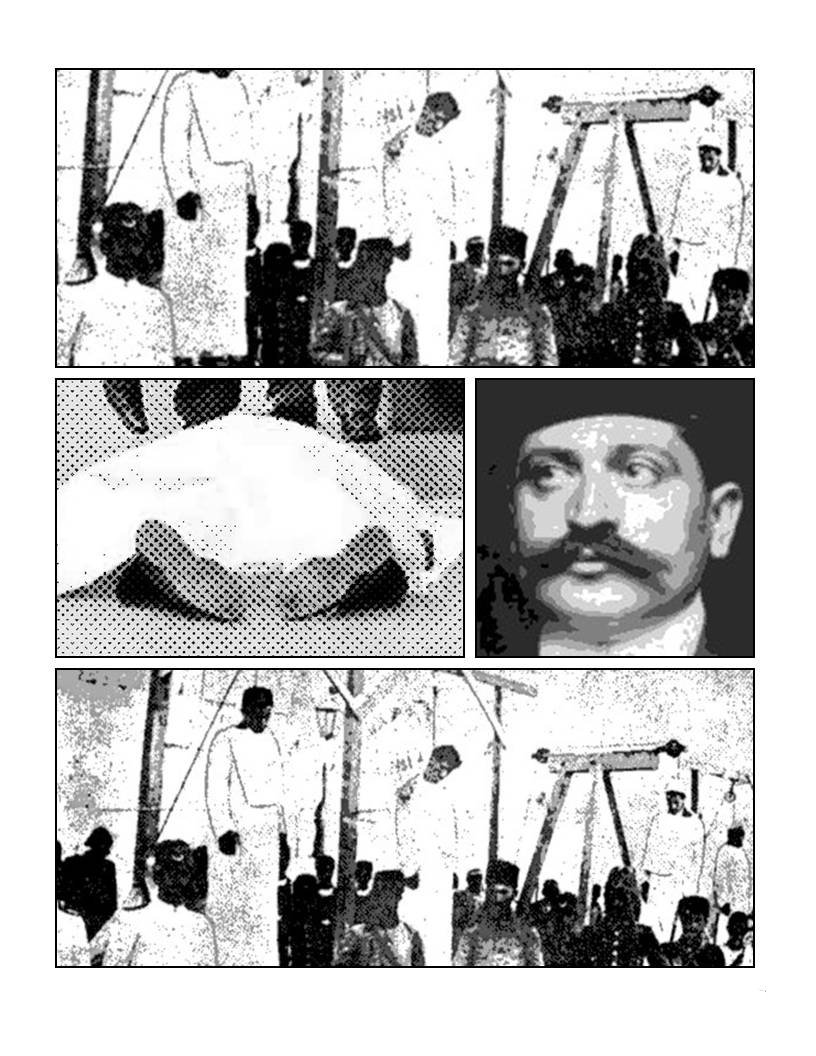
Posted by babylon crashing | Filed under Armenia, story without words
≈ Comments Off on assassination of hrant dink
31 Thursday Jul 2014
Tags
[QRMUHIN/ ՔՐՄՈՒՀԻՆ]
1896
The night was gloomy but the breeze that rustled in the vines of the hanging moss forest was humid and soft. It was not against the wind that the Turkish rider, a girl no more than seventeen, hugged her robes closer about herself, pulled her veil tighter around her face and looked about with dread. She slipped down from her saddle, reluctant and slow, and began to walk toward a ruin building that her people called damned and cursed. Once, before the massacres, it had been a small bungalow, a house of her neighbors; but devastation had let in the harsh winter storms among its pink-grey stones, the heavy summer rains had softened the clay that bound them together, so that now the floor of the building was covered in last year’s autumn leaves and the skulls of double-crossed jackdaws. It was almost, the girl thought, as if Allah himself, in all his wisdom, had blasted the very earth in righteous indignation.
The girl, Hamiyet, stopped, for now there now came from a broken window the flicker of firelight. At the sound of the horse’s shod hooves on the gravel outside a figure came to the door and an elderly woman’s voice called out faintly, “Who’s there?”
Hamiyet called out, nervously in her native Turkish, “I have come for the Qrmuhin.”
“Then return home, girl,” the figure in the doorway replied, “for the Qrmuhin cannot come.”
“Not come …?”
As if by a click of a switch Hamiyet’s fear suddenly turned into impatience. There was sickness in the land, ever since the Sultan’s troops had entered the valley. Now many were dead. The last few surviving Qrmuhini were being kept busy caring for the sins of the righteous dead. Hamiyet drew closer, the horse’s reins looped over her arm.
“The Qrmuhini must come! I’ve been searching for her for three days. I can’t find anyone else. The Qrmuhin from Morratsum is ill, the one at Dzhokhk died yesterday …”
“Died?” the old woman echoed. “I did not know,” and the Turkish girl thought she heard in the Dhimmi’s voice the faint signs of despair.
Hamiyet rolled her eyes. “Of course you don’t know. Anyone living so far away and isolated like this … ”
The old woman interrupted the Turkish girl bitterly. “Of course the Qrmuhini live like lepers! Our daughters take your sins upon their souls and for that you call us Dhimmi and cast us out.”
The girl shrugged. The metaphysics of adults, regardless of their caste, was boring. For her it was simply doing what the Quran instructed: mortals can either accept the teachings of Mohammad or not, it really was that simple. “We will pay you. Plus … there is … food.”
The meal. It was a long-standing joke that for the worse True Believer then the better would be the feast that would be offered to the Dhimmi. No one could remember when this bizarre tradition started, but for years the pious who lived in this small corner of the Ottoman empire spread out food upon their dead’s body so that the starving would gobble down not just the meal but the dead’s sins along with it. The dead, made innocent again, went directly to paradise, Jannah; while the death-priestesses, the Qrmuhini, were feared and exiled from their own village, to live in wretched poverty until the villagers had need of the outcast once more. “Nevertheless,” said the old woman, turning back to the doorway, “my daughter is sick, she can’t come.”
Hamiyet dared not go back without a Qrmuhin. “I can get no one else. The time is passing. My father must be buried tomorrow. My mother is distraught in case he goes to the grave with his sins still upon his chest.” The seventeen year-old insisted: “is your daughter so very sick?”
The ivy, covering the ruined walls, in parts almost tumbled to the ground, seemed to listen. Somewhere off an owl, unnervingly hooting, called out “Hyek! Hyek!” while all about them dried brown leaves rustled and whispered, driven by the warm night wind. The old woman stopped in the doorway. She repeated, “Nobody else?”
“Who else could I get now? They must bury my father by tomorrow.”
The old woman considered a long time. She said at last: “where are you from?”
“I come from Dzhokhk. You know where it is, we’re not too far away.”
“How do you know what’s ‘too far’?” the woman asked. She looked past the girl at the rough little, stout mountain horse. “If … and I only say ‘if’ … if she comes with you then she must ride your horse.”
The teenage girl laughed. “What? … I walk, while a Dhimmi rides my horse?” But then Hamiyet sobered; what if the girl really was too weak to walk?
“Very well,” Hamiyet mumbled, trying to sound generous. “I will let her ride.”
“Both ways,” the old woman demanded. “You will bring her back again?”
“Evet, evet,” the girl said. “We’ll go both ways.”
Once the Armenian had done her work, Hamiyet thought, her kinfolk could decide what to do with her. There was a heap of stones near the door and the Turkish girl went and sat down upon one, cautiously, hugging her robes about her, watching the light glimmering inside the ruins, faint as a pale moonstone.
“Go, büyükanne, and tell your daughter to make haste,” Hamiyet declared regally. “I can’t wait all night.”
“I’ll fetch her,” was the reply, but then the old woman paused: “both ways?”
“Evet! Both ways, both ways,” Hamiyet promised once more, impatiently. She frowned, “what afflicts your daughter?”
“She is hungry,” said the woman simply, disappearing into the bungalow.
Moments later, in the fire’s glow, stood a girl … an ancient girl; from her gaunt, gangling body with her foolish, gentle face, she seemed old beyond years. Even the girl’s hair, a wild ashy thatch that hung almost to her ass, so bleached as to seem to be the white hair of old age, shook this way and that as the Qrmuhin glanced towards the open door, questioning.
Her mother stood silently for a long moment.
The girl finally shrugged hopelessly. She wrapped a thin arm was across her flat belly, her face was streaked with tears. “Mama-jan … it’s terrible to feel this way. My father lies sick in your bed and all I can think of is that I’m hungry.”
“If you do what I tell you,” with a sigh her mother took her daughter’s hand in hers, “we all shall have enough to eat.”
“Eat, Mama-jan?” There had been neither sin nor food in the house for well over a month.
The mother gestured to the distant figure sitting outside on the heap of stones. “This young lady has come for the Qrmuhin.”
“But mother, the Qrmuhin is … ”
The old woman looked into her daughter’s face. She tried to look intent, compassionate, yet fiercely resolute, but only ended up appearing irritated. “Shahani-jan,” she said, “you must go with the young lady.”
“Me?”
The girl was terrified, panic-stricken, freeing herself from her mother’s grasp. She began to beat the air like a child deprived of her toy.
“I couldn’t! I couldn’t! To eat a Turk’s sins …”
Her mother tried to get possession of her daughter’s flailing hands. “Hush now child, hush! Listen! Aren’t you are hungry?”
“But to eat off a dead man’s chest? I know what these people have done, their food will poison me.”
“Shahani-jan, they pay you, they will give you money.”
The girl only struggled and whimpered. “I’d rather starve … I’d rather starve!”
They were all starving. The massacres had left their little community devastated. Her husband had been ill for many weeks; the old woman dared not leave him long enough to try to earn or beg in the villages, the nearest town was eight miles away. Her daughter was too shell-shocked to send on such a task, ever since the Hamidiye had ridden into town; and with her own increasing illness the old woman had lost the will to try.
“If not for yourself, Shahani, for all of us. For your father.”
The poor girl’s vague eyes, unfocused, came at last to rest, looking wretchedly back, into her mother’s. “If he has no food … will he die?”
The old woman turned away her head from her daughter’s gaze. She knew that her husband must die, as all mortal things will eventually. But she simply answered, “yes, daughter, yes.”
“You said … that they will pay me?” The girl pressed her lips together, shivering. “To eat off the chest of a corpse! To take their sins!”
“Shahani-jan … this is what I am trying to say to you.” The old woman caught her daughter’s hands up, urgently whispering. “To get money for your father you must take their sins into your body, you must eat from their body. But listen, listen! You don’t really need to eat the food they present to you, you can bring it away …”
“Bring it away?”
“Eat nothing they give you, Shahani. Not one scrap, not one crumb! Say their queer prayers. Tell the people to let you alone with the body while you eat. But don’t eat anything they lay out for you. Bring all the food back with you.”
“Mother, I don’t understand. You want me to say the prayers but not eat what they give me? I am so hungry and all I’m to do is say prayers?”
“Yes.”
“But … to see a dead body covered in food … and to say the prayers, to wail and scream! Mother! Must I?”
The old woman bent all her strength to uphold her will against her girl’s, “Yes, child. You must go.”
“Bring the food back? Bring it here?” It was dreadful to see the bewildered face lose its purity, the dawn of what her mother was asking of her creeping upon her. “So the food is for father? Isn’t that what you are telling me?”
“The food?” The girl’s thin arms hugged the aching emptiness of her belly.
“The food is not for me,” her mother replied. “I shall not touch one crumb of it, not one crumb.”
That was, of course, the truth of the matter.
][][
Shahani went with the Turkish girl, trembling. Her mother had thrown a rough shawl about her head and shoulders so Hamiyet only saw the old-young face, hooded with wild white hair. The Widow, though, meeting them at the farmhouse door, held her lantern aloft and cried out, “What is this wretch that you’ve brought me? This is no Qrmuhin, fool, this is a Dhimmi girl!”
“She can eat as well as another, mother,” said the girl. But Hamiyet was mortified at having been deceived by an elderly Armenian woman, so she sought to recover herself. “She is better, perhaps. You know that girls are strong and born to bear the burden of their parents’ sins.”
“Do you call this strong?” The older woman said, pushing the Armenian girl before her into the lighted kitchen, turning the thin, dazed face to hers. You could see her heart sink within her. “As for young … is this wretched child to take on the evil of a grown man, a True Believer, in a whole day?”
“She is a Qrmuhin,” said the girl, shrugging. “Let her eat what she can.” Hamiyet threw herself down on the high-backed oak settle at the open hearth where, despite the oppressive heat of the night, a fire sputtered and sparked. “At any rate, there’s no other. I have searched three days; and, as it is, I had to walk all this way while your Qrmuhin rode upon my horse. I spent most of the time holding her to keep her from tumbling off the saddle.”
“She is weak,” said the older woman, looking at the girl with a mix of irritation and pity.
“I am hungry,” Shahani, her face slack with pan, finally announced.
][][
The corpse was laid out in the little parlor where candlelight glowed from the tall dresser reflected in a dozen mirrors. A white sheet was pulled up to the bearded chin, a Greek dish balanced upon the dead chest, heaped with food — thick slices of ham, blue and glistening cheese, aromatic with herbs, eggs boiled and shelled, raw garlic sliced across, fresh-baked lavish, spread thinly with the butter, great wedges of iced cake, sticky slabs of Australian vegemite … Shahani stood looking amazed at it all.
The family, hastily summoned, crowded in after the girl and stood with heads bent around the table; the naked flesh of the patriarch, now rotting, now useless in his pride … the young children of the family shying away like frightened foals in the firelight that flickered into the hideous shadows so that, beneath the dead man’s shroud, the corpse seemed to move. The Turks waited for the Armenian girl to speak and cast their sins away.
Shahani could not speak. Her heart was like shush-winter water flowing deep within her breasts at the sight of the food. An old grandmother said at last, “Shall we begin?”
The Widow had protected the girl from her hurry-scurry ancestor’s scrutiny, keeping the unbeliever in the shadows, muffling her old-young face into her Kurdish shawl the way one does with a horse to blind it from what it is about to charge into. Too late now to find another priestess willing to play along with this game; Hamiyet’s mother had done her best … she wanted no argument from her kinfolk. She prompted the Armenian girl, mouthing, fearful, the opening words of what she knew was the Qrmuhin’s terrible prayer for their sinful dead.
Shahani had heard her father rehearsing what she had to say often enough … the burbling nonsense in Turkish, the pauses while the food was gobbled down, bit by ceremonious bit, the climax of prayer, the storming of Allah’s paradise, the shriek of horror as the prayer at last was answered, the sins transmitted into worthless flesh, the hasty flight of the Dhimmi, eerily sobbing like the Wailing Wall, staying only to pick up the money, by custom flung after the pariah cast out of the True Believer’s household. But the words … the howl of the Ottoman beast all girls had heard but could not imitate … so she made the cry of the She-Wolf that she knew would cry back to her, made the hoot of the Sevan Owl, the scream of the Cinereous Vulture, but these sounds had no words; she knew no words … Shahani began to mumble desperately … imitating a meaningless babel of Turkish words, like the tower collapsing upon itself. The family of the dead man shifted uneasily their thick feet … only half listening, only half watching the damned girl, afraid of the moment that had to come, giving the heathen girl, deliberately, only a divided part of their attention; yet conscious, with a growing consciousness, that all was not as it should be. The Widow made small, urgent, hidden gesture towards the body of her husband.
Shahani blanched. The time had come to eat.
The butter was foul in the candlelight, gleaming yellow-white among the moldy batch four-day old loaves; inside the girl’s mouth her cheeks seemed to sweat saliva. She stretched out a shaking hand towards the food. But her mother’s voice hissed in her ear: “Not one scrap, not one crumb!”
Shahani’s hand dropped back, her bony fists crumpling the sides of her dress.
The old woman had counselled her daughter, feverishly coaching her in the part that she must play, knowing Shahani was not capable of ad-libbing. Now, obedient by a distant summons, Shahani stumbled through the simple sentences. “You must all go. I am the Qrmuhin who must eat alone.”
The family was astonished, protesting. “Yok! The Qrmuhin must eat before the True Believers! That is the whole point!”
The girl repeated, “I am one that must eat alone.”
“Witnesses must be present to see that the sin leaving the body and enters a Dhimmi!”
“You shall hear it when it happens,” the girl replied.
That was the whole point of the ceremony, wasn’t it? The shriek of mortal terror, the terrible wailing …
“If we stand in the next room,” urged the Widow, aiding to the girl’ request, “then we shall hear when the sin passes.”
This Qrmuhin was not like any other Dhimmi sin-eater they had ever seen; in her heart the Widow doubted the girl’s worth but the damned creature was the best that they could do; her husband must be buried the next day. The Widow prayed again for no argument from amongst her ill-tempered kinfolk, True Believers were such a pain in the ass. So, uneasy but resolute, she drove them all into the kitchen next door.
With ears pressed against the balsa, the toothless hoard listened with bated breath to the wild babel that they assumed must be Armenian. Shahani, obedient, stuffed her threadbare pockets with all the food; menemen and börek disappeared into the lining of her torn skirt; simit and kaymak hidden against her naked thighs all the goat fat fit to burst found a home against the green-white hue of her flesh; the glossy fat of calf meat mushed against her hard rib-cage. All the while Shahani set up a shrill chant, incoherently the way men wild with drink do; perhaps it was Dog-Greek and Pig-Latin; the sort of mumbo-jumbo that only amazes those who haven’t gotten beyond 3rd grade.
“When we hear the Dhimmi scream,” one Turkish grandmother said, passionately, “it will be when the sin passes.”
The chanting suddenly ceased. Within the little room Shahani attempted to nerve herself for the screaming bit; yet there is nothing for her to scream about. May Tsovinar bless us all. What divine goddess would ever want one of these daughters scream to? In a corner a German grandfather clock, looking like a great, long, red-legged scissorman, ticked away the minutes. Silently, beneath the shroud, pale against the gloom of old Mormon silver, the Turkish corpse seemed to shift slightly, as if coming awake.
Shahani’s mouth opened, dragging up from her laboring lungs a deep gasp. The girl lurched forward like Frankenstein’s Monster, sick and trembling with this one chance to keep her father alive, this one chance that will, of course, fail, since the villagers know that the Monster and the Monster’s Creator must both die if the unbeliever, the Dhimmi, could not for them what they believed must happen.
Then an odd thing happened.
The metal dish, once heavy with food, resting on the corpse’s chest, began to move. Now emptied of food Shahani saw the beginning of the slow slide. She flung out a hand to stop it and one finger brushed the rim as she leaned over the corpse, crushing the food even more so; but, slick and greasy with bacon fat, the dish continued and a moment later crashed with a metallic bang onto the scrubbed stones of the floor.
Shahani let out one startled shriek as the door burst open. The family stood gaping as the screaming Qrmuhin pushed her way through and dashed outside. Out into the night air, under the stars, fleeing down the mountain-side to the place she called her home. If the Widow flung gold after her, if Hamiyet recollected her promise to bring the girl back home, Shahani waited for neither. After the long panic of the night, terror held her fast. Faint with starvation the girl rushed blindly on and on, stumbling through the hanging, moss-covered forest pungent with tarmac, across the squelchy marshland with its hideous cadaver-hunting night-birds, plunging through the river Pekolot, through scrub and thorn again and so at last, collapsing, bawling, Shahani found herself outside her ruined house, clutching blindly at her mother’s feet.
The old woman could not wait even to comfort or assist her daughter. Instead she burst out, “have you brought the food?”
Shahani dragged herself painfully to her feet. Her old-young face was raw and there was blood around her nostrils. Her long white hair was tangled and dirty. As if in a dream she began to take off items of her clothing, to extract from the hiding places on her body all the poor, battered remnants of a dead man’s feast … the crushed hard-boiled eggs, the börek gone limp and greasy now from long contact with the sweating body, the kaymak and the menemen. Her mother took it all from her, silently, piece by piece, scraped with a cupped palm the melting butter from between the hollow of her daughter’s breasts, gathered it all onto a crust of flat bread, lavash. It was only when her daughter stood before her naked that the old woman at last asked, “are you sure this is all of it?”
It was everything. Shahani had eaten nothing, had carried everything back home. As her mother stood the girl’s heart rose with her … she had saved her father, temptation had been resisted. But even at this realization Shahani could tell something wrong was happening.
“Where are you taking it? It’s for father, you promised!” Ravenous, shattered, Shahani began to drag herself after her mother, crying, “You’re not going to eat it yourself? Why aren’t you giving it to father …?”
The sins of a Turk, what were they? The massacre had swept through the land and he had done nothing to stop it. The Sultan, the “Sick Man of Europe,” had issued orders and he had excitedly carried them out. He had coveted and then watched his neighbor’s house burn and lifted not a single finger to help. They were bad … but the sins of the Qrmuhin were far worse; the long accumulation of sin upon sin, all unshriven and unforgiven, the sins of a True Believer who could only enter paradise if a monster ate them. There was no one who would take on the sins of a Qrmuhin.
The old woman had known, all along, that her husband, Shahani’s father, was in the gray-lands of death; there was nothing that could be done about that, priestess or no priestess. Now Shahani’s mother took her naked daughter by the hand and led her into the ruined house where her husband lay and spread out all the food upon his naked chest.
26 Saturday Jul 2014
Posted in Armenia, Disaster –- Pain –- Sorrow, drama
≈ Comments Off on ash and bone [1]
memory is nothing but ash and bone
hishoghut’yan mokhir yev voskrayin
հիշողության մոխիր եւ ոսկրային
— Armenian proverb
ACT I:
FADE IN:
EXT. YENI BIR KADIN.1 FINISHING SCHOOL FOR YOUNG LADIES — DAY
[It is the age of the NEW WOMAN,2 July, 1914. YENI BIR KADIN SCHOOL is an experiment in Constantinople, the first of its kind, a brief, liberal attempt to dismantle the DHIMMI,3-caste system. The students are mainly from middle-class Turkish, Armenian and Greek families, a combination of Islamic and Christian faiths. Riot of girls cheering loudly, something that has never been seen before; wild-looking girls running at break-neck speed. The athletes wear a curious combination of head scarves, pantaloons and silky knickerbockers. Their classmates, in their official YOUNG TURKS’4 -sponsored school uniforms, cheer enthusiastically as the athletes race around on the immaculately-kept grounds. It is amazing enough to make even SUFFRAGETTE SALLY5 stand up and take note.]
[NARINE DILSIZIAN (27), an Armenian gardener, works on the school’s garden. A few feet away, her daughter, HASMIK (15), leans against a broken and bullet-pocked wall, watching the race.]
[ZELDA KIRKE, a 40-year old American English teacher, wife to a junior member of the American embassy, is enthusiastically cheering on her daughter, MATILDA (15), who, dressed in the same silly Edwardian-era fashion, leads neck-and-neck with another girl in the last lap of the race. The excitement increases as they approach the finish line. ZELDA is beside herself, encouraging her daughter with shouting and jumping up and down. A young Turkish teacher (though not a YOUNG TURK), ASIYE, stands next to ZELDA, shouting, “Bravo, Matilda!” over and over while clapping her hands.]
[MATILDA breasts the tape just ahead of the other girl; her head scarf unraveling, letting her long brown hair shine in the sun. The grounds are invaded by girls running to congratulate MATILDA and her rival. ZELDA hurries towards her happy but exhausted daughter, pushing her way through the mass of school girls.]
ZELDA:
This was your best race!
MATILDA [perspiring]:
I — I beat her, Mama.
ZELDA [proudly]:
You did daughter! [Laughing.] Come to the baths, we will get you cleaned up again.
[Mother and daughter walk happily towards the school buildings; MATILDA getting many kisses from her friends as they pass by. ZELDA stops to talk to NARINE, who jumps to her feet and looks nervous.]
ZELDA:
Narine, my dear, I hope you can make it. There isn’t much to do, you know, only caring for the tulips.
NARINE:
We’ll be there, Madam Zelda, bayan,.6 Hasmik-jan.7 will come to help me.
[ZELDA, who hadn’t realized HASMIK was there, turns to her.]
ZELDA:
How’s the calculus? Still confusing?
HASMIK [with respect]:
A little, Madam Zelda, bayan.
MATILDA [with a very fond look in her eye as she steps forward]:
Me too.
NARINE [straightening herself]:
My daughter works hard, Madam Zelda, bayan. Your money will not be wasted. Varton and I will always thank you.
ZELDA [gaily as she leaves]:
I hope to see you both later, darlings.
[NARINE returns to her work. A group of students, TURKISH GIRLS, laughing and pushing each other boisterously, amble by. As they near HASMIK, two girls nudge each other and giggle. Suddenly one of them trips HASMIK as she passes. The Armenian girl falls to the ground and jumps up aggressively, about to attack the Turkish girl. NARINE shouts “Hasmik-jan!”]
[The headmaster, OSMANOGLU BEY (65), despite his so-called liberal views, observes the incident but simply looks the other way.]
[HASMIK stands, suddenly blind with rage. With a snort she strides away towards the main school’s gate.]
NARINE [shouting angrily in Turkish]:
Nereye gidiyorsun?
(Where are you going?)
HASMIK turns to look at her mother then continues to storm off.
footnotes:
1. Turkish, literally, New Woman.↩
2. The New Woman was a Feminist ideal that emerged in the late 19th century and had a profound influence on Feminism well into the 20th. The term was popularized by writer Henry James, to describe the growth in the number of Feminist, educated, independent career women in Europe and the United States. According to historian Ruth Bordin, the term was, “intended by James to characterize American expatriates living in Europe: women of affluence and sensitivity, who despite or perhaps because of their wealth exhibited an independent spirit and were accustomed to acting on their own.”↩
3. Dhimmi and Dhimmitude are historical terms referring to non-Muslim citizens living in an Islamic state. Depending on the people and time period this “separate but equal” status has led to persecution, purges and, in extreme cases, genocide.↩
4. Officially known as the Committee of Union and Progress, the Young Turks were a Pan-Turkish nationalist reform party in the early 20th century, aligning themselves with Germany during WW1 and seeking to purge non-Turkish Muslims from the country. Originally favoring reformation of the absolute monarchy of the Ottoman Empire, their leadership, what historians have referred to as a “dictatorial triumvirate,” seized power in a coup d’état in 1913. Led by “The Three Pashas” (Enver, Djemal and Talaat), their dogma and policies led directly to humiliating defeat after defeat against Tsarist Russia and the ethnic cleansing of 1.5 million of their own people, the Ottoman-Armenians.↩
5. The title character in a novel by English author Gertrude Colmore (1911), written to help further the cause of the Women’s Movement.↩
6. Bayan is the Turkish word for lady.↩
7. -jan is a suffix in the Armenian language denoting affection.↩
22 Tuesday Jul 2014
Posted in Armenia, Disaster –- Pain –- Sorrow, Illustration and art, Prose
≈ Comments Off on making the bread that the dead call lavash
Tags
Armenian fairy tale, Armenian Genocide, art, Der Zor, Medz Yeghern, prose, the dead are always talking

The dead are always talking; it is the living, in every age of gizmos and thingamabobs, who have forgotten how to listen.
“I died like this …”
Contrary to what you might believe these stories are told to anyone who can hear, regardless of kinship curse, haunting or vague homicidal family blood ties. Why is it that those who worship ancestors the most turn a deaf ear to their own tribe, let alone the tribe of their neighbors? That is a darkening of the soul. That is something the dead will not abide.
“… far out in a desert, a wasteland of salt, in the heat and stink of what the Turks call Der ez Zor …”
If you can hear stars sing you can listen to the dead. It is simple, for the dead are always talking with red adder’s tongue and the blessed silver owl light. A kiss in your mouth that leaves sparks. Sparks. If you can rub amber’s essence between your fingers you can listen to anything.
…“I was a girl, fey-wristed with curly black hair. I will tell you. I will tell you everything …”
You know some things, but never all. Der ez Zor was a place of suffering during the starving times. During the long walks. During the annihilation. The dead can tell you this because they remember the names. Names for everything. Names that you have been taught to ignore, that you’ve forgotten.
“… we called it Medz Yeghern, the Great Calamity. Remember what I tell you. Remember when the first signs of destruction were blown to us in the wind …”
I tell you about the fourteenth year in the new century. I tell you what I’ve heard because I am nothing and nobody. I can’t speak their language or read from their books. But the dead don’t care about grammar or poor translation or how verbs are conjugated. All they need is a willing audience.
“… when the wild horsemen came and burned down our crops, killing our fathers and husbands and son, telling us that we must go south, to the camps, to follow the relocation orders …”
These are not my kith and kin. These are not my blood soaked lands. Still — Medz Yeghern, the Great Calamity — fills my dreams and will not let me rest. Ever since I returned home from Peace Corps. Ever since I first tasted that strange flat bread that the dead call lavash.
16 Wednesday Jul 2014
Tags
Petals of lust. Stamens of dreams. Nightmare
upon horseback. My heart was ripped open;
moonlight in the dust, trampled without prayer,
without mercy. Mustachioed horseman,
blood-red fez, ghost. You planted the horror,
roots like ass’ legs; you have death-head lilies
in place of eyes. The was once a flower
that I loved, for there is no smut or sleaze
when it comes to Nature. No shame. No sin.
That’s Man’s domain. I don’t want a trampled
flower or a dream that promises lust
but can never deliver. Horror-man,
you rise, with your broken tusk you impaled
my curse, you’ll spawn only decay and rust.
16 Wednesday Jul 2014

Posted by babylon crashing | Filed under Armenia, Feminism, Illustration and art
≈ Comments Off on mariam abandian [age 12]
 memories of my ghost sista