• hopilavayi: an erotic dictionary

memories of my ghost sista

~ the dead are never satisfied

memories of my ghost sista

Tag Archives: essay

ch’iu chin: i die unfulfilled

11 Wednesday Oct 2017

Posted by babylon crashing in Chinese, Feminism, Historic Research, Poetry, Translation

≈ Comments Off on ch’iu chin: i die unfulfilled

Tags

ch'iu chin, Chinese translation, 秋风秋雨愁煞人, essay, i die unfulfilled, Poetry, Qiu Jin, translation

autumn rain/ autumn wind/ i die unfulfilled

Poetry translation is never an exact science. Taking a concept, rich with metaphors, from one language and somehow then discovering a similar meaning in another has challenges. How does one find that original essence – the core of what the poet was trying to say – in an alien tongue? I have always found translation to be a synthesis of everything that has been done before my attempt and then a smoothing out of all the rough bits into something that sings to me. If there was a philosophy to this it’d go: be illiterate in all languages, just resonate with the soul of what is being said. I suppose that is the difference between professionals and amateurs. I will always be an amateur. To misquote the Japanese haiku poet Issa: “there will always be farmers/ laboring in the fields/ I don’t feel guilty.”

Today I turn my attention to the Chinese radical feminist, revolutionary and martyr, Ch’iu Chin (better known through modern translation as Qiu Jin). If you’ve never heard her name before just know this: she was a lesbian poet who tried to overthrow the Qing dynasty in 1907 and then was executed, beheaded. One day someone will translate all her poetry, essays and speeches into English and that will be a blessing. Just now I am only looking at her last words, her death poem. They’re simple, they look like this:

秋风秋雨愁煞人

Technology fails us. According to Google Translate we get, “Autumn autumn rain sad people.” which are at least English words strung together in some sort of order. And yet they fail to capture any meaning of these words. First let me reprint the best translation that I’ve found:

Autumn rain, autumn wind/ I die of sorrow.
[from the documentary, Autumn Gem]

Now let me tell you why this is so good. Ch’iu Chin’s name literally translates into, “Autumn Gem,” and the ‘autumn’ is the metaphor that works in this poem. By the time of her capture she was burned out, depressed and had realized that her revolutionary goals would never happen. She let herself be captured and executed so that she could become one of the Chinese heroines of myth who rose up to fight for women during times of oppression.

As one says, there are no bad translations, just different interpretations. I point out these simply because they were faithful to the words on the page but the translators did not seem to know why the words were written:

O Autumn Winds chilly, O Autumn Rains chilly, (Why you are spilling)
Frank C Yue

Autumn wind autumn rain makes one gloomy
Lu Yin, from Imagining Sisterhood in Modern Chinese Texts, 1890–1937

For whom does the autumn rain and wind lament?
Sjcma

All of which, out of context, still works. Getting executed would make one gloomy. Then there is the fact that Ch’iu Chin became a symbol for the 1911 Revolution and her words were used to express the woes of other people, and thus we get the royal ‘we’

Autumn wind and rain have brought overwhelming grief to many
Albert Chan

The sorrow of autumn wind and autumn rain kills
China Heritage Quarterly

Again, this is all just a matter of interpretation of what comes before. Like I said, I can’t read Chinese, I can just guesstimate from the works of others. If I’m wrong … then I’m wrong and this was just a curious post won’t mean anything. Still, I love the poetry of Qiu Jin and if I can be part of helping her find an English audience then my day is good. Two translations that I think are kind of marvelous:

Autumn wind and autumn rain often bring forth unbearable sorrow
Alan Cykok

The autumn wind and autumn rain agonize me so much.
Badass Women of Asia

Quote

Speaking Between the Lines: Line-lengths and What They Can Do For You

17 Friday Apr 2015

Posted by babylon crashing in quote unquote

≈ Comments Off on Speaking Between the Lines: Line-lengths and What They Can Do For You

Tags

essay, reblog, the craft, things I find interesting, twritersdirectory

twritersdirectory:

LIn
this series we will look at the fundamental elements of poetry, from individual
units of sound to grand uses of metaphor and imagery. By examining the
different ways skilled writers implement these elements we can gain a greater
understanding of the ways poetry works and improve both our practice of writing
poetry and our appreciation of reading it.

In the first article of this series we began at the
end, by examining line-breaks and how the different choices made when ending a
line can influence the readers’ perception of a poem. By examining a poetic
element that we almost take for granted when reading, I hoped to show that
every tool in the poet’s arsenal can be used to great effect.

But today we are going to take a step back and
examine the line as a whole, to explore this most fundamental element of
poetry. The ‘line’ is the most basic way a poem can be organised. It forces us
to be aware of sections of speech we run through quickly in prose, and/or
internalise the speech patterns of the poem’s speaker.

Different movements—and writers—in poetry have
various emphasised these two functions of poetry. For some people a line should
mirror the lengths of breaths in speech; for others it should contain and focus
on singular images or thoughts.

By the end of this article I hope to have discussed
both philosophies. I also hope to show that far from an unconscious, arbitrary choice,
line-lengths in free verse poetry are full of meaning and importance which
skilled writers can use to fully embellish their writing.

Read More

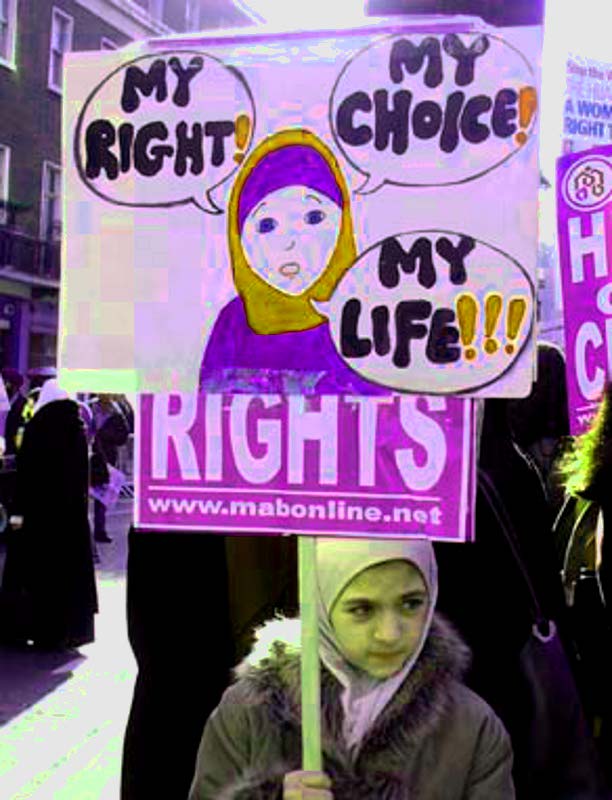
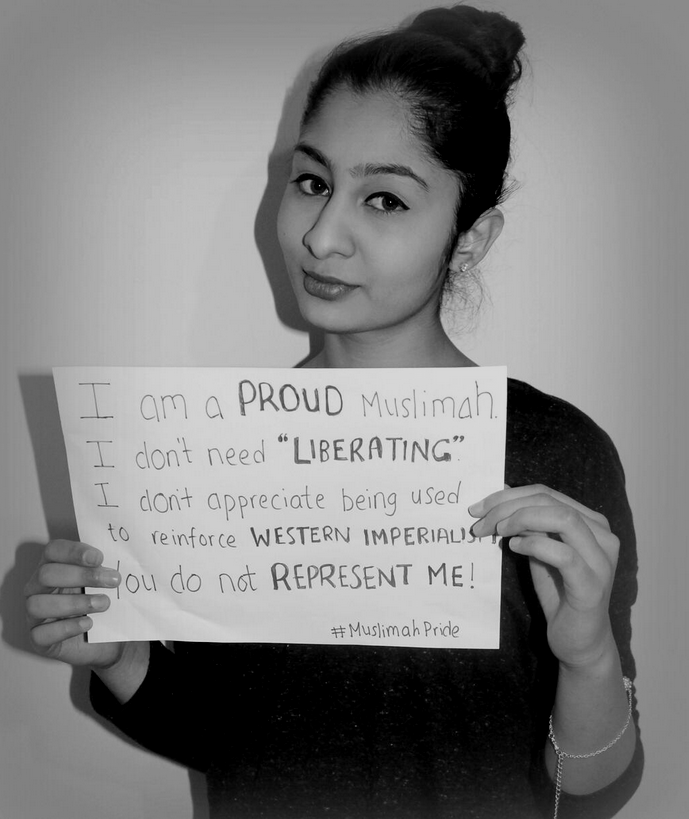
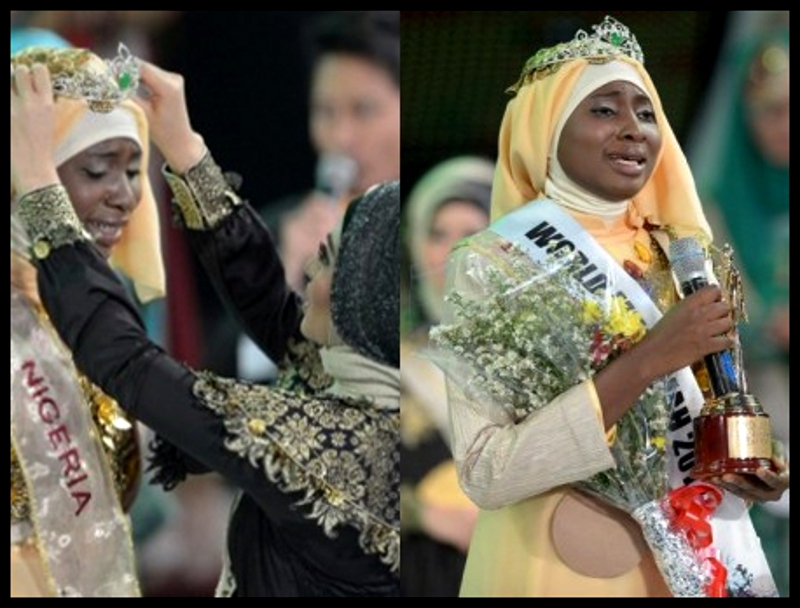
what a muslim feminist looks like

12 Saturday Oct 2013

Posted by babylon crashing in Feminism, Illustration and art, Uncategorized

≈ Comments Off on what a muslim feminist looks like

Tags

2013 World Muslimah, bell hooks, Colonialism, essay, freedom of choice, hijab, Imperialism, Islamophobia, Lifestyle Feminism, Lori Ginzberg, Muslim Feminism, Muslimah, Noor Al-Sibai, Obabiyi Aishah Ajibol, Patriarchy, Pro-Choice, racism, White Privilege, xenophobia

muslim feminist 1

muslim feminist 2

muslim feminist 3

muslim feminist 4

muslim feminist 5

muslim feminist 6

muslim feminist 7

][][

[the biography] Elizabeth Cady Stanton: An American Life, states that although Stanton is well-known for her involvement in the women’s rights movement, she descended to some rather ugly racist rhetoric along the lines of, ‘Only we educated, virtuous white women are more worthy of the vote’ … That is where my disagreement with Stanton is strongest: Whose rights are you going to put down in the process of demanding your own?”
—-Lori Ginzberg

There has always been racism within the various mainstream Feminist movements. From Suffragettes like Elizabeth Cady Stanton, who spent a lifetime advocating that black women should never have the same Constitutional rights as white women, all the way up to our modern age with Sarkozy’s France and FEMEN claiming that Muslim women should not have the right to choose how to dress themselves as they see fit.

I focus here on the debate over the hijab, the Islamic head-cloth that many Muslim women choose to wear, because for me it has direct parallels to the same logic and reasoning found in many Pro-Choice and Sexual Rights movements operating today; that is, that every woman should have the freedom to choose what they want to do with their bodies. Control over her body and the freedom to decide the course of her own life is critical not just to woman’s civil rights but all human rights as well. The fact that the people—-who seem blind to their own racial privileges and use xenophobia and Islamophobia to support their cause—-just happen to be women does not strengthen their arguments, it simply shows that we still live in a time and place where the dominate culture feels that it has the right to declare who gets to be called a Feminist and what a Feminist should look like.

Writing in her essay, Does Your Lifestyle Make You Unworthy of Feminism? Noor Al-Sibai says:

The term “Lifestyle Feminism” became a buzzword in the second wave of Feminism during the 1960’s and 70’s (in the Western-centric view of “Waves” of Feminism). The term, as defined by influential writer Bell Hooks in Feminism is For Everybody, is “the notion that there could be as many versions of Feminism as there were women”. It is the recognition—-or rather, the lack thereof—-of the fact that there is as much plurality within Feminism as there are Feminists that’s been troubling me recently. Many Feminists of all flavors (queer, fat, etc.) seem to be engaged in policing who can and can’t identify as a Feminist based purely on their own preferences and lifestyle choices. While this sort of internal division and conflict is nothing new (like when Black Feminism and Womanism split from mainstream Feminism, or the Feminist Sex/Porn wars of the 80’s and 90’s), it has reached a peculiar pinnacle when it comes to specific lifestyle choices such as the decision to engage in sex work (defined broadly as anything from webcam porn to stripping to escorting), or the decision to be a Muslim and wear a hijab …

I find the disassociation between fighting for the right of women to have freedom of choice over their own bodies when it comes to sexual reproduction but not when it comes to faith, fashion or lifestyle utterly bizarre. The fact that in 2013 there are still Feminists who are not only attacked and silenced by the larger “White Imperial Patriarchal culture,” as Bell Hooks points out, but also by members within their own struggle disastrous on all levels. I am not Muslim but as long as there are women in this world who choose to wear a hijab then I will help fight for their right to do so. That is, after all, what freedom of choice is all about.

][][

The photos I use here were taken from various Muslim Feminist websites I read as I was writing this essay. The last, of the woman wearing the tiara, is Obabiyi Aishah Ajibola, from Nigeria, who was crowned 2013 World Muslimah in Jakarta.

age difference anal sex Armenia Armenian Genocide Armenian translation ars poetica art artist unknown blow job Chinese translation conversations with imaginary sisters cum cunnilingus drama erotic erotica erotic poem erotic poetry Federico Garcia Lorca fellatio finger fucking free verse ghost ghost girl ghost lover gif Gyumri haiku homoerotic homoerotica Humor i'm spilling more thank ink y'all incest Lilith Love shall make us a threesome masturbation more than just spilled ink more than spilled ink mythology ocean mythology Onna bugeisha orgasm Peace Corps photo poem Poetry Portuguese Portuguese translation prose quote unquote reblog retelling Rumi Sappho sea folklore Shakespeare sheismadeinpoland sonnet sorrow Spanish Spanish translation spilled ink story Taoist Pirate rituals Tarot Tarot of Syssk thank you threesome Titus Andronicus translation video Walt Whitman war woman warrior xenomorph

electric mayhem [links]

  • armenian erotica and news
  • cyndi lauper
  • sandra bernhard
  • Poetic K [myspace]
  • discos bizarros argentinos
  • aimee mann
  • poesia erótica (português)

Meta

  • Create account
  • Log in
  • Entries feed
  • Comments feed
  • WordPress.com

Blog Stats

  • 388,044 hits

Categories

ars poetica: the blogs a-b

  • afterglow
  • all things said and done
  • black satin
  • aliki barnstone
  • stacy blint
  • american witch
  • emma bolden
  • tiel aisha ansari
  • mary biddinger
  • wendy babiak
  • afghan women's writing project
  • cecilia ann
  • sandra beasley
  • kristy bowen
  • alzheimer's poetry project
  • armenian poetry project
  • lynn behrendt
  • Alcoholic Poet
  • margaret bashaar
  • clair becker
  • sommer browning
  • the art blog
  • megan burns
  • brilliant books

Enter your email address to follow this blog and receive notifications of new posts by email.

Join 44 other subscribers

Archives

ars poetica: the blogs c-d

  • juliet cook
  • roberto cavallera
  • natalia cecire
  • lyle daggett
  • jennifer k. dick
  • linda lee crosfield
  • cheryl clark
  • lorna dee cervantes
  • cleveland poetics
  • michelle detorie
  • julie carter
  • abigail child
  • CRB
  • flint area writers
  • maria damon
  • jackie clark

ars poetica: the blogs e-h

  • carol guess
  • maggie may ethridge
  • Gabriela M.
  • joy harjo
  • ghosts of zimbabwe
  • jessica goodfellow
  • julie r. enszer
  • pamela hart
  • Free Minds Book Club
  • amanda hocking
  • maureen hurley
  • joy garnett
  • elizabeth glixman
  • hayaxk (ՀԱՅԱՑՔ)
  • herstoria
  • elisa gabbert
  • liz henry
  • bernardine evaristo
  • sarah wetzel fishman
  • jeannine hall gailey
  • jane holland
  • carrie etter
  • human writes

ars poetica: the blogs i-l

  • lesbian poetry archieves
  • sandy longhorn
  • gene justice
  • language hat
  • kennifer kilgore-caradec
  • IEPI
  • dick jones
  • meg johnson
  • las vegas poets organization
  • charmi keranen
  • renee liang
  • sheryl luna
  • irene latham
  • Kim Whysall-Hammond
  • maggie jochild
  • donna khun
  • Jaya Avendel
  • diane lockward
  • miriam levine
  • emily lloyd
  • joy leftow
  • laila lalami
  • lesley jenike
  • amy king
  • a big jewish blog
  • megan kaminski

ars poetica: the blogs m-o

  • the malaysian poetic chronicles
  • nzepc
  • mlive: michigan poetry news
  • marion mc cready
  • adrienne j. odasso
  • majena mafe
  • heather o'neill
  • Nanny Charlotte
  • new issues poetry & prose
  • My Poetic Side
  • sophie mayer
  • ottawa poetry newsletter
  • michigan writers resources
  • michigan writers network
  • maud newton
  • motown writers
  • sharanya manivannan
  • january o'neil
  • iamnasra oman
  • wanda o'connor
  • caryn mirriam-goldberg
  • michelle mc grane

ars poetica: the blogs p-r

  • ariana reines
  • Queen Majeeda
  • rachel phillips
  • maria padhila
  • kristin prevallet
  • sophie robinson
  • susan rich
  • split this rock
  • helen rickerby
  • joanna preston
  • nikki reimer
  • nicole peyrafitte

ars poetica: the blogs s-z

  • switchback books
  • ron silliman
  • vassilis zambaras
  • southern michigan poetry
  • Stray Lower
  • Trista's Poetry
  • womens quarterly conversation
  • tim yu
  • sexy poets society
  • shin yu pai
  • tuesday poems
  • scottish poetry library

  • Subscribe Subscribed
    • memories of my ghost sista
    • Join 44 other subscribers
    • Already have a WordPress.com account? Log in now.
    • memories of my ghost sista
    • Subscribe Subscribed
    • Sign up
    • Log in
    • Report this content
    • View site in Reader
    • Manage subscriptions
    • Collapse this bar
 

Loading Comments...