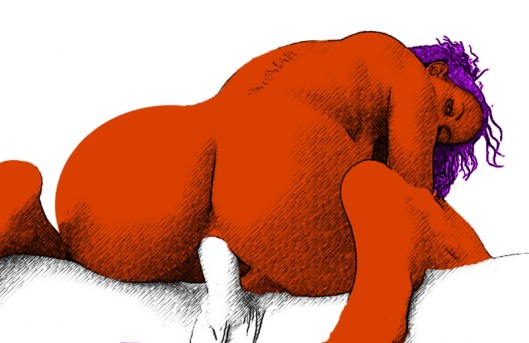
mecos como el polen

Tags

, , , , ,

“La abeja, que salen de profunda

dentro de la peonía, sale a regañadientes.”

— Matsuo Basho.


Perdido en el inconsciente.

Las abejas toman néctar a sus colmenas.

Tu flor se abre. Mi lengua.

Una abeja grasa. Lamer

a tu memoria.

Mecos como el polen.

La miel de amor.

¿Te acuerdas?


(“The bee emerging from deep within the peony leaves reluctantly.” Matsuo Basho. Lost in the unconscious. Bees take nectar to their hives. Your flower opens. My tongue. A fat bee. Licking your memory. Cum as pollen. Love honey. Do you remember?)

azucar en crudo

Tags

, ,

Puro o pervertida.

Una transformación.

Nuestra tristeza.

Nuestra pasión.

Esta cosa buena.

Hundimiento

dentro de usted.

Pulgada por pulgada.

Gloriosa.

En nuestra sangre.

Si soy malsano

para usted,

soy azúcar en crudo.

Algo dulce.

Una felicidad.

Hundimiento

profundamente

dentro de usted.


(Pure or perverted. A transformation. Our sadness. Our passion. This good thing. Sinking into you. Inch by inch. Glorious. In our blood. If I am unhealthy for you, I’m raw sugar. Something sweet. A happiness. Sinking deep within you)

el poeta en el trabajo

Tags

, , , , ,

Hoy. Usted escribe.

Mis dedos recorren

en todo tu cuerpo.

Tu coño empapado,

en mis manos,

un rebosante copa.

Se abre una hendidura

mojada. Mi lengua

es difícil,

penetrante,

convocando

esta loco

cosecha.

El vino

de placer

en tu cuerpo

causando

espasmos

y gemidos.

Hoy.

el poeta en el trabajo

(Today. You write. My fingers roam throughout your body. Your pussy drenched in my hands, a brimming cup. A wet slit opens. My tongue is hard, penetrating, summoning this crazy harvest. The wine of pleasure in your body causing spasms and moans. Today.)

the story of ferdinand

Tags

, ,

The Story of Ferdinand

The Story of Ferdinand

Not everything in this world is erotic, nor does it need to be. There is time enough for all sorts of tenderness. This story is for all of us dreamers who were the type of children who would rather just “smell the flowers,” as the story goes. I was read this when I was a child. ¡Viva Ferdinand!

THE STORY OF FERDINAND

by Munro Leaf

Once upon a time in Spain there was a little bull and his name was Ferdinand. All the other little bulls he lived with would run and jump and butt their heads together, but not Ferdinand. He liked to sit just quietly and smell the flowers. He had a favorite spot out in the pasture under a cork tree. It was his favorite tree and he would sit in its shade all day and smell the flowers.

Sometimes his mother, who was a cow, would worry about him. She was afraid he would be lonesome all by himself. “Why don’t you run and play with the other little bulls and skip and butt your head?” she would say. But Ferdinand would shake his head. “I like it better here where I can sit just quietly and smell the flowers.” His mother saw that he was not lonesome, and because she was an understanding mother, even though she was a cow, she let him just sit there and be happy.

As the years went by Ferdinand grew and grew until he was very big and strong. All the other bulls who had grown up with him in the same pasture would fight each other all day. They would butt each other and stick each other with their horns. What they wanted most of all was to be picked to fight at the bull fights in Madrid. But not Ferdinand — he still liked to sit just quietly under the cork tree and smell the flowers.

One day five men came in very funny hats to pick the biggest, fastest roughest bull to fight in the bull fights in Madrid. All the other bulls ran around snorting and butting, leaping and jumping so the men would think that they were very very strong and fierce and pick them. Ferdinand knew that they wouldn’t pick him and he didn’t care.

So he went out to his favorite cork tree to sit down. He didn’t look where he was sitting and instead of sitting on the nice cool grass in the shade he sat on a bumble bee. Well, if you were a bumble bee and a bull sat on you what would you do? You would sting him. And that is just what this bee did to Ferdinand. Wow! Did it hurt! Ferdinand jumped up with a snort. he ran around puffing and snorting, butting and pawing the ground as if he were crazy.

The five men saw him and they all shouted with joy. here was the largest and fiercest bull of all. Just the one for the bull fights in Madrid! So they took him away for the bullfight day in a cart.

What a day it was! Flags were flying, bands were playing … and all the lovely ladies had flowers in their hair. They had a parade into the bull ring. First came the Banderilleros with long sharp pins with ribbons on them to stick in the bull and make him mad. Next came the Picadores who rode skinny horses and they had long spears to stick in the bull and make him madder. Then came the Matador, the proudest of all — he thought he was very handsome, and bowed to the ladies. He had a red cape and a sword and was supposed to stick the bull last of all. Then came the bull, and you know who that was don’t you? — FERDINAND.

They called him Ferdinand the Fierce and all of the Banderilleros were afraid of him and the Picadores were afraid of him and the Matador was scared stiff. Ferdinand ran to the middle of the ring and everyone shouted and clapped because they thought he was going to fight fiercely and butt and snort and stick his horns around. But not Ferdinand. When he got to the middle of the ring he saw the flowers in all the lovely ladies’ hair and he just sat down quietly and smelled.

He wouldn’t fight and be fierce no matter what they did. He just sat and smelled. And the Banderilleros were mad and the Picadores were madder and the Matador was so mad he cried because he couldn’t show off with his cape and sword.

So they had to take Ferdinand home.

And for all I know he is sitting there still, under his favorite cork tree, smelling the flowers just quietly.

He is very happy.

la cabelluda, por gabriela mistral (1889–1957)

Tags

, , , ,

LA CABELLUDAY
Y vimos madurar violenta
a la vestida, a la tapada
y vestida de cabellera.
Y la amamos y la seguimos
y por amada se la cuenta.
A la niña cabelluda
la volaban toda entera
sus madejas desatentadas
como el pasto de las praderas.
Pena de ojos asombrados,
pena de boca y risa abierta.
Por cabellos de bocanada,
de altos mástiles y de banderas.
Rostro ni voz ni edad tenía
sólo pulsos de llama violenta,
ardiendo recta o rastreando
como la zarza calenturienta.
En el abrazo nos miraba
y nos paraba de la sorpresa
el corazón. Cruzando el llano
a más viento más se crecía
la tentación de sofocar
o de abajar tamaña hoguera.
Y si ocurría que pararse
de repente en las sementeras,
se volvía no sé qué Arcángel
reverberando de su fuego.
Más confusión, absurdo y grito
verla dormida en donde fuera.
El largo fuego liso y quieto
no era retama ni era centella.
¿Qué sería ese río ardiendo
y bajo el fuego, qué hacía ella?
Detrás de su totoral
o carrizal, viva y burlesca,
existía sin mirarnos
como quien burla y quien husmea
sabiendo todo de nosotros,
pero sin darnos respuesta …
Mata de pastos nunca vista,
cómo la hacía sorda y ciega.
No recordamos, no le vimos
frente, ni espaldas, ni hombreras,
ni vestidos estrenados,
sólo las manos desesperadas
que ahuyentaban sus cabellos
partiéndose como mimbrera.
Una sola cosa de viva
y la misma cosa de muerta.
Galanes la cortejaban
por acercársela y tenerla
un momento separando
mano terca y llama en greñas,
y se dejaba sin dejarse,
verídica y embustera.
Al comer no se la veía
ni al tejer sus lanas sueltas.
Sus cóleras y sus gozos
se le quedaban tras esas rejas.
Era un cerrado capullo denso,
almendra apenas entreabierta.
Se quemaron unos trigales
en donde hacía la siesta;
y a los pinos chamuscaba
con sólo pasarles cerca.
Se le quemaron día a día
carne, huesos, y linfas frescas,
todo caía a sus pies,
pero no su cabellera.
Quisieron ponerla abajo,
apagarla con la tierra.
En una caja de cristales
pusimos su rojo cometa.
Esas dulces quemaduras
que nos pintan como a cebras.
La calentura del estío,
lo dorado de nuestros ojos
o lo rojo de nuestra lengua.
Son los aniversarios
de los velorios y las fiestas,
de la niña entera y ardiente
que sigue ardiendo bajo la tierra.
Cuando ya nos acostemos
a su izquierda o a su diestra,
tal vez será arder siempre
brillar como red abierta,
y por ella no tener frío
aunque se muera nuestro planeta.

THE SHAGGY WOMAN
We watched her grow up bestial,
hidden, cloaked,
arrayed in her naked locks and curls.
We loved her, chased her,
called her our adored one.
Her chaotic tresses
would shake around
the head of the shaggy girl, the one
resembling wild meadow weeds.
Grief from frightened eyes,
grief from gaping lips, from laughter.
At the curls from smoke drafts,
from high masts, from flags.
She had no face, no voice, no age,
just a pulse from the wild flame,
burning tall, chasing
like a feverous thorn.
She gazed on us in our caress,
as if our hearts would stop
from surprise. The stronger
the breeze passed over the plain,
the stronger grew the need
to drown or smother that bonfire.
If she chanced to stand up
suddenly from the seeded ground,
she turned into a Seraphim,
echoing us in its flames.
More chaos, mayhem, a single cry
to glimpse her asleep, someplace.
The hot fire, the canny quiet,
it wasn’t brushwood or a spark.
What could that fiery river be?
What did she do, down in the flames?
Blazing, mocking, under
her cane brake or reed and marsh,
she persisted without seeing us
as the ones who jeered at her, sniffed,
knowing everything about us,
but offering us nothing in return …
How a bush from grasses, unseen,
made her deaf, blind,
no one knows. We can’t recall,
we didn’t see a brow, a back, shoulders,
nor any brand-new clothes,
only despairing hands
that beat her hair back,
parting her locks like willow branches.
One lone thing in life,
perhaps the same lone thing in death.
Dandies hunted after her,
they wanted to get her, to have her,
one moment separating her defiant
hand, separating her complex fire.
She had them without having them,
the tranquil hellcat.
She was never observed eating,
never seen binding up her disheveled
fleece. Her rages, her pleasures,
both continued from behind those bars.
She was a cocoon, thick, closed.
She was an acorn nut hardly opened.
A few wheat fields burned
where she took her cat nap;
she scorched the tall pines
just by passing near by.
Flesh, bones, fluids still fresh, all
burned away, day following day, falling
at her feet, but not into her shaggy mane.
They tried to put her out,
extinguish her with the earth.
We hid her red comet
in a glass casket.
Those beautiful burn-scars
that marked us like zebras.
The fever that came with the summer,
the coating in our eyes, the red
we got from our tongue.
They are the flashbacks
from funerals, from celebrations,
from the girl alone, fiery,
who kept burning underground.
When we at last lay down
on her right side or her left,
it might be to burn forevermore,
to glow like a yawning grate,
to keep us from this chill,
even though all the earth will perish.

cuando llegue manana

Tags

, , , , ,

Nada es mío. Nada

es totalmente mío.

Esa es la droga llamada

el erotismo. Seducción.

Y me encanta esta droga.

Me encanta que nadie

puede hacerte temblar

de placer, como lo hago.

Me encanta que nadie

accederá a tus mas profundos

deseos, como lo hago.

A pesar de todo esto,

usted continúa a soñar

besando a un extraño.

Mañana, usted dice.

Cuando llegue mañana.

sueno del narguile

(Nothing is mine. Nothing is totally mine. That’s the drug called eroticism. Seduction. And I love this drug. I love that no one can make you tremble with pleasure, as I do. I love that nobody will access your deepest desires, as I do. Despite all this, you continue to dream of kissing a stranger. Tomorrow, you say. When tomorrow comes)