• hopilavayi: an erotic dictionary

memories of my ghost sista

~ the dead are never satisfied

memories of my ghost sista

Category Archives: sonnet

sister swallow

15 Tuesday Oct 2013

Posted by babylon crashing in Erotic, Poetry, sonnet

≈ Comments Off on sister swallow

Tags

舔阴horny goat weed, gagging it down, poem, Poetry, scream spit or swallow, self-hate, sonnet, Swinburne

scream, spit or swallow
–舔阴horny goat weed

swallow, my sister, o sister swallow
–Itylus, Algernon Swinburne

][][

Just as I swallow, just as I must close
my eyes and let it all trickle down my throat.
Call it doom. Gag and it spews out your nose
while up above you, with a sneer and gloat,
some blue, puffed face pats the top of your head,
says, “job well done.” And it was a good job,
getting it down, daring yourself, the dread.
Doing what you said, “never again.” Slob
that you are. Slob, coward: there’s a whole list
I keep in my head just in case. What doom
could get me this far except the sweat-stink
of raw despair? Because after this tryst
I will excuse myself to the bathroom
just to throw up everything in the sink.

martyr’s ancestors

14 Monday Oct 2013

Posted by babylon crashing in Armenia, Illustration and art, Poetry, sonnet

≈ Comments Off on martyr’s ancestors

Tags

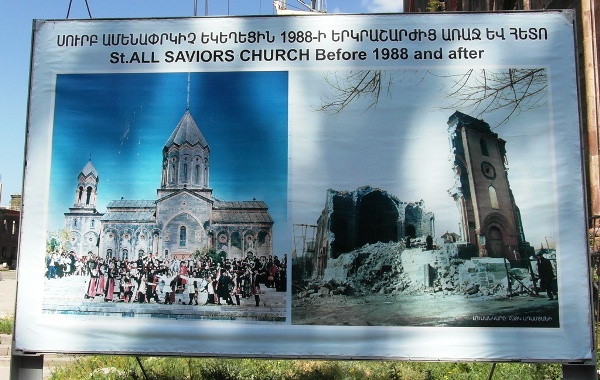
1988 earthquake, 1995-1997, All Saviors Church, Ani, Arcadia, Armenia, Gyumri, Katie Aune, Peace Corps, poem, Poetry, sonnet

photo by katie aune

I lived near the ruins of All Saviors
Church. If this were an altar for the dead,
worshiped since 3000 BC, martyr’s
ancestors, then I would have prayed and fed
them as I once fed the dead of Ani’s
ruins, across the border, a different
city of ghosts. But it is not. What frees
all these dead from Arcadia’s ancient
curse? They entered into me, sick larvae
in a ripe fruit, and now I can’t leave it
alone. If I could call on some unknown
fury to heal this I would. But fury
and loss is what binds these cast-off spirits;
and now, like them, I can’t leave this alone.

][][

notes:

If metaphors are the engine that drives a poem then the problem with writing about a city that 98% of the free world has never heard of is, like trying to make sense of out-of-date pop cultural references, 98% of the free world won’t get what you’re trying to say. The metaphor, in other words, fails. I’m trying to avoid that here, but I realize that if I need to write several paragraphs in my notes explaining what each reference I use means then … perhaps I need to rethink how I can “talk right down to earth in a language that everybody here can easily understand.” (thank you, Living Color).

So, as a quick reference guide, here goes:

The poem is set in the earthquake-devastated city of Gyumri, Armenia; a part of the world that archaeologists have determined has been continually inhabited since 3000 BC. All Saviors Church was a ruined church down the street from where I once lived. Ani is an abandoned, ancient Armenian city just across the border between Armenia and Turkey. As a metaphor, Arcadia usually refers to the idea of an unspoiled, utopian wilderness; sort of like what your hippie parents (or grandparents) might talk about when someone mentions California in the 1960s. Needless to say, the 1960s have never been “all that,” in much the same way that modern-day Turkey has never been the cradle of anyone’s crescent civilization.

The photo I use here was taken by Katie Aune.

the heathen times

13 Sunday Oct 2013

Posted by babylon crashing in Poetry, sonnet

≈ Comments Off on the heathen times

Tags

1995-1997, Armenia, Cantor, Cossack, Gyumri, Peace Corps, poem, Poetry, sonnet, Tsovinar

Dry this stream bed, flowing through not desert
heat but Neolithic outcroppings, hills
they call them, marking the border. The dirt
here is sweet, sweeter than whatever spills
out on the other side. I have wandered
through these hills, down paths that even shepherds
couldn’t get their flocks to follow. I’ve heard
the sound of paw-pads on rock, like drunkards
kicking stones. Later my neighbors would tell
me ghost stories of the heathen times, back
when goddesses of wind, fire and shadow
roamed the hills. But I was under the spell
of youth, where having Cantor and Cossack
blood was all the safety I needed to know.

][][

notes:

It’s odd how one starts a poem about the river that divides Armenia from Turkey and ends up writing about being chased through the hills by unseen forces. I suppose it’s all about where the rhyme takes you.

This poem comes from my time spent in Gyumri, Armenia, as a Peace Corps volunteer. The city is surrounded on two sides by mountains and between the endless flat land the towering mountains are the foothills, which were bizarre when I first looked on them. The closest I’ve ever seen as a comparison is the Glastonbury Tor, in England, which looks like a huge burial mound. There were hundreds and hundreds of them, spanning the eastern and southern sides of the valley Gyumri is located in. It took around four hours to hike from the city center where I lived out to the hills, but I liked it because, for some odd reason, no one else seemed to venture out there. One night, though, having decided to go on a midnight stroll, I ended up getting lost and coming to the conclusion that something was following me. Perhaps I was hearing things, perhaps it was something as innocent as a wolf. Whatever it was I never found out, for even when I turned around and began looking for the source of the noise I couldn’t find anything. When I asked my neighbors why the hills were deserted they began telling me stories about the pre-Christian times of Armenia, with tales of fire whirlwinds, goddesses that caused goats to dry up and dragons that lived on the slopes of Mt. Ararat. I suppose they thought that since I was an American I’d be willing to believe in anything.

The Cantor and Cossack reference is personal, for as far as I can gather from the little information I have found, my grandfather’s father on my dad’s side were both holy singers and horse soldiers during the days of the Russian Tzar. But that’s just family lore, what I know is that he came from a small village in the Ukraine, near Minsk. The difficulty of pin-pointing my ancestors isn’t just that everyone on my father’s side is dead, it’s that since they were Jewish and everyone else in the surrounding villages during WWII the Nazis rounded them up and executed everyone, afterward burning down the villages. There is literally no literal trance of my father’s roots.

the path into purgatory

10 Thursday Oct 2013

Posted by babylon crashing in Armenia, Poetry, sonnet

≈ Comments Off on the path into purgatory

Tags

1995-1997, Aragats, bus rides, Dante, Gyumri, Hellz da bomb, Hrazdan, Inferno, Peace Corps, poem, Poetry, Purgatory, sonnet, Yerevan

… at the midpoint of the journey of life, I found myself in a dark forest, for the clear path was lost.
—Dante Alighieri, Inferno

All roads to Hell start like this, Dante tells
us. The path into purgatory, though,
the ghost realm, is much more difficult. Hell’s
Nine Circles are sick and flash, we all know
Hellz da bomb. Limbo, though, is a bus ride.
We wound through the farms on the Hrazdan,
then north, near Aragats. I had no guide,
no blessed Virgil. I could not speak more than
baby-words. But, as the bus turned the last
mountain pass, there it was spread out below:
empty, vast, flat. A gray valley so vast
it was all horizon. But there—a glow
on the edge—ghost ruin that had survived
the ’88 earthquake—I had arrived.

notes:

Inferno is the first part of Dante’s epic poem Divine Comedy. It is an allegory telling of the journey Dante took through Hell, guided by the soul of the Roman poet, Virgil.

Hrazdan is a river that flows through the Ararat valley, irrigating many apricot orchards and farmland. It divides the city of Yerevan in half. Once, during a very drunken party, a bunch of us Americans went skinny dipping in the river because what’s the point of having a river in your city if you can’t strip off all your clothes and jump in it now and then?

Mt. Aragats is the highest peak in Armenia, forming part of a mountain chain that separates Gyumri from Yerevan. To travel between the two cities required me taking a big red autobus that traveled roughly 15 miles an hour, it felt like, worming its way up and down high mountain roads. The city I refer to at the end of the poem is Gyumri, which in 1988 was totally destroyed in an earthquake that killed 25,000 people. When I arrived seven years later it was still rubble, looking like something out of a war movie.

shadows follow

10 Thursday Oct 2013

Posted by babylon crashing in Armenia, Poetry, sonnet

≈ Comments Off on shadows follow

Tags

1995-1997, Elie Wiesel, memory, Peace Corps, poem, Poetry, sonnet, Yerevan

Most people think that shadows follow, precede or surround beings or objects. The truth is that they also surround words, ideas, desires, deeds, impulses and memories.
— Elie Wiesel

If my memories could have only slept
in Yerevan; if I would have never
faced the sky’s worrisome slackness, windswept
spirits swept between mountains and further
rocks; if the swifts and skylarks had only
saved me; then telling you of what happened
would be utterable. My skull’s memory
feels like an oak-beam ripped in two, opened
by force. Hesitantly I step forward.
I want to tell you how this all began
but pain is potent and drives everything
away. There is no magic, no numbered
spell to ease this. No. I left Yerevan
and went north, which was all my undoing.

wreckage’s fate

10 Thursday Oct 2013

Posted by babylon crashing in Armenia, Poetry, sonnet

≈ Comments Off on wreckage’s fate

Tags

fate, Hanrapetu'tyan Hraparaksurchgareju, poem, Poetry, Republic Square, sonnet, wreckage, Yerevan

Was there enough time to know the wreckage
that I soon would be facing? There were swifts,
skylarks, over Republic Square. Savage
small things. I would sit at a cafe, the gifts
from home—letters—spread out on the table
before me, drinking surch and garejur.
Find me a story teller or fable
maker, someone who doesn’t need liqueur
to help forget. Is it wreckage’s fate
to be wreckage? Savage words and bright birds
and I still have nightmares—all in a row.
But still … to have time to sit, watch and wait.
That’s a gift. To have time to write down words
of our fall; to have time enough to know.

][][

notes:

The Republic Square, or Hanrapetu’tyan Hraparak (Հանրապետության հրապարակ) as it is called in Armenian, is the large central square in the heart of Yerevan. It is intersected by Abovyan, Nalbandyan, Vazgen Sargsyan and Amiryan streets as well as Tigran Mets avenue. During my summer training (1995) in Peace Corps I would sit at a little cafe outside the National Gallery and History Museum, drinking coffee, surch (սուրճ) and beer, garejur (գարեջուր) and watching the skylarks circle in the sky far over head. I liked that particular cafe partly because it was fun to people watch (everyone passes through the square at some point) but also because the layout of the square gives anyone sitting at the cafe an obscured view of Mt. Ararat, which is always a nice thing.

mountain mountain mountain

10 Thursday Oct 2013

Posted by babylon crashing in Armenia, Poetry, sonnet

≈ Comments Off on mountain mountain mountain

Tags

1995-1997, Ararat, Armenia, Kurdish villages, Noah, Peace Corps, poem, Poetry, sonnet, Turkish gunships, Yerevan

But stay tender. Stay enchanted. Mountain,
mountain, mountain. I drank you like vodka,
so you weren’t useless like a grave. Heathen
women prayed for you and so did Noah.
We flew in during the city’s blackout.
I didn’t realize just how you dazzled
until I fell in love with your devout
colors: blue hues cut into deep purple.
Everywhere I went that summer I spied
you. Then, when Turkish gunships attacked
Kurdish towns, smoke darkened your eastern side.
People still pray to you. We build abstract
myths then tear them down. There’s nothing cryptic
about how this wayfarer is homesick.

disgrace

10 Thursday Oct 2013

Posted by babylon crashing in Armenia, Poetry, sonnet

≈ Comments Off on disgrace

Tags

1995-1997, Armenia, disgrace, P.T.S.D., Peace Corps, poem, Poetry, Post-traumatic stress disorder, sonnet

These memories, these harsh memories, marred
with the stink of self-hatred and hard drink.
Meager flowers. Petals. Sparse leaf. A shard
I still cannot dislodge. I use to think
that time would dull them; to think that time’s cure
would make them all fade. Then I tried to write.
But what words are there for the dead? What poor
sequence or meager spell would ease the spite
I feel for myself? P.T.S.D. … they
said. Survivor’s guilt. A world with no lust.
Let me write my erotica, pretend
that the spiritual life is the best, pray
that this shard will loosen one day. It must.
I must. I must begin. I must begin.

][][

notes

P.T.S.D., Post-traumatic stress disorder, is a severe psychological condition that might develop after a person is exposed to a traumatic event. This diagnosis may be given when a group of symptoms occur, such as disturbing recurring flashbacks and nightmares, avoidance or numbing of memories of the event, or a high level of anxiety continuing for a long period of time after the event happened.

I was diagnosed with it after I returned home in disgrace from Peace Corps.

achilles’s bane

09 Wednesday Oct 2013

Posted by babylon crashing in Poetry, sonnet

≈ Comments Off on achilles’s bane

Tags

Achilles's bane, Amazon warrior, blue is beautiful, Greek myth, Penthesilea, poem, Poetry, sonnet, violets

Mother of war, an ice blue flame flutters
on the hill, wild violets, Achilles’s bane,
fragile on their stalks. All the warriors
who fell before you have given their name
to rocks and flowers, but your name is scorned.
If I were a mother with bronze daughters
of my very own I would have you mourned
in the proper way. The violet honors
you, a star with blue edged of fire, but I am poor.
There are some things more fragile than agates.
I have walked these dunes all morning, the wind
on the hill sings your song. Mother of war,
since I cannot find your grave these violets
must do what I started but will not end.

][][

notes:

Penthesilea was the daughter of Orithia and the god Ares. She was known for her bravery, her skill in weapons and her wisdom. During a wild hunt, she accidentally killed her own sister, Hippolyte the Lesser. She was so filled with grief that she set out to liberate Troy, but Greek myth claims Achilles later retook it. During the battle, since she was the daughter of the god of war she killed many high ranking Greek warriors, including Machaon and the Achilles the Greater. Her name means “She Who Compels Men to Mourn.”

pantariste’s labrys

08 Tuesday Oct 2013

Posted by babylon crashing in Poetry, sonnet

≈ Comments Off on pantariste’s labrys

Tags

battle ax, Greek myth, labrys, old truths, Pantariste, poem, Poetry, sonnet, the problem with history

Every myth speaks, every way, every lost
path that wanders off to the last hill’s crest
must, at last, speak. It was there, as I crossed
the ridge, in pink clover, border pinks, blessed
lilies and sweet cress, that I found the ax.
The head, bronze tip, like the fingers that once
choked life, stuck up out of the greensward. Wax
pears hung nearby in witness. The grievance
we call history is that even when
I dig you up, dear ax, I will be told
that it was some man’s name, man’s arms, man’s face,
that bore you and that bores me once again.
Please, dear ax, speak. I listen for the old
truths found in these pink wind-tortured places.

][][

notes:

When Hercules’ soldiers fled from the Amazons’ attack Pantariste lead the chase after them. Two Greek foot soldiers turned to attack her but she killed them both (legend has it she broke the neck of one with her bare hands). She then threw her spear at Tiamides, who blocked it with his shield, but the force knocked him to the ground. Pantariste then beheaded Tiamides using her labrys, a double-headed ax.

← Older posts
Newer posts →

age difference anal sex Armenia Armenian Genocide Armenian translation ars poetica art artist unknown blow job Chinese translation conversations with imaginary sisters cum cunnilingus drama erotic erotica erotic poem erotic poetry Federico Garcia Lorca fellatio finger fucking free verse ghost ghost girl ghost lover gif Gyumri haiku homoerotic homoerotica Humor i'm spilling more thank ink y'all incest Lilith Lord Byron Love shall make us a threesome masturbation more than just spilled ink more than spilled ink mythology ocean mythology Onna bugeisha orgasm Peace Corps photo poem Poetry Portuguese Portuguese translation prose quote unquote reblog retelling Rumi Sappho sea folklore Shakespeare sheismadeinpoland sonnet sorrow Spanish Spanish translation spilled ink story Taoist Pirate rituals Tarot Tarot of Syssk thank you threesome Titus Andronicus translation video Walt Whitman woman warrior xenomorph

electric mayhem [links]

  • poesia erótica (português)
  • Poetic K [myspace]
  • sandra bernhard
  • discos bizarros argentinos
  • cyndi lauper
  • aimee mann
  • armenian erotica and news

Meta

  • Create account
  • Log in
  • Entries feed
  • Comments feed
  • WordPress.com

Blog Stats

  • 393,674 hits

Categories

ars poetica: the blogs a-b

  • all things said and done
  • black satin
  • sommer browning
  • Alcoholic Poet
  • the art blog
  • emma bolden
  • cecilia ann
  • alzheimer's poetry project
  • aliki barnstone
  • margaret bashaar
  • clair becker
  • lynn behrendt
  • stacy blint
  • kristy bowen
  • tiel aisha ansari
  • wendy babiak
  • american witch
  • armenian poetry project
  • mary biddinger
  • afterglow
  • megan burns
  • sandra beasley
  • brilliant books
  • afghan women's writing project

Enter your email address to follow this blog and receive notifications of new posts by email.

Join 44 other subscribers

Archives

ars poetica: the blogs c-d

  • juliet cook
  • cheryl clark
  • linda lee crosfield
  • CRB
  • abigail child
  • lyle daggett
  • natalia cecire
  • maria damon
  • roberto cavallera
  • michelle detorie
  • lorna dee cervantes
  • julie carter
  • jennifer k. dick
  • cleveland poetics
  • jackie clark
  • flint area writers

ars poetica: the blogs e-h

  • sarah wetzel fishman
  • maggie may ethridge
  • pamela hart
  • amanda hocking
  • bernardine evaristo
  • elizabeth glixman
  • hayaxk (ՀԱՅԱՑՔ)
  • liz henry
  • maureen hurley
  • joy garnett
  • human writes
  • herstoria
  • jane holland
  • Free Minds Book Club
  • ghosts of zimbabwe
  • Gabriela M.
  • joy harjo
  • elisa gabbert
  • jeannine hall gailey
  • julie r. enszer
  • carrie etter
  • carol guess
  • jessica goodfellow

ars poetica: the blogs i-l

  • renee liang
  • maggie jochild
  • sandy longhorn
  • IEPI
  • megan kaminski
  • miriam levine
  • diane lockward
  • gene justice
  • charmi keranen
  • meg johnson
  • Jaya Avendel
  • donna khun
  • irene latham
  • joy leftow
  • kennifer kilgore-caradec
  • lesley jenike
  • Kim Whysall-Hammond
  • sheryl luna
  • amy king
  • emily lloyd
  • laila lalami
  • language hat
  • las vegas poets organization
  • dick jones
  • a big jewish blog
  • lesbian poetry archieves

ars poetica: the blogs m-o

  • nzepc
  • majena mafe
  • heather o'neill
  • sharanya manivannan
  • the malaysian poetic chronicles
  • caryn mirriam-goldberg
  • maud newton
  • motown writers
  • adrienne j. odasso
  • michelle mc grane
  • january o'neil
  • iamnasra oman
  • sophie mayer
  • marion mc cready
  • michigan writers resources
  • Nanny Charlotte
  • ottawa poetry newsletter
  • michigan writers network
  • My Poetic Side
  • new issues poetry & prose
  • mlive: michigan poetry news
  • wanda o'connor

ars poetica: the blogs p-r

  • rachel phillips
  • maria padhila
  • Queen Majeeda
  • split this rock
  • nicole peyrafitte
  • sophie robinson
  • nikki reimer
  • helen rickerby
  • joanna preston
  • kristin prevallet
  • susan rich
  • ariana reines

ars poetica: the blogs s-z

  • ron silliman
  • Stray Lower
  • womens quarterly conversation
  • vassilis zambaras
  • shin yu pai
  • scottish poetry library
  • southern michigan poetry
  • Trista's Poetry
  • switchback books
  • sexy poets society
  • tuesday poems
  • tim yu

  • Subscribe Subscribed
    • memories of my ghost sista
    • Join 44 other subscribers
    • Already have a WordPress.com account? Log in now.
    • memories of my ghost sista
    • Subscribe Subscribed
    • Sign up
    • Log in
    • Report this content
    • View site in Reader
    • Manage subscriptions
    • Collapse this bar
 

Loading Comments...