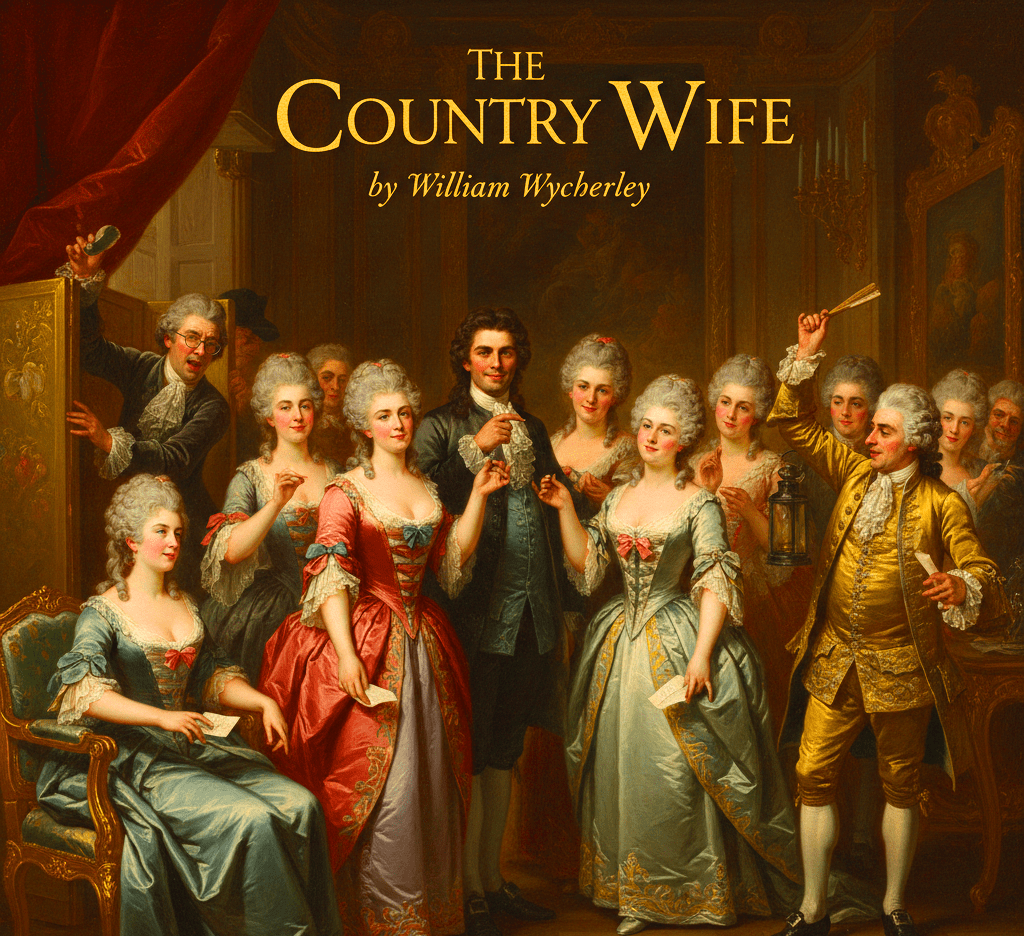
威廉·威彻利 著/ by: William Wycherley (1672)
Translation by ZJC (2026)
DRAMATIS PERSONAE
霍纳/ Mr. Horner.
哈考特/ Mr. Harcourt.
多里兰特/ Mr. Dorilant.
平奇怀夫/ Mr. Pinchwife.
斯帕基什/ Mr. Sparkish.
杰斯珀爵士/ Sir Jasper Fidget.
男童/ A Boy.
庸医/ A Quack doctor.
玛杰里太太/ Mrs. Margery Pinchwife.
爱丽丝亚/ Alithea, Sister of Pinchwife.
费杰特夫人/ Mrs. Fidget.
丹蒂太太/ Mrs. Dainty Fidget, Sister of Sir Jasper.
斯奎米什太太/ Madam Squeamish.
老斯奎米什太太/ Old Lady Squeamish.
露西/ Lucy, Alithea’s Maid.
Scene—London.
)(*)(
第一幕,第一场/ Scene I. Act I.
霍纳的住所。/ Horner’s residence.
霍纳和一位江湖医生走了进来。/ Horner and a Quack Doctor enter.
霍纳/ Horner: (旁白)找个庸医当皮条客,就跟找个接生婆当老鸨一样合适;他们路数不同,本质却一样,都是‘大自然的帮手’。(大声地)好啦,我亲爱的医生,我交代的事你办妥了吗?/ (Aside) To employ a quack doctor as a pimp is as fitting as employing a midwife as a madam; their methods differ, but their essence is the same, both being ‘helpers of nature.’ (Aloud) Well, my dear doctor, have you completed the task I assigned you?
庸医/ Quack: 我已经把你彻底毁了,让全城的女人都对你避之不及。我现在传遍了全城,说你比太监还干净。为了把这假话编圆,我费的劲儿简直比真把你阉了还大。/ I have utterly ruined your reputation, making all the women in the City shun you. I’ve spread the word throughout the City that you’re as useful as an eunuch. I put more effort into fabricating this lie than it would have taken to actually castrate you.
霍纳/ Horner: 那你有没有告诉你认识的那些接生婆?还有剧院里卖橘子的野丫头、城里的那些丈夫们,以及城西头那些老奸巨猾的‘被戴绿帽者’们?他们可是传闲话最快的人。/ And have you told all the midwives that you know? And the orange girls at the theater? The husbands in the City? Those cunning old ‘cuckolds’ in the West End? They’re the quickest to spread gossip.
庸医/ Quack: 我告诉了我认识的所有女仆、随从、化妆女工和老太太;不,我还把这事儿当成秘密当作秘密耳语给她们,甚至传到了怀特霍尔宫那些爱嚼舌根的人耳朵里。你放心,这消息绝对传得开。现在那些漂亮姑娘看你,就像看……/ I’ve told all the maids, servants, dressmakers, and old women that I know; no, I even whispered it to them in secret, and it’s even reached the gossips at Whitehall Palace. Rest assured, the news will spread. Now those pretty girls will look at you as if…
霍纳/ Horner: ……就像看天花一样。好极了!/ …as if I had smallpox. Excellent!
庸医/ Quack: 那些住在城西头的阔太太们看你,就像看……/ Those wealthy ladies in the West End will look upon you as if…
霍纳/ Horner: ……就像看梅毒一样;不,就像看她们自己的丈夫一样厌恶。/ …as if I had syphilis; no, as if they hated me as much as their own husbands.
庸医/ Quack: 至于城里的那些阔绰夫人们,她们把你当成了那个名声狼藉的‘茴香豆罗宾’[1];她们甚至会用你的名字来吓唬小孩,尤其是女孩子。/ As for the wealthy ladies in the City, they’ve mistaken you for that notorious ‘Fennel-seed Robin’; they even use your name to scare children, especially the girls.
霍纳/ Horner: 她们会喊:‘霍纳来把你抓走啦!’我唯一担心的就是没人信。你告诉她们了吗?说这是因为一次‘英法两地的意外’,而且是个英法混血的外科医生给我治的——这医生不仅治好了我的病,还顺便给我打了一针‘爱情’的终生免疫。/ They’ll shout, ‘Horner’s coming to get you!’ My only worry is that no one will believe it. Did you tell them that it was due to an ‘accident between England and France,’ and that a half-English, half-French surgeon treated me—a surgeon who not only cured my illness but also gave me a lifelong immunity to ‘love’?
庸医/ Quack: 你最近去法国待了那么久,这让谎言更有说服力。而且你回国后足足躲了半个月才露面,看起来就像是真的没脸见人一样。(旁白)我真纳闷你怎么就不知道羞耻。(大声地)说真的,我经常被年轻的小伙子雇去吹嘘他们的‘雄风’,你倒好,是第一个求着别人说你‘不行’的人。/ You’ve been in France for so long recently, which makes the lie all the more convincing. And you’ve hid away for a full two weeks after returning home before showing your face again, looking like you were truly ashamed to be seen. (Aside) I really wonder how you have no sense of shame. (Aloud) Honestly, I’m often hired by young men to brag about their ‘manhood,’ but you’re the first person to beg someone to say you’re, ‘impotent.’
霍纳/ Horner: 亲爱的医生,让那些虚荣的流氓们去显摆吧,让他们觉得自己比实际情况更‘强悍’。这通常是他们唯一的乐趣……但我的乐趣在别处。/ My dear doctor, let those vain rascals show off; let them think they’re ‘stronger’ than they actually are. That’s usually their only pleasure… but my pleasure lies elsewhere.
庸医/ Quack: 你追求乐趣的方式恐怕有点走火入魔。就像我们行医的,为了招揽顾客,反而到处发传单诋毁自己的药没效,这太荒唐了。/ Your way of pursuing pleasure is probably a bit extreme. It would be like us doctors, in order to attract customers, go around distributing leaflets discrediting our own medicine as ineffective—that would be absurd.
霍纳/ Horner: 医生,情场和医场一样都有骗子。有些骗子吹嘘得天花乱坠,招来的病人却又少又差。名声靠自吹自擂是赚不来的;女人和荣誉一样,都不是靠吹牛就能得到的。算了吧医生,最精明的律师在开庭前绝不亮出底牌,最富有的人会藏富,最狡猾的赌徒会藏牌。那些多疑的丈夫和被戴绿帽者们,就像老乌鸦一样精,只有用这种前所未见的招数才能骗过他们。/ Doctor, the world of love and the world of medicine are both full of deceivers. Some deceivers boast endlessly, but they only attract few and poor patients. Reputation isn’t earned through self-praise; women, like honor, aren’t obtained through bragging. Come on, doctor, the shrewdest lawyers never show their hand before the trial, the wealthiest people hide their riches, and the most cunning gamblers hide their cards. Those suspicious husbands and cuckolded men are as shrewd as old crows; only with this unprecedented trick can we deceive them.
男童/ Boy: (进场) 先生们,有两位女士和一位绅士上楼来了。(退出)/ (Entering) Gentlemen, two ladies and a gentleman have come upstairs. (Exits)
霍纳/ Horner: 见鬼!肯定是我以前认识的那些不信邪的‘好姐妹’,我担心她们是想亲自来‘验明正身’,看看传闻是不是真的。/ Damn it! It must be those skeptical ‘good sisters’ that I knew before. I’m worried they’ve come to ‘verify the truth’ themselves, to see if the rumors are true.
庸医/ Quack: 是他的太太和妹妹。/ It’s his wife and sister.
(贾斯珀·菲吉特爵士带着菲吉特夫人和丹蒂·菲吉特太太进场。)/ (Sir Jasper Fidget enters with Lady Fidget and Mrs. Dainty Fidget.)
杰斯珀爵士/ Sir Jasper: 先生,我的马车刚才恰好停在你门口,我认为这是老天在怪罪我呀,先生,怪我自从你从法国回来还没来拜会过你,先生。所以我的这点小意外反倒成了我的好运,先生。这两位是我的夫人和妹妹,先生。/ Sir, my carriage seems to have stopped right at your door, and I think it’s Providence punishing me, sir, for not having called on you since your return from France, sir. So this little accident has turned out to be my good fortune, sir. These are my wife and my sister, sir.
霍纳/ Horner: 那又怎样,先生?/ So what, sir?
杰斯珀爵士/ Sir Jasper: 我的夫人和妹妹呀,先生——夫人,这位是霍纳先生。/ My wife and my sister, sir—Madam, this is Mr. Horner.
费杰特夫人/ Mrs. Fidget: 霍纳先生?夫君!/ Mr. Horner? My husband!
杰斯珀爵士/ Sir Jasper: 我的夫人,费杰特夫人,先生。/ My wife, Lady Fidget, sir.
霍纳/ Horner: 所以呢,先生?/ So what, sir?
杰斯珀爵士/ Sir Jasper: 难道你不想认识认识她吗,先生?(旁白)我看传闻是真的,瞧他对异性这副冷冰冰又厌恶的德行。不过我要逗逗他——(大声地)劳驾,先生,请问候一下我的夫人。/ Don’t you want to make her acquaintance, sir? (Aside) I see the rumors are true; look at his cold and disgusted demeanor towards the opposite sex. But I’ll tease him—(Aloud) Pray, sir, greet my wife.
霍纳/ Horner: 我绝不亲吻任何人的妻子,先生。我已经彻底告别女性这个群体了,先生。/ I never kiss anyone’s wife, sir. I have completely renounced the company of women, sir.
杰斯珀爵士/ Sir Jasper: (旁白)哈哈哈!我非要折磨折磨他——(大声地)噢?连我夫人的面子都不给,先生?/ (Aside) Ha ha ha! I must torment him—(Aloud) Oh? You won’t even show my wife any respect, sir?
霍纳/ Horner: 我认识你夫人,先生。她是女人,先生,因此她就是个怪物,先生,是个比丈夫还要可怕的怪物,先生。/ I know your wife, sir. She’s a woman, sir, therefore she’s a monster, sir, a monster more terrible than her husband, sir.
杰斯珀爵士/ Sir Jasper: ‘丈夫’?你这是什么话,先生?/ ‘Husband’? What do you mean by that, sir?
霍纳/ Horner: 实话,先生。我以后再也不会给任何人戴绿帽子了,先生。(比划出牛角的手势)/ The truth, sir. I’ll never cuckold anyone again, sir. (Makes a gesture of horns)
杰斯珀爵士/ Sir Jasper: 哈哈哈!这就是水银的后遗症啊![2] / Ha ha ha! That’s the after-effects of the mercury treatment!
费杰特夫人/ Mrs. Fidget: 杰斯珀爵士,求你了,咱们快离开这个粗鲁的家伙吧。/ Sir Jasper, please, let’s leave this rude fellow.
黛恩蒂夫人/ Lady Fidget: 瞧他这教养,谁能想到他去过法国呢?/ Look at his manners, who would have thought he’d been to France?
费杰特夫人/ Mrs. Fidget: 呸!他就是满身法国酸腐气的男人,专门讨厌那些出身高贵、恪守妇道、热爱丈夫的女性。杰斯珀爵士,这种男人恨女人爱丈夫,就像恨女人爱他们的钱一样。快走吧。/ Bah! He’s just a man full of French affectation, who hates women of noble birth, who are virtuous and love their husbands. Sir Jasper, this kind of man hates women who love their husbands as much as they hate women who love their money. Let’s go.
霍纳/ Horner: 您走得对,夫人。因为你们想要的东西,我这里一样都没有。我连一张淫秽画片都没带回来,没有新姿势图解,也没有《女学生》[3] 第二册,更没有——/ You’re right to go, ladies. Because I have nothing you want. I didn’t bring back a single obscene picture, no new illustrated positions, no second volume of ‘The Schoolgirl,’ and certainly no—
庸医/ Quack: (小声对霍纳)住口,羞死人了!你疯了吗?你会彻底把这辈子的毁掉你在所有女性心中的形象都毁掉的——/ (Whispers to Horner) Shut up, you fool! Are you mad? You’ll completely ruin your reputation with all women for the rest of your life—
杰斯珀爵士/ Sir Jasper: 哈哈哈!他恨女人!绝了!/ Ha ha ha! He hates women! Brilliant!
黛恩蒂夫人/ Lady Fidget: 他居然变成这样,真是太可惜了!/ It’s such a pity that he’s become like this!
费杰特夫人/ Mrs. Fidget: 没错,所以他更显卑劣了。但在这种男人眼里,虚伪的做作远没有美德来得讨人嫌。/ Yes, that makes him even more despicable. But in the eyes of such men, hypocrisy and affectation are far less offensive than virtue.
霍纳/ Horner: 那是因为您的‘美德’就是您最大的‘做作’,夫人。/ That’s because your ‘virtue’ is your greatest ‘affectation,’ Madam.
费杰特夫人/ Mrs. Fidget: 你这厚颜无耻的家伙!你竟敢玷污我的名誉?/ You impudent wretch! How dare you tarnish my reputation?
霍纳/ Horner: 要是我真能办到就好了。/ I wish that I could.
费杰特夫人/ Mrs. Fidget: 你这是什么意思,先生?/ What do you mean by that, sir?
杰斯珀爵士/ Sir Jasper: 哈哈哈!不,他坏不了夫人的名誉,我拿名誉担保。可怜的人——(凑到夫人耳边小声说)他就是个纯太监!/ Ha ha ha! No, he can’t tarnish her reputation, I’ll vouch for that. Poor fellow—(whispers in Mrs. Fidget’s ear) He’s a complete eunuch!
费杰特夫人/ Mrs. Fidget: 噢,邋遢的法国畜生!呸!呸!我们还待在这儿干嘛?快走,我一眼都看不下去他。/ Oh, you filthy French beast! Bah! Bah! Why are we still here? Let’s go, I can’t stand the sight of him.
杰斯珀爵士/ Sir Jasper: 再等一会儿,等轿子来了再走,马上就到。/ Wait a moment, until the sedan chair arrives, it will be here soon.
费杰特夫人/ Mrs. Fidget: 不,不行。/ No, I can’t.
杰斯珀爵士/ Sir Jasper: 我也没法多待了。让我看看,十一点过了一刻,呃,一刻又半分钟了。议会正在开会,我得走了。在聪明人眼里,生意永远排在情爱和礼数前面,霍纳先生。/ I can’t stay much longer, either. Let me see, it’s a quarter past eleven, er, a quarter and a half past. Parliament is in session, I must go. Business always comes before love and courtesy in the eyes of wise men, Mr. Horner.
霍纳/ Horner: 在‘无能’的人眼里也是如此,杰斯珀爵士。/ And in the eyes of ‘impotent’ men too, Sir Jasper.
杰斯珀爵士/ Sir Jasper: 是的,没错,无能的人,霍纳先生——(咯咯笑)。/ Yes, that’s right, impotent men, Mr. Horner—(chuckles).
费杰特夫人/ Mrs. Fidget: 什么?要把我们和这样一个肮脏的男人单独留在寓所里?/ What? You mean to leave us alone in the apartment with such a filthy man?
杰斯珀爵士/ Sir Jasper: 他现在可是个‘无害’的人了,你知道的。请留步,我去催轿子来接你们——霍纳先生,失陪了。欢迎来我家坐坐。请务必来吃个便饭,饭后陪我夫人打打牌。在那类‘游戏’上,你倒是还应付得了女人,哈哈哈!(自言自语。)丈夫的精明就在于此,既要给妻子安排无害的消遣,又要防着她搞非法勾当;与其让她自己找乐子,不如帮她找点事做——(大声地)告辞。/ He’s quite ‘harmless’ now, you know. Please excuse me, I’ll go and hurry the sedan chair for you—Mr. Horner, farewell. Do come and visit my house. Be sure to come for a casual meal and play cards with my wife afterwards. You can still handle women in that kind of ‘game,’ ha ha ha! (To himself.) My husband’s cleverness lies in this: he wants to arrange harmless amusements for his wife, but also prevent her from engaging in illicit activities; instead of letting her find her own entertainment, he’d rather find something for her to do—(Aloud) Farewell.
霍纳/ Horner: 慢走,杰斯珀爵士。/ Goodbye, Sir Jasper.
费杰特夫人/ Mrs. Fidget: 我才不要跟他待在一起,呸!——/ I don’t want to be with him, ugh!—
霍纳/ Horner: 别这样,夫人,我恳求您留步。哪怕只是为了见识一下,我也能像各位女士所期望的那样‘文明’。/ Don’t be like that, madam, I beg you to stay. Even if only to see, I can be ‘civilized’ as the ladies expect.
费杰特夫人/ Mrs. Fidget: 不,不行,呸!你这种人对女性根本‘文明’不起来。/ No, no, ugh! You can’t be ‘civilized’ towards women.
黛恩蒂夫人/ Lady Fidget: ‘像女士所期望的那样文明’?/ ‘Civilized as the ladies expect’?
费杰特夫人/ Mrs. Fidget: 不,不,不!呸!呸!呸!/ No, no, no! Ugh! Ugh! Ugh!
(菲吉特夫人与菲吉特女士下)/ (Mrs. Fidget and Lady Fidget exit)
庸医/ Quack: 好了,这下子——或者说,是你自己——可算是彻底把和女人有关的‘正事’给搞砸了。/ Well, now—or rather, you yourself—have completely ruined any ‘proper’ business with women.
霍纳/ Horner: 你真是个笨蛋。你难道没看见吗?由于那个传闻和我刚才的表现,这个视事业如命的庄重男人竟然把妻子留在了我的寓所里,还邀请我去他家陪他老婆。要是换做以前,他因为嫉妒,连认识都不敢让我认识她。/ You’re such a fool. Don’t you see? Because of that rumor and my recent behavior, this serious man, who values his career above all else, has left his wife in my lodgings and invited me to his house to keep his wife company. Before, because of his jealousy, he wouldn’t even let me meet her.
庸医/ Quack: 不,你这样做也许能让你跟那些丈夫混得更熟,但跟那些妻子可就越来越远了。/ No, this might make you closer to the husbands, but you’ll be getting further and further away from the wives.
霍纳/ Horner: 这你就别管了。只要我能戏弄那些丈夫,我就能很快让那些妻子明白真相。/ Don’t worry about that. As long as I can fool the husbands, I can quickly make the wives understand the truth.
(庸医准备离开)/ (Quack prepares to leave)
霍纳/ Horner: 站住——我来给你算算我这计谋能带来的好处。首先,我能甩掉所有老相好,那可是最贪得无厌的一群‘债主’,大清早就能闯进房间;其次……这能让我享受追求新欢的乐趣,同时摆脱旧爱和所有旧账。情债这种东西,一旦变成负担,还起来是最不情愿的。/ Stop—let me tell you the benefits of my scheme. First, I can get rid of all my old lovers, who are the most insatiable ‘creditors,’ barging into my room early in the morning; secondly… this allows me to enjoy the pleasure of pursuing new lovers while getting rid of old ones and all my old debts. Emotional debts, once they become a burden, are the most unwilling to repay.
庸医/ Quack: 行吧,老相好你是甩掉了,可你怎么结识新欢呢?/ Alright, you’ve gotten rid of your old flames, but how are you going to find a new love interest?
霍纳/ Horner: 医生,你永远成不了一个好的化学家,因为你太疑神疑鬼,又没耐心。你去问问城里那些小伙子,他们花在‘惊动猎物’上的时间,是不是比‘捕获猎物’的时间还要长?那些名门淑女表现得太客气了,你很难分清那是爱意还是教养。但现在,我能肯定,那个对我表现出极度厌恶的女人,其实最喜欢这种‘运动’——就像刚才走掉的那两个。还有一点:你们口中那些‘正经女人’,在乎的是名声,而不是身体。她们躲避的是丑闻,而不是男人。现在,我有了‘太监’的名声,我就能像她们丈夫一样,在大清早出入淑女的闺房,甚至在长辈或情人面前亲吻处女。简而言之,这名声就是我在全城通行的护照。/ Doctor, you’ll never be a good chemist because you’re too suspicious and impatient. Go ask those young men in town if they spend more time ‘startling the prey’ than ‘catching the prey.’ Those ladies of high society are so polite, it’s hard to tell if it’s affection or just good manners. But now, I’m certain that the woman who showed extreme disgust towards me actually enjoys this ‘sport’—just like those two who just left. And another thing: those ‘respectable women’ you talk about care about their reputation, not their bodies. They avoid scandal, not men. Now that I have the reputation of being an ‘eunuch,’ I can enter ladies’ boudoirs in the early morning like their husbands, and even kiss virgins in front of their elders or lovers. In short, this reputation is my passport to move freely throughout the City.
庸医/ Quack: 得了,现在你才是医生。你这套‘疗法’太过超前,但说不定还真管用。/ Well, now you’re the doctor. Your ‘treatment’ is quite unconventional, but maybe it actually works.
霍纳/ Horner: 也没那么超前,‘亲测有效’,医生。/ Not so unconventional, ‘tested and proven,’ Doctor.
庸医/ Quack: 那好,祝你(生意)兴隆,病人(多多)。我得去看我的病人了。(退场)/ Alright then, I wish you prosperity and many patients. I have to go see my patients. (Exits)
(多里兰特和哈考特入场。)/ (Dorilant and Harcourt enter.)
哈考特/ Harcourt: 来吧,你昨天在戏院那一露面,我希望已经让你练就了金刚不坏之身,以后再也不怕女人的蔑视和男人的八卦了。现在你可以随心所欲地行动了。/ Come on, I hope your appearance at the theater yesterday has made you invulnerable to women’s scorn and men’s gossip. Now you can act as you please.
霍纳/ Horner: 我表现得够英勇吧?/ Was I brave enough?
多里兰特/ Dorilant: 简直是一种戏剧级别的厚颜无耻。不,比剧场里卖橘子的野丫头、喝醉的蒙面女或者是大肚子的女演员还要脸皮厚。甚至比最厚脸皮的生物——蹩脚诗人,或者是更不要脸的——二传手评论家,还要无耻!/ It was a theatrical level of shamelessness. No, even more shameless than the wild girls selling oranges in the theater, the drunken masked women, or the pregnant actresses. Even more shameless than the most shameless creatures—the mediocre poets, or even more shameless—the second-rate critics!
霍纳/ Horner: 那些女士们怎么说?她们难道一点都不同情我吗?/ What did the ladies say? Didn’t they have any sympathy for me at all?
哈考特/ Harcourt: 哪些女士?你知道那些‘蒙面女’,除非是你为她们效力过度,否则她们绝不会在一个男人‘倾家荡产’时同情他。/ Which ladies? You know those ‘masked women,’ they’ll never sympathize with a man when he’s ruined, unless you’ve been overly devoted to them.
多里兰特/ Dorilant: 至于包厢里的那些贵妇人,以前你有能力的时候,可从来没同情过她们。/ As for those ladies in the boxes, you never showed them any sympathy when you were in a position to do so.
哈考特/ Harcourt: 她们说,凡是跟‘野女人’鬼混的人,落得这种下场都是活该。/ They say that anyone who consorts with ‘loose women’ deserves this fate.
多里兰特/ Dorilant: 没错,我敢发誓,她们绝不会让你陪她们打牌、看戏,或者做那些其他‘男人的影子’才肯做的琐碎差事。/ That’s right, I swear they wouldn’t let you play cards with them, or go to the theater, or do any of those other trivial things that only ‘men’s shadows’ would do.
霍纳/ Horner: 你管那些人叫‘男人的影子’?/ You call those people ‘men’s shadows’?
多里兰特/ Dorilant: ‘半个男人’。/ ‘Half-men.’
霍纳/ Horner: 什么,你是说‘男童’?/ What, you mean ‘boys’?
多里兰特/ Dorilant: 是啊,就是你们那些‘老顽童’,老白脸。他们就像退役的种马,只要还活着,就允许他们在母马群里跑跑跳跳、吃吃喝喝、嘶鸣几声,反正他们也干不了别的了。/ Yes, those ‘old rascals,’ those old white-powdered men. They’re like retired stallions; as long as they’re alive, they’re allowed to run around, eat and drink, and neigh a few times among the mares, since they can’t do anything else anyway.
霍纳/ Horner: 哎,去他的爱情和勾搭吧!唯有交情和友谊才是持久、理性且充满男子气概的快乐。/ Ah, to hell with love and flirtation! Only camaraderie and friendship provide lasting, rational, and manly pleasure.
哈考特/ Harcourt: 话虽如此,但也请给我一些你所谓的‘娘娘腔’的快乐吧;它们能让彼此更有滋味。/ That may be true, but please give me some of your so-called ‘effeminate’ pleasures; they make each other more enjoyable.
霍纳/ Horner: 它们只会互相干扰。/ They only interfere with each other.
哈考特/ Harcourt: 不,情妇就像书。如果你钻研太深,就会昏昏欲睡,变得不合群;但如果你懂得适度运用,你就会变得更擅长‘交际’。/ No, mistresses are like books. If you delve too deeply, you’ll become drowsy and unsociable; but if you use them moderately, you’ll become more adept at ‘socializing.’
多里兰特/ Dorilant: 情妇应该像城郊的小别墅;不是让你常住的,而是偶尔去过一夜就走,这样回来时才能更好地品味城里的生活。/ Mistresses should be like a small villa in the suburbs; not for permanent residence, but for occasional overnight stays, so that you can better appreciate City life when you return.
霍纳/ Horner: 我告诉你们,想同时当个好哥们、好朋友和护花使者,就像想当个好哥们、好朋友和守财奴一样难。既然不能兼顾,那就选好你的阵营。正如人们所说,‘美酒自由,爱情夺走自由。’/ I tell you, trying to be a good buddy, a good friend, and a ladies’ man at the same time is as difficult as trying to be a good buddy, a good friend, and a miser. Since you can’t have both, choose your side. As the saying goes, ‘Wine gives freedom, love takes it away.’
多里兰特/ Dorilant: 天哪,他在这一点上说得太对了!/ My God, he’s absolutely right on that point!
霍纳/ Horner: 美酒给你喜悦;爱情给你悲哀、折磨和黑诊所的外科医生。美酒让我们机智;爱情只让我们变成醉汉。美酒让我们入眠;爱情却让我们惊醒。/ Wine gives you joy; love gives you sorrow, torment, and quack surgeons. Wine makes us witty; love only makes us drunkards. Wine puts us to sleep; love wakes us up.
多里兰特/ Dorilant: 说真的,哈考特,他说的有道理。/ Honestly, Harcourt, he has a point.
霍纳/ Horner: 美酒让——/ Wine makes—
多里兰特/ Dorilant: 对,对,‘美酒让我们’——让我们变成君主;爱情让我们变成乞丐、穷光蛋,见鬼——而酒——/ Yes, yes, ‘Wine makes us’—makes us monarchs; love makes us beggars, paupers, confound it—but wine—
霍纳/ Horner: 瞧,这就感化了一个。——不,不,爱情和美酒,就像油和醋。/ So, here’s one that’s been converted. —No, no, love and wine are like oil and vinegar.
哈考特/ Harcourt: 我承认;但爱情总是会浮在最上面。/ Perhaps, but love always floats to the top.
霍纳/ Horner: 至于我,我只要那种光荣的、男子气概的快乐:烂醉如泥,不修边幅。/ As for me, I only want that glorious, manly pleasure: getting roaring drunk and being slovenly.
男童/ Boy: (进场)斯帕基什先生在楼下,先生。(退场)/ (Entering) Mr. Sparkish is downstairs, sir. (Exits)
哈考特/ Harcourt: 瞧,我那亲爱的‘好哥们’来了!这混蛋之所以粘着我,我看纯粹是因为我爱损他。/ Look, here comes my dear ‘good fellow’! I think the only reason this fellow sticks to me is because I love to tease him.
多里兰特/ Dorilant: 不,他这种人既不会察觉男人在嘲笑他,也不会发现女人在耍他;他自我感觉实在是太好了。/ No, he’s the kind of man who neither notices when men are mocking him nor when women are making a fool of him; he thinks too highly of himself.
霍纳/ Horner: 噢,我又想到一个喝酒的好处了——我能借此甩掉他的纠缠,因为他根本喝不了酒。你们知道,想甩掉这种人难如登天;他是那种令人作呕的‘才智冒牌货’,就像最烂的小提琴手,哪儿人多就往哪儿钻。/ Oh, I’ve thought of another advantage of drinking—I can use it to get rid of him, because he can’t hold his liquor. You know, it’s impossible to get rid of such a person; he’s that nauseating kind of ‘pretentious wit,’ like the worst fiddler, always trying to worm his way into any crowd.
哈考特/ Harcourt: 他觉得自己混在聪明人堆里,自己也就成了聪明人。/ He thinks that by being among clever people, he becomes clever himself.
霍纳/ Horner: 在目光短浅的世界里或许行得通;就像远看时,假珠宝混在真珠宝里也分不出来。/ That might work in a short-sighted world; just as fake jewels can’t be distinguished from real ones from a distance.
哈考特/ Harcourt: 别提了,这混蛋从不让我们享受二人世界,总是强行强暴我们的谈话。其实他在对话中的作用,还不如《马丁·马罗尔》[4] 里那个张着大嘴、胡乱拨弄琵琶的傻瓜。这人根本没有音乐细胞。/ Don’t even mention it, this fellow never lets us have any private time, always forcing himself into our conversations. His contribution to the conversation is less than that of the gaping, lute-strumming fool in ‘Martin Mar-all.’ The man has absolutely no musical talent.
多里兰特/ Dorilant: 而且为了在城里混个‘才子’的名声,他每晚都在那些知情人面前丢人现眼。/ And to gain a reputation as a ‘man of letters’ in the City, he makes a fool of himself every night in front of those in the know.
霍纳/ Horner: 像他这种‘才子’混在一群理性的人里,就像围观赌局的乌鸦;他们除了占个位子,对赌局毫无贡献,反而只会败坏那些真正玩牌的人的兴致。/ A ‘man of letters’ like him among a group of rational people is like a crow watching a gambling game; they contribute nothing to the game except taking up space, and only spoil the mood of those who are actually playing.
多里兰特/ Dorilant: 不,他们也像乌鸦一样被对待:被呵斥、被羞辱、被痛骂;可这些流氓依然死皮赖脸地赖着不走。/ No, they are treated like crows too: they are scolded, humiliated, and cursed; yet these rascals still shamelessly cling on.
霍纳/ Horner: 真见鬼!‘做作’简直是大自然产出的头号怪物。/ Damn it! Affectation is the greatest monster nature ever produced.
哈考特/ Harcourt: 大多数人表现出来的样子都与本性相反。你看,那些虚张声势的人,往往是带着长剑的懦夫;而那些拿着黑檀木手杖、卑躬屈膝的卑微医生,其实是人类的毁灭者。/ Most people act contrary to their true nature. You see, those who swagger are often cowards with long swords; and those humble doctors with ebony canes and obsequious manners are actually destroyers of mankind.
多里兰特/ Dorilant: 高利贷者其实是守着发霉债券和抵押贷款的可怜虫;而我们所谓的败家子才是真正的富人,因为只有那些每天花钱购买新快乐的人才算富有。/ Usurers are merely wretches guarding moldy bonds and mortgages; and our so-called spendthrifts are the truly wealthy, for only those who spend money daily on new pleasures are truly rich.
霍纳/ Horner: 没错,你最信任的托管人或执行人往往是十足的骗子;最爱吃醋的男人往往是最大的绿帽王;神职人员往往是最大的无神论者;而那个吵吵闹闹、自以为是的‘才子’流氓,则是最大的花花公子、最迟钝的蠢驴,以及最差劲的同伴——你们马上就能领教了,他来了。/ That’s right, your most trusted trustee or executor is often a complete rogue; the most jealous man is often the biggest cuckold; clergymen are often the greatest atheists; and that noisy, self-important ‘wit’ and rogue is the greatest rake, the dullest ass, and the worst companion—as you’ll soon see, here he comes.
斯帕基什/ Sparkish: (进场)怎么样,各位帅哥?最近怎么样?说真的,哈利,我得拿你开个小玩笑,哈哈哈!城里都在传,说你——哈哈哈——真的‘挺不住’了;还要我再说细点吗?/ (Entering) How are you, gentlemen? How have you been? Honestly, Harry, I have to play a little joke on you, ha ha ha! The whole town is saying that you—ha ha ha—are really ‘down and out’; do you want me to elaborate?
霍纳/ Horner: 说吧;但你待会儿嘴下留情,别太刻薄。/ Go ahead; but be gentle with your words later, don’t be too harsh.
斯帕基什/ Sparkish: 老实人迪克和法兰克可以为我作证;我绝不会太刻薄,我对宇宙发誓。/ Honest Dick and Frank can vouch for me; I won’t be too harsh, I swear to the universe.
哈考特/ Harcourt: 我们愿意出两万英镑担保,他绝对一点都不刻薄。/ We’ll put up twenty thousand pounds as a guarantee that he won’t be harsh at all.
多里兰特/ Dorilant: 既不尖锐,也不甜美。/ Neither sharp nor sweet.
霍纳/ Horner: 怎么,难道是彻头彻尾的淡而无味?/ What, completely bland?
斯帕基什/ Sparkish: 既然你们这么有兴致挑衅我,那接招吧。你们得知道,我昨天正跟几位名媛聊天逗趣,她们碰巧聊到了城里的‘新招牌’……/ Since you’re so eager to provoke me, then take this. You should know, yesterday I was chatting and joking with some socialites, and they happened to be talking about the City’s ‘new sensation’…
霍纳/ Horner: 我敢说,肯定是极其‘名贵’的名媛。/ I bet they were extremely ‘high-class’ socialites.
斯帕基什/ Sparkish: 我说,我说呀,我知道最好的‘新招牌’在哪儿。——‘在哪儿?’一位女士问。——‘在科文特花园,’我回答。——另一位问,‘在哪条街?’——‘罗素街,’我答道。——‘天哪,’又一位说,‘我敢肯定昨天那里绝对没有什么漂亮的新招牌。’——‘不,有的,’我又说,‘那是从法国运来的,在那儿放了半个月了。’/ I say, I say, I know where the best new sign is. —‘Where?’ a lady asked. —‘In Covent Garden,’ I replied. —Another asked, ‘On which street?’ —‘Russell Street,’ I answered. —‘Good heavens,’ another said, ‘I’m sure there wasn’t any pretty new sign there yesterday.’ —‘Yes, there was,’ I said again, ‘It was brought from France, and it’s been there for half a month.’
多里兰特/ Dorilant: 够了!我求求你,我听不下去了。/ Enough! I beg you, I can’t listen anymore.
霍纳/ Horner: 不,让他说完;让他把这把破琴拉完。/ No, let him finish; let him finish playing that wretched fiddle.
哈考特/ Harcourt: 音乐越烂,前奏越长。/ The worse the music, the longer the prelude.
斯帕基什/ Sparkish: 不,讲真的,我会让你们笑掉大牙的——‘不可能,’第三位女士说——‘真的,真的,’我又说——第四位女士说——/ No, seriously, I’ll make you all laugh your heads off— ‘Impossible,’ the third lady said— ‘Really, really,’ I said again— the fourth lady said—
霍纳/ Horner: 听着,我们不想再听更多女士的事了。/ Listen, we don’t want to hear any more about ladies.
斯帕基什/ Sparkish: 好吧——那听好了,听好了。我对第四位说,‘你没见过霍纳先生吗?他就住在罗素街,你知道的,自从他从法国回来,他就成了一个男人的‘招牌’’!——哈哈哈!/ Well— then listen, listen. I said to the fourth one, ‘Haven’t you seen Mr. Horner? He lives on Russell Street, you know, and since he came back from France, he’s become a ‘sign’ of a man!’ —Ha ha ha!
霍纳/ Horner: 可是见鬼,我可一点都看不出这笑话哪里好笑。/ But damn it, I don’t see anything funny about that joke at all.
斯帕基什/ Sparkish: 结果她们全笑开了花,简直笑得尿了裤子。怎么?你们居然没反应?哎,看来不带证人去打官司,跟讲笑话没人捧场一样糟糕。——行了,行了,帅哥们,咱们去哪儿吃饭?为了跟你们吃饭,我把一位伯爵都晾在怀特霍尔宫了。/ And they all burst out laughing, they almost wet their pants laughing. What? No reaction from you? Well, it seems going to court without witnesses is as bad as telling a joke without anyone to appreciate it. —Alright, alright, gentlemen, where shall we go for dinner? I’ve left an Earl waiting at Whitehall Palace just to have dinner with you.
(他们把斯帕基什推出了门。)/ (They push Sparkish out the door.)
众人/ Everyone: 哈哈哈!/ Ha ha ha!
斯帕基什/ Sparkish: (又探头进来)我说,哥儿几个,听我一句。你们觉得我肯跟那些没脑子的纨绔子弟或者闷葫芦一块儿吃饭吗?我觉得席间的才智和杯中的美酒一样必不可少;这就是为什么我一个人吃饭时总是没胃口——快说,咱们去哪儿吃?/ (Peeking back in) I say, gentlemen, listen to me. Do you think I’d dine with those brainless fops or dullards? I think wit at the table is as essential as good wine in the glass; that’s why I always lose my appetite when I dine alone—come on, where shall we eat?
霍纳/ Horner: 随你的便。/ As you please.
斯帕基什/ Sparkish: ‘去沙特林餐厅’?/ ‘To the Shatterling Restaurant’?
多里兰特/ Dorilant: 行啊,随你。/ Fine, if you like.
斯帕基什/ Sparkish: 还是去‘公鸡’客栈?/ Or the ‘Cock Inn’?
多里兰特/ Dorilant: 没问题,听你的。/ No problem, whatever you say.
斯帕基什/ Sparkish: 要不‘狗与鹧鸪’?/ Or ‘The Dog and Partridge’?
霍纳/ Horner: 只要你想去,哪儿都行;因为我们哪儿都不去。/ Anywhere you want to go; since we’re not leaving.
斯帕基什/ Sparkish: 啧!净胡闹,咱们要错过新剧的首演了。我绝不想错过首演,就像我绝不想错过剧院里的‘才子席’一样。所以我得先去接我的情妇,咱们待会儿见。(退场)/ Tsk! Nonsense, we’ll miss the premiere of the new play. I wouldn’t miss the premiere for anything, just as I wouldn’t miss the ‘wits’ box’ at the theater. So I must go and fetch my mistress first, I’ll see you later. (Exits)
(平奇怀夫进场)/ (Pinchwife enters)
霍纳/ Horner: 瞧瞧这是谁?平奇怀夫?/ Look who is here? Pinchwife?
平奇怀夫/ Pinchwife: 各位先生,你们卑微的仆人。/ Gentlemen, your humble servant.
霍纳/ Horner: 哟,老杰克。看你久别京城,这一脸的阴沉,还有这身土气的打扮,我是不是该祝贺你新婚大喜呀?/ Well, old Jack. Seeing you after such a long absence from London, with that gloomy face and rustic attire, should I congratulate you then on your recent marriage?
平奇怀夫/ Pinchwife: (旁白)该死!他也知道我结婚了?我还想至少瞒着他呢。——(大声地)我在乡下住久了,这身行头多包涵;我来城里是为了一场官司,所以心情不太好。再说,明天我还得付给斯帕基什五千英镑,让他跟我妹妹睡一辈子。/ (Aside) Damn it! He knows that I’m married, too? I wanted to keep it a secret from him at least. —(Aloud) I’ve been living in the Country for a long time, so please excuse my attire; I’m in town for a lawsuit, so I’m not in a very good mood. Besides, tomorrow I have to pay Sparkish five thousand pounds to let him sleep with my sister for the rest of her life.
霍纳/ Horner: 不,你们乡下绅士什么都敢买,哪怕那‘名头’已经裂了缝。说真的,我不该恭喜你吗?我听说你成家了。/ No, you Country gentlemen will buy anything, even if the ‘reputation’ is already cracked. Seriously, shouldn’t I congratulate you? I heard you got married.
平奇怀夫/ Pinchwife: 哼,成家了又怎样?/ Humph, so what if I got married?
霍纳/ Horner: 那接下来就该听说你当‘活王八’了。/ So, I suppose the next thing we’ll hear is that you’ve become a cuckold.
平奇怀夫/ Pinchwife: (旁白)真是听不得这词儿!/ (Aside) I can’t stand that word!
霍纳/ Horner: 我真没指望你会结婚,你可是个老手,对这城里的门道和女人了如指掌。/ I never expected you to get married; you’re an old hand, you know all the ins and outs of this City and its women.
平奇怀夫/ Pinchwife: 哼,反正我没娶伦敦女人。/ Humph, at least I didn’t marry a London woman.
霍纳/ Horner: 呸!那都一样。你那小心翼翼娶个乡下老婆的劲头,就像是为了不被城里的劣马贩子骗,结果转头就在乡下被熟人坑了一样。/ Bah! It’s all the same. Your carefulness in marrying a Country wife is like trying to avoid being cheated by City horse traders, only to be swindled by an acquaintance in the countryside.
平奇怀夫/ Pinchwife: (旁白)去他的,这什么破比喻!——(大声地)至少乡下的底子更干净点,我知道她以前是怎么养大的,有没有被糟蹋过,或者染上什么病。/ (Aside) Damn it, what a terrible analogy! — (Aloud) At least the Country stock is cleaner; I know how she was brought up, whether she’s been tainted or contracted any diseases.
霍纳/ Horner: 算了吧,威尔士照样能染上脏病;乡下多的是远房表亲、书记员、还有家庭牧师,我还没说马夫呢。不过,她长得漂亮年轻吗?/ Come on, you can still catch venereal disease in Wales; the countryside is full of distant cousins, clerks, and chaplains, not to mention stable boys. But, is she pretty and young?
平奇怀夫/ Pinchwife: (旁白)我得照规矩回答。——(大声地)不,不;她除了年轻一无是处,除了本分没啥吸引力。长得健康、普通、会操持家务,仅此而已。/ (Aside) I have to answer according to the rules. — (Aloud) No, no; she’s nothing but young, and nothing but virtuous. Healthy, plain, and good at housekeeping, that’s all.
多里兰特/ Dorilant: (旁白)他说话就像个农场管家。/ (Aside) He talks like a farm steward.
平奇怀夫/ Pinchwife: 她太笨手笨脚、太丑,而且傻里傻气,根本不适合带到城里来。/ She’s too clumsy, too ugly, and too foolish to bring to the City.
哈考特/ Harcourt: 那你也许该带她来学学什么是‘教养’?/ Then perhaps you should bring her here to learn some ‘manners’?
平奇怀夫/ Pinchwife: ‘教养’?不必了,谢谢。好妻子和普通士兵一样,还是无知一点好。——(旁白)我得把她看得死死的,省得被你们教坏了。/ ‘Manners’? No thank you. A good wife, like a common soldier, is better off ignorant. — (Aside) I have to keep a close eye on her, lest you corrupt her.
哈考特/ Harcourt: (旁白)这混蛋嫉妒得要命,好像他老婆根本不像他说的那么无知。/ (Aside) This bastard is terribly jealous, as if his wife isn’t as ignorant as he claims.
霍纳/ Horner: 既然她像你说的那么丑陋可怕,那带在身边反而比留在乡下更安全。城里山珍海味这么多,我们很少会饿到去吃粗粮。/ Since she’s as ugly and hideous as you say, it’s actually safer to keep her with us than to leave her in the countryside. There’s so much delicious food in the City; we’re rarely so hungry that we’d have to eat coarse grains.
多里兰特/ Dorilant: 可乡下土包子总是胃口大开,在乡下什么陈谷子烂芝麻都吃得津津有味。/ But Country bumpkins always have huge appetites; they eat anything and everything with gusto in the countryside.
哈考特/ Harcourt: 确实不挑食!/ They certainly aren’t picky eaters!
多里兰特/ Dorilant: 而且你们乡下人不是最好客吗?/ And aren’t you Country folk supposed to be the most hospitable?
哈考特/ Harcourt: ‘大门常打开’!谁来都欢迎。/ ‘The door is always open!’ Everyone is welcome.
平奇怀夫/ Pinchwife: 够了,够了,各位。/ Enough, enough, gentlemen.
霍纳/ Horner: 不过请教一下,你干嘛要娶她呢?如果她又丑、又没教养、还一脸傻相,那她一定很有钱。/ But tell me, why did you marry her? If she’s ugly, uneducated, and simple-minded, she must be very rich.
平奇怀夫/ Pinchwife: 她带来的嫁妆,跟我在这城里娶个带两万英镑的女人没区别;因为她绝对不会乱花那点微薄的家底,不像伦敦的那些败家娘们,有多少花多少。所以结果是一样的。再者,因为她丑,她就更有可能只属于我一个;因为她没教养,她就会讨厌社交;既然她又傻又天真,她就分不出二十岁的小伙子和四十岁的大叔有什么区别。/ The dowry she brought is the same as marrying a woman with twenty thousand pounds in this City; because she’ll never squander that meager fortune, unlike those extravagant London women who spend everything they have. So the result is the same. Besides, because she’s ugly, she’s more likely to belong only to me; because she’s uneducated, she’ll dislike socializing; and since she’s simple and innocent, she won’t be able to tell the difference between a twenty-year-old and a forty-year-old man.
霍纳/ Horner: 据我所知——是四十九岁。不过,如果她真那么傻,她对四十九岁男人的要求,恐怕会跟对二十一岁的小伙子一样多。其实我觉得才智比美貌更重要;有才智的女人我就不觉得丑,而没脑子的美女我是一点兴趣都没有。/ As far as I know—he’s forty-nine. But if she’s really that simple, she’ll probably have the same demands on a forty-nine-year-old man as on a twenty-one-year-old. Actually, I think intelligence is more important than beauty; I don’t find intelligent women ugly, and I have no interest in brainless beauties.
平奇怀夫/ Pinchwife: 我的格言是:‘结婚的是傻瓜;但不娶个傻瓜当老婆的,是更大的傻瓜。’老婆有脑子,除了给丈夫戴绿帽,还能干出什么好事?/ My motto is: ‘He who marries is a fool; but he who doesn’t marry a fool is a bigger fool.’ What good can a wife with brains do besides cuckolding her husband?
霍纳/ Horner: 才智起码能让她瞒着你,不让你知道自己被戴了绿帽子。/ At least intelligence would allow her to keep it a secret from you, so you wouldn’t know you were being cuckolded.
平奇怀夫/ Pinchwife: 傻瓜可想不出法子来给丈夫戴绿帽子。/ A fool can’t think of ways to cuckold her husband.
霍纳/ Horner: 没错;但她会配合那些有法子的男人。哪种情况更糟?如果她没本事给丈夫戴绿帽子,她就会让丈夫疑神疑鬼,弄得跟真戴了绿帽子一样:结果还不是一回事。/ True; but she’ll cooperate with men who can. Which is worse? If she’s incapable of cuckolding her husband, she’ll make him suspicious and paranoid, making it seem as if he’s been cuckolded anyway: the result is the same.
平奇怀夫/ Pinchwife: 行了,行了,这方面我会留心的。我的老婆绝不会让我戴绿帽子,哪怕有你帮忙也不行,霍纳先生。你看,我可是懂这城里的套路的。/ All right, all right, I’ll keep an eye on that. My wife will never cuckold me, not even with your help, Mr. Horner. You see, I know the ins and outs of this City.
多里兰特/ Dorilant: (旁白)‘有他帮忙’!哈哈!/ (Aside) ‘With his help!’ Haha!
霍纳/ Horner: 不过告诉我,婚姻治好你爱逛窑子的毛病了吗?我听说这病通常治不好。/ But tell me, did marriage cure you of your habit of frequenting brothels? I hear that’s usually incurable.
哈考特/ Harcourt: (旁白)那可比变老还要难办。/ (Aside) That’s even harder than getting old.
霍纳/ Horner:没那回事,口头上都说:‘我要结婚了,我要改邪归正了’;但婚姻誓言就像赌徒输红了眼发的誓:定下一堆规矩和罚金,限制自己以后只能赌多小的数额,结果反而让他心痒难耐;一旦憋不住了,不仅会把钱输光,连抵押的本钱都要赔进去。/ Nonsense, they all say, ‘I’m getting married, I’m going to mend my ways’; but marriage vows are like a gambler’s desperate promises: they set a bunch of rules and penalties, limiting themselves to only betting small amounts, but it only makes them itch for more; once they can’t hold back, they’ll not only lose all their money, but even their collateral.
多里兰特/ Dorilant: 没错,只要还有钱,赌徒永远是赌徒;只要还有劲,色鬼永远是色鬼。/ That’s right, as long as they have money, gamblers will always be gamblers; as long as they have strength, lechers will always be lechers.
哈考特/ Harcourt: 不,我见过那种人,等他们破产了、输无可输了,他们还会手里攥着个空骰子盒在那儿比划,想以此来糊弄其他的赌徒。/ No, I’ve seen those kinds of people; when they’re bankrupt and have nothing left to lose, they’ll still be holding an empty dice box, gesturing with it to try and fool other gamblers.
多里兰特/ Dorilant: 那样倒也玩得起劲。/ That sounds like fun, though.
平奇怀夫/ Pinchwife: 好了,各位,你们现在尽管笑话我吧;但你们永远别想睡我的老婆:我太了解这京城的德行了。/ Well, gentlemen, you can laugh at me all you want now; but you’ll never get to sleep with my wife: I know the ways of this City too well.
霍纳/ Horner: 但请说实话,你以前那种日子不是挺好吗?当个‘被戴绿帽者’包养情妇,不比结婚强?/ But honestly, weren’t your old days better? Being a ‘cuckold’ and keeping a mistress is better than marriage, isn’t it?
平奇怀夫/ Pinchwife: 见鬼去吧!那些野女人总是耍我,我从来没法独占一个老鸨。/ Go to hell! Those wild women always tricked me, I could never have a madam all to myself.
霍纳/ Horner: 噢,所以你结婚只是为了‘给自己独占一个老鸨’?不过让我告诉你,女人就像士兵,让她们保持忠诚的是丰厚的军饷,而不是誓言和契约。所以我还是建议我的朋友们选择包养而不是结婚,因为从你的例子来看,结婚也解决不了问题。毕竟,我昨天还在那个一先令六便士的廉价看台上,看见你带着一个挺漂亮的乡下姑娘。/ Oh, so you got married just to ‘have a madam all to yourself’? But let me tell you, women are like soldiers, what keeps them loyal is generous pay, not vows and contracts. So I still advise my friends to choose keeping a mistress over marriage, because from your example, marriage doesn’t solve the problem. After all, I saw you yesterday at that one shilling sixpence cheap seat, with a rather pretty Country girl.
平奇怀夫/ Pinchwife: (旁白)活见鬼!难道他看见我老婆了?妈的,再也不让她去看戏了。/ (Aside) Damn it! Did he see my wife? Damn it, I’ll never let her go to the theater again.
霍纳/ Horner: 怎么!你都四十九岁了,带个姑娘露面还会脸红?/ What! You’re forty-nine years old, and you still blush when you’re seen with a girl?
多里兰特/ Dorilant: 不,说真的,我敢保证那是他老婆,他想把她塞在那儿藏起来;因为他是个狡猾的混蛋,自以为很懂这城里的规矩。/ No, seriously, I’ll bet that’s his wife, and he’s trying to hide her away there; because he’s a cunning bastard and thinks he knows all the rules of this town.
哈考特/ Harcourt: 他脸红了。那肯定是他老婆;因为现在的男人,带老婆在公共场合露面,比带个老鸨还要觉得丢人。/ He’s blushing. That must be his wife; because nowadays, men are more ashamed to be seen in public with their wives than with a madam.
平奇怀夫/ Pinchwife: (旁白)真该死!我全完了,既然霍纳看见了她,他们现在肯定知道她是谁了。/ (Aside) Damn it! I’m ruined! Since Horner saw her, they must know who she is now.
霍纳/ Horner: 不过说真的,那是你老婆吗?她长得可真漂亮:隔那么远我都爱上她了。/ But seriously, is that your wife? She’s really beautiful: I’ve fallen in love with her from this distance.
平奇怀夫/ Pinchwife: (旁白)你这辈子离她最近的距离也就是昨天了。(作势要走)失陪了,各位。/ (Aside) The closest you’ll ever get to her is yesterday. (Makes to leave) Excuse me, gentlemen.
霍纳/ Horner: 别啊,请留步。/ No, please stay.
平奇怀夫/ Pinchwife: 留不了,我不留。/ I can’t stay, I won’t stay.
霍纳/ Horner: 别这样,跟我们一起吃午饭。/ Don’t be like that, have lunch with us.
平奇怀夫/ Pinchwife: 我已经吃过了。/ I’ve already eaten.
霍纳/ Horner: 得了吧,我知道你没吃。我请客,亲爱的老伙计;今天不用花你那汉普郡的土产钱。/ Come on, I know you haven’t. My treat, my dear old fellow; you won’t have to spend your Hampshire money today.
平奇怀夫/ Pinchwife:(旁白)请我客!哼,他已经像对待绿帽子王一样对待我了!/ (Aside) Treat me! Humph, he’s already treating me like a cuckold!
霍纳/ Horner: 不,你不许走。/ No, you’re not allowed to leave.
平奇怀夫/ Pinchwife: 我必须走;家里……还有事。(退场)/ I must go; there are things to do at home… (Exits)
哈考特/ Harcourt: 准是跑回去锁老婆了。他现在那副醋劲,活像个提防着‘隔壁老王’的城里丈夫。/ He’s probably running back to lock up his wife. He’s so jealous now, like a City husband guarding against the ‘neighbor next door.’
霍纳/ Horner: 哎,想找个不爱吃醋、没痛风的老风流,就跟找个不怕死、没脏病的小色鬼一样难。/ Ah, finding an old philanderer who isn’t jealous and doesn’t have gout is just as difficult as finding a young libertine who isn’t afraid of death and doesn’t have venereal disease.
(结语诗)
贪欢少年时,痛风老来至;
情事方消散,妒心随即噬;
此乃风流病,梅毒亦次之。
(Concluding poem)
Greedy for pleasure in youth, gout arrives in old age;
As romantic affairs fade, jealousy immediately bites;
This is the disease of philandering, even syphilis is secondary to it.
)(*)(
第二幕,第一场/ Act Two, Scene One
平奇怀夫家的一间房间。/ A room in Pinchwife’s house.
玛格丽·平奇怀夫夫人和她的妹妹阿莉西娅走了进来 / Mrs. Margery Pinchwife and her sister-in-law, Alithea, enter.
平奇怀夫躲在门后偷看。/ Pinchwife stands peeping behind a door.
玛杰里太太/ Mrs. Margery: 好姐姐,求你了,伦敦哪里的田野和林子最适合散步呀?/ My dear sister, please tell me, where in London are the best fields and woods for walking?
爱丽丝亚/ Alithea: (旁白)真是个可爱的问题!——(大声地)哎呀,好妹妹,有桑树园和圣詹姆斯公园;要是想在有遮挡的小路上走走,就去新交易所。/ (Aside) What a lovely question! — (Aloud) Oh, my dear sister, there’s Mulberry Garden and St. James’s Park; and if you want to walk on sheltered paths, go to the New Exchange.
玛杰里太太/ Mrs. Margery: 姐姐,你快告诉我,为什么我丈夫一到城里就整天拉着个脸,把我关得这么死?昨天不让我出去散步,连我最漂亮的裙子都不让穿。/ Sister, tell me, why does my husband always have such a long face when he’s in the City, and why does he keep me so confined? Yesterday he wouldn’t let me go for a walk, and he wouldn’t even let me wear my prettiest dress.
爱丽丝亚/ Alithea: 噢,妹妹,他在吃醋呢。/ Oh, sister, he’s jealous.
玛杰里太太/ Mrs. Margery: 吃醋!吃谁的醋?/ Jealous! Jealous of whom?
爱丽丝亚/ Alithea: 他怕你爱上别的男人。/ He’s afraid you’ll fall in love with another man.
玛杰里太太/ Mrs. Margery: 他除了他自己谁都不让我见,怎么还怕我爱上别人呢?/ How can he be afraid I’ll fall in love with someone else when he won’t let me see anyone but himself?
爱丽丝亚/ Alithea: 他昨天不是带你去剧院看戏了吗?/ Didn’t he take you to the theater yesterday?
玛杰里太太/ Mrs. Margery: 是去了,可我们坐在一群丑八怪中间。他不让我靠近那些坐在下面的达官显贵,所以我根本看不清他们。他跟我说,坐在那儿的都不是‘好女人’,男人在那儿对她们动手动脚的。可就算那样,我也想冒险去瞧一眼。/ Yes, I went, but we were seated among a group of ugly people. He wouldn’t let me get near the interesting people sitting below, so I couldn’t see them clearly at all. He told me that the women sitting there weren’t ‘good women,’ and that the men were busy touching them. But even so, I wanted to risk a look.
爱丽丝亚/ Alithea: 那你觉得戏怎么样?/ So, what did you think of the play?
玛杰里太太/ Mrs. Margery: 说实话,那出戏我看腻了;但我特别、特别喜欢那些戏子。姐姐,他们真是全世界最标致、最体面的男人了!/ To be honest, I’m tired of that play; but I especially, especially liked the actors. Sister, they are truly the most handsome and respectable men in the whole world!
爱丽丝亚/ Alithea: 哎呀,妹妹,你可不能喜欢戏子。/ Oh, sister, you mustn’t like actors.
玛杰里太太/ Mrs. Margery: 噢?这怎么忍得住呢,姐姐?求你了,姐姐,等我丈夫进来,你帮我求求情,让我出去散散步好吗?/ Oh? How can I help it, sister? Please, sister, when my husband comes in, will you plead with him for me, so that I can go for a walk?
爱丽丝亚/ Alithea: (旁白)散步!——哈哈哈!——天呐,乡下女人的消遣简直比邮差还要累人;她需要的放风量,简直跟她丈夫的马一样多。——(大声地)你丈夫来了。我帮你问问,但我敢肯定他不会答应。/ (Aside) A walk!—Ha ha ha!—Heavens, a Country woman’s amusements are more tiring than a postman’s; she needs as much exercise as her husband’s horse. —(Aloud) Your husband is here. I’ll ask him for you, but I’m sure he won’t agree.
玛杰里太太/ Mrs. Margery: 他说他不让我去‘外头’,是怕我染上‘痘子’? / He says he won’t let me go ‘outside’ because he’s afraid I’ll catch ‘the pox’?
爱丽丝亚/ Alithea: 呸!你应该说怕你染上天花。/ Bah! You should say he’s afraid you’ll catch smallpox.
(平奇怀夫进场)/ (Pinchwife enters)
玛杰里太太/ Mrs. Margery: 噢,我亲爱的小亲亲,你回来啦!怎么看起来这么气呼呼的?谁惹你生气了?/ Oh, my dear little darling, you’re back! Why do you look so angry? Who made you angry?
平奇怀夫/ Pinchwife: 你真是个笨蛋。/ You’re a fool.
(玛杰里太太哭了起来)/ (Mrs. Margery cries)
爱丽丝亚/ Alithea: 哎,她确实是个笨蛋,明明不是她的错,她却在那儿哭,真是个娇柔的小可怜!/ Well, she is a fool, crying when it’s not her fault, such a delicate little thing!
平奇怀夫/ Pinchwife: 怎么,你还想让她变得跟你一样厚颜无耻?变成一个轻浮的浪荡女、一个野丫头、一只喜鹊;说白了,变成一个名声狼藉的伦敦交际花?/ What, do you want to make her as shameless as you are? To become a frivolous, loose woman, a wild girl, a magpie; in short, to become a notorious London socialite?
爱丽丝亚/ Alithea: 哥哥,你是我唯一的审判官;比起我,你妻子的名誉很快就会让你家门蒙羞的,尽管我只是享受了一点城里‘无伤大雅的自由’。/ Brother, you are my only judge; your wife’s reputation will soon bring more shame to your family than mine, even though I’ve only enjoyed a little ‘harmless freedom’ in the City.
平奇怀夫/ Pinchwife: 听着,小丫头,别在我老婆面前说这种话——(旁白)什么‘城里无伤大雅的自由’!
/ Listen, little girl, don’t say such things in front of my wife—(Aside) What ‘harmless freedom in the City’!
爱丽丝亚/ Alithea: 哎呀,请问谁在外面吹嘘过跟我的风流韵事吗?哪本讽刺小报让我的名字臭名远扬了?哪个不正经的女人经常出入我的寓所?我可从不跟名声狼藉的女人混在一起。/ Oh, please, who has ever boasted about their affairs with me? Which satirical newspaper has tarnished my name? Which disreputable woman frequents my lodgings? I never associate with women of ill repute.
平奇怀夫/ Pinchwife: 是啊,你是跟那些名声狼藉的男人混在一起。/ Yes, you’re associating with those disreputable men.
爱丽丝亚/ Alithea: 在哪儿?难道你想让我一点礼貌都没有吗?在剧院包厢里不回话?在怀特霍尔的客厅里?在圣詹姆斯公园?在桑树园?或者——/ Where? Do you want me to be completely impolite? Not answering in the theater box? In the drawing-room at Whitehall? In St. James’s Park? In the Mulberry Garden? Or—
平奇怀夫/ Pinchwife: 住口,住口!别教我老婆去哪儿找男人。我看她已经被你这伶牙俐齿教坏了。我命令你让她保持无知,就像我做的一样。/ Stop, stop! Don’t tell my wife where to find men. I see she’s already been corrupted by your glib tongue. I order you to keep her ignorant, just as I do.
玛杰里太太/ Mrs. Margery: 真的,亲亲,别生她的气。她什么城里的事都没跟我说,哪怕我一天问她一千遍。/ Really, darling, don’t be angry with her. She hasn’t told me anything about City life, even though I ask her a thousand times a day.
平奇怀夫/ Pinchwife: 这么说,你非常想知道喽?/ So, you’re very eager to know, are you?
玛杰里太太/ Mrs. Margery: 谁想了,真的没想,亲爱的;我讨厌伦敦。咱们乡下的那个庄园比这儿好上一千倍。我真想回到那儿去!/ Who is? Really, I’m not, darling; I hate London. Our Country estate is a thousand times better than this place. I wish I could go back there!
平奇怀夫/ Pinchwife: 放心吧,你会回去的。但我进来的时候,你们不是在谈论戏院和演员吗?——(对爱丽丝亚)就是你在鼓动她聊这些。/ Don’t worry, you will go back. But weren’t you two talking about the theater and the actors when I came in? — (To Alithea) You were the one encouraging her to talk about them.
玛杰里太太/ Mrs. Margery: 真的没有,亲爱的;她刚才还在责备我喜欢那些演戏的呢。/ No, really, darling; she was just scolding me for liking those actors.
平奇怀夫/ Pinchwife: (旁白)不,既然她天真到敢亲口承认喜欢他们,那说明还没出什么事。——(大声地)过来,我的小调皮,你最喜欢的还是我对吧?/ (Aside) No, since she’s innocent enough to admit liking them, then nothing has happened yet. — (Aloud) Come here, my little rogue, I’m still your favorite, aren’t I?
玛杰里太太/ Mrs. Margery: 没错,确实是。不过演戏的那些人看起来更体面。/ Yes, you certainly are. But those actors look more respectable.
平奇怀夫/ Pinchwife: 但你最爱的不是我吗?/ But I’m the one you love most, aren’t I?
玛杰里太太/ Mrs. Margery: 你是我亲爱的小亲亲呀,我知道你,我最讨厌陌生人了。/ You are my dear little darling, I know you, and I hate strangers.
平奇怀夫/ Pinchwife: 没错,我亲爱的,你只能爱我一个人;千万别学城里那些坏女人,她们只恨自己的丈夫,却爱见到的每一个男人。她们爱看戏、爱串门、爱华丽的马车、爱漂亮的衣服、爱拉小提琴的、爱舞会、爱款待……这一切都会引向邪恶的城里生活。/ That’s right, my dear, you must only love me; don’t be like those wicked women in the City, who hate their husbands but love every man they see. They love plays, visiting friends, fancy carriages, beautiful clothes, violin players, balls, entertainments… all of which lead to the wicked City life.
玛杰里太太/ Mrs. Margery: 噢?如果享受这些就是城里生活,那伦敦这地方看起来也没那么糟嘛,亲爱的。/ Oh? If enjoying those things is what City life is like, then London doesn’t sound so bad after all, my dear.
平奇怀夫/ Pinchwife: 什么!如果你爱我,你就必须恨伦敦!/ What! If you love me, you must hate London!
爱丽丝亚/ Alithea: (旁白)这蠢货。他严禁我向她介绍城里的乐趣,结果他自己倒把她的胃口给吊起来了。 / (Aside) This fool. He strictly forbade me from introducing her to the pleasures of the City, and yet he’s the one who’s whetting her appetite.
玛杰里太太/ Mrs. Margery: 但是,夫君,城里的女人也爱演戏的吗?/ But, husband, do City women also like plays?
平奇怀夫/ Pinchwife: 是的,我敢打包票。/ Yes, I’ll bet you they do.
玛杰里太太/ Mrs. Margery: 哎呀,你还打包票呢。/ Oh, you’re betting on it, are you?
平奇怀夫/ Pinchwife: 怎么,难道你也喜欢?/ What, do you like them too?
玛杰里太太/ Mrs. Margery: 不,不,亲亲。但是为什么我们乡下没有演戏的呢?/ No, no, darling. But why don’t we have plays in the countryside?
平奇怀夫/ Pinchwife: 哈!——你个小狐狸精,再也别求我去带你看戏了。/ Ha!—You little minx, don’t ever ask me to take you to a play again.
玛杰里太太/ Mrs. Margery: 为什么嘛,亲爱的?我本来也没那么想去;可你这一禁止,反而让我更想去了。/ Why not, my dear? I didn’t really want to go; but your forbidding it makes me want to go even more.
爱丽丝亚/ Alithea:(旁白)我敢打赌,她想去干的事儿可不止看戏。/ (Aside) I’ll bet she wants to do more than just see a play.
玛杰里太太/ Mrs. Margery: 亲爱的,让我去看场戏吧,求你了。/ My dear, let me go to a play, please.
平奇怀夫/ Pinchwife: 闭嘴,我不准。/ Shut up, I forbid it.
玛杰里太太/ Mrs. Margery: 为什么嘛,亲爱的?/ Why, my dear?
平奇怀夫/ Pinchwife: 为什么?我告诉你为什么。/ Why? I’ll tell you why.
爱丽丝亚/ Alithea: (旁白)不,要是他告诉了她,她就更有理由去那个地方了。/ No, if he told her, she would have even more reasons to go.
玛杰里太太/ Mrs. Margery: 到底为什么嘛,亲爱的?/ Why, dear?
平奇怀夫/ Pinchwife: 首先,如果你喜欢那些演员,那么那些放荡不羁的绅士也会喜欢你。/ First of all, if you like those actors, then those dissolute gentlemen will like you too.
玛杰里太太/ Mrs. Margery: 什么,喜欢我这种土里土气的乡下丫头?不,亲亲,没人会喜欢我的。/ What, like a plain Country girl like me? No, darling, nobody would like me.
平奇怀夫/ Pinchwife: 我告诉你,他们会。/ I tell you, they will.
玛杰里太太/ Mrs. Margery: 不,不,你在开玩笑——我不信。我要去。/ No, no, you’re joking—I don’t believe it. I’m going.
平奇怀夫/ Pinchwife: 那我告诉你,昨天在戏院看见你的一个城里最下流的家伙,亲口跟我说他爱上你了。/ Then I’ll tell you, one of the most wicked men in the City, who saw you at the theater yesterday, told me himself that he’s fallen in love with you.
玛杰里太太/ Mrs. Margery: 真的吗!谁,谁,快说是谁?/ Really! Who, who, tell me who?
平奇怀夫/ Pinchwife: (旁白)糟了,我话赶话说太快了,说漏嘴了;瞧她乐成什么样了!/ (Aside) Damn it, I spoke too quickly and let it slip; look how happy she is!
玛杰里太太/ Mrs. Margery: 是咱们汉普郡的哪个风流哥儿,还是咱们邻居家的谁?我向你保证,我太感激他了。/ Is it one of those dashing gentlemen from Hampshire, or someone from our neighborhood? I assure you, I’m so grateful to him.
平奇怀夫/ Pinchwife: 我向你保证,你在说谎;因为他只会毁了你,就像他毁掉其他一百个女人一样。他这种人对女人的爱,就是为了织一张毁灭她们的网。他看女人的眼神就像蛇怪一样,他的欲望会吞噬她们。/ I assure you, you’re lying; because he will only ruin you, just as he has ruined a hundred other women. His love for women is just a web to ensnare and destroy them. He looks at women like a basilisk, and his desires will devour them.
玛杰里太太/ Mrs. Margery: 是啊,可既然他爱我,为什么要毁了我呢?你回答我呀。也许他不会呢,我又不害他。/ Yes, but since he loves me, why would he ruin me? Answer me. Maybe he won’t, I haven’t harmed him.
爱丽丝亚/ Alithea:(旁白)——哈哈哈!/ (Aside) —Ha ha ha!
平奇怀夫/ Pinchwife: 说得倒好;但我会防着他害你,也防着他害我。有人来了;快进去,快进去。/ Well said; but I will protect you from him harming you, and from him harming me. Someone’s coming; go inside, go inside.
玛杰里太太/ Mrs. Margery: 但是,夫君,快告诉我,爱我的那个是个体面的绅士吗?/ But, husband, quickly tell me, is the man who loves me a respectable gentleman?
平奇怀夫/ Pinchwife: 进去,你这个小包袱,快进去!/ Get in there, you little baggage, get in there quickly!
(平奇怀夫把玛杰里太太推进房关上门。斯帕基什和哈考特进场)/ (Pinchwife pushes Mrs. Margery into the room and closes the door. Sparkish and Harcourt enter.)
平奇怀夫/ Pinchwife: (旁白)什么?!全城最浪的混蛋,居然被这个没脑子的绣花枕头带到我家里来了?老天爷,我绝不准!/ (Aside) What?! The biggest rake in town, brought to my house by this brainless fop? Good heavens, I won’t allow it!
斯帕基什/ Sparkish: 瞧,哈考特,你觉得我的眼光怎么样?——(对爱丽丝亚)亲爱的小调皮,我说了我会让你认识我所有的才子朋友,还有——(哈考特向爱丽丝亚问好)/ Look, Harcourt, what do you think of my taste? — (To Alithea) My dear little tease, I told you I’d introduce you to all my witty friends, and— (Harcourt greets Alithea)
平奇怀夫/ Pinchwife: (旁白)是啊,他们肯定会‘认识’她的,就像你自己‘认识’她一样,我敢打赌。/ (Aside) Yes, they’ll certainly ‘get to know’ her, just like you ‘know’ her, I’ll wager.
斯帕基什/ Sparkish: 这位就是明天要在你婚礼上跳舞的人之一,我的小宝贝;对于我和你拥有的一哼,你都必须随时欢迎他。/ This is one of the men who will be dancing at your wedding tomorrow, my little darling; you must always welcome him, for everything I have, you have too.
平奇怀夫/ Pinchwife: (旁白)简直是丧心病狂!/ (Aside) Utter madness!
斯帕基什/ Sparkish: 哈考特,说真的,你觉得她怎么样?不,亲爱的,别低头;我可讨厌我的妻子在任何场合露出一副难为情的样子。/ Harcourt, honestly, what do you think of her? No, my dear, don’t look down; I hate to see my wife look embarrassed on any occasion.
平奇怀夫/ Pinchwife: (旁白)真是叹为观止!/ (Aside) Absolutely astonishing!
斯帕基什/ Sparkish: 我说,哈考特,告诉我你觉得她怎么样?你盯着她看了半天,也该给我个准话了。/ I say, Harcourt, tell me what you think of her? You’ve been staring at her for ages, you should give me a straight answer.
哈考特/ Harcourt: 觉得太好了,好到我也希望能有一个情妇,除了她对你的爱和婚约以外,其余的一切都和她一模一样。/ I think she’s wonderful, so wonderful that I wish I had a mistress exactly like her in every way, except for her love for you and your marriage contract.
爱丽丝亚/ Alithea: 先生,斯帕基什先生常跟我吹嘘他的熟人全是才子和爱开玩笑的,现在我发现果然名不虚传。/ Sir, Mr. Sparkish often boasts to me that all his acquaintances are witty and fond of joking, and now I see it’s true.
斯帕基什/ Sparkish: 不,对着宇宙发誓,夫人,他现在可没开玩笑;你可以相信他。我向你保证,他是最诚实、最值得尊敬、最真心的绅士——他这人品德极其高尚,绝不会对女士说违心的话。/ No, by the universe, madam, he’s not joking now; you can believe him. I assure you, he’s the most honest, respectable, and sincere gentleman—a man of such high character that he would never say anything insincere to a lady.
平奇怀夫/ Pinchwife: (旁白)什么鬼?!居然当着未婚妻的面夸别的男人!/ (Aside) What the devil?! He’s praising another man right in front of his fiancée!
哈考特/ Harcourt: 先生,你真是客气得超乎我的预期,以至于——/ Sir, you are being far more polite than I expected, so much so that—
斯帕基什/ Sparkish: 不,天呐,我敢肯定你极其崇拜她;我从你眼睛里都能看出来。——(对爱丽丝亚)他在崇拜你,夫人——(对哈考特)对天发誓,难道不是吗?/ No, good heavens, I’m sure you adore her; I can see it in your eyes. — (To Alithea) He adores you, madam — (To Harcourt) By heaven, doesn’t he?
哈考特/ Harcourt: 是的,超越了这世界上任何一哼,甚至包括这世界上最辉煌的部分。直到现在,我从未想过我会嫉妒你,或者任何一个快要结婚的人,但你确实拥有我见过的最好的结婚理由。/ Yes, beyond anything in this world, even the most glorious parts of it. Until now, I never thought I would envy you, or anyone about to be married, but you certainly have the best reason for marriage I’ve ever seen.
爱丽丝亚/ Alithea: 好了,先生,我现在确定你是才子圈里的人了,因为你连你的朋友都不肯放过,哪怕他只是对你太客气了;但最明显的标志是,你居然是婚姻的敌人——因为我听说你讨厌婚姻,就像讨厌正经事和坏酒一样。/ Well, sir, I’m now certain you belong to the circle of wits, since you won’t spare even your friend, even though he’s only being too polite to you; but the clearest sign is that you’re an enemy of marriage — for I hear you hate marriage as much as you hate serious business and bad wine.
哈考特/ Harcourt: 说实话,夫人,我以前从未敌视过婚姻,因为婚姻以前从未与我为敌。/ To be honest, madam, I’ve never been an enemy of marriage before, because marriage has never been an enemy to me.
爱丽丝亚/ Alithea: 那么先生,为什么婚姻现在成了你的敌人?因为这抢走了你的这位朋友?因为你觉得结了婚的朋友就像进了修道院?也就是说,对这个世界已经死掉了?/ Then, sir, why is marriage now your enemy? Because it’s taking away your friend? Because you think a married friend is like someone who’s entered a monastery? That is, dead to the world?
哈考特/ Harcourt: 的确如此,因为嫁给他的是你;我发现,夫人,你能猜透我的心思。我真诚且公开地承认,我多希望能有权毁掉这桩婚事;对着老天爷,我真想。/ Indeed, because it’s you who are marrying him; I find, madam, that you can read my mind. I sincerely and openly confess that I wish I had the power to ruin this marriage; by heaven, I do.
斯帕基什/ Sparkish: 可怜的法兰克!/ Poor Frank!
爱丽丝亚/ Alithea: 你对我竟然这么狠心吗?/ Are you so cruel to me?
哈考特/ Harcourt: 不,不,这不是因为我对你狠心。/ No, no, it’s not because I’m cruel to you.
斯帕基什/ Sparkish: 可怜的法兰克!不,天呐,这纯粹是他对我的深情厚谊。/ Poor Frank! No, good heavens, it’s purely his deep affection for me.
平奇怀夫/ Pinchwife: (旁白)真是对你‘深情厚谊’啊!这个没知觉的花花公子,竟然让人当着他的面勾搭他的未婚妻!/ (Aside) What ‘deep affection’ for you! This insensible fop, letting someone flirt with his fiancée right in front of him!
斯帕基什/ Sparkish: 来吧,亲爱的法兰克,即便我结了婚,你有空还是能来陪陪我的,好哥们。凭我的名誉,我们这些才子必须像哀悼真正死去的兄弟一样,哀悼那些死于婚姻的兄弟。我觉得我这话说的挺体面的,对吧,哈考特?——来吧,法兰克,别为我难过了。/ Come on, my dear Frank, even though I’m married, you can still come and keep me company whenever you’re free, my good fellow. Upon my honor, we wits must mourn those brothers who die in marriage as if they were truly dead. I think I’ve put that rather neatly, haven’t I, Harcourt? — Come on, Frank, don’t be sad for me.
哈考特/ Harcourt: 不,我向你保证,我可不是为你难过。/ No, I assure you, I’m not sad for you.
斯帕基什/ Sparkish: 请说实话,法兰克,你觉得我未来的妻子是个美人儿吗?/ Tell me honestly, Frank, do you think my future wife is a beauty?
哈考特/ Harcourt: 我能一直盯着她看,直到变得像你一样瞎。/ I could stare at her until I became as blind as you.
斯帕基什/ Sparkish: 瞎?什么意思?/ Blind? What do you mean?
哈考特/ Harcourt: 因为你是个恋爱中的人,而真正的恋人都是盲目的。/ Because you’re in love, and true lovers are blind.
斯帕基什/ Sparkish: 哈哈哈!没错,没错;但对天发誓,她不仅漂亮,还很有才智。去,去,带她去角落里待会儿,看看她有没有才智;随便跟她聊聊,她在面前太害羞了。/ Ha ha ha! That’s right, that’s right; but I swear to God, she’s not only beautiful, but also very witty. Go on, go on, take her to the corner for a while and see if she’s witty; just talk to her casually, she’s too shy in front of me.
哈考特/ Harcourt: 的确,如果一个女人在角落里都缺了才智,那就真的找不着了。/ Indeed, if a woman lacks wit even in a corner, then it’s truly nowhere to be found.
爱丽丝亚/ Alithea: (小声对斯帕基什)先生,你处置我的时间未免有点太早了——/ (Whispers to Sparkish) Sir, you’re disposing of my time a little too soon—
斯帕基什/ Sparkish: (小声对爱丽丝亚)不,不,夫人,听我的话,否则——/ (Whispers to Alithea) No, no, madam, listen to me, otherwise—
(哈考特和爱丽丝亚移步到角落)/ (Harcourt and Alithea move to the corner)
平奇怀夫/ Pinchwife: 像什么话,先生!如果你不担心妻子的名誉,我还担心我妹妹的名誉呢!他休想勾引她!你竟然给自己老婆当皮条客!什么,带男人来见她?让他们当着你的面调情!把他们推进角落,还让他们单独待着?!这就是城里的才子?这就是你的为人准则?/ What nonsense, sir! If you don’t care about your wife’s reputation, I care about my sister’s reputation! He won’t seduce her! You’re acting as a pimp for your own wife! What, bringing men to see her? Letting them flirt in front of you! Pushing them into a corner and leaving them alone?! Is this what a wit in the City is like? Is this your code of conduct?
斯帕基什/ Sparkish: 哈哈哈!一个自作聪明的蠢货比一个纯粹的白痴更让人发笑!——哈哈!我快笑岔气了。不行,你不许打扰他们;对天发誓,我非要把你气死不可!/ Ha ha ha! A self-proclaimed wit is more amusing than a pure idiot! — Ha ha! I’m about to burst out laughing. No, you mustn’t disturb them; I swear to heaven, I’ll drive you crazy!
(斯帕基什缠住平奇怀夫,不让他去干扰哈考特和爱丽丝亚)/ (Sparkish restrains Pinchwife, preventing him from interfering with Harcourt and Alithea)
爱丽丝亚/ Alithea: 文书已经拟好了,先生,财产分配也定了;太晚了,先生,一切都无法撤回了。/ The documents have been drawn up, sir, and the property distribution is settled; it’s too late, sir, everything is irreversible.
哈考特/ Harcourt: 那我的死期也无法撤回了。/ Then my death is also irreversible.
爱丽丝亚/ Alithea: 我不想对他不公。/ I don’t want to be unfair to him.
哈考特/ Harcourt: 那为什么要对我这么不公?/ Then why are you being so unfair to me?
爱丽丝亚/ Alithea: 我对你又没责任。/ I have no obligation to you.
哈考特/ Harcourt: 我的爱难道不算?/ Doesn’t my love count for anything?
爱丽丝亚/ Alithea: 在这之前我已经先得到他的爱了。/ I received his love long before yours.
哈考特/ Harcourt: 你从未得到过他的爱;你看,他根本不懂嫉妒,而那是爱唯一的铁证。/ You never received his love; you see, he doesn’t understand jealousy, and that’s the only true proof of love.
爱丽丝亚/ Alithea: 爱情源于尊重;他不会怀疑我的美德。再者,他爱我,否则他不会娶我。/ Love stems from respect; he wouldn’t doubt my virtue. Besides, he loves me, otherwise he wouldn’t marry me.
哈考特/ Harcourt: 娶你并不能证明他爱你,就像贿赂你的女仆一样。婚姻更多是利益的象征,而非爱情;那个为了财产而结婚的人,渴望的是一个主子,而不是爱人。但如果你非要把婚姻当成爱的象征,那现在就嫁给我吧。/ Marrying you doesn’t prove he loves you, any more than bribing your maid does. Marriage is more a symbol of convenience than of love; the man who marries for property desires a master, not a lover. But if you insist on considering marriage a symbol of love, then marry me now.
爱丽丝亚/ Alithea: 不行,你现在让我心里起了疑虑;但简而言之,先生,为了结束争端,我必须嫁给他,否则我的名声会在世人面前受损。/ No, you’ve now planted doubts in my mind; but in short, sir, to end this dispute, I must marry him, otherwise my reputation will be ruined in the eyes of the world.
哈考特/ Harcourt: 不;如果你真嫁给他,恕我直言,夫人,你的名声才会在世人面前受损,大家会觉得你是因为走投无路才随便找块遮羞布。/ No; if you do marry him, with all due respect, madam, your reputation will be ruined in the eyes of the world; people will think you’re simply grasping at straws out of desperation.
爱丽丝亚/ Alithea: 不,先生,你太放肆了——(大声地)斯帕基什先生,请过来,你的这位朋友太缠人、太‘热情’了。/ No, sir, you’re being too presumptuous—(Aloud) Mr. Sparkish, please come here, your friend is being too persistent and too ‘ardent.’
哈考特/ Harcourt: (小声对爱丽丝亚)等等!等等!——/ (Whispers to Alithea) Wait! Wait!—
平奇怀夫/ Pinchwife: 你听到了吗?/ Did you hear that?
斯帕基什/ Sparkish: 怎么,你觉得我会像个乡下土包子一样表现得疑神疑鬼吗?/ What, do you think I’d act like a Country bumpkin and be all paranoid?
平奇怀夫/ Pinchwife: 不,你像个戴绿帽子的,像个没脑子的城里蠢蛋。/ No, you’d act like a cuckold, like a brainless City idiot.
哈考特/ Harcourt: 夫人,你还不至于那么吝啬,非要把这事儿告诉他吧。/ Madam, you’re not so stingy as to tell him this.
爱丽丝亚/ Alithea: 我会,既然你对他这么不公。/ I will, since you’ve been so unfair to him.
哈考特/ Harcourt: 对他不公!没人能伤害他,他这种档次根本配不上受伤害。一个草包、一个懦夫、一个毫无知觉的白痴,一个除了你以外在全世界眼里都卑微到极点的废物,他——/ Unfair to him! No one can hurt him; he doesn’t deserve to be hurt. A good-for-nothing, a coward, a clueless idiot, a worthless piece of trash in the eyes of the whole world except you—
爱丽丝亚/ Alithea: 住口,别咒骂他。既然他要做我的丈夫,我决定喜欢他。不,我觉得我有义务告诉他,你根本不是他的朋友——(大声地)斯帕基什先生,斯帕基什先生!/ Shut up, stop cursing him. Since he’s going to be my husband, I’ve decided to love him. No, I feel obligated to tell him you’re not his friend at all—(loudly) Mr. Sparkish, Mr. Sparkish!
斯帕基什/ Sparkish: 怎么了,怎么了?——(对哈考特)现在,亲爱的哥们,她是不是很有才智?/ What’s wrong, what’s wrong? —(to Harcourt) Now, my dear friend, isn’t she quite brilliant?
哈考特/ Harcourt: 没我想象和希望的那么多。/ Not as much as I imagined or hoped.
爱丽丝亚/ Alithea: 斯帕基什先生,你带人来就是为了让他们咒骂你吗?/ Mr. Sparkish, did you bring people here just to have them curse you?
哈考特/ Harcourt: 夫人?/ Madam?
斯帕基什/ Sparkish: 什么!没有啊;不过就算他咒骂我,我敢打包票,那也是开玩笑。我们才子之间经常这样,谁都不会往心里去。/ What! No; but even if he cursed me, I bet it was just a joke. That’s how it is among us talented people; nobody takes it to heart.
爱丽丝亚/ Alithea: 他把你骂得那么难听,我实在听不下去了;而且,他一直在向我示爱。/ He cursed you so horribly, I couldn’t bear to listen; and besides, he kept professing his love for me.
斯帕基什/ Sparkish: 啧!那是为了展示他的‘才华’!——哈哈哈!我们才子经常咒骂、经常示爱,只是为了显摆:我们既没真情也没恶意,所以——/ Tsk! That’s just to show off his ‘talent’! —Hahaha! We talented guys often curse and often profess love, just to show off: we have neither true feelings nor malice, so—
爱丽丝亚/ Alithea: 他说你是个根本不配受伤害的废物!/ He said you’re a piece of trash who doesn’t deserve to be loved!
斯帕基什/ Sparkish: 啧!/ Tsk!
爱丽丝亚/ Alithea: 一个十足的草包!/ A complete idiot!
斯帕基什/ Sparkish: 啧!/ Tsk!
爱丽丝亚/ Alithea: 一个懦夫!/ A coward!
斯帕基什/ Sparkish: 啧啧!/ Tsk tsk!
爱丽丝亚/ Alithea: 一个毫无知觉、流着哈喇子的白痴!/ A clueless, drooling idiot!
斯帕基什/ Sparkish: 什么意思!他贬低我的‘才华’了?哼,那这可关乎我的名誉了,先生,这我可咽不下气!绝对不行,对天发誓——(对平奇怀夫)哥哥,帮我一起杀了他——(旁白)既然我们人多势众,我现在可以拔剑了……这可是个好机会,在我的情妇面前显显威风……(作势拔剑)/ What do you mean! He belittled my ‘talent’? Humph, that concerns my reputation, sir, I can’t swallow this! Absolutely not, I swear to God—(to Pinchwife) Brother, help me kill him—(Aside) Since we outnumber him, I can draw my sword now… This is a good opportunity to show off in front of my mistress… (makes a gesture to draw his sword)
爱丽丝亚/ Alithea: 住手,住手!/ Stop, stop!
斯帕基什/ Sparkish: 怎么了,怎么了?/ What is it, what is it?
爱丽丝亚/ Alithea: 实际上,额,说实话吧,这位先生最后说,他说的那些……纯粹是出于对你的深情厚谊。
/ Actually, well, to be honest, this gentleman said at the end that what he said… was purely out of deep affection for you.
斯帕基什/ Sparkish: (高兴地)什么意思!说我是一个傻瓜,也就是没才智,你是说这出于对我的深情厚谊?
/ (Happily) What do you mean! You mean calling me a fool, that is, lacking in intelligence, is out of deep affection for me?
爱丽丝亚/ Alithea: 是的,他是为了试试我是不是足够关心你,好替你确认一下我的美德。/ Yes, he wanted to test whether I cared enough for you, to confirm my virtue for you.
哈考特/ Harcourt: (旁白)倒还算仗义。/ (Aside) That’s quite generous.
斯帕基什/ Sparkish: 哎呀,如果是这样,我亲爱的老伙计,那我向你赔罪;不过说真的,你为什么不亲口告诉我呢?/ Oh dear, if that’s the case, my dear old friend, then I apologize; but honestly, why didn’t you just tell me yourself?
哈考特/ Harcourt: 因为我刚才没想起来嘛,说真的。/ Because I hadn’t thought of it yet, honestly.
斯帕基什/ Sparkish: 走吧,霍纳还没来;哈考特,咱们去剧院看新戏吧。——(对爱丽丝亚)走吧,夫人。/ Come on, Horner hasn’t arrived yet; Harcourt, let’s go to the theater to see the new play. —(To Alithea) Come on, madam.
爱丽丝亚/ Alithea: 我不去,如果你打算把我一个人扔在包厢里,然后像往常一样跑去下面的池座混。/ I’m not going if you’re planning to leave me alone in the box and then go hang out in the stalls downstairs as usual.
斯帕基什/ Sparkish: 啧!我会让哈考特留在包厢里陪你聊天,那不是一样好嘛。如果我坐在包厢里,别人会觉得我除了看衣服修饰以外什么都不懂。——快走吧,哈考特,带她走。/ Tsk! I’ll just leave Harcourt in the box to chat with you, isn’t that just as good? If I sit in the box, people will think I know nothing about clothes and makeup. —Go on, Harcourt, take her with you.
(斯帕基什、哈考特与爱丽丝亚退场)/ (Sparkish, Harcourt, and Alithea exit)
平奇怀夫/ Pinchwife: 哼,滚你们的吧,城里花花公子的‘精华’也就你们这样了:家产还没到手就先败光,婚还没结就先成了绿帽子。呸!我还是去守着我自个儿的地盘吧——这是怎么回事?/ Hmph, get out of here! You’re the ‘best’ playboys in town: squandered fortunes before even getting your hands on the inheritance, cuckolded before even getting married. Pah! I’d better go back to guarding my own territory—what’s going on here?
(费杰特夫人、黛恩蒂夫人与斯奎米什夫人进场)/ (Mrs. Fidget, Mrs. Dainty, and Mrs. Squeamish enter)
费杰特夫人/ Mrs. Fidget: 问您好,先生。你家夫人呢?我们是来请她一起去看新戏的。/ Greetings, sir. Where is your wife? We’ve come to invite her to the new play.
平奇怀夫/ Pinchwife: 看新戏?/ The new play?
费杰特夫人/ Mrs. Fidget: 我丈夫待会儿就过来拜访。/ My husband will be here shortly.
平奇怀夫/ Pinchwife: (旁白)去你们的客套吧。——(大声地)夫人,万万不可;在没去贵府拜访前,我绝不敢在这儿见杰斯珀爵士;在我家夫人去贵府拜访前,她也绝不敢见您。/ (Aside) Forget about formalities. —(Aloud) Madam, absolutely not; I would never dare see Sir Jesper here before visiting your esteemed home; and my wife would never dare see you before visiting your home.
费杰特夫人/ Mrs. Fidget: 即便我们已经到了这儿,先生?/ Even though we’re right here now, sir?
平奇怀夫/ Pinchwife: 正是如此,夫人。/ Indeed, madam.
黛恩蒂夫人/ Lady Fidget: 让我们见见她吧。/ Let’s see her.
斯奎米什夫人/ Lady Squeamish: 见不到她我们就不走了!/ We won’t leave until we see her!
平奇怀夫/ Pinchwife: (旁白)烦死你们了!——(走到门边,晃了晃门锁又回来)她把门反锁了,出门去了。/ (Aside) You’re all so annoying! —(Walks to the door, rattles the knob, then returns) She locked the door and went out.
费杰特夫人/ Mrs. Fidget: 胡说,是你把门锁了,她在里头呢。我们能听见她的动静。/ Nonsense, you locked the door. She’s inside. We can hear her.
黛恩蒂夫人/ Lady Fidget: 楼下的人告诉我们她在,先生。/ The people under the stairs told us she’s there, sir.
平奇怀夫/ Pinchwife: (旁白)真没办法了?——(大声地)好吧,说实话,夫人们,我刚才不敢说,是怕吓着你们。我老婆现在得了天花,正发疹子呢。别害怕,但请快走吧,夫人们。别在这儿冒生命危险,快请回吧,夫人们。/ (Aside) Is there really no other way? —(Aloud) Well, to be honest, ladies, I didn’t dare say it earlier, for fear of frightening you. My wife has smallpox and is currently breaking out in a rash. Don’t be afraid, but please leave quickly, ladies. Don’t risk your lives here, please go back home quickly, ladies.
费杰特夫人/ Mrs. Fidget: 没关系,没关系,我们都经历过。/ It’s alright, it’s alright, we’ve all been there.
斯奎米什夫人/ Lady Squeamish: 哎呀,真是可怜见。/ Oh dear, poor thing.
黛恩蒂夫人/ Lady Fidget: 走吧,走吧,我们得看看她怎么样了;我懂这种病。/ Come on, come on, we have to see how she is; I know about this kind of illness.
费杰特夫人/ Mrs. Fidget: 走!/ Let’s go!
平奇怀夫/ Pinchwife: (旁白)行,论耍无赖我真是玩不过这帮女人,我认输。/ (Aside) Fine, I can’t outmaneuver these women when it comes to being a scoundrel, I concede.
(平奇怀夫突然退场)/ (Pinchwife suddenly exits)
斯奎米什夫人/ Lady Squeamish: 瞧瞧这嫉妒的样儿!/ Look at how jealous they are!
费杰特夫人/ Mrs. Fidget: 说真的,就现在这世道,既然丈夫们都这么冷落妻子,我真不明白他们干嘛还要这么嫉妒。/ Honestly, in this world, with husbands neglecting their wives so much, I really don’t understand why they’re so jealous.
黛恩蒂夫人/ Lady Fidget: 啧!就这世道,他们嫉妒还有什么意义?/ Tsk! In this world, what’s the point of their jealousy?
费杰特夫人/ Mrs. Fidget: 呸!这世界真肮脏。/ Bah! This world is filthy.
斯奎米什夫人/ Lady Squeamish: 那些有才智、有门第、有地位的男人,居然成天跟交际花和剧院里的那些小货色混在一起,把身家性命都搭进去,呸!/ Those intelligent, well-educated, and high-status men, spending their days with courtesans and theater girls, risking their lives—bah!
费杰特夫人/ Mrs. Fidget: 就是,那些有头脑、有门第、有修养的女人,居然也沦落到去养些下流坯子和小男人,呸!/ Exactly! Those intelligent, well-educated, and cultured women, reduced to keeping scoundrels and sycophants—bah!
斯奎米什夫人/ Lady Squeamish: 哎,这都是那些权贵男人的错;他们再也不像以前那样去拜访名声显赫的正经女人了。对我们这种身份的女士,他们连基本的礼貌都没有……对待我们就像对待他们自己的老婆一样,那叫一个冷淡和没教养。/ Alas, it’s all the fault of those powerful men; they no longer visit respectable women of high standing as they used to. They have no basic manners towards ladies of our status…treating us like their own wives, so cold and ill-mannered.
费杰特夫人/ Mrs. Fidget: 她说得对;出身高贵的女人被如此冷落,简直是奇耻大辱。高贵的血统和社会地位理应换来尊重和关注。我认识一些男人,纯粹是因为爵位才受人景仰和追捧,除此之外他们一无是处。/ She’s right; it’s a disgrace for a woman of noble birth to be treated like this. Noble lineage and social status should earn respect and attention. I know some men who are admired and sought after purely because of their titles; otherwise, they are worthless.
斯奎米什夫人/ Lady Squeamish: 没错,按理说,体面的男人不论是恋爱还是结婚,都不该找低于自己身份的人。/ Exactly. In principle, a respectable man, whether in courtship or marriage, should not seek out someone of lower status than himself.
黛恩蒂夫人/ Lady Fidget: 呸,呸,真替他们害臊!他们现在觉得‘杂交’才是最好的,就像对待他们的狗和马一样。/ Bah, bah, I’m ashamed of them! They think ‘crossbreeding’ is the best now, just like they treat their dogs and horses.
费杰特夫人/ Mrs. Fidget: 他们自己就是猪狗不如。/ They themselves are worse than pigs and dogs.
斯奎米什夫人/ Lady Squeamish: 哪怕不是为了爱,至少也该为了那点虚荣心吧。/ Even if not for love, at least for vanity.
黛恩蒂夫人/ Lady Fidget: 不,他们倒是会在我们身上满足虚荣心……偶尔吧。等他们对我们献殷勤的时候,他们恨不得告诉全世界他们跟我们睡了。/ No, they do satisfy their vanity with us… occasionally. When they fawn over us, they want to tell the whole world they slept with us.
费杰特夫人/ Mrs. Fidget: 名誉扫地简直是这世界上最糟糕的事!/ Disgrace is the worst thing in the world!
斯奎米什夫人/ Lady Squeamish: 没错,权贵人士被如此冤枉和冷落,真是公认的耻辱。/ Yes, it’s a universally acknowledged disgrace for the powerful to be so wronged and neglected.
费杰特夫人/ Mrs. Fidget: 但即便如此,权贵人士要是糟蹋自己的名节,跟那些不入流的家伙搞在一起,那更是公认的耻辱,呸!/ But even so, it’s a universally acknowledged disgrace for a powerful man to ruin his reputation by associating with lowlifes—bah!
黛恩蒂夫人/ Lady Fidget: 我觉得,跟权贵男人犯下的名誉罪,和跟普通男人犯下的是一样的。/ I think the defamation committed with a powerful man is the same as the one committed with an ordinary man.
费杰特夫人/ Mrs. Fidget: 那可不对。跟权贵男人在一起就像跟自己的丈夫一样,所以过错要小一些。/ That’s not true. Being with a powerful man is like being with your own husband, so the transgression is less.
黛恩蒂夫人/ Lady Fidget: 但那样一来,乐趣也会少一些。/ But then there’s less fun.
费杰特夫人/ Mrs. Fidget: 呸,呸,呸,真羞耻,妹妹!咱们都在瞎扯些什么?说话检点些,否则我要讨厌你了。/ Bah, bah, bah, shame on you, sister! What are we talking about? Watch your mouth, or I’ll hate you.
黛恩蒂夫人/ Lady Fidget: 再者,偷情这事儿,男人的名声越响,就越容易暴露。/ Besides, the more famous a man’s reputation is, the easier it is to expose an affair.
斯奎米什夫人/ Lady Squeamish: 确实,没人会注意到一个平民百姓。所以跟平民在一起反而更隐秘;只要没人知道,罪过也就更小。/ Indeed, no one will notice a commoner. So being with a commoner is more discreet; as long as no one knows, the sin is less.
费杰特夫人/ Mrs. Fidget: 你说得有道理;的确,我觉得你是对的。只要不损害我们的名誉,就不算伤害丈夫。所以一个正经女人跟一个无名小卒在一起,是不会丢掉名誉的。说实话——/ You’re right; indeed, I think you’re correct. As long as it doesn’t damage our reputation, it doesn’t count as harming our husbands. So a respectable woman won’t lose her reputation with a nobody. To be honest—
黛恩蒂夫人/ Lady Fidget: (小声对斯奎米什夫人)这么说,那个小太监跟她在一起……很安全喽?/ (Whispers to Lady Squeamish) So, that little eunuch is…safe with her?
费杰特夫人/ Mrs. Fidget: 但毕竟我那亲爱的、亲爱的名誉——/ But after all, my dear, dear honor—
(杰斯珀爵士、霍纳与多里兰特进场)/ (Sir Jasper, Horner, and Dorilant enter)
杰斯珀爵士/ Sir Jasper: 是啊,我亲爱的、名誉的宝贝,你嘴里成天挂着‘名誉’这两个字——/ Yes, my dear, honorable darling, you always have the word “honor” in your mouth—
霍纳/ Horner: (旁白)这就是他所谓的‘名誉’?/ (Aside) Is that what he calls ‘honor’?
费杰特夫人/ Mrs. Fidget: 噢,你带这些流氓来见我们干嘛?/ Oh, why did you bring these scoundrels to see us?
黛恩蒂夫人/ Lady Fidget: 呸!他们跟那帮‘才子’[5] 一样糟糕。/ Bah! They’re just as bad as those ‘gifted men.’
斯奎米什夫人/ Lady Squeamish: 呸,我说!呸!/ Bah, I say! Bah!
费杰特夫人/ Mrs. Fidget: 我们走。/ Let’s go.
杰斯珀爵士/ Sir Jasper: 别,别。说真的,告诉你们一个赤裸裸的真相——/ No, no. Seriously, let me tell you the stark naked truth—
费杰特夫人/ Mrs. Fidget: 呸,杰斯珀爵士!别在我们面前用那个词……‘赤裸裸’。/ Bah, Sir Jasper! Don’t use that word in front of us… ‘naked.’
杰斯珀爵士/ Sir Jasper: 好吧,好吧。简而言之,我得去怀特霍尔宫办点事,没法陪你们看戏了。所以你们得——/ Well, well. In short, I have some business at Whitehall Palace and can’t accompany you to the play. So you’ll have to—
费杰特夫人/ Mrs. Fidget: 什么?跟这两个人?去看戏?/ What? With both of them? To the play?
杰斯珀爵士/ Sir Jasper: 不,不跟另一个,只跟霍纳先生去。跟他在一起,绝对不会比跟某某老学究 或 某某牧师在一起更有丑闻。/ No, not with the other one, only with Mr. Horner. Being with him will be no more scandalous than being with some old scholar or some clergyman.
费杰特夫人/ Mrs. Fidget: 跟这个肮脏的家伙?不行!绝对不行!/ With this filthy fellow? No! Absolutely not!
杰斯珀爵士/ Sir Jasper: 别这样,亲爱的,听我说完。(在费杰特夫人耳边低语)/ Please, my dear, let me finish. (Whispers in Mrs. Fidget’s ear)
霍纳/ Horner: 女士们——/ Ladies—
(霍纳与多里兰特站在斯奎米什夫人和黛恩蒂夫人身旁)/ (Horner and Dorilant stand beside Mrs. Squeamish and Mrs. Dainty.)
黛恩蒂夫人/ Lady Fidget: 站远点,你!/ Get back, you!
斯奎米什夫人/ Lady Squeamish: 别靠近我们!/ Don’t come near us!
黛恩蒂夫人/ Lady Fidget: 你跟那帮‘才子’混在一起,浑身上下都透着猥琐。/ You reek of sleazy hanging around with those ‘gifted men.’
斯奎米什夫人/ Lady Squeamish: 我宁可去看没穿遮羞布的亚当夏娃画像,也不想看你们一眼,只要我能躲得开!所以退后,小伙子,别让我们恶心。/ I’d rather look at a picture of Adam and Eve without their fig leaves than look at you, as long as I can get away! Step back, young men, don’t disgust us.
多里兰特/ Dorilant: (旁白)这帮女人到底是哪路神仙?/ (Aside) Who are these women anyway?
霍纳/ Horner: (旁白)这些都是‘名誉’的伪装者。就像那些平庸刻薄、心理失衡、附庸风雅的白痴靠贬低聪明人来伪装才子一样,这些女人靠贬低宫廷和比她们高贵的女士来伪装正经。/ (Aside) They’re all imposters of ‘reputation.’ Just as those mediocre, sarcastic, psychologically unbalanced, pretentious idiots pretend to be intellectuals by belittling the wise, these women pretend to be virtuous by belittling the court and ladies of higher status.
杰斯珀爵士/ Sir Jasper: 来吧,霍纳先生。我恳请你陪这几位女士去看戏,先生。/ Come, Mr. Horner. I implore you to accompany these ladies to the theater, sir.
霍纳/ Horner: 我吗,先生?/ Me, sir?
杰斯珀爵士/ Sir Jasper: 是的,是的,来吧,先生。/ Yes, yes, come, sir.
霍纳/ Horner: 请恕我拒绝,先生。我这辈子再也不想在公共场合出现在女人堆里了。/ Please excuse me, sir. I never want to appear in public among women again.
杰斯珀爵士/ Sir Jasper: 哈哈哈!你瞧你,竟然厌恶成这样!/ Ha ha ha! Look at you, so disgusted!
斯奎米什夫人/ Lady Squeamish: 没准儿他喜欢在私下里混在女人堆里呢。/ Perhaps he prefers to mingle with women in private.
杰斯珀爵士/ Sir Jasper: ‘私下’?就凭他?——啊,可怜的人!哈哈哈!/ ‘In private’? With him? —Oh, poor man! Ha ha ha!
黛恩蒂夫人/ Lady Fidget: 对那些淫荡男人来说,跟正经女人在一起露面,比女人跟他们在一起还要丢脸。/
For those lecherous men, being seen with respectable women is more shameful than women being seen with them.
霍纳/ Horner: 的确,夫人。以前我只是讨厌正经女人,现在我讨厌所有人。请原谅,女士们。/ Indeed, madam. I used to only hate respectable women; now I hate everyone. Please forgive me, ladies.
费杰特夫人/ Mrs. Fidget: 你可真是太客气了,先生,因为我们也不想被迫跟你在一起。/ You are too kind, sir, for we do not wish to be seen with you either.
杰斯珀爵士/ Sir Jasper: 夫人们,说认真的,我说了他必须去。/ Ladies, to be honest, I said he had to go.
多里兰特/ Dorilant: 行吧,如果他不去,我愿意陪这几位女士。我觉得我更合适。/ Well then, if he doesn’t go, I’d be happy to accompany these ladies. I think I’m far more fit.
杰斯珀爵士/ Sir Jasper: 你,先生?不,谢谢了。霍纳先生在正经女士中间是有‘特权’的,你想达到那个境界还得等很久呢。哈哈哈!你们瞧,他是我夫人的‘护花使者’(咯咯笑)。不,请回避吧,先生。据我所知,正经女士跟您没啥交情。/ You, sir? No, thank you. Mr. Horner has ‘privileges’ among respectable ladies; you’ll have to wait a long time to reach that level. Hahaha! You see, he’s my wife’s ‘escort’(chuckles). No, please excuse me, sir. As far as I know, respectable ladies don’t have much of a relationship with you.
多里兰特/ Dorilant: (旁白)我敢肯定他跟她们也没啥交情。真是奇怪,现在男人想进正经女人的门,居然得像进土耳其后宫一样先阉了才行。老天保佑,我可不想陪她们玩那种无聊的扑克牌!——(大声地)平奇怀夫在哪儿?(退场)/ (Aside) I’m sure he doesn’t have much of a relationship with them either. It’s strange that nowadays, a man has to be castrated before he can enter a respectable woman’s door, like entering a Turkish harem. God help me, I don’t want to play such a boring card game with them! — (Aloud) Where’s that Pinchwife? (Exits)
杰斯珀爵士/ Sir Jasper: 走吧,老兄。何必躲着这群可爱的伙伴呢?这么甜美、温柔、驯服、高贵的生物——/ Come on, my friend. Why hide from these lovely companions? Such sweet, gentle, docile, noble creatures—
霍纳/ Horner: 你是说哈巴狗吗?/ You mean pugs?
杰斯珀爵士/ Sir Jasper: 哈哈哈!/ Ha ha ha!
斯奎米什夫人/ Lady Squeamish: 噢,这个粗鲁的畜生!/ Oh, that rude beast!
黛恩蒂夫人/ Lady Fidget: 狂妄的野兽!/ That arrogant brute!
费杰特夫人/ Mrs. Fidget: 臭烘烘、死气沉沉、腐烂的法国阉羊,竟然敢——/ That stinking, lifeless, rotten French castrated man—
杰斯珀爵士/ Sir Jasper: 息怒,夫人息怒。——(小声对费杰特夫人)听着,夫人,听我一劝。你们平时玩扑克牌不总是缺个人吗?你可以轻而易举地赢他的钱;他是个烂牌手,而且偏偏还爱玩。再说了,你身边平时的那两个随从老头儿,嘴里全是臭气;不如把他招进你的服务队。那两个老家伙身体不行了,作为女士,随从就像马车上的马一样,多备几个才好,省得总得待在家里。/ Calm down, madam, calm down. —(Whispers to Lady Fidget) Listen, madam, let me give you some advice. Don’t you always need someone when you play poker? You can easily win his money; he’s a terrible player, and he loves to play. Besides, those two old men who usually serve you have foul breaths; you might as well bring them into your service. Those two old fellows are not in good health; as ladies, servants are like horses on a carriage—it’s better to have a few more on hand, so they don’t always have to stay at home.
费杰特夫人/ Mrs. Fidget: (小声)你确定他爱玩牌,而且有钱?/ (Whispers) Are you sure he’s a card player and rich?
杰斯珀爵士/ Sir Jasper: (小声)他爱玩牌的程度不亚于你,他的钱也不亚于我。/ (Whispers) He’s just as much of a card player as you are, and he’s just as rich as I am.
费杰特夫人/ Mrs. Fidget: 那我愿意让他为刚才的辱骂付出代价。(旁白)金钱在某种程度上能弥补男人所有的缺陷。/ Then I’ll make him pay for his insults. (Aside) Money can, to some extent, compensate for all of a man’s shortcomings.
杰斯珀爵士/ Sir Jasper: (对霍纳)霍纳先生,难道你再也不混正经人的圈子了吗?没准儿现在正是时候,反正你也就适合待在这种圈子里。来吧,老兄,你以后得常来拜访我们夫人。来我们席上吃饭,饭后跟我们那些正经亲戚喝喝茶,陪她们打打牌,给她们读读剧本和报纸,帮她们抓抓内衣里的虱子,帮她们收集食谱,给她们唱唱新歌!/ (to Horner) Mister Horner, will you never keep civil company again? Perhaps it is time, since you are only fit for them. Come, come, man, you must visit our wives, come eat at our tables, drink tea with our virtuous relations after dinner, deal cards to them, read the plays and gazettes to them, pick fleas out of their chemises for them, collect receipts for them, sing them new songs!
霍纳/ Horner: (叹气)我希望她们能给我安排点更有意义的工作,先生。/ (Sighs) I wish they could give me something more meaningful, sir.
杰斯珀爵士/ Sir Jasper: 哈哈哈!在你上任前,得先让你知道工作的职责。既然你没有情妇要讨好,也没有好地方吃饭,就常来我家吧。叫我老婆‘亲爱的’,让她叫你‘护花使者’,这可是规矩。/ Ha ha ha! Before you take office, you need to know your job responsibilities. Since you don’t have mistresses to please and nowhere to eat well, come to my house often. Call my wife ‘Darling,’ and let her call you ‘Hero of the Flowers’—that’s the rule.
霍纳/ Horner: 护花使者?我?/ Hero of the Flowers? Me?
杰斯珀爵士/ Sir Jasper: 凭咱俩的交情,你就当帮我个忙吧。/ Given our relationship, consider it a favor.
霍纳/ Horner: 帮你个忙?/ A favor?
杰斯珀爵士/ Sir Jasper: (拽着霍纳)来吧,女士们,给你们找了个牌友。让他也跟你们套套近乎;就算他有点粗鲁又怎样?你们知道,牌手对女士粗鲁一点也是常有的事。/ (Grabbing Horner) Come on, ladies, I’ve found you a poker buddy. Let him get to know you; so what if he’s a little rude? You know, it’s common among poker players to be a little rude to ladies.
费杰特夫人/ Mrs. Fidget: 是啊;输了牌的男人总想在女人身上找点安慰。/ Yes; men who lose at cards always seek solace in women.
霍纳/ Horner: 我觉得恰恰相反,夫人。赢了牌的人在女人面前才有特权;因为他可以随心所欲地处置你们。
/ I think quite the opposite, madam. The winner has privileges with women; because he can do whatever he wants with you.
杰斯珀爵士/ Sir Jasper: 哈哈哈!行了,不论输赢,你在她面前都有‘自由’。/ Ha ha ha! Alright, win or lose, you have ‘freedom’ with her.
费杰特夫人/ Mrs. Fidget: (哼了一声)如果他守规矩的话。看在你的面子上,我准许他出入并给他自由。/ (Snorts) If he behaves. For your sake, I grant him permission to come and go as he pleases.
霍纳/ Horner: 所有的自由吗,夫人?/ All freedom, madam?
杰斯珀爵士/ Sir Jasper: 对,对,对,你可以行使的所有自由。去陪她吧,开始你的新工作;哄哄她,开开玩笑,让你们彼此更熟悉。(拽着霍纳)妹妹,我给你们在那儿安排了一个无害的玩伴。/ Yes, yes, yes, all the freedoms you want. Go and be with her, get to work; flirt with her, crack a joke, get to know each other better. (Grabbing Horner.) Sisters, I’ve arranged a harmless playmate for you.
斯奎米什夫人/ Lady Squeamish: 真算是个‘玩伴’啊? / Is he really a ‘playmate’?
杰斯珀爵士/ Sir Jasper: 当然啦。我敢保证,他陪你们打打牌、玩玩捉迷藏、解解闷还是绰绰有余的!/ Of course. I assure you, he’ll be more than capable of keeping you company while you play cards, hide-and-seek, go and have some fun!
斯奎米什夫人/ Lady Squeamish: 呸!我们才不要这样的玩伴。/ Bah! We don’t need such a playmate.
黛恩蒂夫人/ Lady Fidget: 没错,先生;不用你帮我们挑玩伴,谢谢了。/ Yes, sir; thank you for not choosing a playmate for us.
(霍纳与费杰特夫人耳语)/ (Horner whispers to Mrs. Fidget.)
杰斯珀爵士/ Sir Jasper: 别这样,听我说。(跟她们低语)/ Don’t be like that, listen to me. (Whispers to them)
费杰特夫人/ Mrs. Fidget: (小声对霍纳)可是,我可怜的绅士!你竟然能如此慷慨,如此有男子气概,为了保全我们的名誉,竟然到处宣称自己不是个男人?不是男人!而且承受了一个男人能承受的最大羞辱?不过,说真的,先生,你真的、真的和去法国前一模一样吗?真的、真的吗,先生?/ (To Horner in a low voice) But, my poor gentleman! How could you be so generous, so manly, to protect our reputation by going around declaring yourself not a man? Not a man! And enduring the greatest humiliation a man can bear? But, truly, sir, are you really, really the same as before you went to France? Really, really, sir?
霍纳/ Horner: (小声对费杰特夫人)真的、真的,夫人。不,我不屑于让你听我的空话;我只求能亲自向您证明,夫人。/ (Whispers to Mrs. Fidget) Really, really, madam. No, I wouldn’t deign to let you hear my empty words; I only wish to prove myself to you, madam.
费杰特夫人/ Mrs. Fidget: (小声)哎呀,这话听起来倒像个正经绅士说的。所有正经绅士都渴望经受考验。不过,通常你们男人只会互传这种消息,搞得我们不知道该相信谁。到了那种地步,我们不敢相信你们的话,就像不敢相信裁缝的话一样。但我对您的荣誉深信不疑,我亲爱的、尊贵的先生,我随时随地都愿意拿我的荣誉去换您的。/ (Whispers) Oh dear, that sounds like something a proper gentleman would say. All proper gentlemen crave to be tested. However, usually you men pass on such messages it is only to each other, leaving us unsure over whom to believe. At that point, we dare not believe your words any more so than we would a tailor’s. But I have unwavering faith in your honor, my dear, esteemed sir, and I would gladly exchange my honor for yours at any time.
霍纳/ Horner: (小声)不,夫人,您不需要为我牺牲任何东西。我已经为您提供了安全的保障,毕竟我的名声现在全天下都知道了。/ (Whispers) No, madam, you need not sacrifice anything for me. I have already guaranteed your safety; after all, my reputation is known throughout the world now.
费杰特夫人/ Mrs. Fidget: (小声)但如果将来咱们闹翻了,或者我怀疑你不可靠想换个人,你会背叛我的信任吗?我是说,请原谅我说话下流——你会说出去吗,先生?/ (Whispers) But if we fall out in the future, or if I doubt your dependability and want to find someone else, will you betray my trust? I mean, forgive my vulgarity, but—will you tattle, sir?
霍纳/ Horner: (小声)就算我说了,也没人会信。在这世上,从‘无能’的名声中恢复,可比从‘胆小鬼’的名声中恢复难多了。/ (Whispers) Even if I did, no one would believe me. In this world, recovering from a reputation for ‘incompetence’ is much harder than recovering from a reputation for ‘cowardice’.
费杰特夫人/ Mrs. Fidget: (小声)既然如此,可以说,我随你处置了,亲爱的、亲爱的先生。/ (Whispers) In that case you can say that I’m at your disposal, dear, dear sir.
杰斯珀爵士/ Sir Jasper: (插话)怎么样,夫人跟他和解了吗?事情都谈妥了?快点,我得去怀特霍尔宫了。
/ (Interrupting) So, has the lady reconciled with him? Is everything settled? Hurry, I have to go to Whitehall Palace.
费杰特夫人/ Mrs. Fidget: 哎呀,真的,杰斯珀爵士,霍纳先生比我想象的好上一千、一万倍。表妹,妹妹,我现在可以直呼他的名讳了。说真的,刚才我还觉得他的名字本身就是一种猥亵呢;那时候我宁可跟他同床共枕也不想提到他的名字。/ Oh, really, Sir Jasper, Mr. Horner is a thousand, a thousand times better than I imagined. Cousin, sister, I can call him by his first name now. Honestly, just a moment ago I thought his name itself was obscene; I’d rather share a bed with him than mention it.
杰斯珀爵士/ Sir Jasper: 很有可能,可怜的夫人。/ Very likely, poor lady.
黛恩蒂夫人/ Lady Fidget: 我信。/ I believe it.
斯奎米什夫人/ Lady Squeamish: 毫无疑问。/ Without a doubt.
杰斯珀爵士/ Sir Jasper: 好了,好了。我知道夫人您品德高洁,全城也都知道他——(咯咯笑)。既然现在你们看对眼了,快去忙你们的‘正经事’吧,去,忙你们的‘正经事’——我是说,去享受快乐。我也要去忙我的快乐了:正经事。/ Well, well. I know you are of noble character, and the whole town knows him—(chuckles). Now that you’ve found your match, go and get on with your ‘serious business,’ go, get on with your ‘serious business’—I mean, go and enjoy your pleasure. I’m off to my pleasure too: my serious business.
费杰特夫人/ Mrs. Fidget: 走吧,我亲爱的护花使者。/ Come, my dearest Hero of the Flowers.
霍纳/ Horner: 走吧,我最亲爱的情人。/ Come, my Darling.
杰斯珀爵士/ Sir Jasper: 对,对,很好。正合我意。(退场)/ Yes, yes, very well. Just what I wanted. (Exits)
霍纳/ Horner: 也正合我意。/ Just what I wanted too.
(结语诗)
丈夫忙于公务,弃妻在家中;
自有人代劳,替他忙‘家务’。
(Concluding poem)
The husband is busy with official duties, leaving his wife at home;
While someone else takes care of the ‘household chores’ for him.
(众人退场)/ (All exit.)
)(*)(
第三幕,第一场 / Act III, Scene I
爱丽丝亚/ Alithea: 妹妹,你这是怎么了?怎么变得这么忧郁?/ Sister, what’s wrong? Why are you so melancholy?
玛杰里太太/ Mrs. Margery: 换成是谁天天看着你穿得花枝招展地往外跑,自己却得像只可怜、孤独、闷闷不乐的笼中鸟一样守在家里,谁能不忧郁呢?/ Who wouldn’t be melancholy if they saw you dressed up and running around every day, while they themselves had to stay at home like a poor, lonely, sullen caged bird?
爱丽丝亚/ Alithea: 是啊,妹妹;可你是直接从老家那个窝飞进这个笼子里的。我本以为你挺习惯的,甚至觉得你在这儿挺快活,就像那些早就飞出去、在外面旷野里蹦跶的人一样。/ Yes, sister; but you flew straight from your old nest into this cage. I thought you were quite used to it, even quite happy here, like those who have long since flown out and are frolicking in the open fields.
玛杰里太太/ Mrs. Margery: 不,我承认,原本我挺知足的。直到我丈夫告诉我,伦敦的阔太太们过的是什么神仙日子:跳舞、聚会、下馆子,每天都穿着最漂亮的裙子……我敢打赌,她们肯定一个礼拜七天都在玩九柱戏,绝对是这样。/ No, I admit, I was quite content at first. Until my husband told me about the idyllic lives of the wealthy ladies of London: dancing, parties, dining out, wearing their finest dresses every day… I bet they play piste seven days a week, absolutely.
平奇怀夫/ Pinchwife: (进场)过来,这儿聊什么呢?(对爱丽丝亚)你又在往她脑子里塞那些城里的乐子,勾引她起邪念是不是?/ (Enters) Come here, what are you talking about? (To Alithea) You’re feeding her those City pleasures again, trying to seduce her, aren’t you?
爱丽丝亚/ Alithea: 是啊,勾引她想玩九柱戏。能让她起那些邪念的,除了你自个儿没别人。/ Yes, trying to seduce her into wanting to play the nine-pin game. The only one who can make her have those thoughts is yourself.
平奇怀夫/ Pinchwife: 我告诉她城里的那些虚荣,是像神父告解一样在警示她。/ I tell her about those City vanities, like a priest’s confession, to warn her.
爱丽丝亚/ Alithea: ‘告解神父’?是啊,就像一个神父明令禁止马夫给马牙抹油一样——他这哪是禁止,简直是手把手教马夫怎么偷懒。/ ‘Confessor’? Yes, like a priest forbidding a stable boy from oiling a horse’s teeth—it’s not a prohibition, it’s practically teaching the stable boy how to be lazy.
平奇怀夫/ Pinchwife: 行了,别贫了。身边全是坏榜样,再好的原则也得毁了:正是你享受的这些自由,让她也跟着心痒痒,弄得她在家里脾气大得很。可怜的小东西!她本来都不想来伦敦,是我非带她来的。/ Alright, stop joking. Surrounded by bad examples, even the best principles will be ruined: it’s precisely these freedoms you enjoy that make her itchy too, making her so grumpy at home. Poor little thing! She didn’t want to come to London; I insisted on bringing her.
爱丽丝亚/ Alithea: 那可真行。/ That’s just wonderful.
平奇怀夫/ Pinchwife: 她这周在城里待得好好的,直到今天下午前,一次都没吵着要出去。/ She’s been perfectly content in town this week, and didn’t ask to go out once until this afternoon.
爱丽丝亚/ Alithea: 她昨天不是还去看戏了吗?/ Didn’t she go to the theater yesterday?
平奇怀夫/ Pinchwife: 是啊;但那是她求我去的吗?是我非要带她去的。/ Yes; but did she beg me to go? I insisted on taking her.
爱丽丝亚/ Alithea: 那要是她再求你去,那也是你自个儿种下的因,可别赖在我头上。/ If she begs you to go again, that’s your own doing, don’t blame me.
平奇怀夫/ Pinchwife: 好了,明晚我就能把你这麻烦精 打发走了;后天天没亮,我就能带着她甩掉这破城,还有我这该死的担忧。——(对玛杰里)过来,别忧郁了;后天咱们就回乡下去,宝贝儿。/ Well, I’ll get rid of you, you troublemaker, by tomorrow night; and the day after tomorrow, before dawn, I’ll take her away from this wretched City and my damn worries. —(To Margery) Come here, don’t be sad; we’ll go back to the countryside the day after tomorrow, darling.
爱丽丝亚/ Alithea: 呵,这安慰可真够大的!/ Oh, that’s quite a comfort!
玛杰里太太/ Mrs. Margery: 呸!你跟我提乡下干什么?/ Bah! Why are you mentioning the countryside to me?
平奇怀夫/ Pinchwife: 怎么回事? 什么,你竟然对乡下说‘呸’?/ What’s going on? What, you actually said ‘bah’ to the countryside?
玛杰里太太/ Mrs. Margery: 别管我,我不舒服。/ Leave me alone, I’m not feeling well.
平奇怀夫/ Pinchwife: 噢,如果只是因为这个——你怎么了,我最亲爱的?/ Oh, if that’s all—what’s wrong, my dear?
玛杰里太太/ Mrs. Margery: 说真的,我也说不上来。但自从你告诉我戏院有个风流哥儿爱上我之后,我就一直不舒服。/ To be honest, I can’t really say. But ever since you told me there’s some playboy at the theater who’s fallen for me, I’ve been feeling unwell.
平奇怀夫/ Pinchwife: 哈?不,如果你不舒服,那是因为有个下流胚子随口撒谎说他喜欢你。但你要是再这么闹下去,连我也要病了。/ Huh? No, if you’re feeling unwell, it’s because some scoundrel lied and said he likes you. But if you keep this up, I’ll get sick, too.
玛杰里太太/ Mrs. Margery: 病了?得什么病?/ Sick? What sort of sick?
平奇怀夫/ Pinchwife: 噢,得一种比瘟疫还糟糕的病:嫉妒。/ Ah, a sickness worse than the plague: jealousy.
玛杰里太太/ Mrs. Margery: 呸,你又开玩笑!我敢肯定咱家的医书偏方里绝对没这种病。/ Bah, you’re joking again! I’m sure there’s no such disease in our family’s medical books or folk remedies.
平奇怀夫/ Pinchwife: 是啊,你当然没见过,你这可怜的傻孩子。——(旁白)行吧,要是你真给我戴了绿帽子,那也是我自找的——毕竟绿帽子和私生子通常都是靠自己‘努力’挣来的。/ Yes, of course you haven’t seen it, you poor silly thing. —(Aside) Fine, if you really did cheat on me then it’s my own fault—after all, cuckoldry and illegitimate children are usually earned through one’s own ‘effort’.
玛杰里太太/ Mrs. Margery: 好了,求你了,亲亲,咱们今晚去看戏吧。/ Okay, please, darling, let’s go to the theater tonight.
平奇怀夫/ Pinchwife: (旁白)瞧,戏肉来了。——(对玛杰里)可你干嘛这么急着看戏呢?/ (Aside) Look, the main event is here. —(To Margery) But why are you in such a hurry to see the theater?
玛杰里太太/ Mrs. Margery: 说真的,亲爱的,我才不在乎他们在台上满嘴喷什么粪呢;我只是喜欢看那些演戏的,而且我想见见——如果能见着的话——那个你说爱我的风流哥儿。就这些,亲亲。/ Honestly, darling, I don’t care what they spew on the stage; I just enjoy watching the actors, and I want to see—if I could—that charming young man you said loved me. That’s all, darling.
平奇怀夫/ Pinchwife: (语塞)‘就这些,亲亲’?!/ (Speechless) ‘That’s all, darling’?!
爱丽丝亚/ Alithea: (旁白)搞得好像这也是跟我学坏的一样!/ (Aside) It’s like you’ve picked up bad habits from me!
玛杰里太太/ Mrs. Margery: 等戏演完了,咱们去外头逛逛吧,亲亲。/ After the play, let’s go for a walk outside, darling.
平奇怀夫/ Pinchwife: 乖,再耐心等会儿,咱们周五就回乡下了。/ Be patient, we’re going back to the countryside on Friday.
玛杰里太太/ Mrs. Margery: 那我更得先见识见识,回去好跟邻居们显摆呀。不行,我一定要出去,就这一次。/ Then I really need to see it first, so that I can brag to the neighbors when I get back. No, I have to go out, just this once.
爱丽丝亚/ Alithea: (旁白)搞得好像这念头也是我挑起的一样!/ (Aside) It’s as if I started this idea too!
平奇怀夫/ Pinchwife: 慢着,我现在想起来了。今天到底是谁、是谁让霍纳那小子进我家门的?(爱丽丝亚)是你!/ Wait, I remember now. Who, who let that rascal Horner into my house today? (To Alithea) It was you!
爱丽丝亚/ Alithea: 不,是你,谁让你非要把你藏在家里的漂亮老婆捂着不让他看。/ No, it was you! Who told you to keep your beautiful wife hidden at home from him?
玛杰里太太/ Mrs. Margery: 什么,天呐!那个绅士真的是来看我的吗?/ What, good heavens! Was that gentleman really here to see me?
平奇怀夫/ Pinchwife: 没有,没有。——爱丽丝亚小姐,难道这该死的问题也不是你挑起的吗?——(旁白)行吧,她说的没错。那小子肯定是爱上我老婆了,他是冲她来的。没错,但我得把这苗头掐死在摇篮里;省得他一路跟到乡下,还得故意在我们家门口弄坏马车轮子,好找借口登门入室。我可太懂城里这套把戏了 / No, no. —Miss Alithea, didn’t you start this damned problem too? —(Aside) Well, she’s right. That terror must be in love with my wife; for he came for her. Yes, but I have to nip it in the bud; otherwise, he might follow us all the way to the countryside and deliberately damage his cart’s wheel at our doorstep just to find an excuse to break in. I know all too well these City tricks.
玛杰里太太/ Mrs. Margery: 来吧,求你了,亲亲,趁天还没黑咱们出去吧。我一定要去,把话撩这儿了。/ Come on, please, darling, let’s go out before it gets dark. Let me get to the point here: I have to go.
平奇怀夫/ Pinchwife: (旁白)瞧瞧!这就已经摆出城里太太那种死缠烂打的架势了。既然在这儿,我也只能像伺候她们一样顺着她了。——(大声地)妹妹,咱们怎么弄才能让她出去又不被人看见、不被人认出来? / (Aside) Look! She already has the obstinacy of a City lady and I must, while she’s here, humor her like one.—(Aloud) Sister, how can we get her out without being seen or recognized?
爱丽丝亚/ Alithea: 让她戴个面具呗。/ Have her wear a mask.
平奇怀夫/ Pinchwife: (旁白)呸!戴上面具反而让人更有好奇心,那种伪装就像戏台上的假胡子一样滑稽。她的身段、个头、习惯大家都知道。要是撞见霍纳,他肯定会跑来套近乎,祝贺她,亲她,跟她搭讪,色迷迷地盯着她……那简直是引鬼上门。——(大声地)不行,不行,我不让她戴面具,那太危险了。面具造就的绿帽子,比这世上最漂亮的脸蛋造就的还要多。/ (Aside) Bah! A mask only arouses more curiosity; that disguise is as ridiculous as a fake mustache on stage. Everyone knows her figure, her height, her habits. If she bumps into Horner then he’ll definitely come over, congratulate her, kiss her, flirt with her, and stare at her lecherously… it’s like inviting a hungry ghost into our home. —(Aloud) No, no, I won’t let her wear a mask, it’s too dangerous. Masks create more cuckoldry than all the most beautiful faces in the world.
爱丽丝亚/ Alithea: 那你打算怎么办?/ So what are you going to do?
玛杰里太太/ Mrs. Margery: 咱们走不走呀?交易所快关门了,我正想去那儿看看呢。/ Shall we go? The New Exchange is about to close, I was just thinking of going there.
平奇怀夫/ Pinchwife: 嗯,有了!我要让她穿上咱们准备带给乡下弟弟的那套衣服,扮成漂亮的小盖尼米德。瞧见没,我也懂城里的门道。走,咱们去给她换衣服。呸!面具!不行——戴面具的女人就像盖着盖子的菜,只会勾起男人的好奇心和胃口。不行,不行。/ Hmm, I’ve got it! I’ll dress her in the outfit we’re going to take to my little brother in the countryside, and make her look like a pretty little Ganymede. See? I know the ways of the City, too. Come on, let’s go change her clothes. Ugh! A mask! No—a masked woman is like a dish with a lid on; it only arouses men’s curiosity and appetite. No, no.
爱丽丝亚/ Alithea: 确实,你这比喻听起来油腻了点。不过我以前有个风流追求者常说:‘戴面具的美女就像日食,比起艳阳高照的时候,反而能招来更多的‘追光者’。’/ Indeed, your analogy sounds a bit cheesy. But I used to have a flirtatious suitor who would say, ‘A beautiful woman wearing a mask is like a solar eclipse; it attracts more “spotters” than when the sun is shining brightly.’
(众人退场)/ (All exit.)
)(*)(
第三幕,第二场/ Act III, Scene II
多里兰特/ Dorilant: 居然为了陪女人而不跟咱们一块儿吃晚饭!/ He skipped dinner with us to be with women!
霍纳/ Horner: 是啊,真该死,全怪那些女人!/ Yes, damn it, all those women’s fault!
哈考特/ Harcourt: 你早上的时候还没这么离谱呢,那时候你对付她们的决心,简直像个正在狂欢放纵的鳏夫一样坚定。/ You weren’t this outrageous this morning. Back then, your determination to deal with them was like that of a widower in the throes of revelry.
多里兰特/ Dorilant: 我真没指望能见到你这种人白白在女人堆里混时间。/ I never expected to see someone like you wasting time among women.
哈考特/ Harcourt: 现在的你就像没了刺的黄蜂,钻在女人堆里活像个蜂群里的雄蜂;全围着你转,谁都能推你两把、欺负你一下,把你从这头挤到那头。/ Now you’re like a stingerless wasp, swarming around women like a drone in a swarm; everyone’s chasing after you, everyone can push you around, bully you, jostle you from one end to the other.
多里兰特/ Dorilant: 可他还是非得在那儿嗡嗡叫,就像那些脑壳空空的馋嘴雄蜂一样。/ But he still keeps buzzing around like those empty-headed, greedy drones.
霍纳/ Horner: 我跟她们交往,就像你们跟那些有钱的傻瓜交往一样:为了嘲笑她们,顺便消遣她们。/ I associate with them like you associate with rich fools: to laugh at them, and to amuse them.
多里兰特/ Dorilant: 要是不能睡她们,我才不跟女人一块儿吃晚饭呢;这就像如果不打算骗那个阔少爷,我就绝不会跟他对坐吃喝一样。/ I wouldn’t have dinner with a woman if I couldn’t sleep with her; it’s like I wouldn’t sit down and drink with a rich young man unless I was planning to cheat him.
哈考特/ Harcourt: 没错,男人常跟傻瓜喝酒,就像掷骰子一样,纯粹是为了练手。不过,那些阔太太们喝酒吗?/ Exactly, men often drink with fools like they’re playing dice, purely for practice. But do the rich ladies drink?
霍纳/ Horner: 我至少能享受用一瓶酒就把她们灌倒的乐趣,顺便在那方面给她们制造点丑闻,就像我以前用另一种方式干的一样。/ At least I enjoy getting them drunk with a bottle of liquor, and incidentally creating some scandal for them in that area, like I used to do it another way.
哈考特/ Harcourt: 搞不好你在酒桌上表现得跟你在床上一样‘虚弱’呢。/ You might be just as ‘weak’ at the table as you are in bed.
多里兰特/ Dorilant: 呸!跟女人喝酒就像跟她们聊才学一样,太不自然了。这只是那些性能力衰退的色鬼们的娱乐,是消火最下等的方式。/ Bah! Drinking with women like you’re discussing academics is too unnatural. This is just entertainment for those lecherous men with declining sexual prowess; it’s the worst way to relieve their lust.
哈考特/ Harcourt: 不,聊天只会让人陷入爱河,才不会消火呢。/ No, chatting only makes you fall in love, it doesn’t relieve lust.
霍纳/ Horner: 讲真,要是她们不喝醉,我绝不会为了她们抛弃你们这两个哥们。/ Seriously, if they weren’t drunk, I would never have abandoned you two guys for them.
哈考特/ Harcourt: 呸!美酒和佳人分开都是好东西,可凑在一起就像盐兑糖一样让人恶心。我喝酒只为了纯粹的爷们交情。不过,听着,伙计,在你走之前给我出出主意;毕竟,一个伤残退役的老将军虽然上不了战场,却最适合当军师。我爱上了斯帕基什的未婚妻,他明天就要娶她了:我该怎么把她抢过来?/ Bah! Good wine and beautiful women are good on their own, but together they’re like salt and sugar—disgusting. I drink only for pure camaraderie. But listen, buddy, give me some advice before you go; after all, a wounded, retired general may not be able to fight, but he’s perfect as a strategist. I’ve fallen for Spaghetti’s fiancée, and he’s marrying her tomorrow: how can I win her over?
霍纳/ Horner: (小声对哈考特)瞧,能帮你抢走她的人来了。/ (Whispers to Harcourt) Look, here is the one who can help you win her over.
哈考特/ Harcourt: 他?不,我告诉你,他是我的情敌,只会碍我的事。/ Him? No, I’m telling you, he’s my rival, he’ll only get in my way.
霍纳/ Horner: 不,一个愚蠢的情敌和一个嫉妒的丈夫其实都是在帮对手的忙;因为他们肯定会弄得女人讨厌自己,而这正是女人爱上另一个男人的第一步。/ No, a foolish rival and a jealous husband are actually helping their opponent; because they’ll definitely make the woman hate them, and that’s the first step for a woman to fall in love with another man.
斯帕基什/ Sparkish: (进入。)谁?谁要被当成肥羊给宰了?嘿,算我一个,圣诞节之后我就没见过肥羊了。天呐,我觉得肥羊就像山鹬一样,天一冷就绝迹了。/ (Enters.) Who? Who’s going to be slaughtered like a lamb? Hey, count me in, I haven’t seen a lamb since Christmas. Good heavens, I think lambs are like sandpipers, they disappear as soon as it gets cold.
哈考特/ Harcourt: (小声)该死!希望他没听见。/ (Whispers) Damn! Hope he didn’t hear me.
斯帕基什/ Sparkish: 过来,你们这群骗子,咱们去哪儿吃晚饭?——噢,哈考特,我未婚妻告诉我,刚才整场戏你都在拼命勾引她:——哈哈哈!——/ Come here, you bunch of liars, where are we going for dinner? —Oh, Harcourt, my fiancée told me you were trying so hard to seduce her the whole time: —Hahaha! —
哈考特/ Harcourt: 什么?我勾引她!/ What? I seduce her!
斯帕基什/ Sparkish: 没事,我原谅你了,因为我觉得我了解你,也了解她;但我敢肯定,我最了解的是我自己。/ It’s alright, I forgive you, because I think I know you, and I know her; but I’m sure that I know myself best.
霍纳/ Horner: 斯帕基什,你有未婚妻?这简直让我难以置信,就像你刚才吹嘘你见过肥羊一样。/ Sparkish, you have a fiancée? That’s unbelievable, just like when you were bragging about seeing a fat sheep.
斯帕基什/ Sparkish: 噢,幸会,先生:您又在开玩笑了?今天看戏时你也在场。那些才子们对你可不太客气,你没听见我们在笑吗?/ Oh, nice to meet you, sir: are you joking again? You were there at the play today. Those tricksters weren’t very kind to you, didn’t you hear us laughing?
霍纳/ Horner: 听见了;但我以为你们是在笑戏里的台词和诗人的才华,而不是在笑我们自己。/ I heard you; but I thought you were laughing at the lines in the play and the poet’s talent, not at us.
斯帕基什/ Sparkish: 幸会,先生:不,谢了。老天,我去剧院就像去乡下吃席一样;我自带美酒,也自带才华,否则两边我都乐不起来。我们说话声音经常比演员还大,是因为我们觉得自己的话更有才,甚至成了诗人的竞争对手。说实话,我们讨厌那帮蠢诗人;讨厌到连他们在台上说的荤段子我们都要挑刺,尽管我们在台下聊的荤段子有过之而无不及。/ Nice to meet you, sir; no, thank you. Good heavens, I go to the theater like I’m going to a Country feast; I bring my own wine and my own wit, otherwise I wouldn’t enjoy either. We often speak louder than the actors because we think our own words are more eloquent, even rivals to the poets. To be honest, we hate those stupid poets; we hate them so much that we nitpick their dirty jokes on stage, even though our own jokes offstage are no less titillating.
霍纳/ Horner: 但你为什么要恨那些愚蠢的诗人呢?你太聪明了,当不了诗人;而他们就像交际花,只会被同行仇恨。我敢肯定,你是不屑于动笔写作的。/ But why do you hate those foolish poets? You’re too smart to be a poet; and they’re like courtesans, they’re only hated by their peers. I’m sure you disdain even just writing.
斯帕基什/ Sparkish: 没错;我得让你知道,我确实不屑于写作。但是爱情啊,爱情让男人做出种种蠢事,也让他们写起情歌来。每个人都这么干。这在情人之间就像玩弄扇子一样普遍;你忍不住要为你的‘菲莉丝’[6] 押韵,就像你忍不住要为你的‘菲莉丝’干杯一样。/ Yes; I have to let you know, I really do disdain writing. But love, love makes men do all sorts of foolish things, and it makes them write love songs. Everyone does it. It’s as common among lovers as playing with a fan; you can’t help but rhyme for your ‘Phyllis,’ just as you can’t help but toast to your ‘Phyllis.’
哈考特/ Harcourt: 菲莉丝?没错,情诗就像嫉妒一样,是躲不掉的。/ Phyllis? Yes, love poems, like jealousy, are inescapable.
多里兰特/ Dorilant: 但那些诗人贬低了你的歌,不是吗?/ But those poets belittled your songs, didn’t they?
斯帕基什/ Sparkish: 去他妈的诗人!他们把剧场变成了所谓的‘滑稽戏’。那种滑稽戏就是一种障眼法,凭着那种翻云覆雨、指鹿为马的胡言乱语,他们把舞台上的聪明才子变成了傻瓜。这也是我恨他们的原因。他们的前辈还满足于只拿仆人当舞台上的丑角;但这群混蛋偏要拿绅士开涮,该死,甚至是拿爵士开涮;事实上,你很难在舞台上看到一个不是爵士、公爵或伯爵的傻瓜。实话告诉你,这六年来我一直没去正式受封爵位,就是怕被写进戏里,落得个‘封爵即封傻’的名声。/ To hell with the poets! They turned the theater into what they call ‘burlesque.’ That kind of farce is just a smokescreen. With its manipulative, distorted, and nonsensical ramblings, it turns brilliant performers into fools. That’s why I hate them. Their predecessors were content with using servants as clowns; but these bastards insist on making fun of gentlemen, damn it, even knights; in fact, you’ll rarely see a fool on stage who isn’t a knight, duke, or earl. To tell you the truth, I haven’t formally received a knighthood in the last six years, precisely because I’m afraid of being written into a play and getting the reputation of ‘becoming the knight who is equivalent to a fool.’
多里兰特/ Dorilant: 别怪他们,他们必须追随他们的素材——也就是这个时代。/ Don’t blame them; they simply have to follow their material—it’s the times.
哈考特/ Harcourt: 但既然你每天都把自己暴露在剧场和公共场所,你为什么还害怕进到戏里去呢?/ But since you expose yourself in theaters and public spaces every day why are you afraid to do so in a play?
霍纳/ Horner: 那不过是从池座的小板凳上站到了舞台上而已。/ It’s just going from a stool in the stalls to the stage.
多里兰特/ Dorilant: 你不是还花钱请画家给你画肖像吗?难道你害怕你的全身像最后挂在剧院里,让你所有的情妇都看见你?/Haven’t you ever paid an artist to paint your portrait? Are you afraid that your full-body portrait will end up hanging in the theater, visible to all your mistresses?
斯帕基什/ Sparkish: 该死!画家可不会把人脸上的天花痘痕或粉刺画出来。得了吧,管他什么愚蠢的作家、书本还是书商,统统见鬼去吧;还有所有的读者,管你是彬彬有礼还是粗鲁无礼!/ Damn it! Painters don’t paint smallpox scars or pimples on a person’s face. Forget it, to hell with stupid writers, books, and booksellers; and all the readers, polite or rude!
哈考特/ Harcourt: 但那是谁来了,斯帕基什?/ But who is it, Sparkish?
(平奇怀夫带着穿着男装的玛杰里太太进场,爱丽丝亚和露西随行。)/ (Pinchwife enters with Mrs. Margery dressed in men’s clothing, accompanied by Alice and Lucy.)
斯帕基什/ Sparkish: 噢,把我藏起来!我那未婚妻也在。/ Oh, hide me! My fiancée is here, too.
(斯帕基什试图躲在哈考特身后。)/ (Sparkish tries to hide behind Harcourt.)
哈考特/ Harcourt: (低声对斯帕基什)她看见你了。/ Harcourt: (Whispers to Sparkish) She saw you.
斯帕基什/ Sparkish: (低声对哈考特)但我不想看见她。该去怀特霍尔宫了,我绝对不能错过接见室的聚会。/ Sparkish: (Whispers to Harcourt) But I don’t want to see her. I have to go to Whitehall Palace; I absolutely cannot miss the reception in the audience room.
哈考特/ Harcourt: (低声对斯帕基什)求你了,先带我过去,帮我在她面前说句好话。/ (Whispers to Sparkish) Please, take me there first, and put in a good word for me with her.
斯帕基什/ Sparkish: (低声对哈考特)下次吧。老天,国王都要吃完晚饭了。/ (Whispers to Harcourt) Next time. Good heavens, the King is almost finished with his dinner.
哈考特/ Harcourt: (低声对斯帕基什)国王绝不会因为你不在而胃口变差。你这种傻瓜总觉得你陪国王吃饭就像他的医生一样必不可少,其实你比他的医生或他的猎犬还要让他心烦。/ (Whispers to Sparkish) The King’s appetite will not be diminished because you are absent. You fools think that you are as indispensable to the King as his physician, when in fact you are more of a nuisance than his physician or his hounds.
斯帕基什/ Sparkish: (低声对哈考特)呸!我知道我的门路,先生。请把我藏好。/ (Whispers to Harcourt) Bah! I know my ways, sir. Please hide me well.
霍纳/ Horner: 你好啊,平奇怀夫。/ Hello, Pinchwife.
(他们径直走过,无视了这群男人。)/ (They walk past, ignoring the group of men.)
霍纳/ Horner: 嘿,瞧啊,他装作不认识我们!/ Hey, look, he’s pretending not to know us!
平奇怀夫/ Pinchwife: (对玛杰里太太)走快点。/ (To Mrs. Margery) Hurry up.
(平奇怀夫、玛杰里太太、爱丽丝亚和露西进了一家书店。)/ (Pinchwife, Mrs. Margery, Alice, and Lucy enter a bookstore.)
玛杰里太太/ Mrs. Margery: 请问,你有民谣小调吗?给我来六便士的。/ Excuse me, do you have any folk tunes? Give me sixpence worth.
书商/ Bookseller: 我们不卖民谣。/ We don’t sell folk songs.
玛杰里太太/ Mrs. Margery: 那就给我一本《科文特花园笑话集》,再来一两本剧本——噢,这儿有《塔鲁戈的诡计》和《被冷落的少女》;我要这两本。/ Then give me a copy of ‘Covent Garden Jokes’, and a play or two—Oh, here’s ‘Tarug’s Naughty Trick’ and ‘The Neglected Girl’; I’ll take those.
平奇怀夫/ Pinchwife: 不行;剧本不是给你看的。跟我走;还是说你想暴露身份?/ No; plays aren’t for you. Come with me; or do you want to reveal your identity?
霍纳/ Horner: 跟在他身边那个漂亮小男孩是谁,斯帕基什?/ Who’s that handsome little boy with him, Sparkish?
斯帕基什/ Sparkish: 我想那是他老婆的兄弟, ‘卡尼米德爵士’,因为他长得挺像他姐的;但我只见过这孩子一次。/ I think that’s his wife’s brother, ‘Sir Kanymede’, because he looks quite like his sister; but I’ve only seen the boy once.
霍纳/ Horner: 漂亮极了。我也见过一张类似的脸。我们跟上他们。/ Very handsome. I’ve seen a similar face. Let’s follow them.
(平奇怀夫、玛杰里太太、爱丽丝亚和露西退出;霍纳和多里兰特跟在后面。)/ (Pinchwife, Mrs. Margery, Alice, and Lucy exit with Horner and Dorilant following.)
哈考特/ Harcourt: 来吧,斯帕基什,你的未婚妻看见你了,她正因为你没过去找她而生气呢。况且,我真的很想跟她和解,这事儿除了你谁也办不到,亲爱的朋友。/ Come on, Sparkish, your fiancée saw you, and she’s angry because you didn’t go to her. Besides, I really want to reconcile with her, and no one but you can do it, my dear friend.
斯帕基什/ Sparkish: 好吧,这倒是个更好的理由,亲爱的朋友。我原本不想为了她或为了我自己过去;但我没法拒绝你:虽然我认识你很久了,但如果我不是像爱新欢一样爱你,我就再也不出门了。/ Well, that’s a better reason, my dear friend. I didn’t want to go for her or for myself; but I can’t refuse you: although I’ve known you for a long time, I wouldn’t leave the house if I didn’t love you like I love a new love.
哈考特/ Harcourt: 我真是感激不尽,亲爱的朋友。我想跟她搞好关系,仅仅是为了能继续跟你搞好关系;因为这种对妻子的束缚通常会瓦解朋友间的纽带。我满足于让她在晚上享有你,但我希望你在白天属于我,就像以前一样,亲爱的朋友。/ I’m truly grateful, my dear friend. I want to maintain a good relationship with her simply so I can maintain a good relationship with you; because such a bond with one’s wife usually breaks down what’s between friends. I’m content to let her have you at night, but I want you to belong to me during the day, just like before, my dear friend.
斯帕基什/ Sparkish: 你当然可以享有我,亲爱的、亲爱的朋友,绝对没问题:我宁愿跟她离婚,也不愿跟你绝交。走吧。/ Of course you can have me, my dear, my dear friend, absolutely no problem: I’d rather divorce her than break off our friendship. Let’s go.
哈考特/ Harcourt: (旁白)哎,当我们把情敌当成自己的牵线人时,也真是够难为情的。说到底,情敌才是偷香窃玉时最好的挡箭牌。/ (Aside) Ah, it really is embarrassing when we use our rivals as matchmakers. After all, rivals are the best shield when it comes to stealing another’s affections.
(斯帕基什与哈考特退出,平奇怀夫与玛杰里太太进场。)/ (Sparkish and Harcourt exit as Pinchwife and Mrs. Margery enter.)
平奇怀夫/ Pinchwife: (旁白)爱丽丝亚那个蠢货追求者肯定会把这儿的浪荡子都招来。这儿简直是一群绿帽子和造绿帽子的人在聚会!——(对玛杰里)走吧,玛杰里太太。/ (Aside) That foolish suitor of my sister’s will surely attract all the scoundrels here. It’s practically a party of cuckolds and cuckold makers! —(To Margery) Let’s go, Mrs. Margery.
玛杰里太太/ Mrs. Margery: 别想,我还没看够呢。天呐,这儿的招牌真多!快看,那些角!——公牛头旅店、公羊头酒馆,还有鹿头澡堂,亲爱的!/ Don’t even think about it, I haven’t seen enough yet. Good heavens, so many signs here! Look, those signs! —Bull’s Head Inn, Ram’s Head Tavern, and Stag’s Head Bathhouse, darling!
平奇怀夫/ Pinchwife: 哼,要是这儿每个丈夫头上的‘招牌’都能显形,那大家长的都一个样。/ Hmph, if every husband’s ‘signature’ were here could be revealed, everyone would look the same.
玛杰里太太/ Mrs. Margery: 你这话什么意思,亲亲?/ What do you mean, darling?
平奇怀夫/ Pinchwife: 额,没啥,没啥,亲亲。就是说大家都会长出公牛角、鹿角和公羊角。/ Uh, nothing, nothing, darling. I mean everyone would grow bull horns, stag horns, and ram horns.
(玛杰里耸耸肩,两人退出;斯帕基什、哈考特、爱丽丝亚和露西从另一侧上场。)/ (Margery shrugs as the two exit; Sparkish, Harcourt, Alithea, and Lucy next enter from the other side.)
斯帕基什/ Sparkish:来吧,亲爱的夫人,看在我的份上,你就跟他和解吧。/ Come on, dear lady, for my sake, make peace with him.
爱丽丝亚/ Alithea: 正是看在你的份上,我才讨厌他。/ It’s precisely for your sake that I hate him.
哈考特/ Harcourt: 夫人,这未免太残酷了,竟然为了他而讨厌我。/ Madam, this is too cruel, to hate me because of him.
斯帕基什/ Sparkish:确实如此,夫人,对我来说也太、太残酷了,竟然为了我而讨厌我的朋友。/ Indeed, madam, it is too, too cruel for me, to hate my friend because of me.
爱丽丝亚/ Alithea: 我讨厌他,是因为他是你的敌人;如果你爱我,你也该讨厌他,因为他居然向我求爱。/ I hate him because he is your enemy; if you love me, you should hate him too, for he has dared to court me.
斯帕基什/ Sparkish:——哈!哈!哈!——这主意真绝!因为一个男人爱你而讨厌他!如果他真的爱你,那也是他情不自禁;如果他仰慕你,那是你的错,不是他的。/ Ha! Ha! Ha! — What a brilliant idea! To hate a man because he loves you! If he truly loves you then it is involuntary; if he admires you then it is your fault, not his.
爱丽丝亚/ Alithea: 我明天就要嫁给你了,现在容忍一个男人向我求爱,这究竟是保全了你的名誉,还是我的名誉?/ I am to marry you tomorrow. To tolerate a man courting me now—is this preserving your reputation, or mine?
斯帕基什/ Sparkish:难道你想让我嫉妒吗?他向你求爱,说明你长得美;我不嫉妒,说明你品行端。/ Do you want me to be jealous? His courting you proves your beauty; my lack of jealousy proves your virtuous character.
爱丽丝亚/ Alithea: 什么?可我也在乎你的名誉啊。/ What? But I care about your reputation, too.
哈考特/ Harcourt: 但是,亲爱的夫人,你干嘛要比他本人更在乎他的名誉呢?看在我和他的份上,别管他的名誉了。他根本没有什么名誉……/ But, my dear lady, why do you care more about his reputation than he does? For his sake, forget about his reputation. He has no reputation at all…
斯帕基什/ Sparkish:诶,你说什么?/ Eh, what did you say?
哈考特/ Harcourt: ……除非是我这位亲爱的朋友自己能守住的那点儿名誉。/ …Unless it’s the little reputation my dear friend can hold onto himself.
斯帕基什/ Sparkish:噢呵——这话又说对了!/ Oh ho—that’s right again!
哈考特/ Harcourt: 你对他名誉的关心,反倒说明了他对名誉的忽视,这对我的朋友来说可不是什么光彩的事。所以,亲爱的夫人,就让他的名誉爱去哪儿去哪儿吧。/ Your concern for his reputation only shows his disregard for it, which is not a good thing for my friend. So, my dear lady, let his reputation go wherever it wants.
斯帕基什/ Sparkish:对,对;如果我娶一个美德令我怀疑、且连放在朋友手里都信不过的女人,那难道符合我的名誉吗?/ Yes, yes; if I marry a woman whose virtue I doubt, a woman I can’t even trust in my friends, would that be in accordance with my reputation?
爱丽丝亚/ Alithea: 难道你不怕失去我吗?/ Aren’t you afraid of losing me?
哈考特/ Harcourt: 失去你,夫人!不,不——你可以看看,世上最可敬、最辉煌的造物在他眼里值几个钱。(对斯帕基什) 你看明白了,对吧,先生?/ To lose you, madam! No, no—you see, the most venerable and magnificent creation in the world is worth little in his eyes. (To Sparkish) You see, don’t you, sir?
斯帕基什/ Sparkish:没错,诚实的弗兰克,我对她有着崇高的评价,所以我根本不会嫉妒她。/ Yes, honest Frank, I hold her in high regard, so I have no reason to be jealous.
爱丽丝亚/ Alithea: 你误解他了。他的意思是,你根本不在乎我,也不在乎谁占有了我。/ You misunderstand him. He means you don’t care about me at all, nor about who possesses me.
斯帕基什/ Sparkish:天哪,夫人,我看是你自己在嫉妒!你要从一个可怜人的话里强行曲解出别的意思吗?/ Good heavens, madam, I think it’s you who are jealous! Are you trying to twist the words of a poor man into something else?
爱丽丝亚/ Alithea: 先生,你这种毫不嫉妒的态度真让我吃惊。/ Sir, I’m truly astonished by your lack of vigilance.
斯帕基什/ Sparkish:而夫人,你那些嫉妒、恐惧、美德和名誉,也搞得我头晕脑胀。天哪,我看美德让女人变得跟读书识字一样麻烦。/ And madam, your jealousy, fear, virtue, and reputation are making my head spin. Good heavens, I think virtue makes women as troublesome as reading and writing.
爱丽丝亚/ Alithea: 简直荒谬!/ Absolutely ridiculous!
露西/ Lucy: (旁白) 哎,看看这些贵妇人都会遇到什么样的傻瓜丈夫!像我这样可怜的小女仆可没这种‘贵妇命’。况且,一个文雅的绅士守着一个不识货的女人真是浪费;毕竟,当绿林好汉(绿帽子)也得有良好的教养才行。/ (Aside) Oh, look at the foolish husbands these ladies end up with! A poor little maid like me doesn’t have that kind of ‘lady’s fate.’ Besides, it’s a waste for a refined gentleman to be with a woman who doesn’t know her worth; after all, even a greenhorn-cuckold needs good manners.
爱丽丝亚/ Alithea: 那我实话告诉你吧,他追求我是为了要娶我。/ Well, to tell you the truth, he pursued me to marry me.
斯帕基什/ Sparkish:呸!/ Bah!
哈考特/ Harcourt: 好了,夫人,你想让他嫉妒我只是徒劳。我亲爱的朋友是世上最善良的人。/ Well, madam, it’s futile to try and make him jealous. My dear friend is the kindest man in the world.
斯帕基什/ Sparkish:我可怜的老伙计!/ My poor old chum!
哈考特/ Harcourt: 但光有他的善良对我来说还不够,因为,如果没有您的青睐和好感,亲爱的夫人,我就无法得到完美的幸福。好先生,相信我!哪怕给我全世界,我也不愿伤害他或您。/ But his kindness alone isn’t enough for me, because without your favor and affection, dear madam, I cannot attain perfect happiness. Good sir, believe me! Even if I were given the whole world, I would not want to hurt her or you.
(爱丽丝亚心不在焉地走来走去。)/ (Alithea anxiously paces back and forth.)
斯帕基什/ Sparkish:你瞧瞧。听听他的话,听听,别就这么走开。/ Look at him. Listen to him, listen to him, don’t just walk away.
哈考特/ Harcourt: 所以,我爱你,夫人——/ So, I love you, madam—
斯帕基什/ Sparkish:你说什么?不,这回你确实有点过头了。/ What did you say? No, you’ve really gone a bit too far this time.
哈考特/ Harcourt: 我是说,我承认,我极其‘爱你’,以至于我不忍心看着你受苦,把自己浪费在这样一个不值一提、无足轻重的东西身上。/ I mean, I confess, ‘I love you’ so much that I can’t bear to see you suffer, wasting yourself on something so insignificant and worthless.
(拍着胸口,指着斯帕基什)/ (Pounds his chest, points at Sparkish)
斯帕基什/ Sparkish:不,说真的,我相信你不会:现在你的意思很清楚了。——我早就知道你不会伤害我,也不会伤害她。/ No, really, I believe you won’t: now your meaning is clear. —I always knew you wouldn’t hurt me, and you wouldn’t hurt her.
哈考特/ Harcourt: 不,不,上天保佑,别让她自甘堕落,投入这样一个卑微可鄙、人类中最微不足道的恶棍怀里——也就是我这位朋友,免得我伤害了他!(拥抱斯帕基什)/ No, no, God help her, don’t let her stoop so low as to fall into the arms of such a lowly, despicable, most insignificant villain of mankind—my friend, no less—lest I harm him! (Hugs him)
爱丽丝亚/ Alithea: 好,好,好。/ Okay, okay, okay.
斯帕基什/ Sparkish:不,不,亲爱的朋友,我知道——夫人,你看,他宁愿自贬身价,给自己起这种名号,也不愿委屈我。/ No, no, my dear friend, I know—madam, you see, he’d rather demean himself by giving himself such a title than humiliate me.
爱丽丝亚/ Alithea: 你还是听不懂他在说什么吗?/ Don’t you understand what he’s saying?
斯帕基什/ Sparkish:听得懂:这个可怜的家伙对自己说话多谦虚啊!/ I understand: how humble this poor fellow is when he speaks about himself!
爱丽丝亚/ Alithea: 也许他是在当面厚颜无耻地羞辱你;我已经没法再忍受他对你那种粗俗的漫骂,就像我没法再忍受他对我的爱意一样。再见。(欲走)/ Perhaps he’s shamelessly humiliating you to your face; I can no longer tolerate his vulgar insults towards you, just as I can no longer tolerate his affection for me. Goodbye. (Turns to leave)
斯帕基什/ Sparkish:别,别,夫人,请留步——天哪,夫人,难道他说得还不够明白吗?/ No, no, madam, please wait—good heavens, madam, hasn’t he made himself clear enough?
爱丽丝亚/ Alithea: 是的,确实,我觉得他已经说得够明白了。/ Yes, indeed, I think he has made himself clear enough.
斯帕基什/ Sparkish:好吧,天底下总有这种事,一个男人对女人客客气气说话,她马上就说人家在‘追求她’。不,夫人,请恕我直言,你必须留下,既然你还没听懂他的意思,就让他解释清楚他对你的‘爱’——(对哈考特) 那到底是什么样的爱?朋友,回答你的教义问答:你爱我这位未婚妻吗?/ Well, it happens all the time. A man speaks politely to a woman, and she immediately accuses him of ‘pursuing her.’ No, madam, if I may be so blunt, you must stay. Since you haven’t understood him, let him explain his ‘love’ for you—(to Harcourt) What kind of love is it? Friend, answer your doctrinal question: Do you love my fiancée?
哈考特/ Harcourt: 爱,我希望她不要怀疑。/ Yes, I hope she doesn’t doubt it.
斯帕基什/ Sparkish:那你怎么爱她?/ And how do you love her?
哈考特/ Harcourt: 全身心地爱。/ With all my heart.
爱丽丝亚/ Alithea: 多谢他,也许他现在说得确实够明白了。/ Thank him. Perhaps he’s made himself clear enough now.
斯帕基什/ Sparkish:(对爱丽丝亚) 你还是没领会——哈考特,那是什么样的爱?/ (to Alithea) You still don’t get it—Harcourt, what kind of love is it?
哈考特/ Harcourt: 世上最完美、最真诚的爱。/ The most perfect, the most sincere love in the world.
斯帕基什/ Sparkish:你看,那肯定不是‘婚姻之爱’。/ You see, that’s definitely not ‘matrimonial love’.
爱丽丝亚/ Alithea: 什么意思?你是说婚姻之爱不是最好的?/ What do you mean? You mean marital love isn’t the best?
斯帕基什/ Sparkish:(旁白) 天哪,我一不小心说太快了。——不过,哈考特,你自己说吧,你说过你不会伤害我,也不会伤害她。/ (Aside) Good heavens, I spoke too quickly. —But Harcourt, you said yourself that you wouldn’t hurt me, nor would you hurt her.
哈考特/ Harcourt: 是的,看在上帝的份上,我不会。/ Yes, for God’s sake, I won’t.
斯帕基什/ Sparkish:你看,夫人,明白了吗?/ You see, madam, do you understand?
哈考特/ Harcourt: 在所有公义中,真正属于你的,应该是那个最爱你的人。/ Out of all righteousness, the one who truly belongs to you is the one who loves you most.
爱丽丝亚/ Alithea: 你看,斯帕基什先生,你怎么看这句话?/ You see, Mr. Sparkish, what do you think of that statement now?
斯帕基什/ Sparkish: ‘最爱你的人’?——继续说,哈考特。/ ‘The one who loves you most’? —Go on, Harcourt.
哈考特/ Harcourt: 爱你的程度,胜过那些傻瓜看重的名号、金钱或家产。/ My love for you surpasses the titles, money, or possessions that fools value.
爱丽丝亚/ Alithea: 荒谬!/ Ridiculous!
哈考特/ Harcourt: 只有这样的人,才能匹配您在爱情中的忠诚。/ Only one can match your loyalty in love.
斯帕基什/ Sparkish:对!他指的是我。/ Yes! He’s referring to me.
哈考特/ Harcourt: 这种人懂得——如果可能的话——如何珍视如此的美貌与美德。/ But only if such a person knows—if possible—how to cherish such beauty and virtue.
斯帕基什/ Sparkish:没错。我就是这样。/ Exactly. That’s me.
哈考特/ Harcourt: 他的爱在世上无可比拟,正如您那天堂般的容颜一样。/ His love is unparalleled in the world, just as your heavenly face is.
斯帕基什/ Sparkish: ‘天堂般的容颜’?不对吧。/ ‘Heavenly face’? No, that can’t be right.
哈考特/ Harcourt: 这种人无法容忍情敌,正如无法忍受与您分离;但他绝不会怀疑您的美德,正如他绝不会怀疑自己对您的忠诚。/ Such a man cannot tolerate a rival, just as he cannot bear separation from you; but he will never doubt your virtue, just as he will never doubt his own loyalty to you.
斯帕基什/ Sparkish:‘忠诚’?不对,不对。/ ‘Loyalty’? No, no.
哈考特/ Harcourt: 总而言之,他爱您胜过爱自己的眼睛,正是这双眼睛让他爱上了您。/ In short, he loves you more than his own eyes, and it is these eyes that made him fall in love with you.
(爱丽丝亚第二次准备离开。)/ (Alithea prepares to leave for the second time.)
斯帕基什/ Sparkish:对——不,夫人,真的,在你……之前你不能走。/ Yes—no, madam, truly, you cannot leave before you…
爱丽丝亚/ Alithea: 小心点,先生,免得让我留得太久。/ Be careful, sir, lest I stay too long.
斯帕基什/ Sparkish:直到他向你致意为止;这样我就能确信,在他这一番诚恳的劝告和表白之后,你们还是朋友。(把他们推到一起) 来,夫人,请跟他和好。/ Only until he greets you then I can be sure that after his sincere advice and confession that you are still friends. (Pushes them together) Come, madam, please reconcile with him.
(平奇怀夫和玛杰里太太上场。)/ (Pinchwife and Mrs. Margery enter.)
爱丽丝亚/ Alithea: 请原谅,先生,我还不想这么听你的话。/ Please forgive me, sir, I don’t want to listen to you like that yet.
平奇怀夫/ Pinchwife:(对斯帕基什) 什么,你居然邀请你的妻子去亲别的男人?简直禽兽!你不害臊吗?我永远不会原谅你。/ (To Sparkish) What? You actually invited your wife to kiss another man? You beast! Aren’t you ashamed? I will never forgive you.
斯帕基什/ Sparkish:(对平奇怀夫) 你难道不害臊吗?我对贞操的信心居然比你还足?你不用教我,我可是个有荣誉感的人,先生,虽然我为人坦诚、不拘小节;我很坦诚,先生——/ (To Pinchwife) Aren’t you ashamed? Isn’t my confidence in chastity even greater than yours? You don’t need to teach me, I’m a man of honor, sir. Although I’m frank and easygoing; I’m very frank, sir—
平奇怀夫/ Pinchwife:(打断) 确实很‘坦诚’,先生,竟然跟朋友分享妻子。/ (Interrupting) Very ‘frank,’ indeed, sir, sharing your wife with a friend.
斯帕基什/ Sparkish: 他是个卑微、服帖的朋友,专门负责调解床头吵架;你知道夫妻并不总是和睦的;我打算让他派这个用场,所以想让他好好了解我妻子。/ He’s a humble, submissive friend, specializing in mediating bedtime squabbles; you know, couples aren’t always harmonious; I intend to put him to that purpose, so I want him to get to know my wife better.
平奇怀夫/ Pinchwife: ‘服帖的朋友’!——像你这样显摆老婆,你会招来一大堆这种‘服帖的朋友’。/ ‘Submissive friend’! —Showing off your wife like that will attract a whole bunch of these ‘submissive friends.’
斯帕基什/ Sparkish: 那又怎样?也许我乐在其中,就像我在剧院显摆华服,或在穷光蛋面前数钱一样。/ So what? Maybe I enjoy it, like when I flaunt my finery at the theater, or count my money in front of a pauper.
平奇怀夫/ Pinchwife: 显摆妻子或金钱的人,随时有被人‘借走’的危险。/ A person who flaunts their wife or money is always in danger of being ‘borrowed’.
斯帕基什/ Sparkish: 我喜欢被人嫉妒,我才不娶一个只有我一个人会爱的女人;独自相爱就像独自吃饭一样沉闷。现在不是个坦诚的时代吗?我就是个坦诚的人,先生;说实话,也许我喜欢妻子有情敌,这让她在男人眼里始终像个受宠的情妇。那么晚安吧,我还得去怀特霍尔宫——(对爱丽丝亚) 夫人,我希望你现在已经和我朋友和解了;祝你晚安,如果能睡着的话就睡吧:因为你知道明天一早我就得带着一位教士(牧师)来拜访你。晚安,亲爱的哈考特。(退出)/ I enjoy being envied. I would never marry a woman whom only I love; to love alone is as dull as eating alone. Isn’t this an age of honesty? I am an honest man, sir; to be honest, perhaps I like my wife to have rivals, so that she always seems like a favored mistress in the eyes of men. Well then, goodnight, I must go to Whitehall Palace—(to Alithea) Madam, I hope you have reconciled with my friend by now; goodnight, and sleep if you can: for you know I will be visiting you early tomorrow morning with a priest. Goodnight, dear Harcourt. (Exits)
哈考特/ Harcourt: 夫人,我希望明天你不会拒绝我的拜访,如果我带教士来的时间比斯帕基什先生还早的话。 / Madam, I hope you will not refuse my visit tomorrow if I bring the priest before Mr. Sparkish does.
(平奇怀夫挡在爱丽丝亚和哈考特之间。)/ (Pinchwife stands between Alithea and Harcourt.)
平奇怀夫/ Pinchwife:这位小姐目前由我监护,所以你现在还得克制一下你的放肆,先生。/ This young lady is currently under my guardianship, so you must restrain your rudeness for now, sir.
哈考特/ Harcourt: ‘还得’?先生。/ ‘For now’? Sir.
平奇怀夫/ Pinchwife:是的,先生,她是我的妹妹。/ Yes, sir, she is my sister.
哈考特/ Harcourt: 她是你的妹妹倒也挺好,先生——因为我必须做她的仆人。夫人——/ It’s good that she’s your sister, sir—because I must be her servant. Madam—
平奇怀夫/ Pinchwife:走吧,妹妹,我们得走了,好避开这些阴魂不散的放荡无赖。/ Come on, sister, we must go, to avoid these persistent, dissolute scoundrels.
(霍纳和多里兰特上场。)/ (Horner and Dorilant enter.)
霍纳/ Horner: 哟,平奇怀夫!/ Oh, Pinchwife!
平奇怀夫/ Pinchwife:幸会。/ Nice to meet you.
霍纳/ Horner: 怎么!看来在乡下待上一阵子会让男人变得野蛮、孤僻,只适合跟马、狗和畜群打交道了。/ What! It seems that spending time in the countryside makes men savage and withdrawn, only fit to deal with horses, dogs, and herds.
平奇怀夫/ Pinchwife:我有正事,先生,必须去办;你的正事是寻欢作乐,所以你我道不同不相为谋。/ I have important business to attend to, sir; your business is pleasure-seeking, so we are not on the same page.
霍纳/ Horner: 好吧,你可以走你的路,但这位漂亮的小绅士——(拉住玛杰里太太)/ Well, you may go your way, but this handsome little gentleman—(grabs Mrs. Margerry)
哈考特/ Harcourt: 还有这位女士——/ And this lady—
多里兰特/ Dorilant: 还有这个女仆——/ And this maid—
霍纳/ Horner: 得留下来陪我们;我想他们的正事跟我们一样,也是寻欢作乐。/ They must stay and keep us company; I suppose their business is the same as ours—pleasure.
平奇怀夫/ Pinchwife:(旁白) 见鬼,他认出她了,她表现得太蠢了!但万一他没认出来,我先揭穿她岂不是更蠢。/ (Aside) Damn it, he has to have recognized her! She’s been so stupid! But if he hasn’t, wouldn’t it be even stupider of me to expose her first?
爱丽丝亚/ Alithea: 请让我们走吧,先生。/ Please let us go, sir.
平奇怀夫/ Pinchwife:走,快走——/ Come, hurry up.
霍纳/ Horner: (对玛杰里太太) 小伙子,你难道不想留下来陪我们吗?——请便,平奇怀夫,这位漂亮的小绅士是谁?/ (To Margaret) Young man, don’t you want to stay with us? —Please, Pinchwife, who is this handsome young gentleman?
平奇怀夫/ Pinchwife:一个由我监护的人——(旁白) 我真希望我能让她远离你的手。/ A person under my guardianship—(Aside) I wish I could keep her away from your hands.
霍纳/ Horner: 他是谁?我这辈子没见过这么漂亮的人。/ Who is he? I’ve never seen such a handsome man in my life.
平奇怀夫/ Pinchwife:呸!别像看男妓一样盯着他看,他是个腼腆的可怜少年,你会让他难堪的——走吧,呃,弟弟。/ Bah! Don’t stare at him like he’s a male prostitute. He’s a shy, poor boy; you’ll embarrass him—come on, uh, brother.
霍纳/ Horner: 噢,你的弟弟!/ Oh, your brother!
平奇怀夫/ Pinchwife:是的,我妻子的弟弟——走吧,走吧,她还要给我们准备晚饭呢。/ Yes, my wife’s brother—come on, come on, she still has dinner to prepare for us.
霍纳/ Horner: 我想也是,因为他长得太像我在剧院见到的那个女人了,我告诉过你,我爱上她了。/ I think so, because he looks so much like the woman I saw at the theater, and I told you, I fell in love with her.
玛杰里太太/ Mrs. Margery: (旁白) 噢,老天!他就是那个爱上我的人吗?我发誓我太高兴了,因为他真是个极其优雅的绅士,我也已经爱上他了——(对平奇怀夫) 老头子,就是他吗?/ (Aside) Oh, Goodness! Is he the one who fell in love with me? I swear I’m so happy, because he’s such a charming gentleman, and I’ve fallen in love with him too—(to Pinchwife) Old man, is that him?
平奇怀夫/ Pinchwife:走开,快走开!/ Get away, get away!
霍纳/ Horner: 哎呀,你急什么?为什么不让我跟他聊聊?/ Oh dear, what’s the rush? Why won’t you let me talk to him?
平奇怀夫/ Pinchwife:因为你会带坏他;他还没成年,很纯洁,我绝不希望他被带坏——(旁白) 她居然那样盯着他看!见鬼!/ Because you’ll corrupt him; he’s a child, very innocent, and I absolutely don’t want him to be corrupted—(Aside) She’s staring at him like that! Damn it!
霍纳/ Horner: 哈考特,多里兰特,你们看,这长相哪像他跟我们描述的那个邋遢老太婆妻子?不,你们见过更可爱的造物吗?这无赖嫉妒他老婆是有道理的,因为如果她长得像他,谁见了都会爱上她。/ Harcourt, Doriant, look at him, he doesn’t look like that scruffy old woman he described to us! No, have you ever seen a more beautiful creation? This scoundrel has every reason to be jealous of his wife if she looked like him, everyone would fall in love with her.
哈考特/ Harcourt: 我现在想起来了,她跟他长得简直就像双胞胎一样像。/ Now I remember, she looked exactly like him, like twins.
多里兰特/ Dorilant: 如果她长得像他,那确实很漂亮。/ If she looked like him, she would be very beautiful.
霍纳/ Horner: 很漂亮?这赞美也太轻了!——她是个辉煌的造物,比我见过的一切都美。/ Beautiful? That’s too little praise! —She’s a magnificent creation, more beautiful than anything I’ve ever seen.
平奇怀夫/ Pinchwife:好啦,够了。/ Alright, enough.
哈考特/ Harcourt: 比诗人幻想中的初恋情妇还要美。/ More beautiful than a poet’s idealized first love.
霍纳/ Horner: 或者比别人现实中最后一个情妇还要美。/ Or more beautiful than someone’s last mistress.
玛杰里太太/ Mrs. Margery: 不,你在开玩笑,先生;请别取笑我。/ No, you’re joking, sir; please don’t tease me.
平奇怀夫/ Pinchwife:走,快走——(旁白) 老天,她要露馅了!/ Come, come quickly—(Aside) Good heavens, she’s about to be exposed!
霍纳/ Horner: 我只是在说你的姐姐,先生。/ I was only talking about your sister, sir.
平奇怀夫/ Pinchwife:是,是,但说她漂亮让这孩子脸红了——(旁白) 我简直是在受刑!/ Yes, yes, but saying she’s beautiful makes this boy blush—(Aside) I’m being tortured!
霍纳/ Horner: 也许他长得这么漂亮,是因为他其实根本不是个男人?/ Perhaps he’s so fine-looking because he’s not actually a man?
平奇怀夫/ Pinchwife:(旁白) 噢,露馅了!他识破她了!我再也受不了了——(对玛杰里太太) 走,我叫你快走。/ (Aside) Oh, exposed! He’s seen through her! I can’t take it anymore—(to Margery) Come, I told you to get out of here.
霍纳/ Horner: 不,恕我直言,先生,他还不能走——(低声对哈考特和多里兰特) 让我们折磨一下这个嫉妒的无赖。/ No, forgive my bluntness, sir, he can’t leave yet—(Whispers to Harcourt & Dorilant) Let’s torment this jealous scoundrel.
哈考特 & 多里兰特/ Harcourt & Dorilant: (低声) 怎么做?/ (Whispers) How?
霍纳/ Horner: (低声) 我做给你们看。/ (Whispers) I’ll show you.
平奇怀夫/ Pinchwife:求你了,让他走吧,我没工夫在这儿胡闹了;我告诉你他姐姐正等着我们吃晚饭。/ Please, let him go. I don’t have time for this nonsense; I tell you that his sister is waiting for us for dinner.
霍纳/ Horner: 是吗?那正好,我们一起去跟你们俩吃晚饭。/ Is that so? That’s perfect, we’ll come and have dinner with you two.
平奇怀夫/ Pinchwife:不,我现在想想,既然等了我们这么久,她肯定已经睡觉了——(旁白) 我真希望我和她能快点脱身——(对玛杰里太太) 走,孩子,我明天还得早起,走。/ No, now that I think about it, since she’s been waiting for us so long, she must be asleep by now—(Aside) I really wish we could get away soon—(to Margery) Come, son, I have to get up early tomorrow, come on.
霍纳/ Horner: 那好,既然她睡觉了,我祝她和你晚安。但是,请允许我向这位年轻绅士表达我卑微的敬意。/ Well then, since she’s asleep, I wish her and you goodnight. But please allow me to express my humble respect to this young gentleman.
玛杰里太太/ Mrs. Margery: 真心感谢你,先生。/ Thank you very much, sir.
平奇怀夫/ Pinchwife:(旁白) 该死,她非要露馅不可——(大声) 看来他对你比对我还要客气,就因为你对他姐姐好。/ (Aside) Damn it, she’s going to give herself away—(Aloud) It seems he’s been nicer to you than to me, just because you’re nice to his sister.
霍纳/ Horner: 告诉她,亲爱的小绅士,因为你是她的亲弟弟,告诉她,见到你就勾起了我对她在剧院一见钟情时的爱火。/ Tell her, dear little gentleman, that because you’re her brother, tell her that seeing you has rekindled the love I felt for her at first sight at the theater.
玛杰里太太/ Mrs. Margery: 但你是真的、真的爱她吗?/ But do you really, really love her?
平奇怀夫/ Pinchwife:(旁白) 完了,完了——(大声) 走开,我叫你走。/ (Aside) Oh no, oh no—(Aloud) Go away, I told you to go away.
霍纳/ Horner: 不,等等——是的,真的,真的,请你这样告诉她,并代我给她这个吻。(亲吻玛杰里)/ No, wait—yes, really, really, please tell her that, and give her this kiss for me. (Kisses Margery)
平奇怀夫/ Pinchwife:(旁白) 天哪!我这受的是什么罪?现在太明显了,他认出她了,可还是……/ (Aside) Good heavens! What am I going through? It’s so obvious now, he recognizes her, but still…
霍纳/ Horner: 还有这个,还有这个——(不停地亲吻她)/ And this, and this—(Keeps kissing her)
玛杰里太太/ Mrs. Margery: 你为什么要亲我,先生?我,呃,又不是女人。/ Why are you kissing me, sir? I, uh, am not a woman.
平奇怀夫/ Pinchwife:(旁白) 瞧,这就说出来了——(大声) 够了,我不能、也不会再多留一秒。/ (Aside) See, that’s what you’ve said—(Aloud) Enough, I can’t, and won’t, linger a second longer.
霍纳/ Horner: 别急,我的朋友们也要给你的夫人送个吻。来,哈考特,多里兰特,你们不送吗? (他们都亲吻了她。)/ Don’t rush, my friends also want to give your wife a kiss. Come on, Harcourt, Doriant, aren’t you going to? (They all kiss her.)
平奇怀夫/ Pinchwife:(旁白) 什么!我为什么要忍受这个?我刚才不是还在谴责别人那种窝囊的耐心,竟然允许妻子在自己面前被人亲吻吗?真该长一万个脓疮烂掉他们的嘴唇——(大声) 走,走,走,走!/ (Aside) What! Why should I put up with this? Wasn’t I just condemning their cowardly patience in allowing their wives to be kissed in front of them? May their lips rot with a thousand sores—(Aloud) Go, go, go, go!
霍纳/ Horner: 晚安,亲爱的小绅士;夫人,晚安;永别了,平奇怀夫。——(低声对哈考特和多里兰特) 我不是说我会气死这个嫉妒的混蛋吗?/ Goodnight, dear little gentleman; goodnight, madam; farewell, Pinchwife. —(Whispering to Harcourt and Dorilant) Didn’t I say I’d drive this jealous bastard crazy?
(霍纳、哈考特和多里兰特退出。)/ (Horner, Harcourt, and Dorilant exit.)
平奇怀夫/ Pinchwife:总算走了;留在这儿,我先看看马车是不是在门口。(退出)/ Finally gone; stay here, I’ll see if the carriage is at the door. (Exits)
(霍纳、哈考特和多里兰特上场。)/ (Horner, Harcourt, and Dorilant enter.)
霍纳/ Horner: 什么,还没走?你一定会照我的要求做的,对吧,可爱的先生?/ Horner: What, still here? You’ll do as I ask, won’t you, dear sir?
玛杰里太太/ Mrs. Margery: 可爱的先生,那你打算给我什么呢?/ Dear sir, what are you going to give me?
霍纳/ Horner: 什么都行。来,我们走走。/ Everything. Follow me.
(霍纳与玛杰里太太退出。)/ (Horner and Mrs. Margery exit.)
爱丽丝亚/ Alithea: 等等!等等!你们干什么?/ Wait! Wait! What are you doing?
露西/ Lucy: 站住,站住,等等——/ Stop, stop, wait—
哈考特/ Harcourt: ‘等等’?夫人,他会‘等’的,他马上就会把自己‘献上’;不,除非你回答我的问题,否则我绝不让你走。/ ‘Wait’? Madam, he’ll ‘wait,’ he’ll ‘offer’ himself at once; no, I won’t let you go unless you answer my question.
露西/ Lucy: 看在上帝份上,先生,我得跟上他们!/ For God’s sake, sir, I have to go with them!
(爱丽丝亚和露西与哈考特和多里兰特扭打纠缠。)/ (Alice and Lucy wrestle with Harcourt and Dorilant.)
多里兰特/ Dorilant: 不,我也有些东西要送给你,你不能跟去。/ No, I have something to give you too, you can’t go.
平奇怀夫/ Pinchwife:(上场,语无伦次地吐沫横飞) 哪儿去了?——什么?——人呢?——不见了!——去哪儿了?/ (Enters, spluttering incoherently) Where did they go? —What? —Where are they? —Gone! —Where did they go?
露西/ Lucy: 他只是跟那位先生走了,那位先生说要给他点什么东西,要是老爷您不介意的话。/ He just went with that gentleman, who said he’d give him something, if you don’t mind, sir.
平奇怀夫/ Pinchwife:‘给点东西’!——给他‘点东西’!给他个梅毒吧!——他们在哪儿?/ ‘Give him something’! — Give him ‘something’! Give him syphilis! —Where are they?
爱丽丝亚/ Alithea: 他们只是往那边去了,哥哥。/ They just went that way, brother.
平奇怀夫/ Pinchwife:‘只是’!?在哪儿,在哪儿?/ ‘Just’!? Where? Where?
(平奇怀夫冲下场又马上回来,然后往另一个方向冲下场。)/ (Pinchwife rushes offstage, then immediately returns, and rushes offstage in another direction.)
哈考特/ Harcourt: 他出什么事了?干嘛这么着急?但是,最亲爱的夫人——/ What happened to him? Why the rush? But, dearest lady—
爱丽丝亚/ Alithea: 请让我走吧,先生;我已经说得够多,也受够了。/ Please let me go, sir; I’ve said enough, I’ve had enough.
哈考特/ Harcourt: 那你就不能看一眼、或同情一下我的痛苦吗?/ Can’t you even glance at me, or show some compassion for my suffering?
爱丽丝亚/ Alithea: 男人和他们的‘痛苦’!既然我帮不了,去看他们就是残忍而非同情;所以,我再也不想见到你了。/ That!? Men and their ‘suffering’! Since I can’t help them, to go see them would be cruel, not compassionate; therefore, I never want to see you again.
哈考特/ Harcourt: 夫人,那就请给我一个被放逐的情人应有的特权吧;如果你不愿俯就嫁给我,那你也不该嫁给那个令人作呕的竞争对手。/ Madam, then grant me the privileges due to an exiled lover; if you won’t condescend to marry me, then you shouldn’t marry that disgusting rival.
爱丽丝亚/ Alithea: 既然我的名誉已经许诺出去了,你能给我一个理由为什么我不该嫁给他吗,先生?如果他对我忠诚,我也必须对他忠诚。回见,先生。/ Now that my honor has been promised, can you give me a reason why I shouldn’t marry him, sir? If he is faithful to me, I must be faithful to him. Goodbye, sir.
多里兰特/ Dorilant: (对露西) 你这个粗鲁的小辣椒;你看我——啊!!/ You sausy little firecracker; look at me—ah!!
(露西狠狠地用膝盖顶了他的胯下。)/ (Lucy knees him hard in the groin.)
平奇怀夫/ Pinchwife:(上场) 走了,走了,找不到了!彻底失踪了!愿一万个瘟疫跟着他们!哪条路?哪条路?/ (Enters) Gone, gone, gone! Utterly vanished! May a thousand plagues follow them! Which way? Which way?
爱丽丝亚/ Alithea: 他们不可能走太远的,哥哥。/ They couldn’t have gone too far, brother.
露西/ Lucy: 他们的事儿很快就能办完,要是老爷您不介意的话;办那事儿花不了多久,我敢肯定。/ Their business will be done soon, if you don’t mind, sir; it won’t take long, I’m sure of it.
爱丽丝亚/ Alithea: 他们不在那儿吗?/ Aren’t they over there?
平奇怀夫/ Pinchwife:(对爱丽丝亚) 不,你知道他们在哪儿,你这个无耻的贱货!你真是家族永恒的耻辱!你自己丢脸还嫌不够,还得帮着她一起丢脸,你这个老鸨头子!/ (To Alithea) No, you know where they are, you shameless slut! You are a disgrace to the family! Not content with your own shame, you have to drag her down with you, you brothel madam!
爱丽丝亚/ Alithea: 好哥哥——/ Good brother—
平奇怀夫/ Pinchwife:该死的,该死的妹妹!/ Damn it, damn it sister!
爱丽丝亚/ Alithea: 看,她回来了。/ Look, she’s back.
玛杰里太太/ Mrs. Margery: (跑回来,帽子里装满了橙子和干果)噢,亲亲,快看我弄到了什么!/ (Runs back, her hat full of oranges and dried fruit) Oh, darling, look what I’ve found!
平奇怀夫/ Pinchwife: (旁白,摸着额头,暗示自己长角了)我也弄到了一些你看不到的‘好东西’!/ (Aside, touching his forehead, implying horns) I’ve also gotten my hands on some ‘good stuff’ you can’t see!
霍纳/ Horner: 我只是送了你小舅子一个橙子,先生。/ I just gave your brother-in-law an orange, sir.
平奇怀夫/ Pinchwife: (对霍纳)谢谢您,先生。——(旁白)我想你是不光挤了我的橙子,还把它原样还给了我。但我现在得拿出城里人的忍耐力来。/ (To Horner) Thank you, sir. —(Aside) I think you not only squeezed my orange, but returned it to me intact. But I must use the patience of a City person now.
杰斯珀爵士/ Sir Jasper: (进场)噢,霍纳,快快,夫人们等着你呢。我老婆正纳闷你怎么还不赶过去。(窃笑)别见怪,各位,他现在可是我的‘太监’!——哈哈哈!——/ (Enters) Oh, Horner, hurry, the ladies are waiting for you. My wife is wondering why you haven’t come over yet. (Chuckles) Don’t be offended, gentlemen, he’s my ‘eunuch’ now! —Hahaha! —
平奇怀夫/ Pinchwife: (最后对玛杰里)走。/ (Finally to Margery) Come on.
玛杰里太太/ Mrs. Margery: 等会,亲亲。等回家了,你也分一点那个漂亮绅士送给我的好吃的。/ Wait, darling. When we get home, you can have some of the treats that handsome gentleman gave me.
平奇怀夫/ Pinchwife: 是啊,我的确该吃点,毕竟这‘好吃的’里最精华的部分是我提供的。(踢开一个橙子)/ Yes, I should have some, after all, the best part of those ‘treats’ was provided by me. (Kicks an orange away)
(结语诗)
风流哥儿请客送礼、大办舞会, 到头来,
全由那不在场的绿帽老公掏钱交费。
(Concluding poem)
The playboy throws lavish parties and gifts, but in the end,
the cuckolded husband who isn’t even there pays for everything.
)(*)(
第四幕,第一场/ Act IV, Scene 1
露西/ Lucy: 好了——夫人,我给您穿好了衣服,戴齐了首饰,还在您身上用了好几盎司的香精和香粉。可费了这么大劲,简直就像在给一具尸体梳妆打扮、喷洒香水,好送进一个发臭的二道坟墓里:我觉得斯帕基什先生的婚床,也就这水平,甚至更糟。/ Well done—madam, I’ve dressed you, adorned you with your jewelry, and even used several ounces of perfume and powder on you. All this effort, it’s like dressing and perfuming a corpse before sending it to a stinking second-hand grave: I think Mr. Sparkish’s wedding bed is of such a caliber, or even worse.
爱丽丝亚/ Alithea: 闭上你的嘴。/ Shut your mouth.
露西/ Lucy: 不,夫人,我非得问问您,为什么要永远把可怜的哈考特先生赶出您的视线?您的心肠怎么能这么硬?/ No, madam, I must ask you, why do you keep poor Mr. Harcourt out of your sight forever? How can you be so heartless?
爱丽丝亚/ Alithea: 正因为我的心肠不够硬。/ Precisely because my heart isn’t hard enough.
露西/ Lucy: 噢,得了吧;我敢打赌,那分明是由于纯粹的爱和仁慈。/ Oh, come on; I bet it’s clearly out of pure love and kindness.
爱丽丝亚/ Alithea: 的确如此;我不想再见到他,正是因为我爱他。/ Indeed; I don’t want to see him again precisely because I love him.
露西/ Lucy: 嘿,这理由可真够新鲜的!/ Hey, that’s a pretty fresh reason!
爱丽丝亚/ Alithea: 不,你不明白。/ No, you don’t understand.
露西/ Lucy: 我只希望您能明白您自己在干什么。/ I just wish you understood what you’re doing.
爱丽丝亚/ Alithea: 如你所见,我已经许配给了另一个男人,我的正义感不允许我欺骗或伤害他。/ As you can see, I’ve already betrothed to another man, and my sense of justice won’t allow me to deceive or hurt him.
露西/ Lucy: 夫人,这世上还有比把身子给了他,心却不在他身上更严重的欺诈或伤害吗?我都想拿这事儿写个寓言故事了。/ Madam, is there any greater deception or harm in this world than giving your body to someone but not your heart? I’d love to write a fable about it.
爱丽丝亚/ Alithea: 结婚一段时间后,我会把心收回来给他的。/ After a while, I’ll give my heart back to him.
露西/ Lucy: 不,夫人,想靠结婚来增加爱,就像想靠赌博来发财一样;哎呀!您只会把原本那点儿微薄的本钱也赔个精光。/ No, madam, trying to increase love through marriage is like trying to get rich through gambling; alas! You’ll only lose your meager initial investment.
爱丽丝亚/ Alithea: 听你这套辞令,我发现你肯定是被人收买来背叛我的。/ Judging from your rhetoric, I’ve come to believe you’ve been bribed to betray me.
露西/ Lucy: 我?我只是让您的心别跟您的诺言和死板的‘荣誉感’作对。这所谓的‘荣誉’到底是个什么鬼东西!它肯定是脑子里的一种病,就像偏头痛或癫痫一样,总撺掇着人们去伤害自己。男人为了它丢掉性命!女人为了它丢掉更宝贵的东西:对生活的爱。/ Me? I was just trying to stop your heart from working against your promises and rigid sense of ‘honor.’ What the hell is this ‘honor’ anyway! It’s a mental illness, like a migraine or epilepsy, always tempting people to hurt themselves. Men lose their lives for it! Women lose something far more precious: their love of life.
爱丽丝亚/ Alithea: 行了,求你别再谈论什么名誉,也别再提哈考特先生了。/ Enough! Please, stop talking about honor and Mr. Harcourt.
露西/ Lucy: 那您是非嫁不可了?/ So you’re determined to marry him?
爱丽丝亚/ Alithea: 那是自然。我已经对他许下了诺言,等他来的时候,我也会把手交给他,以此践行我的承诺。/ Of course. I’ve made a promise to him, and when he comes, I’ll give him my hand, thus fulfilling my promise.
露西/ Lucy: 哎,要是他跟那位优雅的绅士 比起来不是个彻头彻尾的白痴,我情愿这辈子再也不拿缝衣针了。/ Oh, if he weren’t such a complete idiot compared to that elegant gentleman, I’d rather never hold a needle again.
爱丽丝亚/ Alithea: 我承认他确实缺了点哈考特那种才智。但我愿意宽容这一点,是因为他有另一种‘缺失’,那就是他‘不缺’不嫉妒——而有才智的男人很少不嫉妒。/ I admit he lacks a bit of Harcourt’s intelligence. But I’m forgiving of that because he has another kind of ‘lack,’ which is that he ‘doesn’t lack’ jealousy—and intelligent men rarely aren’t jealous.
露西/ Lucy: 天哪,夫人,您找个傻瓜当丈夫要干嘛呢?您是打算做个贞洁妻子的,对吧?既然如此,‘轻信’这种男人应有的美德 用在您身上简直是浪费。/ Good heavens, madam, what are you going to do with a fool as a husband? You intend to be a chaste wife, aren’t you? In that case, it’s a waste to ‘trust’ such a manly virtue in you.
爱丽丝亚/ Alithea: 正是因为斯帕基什对我美德的这种信心,才促使我对他也必须如此忠诚。/ It is precisely because of Spakish’s faith in my virtue that I must be just as loyal to him.
露西/ Lucy: 可您敢保证他的这种想法能一直维持下去吗?/ But can you guarantee that this attitude will last?
爱丽丝亚/ Alithea: 我很满意,在我给过他那么多证明之后,他是不可能再嫉妒的了。丈夫的嫉妒心——上天保佑我别遇到这种事!它会给可怜的女人招来一千种瘟疫:名誉的丧失、安宁的丧失,还有她的——/ I’m quite pleased. After all the proof I’ve given him, he can’t possibly be jealous of anyone. A husband’s jealousy—God help me avoid that! It brings a thousand plagues to a poor woman: loss of honor, loss of peace, and her—
露西/ Lucy: (轻声地)还有她的乐子。/ (softly) And her pleasure.
爱丽丝亚/ Alithea: 你什么意思,你这个无礼的小蹄子?/ What do you mean, you impudent little strumpet?
露西/ Lucy: 自由就是极大的乐子呀,夫人。/ Freedom is the greatest pleasure, madam.
爱丽丝亚/ Alithea: 我是说,丧失名誉,丧失安宁,不,有时甚至是丧失生命;而几乎同样糟糕的是被送回乡下——我觉得那是丈夫对妻子最极致的虐待了。/ I mean, loss of honor, loss of peace, no, sometimes even loss of life; and almost equally bad is being sent back to the countryside—I think that’s the ultimate abuse a husband can inflict on his wife.
露西/ Lucy: (旁白) 噢,原来她是担心这个?——(大声说) 我看对咱们英国的年轻小姐来说,乡下就像外国的修道院一样可怕;我敢拿我的童贞发誓,她们宁愿嫁给伦敦的一个狱卒,也不愿嫁给郡里的治安官,反正这两个人都不能离开他们的地盘半步。以前聪明的女人嫁给傻瓜是为了大宗地产、华丽的宅邸之类;但现在,她们只为了能在林肯律师公会广场、圣詹姆斯广场或帕尔马尔大街有个漂亮的位子。/ (Aside) Oh, so that’s what she’s worried about? —(Aloud) I think the countryside is as dreadful as a foreign convent for our young English ladies; I swear on my virginity, they’d rather marry a London jailer than a county sheriff, since neither of them can leave their territory. In the past, clever women married fools for large estates and magnificent mansions; but now, they only want a pretty seat in Lincoln’s Bar, St. James’s Square, or Palmar Street.
(斯帕基什与哈考特上场,哈考特穿着一身牧师袍。)/ (Sparkish and Harcourt enter, Harcourt is dressed in clergyman’s robes.)
斯帕基什/ Sparkish: 夫人,您卑微的仆人向您问好,祝您和我们大家今天都快乐。/ Madam, your humble servant greets you and wishes you and all of us a joyous day.
哈考特/ Harcourt: 阿门。/ Amen/
爱丽丝亚/ Alithea: 这位是谁?/ And who is this?
斯帕基什/ Sparkish: 讲真,这是我的私人牧师——噢夫人,可怜的哈考特托我向您致以谦卑的问候;由于服从您最后的旨意,他不敢再出现在您面前了。/ To be honest, this is my personal priest—oh madam, poor Harcourt asked me to give you my humble greetings; out of obedience to your final decree, he dares not appear before you again.
爱丽丝亚/ Alithea: 这不就是他本人吗?/ Isn’t that him?
斯帕基什/ Sparkish: 不,哎呀,怎么可能;为了证明他从未想过阻碍我们的婚事,他特地派了他的孪生兄弟来为我们主婚。按照习俗,我讨老婆得配个牧师;这位就是他兄弟,咱们教区的牧师。/ No, oh dear, that could never be; to prove he never intended to hinder our marriage he specially sent his twin brother to officiate. According to custom, I must be married by a priest; this is his brother, the priest of our parish.
爱丽丝亚/ Alithea: 孪生兄弟?/ Twin brother?
露西/ Lucy: (旁白)那这位牧师待会儿是不是还要去您的‘圣坛’讲经呀……/ (Aside) So, is this priest going to preach at your ‘altar’ later…?
斯帕基什/ Sparkish: 没错,我就知道你不信——(对哈考特)我跟你说了吧,先生,她准会把你当成你兄弟弗兰克的。/ Yes, I knew you wouldn’t believe me—(to Harcourt) I told you, sir, she’ll definitely mistake you for your brother Frank.
爱丽丝亚/ Alithea: ‘你兄弟,弗兰克’!/ ‘Your brother, Frank!’
露西/ Lucy: (旁白)他兄弟!——哈哈哈!——妙极了,看来他还有后招。/ (Aside) His brother! — Hahaha! — Brilliant, looks like he has a backup plan.
斯帕基什/ Sparkish: 来吧,我最亲爱的,咱们快趁着神定婚礼时间没过,赶紧去教堂。/ Come on, my dearest, let’s hurry to the church before the appointed time for the wedding passes.
爱丽丝亚/ Alithea: 丢人哪,你还在被他耍!/ How embarrassing, you’re still being played by him!
斯帕基什/ Sparkish: 奇了怪了,你居然这么疑神疑鬼。/ How strange, you’re so suspicious.
爱丽丝亚/ Alithea: 奇了怪了,你居然这么深信不疑。/ How strange, you’re so convinced.
斯帕基什/ Sparkish: 我生命中的最爱,听我说。我敢对天发誓,这位是剑桥大学的内德·哈考特;你瞧他那副缩头缩脑的穷学生样,满脸都是书呆子气。没错,他长得确实挺像他兄弟弗兰克;但他们除了年纪不同(因为是孪生子),别的哪儿都一样。/ My love, listen to me. I swear to God, this is Ned Harcourt from Cambridge; look at him, that timid, poor student, all bookish. Yes, he does look quite like his brother Frank; but they’re identical except for their age (because they’re twins).
爱丽丝亚/ Alithea: 牧师先生,我也没那么好骗。斯帕基什,你是怎么认定你所说的这些话的?/ Reverend, I’m not that easily fooled. Sparkish, how did you come to the conclusion that he’s telling the truth?
斯帕基什/ Sparkish: 噢,我全告诉你。今天早上弗兰克·哈考特跑来向我道喜,还说要为您效劳,我问他能不能帮我找个副牧师;于是他告诉我他有个当神职人员的兄弟,然后他就立马回去把他兄弟给派来了。/ Oh, I’ll tell you everything. This morning Frank Harcourt came to congratulate me and offered his services. I asked him if he could find me some sort of pastor; and he told me he had a brother who was a clergyman, and he immediately went back and sent his brother over.
爱丽丝亚/ Alithea: 所以,弗兰克回去穿了件黑袍子,回来告诉你他是内德?就这?/ So Frank went home, put on a black robe, and came back to tell you that he was called Ned? That’s it?
斯帕基什/ Sparkish: 哎呀,哎呀!我告诉你,为了区分他俩,接生婆还得在弗兰克脖子上系根吊带,因为他俩长得实在太像了。/ Oh dear, oh dear! Let me tell you, to tell them apart the midwife had to tie a string around Frank’s neck because they looked so alike.
露西/ Lucy: 我来看看……(盯着哈考特)没错,我敢发誓,他有着牧师那种典型的假正经笑脸,还有那种湿乎乎、粘糊糊的牧师手掌。/ Let me see… (Inspects Harcourt) Yes, I swear, he has that typical priest’s fake, mortifying smile, and those cold, clammy priest hands.
哈考特/ Harcourt: 如果您愿意,我愿意献出我全部的灵魂,神圣天真的人儿。/ If you’d like, I’d offer my whole soul, you holy, innocent soul.
爱丽丝亚/ Alithea: 这一开口,确实像个牧师。/ That certainly sounds like a priest.
哈考特/ Harcourt: 仁慈的赞助人,我绝不敢耽误您的婚事;我只想尽快娶……哦不,看您成亲,只要您愿意,我甚至可以亲自动手;毕竟我们这位高尚、善良、慷慨三倍的赞助人是绝不会阻拦的。/ My kind patron, I would never dare delay your wedding; I only wish to marry you as soon as possible… no, to see you married, and if you so desire, I would even do it myself; after all, my noble, kind, three-times-more-generous patron would never stand in the way.
爱丽丝亚/ Alithea: 你做这些到底能指望得到什么?/ What do you expect to gain from doing all this?
斯帕基什/ Sparkish: 快点,夫人,都十二点了,我妈叮嘱过我绝对不能在法定的婚礼时辰之外结婚。快走吧,哎呀,瞧你这副羞答答的样子,我敢说,也就头一天这样。/ Hurry, madam, it’s already time. My mother warned me that I must never marry outside the legally mandated wedding hour. Come on, oh dear, look at you, so shy. I bet you’re only like this on the first day.
露西/ Lucy: (旁白)是啊,回老爷的话,已婚妇女也就头一天装羞涩,因为那是已婚男人唯一一次表现得像个正人君子的时间。/ (Aside) Yes, indeed, sir, married women only feign shyness on the first day, for that is the only time a married man acts like a gentleman.
(众人退场)/ (All exit.)
)(*)(
第二场。/ Scene II.
平奇韦夫家的卧室。/ The Pinchwife bedroom.
平奇韦夫和玛格丽夫人躺在床上。/ Pinchwive and Mrs. Margery are lying in bed.
平奇怀夫/ Pinchwife: 过来,跟我说实话,说!/ Come here, tell me the truth, tell me!
玛杰里太太/ Mrs. Margery: 天呐!我不是都说了几百遍了吗?/ Good heavens! Haven’t I told you hundreds of times already?
平奇怀夫/ Pinchwife: (旁白)我得让她反复说,看这让人反胃的故事里有没有哪怕一丁点儿出入。要是故事是假的,那她整个人也是假的。——(大声地)快说,到底怎么回事,你这小浪货?/ (Aside) I have to make her tell it over and over again, to see if there’s even the slightest discrepancy in this nauseating story. If the story is false, then she’s a complete fraud. —(Aloud) Tell me, what happened, you little slut.
玛杰里太太/ Mrs. Margery: 天呐,你听了一遍又一遍,怎么就这么过瘾呢!/ Good heavens, you listen to it over and over again, how do you enjoy it so much!
平奇怀夫/ Pinchwife: 不,我看你讲得才更过瘾呢。快说,到底怎么样了?/ No, not as much as you enjoy telling it. Tell me, what happened?
玛杰里太太/ Mrs. Margery: 他把我带进了交易所旁边的那栋房子。/ He took me to that house next to the New Exchange.
平奇怀夫/ Pinchwife: 所以房间里就剩下你们两个!/ So it’s just the two of you left in the room!
玛杰里太太/ Mrs. Margery: 是啊,因为他把原本在那儿的一个年轻人打发走了,让他去买点干果和中国橙子。/ Yes, because he sent one of the young men who was there away to buy some dried fruit and Chinese oranges.
平奇怀夫/ Pinchwife: 真的吗?该死!然后呢?/ Really? Damn! And then?
玛杰里太太/ Mrs. Margery: 很快,那房子的女主人就来了。/ Soon, the lady of the house arrived.
平奇怀夫/ Pinchwife: 噢,幸亏她来了;但在等水果的时候,他都干了什么?/ Oh, thank goodness she came; but what did he do while waiting for the fruit?
玛杰里太太/ Mrs. Margery: 他亲了我一百次,还说他感觉是在亲我的‘漂亮姐姐’——指的就是我,你知道的。他说他全身心地爱着她,嘱咐我一定要告诉她,还让她今天上午十一点准时在窗户边等着,他到时候会从窗下经过。/ He kissed me a hundred times, saying that he felt like he was kissing my ‘pretty sister’—you know, me. He said he loved her with all his heart, and told me to tell her to wait by the window at 11 a.m. sharp this morning, as he would be passing by.
平奇怀夫/ Pinchwife: (旁白)他还真是言出必行,准时得很;祝他得病 作为报酬。(对他的妻子说。)你就乖乖站那儿让他亲?/ (Aside) He really does keep his word, very punctually; may he get a pox as payment. (To his wife.) You just stand there and let him kiss you?
玛杰里太太/ Mrs. Margery: 那当然了;难不成你要让我穿帮吗?/ Of course; do you want me to be exposed?
平奇怀夫/ Pinchwife: 但你跟我说,他对你做了些‘禽兽不如’的事……到底是什么?/ But you tell me he did something ‘beastly’ to you… what was it?
玛杰里太太/ Mrs. Margery: 哎呀,他把——/ Oh dear, he—
平奇怀夫/ Pinchwife: 把什么?/ He what?
玛杰里太太/ Mrs. Margery: 哎呀,他把舌头尖塞进我嘴唇中间,在那儿又磨又蹭——我说,既然我是个男孩子,我就要咬他。/ Oh dear, he put the tip of his tongue between my lips, rudely rubbing it there—I said that since I’m a boy I’d bite him.
平奇怀夫/ Pinchwife: 愿永恒的毒疮烂掉他那狗舌头!/ May eternal sores rot his dog tongue!
玛杰里太太/ Mrs. Margery: 不,你也没必要对他发那么大火,说实话,他的口气是我闻过最清香的。/ No, you didn’t need to get so angry with him. To be honest, his breath is the freshest I’ve ever smelled.
平奇怀夫/ Pinchwife: 见鬼? 那你还挺受用?你还想再来一回?/ Ha? You seemed to enjoy it? You want to do it again?
玛杰里太太/ Mrs. Margery: 除非他强迫我。/ Not unless he forced me.
平奇怀夫/ Pinchwife: ‘强迫你’?你这傻蛋!我告诉你,正经女人是不会被强迫的。/ ‘Force you’? You fool! I tell you, a decent woman can’t be forced.
玛杰里太太/ Mrs. Margery: 哎呀,也许那种力气大的就行。他长得那么端正、标致、强壮;我跟你说,那种肌肉真的很难反抗。/ Oh dear, maybe a strong one could do it. He’s so handsome, so good-looking, so manly; I tell you, those muscles are really hard to resist.
平奇怀夫/ Pinchwife: (旁白)真相大白了,她爱上他了,只是还没爱到要瞒着我的地步。但只要让他俩见面,她对我的厌恶和对他的爱就会疯长。——(大声地)去隔壁屋拿笔、墨水和纸来。/ (Aside) The truth is out, she’s fallen in love with him, just not to the point of hiding it from me. But if we let them meet, her disgust for me and her love for him will grow wildly. —(Aloud) Go to the next room and get a pen, ink, and paper.
玛杰里太太/ Mrs. Margery: 好的,老头子。(退出)/ Yes, old man. (Exits)
平奇怀夫/ Pinchwife: 为什么女人的情欲比男人还重?肯定是因为她们有更多邪恶的欲望、更多骚动的激情、更多淫念,而且身上带着更多的魔鬼。/ Why are women’s desires stronger than men’s? It must be because they have more wicked desires, more restless passions, more lustful thoughts, and carry more demons within them.
(玛杰里太太进场。)/ (Margery enters.)
平奇怀夫/ Pinchwife: 过来,小贱人,坐下写信。/ Come here, you little brat, sit down and write a letter.
玛杰里太太/ Mrs. Margery: 好的,亲爱的老头子,但我写得不太好。/ Yes, dear old man, but I’m not very good at it.
平奇怀夫/ Pinchwife: 我倒希望你根本不会写。/ I wish you couldn’t write at all.
玛杰里太太/ Mrs. Margery: 但我该写点什么呢?/ But what should I write?
平奇怀夫/ Pinchwife: 我要你给你的情郎写封信。/ I want you to write a letter to your lover.
玛杰里太太/ Mrs. Margery: 噢,老天,给那位优雅的绅士写信?/ Oh, good heavens, to that elegant gentleman?
平奇怀夫/ Pinchwife: 没错,给那位‘优雅的绅士’。/ Yes, to that ‘elegant gentleman’.
玛杰里太太/ Mrs. Margery: 天呐,你肯定是在取笑我:你一定是在开玩笑。/ Goodness me, you must be mocking me: you must be joking.
平奇怀夫/ Pinchwife: 你看我像是在开玩笑吗?过来,按我吩咐的写。/ Do I look like I’m joking? Come here and write as I say.
玛杰里太太/ Mrs. Margery: 什么,你当我是傻瓜吗?/ What? Do you take me for a fool?
平奇怀夫/ Pinchwife: (旁白) 她是怕我不肯让她写情话,所以才不情愿——(大声说) 你最好赶紧开始。/ (Aside) She’s reluctant because she’s afraid I won’t let her write love letters—(Aloud) You’d better get started.
玛杰里太太/ Mrs. Margery: 真的,真的,我不写,就是不写。/ Really, really, I won’t write, I just won’t.
平奇怀夫/ Pinchwife: 为什么?/ Why?
玛杰里太太/ Mrs. Margery: 因为他在城里呀;如果你愿意,现在就能把他叫来。/ Because he’s in town; you can call him here now if you want.
平奇怀夫/ Pinchwife: 好极了,你还想让他上门找你?已经到了这一步了吗?我叫你拿起笔写,否则你就别怪我发火。/ Very well, you want him to come to you? Has it come to this? I told you to pick up a pen and write; don’t blame me for getting angry.
玛杰里太太/ Mrs. Margery: 天呐,那你干嘛把我当傻瓜耍?难道我不知道只有从乡下寄到城里,或者从城里寄到乡下才写信吗?现在他在城里,我也在城里;所以我没法给他写信,你是知道的。/ Good heavens, why are you treating me like a fool? Don’t I know that letters are only written when they are sent from the Countryside to the City, or from the City to the Countryside? He’s in town now, and so am I; so you know I can’t write to him.
平奇怀夫/ Pinchwife: (旁白) 呼,还好没更糟;她还算天真纯洁——(大声说) 可以写的,只要丈夫吩咐了,你就可以给城里的人写信。/ (Aside) Phew, thank goodness it’s not worse; she’s still innocent and naive—(Aloud) You can write, as long as your husband is giving the orders, then you can write to people in town.
玛杰里太太/ Mrs. Margery: 噢,可以吗?哈,那我就放心了。/ Oh, is that alright? Ha, then I’m relieved.
平奇怀夫/ Pinchwife: 开始吧:(口述) ‘先生’——/ Let’s begin: (Dictating) ‘Sir’—
玛杰里太太/ Mrs. Margery: 我不该说‘亲爱的先生’吗?——你知道的,人们说话总得比光巴巴的一声‘先生’要多加点词儿。/ Shouldn’t I say ‘dear sir’? —You know, people always add a few more words than just a simple ‘sir’.
平奇怀夫/ Pinchwife: (举起一把小折刀) 按我说的写,否则我就用这把刀在你脸上刻下‘荡妇’两个字。/ (Raising a switchblade) Write as I say, or I’ll carve the word ‘bawd’ on your face with this knife.
玛杰里太太/ Mrs. Margery: 别,老头子,你不会的。(写下) ‘先生’……/ No, old man, you won’t. (Writes) ‘Sir’…
平奇怀夫/ Pinchwife: ‘虽然昨晚我忍受了你那令人生厌、令人作呕的亲吻和拥抱’——写!/ ‘Although I endured your disgusting, nauseating kisses and hugs last night’—write!
玛杰里太太/ Mrs. Margery: 不,为什么要这么说?你知道我告诉过你,他的口气很清新的。/ No, why say that? You know I told you his breath is fresh.
平奇怀夫/ Pinchwife: 写!/ Write!
玛杰里太太/ Mrs. Margery: 至少让我把‘作呕’这个词删掉吧。/ At least let me remove the word ‘nauseating’.
平奇怀夫/ Pinchwife: 我叫你写!/ I told you to write!
玛杰里太太/ Mrs. Margery: 好,好,好。/ Okay, okay, okay.
平奇怀夫/ Pinchwife: 让我看看,你写了什么?——(拿过纸读道) ‘虽然昨晚我忍受了你的亲吻和拥抱’——你这不要脸的造物!‘令人生厌’和‘令人作呕’去哪儿了?/ Let me see what you wrote? —(Reads aloud) ‘Although I endured your kisses and hugs last night’—You shameless creature! Where are ‘disgusting’ and ‘nauseating’?
玛杰里太太/ Mrs. Margery: 真害臊,老头子,我实在写不出那种肮脏的词。/ I’m ashamed, old man, I simply can’t write such filthy words.
平奇怀夫/ Pinchwife: 我再说一遍,按我告诉你的写,别废话。/ I’ll say it again, write it as I told you, no more nonsense.
玛杰里太太/ Mrs. Margery: 噢天呐!我在写了。(写字)/ Oh my goodness! I’m writing. (Writes)
平奇怀夫/ Pinchwife: 这就对了!——让我现在看看。——(读道) ‘虽然昨晚我忍受了你那令人生厌、令人作呕的亲吻和拥抱’——(口述) ‘但我不希望你自以为可以旧戏重演’……(她写字)/ That’s it! —Let me see it now. —(Reads) ‘Although I endured your disgusting, nauseating kisses and embraces last night’—(Dictates) ‘But I don’t want you to think you can repeat the same thing’…(She writes)
玛杰里太太/ Mrs. Margery: 写好了。/ Done.
平奇怀夫/ Pinchwife: (继续口述) ‘我当时隐藏了身份,是为了躲避你的无礼。’——(她写字)/ (Dictates) ‘I concealed my identity to avoid your rudeness.’—(She writes)
玛杰里太太/ Mrs. Margery: 然后呢?/ And then?
平奇怀夫/ Pinchwife: ‘同样的理由,既然我现在已经脱离了你的手掌心’——(她写字)/ ‘For the same reason, now that I am out of your grasp’—(She writes)
玛杰里太太/ Mrs. Margery: 然后呢?/ And then?
平奇怀夫/ Pinchwife: (继续口述) ‘让我向你坦白,我穿着男装不过是一次不幸但清白的恶作剧’——(她写字)/ (Dictates) ‘Let me confess to you, my dressing as a man was nothing but an unfortunate but innocent prank’—(She writes)
玛杰里太太/ Mrs. Margery: 然后呢?/ And then?
平奇怀夫/ Pinchwife: ‘以便你从此停止追求那个痛恨并厌恶你的人’——(她继续写)/ ‘So that you may stop pursuing the one who hates and despises you’—(She writes)
玛杰里太太/ Mrs. Margery: 然后呢——唉!(叹气)/ And then—alas! (Sighs)
平奇怀夫/ Pinchwife: 你叹什么气?——‘厌恶你,就像她热爱自己的丈夫和名誉一样深。’/ What are you sighing about?—‘I despise you as deeply as I love my husband and my reputation.’
玛杰里太太/ Mrs. Margery: 我告诉你吧,丈夫,他绝不会相信这种信是我写的。/ I tell you, husband, he will never believe that I wrote this letter.
平奇怀夫/ Pinchwife: 怎么,他难道还指望你给他更温柔的回应?来,签上你的名字。/ What, does he expect a gentler response from you? Come, sign your name.
玛杰里太太/ Mrs. Margery: 什么,难道我不该说‘您最忠实卑微的仆人,至死不渝’吗?/ What, shouldn’t I say, ‘Your most faithful and humble servant, until death do us part’?
平奇怀夫/ Pinchwife: 不,你这个折磨人的妖精!——(旁白) 我看她的文笔肯定会非常温柔——(大声说) 过来,把它折好,我去拿火漆和蜡烛;在背面写上:‘霍纳先生启’。(退出)/ No, you tormenting devil! —(Aside) I bet her writing is very gentle—(Aloud) Come, fold it up, I’ll get the sealing wax and candles; write on the back: ‘To Mr. Horner.’ (Exits)
玛杰里太太/ Mrs. Margery: ‘霍纳先生启’……太好了,我很高兴他告诉了我他的名字。亲爱的霍纳先生!但我为什么要给你送这么一封差劲又冗长的信呢,那会让你烦恼,让你讨厌我的。嗯,我不送这封信……不行,那样我丈夫会发火的……我看得出他显然不准我爱霍纳先生……但我干嘛要在乎我丈夫发火?我不在乎,所以我绝不给可怜的霍纳先生送这种信……但要是被我丈夫发现——噢,如果我在信末写上这是我丈夫逼我写的呢?——不行,那样我丈夫会看到那一页有空白……难道就没有变通的法子吗?唉,城里的女人肯定马上就能想出一百个招。等等……如果我写另一封信,折成这个样子呢?啊,背面也写上字?对,但那样我丈夫会看到的……我不知道该怎么办了,反正无论如何我也不会把这封信送给可怜的霍纳先生。(开始写字) ‘亲爱的、甜美的霍纳先生’……‘我丈夫非要让我给你写一封卑劣、粗鲁、无礼的信;但我不愿意’……‘他要让我对你说我恨你,可怜的霍纳先生’……但我绝不替他撒谎!我该写什么呢?‘因为我敢肯定,如果你和我是在乡下,坐在一起打牌’……‘我会忍不住在桌子底下踩你的脚趾’……嗯,‘或者跟你碰碰膝盖,盯着你的脸看,直到你注意到我。’这写得真好……‘然后低头脸红上个把钟头’……但我得在丈夫回来前快点写:‘既然我丈夫已经教会我写信了,你以后会收到我更长的来信,我是你,亲爱的、亲爱的、可怜的、亲爱的霍纳先生,最卑微的朋友和听凭差遣的仆人,至死不渝——玛杰里·平奇怀夫。’好了——好了——现在把它折得跟刚才那封一模一样——好了——现在写上‘霍纳先生启’。/ ‘To Mr. Horner’… Excellent, I’m so glad he told me his name. Dear Mr. Horner! But why should I send you such a lousy and long letter? It will annoy you and make you hate me. Hmm, I won’t send this letter… No, my husband will be furious… I can tell he obviously forbids me from loving Mr. Horner… But why should I care about my husband’s anger? I don’t care, so I will never send this letter to poor Mr. Horner… But what if my husband finds out—oh, what if I write at the end that my husband forced me to write this? —No, my husband will see that page is blank… Isn’t there a workaround? Ah, City women can surely come up with a hundred ideas right away. Wait… What if I write another letter, folded like this? Ah, write on the back too? Yes, but my husband will see that… I don’t know what to do, but I will never send this letter to poor Mr. Horner. (Begins writing) ‘My dear, sweet Mr. Horner’… ‘My husband insists I write you a vile, rude, and disrespectful letter; but I refuse’… ‘He wants me to tell you I hate you, poor Mr. Horner’… But I will never lie for him! What should I write? ‘Because I’m sure if you and I were in the countryside, sitting together playing cards’… ‘I would be tempted to step on your toes under the table’… Hmm, ‘or bump knees with yours, staring at your face until you notice me.’ That’s good… ‘and then blush for an hour or two’... But I must write quickly before my husband returns: ‘Now that my husband has taught me to write, you will receive longer letters from me from now on. I am you, dear, dear, poor, dear Mr. Horner, my humblest friend and servant, until death do us part—Margery Pinchwife.’ Okay—okay—now fold it exactly like the last one—okay—now write ‘To Mr. Horner’.
平奇怀夫/ Pinchwife: (进场,旁白) 我被斯帕基什那个花花公子给缠住了,他自称是来拜访我;但我担心他是来看我妻子的——(大声说) 怎么,写完了吗?/ (Enters, aside) I’m being pestered by that fop Sparkish, who claims to be visiting me; but I’m worried he’s here to see my wife—(Aloud) Well, are you finished writing?
玛杰里太太/ Mrs. Margery: 写完了,写完了,老头子,刚写完。(递给他第一封信)/ Finished, finished, old man, just finished. (Hands him the first letter)
平奇怀夫/ Pinchwife: 来,火漆和印章呢?/ Here, where’s the sealing wax and the seal?
玛杰里太太/ Mrs. Margery: (旁白) 天呐,我现在该怎么办?啊,有了——(大声说) 给我看看。天呐,你以为我真是那种连信都不会封的万年大傻瓜吗?不,老头子,我来封,我一定要自己封。/ (Aside) Good heavens, what am I going to do now? Ah, I’ve got it—(Aloud) Let me see. Good heavens, do you think I’m some kind of eternal fool who can’t even seal a letter properly? No, old man, I’ll seal it myself, I’ll seal it myself.
(从他手中夺过那封信,换成另一封,封好后交给他。)/ (She snatches the letter from his hand, replaces it with another, seals it, and hands it back to him.)
平奇怀夫/ Pinchwife: 行吧,我相信你会学会……学会那些我不希望你学的东西。/ Alright, I believe you will learn… learn the things I don’t want you to learn.
玛杰里太太/ Mrs. Margery: 瞧,我封得是不是很精巧?/ Look, isn’t my sealing quite skillfully?
平奇怀夫/ Pinchwife: 很好;但我敢保证,你现在肯定不想让它寄出去吧?/ Very good; but I assure you, you certainly don’t want it sent now, do you?
玛杰里太太/ Mrs. Margery: 不,老头子,我现在真的很想让它寄出去。/ No, old man, I really do want it sent now.
平奇怀夫/ Pinchwife: 好,那你就真是个好姑娘。来,在我回来之前,我得把你锁在房间里;记住,我走之后,你的脚不准踏入窗户三步之内,因为我在街上安排了眼线。/ Well, then you’re a good girl. Come, before I return, I must lock you in your room; remember, after I leave, you are not allowed to step within three steps of the window, for I have spies on the street.
(把玛杰里太太关了起来。)/ (He locks Margery away.)
平奇怀夫/ Pinchwife: 至少,她会这么认为。现在家里已经安全了,我要去对付外面的敌人了,带着这份‘假情报’。(退出)/ At least, that’s what she thinks. Now that the house is safe, I’m going to deal with the enemies outside, carrying this ‘false intelligence’ with me. (Exit)
)(*)(
第四幕,第三场 / Act IV, Scene III
庸医/ Quack: 怎么样,先生?您的新计划进展如何?/ How are things, sir? How’s your new plan going?
霍纳/ Horner:是的,好医生。那些道貌岸然的贵妇和古板的老丈夫觉得我跟他们一样,已经没本事寻欢作乐了;但他们的妻子、姐妹和女儿们早已经领教过我的厉害了。/ Yes, good doctor. Those sanctimonious ladies and old-fashioned husbands think I’m no different from them, incapable of finding pleasure anymore; but their wives, sisters, and daughters have already learned their lesson.
庸医/ Quack: ‘早已经’?/ ‘Already’?
霍纳/ Horner:我说了,早已经。昨晚我还跟六个你口中所谓的‘体面’贵妇喝得酩酊大醉,从此我就在那帮女人的社交圈和化妆间里出入自由了。医生,我已经享有了在她们的躺椅上睡觉、帮她们暖内衣、系拖鞋带和吊袜带之类的特权。她们早已经领教了,早已经。/ I said, already. Last night I got completely drunk with six of those so-called ‘respectable’ ladies, and ever since then I’ve had free rein in their social circles and dressing rooms. Doctor, I’ve enjoyed privileges like sleeping on their chaise lounges, warming their underwear, tying their slippers and garter belts. They’ve already learned it, already.
庸医/ Quack: 看来您没虚度光阴啊,先生。/ Looks like you haven’t wasted your time, sir.
霍纳/ Horner:告诉你吧,现在她们唱淫曲或说荤段子时,我在场根本不算碍事,我就像个一句英语都不会说的法国小男仆。/ Let me tell you, now when they sing lewd songs or tell dirty jokes, my presence doesn’t bother me at all. I’m like a French valet who can’t speak a word of English.
庸医/ Quack: 但那些名声显赫的体面女人,真的会喝酒唱淫词艳曲吗?/ But do those famous, respectable women really drink and sing lewd songs?
霍纳/ Horner:噢,在朋友之间,仅限朋友之间。那些满口名誉的伪善者就像沉溺宗教的狂信徒;她们畏惧世俗的目光胜过畏惧上帝的眼睛;她们觉得不痛骂邪恶就不算美德,不闹出丑闻就不算犯罪。她们一边痛骂一个贫穷的小戏子,一边又在密室里养着年轻斯文的‘讲坛笑匠’,好让这些人分享她们在闺房里的罪行,而不是在教堂里揭发她们。/ Oh, among friends, only among friends. Those hypocrites who spout empty praise are like fanatics obsessed with religion; they fear the eyes of the world more than the eyes of God; they feel that not denouncing evil is not virtue, not committing a crime is not sin. They vehemently denounce a poor little actress while secretly keeping young, refined ‘preachers’ in their private quarters, so these people can share in their bedroom sins instead of exposing them in church.
庸医/ Quack: 不,事实是,在如今的女人心中,牧师已经完全取代了我们这些世俗的告解者——也就是医生;但是——/
(菲吉特夫人进场,四处张望。)/ (Mrs. Fidget enters, looking around.)
霍纳/ Horner:说曹操曹操到,这就是一位‘名誉之女’。躲到屏风后面去吧,医生,好好观察一下,看看我是不是早已经和这些有地位的女人打成一片了。/ Speak of the devil, and here comes a ‘woman of honor.’ Go behind the screen, Doctor, and observe carefully to see if I’ve already become one of these women of high standing.
(奎克退出。)/ (Quake exits.)
费杰特夫人/ Mrs. Fidget: 好吧,霍纳先生,我难道不是个重名誉的女人吗?你看,我守信来了。/ Well, Mr. Horner, am I not a woman of honor? You see, I’ve kept my word.
霍纳/ Horner: 您会看到的,夫人,在名誉这方面我也绝不会亏待您;我也会守信的。但如果您愿意,请移步隔壁房间。/ You will see, madam, that I will not fail you in matters of honor; I will keep my word. But if you wish, please move to the next room.
费杰特夫人/ Mrs. Fidget: 但首先,我亲爱的先生,你必须承诺会保护好我宝贵的名誉。/ But first, my dear sir, you must promise to protect my precious reputation.
霍纳/ Horner: 如果您再提一个关于‘名誉’的字眼,我都没法亵渎它了。在欢愉的奥秘中谈论名誉,就像在施展巫术时谈论天堂;正当你打算驱使恶魔时,这种话会让咒语失效的。/ If you utter another word about ‘reputation,’ I cannot bear to dirty it. To discuss reputation amidst the mysteries of pleasure is like discussing heaven while performing witchcraft; such words will render the spell ineffective when you intend to command the devil.
费杰特夫人/ Mrs. Fidget: 不,呸!别说这些下流话。你不能责怪像我这样有身份的女人行事谨慎。/ No, fie! Let us not be smutty. You can’t blame a woman of my status for being cautious.
霍纳/ Horner: 谨慎!我早就够‘谨慎’了,毕竟关于我的那个流言 就是我亲手散布的。/ Cautious! I’ve been ‘cautious’ enough, after all, I’m the one who spread that rumor about me.
费杰特夫人/ Mrs. Fidget: 是的,但如果你让别的女人知道了那个宝贵的秘密,事情就会败露。不,你必须极其小心自己的言行;因为我的朋友们……非常爱挑剔。我是说,她们太爱挑剔、太爱诋毁人了,哪怕你不让她们知道那个秘密,她们也可能会说出有损我名誉的闲话。/ Yes, but if you let other women know that precious secret, things will be exposed. No, you must be extremely careful with your words and actions; because my friends… are very critical. I mean, they are too critical, too slanderous, and even if you don’t let them know the secret, they might still say things that damage my reputation.
霍纳/ Horner: 不,夫人,与其让他们损害您的名誉,不如让我先损害她们的名誉。为了效劳您,我会跟她们所有人都睡上一觉,让这个秘密也变成她们自己的,那样她们就会守口如瓶了。夫人,我可是情场上的马基雅维利。/ No, madam, it’s better for me to damage their reputation first than for them to damage yours. To do you this favor, I’ll sleep with all of them, making this secret theirs too, and they’ll keep it a secret. Madam, I’m a Machiavelli of love.
费杰特夫人/ Mrs. Fidget: 噢,不,先生,在那件事上可不行。/ Oh no, sir, not in that way.
霍纳/ Horner: 不,见鬼,除了这个法子,没法让她们闭嘴。/ No, damn it, there’s no other way to shut them up.
费杰特夫人/ Mrs. Fidget: 我希望秘密由一个人守着总比由一群人守着要好;所以,千万别再告诉任何人了,亲爱的、亲爱的霍纳先生。/ I’d rather have the secret kept by one person than by a group; so, don’t tell anyone else, dear, dear Mr. Horner.
(色情地拥抱他。)/ (She lasciviously embraces him.)
杰斯珀爵士/ Sir Jasper: (进场) 你们在干什么!/ (Enters) What are you doing!
费杰特夫人/ Mrs. Fidget: (旁白) 噢,我丈夫!居然撞见我抱着另一个男人!我该说什么呢?——(大声说) 贾斯珀爵士,快过来:我正试着看霍纳先生怕不怕痒呢。我最喜欢折磨这个该死的蛤蟆了;咱们俩一起挠他痒痒吧。/ (Aside) Oh, my husband! Caught me in the act of embracing another man! What am I to say? —(Aloud) Sir Jasper, come here: I’m trying to see if Mr. Horner is ticklish. I love tormenting this wretched toad; let’s tickle him together.
杰斯珀爵士/ Sir Jasper: 不,我想夫人你一个人挠他效果更好。不过,说好的新瓷器在哪儿?我以为你在瓷器店呢。/ No, I think you’d do a better job tickling him alone, Madam. But where’s the promised new china? I thought you were at the china shop.
霍纳/ Horner: (旁白) 瓷器店!这是我的暗号,我得接住——(大声说) 该死!你就不能把你那讨厌的妻子留在家里吗?有的男人被丈夫烦扰,我却被妻子们烦扰;我得让你知道,既然我晚上没法给你打短工,我白天也不想给你当苦力,天天陪着你老婆到处逛,当个草包或稻草人,专门吓唬那些想偷吃你禁果的喜鹊和乌鸦。再这么下去,我很快就要变成全城公用的卑微随从了。/ (Aside) The china shop! That’s my code, I have to catch it—(Aloud) Damn it! Can’t you leave your wretched wife at home? Some men are annoyed by their husbands, but I’m annoyed by my wives; I need to let you know that since I can’t work for you at night, I don’t want to be your laborer during the day, spending my days wandering around with your wife like a straw man or a scarecrow, just to scare away those magpies and crows who want to steal your forbidden fruit. At this rate, I’ll soon become the whole town’s public servant.
杰斯珀爵士/ Sir Jasper: (旁白) ——哈哈哈!——可怜的家伙,老天,他说得一点没错。替别人陪女人到处逛确实是个吃力不讨好的活计。——(大声说) ——哈哈哈!——别生气,霍纳。/ (Aide) — Ha ha ha! — Poor fellow, God, he’s absolutely right. Accompanying women around is indeed a thankless job. — (Aloud) — Ha ha ha! — Don’t be angry, Horner.
费杰特夫人/ Mrs. Fidget: 不,更有理由生气的是我!被你扔在一边,只能一个人不体面地出门;或者更不体面地跟着你认识的这种没教养的人凑合。/ No, it is I have more reason to be angry, who am left by you, to go abroad indecently alone; or, what is more indecent, to pin myself upon such ill-bred people of your acquaintance as this.
杰斯珀爵士/ Sir Jasper: 别这样,请问,他做什么了?/ Please, what did he do?
费杰特夫人/ Mrs. Fidget: 他什么也没做!/ He did nothing!
杰斯珀爵士/ Sir Jasper: 既然他什么也没做,那你是什么意思?/ If he did nothing, then what do you mean?
费杰特夫人/ Mrs. Fidget: ——哈!哈!哈!——天哪,我忍不住想笑。哎呀,你以为这个没礼貌的蛤蟆会陪我坐马车来吗?我只好亲自上楼来接他,否则就得一个人走,我可不打算一个人走;因为他很懂瓷器,自己也收藏了不少好货,却不肯让我看,生怕我管他要。但我一定要把东西找出来,拿到我想要的东西。/ Ha! Ha! Ha! Good heavens, I can’t help but laugh. Oh dear, do you think this rude toad would come with me in the carriage? I had to come upstairs to fetch him myself, otherwise I’d have to walk alone, and I don’t intend to walk alone; because he knows a lot about porcelain, and has quite a collection of fine pieces, yet he won’t let me see them! As if afraid I’ll ask him for them. But I must find them! I must get what I want.
霍纳/ Horner: (跟在她身后走向门口,低声对菲吉特夫人说) 锁上门,夫人——/ (Following her toward the door, whispers to Mrs. Fidget) Lock the door, madam—
(菲吉特夫人退出并锁上了门。)/ (Mrs. Fidget exits and locks the door.)
霍纳/ Horner: (接上句) (大声说) ——瞧,她冲进我的房间还把我反锁在外面。噢,女人真是太不可理喻了!好吧,贾斯珀爵士,打开天窗说亮话。如果你再让你老婆在这儿烦我,我就让她给你带回一副绿帽子(牛角);我对着市长大人发誓,她绝对会;虽然你知道我本人没法‘亲自’效劳你,但我总能想到办法。/ (Aloud) Look, she stormed into my room and locked me out. Oh, women are so unreasonable! Well, Sir Jasper, let’s be frank. If you let your wife bother me here again, I’ll have her bring you back a pair of horns; I swear to the mayor, she absolutely will; although you know I can’t personally serve you, I always find a way.
杰斯珀爵士/ Sir Jasper: (傻笑) 我刚进来看到她抱着你,看来是在挠你痒痒,我还有点嫉妒呢,现在我才发现自己多蠢!——哈哈哈!——我可怜的霍纳。/ (Chuckling) I just came in and saw her hugging you, apparently tickling you, and I was a little jealous, but now I realize how stupid I was! —Ha ha ha! —My poor Horner.
霍纳/ Horner:听啊,现在她正乱扔我的东西,在翻箱倒柜呢;但我得从‘后路’进去,好好在那儿搜查她一番作为报复。/ Listen! She’s throwing my things around, ransacking the place; but I’ll have to get in through the ‘back way’ and give her a good search as revenge.
杰斯珀爵士/ Sir Jasper: ——哈!哈!哈!——可怜又易怒的霍纳。/ Ha! Ha! Ha! Poor, easily angered Horner.
霍纳/ Horner:请在这儿稍等片刻,先生,我保证马上就把她像搜寻兔子一样给你搜出来。(离开。)/ Please wait here a moment, sir. I promise I’ll find her for you as easily as searching for a rabbit. (Exits.)
杰斯珀爵士/ Sir Jasper: (喊道)老婆!我的菲吉特夫人!老婆!他正从后路进去找你呢。/ (Calling) Wife! My Lady Fidget! Wife! He’s coming in through the back way looking for you.
费杰特夫人/ Mrs. Fidget: (喊道)让他进来吧,欢迎之至,不管他想走哪条路。/ (Calling) Let him in, he’s welcome, whichever way he wants to go.
杰斯珀爵士/ Sir Jasper: (喊道)他会抓住你,粗暴地对待你,你可对付不了他。/ (Calling) He’ll seize you and treat you roughly; you can’t handle him.
费杰特夫人/ Mrs. Fidget: (喊道)你就别操心了,让他尽管试试看吧。/ (Calling) Don’t worry about it, let him try.
斯奎米什太太/ Madam Squeamish: (进场) 那个讨厌女人的家伙在哪儿?那个蛤蟆,那个丑陋、油腻、肮脏、邋遢的汉子在哪儿?/ (Entering) Where is that woman-hating fellow? Where is that toad, that ugly, greasy, filthy, slovenly man?
杰斯珀爵士/ Sir Jasper: (旁白) 瞧,女人们都觉得他丑;也许他本人长得还行,但他的生理缺陷 让他在她们眼里变得面目可憎;就像我老婆昨天说的,一个长得端正的阉人是最滑稽不过的事了。/ (Aside) Look, the women all think he’s ugly; perhaps he’s not bad-looking himself, but his physical defect makes him repulsive in their eyes; as my wife said yesterday, a handsome eunuch is the most ridiculous thing.
斯奎米什太太/ Madam Squeamish: 贾斯珀爵士,幸会:那个令人作呕的畜生在哪儿?/ Sir Jasper, nice to meet you: where is that disgusting beast?
杰斯珀爵士/ Sir Jasper: 他在里面的卧房里,跟我老婆在一起;她正跟他闹着玩呢。/ He’s in the inner room, with my wife; she’s playing with him.
斯奎米什太太/ Madam Squeamish: 是吗?他可是个粗鲁的畜生,绝不会对她留情的,我告诉你:走,咱们去帮帮她——什么,门锁了?/ Really? He’s a rude beast, he won’t show her any mercy. I tell you: come, let’s go help her—what, the door’s locked?
杰斯珀爵士/ Sir Jasper: 是的,我老婆锁的。/ Yes, my wife locked it.
斯奎米什太太/ Madam Squeamish: 她锁的?那咱们把它撞开。/ She locked it? Then let’s break it down.
杰斯珀爵士/ Sir Jasper: 别,别,她不会害他的。/ No, no, she won’t hurt him.
斯奎米什太太/ Madam Squeamish: (旁白)难道没有别的路能进去找他们吗?我非得去打扰他们不可。(从另一道门退出)/ (Aside) Isn’t there any other way to get in and find them? I must see what is happening. (Exits through another door)
老斯奎米什太太/ Old Lady Squeamish: (进场) 那个不知羞耻的小娼妇、小贱人、到处乱跑的小野丫头在哪儿?噢,贾斯珀爵士,很高兴在这儿见到你;你刚才有没有看到我那个卑微的孙女进到这儿来?/ (Enters) Where is that shameless little whore, that little slut, that wild little brat that’s running around? Oh, Sir Jasper, it’s a pleasure to see you here; did you just see my lowly granddaughter come in?
杰斯珀爵士/ Sir Jasper: 呃,看到了。/ Uh, I saw her.
老斯奎米什太太/ Old Lady Squeamish: 看到了,那她人在哪儿?在哪儿?天呐,贾斯珀爵士,为了追她,我这把老骨头都要散架了。但你能告诉我这儿住的是什么人吗?楼下的人说,这儿没住女人。/ I must find her. Where is she? Where? Good heavens, Sir Jasper, I’m going to break my old bones chasing after her. But can you tell me who lives here? The people downstairs said no woman lives here.
杰斯珀爵士/ Sir Jasper: 没住。没住,没有女人。/ No. No, no woman.
老斯奎米什太太/ Old Lady Squeamish: 没有!那她来这儿干什么?但你确定这儿没住女人吗?/ No! What’s she doing here? But are you sure no woman lives here?
杰斯珀爵士/ Sir Jasper: 没住,没住,这是霍纳先生的寓所。/ No, no, this is Mr. Horner’s residence.
老斯奎米什太太/ Old Lady Squeamish: 是吗,你确定?/ Really? Are you sure?
杰斯珀爵士/ Sir Jasper: 确定,确定。/ Sure, sure.
老斯奎米什太太/ Old Lady Squeamish: 好吧;那我想应该没什么大碍。但他人在哪儿?/ Well; then I suppose it’s nothing serious. But where is he?
杰斯珀爵士/ Sir Jasper: 他在隔壁房间,跟我老婆在一起。/ He’s in the next room, with my wife.
老斯奎米什太太/ Old Lady Squeamish: 听说他现在是个快活又无害的人,就像那些从意大利回来的嗓音优美的歌手一样无害;对夫人们来说,他是个漂亮又无害的玩伴,就像一条没了牙齿的蛇。/ I hear he’s a cheerful and harmless man now, as harmless as those beautiful singers with the high voices from Italy; to the ladies, he’s a pretty and innocuous playmate, like a toothless snake.
杰斯珀爵士/ Sir Jasper: 是的,是的,可怜的家伙。/ Yes, yes, poor fellow.
斯奎米什太太/ Madam Squeamish: (进场) 我找不到他们。——噢,祖母,您在这儿?我刚才跟着过来了,您得知道,菲吉特夫人也在这儿;这寓所太漂亮了,我刚才一直盯着那些最漂亮的‘画儿’看。/ (Enters) I can’t find them. —Oh, Grandmother, you’re here? I just followed you here, and you know, Mrs. Fidget is here, too; this house is so beautiful, I’ve been staring at the prettiest of ‘paintings’.
(菲吉特夫人手里拿着一件瓷器进场,霍纳缓缓跟在后面。)/ (Mrs. Fidget enters carrying a piece of porcelain, Horner following slowly behind.)
费杰特夫人/ Mrs. Fidget: 亲爱的,为了这件最漂亮的瓷器,我刚才可真是费了好大的劲呢。/ Darling, I really went to great lengths for this most beautiful piece of porcelain.
霍纳/ Horner: 不行啊,先生,无论我怎么努力,她还是比我更厉害。/ No, sir, no matter how hard I tried, she was still better than me.
斯奎米什太太/ Madam Squeamish: 噢,老天,我也要瓷器。好霍纳先生,别光顾着给别人瓷器而不给我呀;也带我进去吧。/ Oh, good heavens, I want some porcelain, too. Good Mr. Horner, don’t just give porcelain to others and not to me; take me in, too.
霍纳/ Horner: 我对着我的名誉发誓,现在一件都没剩下了。/ I swear on my honor, there’s not a single piece left.
斯奎米什太太/ Madam Squeamish: 不,不,我以前就领教过你舍不得给瓷器,但这次你可别想打发我。走吧。/ No, no, I’ve learned before how stingy you are with porcelain, but this time you won’t get rid of me. Come on.
霍纳/ Horner: 最后的一点都被这位夫人拿走了。/ The last bit was taken by this lady.
费杰特夫人/ Mrs. Fidget: 确实如此,夫人,据我确切所知,他手里真的没货了。/ Indeed, madam, as far as I know, he’s truly out of stock.
斯奎米什太太/ Madam Squeamish: 噢,但也可能他还有些你没找到的存货呢? / Oh, but perhaps he still has some stock you haven’t found?
费杰特夫人/ Mrs. Fidget: 什么,你以为如果他还有剩下的,我难道不会连那些也一并拿走吗?咱们这些有身份的女人,从来不会觉得手里的瓷器够用。/ What? You think if he had any left, wouldn’t I take them all too? We ladies of status never feel we have enough china.
霍纳/ Horner: 请别见怪,我没法给你们所有人都‘变出’瓷器来,但下次,我一定会为你准备一辆‘运货车’。/ Please forgive me, I can’t conjure china for all of you, but next time, I’ll certainly prepare a delivery wagon for you.
斯奎米什太太/ Madam Squeamish: 谢谢你,亲爱的蛤蟆。/ Thank you, dear Fidget.
费杰特夫人/ Mrs. Fidget: (低声对霍纳)你许下那个承诺是什么意思?/ (To Horner in a low voice) What did you mean by that promise?
霍纳/ Horner: (低声对菲吉特夫人)唉,她的理解力很天真,只懂字面意思。/ (To Mrs. Figet in a low voice) Oh, her understanding is so naive, she only gets the literal meaning.
老斯奎米什太太/ Old Lady Squeamish: 可怜的霍纳先生!我看你为了讨好她们,真是费了不少神。/ Poor Mr. Horner! I see you’ve gone to great lengths to please them.
霍纳/ Horner: 是的,夫人,您瞧她们是怎么使唤我的。/ Yes, madam, you see how they treat me.
老斯奎米什太太/ Old Lady Squeamish: 可怜的绅士,我真同情你。/ Poor gentleman, I pity you.
霍纳/ Horner: 谢谢您,夫人:只有像您这样受人尊敬的夫人才能同情我;那些年轻的女人可从来不会放过男人。/ Thank you, madam; only a lady of your stature could pity me; those young women never spare a man.
斯奎米什太太/ Madam Squeamish: 来吧,来吧,你这畜生,去跟我们一起吃饭;饭后我们玩牌 时正缺个男人。/ Come, come, you beast, come with us to dinner; we need a man to play cards afterward.
霍纳/ Horner: 夫人,您瞧,这就是我对她们唯一的用处。/ Madam, you see, this is the only use I have for them.
斯奎米什太太/ Madam Squeamish: 走吧,邋遢鬼,我得牵着你,才保险。/ Come on, you slovenly fellow, I need to hold your hand, just in case.
(斯奎米什太太拽着霍纳的领巾。)/ (Mrs. Squeamish tugs at Horner’s cravat.)
老斯奎米什太太/ Old Lady Squeamish: 唉,可怜的人,瞧她把他拽得!霍纳先生,快亲亲她!那是让这种任性女人安静下来的最好办法。/ Oh, poor man, look how she’s pulling him! Mr. Horner, give her a kiss! That’s the best way to calm such a capricious woman.
霍纳/ Horner: 不,夫人,那个药方比折磨更可怕;她们知道,我宁愿受任何罪也不愿干那种事。/ No, madam, that prescription is worse than torture; they know I’d rather suffer anything than do such a thing.
老斯奎米什太太/ Old Lady Squeamish: 你就亲她一下吧,我会把你昨晚赞不绝口的那张她的小画像送给你;求你了。/ Just kiss her, and I’ll give you that little portrait of her you raved about last night; please.
霍纳/ Horner: 好吧,除了那个,没什么能买通我:我只爱画像和杰作中的女人。——我亲就是了,因为哪怕是画得漂亮的魔鬼我也愿意膜拜。(亲吻斯奎米什太太)/ Well, nothing can bribe me except that: I only love women in portraits and masterpieces. —I’ll kiss her, for I’d worship even a beautifully painted devil. (Kisses Mrs. Squeamish)
斯奎米什太太/ Madam Squeamish: 呸,你这肮脏的蛤蟆!行了,我不开玩笑了。/ Bah! You filthy toad! Alright, I’m not joking anymore.
老斯奎米什太太/ Old Lady Squeamish: ——哈!哈!哈!——我就说嘛。/ Ha! Ha! Ha! I knew it.
斯奎米什太太/ Madam Squeamish: 呸!他亲这一下——/ Bah! That kiss of his—
杰斯珀爵士/ Sir Jasper: 还没我那只猎欢犬亲一下更有害。/ Not as harmful as a kiss from my hound.
斯奎米什太太/ Madam Squeamish: 也没好到哪儿去。/ Not much better.
(平奇怀夫进场。)/ (Pinchwife enters.)
费杰特夫人/ Mrs. Fidget: 噢天呐,来男人了!贾斯珀爵士,我的面具,我的面具!我死也不想在这儿被人看见。/ Oh my god, a man! Sir Jasper, my mask, my mask! I’d rather die than be seen here.
杰斯珀爵士/ Sir Jasper: 什么,我跟你在一起也不行吗?/ What? Not even with you?
费杰特夫人/ Mrs. Fidget: 不,不,我的名誉——咱们快走。/ No, no, my honor—let’s go!
斯奎米什太太/ Madam Squeamish: 噢祖母,咱们快走;快点,快点,我不知道他会怎么看低我们。/ Oh, Grandmother, let’s go! Hurry, hurry, I don’t know how he’ll look down on us!
费杰特夫人/ Mrs. Fidget: 要是被人发现待在一个像男人的东西寓所里!——快走。/ What if we’re found in the house of some man!—Let’s go!
(贾斯珀爵士、菲吉特夫人、老斯奎米什夫人和斯奎米什太太全部退出。)/ (Sir Jasper, Mrs. Fidget, Mrs. Squeamish, and Mrs. Squeamish all exit.)
庸医/ Quack: (进场) 这儿怎么了?又来了一个绿帽子?他看起来就像一个,而且肯定只有这种人才会找他。/ (Enters) What’s going on here? Another cuckold? He looks like one, and only someone like that would come to him.
霍纳/ Horner: 哟,我亲爱的朋友怎么来了?/ Oh, my dear friend!
平奇怀夫/ Pinchwife: 被你的无礼给招来的。/ I was brought here by your rudeness.
霍纳/ Horner: 我的无礼!——哎,你们这些娶了漂亮老婆的绅士,是不是觉得对自己朋友说什么都行,简直比债主还要横蛮。/ My rudeness! —Oh, you gentlemen who’ve married beautiful wives, do you think you can say whatever you want to your friends, more ruthless than creditors?
平奇怀夫/ Pinchwife: 不,先生,反正我永远不会信任你。/ No, sir, I’ll never trust you anyway.
霍纳/ Horner: 为什么不呢,亲爱的杰克?为什么要怀疑我?/ Why not, dear Jack? Why doubt me?
平奇怀夫/ Pinchwife: 因为我太了解你了。/ Because I know you too well.
霍纳/ Horner: 我难道不一直是你的朋友吗,诚实的杰克?无论是在情场还是在战场,在你结婚前我就随时准备效劳你,现在不也一样吗?/ Haven’t I always been your friend, honest Jack? Whether in love or on the battlefield, I was ready to serve you before your marriage, and I’m still now, aren’t I?
平奇怀夫/ Pinchwife: 我相信,你确实很想当我的‘副手’。/ I believe you really want to be my ‘second-in-command’.
霍纳/ Horner: 那好吧,亲爱的杰克,干嘛对我这么冷淡、这么凶巴巴、这么生分?来,亲亲我吧,亲爱的伙计:天呐,我以前是,现在也依然是你的仆人,就像——/ Well then, dear Jack, why are you so cold, so harsh, so distant with me? Come, kiss me, my dear friend: Good heavens, I was, and still am, your servant, just like—
平奇怀夫/ Pinchwife: 就像我是你的仆人一样,先生。怎么,你想通过我的嘴唇给我老婆传个吻吗?是这意思吗?/ Just like I am your servant, sir. What, you want to pass a kiss to my wife through my lips? Is that what you mean?
霍纳/ Horner: 哎,难道一个男人向已婚朋友表达友谊,非得扯到他老婆身上吗?拜托,别提你老婆了,让你我重归于好,就像以前一样。怎么,你对我这点好意这么避讳,就像伦巴德街的执政官在罗基特餐厅避讳朝臣的礼数一样?/ Ah, must a man express friendship to a married friend by bringing up his wife? Please, don’t mention your wife, let’s get back together, just like before. Why are you so hesitant about my small gesture, like a Lombard Street magistrate avoiding courtier etiquette at Lockett’s?
平奇怀夫/ Pinchwife: 你对我好得过分了,倒好像我已经成了被你戴了绿帽子的笨蛋似的;不过我得承认,你确实该对我客气点、文明点,因为我也对你这么客气、这么文明,甚至还给你带了这宝贝:瞧瞧吧,先生。
/ You’re being too nice to me, as if I’m some fool who’s been cuckolded; but I must admit, you should be polite and civilized to me, because I’ve been just as polite and civilized to you, even bringing you this treasure: look, sir.
(把信递给他)/ (Hands him the letter)
霍纳/ Horner: 这是什么?/ What is this?
平奇怀夫/ Pinchwife: 不过是一封情书罢了,先生。/ Just a love letter, sir.
霍纳/ Horner: 谁写的?(拆开信) 什么!这是你老婆写的?嗯……唔……(读信)/ Who wrote it? (Opens the letter) What! Your wife wrote this? Hmm… um… (Reads the letter)
平奇怀夫/ Pinchwife: 没错,我老婆写的,先生。你看我现在对你是不是也出奇地客气、出奇地文明?——(旁白) 不过你肯定不会觉得她对你有多客气。/ Yes, my wife wrote it, sir. Don’t you see how unusually polite and civilized I am to you now? —(Aside) But you certainly don’t think she’s very polite to you.
霍纳/ Horner: (旁白) 哈!这到底是他耍的花招,还是她耍的花招?/ (Aside) Ha! Is this his trick or hers?
平奇怀夫/ Pinchwife: 这位绅士吃惊了,我瞧见了。怎么,你原本指望着一封更温柔的信吗?/ This gentleman is surprised, I see. What, were you expecting a more tender letter?
霍纳/ Horner: 不,老天,我没指望,我怎么敢指望呢?/ No, good heavens, I wasn’t expecting, how could I?
平奇怀夫/ Pinchwife: 行了,行了,我敢肯定你指望过。像你这么风度翩翩的男人,如果女人没在见第一面或抓到第一个机会时就向你表白,你肯定会大失所望的。/ Alright, alright, I’m sure you were hoping for this. A man as charming as you would be terribly disappointed if a woman didn’t confess her feelings on the first meeting or the first opportunity.
霍纳/ Horner: (旁白) 但这到底是什么意思?(避开平奇怀夫读信) ‘无论我丈夫怎么说反话,请务必相信我是爱你的。千万别让他看见这封信,否则他回家会掐我,或者杀掉我的松鼠。’——看来他根本不知道这信里写了什么。/ (Aside) But what does this mean? (Reads the letter, avoiding Pinchwife’s eyes) ‘No matter how ironic my husband is, please believe that I love you. Don’t let him see this letter, or he’ll come home and strangle me or kill my squirrel.’—It seems he has no idea what’s written in the letter.
平奇怀夫/ Pinchwife: 行了,别在那儿大惊小怪了。/ Alright, stop making such a fuss.
霍纳/ Horner: 老天,我实在忍不住不吃惊。/ Good heavens, I can’t help but be surprised.
平奇怀夫/ Pinchwife: 现在,我觉得我完全配得上你那无限的友谊和好意了。我也充分展示了自己是一个多么通情达理的朋友和丈夫,不是吗?居然亲手把妻子的信送给她的情郎?/ Now, I feel completely worthy of your boundless friendship and goodwill. And I’ve certainly demonstrated what a considerate friend and husband I am, haven’t I? Personally delivering my wife’s letter to her lover?
霍纳/ Horner: 没错,见鬼,你简直是这世上最通情达理、最仁至义尽的朋友和丈夫了。(憋笑)/ Yes, damn it, you’re the most considerate, the most benevolent friend and husband in the world. (Suppressing laughter)
平奇怀夫/ Pinchwife: 好吧,你可以拿这事儿开心,先生;但简而言之我得告诉你,先生,我的名誉可容不得半点玩笑。/ Well, you can have your fun with that, sir; but to put it simply, sir, my reputation is not to be trifled with.
霍纳/ Horner: 你真是嫉妒疯了。我这辈子除了昨天在剧院,压根没见过你老婆,而且我连那是不是她都不知道。追求她?亲吻她?/ You’re insanely jealous. I’ve never seen your wife in my entire life, except yesterday at the theater, and I don’t even know if that was her. Pursuing her? Kissing her?
平奇怀夫/ Pinchwife: 我说过,我绝不当绿帽子;把我变成绿帽子可是很危险的。/ I’ve said it before, I would never be cuckolded; making me a cuckold is very dangerous.
霍纳/ Horner: 怎么,难道你上次得的那场花柳病 还没治好,这会儿烧坏脑子了?/ What’s wrong? Have you still not recovered from that syphilis you had last time? Has it gotten to your head?
平奇怀夫/ Pinchwife: 我可是佩着剑的。/ I’m carrying a sword.
霍纳/ Horner: 那剑真该从你身上没收了,省得你拿它伤了你自己;你疯了,伙计。/ That sword should really be confiscated from you, so you don’t hurt yourself with it; you’re insane, buddy.
平奇怀夫/ Pinchwife: 不管我有多疯,也不管你有多得意,在我们散伙之前,你必须给我个交代。我再说一遍,虽然你亲吻并追求了那个穿着男装的内人——正如她在信里坦白的那样——/ No matter how crazy I am, and no matter how smug you are, you have to give me an explanation before we break up. I’ll say it again, even though you kissed and pursued that woman dressed as a man—as she confessed in her letter—
霍纳/ Horner: 哈?‘穿着男装’?/ Huh? ‘Dressed as a man’?
平奇怀夫/ Pinchwife: 她和我都是这个意思:你绝不能再有下次了。因为你认错了女人,就像你认错了男人一样。/ She and I both meant this: you absolutely cannot do it again. Because you mistook a woman for a man, just as you mistook a man for a woman.
霍纳/ Horner: 噢!我现在明白了!那个‘伽倪墨得斯’就是你老婆!你干嘛不早告诉我那是她?说真的,我对她那些冒犯全怪你,不怪我。/ Oh! Now I understand! That ‘Ganemede’ is your wife! Why didn’t you tell me it was her sooner? Honestly, all my offenses against her are your fault, not mine.
平奇怀夫/ Pinchwife: (旁白) 说真的,还真是怪我。/ (Aside) Honestly, it really is my fault.
霍纳/ Horner: 呸!我当然绝不会当着一个丈夫的面去调戏他的老婆,这是肯定的。/ Bah! Of course I would never flirt with a husband’s wife in front of him, that’s for sure.
平奇怀夫/ Pinchwife: 但我宁愿你当着我的面调戏我老婆,也不愿你在我背后搞鬼;那种事你永远也别想做成。/ But I’d rather you flirt with my wife to my face than do it behind my back; you’ll never get away with that.
霍纳/ Horner: 那是——你会拦着我。/ That’s because—you’ll stop me.
平奇怀夫/ Pinchwife: 就算我不拦着,从她的信里你也看得出,她自己也会拒绝你的。/ Even if I don’t stop her, you can tell from her letters that she’ll reject you herself.
霍纳/ Horner: (叹气) 哎,那我也只好默认了,听从她在信里写的那些话吧。/ (Sighs) Well, then I guess I’ll just have to accept it and listen to what she wrote in her letters.
平奇怀夫/ Pinchwife: 我敢保证,这信是她自愿写的,我可没插手。/ I guarantee she wrote those letters willingly; I didn’t interfere.
霍纳/ Horner: 讲真,我绝对相信你。/ Honestly, I absolutely believe you.
平奇怀夫/ Pinchwife: 也要相信她,因为她是个纯真的人,从不伪装……再会,先生。去找别的男人开涮吧,只要别碰我的名誉,亲谁的老婆都行,就是别碰我的。/ And believe her too, because she’s an innocent person, never pretending… Goodbye, sir. Go find other men to tease, as long as you don’t damage my reputation, you can kiss any wife you want, just don’t touch mine.
霍纳/ Horner: 不过,请务必代我向她致以卑微的敬意,并告诉她,我会字字句句遵从她的来信,满足她的愿望——无论那愿望是什么,也无论我做起来有多困难。我向她和你保证,你以后再也不必嫉妒我了。/ But please give her my humble respects and tell her that I will heed every word of her letter and fulfill her wishes—whatever those wishes may be, and however difficult they may be for me. I assure her and you that you will never have to be jealous of me again.
平奇怀夫/ Pinchwife: 那好,就此别过。你去耍弄谁的名誉都行,别耍我的;去亲谁的老婆都行,别亲我的;那样的话,我随时欢迎你。(退出)/ Very well, farewell. You can mess with anyone’s reputation, just don’t mess with mine; you can kiss anyone’s wife, just don’t kiss mine; if that’s the case, I welcome you anytime. (Exits)
霍纳/ Horner: ——哈!哈!哈!——医生,你都听到了?/ Ha! Ha! Ha! —Doctor, you heard everything?
庸医/ Quack: 看来,他要么是没听过关于你的传闻,要么就是压根不信。/ It seems he either hasn’t heard the rumors about you, or he doesn’t believe them at all.
霍纳/ Horner: 现在,医生,你怎么看?/ Now, Doctor, what do you think?
庸医/ Quack: 请让我看看那封信。(读信) 嗯……‘为了……亲爱的……爱你。’/ Let me see the letter. (Reads the letter) Hmm… ‘For…my dear…I love you.’
霍纳/ Horner: 我真纳闷她是怎么想出这招的!你怎么评价?这可是件‘原创杰作’。/ I really don’t know how she came up with this! What do you think? It’s a ‘masterpiece’!
庸医/ Quack: 你手下那些绿帽子也是‘原创杰作’:因为他们跟一般的绿帽子完全不同。从今往后,我相信就算让你去奥斯曼土耳其苏丹那儿,在重重阉人卫队的看守下给他戴绿帽子,也不是不可能的事了。/ Your cuckolds are also ‘masterpieces’: because they’re completely different from ordinary cuckolds. From now on, I believe it wouldn’t be impossible for you to go to the Ottoman Sultan and cuckold him under the watchful eyes of a heavily armed eunuch guard.
霍纳/ Horner: 至于这封信,我要说,这是有史以来第一封没有辞藻堆砌、没有爱神之箭、没有命运说教、没有谎言和虚伪的情书。/ As for this letter, I must say, it’s the first love letter in history without flowery language, without Cupid’s arrow, without the preaching of fate, without lies and hypocrisy.
(斯帕基什上场,拽着平奇怀夫。)/ (Sparkish enters, grabbing Pinchwife.)
斯帕基什/ Sparkish: 回来,你可真是个好姐夫,既不去教堂观礼,也不跟你那刚结婚的妹妹吃喜酒!/ Come back, you’re such a good brother-in-law, not going to church or to your newlywed sister’s wedding!
平奇怀夫/ Pinchwife: 我妹妹不承认这桩婚事,你也看到了,她刚才很不痛快地把你甩下走了。/ My sister doesn’t acknowledge this marriage, and as you saw, she just angrily dumped you.
斯帕基什/ Sparkish: 呸!那不过是些愚蠢的顾虑,说我们的牧师没有合法的授职令,也没把祷文念全;我相信那只是她的羞怯罢了。不过,就算女人在第一天表现得再怎么羞怯,到了晚上也肯定会现出原形,到时候我有的是时间消受。与此同时,哈利·霍纳,你得跟我一起去吃饭:我在广场我姑妈家办喜事。/ Bah! Those are just silly concerns, saying our pastor doesn’t have a proper ordination and didn’t recite the full prayer; I believe it’s just her shyness. But even if a woman is shy on the first day, she’ll surely reveal her true colors by nightfall, and I’ll have plenty of time to enjoy that. Meanwhile, Harry Horner, you have to come with me to dinner: I’m having a wedding at my aunt’s in the square.
霍纳/ Horner: 你的婚礼?是哪个老处女活到了不再指望丈夫的年纪,还是哪个小姑娘等不到情郎了?/ Your wedding? Is it some old maid who’s reached the point of no longer expecting a husband, or some young girl who’s waited for her lover?
斯帕基什/ Sparkish: 噢,您真会说话,先生——就是这位绅士的妹妹——可不是什么老处女。/ Oh, you flatter me, sir—this gentleman’s sister—is no old maid.
霍纳/ Horner: 那我真替她感到遗憾。/ I feel sorry for her.
平奇怀夫/ Pinchwife: (旁白) 他怎么对她这么上心?/ (Aside) Why is he so fond of her?
斯帕基什/ Sparkish: 你感到遗憾?怎么,你知道她什么坏话吗?/ You feel sorry? What, do you know anything bad about her?
霍纳/ Horner: 不,除了从你这儿听到的,我一概不知。我是为了她好,而不是为了你;也是为了另一个原本抱有希望的人好,我是这么想的。/ No, I know nothing except what I heard from you. I’m doing this for her own good, not for you; and for the good of someone else who had hoped for her, that’s what I’m thinking.
斯帕基什/ Sparkish: 另一个人!另一个人!他叫什么名字?/ Someone else! Someone else! What’s his name?
霍纳/ Horner: 不必了,既然木已成舟,就让他隐姓埋名吧。/ No need. Since it’s done, let him live in anonymity.
斯帕基什/ Sparkish: 求你了,告诉我!(对平奇怀夫) 别走,姐夫,你不准走。/ Please, tell me! (To Pinchwife) Don’t go, brother-in-law, you can’t leave.
平奇怀夫/ Pinchwife: 我非走不可,但我晚饭时会过去找你们的。(退出)/ I have to go, but I’ll come to you at dinner. (Exits)
斯帕基什/ Sparkish: 既然我已经结婚了,我觉得自己现在才华横溢。不过,哈利,为什么我老婆已经有情敌了?没关系,我欢迎!虽然我现在食欲正旺,但将来有一天,情敌对已婚男人来说,就像小牛肉配橙子一样,是绝佳的调味剂。/ Now that I’m married, I feel incredibly accomplished. But, Harry, why does my wife have a rival? No problem, I welcome him! Although I have a great appetite now, one day in the future, a rival will be to a married man like veal with an orange—a perfect condiment.
霍纳/ Horner: 你这该死的坏胚!你提‘橙子’两个字简直让我牙酸。/ You damned scoundrel! The word ‘orange’ makes my teeth ache.
斯帕基什/ Sparkish: 哈利,你现在对女人还有什么兴趣?你不是已经‘不行’了吗?/ Harry, what interest do you have in women now? Aren’t you ‘impotent’?
霍纳/ Horner: 我的眼睛还没瞎。除非平奇怀夫的老婆也去,否则我不去赴宴。去把她接来,但别告诉她丈夫这是为了我。/ My eyes aren’t blind. I’m not going to the party unless Pinkie Perry’s wife is there too. Go and fetch her, but don’t tell her husband it’s for me.
斯帕基什/ Sparkish: 行吧,我去试试看;在那之前,你先跟我去我姑妈家住那儿,去平奇怀夫家的路正好经过那儿。(退出)/ Okay, I’ll give it a try; until then, you come with me to my aunt’s house, it’s on the way to the Pinchwyf’s. (Exits)
霍纳/ Horner: 大夫,那个可怜的女人 已经在呼救并向我伸出援手了;我不得不帮她一把,把她拉出那些带刺的篱笆丛 。/ Doctor, that poor woman is already calling for help and reaching out to me; I have to help her and pull her out of those thorny hedges.
(众人退场)/ (All exit.)
)(*)(
第四幕,第四场 / Act IV, Scene IV
玛杰里太太/ Mrs. Margery: 唉,确实是这么回事,我得了一种叫‘爱情’的伦敦病。我讨厌我丈夫,想我的好情郎想得发慌。我听人说这种病叫发烧,但也可能像疟疾:因为我一想起我丈夫,就浑身打冷颤、出冷汗,甚至想吐;可一想起我的好情郎,亲爱的霍纳先生,我就心头火热,像得了热病。我一刻也在这屋里待不下去了;我要给他写完这封信,这封信得比上一封更好,因为我可是下了死功夫去琢磨的。噢,难受死了,难受死了!(提笔疾书)/ Oh, it’s true! I’ve caught a London sickness called ‘love.’ I hate my husband and miss my sweetheart terribly. I’ve heard it’s called a fever, but it can also be like malaria: because the thought of my husband makes me shiver, break out in a cold sweat, and even feel nauseous; but the thought of my sweetheart, dear Mr. Horner, makes my heart burn like a fever. I can’t stand being in this room any longer; I must finish this letter to him, a letter that must be better than the last, for I’ve put so much effort into it. Oh, how awful, how awful! (She starts writing furiously)
(平奇怀夫进场,看到她在写信,悄悄绕到身后,从她肩膀上把信抢了过来)/ (Pinchwife enters, sees her writing, quietly goes behind her, and snatches the letter from her shoulder)
平奇怀夫/ Pinchwife: 呵,还在写信呢?/ Oh, still writing a letter?
玛杰里太太/ Mrs. Margery: (惊跳起来)噢天呐,亲亲,你干嘛吓我!/ (Jumps up) Oh my goodness, honey, why did you scare me like that!
平奇怀夫/ Pinchwife: 这是什么?站住,别动,夫人。(读信)‘亲爱的、亲爱的、亲爱的霍纳先生’……好极了,我教你写信还真是教出大成果来了……‘首先,为我的冒昧写信向您道歉,但我必须让您知道,若不是您先说您如此极致地爱我,我是绝不会写这封信的。如果您真爱我,您绝不会忍心让我躺在另一个男人的怀里,那个人让我厌恶、作呕、反感。’——哟,现在你会用这些脏词儿了?后面写了什么?——‘因此,我希望您能尽快想个法子,把我从这段不幸的婚姻中解救出来。我向您保证,这婚事绝非我自愿,但我怕现在木已成舟;不过,如果您像我爱你那样爱我,您会尽力而为的。您必须在明天之前带我走,否则,唉!我就永远不在您的怀抱里了,因为我再也没法推迟我们的……我们的……’——后面是什么?说!我们的什么?我猜是‘我们回乡下的旅程’吧。 把信写完吧,然后我就这样把你,还有我所有的瘟神一起解决掉!(拔出长剑)/ How’s this? No, you shall not stir, madam. [Reads.] ‘Dear, dear, dear Mr. Horner’… very well, I have taught you to write letters to good purpose… ‘First, I am to beg your pardon for my boldness in writing to you, which I’d have you to know I would not have done, had not you said first you loved me so extremely, which if you do, you will never suffer me to lie in the arms of another man whom I loathe, nauseate and detest.’ Now you can write these filthy words. But what follows?—‘Therefore, I hope you will speedily find some way to free me from this unfortunate match, which was never, I assure you, of my choice, but I’m afraid it is already too far gone; however, if you love me, as I do you, you will try what you can do; but you must help me away before tomorrow, or else, alas! I shall be forever out of your reach, for I can defer no longer our… our…’ what is to follow ‘Our’? Speak, what? Our journey into the Country I suppose. But make an end of your letter and then I’ll make an end of you thus and all my plagues together. [Draws his sword.]
玛杰里太太/ Mrs. Margery: 噢天呐,噢天呐!亲亲,你的脾气也太暴躁了!/ Oh my goodness, oh my goodness! Dearest, you’re so short-tempered!
斯帕基什/ Sparkish: (进场)哎哟,这是干嘛呢?/ (Enters) Oh dear, what’s going on here?
平奇怀夫/ Pinchwife: 怎么又是这蠢货?偏偏是这时候?/ Why this fool again? And now of all times?
斯帕基什/ Sparkish: 哇哦!对你老婆拔剑?这种事你应该晚上摸黑在被窝里干呀。这位就是我弟妹吧?没错,就是咱乡下来的玛杰里。走吧,你俩得跟我去吃饭,席都摆好了。对了,我老婆呢?她还没回家吗?她人在哪儿?/ Whoa! Drawing a sword on your wife? You should do that in the dark in bed. This must be my sister-in-law, right? Yes, it’s Margery from our Country. Come on, you two have to come with me to dinner, the table is all set. By the way, where’s my wife? Hasn’t she come home yet? Where is she?
平奇怀夫/ Pinchwife: 在给你戴绿帽子呢;她们只要有机会,全都干这行。/ She’s cheating on you; they’ll do it anytime they get the chance.
斯帕基什/ Sparkish: 啥?大喜的日子就戴绿帽?不不不,一个想把丈夫当傻瓜耍的女人,开头肯定会先让丈夫尝点甜头的。走吧,大家伙儿都等着呢,我来带玛杰里下去。/ What? Cuckolding on your wedding day? No, no, no, a woman who wants to play with her husband will always let him have a taste of the sweetness first. Come on, everyone’s waiting, I’ll take Margery downstairs.
平奇怀夫/ Pinchwife: 不——先生,你先走,我们随后就到。我就带她走我这一路:怎么,你自己没老婆陪,就想抢我的来凑数?/ No—sir, you go first, we’ll be there shortly. I’ll take her with me this way: what, you don’t have a wife to keep you company, so you want to steal mine to make up the numbers?
(平奇怀夫把玛杰里锁进屋里)/ (Pinchwife locks Margery inside)
斯帕基什/ Sparkish: 我跟霍纳说了,她会跟我们一起去的。天呐,你对自己老婆也太见外了!但我得告诉你,兄弟,我们聪明人之间流传着一句话:‘戴绿帽子就像出天花,越怕越容易撞上。’不管你把你老婆藏得多严实,只要她体质里带着这股劲儿,迟早得染上,我敢对天发誓。/ I told Horner she’d come with us. Good heavens, you’re being too polite to your wife! But let me tell you, brother, there’s a saying among us smart people: “Being cuckolded is like having smallpox; the more you fear it, the more likely you are to get it.” No matter how well you hide your wife, if she has this tendency, she’ll catch it sooner or later, I swear to God.
平奇怀夫/ Pinchwife: (旁白)‘戴绿帽的人’到底算个什么东西啊,竟然连这种傻瓜都能把他当成笑柄!——(大声地)好吧,先生,既然你现在也开始牵扯进来了,既然你也察觉到了危险,那我也得劝你一句:千万别疏忽了防范手段,尤其是当这种‘病’带来的最大痛苦最终会落在你自个儿头上的时候。/ (Aside) What kind of person is this ‘cuckold’ anyway, that even such a fool can make fun of him! — (Aloud) Well, sir, now that you’re involved and you’ve sensed the danger, I have to advise you: never neglect preventative measures, especially when the greatest suffering from this ‘disease’ will ultimately fall on your own head.
(众人退场)/ (They exit)
(结语诗)
任凭那多情的娇妻肚子隆起,
最先害起‘害喜病’的,
准是那倒霉丈夫自己。
(Concluding poem)
No matter how much his amorous wife’s belly swells,
the first one to fall ill with ‘honeymoon sickness’
will surely be the unfortunate husband himself.
)(*)(
第五幕,第一场 / Act V, Scene I
平奇怀夫/ Pinchwife: 过来,提笔把这封信写完,照你原先想的那样写。要是让我发现你有一丁点儿虚假,我立马就能看穿,并按你应得的惩罚你。——(手按在剑柄上)写接下来的内容——我看看——‘您必须赶快在明天之前带我走,否则我就永远不在您的怀抱里了,因为我再也没法推迟我们的’——‘我们的’后面是什么?/ Come here, pick up your pen and finish this letter, just as you intended. If I find even the slightest falsehood in you, I will see right through it and punish you as you deserve. —(Hand on sword hilt) Write the following—let me see—‘You must take me away by tomorrow, or I will never be in your arms again, for I can no longer postpone our…’—What comes after ‘our’?
玛杰里太太/ Mrs. Margery: 亲亲,非得全写出来吗?——行吧,你自己看。 (玛杰里提笔疾书) / Darling, must I write it all out? —Alright, see for yourself. (Margery picks up her pen and writes rapidly)
平奇怀夫/ Pinchwife: 让我看看(读信):‘……因为我再也没法推迟我们的……婚礼了。被你冷落的,爱丽丝亚。’——这是什么意思?我妹妹的名字?快说,给我解开这个谜团!/ Let me see (reads the letter): ‘…for I can no longer postpone our…wedding. Your neglected Alithea.’—What does this mean? My sister’s name? Tell me, unravel this mystery for me!
玛杰里太太/ Mrs. Margery: 是啊,亲亲。/ Yes, darling.
平奇怀夫/ Pinchwife: 为什么要署她的名?说——快说!/ Why sign it in her name? Tell me—tell me now!
玛杰里太太/ Mrs. Margery: 行,但你可不准跑出去乱嚼舌根。/ Fine, but you’re not allowed to go around gossiping.
平奇怀夫/ Pinchwife: 我不会。 (旁白) 我惊呆了,脑袋发晕。—— (大声地) 说。/ I won’t. (Aside) I’m stunned, my head is spinning. — (Aloud) Say it.
玛杰里太太/ Mrs. Margery: 你真的真的不会告诉她?. You really, really won’t tell her?
平奇怀夫/ Pinchwife: 不会,快说。/ No, tell me now.
玛杰里太太/ Mrs. Margery: 她会生我气的。但我宁愿让她生气,也不愿让你生气,亲亲。实话告诉你吧,是她让我写这封信的,也是她教我该写什么的。/ She’ll be angry with me. But I’d rather she be angry than you be angry, darling. To tell you the truth, she’s the one who made me write this letter, and she’s the one who told me what to write.
平奇怀夫/ Pinchwife: (旁白) 我总算清醒过来了!这个傻丫头编不出这种谎话。……我想起来了,霍纳说过他很遗憾爱丽丝亚嫁给斯帕基什。……(大声地) 玛杰里,你去叫她出来见我。/ (Aside) I’m finally coming to my senses! This silly girl couldn’t make up a lie like this. …I remember now, Horner said he regretted that Alithea was marrying Sparkish. …(Aloud) Margery, go and call her out to me.
玛杰里太太/ Mrs. Margery: 亲亲,求你了,别去。她会知道是我出卖了她,她会杀了我的!让我先去跟她谈谈,告诉她我全招了。/ Darling, please, don’t go. She’ll know I betrayed her, she’ll kill me! Let me go and talk to her first, I’ll tell her that I’ve confessed everything.
平奇怀夫/ Pinchwife: 那你去吧,叫她出来见我。/ Then go, and after call her out to me.
(玛杰里下场,平奇怀夫独自留在台上)/ (Margery exits, Pinchwife remains alone on stage)
平奇怀夫/ Pinchwife: 好吧,我决定了,就把爱丽丝亚给霍纳。我宁愿把妹妹送给他,也不愿把老婆借给他。 有了这层亲戚关系,肯定能断了他对我老婆的念想。让他当我的妹夫,他就不会打我老婆的主意了。/ Well, I’ve decided, I’ll give Alithea to Horner. I’d rather give him my sister than lend him my wife. With this kinship, he’ll surely give up on my wife. Having him as my brother-in-law, he won’t covet my wife.
玛杰里太太/ Mrs. Margery: (重新上场) 噢天呐,亲亲!我就说你会让妹妹大发雷霆的。她不好意思见你,她说如果你敢进去,她就直接从楼梯跑下去,丢人现眼地把自己扔给霍纳先生。/ (Re-enters) Oh my God, darling! I told you you’d make your sister furious. She’s too embarrassed to see you; she said if you dared to come in, she’d run down the stairs and shamelessly dump herself on Mr. Horner.
平奇怀夫/ Pinchwife: 既然霍纳答应娶她,那她就谁也别嫁了,就嫁霍纳。去告诉她,只要她愿意跟我谈谈,我马上就考虑这事。/ Since Horner has agreed to marry her, she shouldn’t marry anyone else but Horner. Go tell her I’ll consider it immediately if she’s willing to talk to me.
玛杰里太太/ Mrs. Margery: (再次上场) 她说,她只想让你带她去霍纳的住处。但在见你之前,她得先跟霍纳谈谈。而且这可怜的人儿说,她没脸见你,所以她要戴着面具出来。你得答应在送到霍纳那儿之前不准问她话,也不准责备她,她才肯出来。/ (Enters again) She says she only wants you to take her to Horner’s place. But before seeing you, she needs to talk to Horner. And the poor thing says she’s too ashamed to see you, so she’ll have to wear a mask. You have to promise not to question her or scold her before she’ll come out.
平奇怀夫/ Pinchwife: 让她出来吧,我一个字也不会说。/ Let her out; I won’t say a word.
玛杰里太太/ Mrs. Margery: 噢,我忘了:她说就算戴着面具也没脸见你,所以请你把蜡烛吹灭。/ Oh, I forgot: she said she couldn’t face you even with a mask on, so please blow out the candle.
平奇怀夫/ Pinchwife: 没问题,快点。 (吹灭蜡烛) 灭了。(旁白) 这样我心里还好受点:我宁愿为了霍纳不肯跟我妹妹睡而跟他干架,也不愿为了他跟我老婆睡而跟他拼命。……我们对妹妹费尽心思是为了求别人跟她们睡,对老婆费尽心思是为了防着别人跟她们睡。/ No problem, hurry up. (Blows out the candle) It’s out. (Aside) This makes me feel better: I’d rather fight Horner for refusing to sleep with my sister than fight him for sleeping with my wife. …We go to great lengths with our sisters to get others to sleep with them, and with our wives to prevent others from sleeping with them.
(玛杰里戴着面具,穿着爱丽丝亚的睡袍和裙子进场) / (Margery enters wearing a mask and Alithea’s underclothes and dress)
平奇怀夫/ Pinchwife: 来了吗,妹妹?那咱们走吧——但在那之前,我得先把老婆锁好。/ Are you here, sister? Let’s go then—but before that, I need to lock my wife up.
(锁上了玛杰里刚才出来的房门,其实里面空无一人) 走吧,妹妹,你在哪儿?/ (Locks the door to the room that Margery just came out of, which is actually empty) Come on, sister, where are you?
(玛杰里把手递给他,两人出场)/ (Marjorie hands him her hand, and the two enter)
)(*)(
第五幕,第二场/ Act V, Scene II
庸医/ Quack: 怎么,就你一个人?这儿一个绿帽丈夫都没有,连他们的老婆也不在!他们平时不是轮流来找你吗,简直像在排班监视你似的。/ What, you’re all alone? There isn’t a single cuckolded husband here, not even their wives! Don’t they take turns coming to see you? It’s like they’re monitoring you on a schedule.
霍纳/ Horner: 是啊,通常绿帽丈夫就是他老婆的间谍。当他陪着老婆的情夫在外面乱晃、妨碍人家寻欢作乐时,他表现得比在家跟老婆调情时还要尽职。但已婚女人给情人派的最苦的差事,莫过于得陪她丈夫聊天。搞定一个男人的老婆后,还得陪那男人聊天,这简直就像个伦敦才子赢光了一个乡下土财主的钱之后,还得听那土财主唠叨一样,烦得要命。/ Yes, usually a cuckolded husband is his wife’s spy. When he’s out with his wife’s lover, interfering with their pleasures, he’s more dutiful than when he’s flirting with his wife at home. But the hardest job a married woman can give her lover is to keep him company while he’s talking to his husband. After getting a man’s wife, you still have to keep him company—it’s like a London tycoon winning all the money from a Country bumpkin and then having to listen to his nagging—it’s incredibly annoying.
庸医/ Quack: 所以为了得到人家的老婆,先得跟丈夫交朋友;而最后为了摆脱那丈夫,又不得不跟人家老婆闹翻?/ So, to get someone’s wife, you first have to befriend the husband; and then, to get rid of the husband, you have to fall out with the wife?
霍纳/ Horner: 没错。大多数‘绿帽制造者’都是纯粹的投机客;一旦那可怜人 为他们耗尽了信用,他们就再也不想靠近他了。/ That’s right. Most ‘cuckolders’ are pure opportunists; once the poor guy has exhausted his credit for them, they never want to be near him again.
庸医/ Quack: 那平奇怀夫老婆那个方案进展如何?/ How’s the Pinchwife’s Plan going?
霍纳/ Horner: 别提了!那家伙像个被咬了口的议员一样阴沉暴躁;他这么防范,他老婆再多情也是白搭,毕竟她只是个纯真的傻丫头。/ Don’t even mention it! That guy’s as brooding and irritable as a flea-bitten senator; he’s so wary, no matter how passionate his wife is, it’s all for naught, after all, she’s just an innocent, naive girl.
平奇怀夫/ Pinchwife: (进场)上回,你知道的,先生,我给你送来一封情书;这回,你瞧,我给你送来个情妇。我想你会说我是个对你最文明不过的人了吧。/ (Entering.) Last time, you know, sir, I sent you a love letter; this time, look, I’ve sent you a mistress. I think you’d say I’m the most civilized person I’ve ever met.
霍纳/ Horner: (惊呆) 是啊,该死,我得说你是我见过最文明的人了;我也算见过世面的。我想我现在比读那封信的时候更理解你的意思了。不过,过来,我咬个耳朵——/ (Stunned) Yes, damn it, I have to say you’re the most civilized person I’ve ever met; I’ve seen my share of the world. I think I understand you better now than when I read that letter. But come here, let me whisper in your ear—
平奇怀夫/ Pinchwife: 什么?/ What?
霍纳/ Horner: 只是个常规问题:哥们儿,凭良心说,这货‘干净’吗?/ Just a routine question: sir, honestly, is this woman ‘clean’?
平奇怀夫/ Pinchwife: 什么,你把她当成窑姐儿,把我当成拉皮条的了?/ What, you think she’s a prostitute and me her pimp?
霍纳/ Horner: 哎呀,别提那些难听的词儿。我知道你是个正经人,跟名媛夫人们很熟,也许你是想替我牵线搭桥,省得我总惦记你老婆。/ Ugh, don’t use those nasty words. I know you’re decent, you know all the socialites, maybe you’re trying to set me up so I don’t keep thinking about your wife.
平奇怀夫/ Pinchwife: 废话少说,我不跟傻瓜打交道。既然是你亲戚,她求你带她来见我,那你肯定希望我好好招待她咯?/ Enough nonsense, I don’t deal with fools. Since she’s my relative, and she asked you to bring her to see me, you probably expect me to treat her well, right?
霍纳/ Horner: (对玛杰里) 夫人?(玛杰里对他耳语) 她说她必须私下跟我谈。请回避一下吧。/ (To Margery) Madam? (Margery whispers to him) She said she has to talk to me privately. Please excuse me.
平奇怀夫/ Pinchwife: (旁白) 看来她是不好意思让我知道她在这事儿里表现得有多放荡。—— (大声地) 行吧,我让你俩单独待着。希望我走后你们能达成一致;要是谈不拢,先生,咱俩也谈不拢。 我这就去请个牧师,再去找斯帕基什拆穿真相。你要我请个牧师,对吧?……我们的姐妹和女儿,就像高利贷者的钱,借给别人才最安全;但我们的老婆,就像借据合同,只有锁在保险柜里才安全。(退出)/ (Aside) It seems she’s embarrassed to let me know how promiscuous she’s been in this. — (Aloud) Fine, I’ll leave you two alone. Hopefully, you’ll reach an agreement after I leave; if not, sir, neither will we. I’ll go and get a pastor, and then go find Sparkish to expose the truth. You want me to get a pastor, right? …Our sisters and daughters are like money from a loan shark—safest to lend out; but our wives are like promissory notes—safe only when locked in a safe. (Exits.)
杰斯珀爵士/ Sir Jasper: (出场) 我最亲爱的、最好的朋友!/ (Entering.) My dearest, best friend!
霍纳/ Horner: 废话少说,我很忙。你那讨厌的老婆又想干嘛?/ Enough nonsense, I’m busy. What’s your wretched wife up to now?
杰斯珀爵士/ Sir Jasper: 猜得真准!我正是为她而来的。我夫人和那帮号称‘贞洁帮’的女人,决定今晚戴上面具上你这儿来胡闹,她们都穿戴好了。/ You guessed it! That’s exactly why I’m here. My wife and that bunch of women who call themselves the ‘Chastity Gang’ have decided to come over tonight, all dressed up and ready to cause trouble.
霍纳/ Horner: 我不在家。/ I’m not home.
杰斯珀爵士/ Sir Jasper: 别扫兴嘛,她们会觉得是我的错。我会把宴席和提琴手都送过来。动作小点儿,这些可怜的‘贞洁’淘气包们可不想让世人知道她们去参加假面舞会。她们除了你这儿,哪儿都不敢去。
/ Don’t spoil the fun, they’ll think it’s my fault. I’ll send over the food and the violinist. Keep it low-key, those poor ‘Chastity’ scalawags don’t want the world to know they’re at a masquerade ball. They won’t dare go anywhere but here.
霍纳/ Horner: 行了行了,赶紧滚。告诉她们,要是敢来,那也是在拿她们和你自己的名誉冒险。/ Alright, alright, get out of here. Tell them that if they dare come, they’re risking their own honor and yours.
杰斯珀爵士/ Sir Jasper: 哈哈哈!交给你我们放心。再见! (出场) / Hahaha! We trust you. Goodbye! (Exits)
(结语诗)
大夫,一会儿你也是我的座上宾,
但现在,我要先去享用一场
‘私房私人餐’。
(Concluding poem)
Doctor, you’ll be my guest of honor soon,
but for now, I’m going to enjoy a
‘private dinner’ first.
)(*)(
第五幕,第三场 / Act V, Scene III
科文特花园广场。/ Covent Gardens.
斯帕基什手里拿着一封信走了进来,平奇怀夫紧随其后。/ Sparkish enters carrying a letter, followed closely by Pinchwife.
斯帕基什/ Sparkish: 谁能想到一个女人竟然能对我撒谎?对天发誓,我压根没想过会有这种事。/ Who would have thought a woman could lie to me? I swear to God, I never imagined such a thing.
平奇怀夫/ Pinchwife: 你不是主张给对方自由吗?现在你从那封信里看到了,她只是把自由‘拿走’了而已,先生。你是个坦诚的人,她也是,你瞧那信写得多‘坦诚’。/ Didn’t you advocate giving freedom to the other person? Now you see from that letter, she only ‘took away’ freedom, sir. You are an honest man, and so is she; look how ‘honest’ the letter is.
斯帕基什/ Sparkish: 可是,这真的是她的笔迹吗?我从来没见过她的字。/ But is this really her handwriting? I’ve never seen her handwriting before.
平奇怀夫/ Pinchwife: 笔迹不重要。我敢肯定,是她的手和她的欲望一起把她领到了霍纳先生那儿。我刚才把她留在那儿,正准备按他们的要求去请个牧师,让你永远失去她。看来你们那场婚礼不过是场假结婚。/ Handwriting doesn’t matter. I’m sure it was her hands and her desires that led her to Mr. Horner. I just left her there, preparing to hire a priest as they requested, so you would lose her forever. It seems your wedding was nothing but a sham.
斯帕基什/ Sparkish: 确实,她非说那是哈考特本人穿着牧师袍给我们办的婚事;但我敢肯定哈考特跟我说了,那是他弟弟内德。/ Yes, she insists it was Harcourt himself, dressed in his priest’s robes, who officiated at our wedding; but I’m sure Harcourt told me it was his brother Ned.
平奇怀夫/ Pinchwife: 噢,真相大白了。被骗的是你,不是她:谁让你是个如此‘坦诚’的人呢。我得走了——你去霍纳家准能找着她。去相信你自己的眼睛吧。 (出场) / Oh, the truth is out. You were the one who was fooled, not her: who told you to be such a ‘frank’ person? I have to go—you’ll find her at Horner’s. Trust your own eyes. (Exits)
斯帕基什/ Sparkish: 不行,我要去找她。我要用各种恶毒的字眼来骂她:什么鳄鱼、海妖塞壬、哈耳庇厄(鹰身女妖),还有其他各种异教徒的怪名。我要像那些求爱不成——不,是念诗被拒的诗人咒骂情妇那样狠狠地骂她!——等等,广场那边那个跟着灯笼走的人,不就是她吗?而且看方向肯定是从霍纳家出来的——没错,就是她。/ No, I have to find her. I’ll curse her with every vile word imaginable: crocodile, siren, harpy, and all sorts of other heretical names. I’ll curse her like a poet who’s been rejected—no, like a poet who’s been rejected with his poetry!—Wait, isn’t that her, the one following the lantern over there in the square? And judging by the direction, she’s definitely coming from Horner’s—yes, it’s her.
(爱丽丝亚上场,提着灯笼,露西跟在后面。)/ (Alithea enters, carrying a lantern, followed by Lucy.)
斯帕基什/ Sparkish: 见得正好啊,夫人,虽然你可能不这么想。怎么,去霍纳先生那儿做了个短暂的‘访问’?我想你马上就要回他那儿去了吧,等牧师到了的时候。/ Perfect timing, madam, though you may not think so. What, a brief ‘visit’ to Mr. Horner? I suppose you’ll be back to him soon, when the priest arrives.
爱丽丝亚/ Alithea: ‘霍纳先生’,先生?/ ‘Mr. Horner,’ sir?
斯帕基什/ Sparkish: 行了,夫人,别再装模作样了,别再耍手段了;我再也不是那个好说话的‘坦诚人’了!你难道找不到一个单纯的乡下傻瓜去欺负吗?非得找我,一个在城里有头有脸的才子?/ Enough, madam, stop pretending, stop playing tricks; I’m no longer the easygoing ‘frank man’! Couldn’t you find a simple Country bumpkin to bully? Why must you choose me, a prominent figure in the City?
露西/ Lucy: (旁白) 瞧,计策奏效了。/ (Aside) I see, the scheme worked.
斯帕基什/ Sparkish: 你这不值钱的、虚伪的女人!虚伪得就像那种借钱给人输的损友!虚伪得像灌了铅的骰子!虚伪得就像那种把信任他的人坑得倾家荡产的小人!/ You worthless, hypocritical woman! As hypocritical as a friend who lends money to someone to gamble! Hypocritical as leaden dice! Hypocritical like the kind of scoundrel who swindles those who trust him out of everything!
爱丽丝亚/ Alithea: 先生,你肯定是在婚宴上喝高了。/ Sir, you must have drunk too much at the wedding.
斯帕基什/ Sparkish: 什么?你还嘲笑我?你给霍纳写了封不要脸的情信!你哥刚才给我看了!他还说,他把你留在霍纳的住处去请牧师给你们办婚事了!祝你幸福啊,夫人,祝你们百年好合!也祝我自个儿解脱,谢天谢地没娶你!/ What? You’re mocking me? You wrote a shameless love letter to Horner! Your brother just showed it to me! He said he left you at Horner’s place to have the priest arrange your marriage! May you be happy, madam, and may you live a long and happy life together! And may I be free of this, thank God I didn’t marry you!
爱丽丝亚/ Alithea: (旁白) 看来我哥是铁了心要毁掉这门亲事;我也同意,既然我发现这个男人也会变得如此嫉妒和粗鲁。—— (大声地) 噢露西,他这种野蛮和多疑,让我甚至庆幸我没真嫁给他。/ (Aside) It seems my brother is determined to ruin this marriage; I agree, since I’ve discovered this man can be so jealous and rude. — (Aloud) Oh Lucy, his savagery and suspicion make me even glad I didn’t marry him.
斯帕基什/ Sparkish: 我再告诉你一句实话:直到现在我才对你产生了激情,因为我现在恨你。以前我确实是看中了你的嫁妆,就像城里其他男人干的那样。为了表示我不在乎,我甚至会去参加你和霍纳的婚礼,把你像甩掉一个旧货一样欢天喜地地转让给他!再见,不送!(出场) / Let me tell you another truth: I’ve only developed passion for you now because I hate you. Before, I was indeed after your dowry, just like other men in town do. To show I didn’t care, I would even attend your wedding with Horner and happily hand you over to him like a piece of junk! Goodbye! (Exits.)
爱丽丝亚/ Alithea: (震惊地)什么?什么?什么?我竟然被那个男人骗得这么惨!/ (Shocked) What? What? What? I was so badly fooled by that man!
露西/ Lucy: 您现在总该相信,傻瓜也是会嫉妒的了吧?他那种任由妻子牵着鼻子走的‘随和’,同样也会让他轻易听信别人的挑唆而反对妻子。/ Now you should believe that even a fool can be jealous, right? His ‘easygoing’ nature, letting his wife lead him by the nose, makes him equally susceptible to being swayed by others to oppose her.
爱丽丝亚/ Alithea: 但是……嫁给霍纳先生?我?我哥哥肯定没这打算。如果我觉得他真敢这么干,我一定会听你的建议,选哈考特先生当我的丈夫。我现在要诅咒:如果城里还有哪个自作聪明的女人像我一样,为了财富、自由或头衔去嫁给一个傻瓜,那么:第一,如果她是为钱,愿她的丈夫嗜赌如命,输给全城的人,让他的钱包里只剩下‘运气’;第二,如果她是为自由,愿他把她关在乡下,受一个啰嗦婆婆的管教;第三,如果她是为头衔,愿全世界只送给他们一个头衔——‘绿帽子’。/ But… marrying Mr. Horner? Me? My brother certainly doesn’t intend to. If I thought he would actually do it, I would definitely take your advice and choose Mr. Harcourt as my husband. Now I curse: if any self-important woman in town, like me, marries a fool for wealth, freedom, or a title, then: first, if she’s after money, may her husband be a compulsive gambler, losing to the whole town, leaving him with nothing but ‘luck’ in his pocket; second, if she’s after freedom, may he lock her up in the countryside, subject to the tutelage of a nagging old woman; third, if she’s after a title, may the whole world bestow upon them only one title—‘cuckold’.
露西/ Lucy: 夫人,我还要加上最毒的一条:愿那个丈夫根本配不上这个头衔。/ Madam, I’ll add the most venomous: may that husband be utterly unworthy of the title.
爱丽丝亚/ Alithea: 走开,你这多嘴的丫头!这儿是不是老兰特鲁夫人的家?/ Get out of here, you talkative girl! Is this old Mrs. Lantruy’s house? [7]
露西/ Lucy: 是的,夫人。——(旁白)我希望我们很快就能在这儿找到哈考特先生。/ Yes, madam. —(Aside) I hope we’ll find Mr. Harcourt here soon.
(他们离开了。)/ (They exit.)
)(*)(
第五幕,第四场 / Act V, Scene IV
霍纳的寓所 桌上摆着酒宴。/ Horner’s Residence. A banquet is laid out on the table.
霍纳、费杰特夫人、丹蒂·菲吉特太太和斯奎米什太太进场,她们身着异域礼服,戴着面具。/ Horner, Mrs. Fidget, Mrs. Dandy Fidget, and Mrs. Squeamish enter, dressed in exotic gowns and wearing masks.
霍纳/ Horner: (旁白)该死!她们来得太早了——我还没来得及调戏我的新情妇。我现在唯一能做的就是把她锁起来,不让她们看见。/ (Aside) Damn! They’re here too early—I haven’t even had a chance to flirt with my new mistress. The only thing I can do now is lock her up so they can’t see her.
费杰特夫人/ Mrs. Fidget: 为了确保你会欢迎我们,我们自己带了娱乐节目,并决定好好招待你,亲爱的‘癞蛤蟆’。/ To make sure you’ll welcome us, we’ve brought our own entertainment and decided to treat you well, dear ‘Toad’.
丹蒂太太/ Mrs. Dainty: 为了尽兴,我们把杰斯珀爵士和我那位老斯奎米什太太留在了家里,让他们为了一盘双陆棋在那儿吵架呢。/ To make the most of it, we’ve left Sir Jasper and my Old Lady Squeamish at home, letting them argue over a game of backgammon.
斯奎米什太太/ Madam Squeamish: 所以我们要抓紧时间,免得他们碰巧来打扰我们。/ So we’d better hurry, lest they happen to come and bother us.
费杰特夫人/ Mrs. Fidget: 那我们就开喝吧。/ Let’s drink then.
霍纳/ Horner: 首先,为了保险起见,让我把这扇门锁上,然后我马上就来服侍各位。/ First, just to be safe, let me lock this door, and then I’ll serve you all right away.
费杰特夫人/ Mrs. Fidget: 不用,先生,只要关上门,并永远闭紧你的嘴就行;因为我们必须像信任我们的女仆一样信任你。/ No need, sir. Just close the door and keep your mouth shut forever; for we must trust you as we trust our maid.
霍纳/ Horner: 你知道,我身上所有的虚荣心都死光了;我没有理由到处乱说。/ You know, all my vanity is dead; I have no reason to gossip.
费杰特夫人/ Mrs. Fidget: 我们来这儿可不是为了聊天,你这个无礼的小子!现在,女士们,假设我们每人喝光两瓶酒,让我们说出心中的真话吧!/ We’re not here to chat, you rude boy! Now, ladies, assuming we each finish two bottles, let’s speak our minds!
丹蒂太太 & 斯奎米什太太/ Mrs. Danity & Madam Squeamish: (高举酒瓶)赞成。/ (Raising bottles) Agreed!
费杰特夫人/ Mrs. Fidget: 凭这杯中酒起誓,因为真相在别处是找不到的——(低声对霍纳说)在你的心里也找不到,你这个虚伪的男人!/ I swear by this glass, for the truth cannot be found elsewhere—(Whispers to Horner) nor in your heart, you hypocrite!
霍纳/ Horner: (低声对费杰特夫人说)我敢肯定,你已经发现我是个‘真正的男人’了。/ (Whispers to Mrs. Fidget) I’m sure you’ve discovered I’m a ‘real man’.
费杰特夫人/ Mrs. Fidget: (拍打霍纳的背)并非各方面都是……但我们很快会处理那件事的!/ (Slaps Horner on the back) Not in every way… but we’ll deal with that soon enough!
歌曲 (The Song)
为什么我们该死的暴君要强迫我们,靠他们施舍的那一点点快乐度日? 我们不能用美酒和喧嚣来欢庆:只能独自在沉闷的床上空守醒来,而他们却奔向我们温暖的对手——酒瓶。那就放下娇媚,拿起这些武器。 只有酒能给男人勇气和机智;正因为我们清醒生活,才屈从于男人。如果你想被当作美人,就舔一口玻璃杯,它会修饰你的气色;当美貌逝去, 我们拥有的最好的红润,就是葡萄的红: 那么,姐妹们,痛快喝吧,去他的曼妙身材。/ Why do our damned tyrants force us to live on the meager pleasures they bestow? We cannot celebrate with wine and clamor: We wake alone in our dull beds while they rush toward our warm adversaries—the wine bottle. Let us lay down our coquetry and take up these weapons. Only wine gives men courage and wit; it is because we live soberly that we submit to men. If you want to be considered beautiful, lick a glass; it will enhance your complexion. When beauty fades, the best rosy glow we possess is the red of grapes. So, sisters, drink to your hearts’ content, to hell with your figures.
丹蒂太太/ Mrs. Dainty: 亲爱的满杯酒!好吧,为了表达我们的坦诚和直率,让我们把那些‘讲究’都抛到脑后吧!/ My dear full glass! Well, to express our frankness and straightforwardness, let’s throw all those ‘etiquettes’ to the back of our minds!
(女士们脱掉外衣,只剩下靴子和面具。)/ (The ladies remove their garments, leaving on only their boots and masks.)
霍纳/ Horner: (旁白)所以,待会儿就要动真格的了。/ (Aside) So, in a moment, it’ll be real.
斯奎米什太太/ Madam Squeamish: 可爱的满杯酒!让我先享受它!/ My lovely full glass! Let me enjoy it first!
费杰特夫人/ Mrs. Fidget: 不,我从不放过一个‘情郎’,直到我把他榨干为止。亲爱的满杯酒!是它让我们的丈夫变成了‘近视眼’。/ No, I never let a ‘love’ go unpunished until I’ve drained him dry. My dear full glass! It’s what makes our husbands ‘nearsighted’.
丹蒂太太/ Mrs. Dainty: 让羞怯的情郎变得大胆。/ Let the shy lover become bold.
斯奎米什太太/ Madam Squeamish: 而且,如果没有情郎,管家在我们眼里也是可爱的……(把酒倒进霍纳嘴里)喝吧,太监,喝吧!/ And, even without a lover, the butler is lovely in our eyes… (pours wine into Horner’s mouth) Drink, eunuch, drink!
费杰特夫人/ Mrs. Fidget: 喝吧,你这个丈夫的替代品——去他妈的我的丈夫!/ Drink, you husband substitute—to hell with my husband!
丹蒂太太/ Mrs. Dainty: 去他妈的丈夫,就像去他妈的老监护人。/ To hell with husbands, just like to hell with old guardians.
斯奎米什太太/ Madam Squeamish: 还有老祖母。/ And old grandmothers.
霍纳/ Horner: 还有英国的老鸨和法国的外科医生。/ And English madams and French surgeons.
费杰特夫人/ Mrs. Fidget: 没错,我们完全有理由诅咒他们。/ Yes, we have every reason to curse them.
霍纳/ Horner: 是为了我吗,女士们?/ For me, ladies?
费杰特夫人/ Mrs. Fidget: 不,是为了我们自己;因为前者毁掉了年轻情郎的干劲。/ No, for ourselves; for the former ruined the young lover’s drive.
丹蒂太太/ Mrs. Dainty: 而后者让他们在普通女人面前才变得大胆。/ But the latter makes them bolder in front of ordinary women.
斯奎米什太太/ Madam Squeamish: 他们宁愿冒着染上那种肮脏恶疾的危险去厮混,也不愿在我们要拒绝时受挫。/ They’d rather risk contracting that filthy disease than be rejected when we refuse.
丹蒂太太/ Mrs. Dainty: 那些令人作呕的癞蛤蟆现在挑选情妇就像挑布料,专门选那些别人看中并穿过的。/ Those disgusting toads now choose mistresses like fabric, specifically those that others have seen and worn.
斯奎米什太太/ Madam Squeamish: 因为那样才普通且廉价。/ Because that’s common and cheap.
费杰特夫人/ Mrs. Fidget: 而有身份的女人,就像最昂贵的布料,无人问津地躺在床上,没人翻动。/ And women of status, like the most expensive fabric, lie untouched in bed, untouched.
霍纳/ Horner: 是的,干净、便宜又新鲜,男人们往往觉得这种最好。/ Yes, clean, cheap, and fresh—men often think that’s best.
丹蒂太太/ Mrs. Dainty: 不,先生,认出一个畜生是通过他的情妇,而不是通过他的套装。/ No, sir, you recognize a beast by his mistress, not by his suit.
斯奎米什太太/ Madam Squeamish: 这也不完全是为了便宜。/ It’s not entirely about saving money.
费杰特夫人/ Mrs. Fidget: 不;因为那些虚荣的花花公子会买下粗布并绣上花。但我对聪明男人的堕落胃口感到惊讶;他们通常不走寻常路,讨厌模仿。请告诉我,亲爱的畜生,当你还是个‘男人’时,为什么宁愿和一群人在普通妓院凑份子找廉价娱乐,也不愿在一张好餐桌前当唯一的客人?/ No; because those vain dandies will buy coarse cloth and embroider it. But I’m amazed by the decadent appetite of clever men; they usually don’t follow the beaten path and hate imitation. Tell me, dear beast, when you were still a ‘man,’ why would you rather chip in with a crowd in a brothel for cheap entertainment than be the sole guest at a fine table?
霍纳/ Horner: 噢,老实说,对于那些胃口急迫的人来说,礼节和期待是无法忍受的。人们在普通的小吃摊上胃口最好,每个人都在抢夺最好的一块肉。/ Oh, to be honest, etiquette and expectation are unbearable for those with an impatient appetite. People have the best appetite at ordinary food stalls, everyone scrambling for the best piece of meat.
费杰特夫人/ Mrs. Fidget: 即便他可能会被划伤手指。——但我听说,人们吃别人的肉 时吃得最香。/ Even if he might cut his finger. —But I’ve heard that people eat the flesh of others with the most relish.
霍纳/ Horner: 当他们确信自己受欢迎且自由时;因为爱情和饮食中的礼节就像打仗时的礼节一样荒唐:在那样的场合,猛冲上去才是该做的。/ When they are certain they are welcome and free; because etiquette in love and dining is as absurd as etiquette in war: in such situations, charging forward is the proper course of action.
费杰特夫人/ Mrs. Fidget: 好吧,那么让我告诉你,先生,没有什么地方比我们家里更自由了;我们把年轻人的放肆看作是有教养的表现;一个人在我们面前可以随心所欲地自由、嬉戏、玩闹、狂野。/ Well then, let me tell you, sir, there is no place more liberated than our home; we regard youthful folly as a sign of good manners; a man can be as free, playful, frivolous, and wild as he pleases in our presence.
霍纳/ Horner: 我不是听你们都在谴责那些狂野的男人吗?/ Haven’t I heard you all condemn those wild men?
费杰特夫人/ Mrs. Fidget: 是的;但尽管如此,我们认为男人的狂野就像野鸭或野兔一样讨人喜欢:温顺的男人?呸!/ Yes; but nevertheless, we consider a man’s wildness as charming as a wild duck or a hare: a meek man? Bah!
霍纳/ Horner: 我不知道,但你们的名声 曾像你们的大腿吸引我一样令我胆寒。/ I don’t know, but your reputation has frightened me as much as your thighs have attracted me.
费杰特夫人/ Mrs. Fidget: 我们的名声!天哪,你为什么不认为我们女人利用名声,就像你们男人利用名声一样,只是为了在减少怀疑的情况下欺骗世界?我们的美德就像政客的宗教,就像贵格会教徒的诺言,就像赌徒的誓言,就像大人物的荣誉;只是为了欺骗那些信任我们的人。/ Our reputation! Good heavens, why don’t you think we women use our reputations just as you men do, simply to deceive the world while minimizing suspicion? Our virtues are like the religion of politicians, the promises of Quakers, the vows of gamblers, the honors of the great; merely to deceive those who trust us.
丹蒂太太/ Mrs. Dainty: 因为我向你保证,当女人戴上丝绒面具时,才是最不设防 的时候。/ Because I assure you, a woman is most vulnerable when she wears a velvet mask.
费杰特夫人/ Mrs. Fidget: 你会发现,我们只有在拒绝时才是端庄的。/ You’ll find that we are only dignified when we refuse.
斯奎米什太太/ Madam Squeamish: 我们的羞怯仅仅是男人羞怯的反映。/ Our shyness is merely a reflection of men’s shyness.
丹蒂太太/ Mrs. Dainty: 当他们感到羞愧时,我们才脸红。/ We blush when they feel ashamed.
霍纳/ Horner: 我请求原谅,女士们,我真是被你们骗惨了。但为什么你们以前从不给朋友使个眼色呢?/ I beg your forgiveness, ladies, I’ve been terribly deceived by you. But why didn’t you ever give your friends a wink before?
费杰特夫人/ Mrs. Fidget: 老实说,你的名声也吓到了我们,就像我们的名声吓到你一样,你以前是那么臭名昭著地放荡。/ To be honest, your reputation has frightened us, just as ours has frightened you. You used to be so notoriously dissolute.
霍纳/ Horner: 但现在既然我们互相领教过了,你们看起来倒是很诚实。/ But now that we’ve seen each other’s colors, you seem quite honest.
费杰特夫人/ Mrs. Fidget: 这就是唯一让你退缩的原因吗?/ Is that the only thing that’s making you hesitate?
霍纳/ Horner: 还有就是太贵了——你说过你们允许自由。/ And it’s too expensive—you said you allowed freedom.
费杰特夫人/ Mrs. Fidget: 是的,是的。/ Yes, yes.
霍纳/ Horner: 所以我担心失去我那点微薄的钱财,还有我那点时间,这两样我其他的嗜好都需要。/ So I’m worried about losing my meager savings and my time, both of which I need for my other hobbies.
费杰特夫人/ Mrs. Fidget: 钱!呸!你现在说话像个小瘪三:我们为什么要钱?/ Money! Bah! You’re talking like a little bastard now: Why should we have money?
霍纳/ Horner: 请原谅,夫人,我必须承认,我听说贵妇人就像大商人,对她们拥有的东西开价更高,因为她们不需要急着接受第一个出价。/ Excuse me, madam, but I must admit I’ve heard that ladies of high society, like great merchants, demand higher prices for what they possess, because they don’t need to rush to accept the first offer.
丹蒂太太/ Mrs. Dainty: 这种话!我们为什么要出卖我们的……心?/ Such talk! Why should we sell our…hearts?
斯奎米什太太/ Madam Squeamish: 我们为爱受贿?呸!/ We take bribes for love? Bah!
霍纳/ Horner: 恕我直言,女士们,我知道你们就像官场的大人物,似乎只要求追随者的谄媚和侍奉;但你们身边有代收人,还有那么多费用要付,男人都不敢通过你们的准许。此外,我们必须让你们在牌桌上赢钱,否则就会失去你们的心;如果你们约会,不是在金匠铺、珠宝店,就是在瓷器店;为了你的名誉,你把钱存他那儿,他必须把他的名誉抵押给准时的市民,这样他付你的账,也就付了他自己的账。/ With all due respect, ladies, I know you are like high-ranking officials, seemingly demanding only the flattery and service of your followers; but you have intermediaries and so many fees to pay that men dare not approach you with your permission. Furthermore, we must ensure you win at the card table, or we will lose your hearts; if you date, it’s either at a goldsmith’s, a jeweler’s, or a china shop; for your reputation, you deposit your money with him, and he must mortgage his reputation to punctual citizens, so that when he pays your bills, he also pays his own.
丹蒂太太/ Mrs. Dainty: 难道你不希望我们确信情郎的爱吗?/ Don’t you want us to be sure of our lovers’ love?
斯奎米什太太/ Madam Squeamish: 因为爱通过慷慨比通过嫉妒更容易被识别。/ Because love is more easily recognized through generosity than through jealousy.
费杰特夫人/ Mrs. Fidget: 因为一个可以伪装,另一个不能。——但我的欲望再也掩盖不住了,她们也要说出来了。——(大声说)来,为我们待命的情郎干杯,我们必须指名道姓,我先来。(再次拍打霍纳的背)这就是我那个虚伪的无赖!/ Because one can fake it, the other cannot. —But my desires can no longer be concealed, and they must speak out. —(Speaking loudly) Come, let’s drink to our waiting lovers, we must name names, I’ll go first. (Slaps Horner on the back again) This is my hypocritical scoundrel!
斯奎米什太太/ Madam Squeamish: 什么!/ What!
霍纳/ Horner: (旁白)完了,全露馅了。/ (Aside) It’s all over, we’re all exposed.
斯奎米什太太/ Madam Squeamish: (低声对霍纳说)你不是告诉我,你散布自己不是男人的传闻完全是为了我吗?/ (Whispers to Horner) Didn’t you tell me that you spread the rumor that you weren’t a man entirely for my sake?
丹蒂太太/ Mrs. Dainty: (低声对霍纳说)噢,你这个恶棍!你不是向我发誓,你装成那个样子是为了我的爱和名誉吗?/ (Whispers to Horner) Oh, you scoundrel! Didn’t you swear to me you were doing that for my love and reputation?
霍纳/ Horner: 好,好。/ Well, well.
费杰特夫人/ Mrs. Fidget: 来吧,说吧,女士们:这就是我那个虚伪的恶棍。/ Come on, ladies: This is my hypocritical scoundrel.
斯奎米什太太/ Madam Squeamish: 也是我的!/ Mine, too!
丹蒂太太/ Mrs. Dainty: 还有我的!/ And mine!
霍纳/ Horner: 难道你们不知道,你们三位也都是我那虚伪的宝贝吗?就这样吧。/ Don’t you know that all three of you are my hypocritical darlings? So be it.
费杰特夫人/ Mrs. Fidget: 好吧,那也没办法了;分享的姐妹们,我们别吵架,尽管是冒牌的,还是享受吧。
/ Well, well, what can be done; sisters of sharing, let’s not quarrel, even if it’s an imposter, let’s enjoy it.
霍纳/ Horner: 没错,只要世人这么认为,假的也和真的一样好;因为现在的荣誉就像美貌,全看别人的看法。
/ Yes, as long as the world thinks so, falsehood is just as good as truth; for honor, like beauty, is all about opinion.
费杰特夫人/ Mrs. Fidget: 好吧,‘大众哈利’先生,我希望你能应付三个。发誓吧;但要求你发誓也没用。
/ Well, Mr. ‘Popular Harry,’ I expect you can handle three. Swear an oath; but asking you to swear won’t do any good.
霍纳/ Horner: 说真的,夫人,让我们互相原谅吧;我发现我们之间唯一的区别是,我们在一段恋情开始时违背誓言,而你们是在恋情持续期间一直违背誓言。/ Truly, madam, let us forgive each other; I find the only difference between us is that we broke our vows at the beginning of a relationship, while you broke yours throughout its duration.
男童/ Boy:(隔门喊道)噢,先生,一位绅士来了,还带着一位女士。/ (Calling from behind the door) Oh, sir, a gentleman has arrived, with a lady.
(女士们手忙脚乱地穿衣,贾斯珀·菲吉特爵士带着老斯奎米什太太进场。)/ (The ladies hurriedly dress, and Sir Jasper enters with Old Lady. Squeamish.)
杰斯珀爵士/ Sir Jasper: 噢,我的费杰特夫人,这就是你的诡计吗!不带我就来找霍纳先生?但我希望你没去别的地方。/ Oh, my Mrs. Fidget, is this your trick! Coming to see Mr. Horner without me? But I hope you haven’t gone anywhere else.
费杰特夫人/ Mrs. Fidget: 没有,杰斯珀爵士。/ No, Sir Jasper.
老斯奎米什太太/ Old Lady Squeamish: 你直接来这儿了吗,碧迪?/ Did you come directly here, Betty?
斯奎米什太太/ Madam Squeamish: 是的,的确,祖母大人。/ Yes, indeed, Grandmother.
杰斯珀爵士/ Sir Jasper: 很好,很好;我知道一旦她们彻底了解了可怜的霍纳,她们就再也离不开他了:你可以让她和我的妻子以及霍纳一起参加化妆舞会,我保证她的名誉是安全的。/ Very well, very well; I know that once they fully understand poor Horner, they will never leave him: you can let her accompany my wife and Horner to the masquerade ball, I assure you her reputation is safe.
男童/ Boy:(进场)噢,先生,又一位绅士来了,就是你吩咐过不打招呼不准上楼的那位,还带着一位女士和其他几位绅士。/ (Enters) Oh, sir, another gentleman has arrived, the one you ordered not to come upstairs without an audience, with a lady and several other gentlemen.
霍纳/ Horner: 你们都到那间屋里去,我把他们打发走;孩子,请他们在下面等一下,我马上就下去。/ You all go to that room, I’ll send them away; boy, please have them wait downstairs, I’ll be right down.
(杰斯珀爵士、费杰特夫人、老斯奎米什太太、斯奎米什太太和丹蒂·菲吉特太太全部退出。)/ (Sir Jasper, Mrs. Fidget, Old Lady Squeamish, Madam Squeamish, and Mrs. Dainty all exit.)
男童/ Boy: 是的,先生。(退出)/ Yes, sir. (Exits)
(霍纳从另一扇门退出,带着玛杰里太太回来。)/ (Horner exits through another door and returns with Mrs. Margery.)
霍纳/ Horner: 你就是不听我的劝,在你丈夫回来之前回家,他现在要发现一切了;但我亲爱的,求你听话回家吧,剩下的交给我处理;我带你走后门下去。/ You must listen to me, you must go home before your husband returns, for he’ll find out everything; please listen to me and go home, leave the rest to me; I’ll take you out the back door.
玛杰里太太/ Mrs. Margery: 我不认识回家的路,我不走。/ I don’t know the way home, I won’t go.
霍纳/ Horner: 我的仆人会送你。/ My servant will see you home.
玛杰里太太/ Mrs. Margery: 怎么,你已经厌烦我了吗?/ What, are you already tired of me?
霍纳/ Horner: 不,我的宝贝,这是为了能长久爱你,是为了保住我的爱,还有你在丈夫那里的名誉;否则他绝不会再收留你。/ No, my darling, this is so that I can love you forever, so that I can preserve my love, and so that you can maintain your reputation with your husband; otherwise, he would never take you in again.
玛杰里太太/ Mrs. Margery: 我才不在乎呢!你以为能用这个吓唬我吗?我不打算再回到他身边了;你现在就是我的丈夫。/ I don’t care! Do you think you can scare me with this? I have no intention of going back to him; you are my husband now.
霍纳/ Horner: 亲爱的,我不能做你的丈夫,因为你已经结婚了。/ Darling, I cannot be your husband, for you are already married.
玛杰里太太/ Mrs. Margery: 噢,你想让我相信那个?难道我每天在伦敦没看见,女人们离开第一个丈夫,去和别的男人像夫妻一样生活吗?呸!你要让我生气了,要不是我这么疯狂地爱着你。/ Oh, you want me to believe that? Haven’t I seen every day in London women leaving their first husbands to live as husband and wife with other men? Bah! You’re going to anger me, if it weren’t for my mad love for you.
(楼梯上传来脚步声。)/ (Footsteps on the stairs.)
霍纳/ Horner: 糟了,他们上来了!(把玛杰里太太推回房间)进去,快进去,我听到他们了。——/ Oh dear, they’re coming up! (Pushes Mrs. Margery back into the room) Come in, come in quickly, I can hear them. —
(平奇怀夫带着爱丽丝亚、哈考特、斯帕基什、露西和一个牧师进场。)/ (Pinchwife enters with Alithea, Harcourt, Sparkish, Lucy, and a Priest.)
平奇怀夫/ Pinchwife: 来吧,夫人(对着爱丽丝亚),你突然换了衣服,还有你那自信的断言和那个伪证人,都不能说服我刚刚没带你来这儿;这是我的证人,他不能抵赖,因为你必须和他当面对质。——霍纳先生,我刚才是不是把这位女士带到你这儿来了?/ Come, madam (to Alithea), your sudden change of clothes, your confident assertion, and that false witness cannot convince me that I didn’t bring you here; this is my witness, he cannot deny it, for you must confront him face to face. —Mr. Horner, did I not just bring this lady to you here?
爱丽丝亚/ Alithea: 请说实话,先生。/ Please tell the truth, sir.
霍纳/ Horner: (旁白)只能这样了。我必须厚颜无耻地碰碰运气;厚颜无耻通常能压过真相。/ (Aside) That’s all I can do. I have to shamelessly try my luck; shamelessness usually trumps the truth.
平奇怀夫/ Pinchwife: 怎么,你在为她想推托之词或借口吗!说话,先生。/ What, are you trying to come up with an excuse or pretext for her! Speak, sir.
霍纳/ Horner: 不,老实说,我只是不太愿意在女人的私事或争端中插嘴。/ No, to be honest, I’m just not keen on getting involved in women’s private affairs or disputes.
平奇怀夫/ Pinchwife: 她叫你开口。/ She’s asking you to speak.
爱丽丝亚/ Alithea: 是的,请说吧,先生,请让他满意。/ Yes, please speak, sir, please satisfy him.
霍纳/ Horner: 那么说实话,你刚才确实带了那位女士到我这儿来。/ So, to be honest, you did bring that lady to me just now.
平奇怀夫/ Pinchwife: 噢呵!/ Oh!
爱丽丝亚/ Alithea: 什么,先生?/ What, sir?
哈考特/ Harcourt: 什么,霍纳?/ What, Horner?
爱丽丝亚/ Alithea: 你这是什么意思,先生?我一直以为你是个正直的人。/ What do you mean, sir? I always thought you were an honest man.
斯帕基什/ Sparkish:所以,如果我娶了她,她一定会让我相信月亮是用圣诞派做的。/ So, if I marry her, she’ll make me believe the moon is made of Christmas pies.
露西/ Lucy: (旁白)如果我敢的话,我现在就能开口解开谜团,我才是这一切的始作俑者。/ (Aside) If I dared, I could open the mystery right now; I’m the one who started all this.
爱丽丝亚/ Alithea: 噢,不幸的女人!这是一个针对我名誉的阴谋!我现在最在乎这个,因为你也卷入了我的耻辱中,先生(对哈考特),我担心的是你的谴责,而不是他们的。/ Oh, unfortunate woman! This is a conspiracy against my reputation! That’s what I care about most right now, because you’ve also been dragged into my shame, sir (to Harcourt). I’m worried about your condemnation, not theirs.
哈考特/ Harcourt: 夫人,那就别烦恼了,你现在会看到,我也有可能在不嫉妒的情况下爱一个人;我不仅自己相信你的清白,还要让全世界都相信。——(低声对霍纳说)霍纳,我现在必须为这位女士的名誉负责。/ Madam, don’t worry. You’ll see now that I too can love someone without jealousy; I not only believe in your innocence myself, but I’ll make the whole world believe it. —(Whispers to Horner) Horner, I must now take responsibility for this lady’s reputation.
霍纳/ Horner: (低声对哈考特说)而我也必须为另一位女士的名誉负责。/ (Whispers to Harcourt) And I must also take responsibility for another lady’s reputation.
哈考特/ Harcourt: (低声对霍纳说)这位女士有她的荣誉,我会守护它。/ (Whispers to Horner) This lady has her honor, and I will protect it.
霍纳/ Horner: (低声对哈考特说)我的女士没有了她的荣誉,但她把它交给我保管,我会保全它。/ (Whispers to Harcourt) My lady has lost her honor, but she entrusted it to me for safekeeping, and I will preserve it.
哈考特/ Harcourt: (低声对霍纳说)我不明白你的意思。/ (Whispers to Horner) I don’t understand what you mean.
霍纳/ Horner: (低声对哈考特说)我也不希望你明白。/ (Whispers to Harcourt) And I don’t want you to understand, either.
玛杰里太太/ Mrs. Margery: (在后面窥视)他们都在吵什么呢?/ (Peeking from behind) What are they arguing about?
平奇怀夫/ Pinchwife: 行了,行了,霍纳先生,别争了;牧师在这儿,我带他来不是白费劲的。/ Alright, alright, Mr. Horner, stop arguing; the pastor is here, I didn’t bring him here for nothing.
哈考特/ Harcourt: 不,先生,如果这位女士愿意,我会雇他的。/ No, sir, I’ll hire him if the lady would like.
平奇怀夫/ Pinchwife: 什么!你是什么意思?/ What! What do you mean?
斯帕基什/ Sparkish: 是的,他是几个意思?/ Yes, what does he mean?
霍纳/ Horner: 其实,我已经把你的妹妹让给他了,他得到了我的同意。/ Actually, I’ve already given him your sister, and he got my permission.
平奇怀夫/ Pinchwife: 但他没得到我的同意,先生;一个女人受损的名誉,和男人的一样,除了第一个伤害它的人,谁也无法修补或偿还;你必须马上娶她,否则——(手按在剑柄上)/ But he didn’t get my consent, sir; a woman’s damaged reputation, like a man’s, can never be repaired or repaid except by the one who first inflicted it; you must marry her immediately, or else—(hand on sword hilt)
玛杰里太太/ Mrs. Margery: (进场)噢天哪,他们要杀掉可怜的霍纳先生了!况且,我站在旁边看的时候,他不会娶她的;我可不想就这样失去我的第二个丈夫。/ (Enters) Oh dear, they’re going to kill poor Mr. Horner! Besides, he won’t marry her while I’m standing here watching; I don’t want to lose my second husband like this.
平奇怀夫/ Pinchwife: 我看到了什么?/ What do I see?
爱丽丝亚/ Alithea: 我嫂子穿着我的衣服!/ My sister-in-law wearing my clothes!
斯帕基什/ Sparkish: 哈!/ Ha!
玛杰里太太/ Mrs. Margery: 不,现在请别为了给牧师找活儿干而吵架了,他要让我和霍纳先生结婚。(对爱丽丝亚说)请原谅,姐姐,我撒了那么多关于你的谎。/ No, let’s not argue about finding work for the clergyman now; he wants me to marry Mr. Horner. (To Alithea) Please forgive me, sister, for all the lies I told about you.
霍纳/ Horner: 我想现在谜底很清楚了。/ I think the answer is clear now.
露西/ Lucy: 不,那得是我的工作——好先生,请听我说。(跪在平奇怀夫面前,平奇怀夫执拗地站着,帽子压在眼睛上)/ No, that’s my job—good sir, please listen to me. (Kneels before Pinchwife, who stubbornly stands with his hat pulled over his eyes.)
平奇怀夫/ Pinchwife: 我再也不听女人说话了,要让他们都像这样闭嘴——(开始拔剑)/ I’m never listening to women again! I’ll make them all shut up like this—(Starts drawing his sword)
霍纳/ Horner: 不,那绝对不行!/ No, absolutely not!
平奇怀夫/ Pinchwife: 那你就先去死吧,对我来说都一样。(向霍纳拔剑,但被哈考特拦住)/ Then you can die first, it doesn’t matter to me. (Draws sword at Horner, but Harcourt stops him)
哈考特/ Harcourt: 住手!/ Stop!
(杰斯珀爵士、费杰特夫人、老斯奎米什太太、丹蒂太太和斯奎米什太太全部进场。)/ (Sir Jasper, Mrs. Fidget, Old Lady Squeamish, Mrs. Dainty, and Madam Squeamish all enter.)
杰斯珀爵士/ Sir Jasper: 怎么回事?怎么回事?请问是怎么回事,先生?我恳请你传达一下,先生。/ What’s going on? What’s going on? What’s going on, sir? I beg you to explain this, sir.
平奇怀夫/ Pinchwife: 因为我的妻子已经‘传达’了,先生,就像你的妻子可能也做过一样,先生,如果她认识他的话,先生。/ Because my wife has already ‘explained’ it, sir, just as your wife has done, sir, if she knows him, sir.
杰斯珀爵士/ Sir Jasper: 呸,跟他?——哈!哈!哈!——/ Bah, with him? — Ha! Ha! Ha! —
平奇怀夫/ Pinchwife: 你在嘲笑我吗,先生?绿帽子丈夫是一种野兽;小心点,先生。/ Are you mocking me, sir? A cuckolded husband is a beast; be careful, sir.
杰斯珀爵士/ Sir Jasper: 不,肯定是你嘲笑我,先生。他让你戴绿帽子?!不可能!(咯咯笑)哎呀,我告诉你吧,先生——/ No, it must be you mocking me, sir. He’s cuckolding you!? Impossible! (Chuckles) Oh, let me tell you, sir—
平奇怀夫/ Pinchwife: 我再告诉你一遍,他玩弄了我的妻子,还有你的妻子,如果他认识她的话,还有所有他靠近的女人;他的假装,他的虚伪,是唬不住我的。/ I’ll tell you again, he’s been with my wife, and your wife, if he knows her, and all the women he’s been with; his pretense, his hypocrisy, doesn’t fool me.
杰斯珀爵士/ Sir Jasper: 怎么回事!‘假装’,先生?他的‘虚伪’?不,那么——怎么——老婆——妹妹,他是个伪君子吗?/ What’s going on! ‘Pretense,’ sir? His ‘hypocrisy’? No, then—how—wife—sister, is he a hypocrite?
老斯奎米什太太/ Old Lady Squeamish: 伪君子!骗子!快说,你这个小淫妇,快说,怎么回事?/ Hypocrite! Liar! Tell me, you miserable slut, tell me, what’s going on?
杰斯珀爵士/ Sir Jasper: 不,那么——噢,我的头也疼了!——噢,你这个淫荡的女人!/ No, then—oh, my head hurts too!—Oh, you wanton woman!
老斯奎米什太太/ Old Lady Squeamish: 噢,你这个当婊子的淫妇!你真的做了吗?/ Oh, you cocotte, you trollop! Did you really do it?
杰斯珀爵士/ Sir Jasper: 快说,好霍纳,你是个骗子吗,是个混蛋吗?你有没有——/ Tell me, good Horner, are you a liar, a bastard? Did you—
霍纳/ Horner: 这下糟了!/ This is bad!
露西/ Lucy: (低声对霍纳说)我会帮你脱身的,也帮她脱身,只要她能闭上嘴。/ (To Horner in a low voice) I’ll get you out of this mess, and I’ll get her out of this mess, as long as she keeps her mouth shut.
霍纳/ Horner: (低声对露西说)你能吗?我会给你——/ (To Lucy in a low voice) Can you? I’ll give you—
露西/ Lucy: (对平奇怀夫说)请耐心听我说,先生,我才是这一切混乱的不幸起因。你的妻子是清白的,只有我有罪;因为是我让她告诉你所有关于我女主人的谎言,目的是为了解除斯帕基什先生和她的婚约,为哈考特先生铺路。/ (To Pinchwife) Please listen to me, sir, I am the unfortunate cause of all this chaos. Your wife is innocent, only I am guilty; because I made her tell you all those lies about my mistress, in order to break off Mr. Sparkish’s engagement with her and pave the way for Mr. Harcourt.
斯帕基什/ Sparkish: 什么?你这么做了吗,你这个万年烂牙鬼?那么,看来我的未婚妻对我并没变心,我只是被你骗了。那位本来该成为我大舅哥的人,现在的‘行为楷模’,现在谁才是那个坦诚地把妻子带给情人的蠢货,哈?/ What? You did that, you rotten-toothed devil? So, it seems my fiancée hasn’t changed her mind about me, and I’ve just been fooled by you. The man who was supposed to be my brother-in-law, now the ‘model of conduct’, who’s the fool who honestly gave his wife to his lover, huh?
露西/ Lucy: 我向你保证,先生,她来找霍纳先生不是出于爱,因为她并不爱他。/ I assure you, sir, she didn’t come to Mr. Horner out of love, because she doesn’t love him.
玛杰里太太/ Mrs. Margery: 住口,我为你撒了谎,但你别想为我撒谎,因为我确实全心全意爱着霍纳先生,谁也别想对我说不;请你不要去让可怜的霍纳先生相信相反的话;我敢肯定你这么做是出于恶意。/ Shut up! I lied for you, but you won’t lie for me, because I truly love Mr. Horner with all my heart, and no one can say no to me; please don’t try to convince poor Mr. Horner of the opposite; I’m sure you’re doing this out of malice.
霍纳/ Horner: (低声对玛杰里太太说)安静,亲爱的白痴。/ (To Margery in a low voice) Quiet, dear idiot.
玛杰里太太/ Mrs. Margery: 不,我偏不安静。/ No, I won’t be quiet.
平奇怀夫/ Pinchwife: 直到我让你安静为止。/ Until I make you quiet.
(多里兰特和奎克医生走了进来。)/ (Dorilant and Dr. Quack enter.)
多里兰特/ Dorilant: 霍纳,你的仆人;我是医生的客人,他必须原谅我们的闯入。/ Horner, your servant; I am a guest of the doctor, and he must forgive our intrusion.
庸医/ Quack: 但是怎么回事,先生们?看在老天的份上,出什么事了?/ But what’s going on, gentlemen? For God’s sake, what has happened?
霍纳/ Horner: 噢,你来得正是时候。我们生活在一个爱谴责的世界里;你可能给我带来了缓刑令,否则我会因为一桩从未犯下的罪行而死,而这些清白的女士也会随我一起受难;所以,请满足这些值得尊敬、光荣、爱嫉妒的先生们——那个——(低语)/ Oh, you’ve come at just the right time. We live in a condemnatory world; you may have brought me a reprieve, otherwise I would die for a crime I never committed, and these innocent ladies would suffer with me; so please satisfy these respectable, honorable, envious gentlemen—that—(Whispers)
庸医/ Quack: 噢,我明白了,就这事儿?——杰斯珀爵士,指天发誓,以一个医生的名义担保,先生——/ Oh, I see, is that it? —Sir Jasper, I swear to God, on the behalf of a doctor, sir—
(对杰斯珀爵士低语)/ (Whispers to Sir Jasper)
杰斯珀爵士/ Sir Jasper: 不,我真的相信你!——请原谅我,我贞洁的夫人,亲爱的荣誉之光。/ No, I truly believe you! —Forgive me, my chaste wife, dear light of honor.
老斯奎米什太太/ Old Lady Squeamish: 什么,那么一切又恢复正常了?/ What, so everything is back to normal?
杰斯珀爵士/ Sir Jasper: 是的,是的,现在让我们也让他满意。(他们与平奇怀夫低语)/ Yes, yes, now let us satisfy him too. (They whisper to Pinchwife)
平奇怀夫/ Pinchwife: 太监!请别跟我耍花样。/ Eunuch! Don’t try anything funny with me.
庸医/ Quack: 我可以请城里一半的外科医生来发誓。/ I can have half the surgeons in town swear.
平奇怀夫/ Pinchwife: 他们!——他们会发誓说一个伤重流血而死的人死于中风。/ Them! —They would swear that a man who bled to death from a wound died of a stroke.
庸医/ Quack: 请听我说,先生——哎呀,全城的人都听说了关于他的传言。/ Listen to me, sir—oh dear, the whole town has heard the rumors about him.
平奇怀夫/ Pinchwife: 但全城的人都相信吗?/ But does everyone in town believe it?
庸医/ Quack: 请去打听一下,首先问问这些人。/ Go and inquire, ask these people first.
平奇怀夫/ Pinchwife: 我敢肯定当我离开伦敦时,他是城里最放荡的家伙。/ I’m sure he was the most dissolute man in town when I left London.
庸医/ Quack: 我告诉你,先生,他后来去过法国;请问问这些女士和先生,还有你的朋友多里兰特先生。先生们女士们,你们没听说最近关于可怜的霍纳先生的那个悲惨传闻吗?/ I tell you, sir, he later went to France; ask these ladies and gentlemen, and your friend Mr. Dorilant. Ladies and gentlemen, haven’t you heard the recent tragic rumors about poor Mr. Horner?
所有的女士/ All the Ladies: 听说了,听说了,听说了。/ We’ve heard, we’ve heard, we’ve heard.
多里兰特/ Dorilant: 哎呀,你这个嫉妒的笨蛋,你还在怀疑吗?他是个彻头彻尾的‘法国阉鸡’。/ Oh, you jealous fool, still doubting? He’s a complete ‘French castrator’.
玛杰里太太/ Mrs. Margery: 那是假的,先生,你不准贬低可怜的霍纳先生,因为据我确切所知——/ That’s false, sir. You mustn’t speak ill of poor Mr. Horner, for as far as I know—
露西/ Lucy: 噢,闭嘴!/ Oh, shut up!
斯奎米什太太/ Madam Squeamish: (低声对露西说)堵住她的嘴!/ (Whispers to Lucy) Gag her!
费杰特夫人/ Mrs. Fidget: (对平奇怀夫说)我以我的名誉担保,先生,那是真的!/ (To Pinchwife) I swear on my honor, sir, it’s true!
丹蒂太太/ Mrs. Dainty: 你觉得我们会出现在他的陪伴下吗?/ Do you think we’ll be there with him?
斯奎米什太太/ Madam Squeamish: 把我们完美无瑕的名誉托付给他?/ Entrust our impeccable reputations to him?
费杰特夫人/ Mrs. Fidget: (低声对霍纳说)这就是你和我们应得的,因为把你的秘密托付给了一个笨蛋。/ (Whispers to Horner) This is what you and we deserve, for entrusting your secret to a fool.
霍纳/ Horner: 安静,夫人——(低声对奎克说)好吧,医生,这不是个好计划吗,让人在不被察觉的情况下进行,又让他安全脱身?/ Quiet, madam—(Whispers to Quake) Well, Doctor, isn’t this a good plan, to do it undetected and get him out of there safely?
平奇怀夫/ Pinchwife: (旁白)好吧,如果这是真的——但我的妻子——/ (Aside) Well, if that’s true—but my wife—
(多里兰特与玛杰里太太低语。)/ (Dorilant whispers to Margery.)
爱丽丝亚/ Alithea: 来吧,哥哥,你看到了,你的妻子还是清白的;但要小心过度的幻想,免得像一个过度焦虑胆小的赌徒,因为想象了一个倒霉的掷骰结果,它就真的发生了。女人和运气对那些信任她们的人总是最忠诚的。/ Come, brother, you see, your wife is innocent; but be careful not to let your imagination run wild, lest you become like an overly anxious, cowardly gambler who imagines a bad roll of the dice and it actually happens. Women and luck are always most loyal to those who trust them.
露西/ Lucy: 任何野性的东西被关起来只会变得更凶猛、更饥饿,对看守人也更危险。/ Any wild thing locked up only becomes more ferocious, more hungry, and more dangerous to its guards.
爱丽丝亚/ Alithea: 哈考特先生,这是给所有丈夫的教训。/ Mr. Harcourt, this is a lesson for all husbands.
哈考特/ Harcourt: 我深有感悟,夫人,以至于我迫不及待想成为其中一员。/ I understand it all, madam, so much so that I can’t wait to be one of them.
多里兰特/ Dorilant: 我从例子中感悟太深,所以我永远不会成为其中一员。/ I understand it too well from this example, so I will never be one of them.
斯帕基什/ Sparkish: 因为我不想贬低我的才华,我永远不会成为其中一员。/ Because I don’t want to diminish my talents, I will never be one of them.
霍纳/ Horner: 而我,唉,想当也当不成!/ And me, alas, I can’t be one even if I wanted to!
平奇怀夫/ Pinchwife: 但我必须成为其中一个——违背我的意愿守着一个‘乡下妻子’,真倒霉!/ But I must be one of them—it’s so unfortunate to be with a ‘Country wife’ against my will!
玛杰里太太/ Mrs. Margery: 我也发现我还是得当个‘乡下妻子’。(旁白)但以后,我要像城里妻子一样,甩掉我发霉的丈夫,做我喜欢做的事。/ I’ve also found that I still have to be a ‘Country wife.’ (Aside) But from now on, I’ll be like a City wife, dumping my moldy husband and doing what I love.
霍纳/ Horner: 现在,先生,我必须宣布你的妻子是清白的,虽然我说这话时脸红了;而我现在是她身边唯一暴露在羞耻之下的人,我马上要用酒把这羞耻淹没,就像你要淹没你的怀疑一样;女士们的烦恼我们要用歌谣来排遣——医生,你的假面舞者在哪儿?/ Now, sir, I must declare your wife innocent, though I blush as I say this; and I am now the only one beside her exposed to shame, which I will soon drown in wine, just as you will drown in your doubts; ladies’ troubles are best dispelled by song—Doctor, where is your masquerade?
露西/ Lucy: 的确,她是清白的,先生,我是她的证人,她出来的目的只是为了看她姐姐的婚礼;而她当面告诉你的关于她对霍纳先生的爱,只不过是对丈夫嫉妒的常用而清白的报复;——是不是,夫人,快说?/ Indeed, she is innocent, sir, I am her witness; she came only to see her sister’s wedding; and what she told you to your face about her love for Mr. Horner was merely a common and innocent revenge for her husband’s jealousy;—is that not it, madam, tell me?
玛杰里太太/ Mrs. Margery: (低声对露西和霍纳说)既然你们非要我再说谎——(大声说)是的,确实是这样,老头子。/ (To Lucy and Horner in a low voice) Since you insist I lie again—(Aloud) Yes, that is indeed it, old man.
平奇怀夫/ Pinchwife:: 为了我自个儿,我宁愿全相信; 戴绿帽的像情郎,都该自个儿骗自个儿。 但是——(叹气) 他的名誉最危险(我发现已太晚), 谁把名誉托付给,蠢妻或损友。/ For my own sake, I would rather believe everything; cuckolds, like lovers, should deceive themselves. But—(sighs) his reputation is in the most danger (I realized it too late), who would entrust their reputation to a foolish wife or a bad friend?
(绿帽大游行之舞。)/ (The Dance of the Cuckold Parade.)
霍纳/ Horner: 虚荣的公子哥,只会献媚打扮穷折腾, 为了在彼此眼里,像个女人喜欢的男人; 但谁要是想真正,得到女人的青睐, 如你所见,他必须,先被男人们轻待。/ A vain playboy, only good at flattering and dressing up, trying to appear like a man women like; but if he truly wants to win a woman’s favor, as you can see, he must first be despised by men.
(全剧终)/ (The end)
)(*)(
NOTES.
Indignor quidquam reprehendi, non quia crasse/ Compositum illepideve putetur, sed quia nuper:/ Nec veniam antiquis, sed honorem et praemia posci. —Horat.
I resent being criticized for anything, not because it is thought to be grossly/ composed or impolite, but because it is modern Nor am I seeking forgiveness from the ancients, only honor and rewards.—Horace.
[1] Original was a chimney sweeper, the image of someone from a ‘low-status profession;’ I am referencing the fennel beans from Lu Xun’s character Kong Yiji.
[2] 这就是水银的后遗症啊: At the time Mercury was used to treat a variety of sexually transmitted diseases.
[3] 《女学生》Title of a popular erotic French novel.
[4] 《马丁·马罗尔》 ‘Sir Martin Mar-all, or The Feign’d Innocence,’ is an English Restoration comedy by John Dryden (1667). The play was popular for the foolishness of the title character, who, in order to impress his mistress, Millicent, mimes playing a lute and lip-syncs while another character performs the music off stage.
[5] ‘才子’Puritans. This is the literal historical meaning. In England at that time, ‘gifted men’ often referred to Puritans who claimed to be ‘divinely gifted’ and illegally proselytized.
[6] “菲莉丝”In 17th-century Restoration literature and traditional Pastoral Poetry, ‘Phyllis’ was a generic, symbolic female name specifically used to refer to the ‘dream lover’ or ‘heroine’ in the poems.
[7] 17th-century London joke name; ‘Lanterloo’ or ‘langteraloo’ is the name of a game at cards; Alithea, eager to get rid of Lucy, hints that there is a card game near by that she might find more interesting. It was an obscure joke to translate.


 memories of my ghost sista