“sinaháse nagée nagée alíli kat
bïtása/ a’yeyeyeyahai`” Navajo
protection song.
At the other border crossing I shall
be stopped and so shall we all. “Now, slayer
of the alien gods am I.” Quetzal
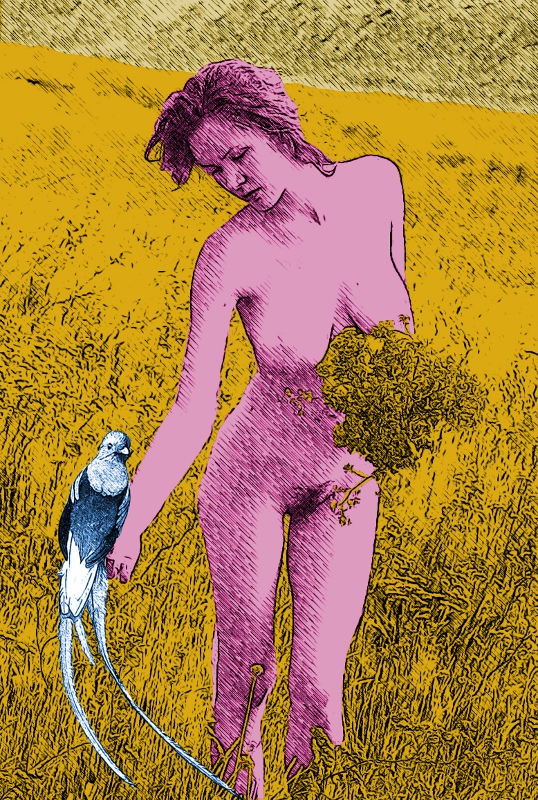
sits in my left hand. The jaguar’s furor
stretches far flung over us. “Now among
alien gods with weapons of magic
am I.” Now all the jaguar’s furor, flung
far out, am I. Now the quetzal, homesick
and blue, am I. At the other border I
shall be stopped by alien gods, foolish
in all that they do and try to condemn.
We all cross, one way or anther, why
make this hard? I pray: go in peace: the wish
I give your gods before I destroy them.
The Sufi mystic, Jalal ad-Din Rumi, tells this story of the dangers of letting the animal in you run wild, literally. I have heard some commentators talk about how it is a metaphor for self-restraint, and perhaps it is, but it also seems to serve as porn, that is, “art for the purpose of sexual gratification,” as the dictionary so blandly puts it, as well.
Mythology seems full of such stories; Zeus only appears as an animal when he takes it into his head to impregnate a mortal. They say it is because his “godly figure” would be too awe inspiring otherwise, but if you are a god with unlimited powers that answer seems a tad convenient. This all leads to the question of how often were shepherds and shepherdesses caught enjoying the flesh of their flock before “that’s not a bull, that’s a god in bull-form” became the standard response?
There was a maidservant
who had cleverly trained a donkey
to perform the services of a man.
From a gourd,
she had carved a flanged device
to fit on the donkey’s penis,
to keep him from going too far into her.
She had fashioned it just to the point
of her pleasure, and she greatly enjoyed
the arrangement, as often as she could!
She thrived, but the donkey was getting
a little thin and tired looking.
The mistress began to investigate.
One day she peeked through a crack in the door
and saw the animal’s marvelous member
and the delight of the girl
stretched under the donkey.
She said nothing. Later, she knocked on the door
and called the maid out on an errand,
a long and complicated errand.
I won’t go into details.
The servant knew what was happening, though.
“Ah, my mistress,” she thought to herself,
“you should not send away the expert.
When you begin to work without full knowledge,
you risk your life. Your shame keeps you
from asking me about the gourd, but you must
have that to join with this donkey.
There’s a trick you don’t know!”
But the woman was too fascinated with her idea
to consider any danger. She led the donkey in
and closed the door, thinking, “With no one around
I can shout in my pleasure.”
She was dizzy
with anticipation, her vagina glowing
and singing like a nightingale.
She arranged the chair under the donkey,
as she had seen the girl do. She raised her legs
and pulled him into her.
Her fire kindled more,
and the donkey politely pushed as she urged him to,
pushed through and into her intestines,
and, without a word, she died.
The chair fell one way,
and she the other.
The room was smeared with blood.
Reader,
have you ever seen anyone martyred
for a donkey? Remember what the Qur’an
says about the torment of disgracing yourself.
Don’t sacrifice your life to your animal-soul!
If you die of what that leads you to do,
you are just like this woman on the floor.
She is an image of immoderation.
Remember her,
and keep your balance.
The maidservant returns and says, “Yes, you saw
my pleasure, but you didn’t see the gourd
that put a limit on it. You opened
your shop before a master
taught you the craft.”
Dear Pat: I miss you! There are time, alone
at night, when I hope that your ghostly scent
will fill the air. You’ll laugh, say how I’ve grown
and I’ll laugh too, and say how you haven’t.
I’ll ask you how Audre and Adrienne
are and you’ll say just fine. Then you will read
something new you have written and I’ll grin
and cheer at all the right parts. Death has freed
you from many things, but not from a warm
audience. Pat, I wait, this fey, whitest
of white boys, who loves you, loves to perform
your work; calls you superfine, the dearest.
You taught me the power of words, laughter,
respect and why I miss my big sister.
See, I was talking with her yesterday.
She was teasing me, calling me “Comrade
Gringo,” due to my accent. Anyway,
we were catching up, the way old friends do
when they haven’t seen each other in years.
“When you die,” she said, “that era’s hairdo
will haunt you like a ghost.” Delfi still sneers
at the dictators of El Salvador.
She was murdered when I was only nine,
but that hasn’t slowed my friend down. “I said,
how can the living or the dead ignore
all our people’s troubles? There are divine
struggles that don’t stop just because you’re dead.”
The boy was gorgeous in the middle hour,
being part flesh and all rot. The sexton
watched him rise up and cast away his sour
smelling funeral shroud. His cracked, swollen
limbs soon smoothed themselves out. Flesh returning
to his frame. Dead boys make the best drama
queens. Still, love is love. The sexton, stepping
out from behind a gravestone, nausea
that the living feel for the dead quickly
fading, wrapped his warm arms around the cold,
little boy; pulling his eerie beauty
close, as if love was something we could hold.
Sacred love, no matter how odd or small;
we are blessed if we find our love at all.
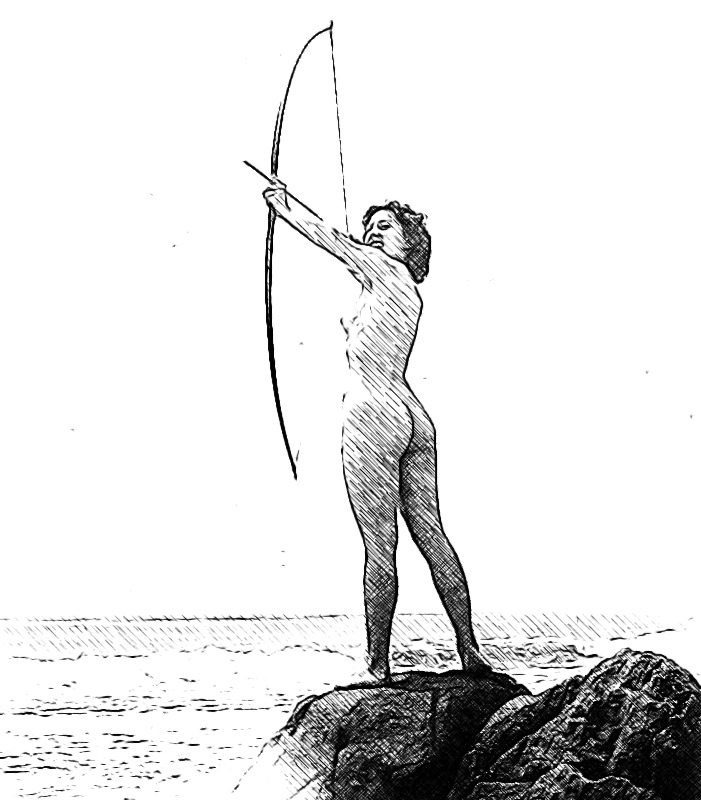
“I shot an arrow into the air it fell to earth I knew not where,” from Henry Wadsworth Longfellow’s “The Arrow and the Song”
When she came to me, Azazyel, I didn’t put two and two together. All angels can be fickle souls and I was pregnant at the time. To ascribe human morals to them is like saying rocks choose to be good or that the sky chooses to be blue. Really? As lovers I knew her swampy region, her tiny hills, her lush bamboo grove. Then came war. Just because I can’t touch her does not mean she’s gone. Our Sammael looks like you: with horns, hooves, eyes like the moon. Of the rebels, the news never says much. just, “shots fired in the third circle of Hell.” Hurry home soon, lover. Hurry home soon.
“Today, like every other day, we wake up empty
and frightened” — translators John Moyne & Coleman Barks
Last night I was ill again, the fever
that comes and goes, the blood cough, the bone itch.
No one came to visit. Not in my bed
and not in my dreams. Empty. Blank. A night
like that terrifies me. A void, despite
everything I know about dreams, the dead,
and the veil. It was as if a light switch
had been thrown. The silence was a torture.
I have never questioned the dead, they claimed
to know what they were doing. Plus, so what?
We the living always claim to know death
inside and out. We want death to be tamed;
we want our dead lovers as living smut;
our nights as orgies filling our last breath.
The BBC has recently reported that Pentagon will end the ban on American women in front-line combat:
US Defence Secretary Leon Panetta has decided to lift the military’s ban on women serving in combat, a senior Pentagon official has said. The move could open hundreds of thousands of front-line positions and elite commando jobs to women.
Which would mean that as early as 2016 it will possible to follow female generals into war, just like the ancient Mongolian days when Lady Khutulun led the Great Khan’s army against China.
I say all this because even in this era there exists a bizarre myth that women and war do not mix except as passive victims, patriotic mothers or trembling daughters waiting back at the hearth fire for their men folk to return. To all these naysayers, I say, “learn your history.” There have been women warriors and generals as long as there has been war.
Learn about Candace of the Sudan, who routed Alexander The Great; Falling Leaf of the Crow nation who counted coup and was considered a chief, sitting in the council of elders; Maria Rosa, a 15 year-old Brazilian girl who led troops in the Contestado War; Japan’s Tomoe Gozen, an onna bugeisha; the Trung Sisters, two 1st century Vietnamese leaders who repelled Chinese invasions for three years; Queen Boudica who led a major uprising of the Celtic tribes against the Roman Empire; Catherine of Aragon; Joan d’Ark; the pirate queen Teuta of Albania; Queen Zenobia of Palmyra; Egypt’s Nefertiti, just to name a few.
Actually, all Rumi’s love poems are tragic and bittersweet. Jalal ad-Din Muhammad Rumi (September 30, 1207 – December 17, 1273) was a 13th-century Persian Sufi mystic and quiet possibly the greatest poet the world has ever produced. Legend has it that one day while in the market place he heard a goldsmith tapping on a golden bowl and the music so astounded him he began to slowly turn about in wonder. From this he founded the Order of the Whirling Dervishes.
None of that matters in understanding this poem. What matters is that for all his talent and understanding of love and God and poetry, Rumi had one great love: Shams.
Shams-e Tabrizi was a wandering Sunni Muslim searching and praying for someone who could “endure my company.” From November 1244 to December 1248 the two men were inseparable and then, on the night of December 5, they heard a knock on the door. Shams went to answer it and was never seen again. It is rumored that it was Rumi’s own son (or some jealous followers) who killed Shams, but of course we’ll never know.
What we do know is that Rumi spent the rest of his life looking for Shams, never to find him. He wrote thousands of poems and through them all he constantly talks of Shams returning, “When Shams comes back from Tabriz,/ he’ll put just his head around the edge/ of the door to surprise us, just like this.” Except Shams will never come back and Rumi knows it and this is why this poem breaks me every time I read it. I have no patience for certain modern Persian scholars whose own homophobia tries to explain away Rumi’s and Shams’ love as simply platonic. This is one of the greatest love stories ever told and they do a disservice to both Rumi and lovers everywhere by derogating it.
We are all haunted by the ghosts of past loves that will never return. I draw my inspiration from Rumi and his beloved Shams.
If anyone asks you
how the perfect satisfaction
of all our sexual wanting
will look, lift your face
and say,
Like this.
When someone mentions the gracefulness
of the nightsky, climb up on the roof
and dance and say,
Like this.
If anyone wants to know what “spirit” is,
or what “God’s fragrance” means,
lean your head toward him or her.
Keep your face there close.
Like this.
When someone quotes the old poetic image
about clouds gradually uncovering the moon,
slowly loosen knot by knot the strings
of your robe.
Like this.
If anyone wonders how Jesus raised the dead,
don’t try to explain the miracle.
Kiss me on the lips.
Like this. Like this.
When someone asks what it means
to “die for love,” point
here.
If someone asks how tall I am, frown
and measure with your fingers the space
between the creases on your forehead.
This tall.
The soul sometimes leaves the body, the returns.
When someone doesn’t believe that,
walk back into my house.
Like this.
When lovers moan,
they’re telling our story.
Like this.
I am a sky where spirits live.
Stare into this deepening blue,
while the breeze says a secret.
Like this.
When someone asks what there is to do,
light the candle in his hand.
Like this.
How did Joseph’s scent come to Jacob?
Huuuuu.
How did Jacob’s sight return?
Huuuu.
A little wind cleans the eyes.
Like this.
When Shams comes back from Tabriz,
he’ll put just his head around the edge
of the door to surprise us









 memories of my ghost sista