• hopilavayi: an erotic dictionary

memories of my ghost sista

~ the dead are never satisfied

memories of my ghost sista

Category Archives: Feminism

scar

18 Monday Mar 2013

Posted by babylon crashing in Feminism, Poetry, sonnet

≈ Comments Off on scar

Tags

cunnilingus, lifetime of love, lithic muscles, Lucky Strike, Moroccan patterns, pubic hair, scar, sonnet, woman warrior


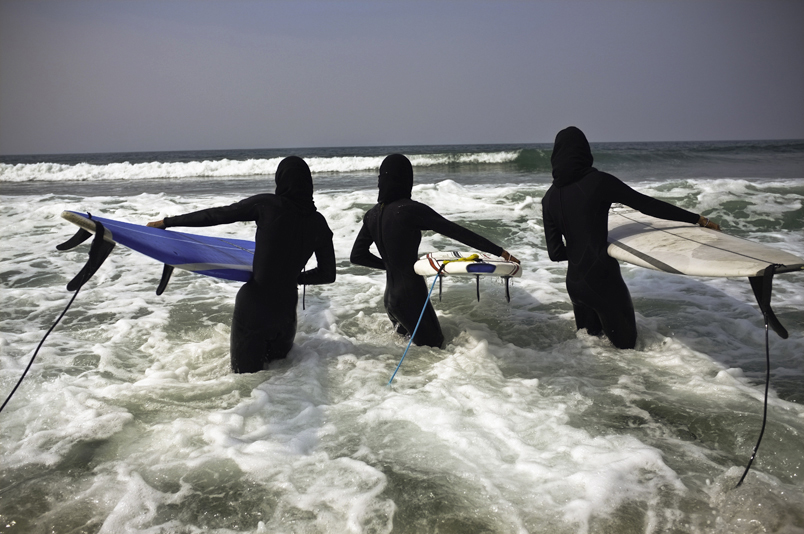
When I trace the scars on her shoulders, thick
as my finger, grotesque tattoos that wrap
around each arm. When I kiss her lithic
muscles she starts to tremble. She could snap
my spine like that. She has killed thirty men
like that. When I play with her softest part,
the part I will not name, her talismen
I call a lifetime of love, my sweetheart
opens. It’s not words but other’s secrets
that that I won’t share. When I light her lucky
strike she groans the earth before volcano’s
blow. She clamps my face in place; her ringlets
tease my nose. I love her, from her forty
broadsword strokes to each of her missing toes.

Image

sketches for without

04 Monday Mar 2013

Tags

Aloisia, armor, Bathilde, Hildur, Hillevi, Livia, Matylda, nude, sword, Thyra, Torhilda, woman warrior
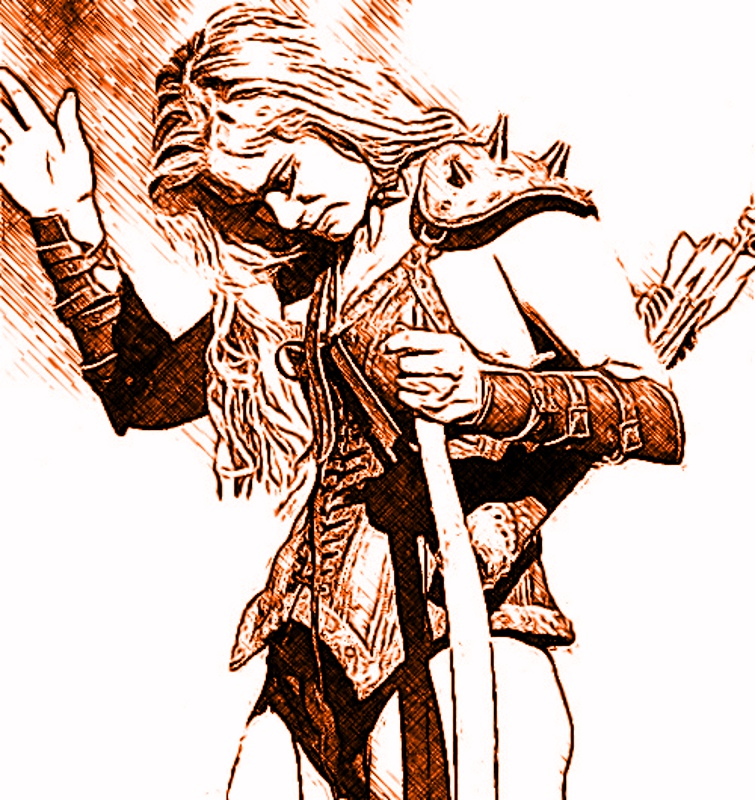
Torhilda

This morning I wrote the poem “without” and after re-reading what I had written I quickly decided none of the images would be in anything remotely resembling good taste when it came to a grieving father over his lost daughter. So I present them here instead in the hope they might get used one day for a different poem. Cheers!

Posted by babylon crashing | Filed under Feminism, Illustration and art

≈ Comments Off on sketches for without

without

04 Monday Mar 2013

Posted by babylon crashing in Feminism, Illustration and art, Poetry, sonnet

≈ 8 Comments

Tags

blizzard, childless father, daughter, fallen in batle, grief, pride and joy, sorrow, without, woman warrior

lost in the snow

Daughter, how many years does a woman
have? You are now shapeless and I a lice

ridden old man. You knew all the Koran
by heart. You could wrestle any boy twice
your weight. The long bow sang only for you.
So did the war ax. Now I itch with grief.

From the vast and bleak steppe country a few
worn sobs can be heard. There is no relief
for the father I’ve become. I despair.

I’m lost beyond words. All I know now fails
me; all because of some mongrel swordsman.

Somewhere in a grave you hide; with your hair

that has stopped growing; and your tiny nails

that will never need to be cut again.

wait

23 Saturday Feb 2013

Posted by babylon crashing in Feminism, Illustration and art, Poetry, sonnet

≈ 10 Comments

Tags

A Bad Girl's Book of Animals, afro, amazons, coward, sonnet, The Muses, Themyscira, wait, war, woman warrior, Wonder Woman, Wong Amy

waiting for themyscira

waiting for themyscira

* * *

“He says, it
cannot be done,
But it is given,
(and mostly as punishment).”

— Wong Amy, A Lesson

You might have left for the Himalayas
or the island of Themyscira, somewhere

I won’t go. But you didn’t. The Muses
know I will never find the rhyme to share
your fate with the world. You were a creature

of war. I valued peace, provided I
didn’t have to give up any leisure

comforts. I know why you left. I know why

I stayed, too. The flip side. I use to brag
that long ago I’d be burned as a witch.
How posh. What airs. But that ignores our fate.

You will always know blood lust, while I’ll drag
my feet in this world and the next. I’ll bitch

but you’ll hear the call. You’ll go and I’ll wait.

* * *

Note:

Themyscira is the fictional island where, according to DC Comics, Wonder Woman and her sister Amazons came from.

like cherry blossoms swift we fall

19 Tuesday Feb 2013

Posted by babylon crashing in Feminism, Illustration and art, Poetry, sonnet

≈ Comments Off on like cherry blossoms swift we fall

Tags

Bushido, female samurai, Japan, mythology, Onna bugeisha, sonnet, sword, The Way Of The Sword, witch-queen

like cherry blossoms swift we fall

If she dies? She has her hand on the hilt,
aware of herself; aware of what she
must not do, not yet. Nothing has been split
out of her, yet. She knows of the red sea
and the purple stars. Her father told her
about the witch-queens; how that long ago
one of them helped save the world. Her mother
taught her the “Way of the Sword,” Bushido
and how death in war is the greatest gift
any samurai could hope for. What’s death
next to letting down your mother? Afraid
does not work here. “Like cherry-blossoms, swift
we fall,”
the poem goes. With a deep breath,
she took a step forward and drew her blade.

* * *

Note:

Bushido, “the way of the warrior,” is a feudal Japanese word for the samurai’s code of ethics. It has been compared to the Western concept of chivalry. As a philosophy, it stresses loyalty, martial arts and that death in battle is the greatest gift a warrior might receive.

delfy gochez fernandez

05 Tuesday Feb 2013

Posted by babylon crashing in Feminism, Illustration and art, Poetry, sonnet

≈ Comments Off on delfy gochez fernandez

Tags

Delfy Gochez Fernandez, El Salvador, friends, sonnet, woman warrior

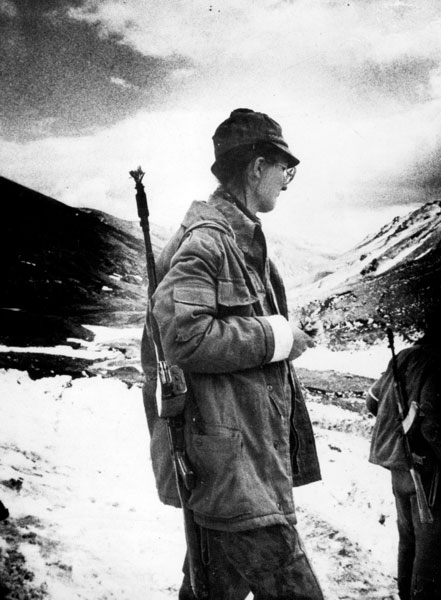
Delfina Gochez Fernandez (1979)

Delfina Gochez Fernandez (1979)

If you never knew Delfi, that’s too bad.

See, I was talking with her yesterday.
She was teasing me, calling me “Comrade
Gringo,”
due to my accent. Anyway,
we were catching up, the way old friends do
when they haven’t seen each other in years.

“When you die,” she said, “that era’s hairdo
will haunt you like a ghost.”
Delfi still sneers
at the dictators of El Salvador.

She was murdered when I was only nine,

but that hasn’t slowed my friend down. “I said,
how can the living or the dead ignore
all our people’s troubles? There are divine
struggles that don’t stop just because you’re dead.”

mujeres que hacen la revolucion

mujeres que hacen la revolucion

mujeres que hacen la revolucion

mujeres que hacen la revolucion

khutulun’s war witches

23 Wednesday Jan 2013

Posted by babylon crashing in Feminism, Illustration and art

≈ Comments Off on khutulun’s war witches

Tags

armor, Celtic, clit, demon, hell hound, Morrigna, sword, the daughters of Khutulun, war witch, woman warrior

the daughters of khutulun

the daughters of khutulun

The BBC has recently reported that Pentagon will end the ban on American women in front-line combat:

US Defence Secretary Leon Panetta has decided to lift the military’s ban on women serving in combat, a senior Pentagon official has said. The move could open hundreds of thousands of front-line positions and elite commando jobs to women.

Which would mean that as early as 2016 it will possible to follow female generals into war, just like the ancient Mongolian days when Lady Khutulun led the Great Khan’s army against China.

I say all this because even in this era there exists a bizarre myth that women and war do not mix except as passive victims, patriotic mothers or trembling daughters waiting back at the hearth fire for their men folk to return. To all these naysayers, I say, “learn your history.” There have been women warriors and generals as long as there has been war.

Learn about Candace of the Sudan, who routed Alexander The Great; Falling Leaf of the Crow nation who counted coup and was considered a chief, sitting in the council of elders; Maria Rosa, a 15 year-old Brazilian girl who led troops in the Contestado War; Japan’s Tomoe Gozen, an onna bugeisha; the Trung Sisters, two 1st century Vietnamese leaders who repelled Chinese invasions for three years; Queen Boudica who led a major uprising of the Celtic tribes against the Roman Empire; Catherine of Aragon; Joan d’Ark; the pirate queen Teuta of Albania; Queen Zenobia of Palmyra; Egypt’s Nefertiti, just to name a few.

amazonomachy

15 Tuesday Jan 2013

Posted by babylon crashing in Erotic, Feminism, Poetry, sonnet

≈ Comments Off on amazonomachy

Tags

Amazon, amazonomachy, Athena, Greece, Parthenon, She Who Cannot Be Named, sonnet, The Goddess, war, woman warrior


Now I hunt for the tomb of Queen Myrine,
was with her when the walls of Cerneh fell.
Myrine, who laid the Greek and Philistine
worlds to ash. Hippolyta, the rebel
Amazon, loved her. And, fey and childlike,
I did, too. Wars come, wars go, but hunger
remains. Once, curious what I tasted like
inside, we fell, clinging to each other
in a berserk haze. Hips grinding, amazed,
hot with blood-sweat until the war-god, Mars,
became enraptured. Now women are praised
for their chastity, not battle scars.
My queen, your tomb is lost, but your cravings
and name live on. Take these, my offerings.

    Note:

Amazonomachy: art portraying battles between Greeks and Amazonian warriors; Pheidias designed an amazonomachy upon the shield of Athena Parthenos, a statue of the goddess found in the Parthenon.

the statue of a crimsoned succubus

08 Wednesday Aug 2012

Posted by babylon crashing in Erotic, Feminism, story

≈ Comments Off on the statue of a crimsoned succubus

Tags

Buddha, crimson, ghost, historic, Japan, Lady Leiko, masturbation, Mistress Fuyu, Nagasaki, Onna bugeisha, sculptress, story, succubus

the statue of a crimsoned succubus

In a large room of an artist’s studio, somewhere lost within one of the many suburbs of Kyoto, a boy watched an older woman, red paint up to her elbows, in the act of crimsoning a succubus.

The studio looked out on the courtyard which the building itself was built around. The sun, at that moment overhead, blazed down upon the mossy wet vines that clung to the brick work, sending their red reflections glowing into all the sombre nooks of the work room.

The succubus, rudely cut from lecher’s wood, rested at ease upon her tail, her curled-ram horns pressed against the wall, her legs obscenely sprawled open. The sculptress sat before her creation on a low stool, hard at work. The silent boy sat nearby, gazing fondly at both.

On the table in front of the open window stood a row of Oni, rough mountain demons, modeled from river-bed clay. Beside that project were piles of washi parchment covered with drawings in the woman’s own hand, done in blues and reds. By the door a figure of Inari, the trickster fox god of rice, sake and prosperity, sat upon its haunches, a sacred minashigo key hanging from its mouth.

The woman was dressed in simple browns, she had a round, dark face and straight black hair. From the globs of scarlet-red paint spread out at her feet she carefully, with only her fingertips as tools, crimsoned the succubus into life. The effect was less of a statue being given a second skin with an ox-tail brush; rather, it was as if life was slowly seeping through the cold dark hues of the wood through the miraculous use of the succubus’ own menstrual blood. From her thighs on down she appeared to have spurted and spouted sticky rivulets that coated her goat-legs; while, from her navel upwards, the artist’s red-soaked fingerprints could be seen upon the naked wood, fondling each intrinsically carved breast, the thick neck, the bulbous lips.

Once in a while the woman would say the boy’s name, “Shijo;” but it had less to do with starting a conversation and more in a childish, sing-song voice, as if his name were precious to her and she simply enjoyed saying it for the sake of hearing the syllables roll off her tongue. Whenever she did say it, though, the boy would look up from whatever he was doing and smile to himself. He was use to her moods, had seen all of them in the last two years. She was having a mood right at that moment. He could tell. The studio was utterly silent, a perfect hush enhanced by the heat of a noonday sun beating down. Presently the woman rose, crossed to the window, her arms sticky with paint and looked out into the heat.

From where she stood she could see the sparse flowers edging the neglected pathway, the building opposite her with its broken windows, the scandalmongering vines climbing up the tiled roof that cut the violet-blue of a July sky into fragments.

In the center of the courtyard was an ancient, dry fountain; some tall red sayuri lilies grew there, the pure cherry of their hearts bright as the paint the woman had been applying to the succubus reclining wantonly behind her.

The boy stood and walked to stand behind the woman, to see what had caught her attention. The sculptress rested her elbows on the sill, it was so hot that she felt it burning through the paint that was quickly drying on her hands. She had the air of one routinely use to being by herself, the unquestioned calm that arose from a life of long silences. Her face was reserved, even sombre; her lips, well shaped but pale, were resolutely set; there was a fine curve of strength to her chin. She had wide, black brows, smooth dark skin, nebulous mahogany eyes. Her throat was full, she had the sort of muscles sculptors called beautiful.

After a time of gazing at the sun-burned garden she turned back into the room. Standing in the center of the studio, with her teeth worrying her red middle finger, she looked questioningly at the half-crimson succubus. The boy smiled, waiting patiently to see what she finally would say. Some times it would take her hours to form a single comment, but they were observations he always found endlessly interesting. Instead, with a sigh, she took a curiously wrought key from her belt, swung it about in her fingers and left the room.

The building was built without connecting corridors or passages. Each room opened onto another, the upper ones were reached by short wooden staircase built against one of the outer walls. There were many apartments on the second floor, each one boasting imperial designs from at least fifty to sixty years ago. As with all the windows on the first floor, the ones on the second were set facing the old courtyard.

Many queer and exquisite objects could be seen in those long deserted rooms; carved chests full of Korean silver; paintings from China full of erotic terror; furniture made by long-forgotten hands. In one chamber hung several gold-silk tapestries depicting the Eight Devils of Kimon, all done in shades of ruddy brown. As she walked lightly from one room to the next her footsteps caused little clouds of dust to billow up, marking her slow passage.

Passing these things without a glance the woman unlocked a door on whose rusty hinges it took all her strength simply to turn. It was a store-room, one lit only by one low window looking down upon the street. Like everything else in the building, it too was full of dust as well as a sallow, moldy odor. About the floor lay many bound-chests, untouched and before one of these the woman knelt, fiddling with the lock.

The smell of rust filled her nose as the lid swung open. The chest contained a number of cut gemstones. She selected two of more or less equal size, each a crystal pink in hue. Then, after locking the old door behind her, she silently made her way back from where she had come, returning to her studio. When she saw the hollow eye-sockets of the succubus, she placed what looked like living liquid fire into the wooden skull. Watching her statue’s eyes sparkle she finally relaxed, standing for a long while contemplating her handiwork. Finally she washed her hands and arms, putting away her orphic paints.

By then the sun had changed position as it crept across the room, casting hot brindled shadows, cast from the dappled vines hanging from the window eaves over the river-clay Oni, dazzling the colors in Inari’s psychedelic robe.

For the second time that day the woman left the room, venturing into the hall, opening the door that exited upon the street. She shaded her eyes, gazed across the July dazzle, the shadow of her slack, slim figure was cast into the square of hot sunlight issuing from across the hallway and through the open door.

It had been almost two years since the Siege of Kyoto. The section where her studio stood had been devastated. Now, newer suburbs were being built, but that left her neighborhood’s ruins neglected. It was hard for her to imagine a city as vast as Kyoto containing ghost towns, but wasn’t that what this was? She looked at the barren market-place, surrounded by abandoned buildings. Everything was falling into decay. Beyond those shells she could spy the squat roof of the local Shinto shrine jutting upwards across the scarlet sky. Brown grass grew between broken cobbles. There was not a soul in sight.

Under the rusted iron bell that hung against the door beam to her building hung a basket. Her mysterious patron had been by it seemed. She fished out of it bread, a flask of plum sake, some old vegetables wrapped in a linen cloth. The sculptress took these with her and closed the door upon the outer world.

Carrying her loot back in her arms, she crossed the hallway and came out into the opposite end of the courtyard. The tall red sayuri lilies seemed to be nodding their heads to her, as if the two of them were in on a secret no one else knew. Entering by a door next to the fountain the woman found herself in her workshop once more.

Setting her load down on a corner of her work table, the woman proceeded to prepare her meal. Above the wide tiled hearth hung a metal chain and attached to that was an iron pot. She lit a fire under the pot, filled it with water, then put the vegetables in. Then she took down a heavily bound book from off a shelf. Bending over it, huddled on a stool, she began to read.

It was a book filled with drawings — strange, horrible, erotic artwork — as well as curious stories that had been written in a black-blue scrawl. As the woman read she uncrossed her legs and her face grew hot. She flushed while resting her cheek on one hand, turning pages with the other. The heavy volume felt cumbrous on her knees. Not once did she look up but with parted lips pored over the midnight-blue drawings.

Outside the vines curled against the sun-kissed brick, the empty sky looked down upon the dry fountain, it burned the dead grass, the tall red sayuri lilies. The sun sank on the other side of the building, still the woman read on. The flames leaped on the hearth, the vegetables seethed in the pot unheeded.

All alone the woman leaned back on one elbow looking at the drawings. She reached down with her free hand and raised the hem of her kimono, revealing the cotton thong of a man’s fundoshi that she was in the habit of wearing. She ran one long fingertip along the front of her cunt and moaned. She looked up at the window and then back at the book, an anthology called “Kinoe no Komatsu / Languishing for Love”. She let her knees fall open wider and pulled the crotch of her fundoshi to one side as she turned the page. The glorious mound of her pubic hair was already wet and sticky. She plunged two-fingers inside her girl-lips and began to grind, leaving a wet cum-smear on the stool’s seat.

The woman groaned. There it was, the famous print known as “Dream of the Fisherman’s Wife” a prime example of the “aesthetic of the grotesque” in the erotic age of Hokusai. The body of a woman, head thrown back in either carnal abandonment, or drowned and swaying this way and that in the inky green water, allowing Tako no Kami, the octopus god, access to her cunt. It was a curious new form of 8-tentacle “kun’niringusu,” as the Kyoto poets once called the ancient art of clit licking. Her fingers plunged in-and-out of her soaked pussy.

“I’m going to cum–”

The woman’s eyes were screwed tight, her mind lost in the approaching orgasm. She was finger fucking herself so red-hot and hard that her tiny breasts under her kimono were shaking. She knew exactly how that fisherman’s wife felt; she’d fuck a devil-god if the opportunity presented itself. That need to be filled up with something otherworldly, that need to cum all over something impossibly hard.

“O! O! O!”

She was making soundless noises now, feeling the wave over take her. She slipped a third finger into her cunt as she brought herself to the brink. Closer — harder — closer — faster — clo–

With that, without warning, a heavy clang from her old rusted doorbell broke the spell. The woman dropped the book, sprang to her feet, gazing in horror and bewilderment, one hand still buried between her legs as the long awaited orgasm … faded away.

Again the bell sounded.

She picked up the book, put it back on the shelf, licked her fingers, feeling ambivalent.

For a third time the iron clang, insistent, impatient, breaking her quiet once and for all.

The woman frowned while readjusting her clothes, pushing back her hair from her sweaty forehead, fingered her clit through the fabric of her fundoshi, then went, with cautious steps, across the courtyard once more, back through the dark hall and up to the door. For a second she hesitated — was it really worth it? — then drew back the bolt and threw open the door to world outside.

A woman stood waiting for her.

She was younger than the sculptress, but not greatly, gorgeously attired, a lady no doubt from the emperor’s inner court. A concubine? No, a warrior, even though her carefully pleated and folded dress was stunning. Her coiffure was just as stylized, with not a hair out of place.

“You cannot want me,” the sculptress finally said, surveying the stranger for a couple of moments. “And there is no one else here. Sayonara.”

“If you are Mistress Fuyu Tsukiko,” the splendidly-dressed stranger answered, “then I certainly do want you.”

“Want me?” The sculptress opened the door a little wider. “I am Fuyu Tsukiko, but I do not know you.”

“Perhaps,” the other answered. “But I have questions that only you can answer. I am Lady Leiko of Nagasaki.”

“Leiko of Nagasaki!” repeated Fuyu softly. Then, as if she had come to a conclusion, she stood aside, motioning for the lady to enter. When she had passed into the hallway she carefully bolted the door, then turned to her with a grave expression.

“Will you follow me, my lady?” she said, walking before Leiko to her studio.

The sun had left the room by that time, but the air was still bathed in a reddish warmth. There was a sense of great heat that lay trapped in the ancient bricks and grass.

Fuyu Tsukiko offered a seat to her guest, who accepted in silence.

“You must wait until the supper is prepared,” she said. With that she placed herself on the stool by the pot, stirring its contents with an iron spoon, openly studying the woman.

The material of Leiko’s semitransparent kimono did nothing much to hide her curves, although most were hidden by layers of silk. Her beauty mesmerized Fuyu until she forgot for a moment what she was suppose to do.

Leiko, for her part, returned Mistress Fuyu Tsukiko’s steady gaze.

“You have heard of me?” she said suddenly.

“Yes,” was the instant answer.

“Then you know what I am here for?”

“Perhaps,” said Mistress Fuyu, frowning.

Leiko turned and stared at the half-crimson succubus with great interest, even, Fuyu mused, a little fear.

“My mother is the Lady Miyuki of Nagasaki,” Leiko finally answered in a manner one might have called arrogant. “The Emperor made me a warrior, an Onna bugeisha, when I was fifteen. Now I am tired of Nagasaki life, of castle life, of my mother. So I have taken to the road.”

Mistress Fuyu lifted the iron pot from the fire to the hearth.

“The road to where?” the sculptress asked.

Leiko made a large gesture with her hands.

“To wherever the road leads.”

“As an Onna bugeisha?” asked Mistress Fuyu.

Leiko tossed her fine head.

“As a former Onna bugeisha. Now I have other ambitions.”

Mistress Fuyu smiled, moving about, setting the food ready. She placed the little clay Oni on the window-sill; flung, without any ado, her drawings, paints and brushes onto the floor.

A queer silence fell on the room. The host did not seem to encourage comment. The atmosphere was not conducive to talk. Fuyu opened a cabinet in the wall, took out an elegant cloth that she laid smoothly on the rough table. Then she set on it earthenware dishes, honey in a clay jar, flushed pears cut thin, rice cakes in a plaited basket, steamed cabbage, radishes fragrantly pickled, the bottle of plum sake.

“Does anyone else live here with you?” Leiko asked at one point.

“I live by myself. I have no desire for company. I take pleasure in my work alone. Sometimes people come to buy my art, usually one of my sculptures for their shrines, but of late very few.”

“You are a good artisan, then?” asked Miyuki. “Who taught you?”

“Old Mistress Yoi, born in Higashimurayama village, taught in Edo. When she died she left me this building.”

Again the room sank into silence. Shadows crept about.

Leiko ate everything put in front of her. Fuyu, on the other hand, seated next to the window, rested her chin on her palm, stared out at the bright and fading orange sky, then at the broken windows, then at the sayuri lilies waving about the dry fountain. She ate very little. After a while the lady asked, almost shamelessly, for some of the sake. The sculptress rose and brought a sake cup to her.

“Why have you come here?” Fuyu inquired, placing the bottle before Leiko.

Leiko laughed easily.

“I am married,” she said, as an explanation, lifting her cup to her lips. At that Mistress Fuyu frowned.

“There are a lot of married people in this world.”

Leiko surveyed the mysterious swirling liqueur through half-closed eyes.

“It is about my husband, O my host; that is why I am here.”

Fuyu Tsukiko leaned back in her chair.

“Yes, I have known your husband.”

“Really? Please, tell me about him,” Leiko of Nagasaki requested. “I have come here for that story.”

Fuyu smiled slightly.

“But why would I know anything more about him than his own wife?”

Leiko flushed.

“Perhaps. Perhaps. But never mind, go on, what do you know? Tell me.”

Fuyu’s smile deepened.

“He was the only son of the Lady of Kobayashi, he hid himself at the cloister of the Red Brotherhood in Kyoto to avoid having to marry you.”

“I see you know that,” said Leiko. “What else?”

“Since you wish for me to tell you about your own life, listen to what I have to say, my lady.”

Fuyu spoke with an uninterested tone, staring the entire time out of the window.

“He desired, I think, to become one of the Order of the Red Brotherhood. But when he was fifteen his elder brother died, thus he became your mother-in-law’s only heir. Many families wished to align themselves with her, but in the end they agreed for him to marry you.”

“Without my wish or consent,” Leiko added, refilling her sake cup.

Fuyu simply shrugged.

“The feelings seem to be mutual. Your husband, who wished most passionately, I am told, to become a priest, fell ill with grief. In his despair he confided his misery to a local miko, a temple maiden, who lived in his neighborhood.”

Leiko’s eyes flickered, hardened behind their long lashes.

“Your husband was to be heir to a great fortune,” said Fuyu, “but it was through this miko that he became introduced to the Brothers. In his fear of marriage he promised them all his inheritance if they would save him from his mother’s iron will. So the priests, tempted by greed, spread the rumor that he had died. There was even a fake funeral and he was kept secret in the city’s cloister, dressed as an initiate. All this was put into writing, documented by the priests, so that there would be no doubt when the boy returned from the dead, as it were, looking for his inheritance once his mother had died.”

“Yes. I was glad to hear that he had died, at least at the time,” said Leiko. “For by that time I loved another and there is no honor in behavior like that, husband or no.”

“He lived for a year among the priests,” Fuyu Tsukiko went on. “But his life became bitter. He wanted to escape, I believe, yet he could not make himself known to his mother for then it would become known that not only had he lied about this death but that he had promised the priests everything.”

“Go on.”

“Is there more?”

“You know there is.”

“So, as life became more and more horrible for your husband he found a way to send a letter to his widow.”

“Yes. I have it here.” Leiko touched her breast. “He told me all about his dishonesty, begged forgiveness,” she laughed. “He asked me to come rescue him.”

Fuyu crossed her long hands upon the table. There was still red paint under her nails.

“But you … but you did not rescue him, though. You did not even answer his letter.”

“No, I did not rescue him. His mother had taken another husband, she now had a new son to inherit everything.” Leiko lowered her eyes moodily, “I was occupied, in love with a … dairy fairy. Plus, he had lied, my little foolish husband: to Buddha, to me, to the world. ‘It will be poetic justice,’ I thought. ‘For him to suffer as I once suffered’.”

“He waited for months for your answer,” stated Mistress Fuyu flatly. “Finally he fled from the cloister to here, to this very building. Again he wrote to his wife and again she did not answer. That was two years ago.”

“Did the priests make no attempts to search for him?” asked Leiko.

“By that time they knew that the boy was heir to nothing. They were afraid that the tale might reach the ears of the shogun and there might be … repercussions. But did it matter? Around that time the usurper, Tokugawa, lay Kyoto under siege and everyone suddenly had other things to worry about.”

“Indeed. Had it not been that I was required to help mount a defense of the city I might gotten here sooner,” explained Leiko. “But I was occupied with fighting.”

“The cloister was destroyed, the brothers murdered or fled into exile,” continued Fuyu. “The boy lived here, learning many crafts from Old Mistress Yoi. She had no apprentices but the two of us.”

Leiko leaned back in her chair.

“That much I have learned. That the old woman, dying, left her place to you. What did she leave to my husband?”

Fuyu gave her a long, unblinking stare and then turned back to the window.

“It is not strange that you are here, now? You, Leiko of Nagasaki, after all this time, inquiring about your husband.”

“A woman must know how she is loaded down with other people’s responsibilities. As it turns out only you and I know that he had an existence of any sort after he faked his death. He might be a fool but he is still my husband.”

Dusk — hot, blood-red — had fallen on the chamber. The half-crimsoned succubus gleamed dully, the wet lips of her cunt spread vulgarly before the two women. Lady Leiko of Nagasaki felt a little chill pass through her, despite the heat, a little sullen chill, but she waited to see what the older woman had to say.

The sculptress rested her smooth pale face on her palm, her mahogany eyes were hardly discernible in the twilight, but the shadow of her lips moved when she spoke.

“Shijo died two years ago,” she said. “His grave is in the garden, next to the fountain, where those red sayuri lilies grow.”

trespassing upon dreamland

03 Friday Aug 2012

Posted by babylon crashing in Erotic, Feminism, Lilith, story

≈ Comments Off on trespassing upon dreamland

Tags

Bulldagger Blues, cunnilingus, Dreamland, Gladys Bentley, Lilith, Lucille Bogan, Ma Rainey, Mother of a Mixed Multitude, Prove It On Me Blues, story, Tallulah Bankhead

In Arcadia Damian Dastagna consumed his breakfast in the breakfast-nook with a warm, congenial feel of a man sure of victory. He loved victories and though he was scarcely what one might call a hard-boiled chap by dint of habit, he saw himself as a master of fisticuffs against the evils of life. There were certainly evils enough in the world. Wickedness. Vice. Sin. He often bragged about how he could twist fickle Fate this way or that, all through marvelous cunning on his part. Just now, for example, Damian felt that he had brought about his hardest, no doubt his loftiest, struggle for a beneficial and economic future to a close. To have married Claudine Nicholas, “Creepy Claudine,” as her more intimate friends called her, in the howling storm of hostility that her family had flung up at him — all this in spite of her unaffected indifference to men — was indeed an accomplishment that had required more than a bit of pluck and daring-do on his part. He had pried his new wife away from the City, with its salons and speakeasies, away from all her “gay flapper” friends — odd girls and twilight lovers the lot of them, as far as Damian was concerned — and out to a remote farmhouse-estate called Arcadia.

It was more than just any farmhouse, however, it had been in the Nicholas dynasty as a summer residence for over a hundred years.

“… and you will never get Claudine to go anywhere but there,” old man Nicholas had said when his much despised son-in-law had inquired. “Arcadia’s roots grow deep inside her, even more than the City could ever hope for. One can understand what holds her to Arcadia, but the City?” the old man had simply shrugged his shoulders as if he knew nothing about Roaring Twenties, cocaine or flappers.

“Vice is nice,” Damian thought, but wisely he kept those thoughts to himself.

The truth of the matter was, however, that there was something about the farm and its rolling, heavily wooded hills that unnerved Damian. His grandmother would have said that there was a witching — a savage wildness — about Arcadia that would certainly not appeal to stuffy Nantucket tastes. Damian looked down upon what he called “the countryside” in the same manner that certain gentlemen-bachelor friends of his would romanticize golf courses: a great way to get out into ol’ Mother Nature now and then but thank the Pope and the Holy Ghost that there were gates to keep all the undesirables out. Of late he had grown bored with the City, a feeling he had never known before. Perhaps it was because Claudine was known everywhere the couple went, and many places he was not allowed to go. Despite her reputation of being a little … “funny,” as his grandmother would have also said, he had found himself growing a tad bit jealous over her notoriety. She knew Lucille Bogan, Gladys Bentley and Tallulah Bankhead. She had even been in attendance at the legendary Clam House Club when Ma Rainey sang:

“I went out last night
with a crowd of my friends;
They must’ve been women,
’cause I don’t like no men.
It’s true I wear a collar and a tie,
I like to watch the women as they pass by…”

How was a husband to compete against that? He had watched with satisfaction, then, at the gradual fading in his wife’s eyes of what he called the “Bulldagger Blues” hunger as the hills, the heather and the orchards that made up the Arcadia estate all closed in around them as they bounced along in her splendid old Tin Lizzie, a T-Model Ford, hitting every pot hole in the bumpy roads.

Now, peering out the breakfast-nook window, munching his blackberry jam and toast he peered at a low hedge of uncared for fire-brand fuchsia, beyond that were steep slopes of heather and clover. Everywhere one looked bracken cascaded down into the dark. The buildings were constructed upon a series of cavernous, stone catacombs, none knew how old, now all overgrown with oak and ivy. Just the other day Damian had started reading a book written by some mad fellow from the Hermetic Order of the Golden Dawn that seemed to declare that Nature’s open savagery against mankind was a direct result of Man’s inability to understand and know all the horrors of unseen that surrounded him. Damian had said “poppycock!” at that and chucked the book out the bouncing car’s window. But now as he gazed at the landscape he shuddered and did not know why.

“It is very wild,” he said to Claudine, who had joined him, “one could almost suppose you might turn a corner and run into some ancient nightmare you read about in books, like that horrible old Pan, dancing away across the glen.”

“I don’t think Pan spends much time in upstate New York,” his wife had said in her soft, monotone voice.

“O well, too bad for him. I’m sure all those poor, daffy gods must have a devil of time in this market, since no one believes in them anymore.”

“Some do.”

“Hmm?”

There were times when it occurred to Damian that he had no idea who he had just married. Claudine Nicholas was at once emotionally removed from him and sexually adventurous, in equal measures. When they went out in public she wore her trademark tux and top hat and would lean in and touch his leg or arm as she talked to her friends, often sliding her hand right up his thigh and then across his crotch. Each time she did so, Damian’s misery and excitement deepened in equal measures. Sex with a woman was terrifying to him, but it was the sort of terror he never wanted to stop.

On the occasions when she talked directly at him she used terms like “sweet boy” and “my darling thing.” The first night they slept together she had him stand naked in front of her, while she, fully dressed, took long drags off her chrome and red hookah pipe and blew pink and blue opium clouds out from her nostrils, like a bullgod stamping his foot.

“You are rather embarrassed around me, aren’t you, my darling little thing?”

Damian could only look down at his semi-erect cock in shame. The good life had robbed him of much of his vitality. Fear, erotic excitement, shame and humiliation could be read in every line of his face.

As she had talked to him she reached out and stoked his naked cock, all seven and a half inches, feeling him harden at her touch while a crafty, small smile crossed her lips. Just once, a flash and then it was gone.

“You might be curious as to why I agreed to marry you,” she said. The opium in the air made everything feel like honey: sweet and slow. As a way of answering her own question, she said, “bow down.”

A moment later Damian found himself kneeling in front of his fiance. That night she had chosen to wear a slinky black sheath, a black feather headband and long pearl necklace. Damian was amazed at how easily she could transform herself, from a mysterious rogue to a gorgeous woman, all in a manner of minutes. Now her legs were slightly apart, her silk dress wide open. When Damian looked down his eyes grew wide at the sight of her splayed open cunt.

“Some do.”

“Some do what?”

“Worship.”

“Worship who?”

“Lilith, for example.”

“Who?”

“Lilith. The worship of Lilith never has died out,” Claudine said. “Perhaps newer gods get more attention, from time to time, but she is the One-Mother, the Ancient One, to whom all must come back to at last. What is Mother Mary but a celibate shadow of Lilith, dressed up in ugly robes?”

Damian was religious in that vaguely devotional kind of way; still, he did not like to hear his beliefs, or at least his friend’s beliefs, spoken about as being mere shadow puppets of something far bigger and darker.

“Say now, you don’t really believe in this Lilith person?” he asked, pettishly.

“Belief has very little to do with anything that happens in this world,” Claudine said, quietly, “but if you are a smart little boy you won’t ask too many silly questions while you reside in her domain.”

It was not a week later, when Damian had grown bored of the forest paths that made their way around Arcadia, he ventured out on a tour to inspect of the farm buildings. Farms suggested to his mind a scene of cheerful bumpkinly bustle, with milk churns and smiling busty dairymaids in low-cut dresses with ruffles and teams of Clydesdale horses pulling things and rustic yeomen looking like they had just stepped out of a Bruegel painting. Here, though, between the cadaverous buildings, there was nothing save the slatternly owls and the blowsy cobwebs. Nothing could be heard from behind the warped and stained doors. The shuttered windows appeared dead. The stables were empty of the restless stamping of horses. All the farmyard sounds were missing: no roosters preening themselves in the sun, no drifting falcon turning and turning in a widening gyre, no rasp of a saw, no muted hollo from some beast of burden.

“Curiouser and curiouser,” muttered Damian to himself, nervously.

The fact was, Damian was nervous. The world was full of small noises, weird songs and chatter and endless rustlings. He felt as if he were being watched, that same mocking hostility from unseen things that he felt lurking in the woods and the catacombs and the thickets. As he threaded his way past empty cowsheds and long blank walls, he started suddenly as a strange sound reached his ears. It was the echo of a girl’s laughter, sounding both golden and dark all at once. Damian paused, but he could neither figure out who or where the laughter, if indeed that was what it was, originated from. Later that evening when he asked Claudine about it she said that she knew of no other girls in the neighborhood, that it was probably some local rustic having fun at Damian’s expense. The memory of that echo, however, seemed to be one more indication that something queer and forbidding lurked in and about Arcadia.

During his days he was alone, for he saw very little of Claudine. She would go horse back riding with her friends when they came up from the City to visit. Whatever they did out in the woods seemed to swallow her up everyday from dawn until dusk. When she returned from her mysterious jaunts often she would be flushed and full of vigor. She would find her husband and then slide out of her riding trousers like a second skin.

“Pleasure me, my toy.”

That would be his cue to lean ever closer to the Y her legs formed, until she would take his head in her hands and guide him to her clit. Damian Dastagna might have been a wastrel in every sense of the word, but her knew his way around a girl’s nether regions. With tongue and fingers and nose and chin he would begin to lick and probe and taste and consume. Her cum would leave a shine across his chin. He delighted in her wetness and her scent, nibbling on her out-turned lips, tugging at her pink flesh gently.

“Take your time, boy of mine,” Claudine had said on their wedding night, “but makes sure you swallow all of my cum. I want you to beg for this. I want this to be your new craving.”

At times like these Damian was glad there were no servants in the house, for her moans and sighs, her screams and cries, shook the walls and once she got started they continued and continued, building from one orgasm up into another. At each her thighs and hands would grip Damian’s skull and then relax in a gush, only to tense up once more as the next orgasm washed over her.

One day, following the direction he had seen Claudine take earlier that morning, he came upon an open space in a lonely orchard, further shut in by huge oak trees that grew all around. In the center of this clearing stood a marble plinth on which sat a small, bronze figure of a naked woman. It appeared to have been modeled after the 19th century Decadence movement: one of her hands had dropped down past her hips to caress the top of her kinky patch of hair. Her legs were long, tapering away into goat hooves. The statue’s head was thrown back, eyes closed, her mouth frozen in an endless O of desire as she prepared for her flood-gates to burst just below the threshold of a god-like orgasm.

Studying it careful Damian could see that it was a beautiful piece of workmanship, but what it was doing in an abandoned orchard confused him so much that he almost didn’t notice the chalice and knife that had been placed as offerings at her feet. Was that … gold? Damian stepped up to the plinth and peered inside the large cup, staring for a long minute at what looked like congealed blood caked the concave rim. With a cry of disgust Damian knocked the offending item angrily from the pedestal. Even as his hand made contact with it a strange wind stirred itself up, rustling the trees overhead and he shuddered a second time and did not know why.

As he strolled slowly homeward he found himself on a lonely pathway he had never seen before, though, truth be told, all pathways in Arcadia were lonely. He did not know what had possessed him to touch the chalice. Still, the damage had been done. Suddenly he stopped; for, gazing out from a thick tangle of undergrowth, he saw that a girl’s face was scowling at him. It was a girl with an unearthly beauty: brown, exquisite, with mesmerizing black eyes. He stopped and stared. The girl’s angry expression did not change the longer he stood there.

“I say, hello?”

Damian felt his legs buckle a little. The girl opened her mouth as if to speak but at that moment, with a cry of dismay, he broke into a run and fled.

“I saw a girl in the wood today,” he told Claudine, later that evening, “brown-faced, rather beautiful, but an orphan, I think. An orphan or a gypsy, I suppose.”

“A gypsy?” Claudine echoed, “there aren’t any gypsies in upstate New York.”

“Then who is she?” asked Damian.

As Claudine appeared not to be interested in answering his question he shrugged his shoulders and began talking about his finding of the chalice and the statue.

“I suppose you know all about it,” he observed, “you and your bulldagger friends. It’s a harmless piece of tomfoolery, but what would people think if they knew of it?”

Instead of answering Claudine asked, “did you meddle with it in any way?”

“I, er, I knocked that cup away, sure,” Damian said, feebly, watching Claudine’s impassive face for a sign of annoyance. Then he added a second time, “it was simply disgusting. Blood? Whose blood was it?”

“I think you were very foolish to do that,” his wife simply said. “I’ve heard it said that the Mother of a Mixed Multitude is rather horrible to all those who molest her.”

“Molest?” cried Damian, a bit louder than he intended. “I did no such thing. Plus, all this talk about spooks and bugaboos is rot and stuff and nonsense!”

“All the same,” Claudine said in her soft, cold-eyed tone, “I would avoid the orchard if I were you.”

It was all rot and stuff and nonsense, of course, but in that lonely part of the world where unseen eyes were always watching and waiting, all Damian could feel was a gut-turning fear boiling away from deep inside of him.

“Er, Claudine,” Damian ventured, after a moment, “I think we will go back to the City … soon.”

His victory in separating her from her queer habits had not been as satisfying as he had so expected.

“We? I don’t think you will ever go back to the City,” Claudine said.

“Why?”

“O, just call it a feeling. Avoid the orchard from now on and I am sure nothing … bad will happen,” and she gave one of her unusual smiles, from which her got the nick-name of Creepy. It wasn’t so much a smile as rigamortis.

The next afternoon Damian walked upon a different path, following a clear, narrow track that faintly reflected the mottled sky; but wherever shadows fell from branches overhead he felt the world as dark and deserted. He felt blind. All around him nature was showing its secrets — silent meadows wide-spread, golden quiet flora, lofty kingdoms hidden among the leaves and hills — if only he knew how to read them. As he walked a change began slowly to declare itself. A bird cried suddenly, then was still. A light breeze sprang up and set the silver leaves and ivy to rustling.

Damian abruptly stopped, amazed, listening with an aroused intentness.

“What is it?” he wondered, his head turning this way and that. “So terrible and strange and new.”

He held his breath, unable to hear anything for several beats of his heart.

“No, is it passing overhead? It is fading, I shall lose it,” he moaned.

In silence Damian walked steadily on, breathless and transfixed, pushing through blossoms and scented undergrowth that led to where he did not know, until at last he stood in a little clearing of a improbable green. It was the orchard of the day before and as he stood there Damian felt suddenly a great fear fall upon him, a fear that turned his soul to sand, that bowed his head, that rooted his feet to the ground.

It was no panic terror, as his grandmother would say, but it was a fear nonetheless. A childish fear. A fear that all sexual creatures must face at the moment that they are transform from their vestal state into that of knowledge. Whatever was there, in front of him, had struck him and held him and, without seeing, he knew it could only mean that some terrible presence was very near.

There was a rustle all around him, the vague sound of a body pushing its way through the bracken, the slip-slush of finger fucking and trembling, he looked up, flushed and holding his breath for fear of what he might see. He looked into the very eyes of the First Mother; saw the backward sweep of her curved horns gleaming in the noon-day sun; saw the Babylonian nose between the sensual eyes that were looking down on him mockingly, while the puffy, full lips broke into that same half-smile, half-leer that his wife used when he said something especially funny. He saw the tawny muscles on her legs and the naked large, milky breasts tipped with ruby nipples. He saw the long supple fingers still sticky from self-pleasure and suddenly there fell a terrible noise upon the orchard — a woman in labor, a woman in pleasure — a cry that was both heavy and fertile and absolutely loathed to be interrupted. A noise which closed in around Damian and consumed him, the way water consumes a drowning man.

← Older posts
Newer posts →

age difference anal sex Armenia Armenian Genocide Armenian translation ars poetica art artist unknown blow job Chinese translation conversations with imaginary sisters cum cunnilingus drama erotic erotica erotic poem erotic poetry Federico Garcia Lorca fellatio finger fucking free verse ghost ghost girl ghost lover gif Gyumri haiku homoerotic homoerotica Humor i'm spilling more thank ink y'all incest Lilith Lord Byron Love shall make us a threesome masturbation more than just spilled ink more than spilled ink mythology ocean mythology Onna bugeisha orgasm Peace Corps photo poem Poetry Portuguese Portuguese translation prose quote unquote reblog retelling Rumi Sappho sea folklore Shakespeare sheismadeinpoland sonnet sorrow Spanish Spanish translation spilled ink story Taoist Pirate rituals Tarot Tarot of Syssk thank you threesome Titus Andronicus translation video Walt Whitman woman warrior xenomorph

electric mayhem [links]

  • sandra bernhard
  • cyndi lauper
  • aimee mann
  • poesia erótica (português)
  • armenian erotica and news
  • Poetic K [myspace]
  • discos bizarros argentinos

Meta

  • Create account
  • Log in
  • Entries feed
  • Comments feed
  • WordPress.com

Blog Stats

  • 393,074 hits

Categories

ars poetica: the blogs a-b

  • tiel aisha ansari
  • black satin
  • the art blog
  • armenian poetry project
  • sommer browning
  • lynn behrendt
  • clair becker
  • afghan women's writing project
  • cecilia ann
  • wendy babiak
  • stacy blint
  • sandra beasley
  • aliki barnstone
  • Alcoholic Poet
  • alzheimer's poetry project
  • mary biddinger
  • emma bolden
  • afterglow
  • margaret bashaar
  • kristy bowen
  • brilliant books
  • american witch
  • all things said and done
  • megan burns

Enter your email address to follow this blog and receive notifications of new posts by email.

Join 44 other subscribers

Archives

ars poetica: the blogs c-d

  • abigail child
  • linda lee crosfield
  • lyle daggett
  • juliet cook
  • maria damon
  • michelle detorie
  • natalia cecire
  • roberto cavallera
  • julie carter
  • flint area writers
  • jackie clark
  • CRB
  • jennifer k. dick
  • cleveland poetics
  • cheryl clark
  • lorna dee cervantes

ars poetica: the blogs e-h

  • herstoria
  • elizabeth glixman
  • bernardine evaristo
  • joy garnett
  • amanda hocking
  • jessica goodfellow
  • jeannine hall gailey
  • hayaxk (ՀԱՅԱՑՔ)
  • maureen hurley
  • liz henry
  • sarah wetzel fishman
  • pamela hart
  • carrie etter
  • carol guess
  • human writes
  • maggie may ethridge
  • Gabriela M.
  • Free Minds Book Club
  • joy harjo
  • julie r. enszer
  • ghosts of zimbabwe
  • jane holland
  • elisa gabbert

ars poetica: the blogs i-l

  • a big jewish blog
  • irene latham
  • IEPI
  • kennifer kilgore-caradec
  • joy leftow
  • renee liang
  • meg johnson
  • sandy longhorn
  • laila lalami
  • maggie jochild
  • gene justice
  • lesbian poetry archieves
  • miriam levine
  • Jaya Avendel
  • amy king
  • las vegas poets organization
  • language hat
  • emily lloyd
  • diane lockward
  • Kim Whysall-Hammond
  • lesley jenike
  • sheryl luna
  • dick jones
  • donna khun
  • megan kaminski
  • charmi keranen

ars poetica: the blogs m-o

  • marion mc cready
  • sharanya manivannan
  • iamnasra oman
  • Nanny Charlotte
  • sophie mayer
  • My Poetic Side
  • the malaysian poetic chronicles
  • new issues poetry & prose
  • michelle mc grane
  • january o'neil
  • ottawa poetry newsletter
  • wanda o'connor
  • heather o'neill
  • maud newton
  • mlive: michigan poetry news
  • michigan writers resources
  • nzepc
  • caryn mirriam-goldberg
  • michigan writers network
  • adrienne j. odasso
  • motown writers
  • majena mafe

ars poetica: the blogs p-r

  • kristin prevallet
  • susan rich
  • sophie robinson
  • rachel phillips
  • split this rock
  • joanna preston
  • ariana reines
  • Queen Majeeda
  • nicole peyrafitte
  • nikki reimer
  • maria padhila
  • helen rickerby

ars poetica: the blogs s-z

  • Stray Lower
  • shin yu pai
  • ron silliman
  • Trista's Poetry
  • sexy poets society
  • womens quarterly conversation
  • tim yu
  • tuesday poems
  • southern michigan poetry
  • vassilis zambaras
  • scottish poetry library
  • switchback books

  • Subscribe Subscribed
    • memories of my ghost sista
    • Join 44 other subscribers
    • Already have a WordPress.com account? Log in now.
    • memories of my ghost sista
    • Subscribe Subscribed
    • Sign up
    • Log in
    • Report this content
    • View site in Reader
    • Manage subscriptions
    • Collapse this bar
 

Loading Comments...