• hopilavayi: an erotic dictionary

memories of my ghost sista

~ the dead are never satisfied

memories of my ghost sista

Category Archives: Feminism

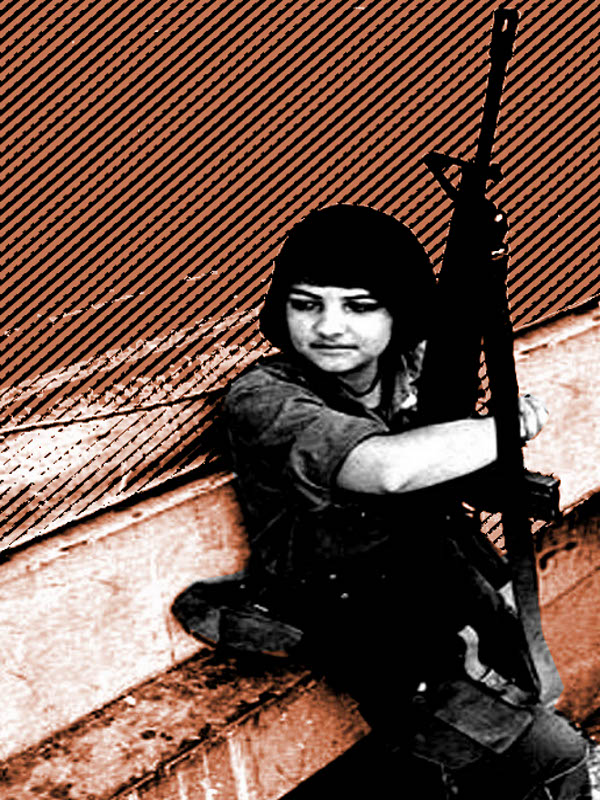
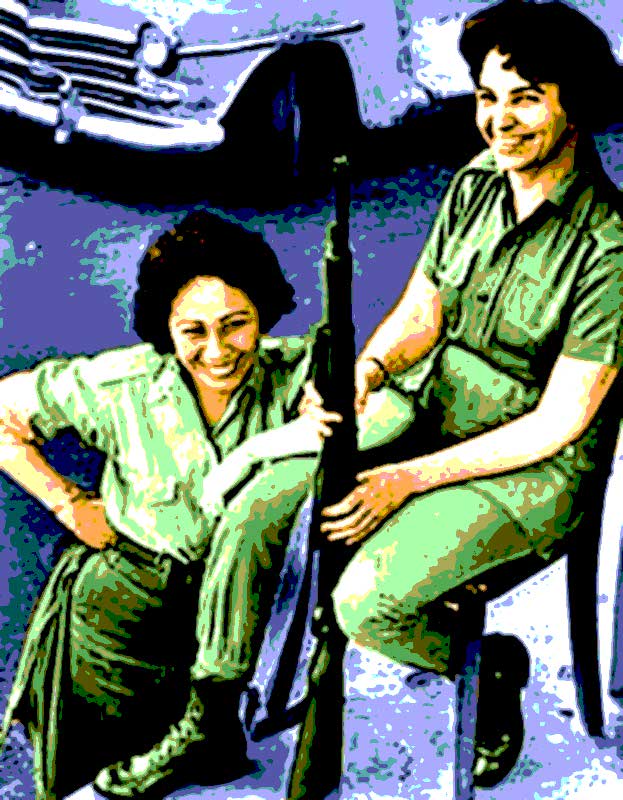
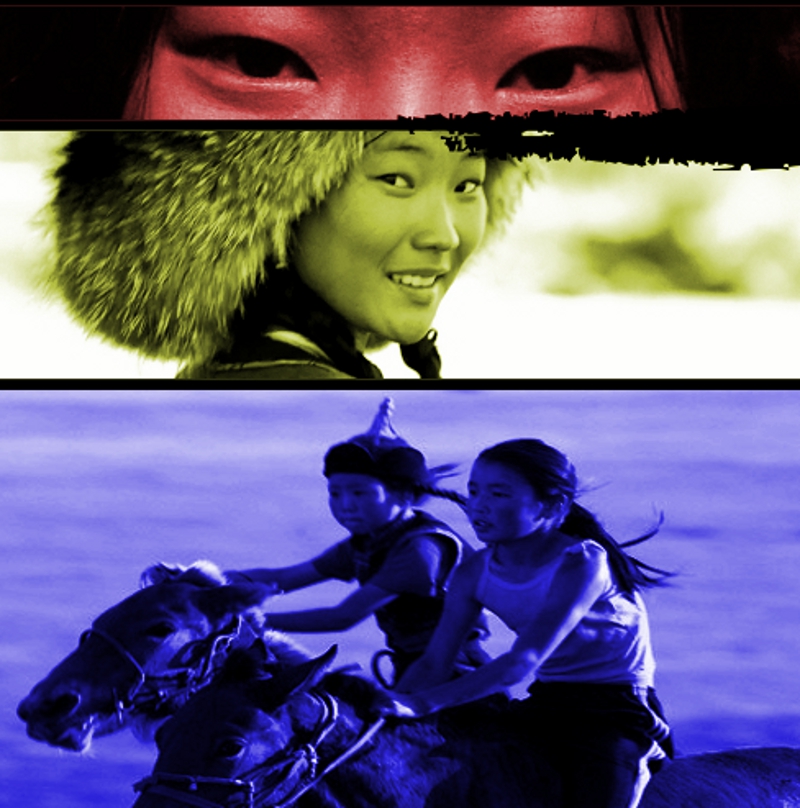
khutulun’s war witches

23 Wednesday Jan 2013

Posted by babylon crashing in Feminism, Illustration and art

≈ Comments Off on khutulun’s war witches

Tags

armor, Celtic, clit, demon, hell hound, Morrigna, sword, the daughters of Khutulun, war witch, woman warrior

the daughters of khutulun

the daughters of khutulun

The BBC has recently reported that Pentagon will end the ban on American women in front-line combat:

US Defence Secretary Leon Panetta has decided to lift the military’s ban on women serving in combat, a senior Pentagon official has said. The move could open hundreds of thousands of front-line positions and elite commando jobs to women.

Which would mean that as early as 2016 it will possible to follow female generals into war, just like the ancient Mongolian days when Lady Khutulun led the Great Khan’s army against China.

I say all this because even in this era there exists a bizarre myth that women and war do not mix except as passive victims, patriotic mothers or trembling daughters waiting back at the hearth fire for their men folk to return. To all these naysayers, I say, “learn your history.” There have been women warriors and generals as long as there has been war.

Learn about Candace of the Sudan, who routed Alexander The Great; Falling Leaf of the Crow nation who counted coup and was considered a chief, sitting in the council of elders; Maria Rosa, a 15 year-old Brazilian girl who led troops in the Contestado War; Japan’s Tomoe Gozen, an onna bugeisha; the Trung Sisters, two 1st century Vietnamese leaders who repelled Chinese invasions for three years; Queen Boudica who led a major uprising of the Celtic tribes against the Roman Empire; Catherine of Aragon; Joan d’Ark; the pirate queen Teuta of Albania; Queen Zenobia of Palmyra; Egypt’s Nefertiti, just to name a few.

amazonomachy

15 Tuesday Jan 2013

Posted by babylon crashing in Erotic, Feminism, Poetry, sonnet

≈ Comments Off on amazonomachy

Tags

Amazon, amazonomachy, Athena, Greece, Parthenon, She Who Cannot Be Named, sonnet, The Goddess, war, woman warrior


Now I hunt for the tomb of Queen Myrine,
was with her when the walls of Cerneh fell.
Myrine, who laid the Greek and Philistine
worlds to ash. Hippolyta, the rebel
Amazon, loved her. And, fey and childlike,
I did, too. Wars come, wars go, but hunger
remains. Once, curious what I tasted like
inside, we fell, clinging to each other
in a berserk haze. Hips grinding, amazed,
hot with blood-sweat until the war-god, Mars,
became enraptured. Now women are praised
for their chastity, not battle scars.
My queen, your tomb is lost, but your cravings
and name live on. Take these, my offerings.

    Note:

Amazonomachy: art portraying battles between Greeks and Amazonian warriors; Pheidias designed an amazonomachy upon the shield of Athena Parthenos, a statue of the goddess found in the Parthenon.

the statue of a crimsoned succubus

08 Wednesday Aug 2012

Posted by babylon crashing in Erotic, Feminism, story

≈ Comments Off on the statue of a crimsoned succubus

Tags

Buddha, crimson, ghost, historic, Japan, Lady Leiko, masturbation, Mistress Fuyu, Nagasaki, Onna bugeisha, sculptress, story, succubus

the statue of a crimsoned succubus

In a large room of an artist’s studio, somewhere lost within one of the many suburbs of Kyoto, a boy watched an older woman, red paint up to her elbows, in the act of crimsoning a succubus.

The studio looked out on the courtyard which the building itself was built around. The sun, at that moment overhead, blazed down upon the mossy wet vines that clung to the brick work, sending their red reflections glowing into all the sombre nooks of the work room.

The succubus, rudely cut from lecher’s wood, rested at ease upon her tail, her curled-ram horns pressed against the wall, her legs obscenely sprawled open. The sculptress sat before her creation on a low stool, hard at work. The silent boy sat nearby, gazing fondly at both.

On the table in front of the open window stood a row of Oni, rough mountain demons, modeled from river-bed clay. Beside that project were piles of washi parchment covered with drawings in the woman’s own hand, done in blues and reds. By the door a figure of Inari, the trickster fox god of rice, sake and prosperity, sat upon its haunches, a sacred minashigo key hanging from its mouth.

The woman was dressed in simple browns, she had a round, dark face and straight black hair. From the globs of scarlet-red paint spread out at her feet she carefully, with only her fingertips as tools, crimsoned the succubus into life. The effect was less of a statue being given a second skin with an ox-tail brush; rather, it was as if life was slowly seeping through the cold dark hues of the wood through the miraculous use of the succubus’ own menstrual blood. From her thighs on down she appeared to have spurted and spouted sticky rivulets that coated her goat-legs; while, from her navel upwards, the artist’s red-soaked fingerprints could be seen upon the naked wood, fondling each intrinsically carved breast, the thick neck, the bulbous lips.

Once in a while the woman would say the boy’s name, “Shijo;” but it had less to do with starting a conversation and more in a childish, sing-song voice, as if his name were precious to her and she simply enjoyed saying it for the sake of hearing the syllables roll off her tongue. Whenever she did say it, though, the boy would look up from whatever he was doing and smile to himself. He was use to her moods, had seen all of them in the last two years. She was having a mood right at that moment. He could tell. The studio was utterly silent, a perfect hush enhanced by the heat of a noonday sun beating down. Presently the woman rose, crossed to the window, her arms sticky with paint and looked out into the heat.

From where she stood she could see the sparse flowers edging the neglected pathway, the building opposite her with its broken windows, the scandalmongering vines climbing up the tiled roof that cut the violet-blue of a July sky into fragments.

In the center of the courtyard was an ancient, dry fountain; some tall red sayuri lilies grew there, the pure cherry of their hearts bright as the paint the woman had been applying to the succubus reclining wantonly behind her.

The boy stood and walked to stand behind the woman, to see what had caught her attention. The sculptress rested her elbows on the sill, it was so hot that she felt it burning through the paint that was quickly drying on her hands. She had the air of one routinely use to being by herself, the unquestioned calm that arose from a life of long silences. Her face was reserved, even sombre; her lips, well shaped but pale, were resolutely set; there was a fine curve of strength to her chin. She had wide, black brows, smooth dark skin, nebulous mahogany eyes. Her throat was full, she had the sort of muscles sculptors called beautiful.

After a time of gazing at the sun-burned garden she turned back into the room. Standing in the center of the studio, with her teeth worrying her red middle finger, she looked questioningly at the half-crimson succubus. The boy smiled, waiting patiently to see what she finally would say. Some times it would take her hours to form a single comment, but they were observations he always found endlessly interesting. Instead, with a sigh, she took a curiously wrought key from her belt, swung it about in her fingers and left the room.

The building was built without connecting corridors or passages. Each room opened onto another, the upper ones were reached by short wooden staircase built against one of the outer walls. There were many apartments on the second floor, each one boasting imperial designs from at least fifty to sixty years ago. As with all the windows on the first floor, the ones on the second were set facing the old courtyard.

Many queer and exquisite objects could be seen in those long deserted rooms; carved chests full of Korean silver; paintings from China full of erotic terror; furniture made by long-forgotten hands. In one chamber hung several gold-silk tapestries depicting the Eight Devils of Kimon, all done in shades of ruddy brown. As she walked lightly from one room to the next her footsteps caused little clouds of dust to billow up, marking her slow passage.

Passing these things without a glance the woman unlocked a door on whose rusty hinges it took all her strength simply to turn. It was a store-room, one lit only by one low window looking down upon the street. Like everything else in the building, it too was full of dust as well as a sallow, moldy odor. About the floor lay many bound-chests, untouched and before one of these the woman knelt, fiddling with the lock.

The smell of rust filled her nose as the lid swung open. The chest contained a number of cut gemstones. She selected two of more or less equal size, each a crystal pink in hue. Then, after locking the old door behind her, she silently made her way back from where she had come, returning to her studio. When she saw the hollow eye-sockets of the succubus, she placed what looked like living liquid fire into the wooden skull. Watching her statue’s eyes sparkle she finally relaxed, standing for a long while contemplating her handiwork. Finally she washed her hands and arms, putting away her orphic paints.

By then the sun had changed position as it crept across the room, casting hot brindled shadows, cast from the dappled vines hanging from the window eaves over the river-clay Oni, dazzling the colors in Inari’s psychedelic robe.

For the second time that day the woman left the room, venturing into the hall, opening the door that exited upon the street. She shaded her eyes, gazed across the July dazzle, the shadow of her slack, slim figure was cast into the square of hot sunlight issuing from across the hallway and through the open door.

It had been almost two years since the Siege of Kyoto. The section where her studio stood had been devastated. Now, newer suburbs were being built, but that left her neighborhood’s ruins neglected. It was hard for her to imagine a city as vast as Kyoto containing ghost towns, but wasn’t that what this was? She looked at the barren market-place, surrounded by abandoned buildings. Everything was falling into decay. Beyond those shells she could spy the squat roof of the local Shinto shrine jutting upwards across the scarlet sky. Brown grass grew between broken cobbles. There was not a soul in sight.

Under the rusted iron bell that hung against the door beam to her building hung a basket. Her mysterious patron had been by it seemed. She fished out of it bread, a flask of plum sake, some old vegetables wrapped in a linen cloth. The sculptress took these with her and closed the door upon the outer world.

Carrying her loot back in her arms, she crossed the hallway and came out into the opposite end of the courtyard. The tall red sayuri lilies seemed to be nodding their heads to her, as if the two of them were in on a secret no one else knew. Entering by a door next to the fountain the woman found herself in her workshop once more.

Setting her load down on a corner of her work table, the woman proceeded to prepare her meal. Above the wide tiled hearth hung a metal chain and attached to that was an iron pot. She lit a fire under the pot, filled it with water, then put the vegetables in. Then she took down a heavily bound book from off a shelf. Bending over it, huddled on a stool, she began to read.

It was a book filled with drawings — strange, horrible, erotic artwork — as well as curious stories that had been written in a black-blue scrawl. As the woman read she uncrossed her legs and her face grew hot. She flushed while resting her cheek on one hand, turning pages with the other. The heavy volume felt cumbrous on her knees. Not once did she look up but with parted lips pored over the midnight-blue drawings.

Outside the vines curled against the sun-kissed brick, the empty sky looked down upon the dry fountain, it burned the dead grass, the tall red sayuri lilies. The sun sank on the other side of the building, still the woman read on. The flames leaped on the hearth, the vegetables seethed in the pot unheeded.

All alone the woman leaned back on one elbow looking at the drawings. She reached down with her free hand and raised the hem of her kimono, revealing the cotton thong of a man’s fundoshi that she was in the habit of wearing. She ran one long fingertip along the front of her cunt and moaned. She looked up at the window and then back at the book, an anthology called “Kinoe no Komatsu / Languishing for Love”. She let her knees fall open wider and pulled the crotch of her fundoshi to one side as she turned the page. The glorious mound of her pubic hair was already wet and sticky. She plunged two-fingers inside her girl-lips and began to grind, leaving a wet cum-smear on the stool’s seat.

The woman groaned. There it was, the famous print known as “Dream of the Fisherman’s Wife” a prime example of the “aesthetic of the grotesque” in the erotic age of Hokusai. The body of a woman, head thrown back in either carnal abandonment, or drowned and swaying this way and that in the inky green water, allowing Tako no Kami, the octopus god, access to her cunt. It was a curious new form of 8-tentacle “kun’niringusu,” as the Kyoto poets once called the ancient art of clit licking. Her fingers plunged in-and-out of her soaked pussy.

“I’m going to cum–”

The woman’s eyes were screwed tight, her mind lost in the approaching orgasm. She was finger fucking herself so red-hot and hard that her tiny breasts under her kimono were shaking. She knew exactly how that fisherman’s wife felt; she’d fuck a devil-god if the opportunity presented itself. That need to be filled up with something otherworldly, that need to cum all over something impossibly hard.

“O! O! O!”

She was making soundless noises now, feeling the wave over take her. She slipped a third finger into her cunt as she brought herself to the brink. Closer — harder — closer — faster — clo–

With that, without warning, a heavy clang from her old rusted doorbell broke the spell. The woman dropped the book, sprang to her feet, gazing in horror and bewilderment, one hand still buried between her legs as the long awaited orgasm … faded away.

Again the bell sounded.

She picked up the book, put it back on the shelf, licked her fingers, feeling ambivalent.

For a third time the iron clang, insistent, impatient, breaking her quiet once and for all.

The woman frowned while readjusting her clothes, pushing back her hair from her sweaty forehead, fingered her clit through the fabric of her fundoshi, then went, with cautious steps, across the courtyard once more, back through the dark hall and up to the door. For a second she hesitated — was it really worth it? — then drew back the bolt and threw open the door to world outside.

A woman stood waiting for her.

She was younger than the sculptress, but not greatly, gorgeously attired, a lady no doubt from the emperor’s inner court. A concubine? No, a warrior, even though her carefully pleated and folded dress was stunning. Her coiffure was just as stylized, with not a hair out of place.

“You cannot want me,” the sculptress finally said, surveying the stranger for a couple of moments. “And there is no one else here. Sayonara.”

“If you are Mistress Fuyu Tsukiko,” the splendidly-dressed stranger answered, “then I certainly do want you.”

“Want me?” The sculptress opened the door a little wider. “I am Fuyu Tsukiko, but I do not know you.”

“Perhaps,” the other answered. “But I have questions that only you can answer. I am Lady Leiko of Nagasaki.”

“Leiko of Nagasaki!” repeated Fuyu softly. Then, as if she had come to a conclusion, she stood aside, motioning for the lady to enter. When she had passed into the hallway she carefully bolted the door, then turned to her with a grave expression.

“Will you follow me, my lady?” she said, walking before Leiko to her studio.

The sun had left the room by that time, but the air was still bathed in a reddish warmth. There was a sense of great heat that lay trapped in the ancient bricks and grass.

Fuyu Tsukiko offered a seat to her guest, who accepted in silence.

“You must wait until the supper is prepared,” she said. With that she placed herself on the stool by the pot, stirring its contents with an iron spoon, openly studying the woman.

The material of Leiko’s semitransparent kimono did nothing much to hide her curves, although most were hidden by layers of silk. Her beauty mesmerized Fuyu until she forgot for a moment what she was suppose to do.

Leiko, for her part, returned Mistress Fuyu Tsukiko’s steady gaze.

“You have heard of me?” she said suddenly.

“Yes,” was the instant answer.

“Then you know what I am here for?”

“Perhaps,” said Mistress Fuyu, frowning.

Leiko turned and stared at the half-crimson succubus with great interest, even, Fuyu mused, a little fear.

“My mother is the Lady Miyuki of Nagasaki,” Leiko finally answered in a manner one might have called arrogant. “The Emperor made me a warrior, an Onna bugeisha, when I was fifteen. Now I am tired of Nagasaki life, of castle life, of my mother. So I have taken to the road.”

Mistress Fuyu lifted the iron pot from the fire to the hearth.

“The road to where?” the sculptress asked.

Leiko made a large gesture with her hands.

“To wherever the road leads.”

“As an Onna bugeisha?” asked Mistress Fuyu.

Leiko tossed her fine head.

“As a former Onna bugeisha. Now I have other ambitions.”

Mistress Fuyu smiled, moving about, setting the food ready. She placed the little clay Oni on the window-sill; flung, without any ado, her drawings, paints and brushes onto the floor.

A queer silence fell on the room. The host did not seem to encourage comment. The atmosphere was not conducive to talk. Fuyu opened a cabinet in the wall, took out an elegant cloth that she laid smoothly on the rough table. Then she set on it earthenware dishes, honey in a clay jar, flushed pears cut thin, rice cakes in a plaited basket, steamed cabbage, radishes fragrantly pickled, the bottle of plum sake.

“Does anyone else live here with you?” Leiko asked at one point.

“I live by myself. I have no desire for company. I take pleasure in my work alone. Sometimes people come to buy my art, usually one of my sculptures for their shrines, but of late very few.”

“You are a good artisan, then?” asked Miyuki. “Who taught you?”

“Old Mistress Yoi, born in Higashimurayama village, taught in Edo. When she died she left me this building.”

Again the room sank into silence. Shadows crept about.

Leiko ate everything put in front of her. Fuyu, on the other hand, seated next to the window, rested her chin on her palm, stared out at the bright and fading orange sky, then at the broken windows, then at the sayuri lilies waving about the dry fountain. She ate very little. After a while the lady asked, almost shamelessly, for some of the sake. The sculptress rose and brought a sake cup to her.

“Why have you come here?” Fuyu inquired, placing the bottle before Leiko.

Leiko laughed easily.

“I am married,” she said, as an explanation, lifting her cup to her lips. At that Mistress Fuyu frowned.

“There are a lot of married people in this world.”

Leiko surveyed the mysterious swirling liqueur through half-closed eyes.

“It is about my husband, O my host; that is why I am here.”

Fuyu Tsukiko leaned back in her chair.

“Yes, I have known your husband.”

“Really? Please, tell me about him,” Leiko of Nagasaki requested. “I have come here for that story.”

Fuyu smiled slightly.

“But why would I know anything more about him than his own wife?”

Leiko flushed.

“Perhaps. Perhaps. But never mind, go on, what do you know? Tell me.”

Fuyu’s smile deepened.

“He was the only son of the Lady of Kobayashi, he hid himself at the cloister of the Red Brotherhood in Kyoto to avoid having to marry you.”

“I see you know that,” said Leiko. “What else?”

“Since you wish for me to tell you about your own life, listen to what I have to say, my lady.”

Fuyu spoke with an uninterested tone, staring the entire time out of the window.

“He desired, I think, to become one of the Order of the Red Brotherhood. But when he was fifteen his elder brother died, thus he became your mother-in-law’s only heir. Many families wished to align themselves with her, but in the end they agreed for him to marry you.”

“Without my wish or consent,” Leiko added, refilling her sake cup.

Fuyu simply shrugged.

“The feelings seem to be mutual. Your husband, who wished most passionately, I am told, to become a priest, fell ill with grief. In his despair he confided his misery to a local miko, a temple maiden, who lived in his neighborhood.”

Leiko’s eyes flickered, hardened behind their long lashes.

“Your husband was to be heir to a great fortune,” said Fuyu, “but it was through this miko that he became introduced to the Brothers. In his fear of marriage he promised them all his inheritance if they would save him from his mother’s iron will. So the priests, tempted by greed, spread the rumor that he had died. There was even a fake funeral and he was kept secret in the city’s cloister, dressed as an initiate. All this was put into writing, documented by the priests, so that there would be no doubt when the boy returned from the dead, as it were, looking for his inheritance once his mother had died.”

“Yes. I was glad to hear that he had died, at least at the time,” said Leiko. “For by that time I loved another and there is no honor in behavior like that, husband or no.”

“He lived for a year among the priests,” Fuyu Tsukiko went on. “But his life became bitter. He wanted to escape, I believe, yet he could not make himself known to his mother for then it would become known that not only had he lied about this death but that he had promised the priests everything.”

“Go on.”

“Is there more?”

“You know there is.”

“So, as life became more and more horrible for your husband he found a way to send a letter to his widow.”

“Yes. I have it here.” Leiko touched her breast. “He told me all about his dishonesty, begged forgiveness,” she laughed. “He asked me to come rescue him.”

Fuyu crossed her long hands upon the table. There was still red paint under her nails.

“But you … but you did not rescue him, though. You did not even answer his letter.”

“No, I did not rescue him. His mother had taken another husband, she now had a new son to inherit everything.” Leiko lowered her eyes moodily, “I was occupied, in love with a … dairy fairy. Plus, he had lied, my little foolish husband: to Buddha, to me, to the world. ‘It will be poetic justice,’ I thought. ‘For him to suffer as I once suffered’.”

“He waited for months for your answer,” stated Mistress Fuyu flatly. “Finally he fled from the cloister to here, to this very building. Again he wrote to his wife and again she did not answer. That was two years ago.”

“Did the priests make no attempts to search for him?” asked Leiko.

“By that time they knew that the boy was heir to nothing. They were afraid that the tale might reach the ears of the shogun and there might be … repercussions. But did it matter? Around that time the usurper, Tokugawa, lay Kyoto under siege and everyone suddenly had other things to worry about.”

“Indeed. Had it not been that I was required to help mount a defense of the city I might gotten here sooner,” explained Leiko. “But I was occupied with fighting.”

“The cloister was destroyed, the brothers murdered or fled into exile,” continued Fuyu. “The boy lived here, learning many crafts from Old Mistress Yoi. She had no apprentices but the two of us.”

Leiko leaned back in her chair.

“That much I have learned. That the old woman, dying, left her place to you. What did she leave to my husband?”

Fuyu gave her a long, unblinking stare and then turned back to the window.

“It is not strange that you are here, now? You, Leiko of Nagasaki, after all this time, inquiring about your husband.”

“A woman must know how she is loaded down with other people’s responsibilities. As it turns out only you and I know that he had an existence of any sort after he faked his death. He might be a fool but he is still my husband.”

Dusk — hot, blood-red — had fallen on the chamber. The half-crimsoned succubus gleamed dully, the wet lips of her cunt spread vulgarly before the two women. Lady Leiko of Nagasaki felt a little chill pass through her, despite the heat, a little sullen chill, but she waited to see what the older woman had to say.

The sculptress rested her smooth pale face on her palm, her mahogany eyes were hardly discernible in the twilight, but the shadow of her lips moved when she spoke.

“Shijo died two years ago,” she said. “His grave is in the garden, next to the fountain, where those red sayuri lilies grow.”

trespassing upon dreamland

03 Friday Aug 2012

Posted by babylon crashing in Erotic, Feminism, Lilith, story

≈ Comments Off on trespassing upon dreamland

Tags

Bulldagger Blues, cunnilingus, Dreamland, Gladys Bentley, Lilith, Lucille Bogan, Ma Rainey, Mother of a Mixed Multitude, Prove It On Me Blues, story, Tallulah Bankhead

In Arcadia Damian Dastagna consumed his breakfast in the breakfast-nook with a warm, congenial feel of a man sure of victory. He loved victories and though he was scarcely what one might call a hard-boiled chap by dint of habit, he saw himself as a master of fisticuffs against the evils of life. There were certainly evils enough in the world. Wickedness. Vice. Sin. He often bragged about how he could twist fickle Fate this way or that, all through marvelous cunning on his part. Just now, for example, Damian felt that he had brought about his hardest, no doubt his loftiest, struggle for a beneficial and economic future to a close. To have married Claudine Nicholas, “Creepy Claudine,” as her more intimate friends called her, in the howling storm of hostility that her family had flung up at him — all this in spite of her unaffected indifference to men — was indeed an accomplishment that had required more than a bit of pluck and daring-do on his part. He had pried his new wife away from the City, with its salons and speakeasies, away from all her “gay flapper” friends — odd girls and twilight lovers the lot of them, as far as Damian was concerned — and out to a remote farmhouse-estate called Arcadia.

It was more than just any farmhouse, however, it had been in the Nicholas dynasty as a summer residence for over a hundred years.

“… and you will never get Claudine to go anywhere but there,” old man Nicholas had said when his much despised son-in-law had inquired. “Arcadia’s roots grow deep inside her, even more than the City could ever hope for. One can understand what holds her to Arcadia, but the City?” the old man had simply shrugged his shoulders as if he knew nothing about Roaring Twenties, cocaine or flappers.

“Vice is nice,” Damian thought, but wisely he kept those thoughts to himself.

The truth of the matter was, however, that there was something about the farm and its rolling, heavily wooded hills that unnerved Damian. His grandmother would have said that there was a witching — a savage wildness — about Arcadia that would certainly not appeal to stuffy Nantucket tastes. Damian looked down upon what he called “the countryside” in the same manner that certain gentlemen-bachelor friends of his would romanticize golf courses: a great way to get out into ol’ Mother Nature now and then but thank the Pope and the Holy Ghost that there were gates to keep all the undesirables out. Of late he had grown bored with the City, a feeling he had never known before. Perhaps it was because Claudine was known everywhere the couple went, and many places he was not allowed to go. Despite her reputation of being a little … “funny,” as his grandmother would have also said, he had found himself growing a tad bit jealous over her notoriety. She knew Lucille Bogan, Gladys Bentley and Tallulah Bankhead. She had even been in attendance at the legendary Clam House Club when Ma Rainey sang:

“I went out last night
with a crowd of my friends;
They must’ve been women,
’cause I don’t like no men.
It’s true I wear a collar and a tie,
I like to watch the women as they pass by…”

How was a husband to compete against that? He had watched with satisfaction, then, at the gradual fading in his wife’s eyes of what he called the “Bulldagger Blues” hunger as the hills, the heather and the orchards that made up the Arcadia estate all closed in around them as they bounced along in her splendid old Tin Lizzie, a T-Model Ford, hitting every pot hole in the bumpy roads.

Now, peering out the breakfast-nook window, munching his blackberry jam and toast he peered at a low hedge of uncared for fire-brand fuchsia, beyond that were steep slopes of heather and clover. Everywhere one looked bracken cascaded down into the dark. The buildings were constructed upon a series of cavernous, stone catacombs, none knew how old, now all overgrown with oak and ivy. Just the other day Damian had started reading a book written by some mad fellow from the Hermetic Order of the Golden Dawn that seemed to declare that Nature’s open savagery against mankind was a direct result of Man’s inability to understand and know all the horrors of unseen that surrounded him. Damian had said “poppycock!” at that and chucked the book out the bouncing car’s window. But now as he gazed at the landscape he shuddered and did not know why.

“It is very wild,” he said to Claudine, who had joined him, “one could almost suppose you might turn a corner and run into some ancient nightmare you read about in books, like that horrible old Pan, dancing away across the glen.”

“I don’t think Pan spends much time in upstate New York,” his wife had said in her soft, monotone voice.

“O well, too bad for him. I’m sure all those poor, daffy gods must have a devil of time in this market, since no one believes in them anymore.”

“Some do.”

“Hmm?”

There were times when it occurred to Damian that he had no idea who he had just married. Claudine Nicholas was at once emotionally removed from him and sexually adventurous, in equal measures. When they went out in public she wore her trademark tux and top hat and would lean in and touch his leg or arm as she talked to her friends, often sliding her hand right up his thigh and then across his crotch. Each time she did so, Damian’s misery and excitement deepened in equal measures. Sex with a woman was terrifying to him, but it was the sort of terror he never wanted to stop.

On the occasions when she talked directly at him she used terms like “sweet boy” and “my darling thing.” The first night they slept together she had him stand naked in front of her, while she, fully dressed, took long drags off her chrome and red hookah pipe and blew pink and blue opium clouds out from her nostrils, like a bullgod stamping his foot.

“You are rather embarrassed around me, aren’t you, my darling little thing?”

Damian could only look down at his semi-erect cock in shame. The good life had robbed him of much of his vitality. Fear, erotic excitement, shame and humiliation could be read in every line of his face.

As she had talked to him she reached out and stoked his naked cock, all seven and a half inches, feeling him harden at her touch while a crafty, small smile crossed her lips. Just once, a flash and then it was gone.

“You might be curious as to why I agreed to marry you,” she said. The opium in the air made everything feel like honey: sweet and slow. As a way of answering her own question, she said, “bow down.”

A moment later Damian found himself kneeling in front of his fiance. That night she had chosen to wear a slinky black sheath, a black feather headband and long pearl necklace. Damian was amazed at how easily she could transform herself, from a mysterious rogue to a gorgeous woman, all in a manner of minutes. Now her legs were slightly apart, her silk dress wide open. When Damian looked down his eyes grew wide at the sight of her splayed open cunt.

“Some do.”

“Some do what?”

“Worship.”

“Worship who?”

“Lilith, for example.”

“Who?”

“Lilith. The worship of Lilith never has died out,” Claudine said. “Perhaps newer gods get more attention, from time to time, but she is the One-Mother, the Ancient One, to whom all must come back to at last. What is Mother Mary but a celibate shadow of Lilith, dressed up in ugly robes?”

Damian was religious in that vaguely devotional kind of way; still, he did not like to hear his beliefs, or at least his friend’s beliefs, spoken about as being mere shadow puppets of something far bigger and darker.

“Say now, you don’t really believe in this Lilith person?” he asked, pettishly.

“Belief has very little to do with anything that happens in this world,” Claudine said, quietly, “but if you are a smart little boy you won’t ask too many silly questions while you reside in her domain.”

It was not a week later, when Damian had grown bored of the forest paths that made their way around Arcadia, he ventured out on a tour to inspect of the farm buildings. Farms suggested to his mind a scene of cheerful bumpkinly bustle, with milk churns and smiling busty dairymaids in low-cut dresses with ruffles and teams of Clydesdale horses pulling things and rustic yeomen looking like they had just stepped out of a Bruegel painting. Here, though, between the cadaverous buildings, there was nothing save the slatternly owls and the blowsy cobwebs. Nothing could be heard from behind the warped and stained doors. The shuttered windows appeared dead. The stables were empty of the restless stamping of horses. All the farmyard sounds were missing: no roosters preening themselves in the sun, no drifting falcon turning and turning in a widening gyre, no rasp of a saw, no muted hollo from some beast of burden.

“Curiouser and curiouser,” muttered Damian to himself, nervously.

The fact was, Damian was nervous. The world was full of small noises, weird songs and chatter and endless rustlings. He felt as if he were being watched, that same mocking hostility from unseen things that he felt lurking in the woods and the catacombs and the thickets. As he threaded his way past empty cowsheds and long blank walls, he started suddenly as a strange sound reached his ears. It was the echo of a girl’s laughter, sounding both golden and dark all at once. Damian paused, but he could neither figure out who or where the laughter, if indeed that was what it was, originated from. Later that evening when he asked Claudine about it she said that she knew of no other girls in the neighborhood, that it was probably some local rustic having fun at Damian’s expense. The memory of that echo, however, seemed to be one more indication that something queer and forbidding lurked in and about Arcadia.

During his days he was alone, for he saw very little of Claudine. She would go horse back riding with her friends when they came up from the City to visit. Whatever they did out in the woods seemed to swallow her up everyday from dawn until dusk. When she returned from her mysterious jaunts often she would be flushed and full of vigor. She would find her husband and then slide out of her riding trousers like a second skin.

“Pleasure me, my toy.”

That would be his cue to lean ever closer to the Y her legs formed, until she would take his head in her hands and guide him to her clit. Damian Dastagna might have been a wastrel in every sense of the word, but her knew his way around a girl’s nether regions. With tongue and fingers and nose and chin he would begin to lick and probe and taste and consume. Her cum would leave a shine across his chin. He delighted in her wetness and her scent, nibbling on her out-turned lips, tugging at her pink flesh gently.

“Take your time, boy of mine,” Claudine had said on their wedding night, “but makes sure you swallow all of my cum. I want you to beg for this. I want this to be your new craving.”

At times like these Damian was glad there were no servants in the house, for her moans and sighs, her screams and cries, shook the walls and once she got started they continued and continued, building from one orgasm up into another. At each her thighs and hands would grip Damian’s skull and then relax in a gush, only to tense up once more as the next orgasm washed over her.

One day, following the direction he had seen Claudine take earlier that morning, he came upon an open space in a lonely orchard, further shut in by huge oak trees that grew all around. In the center of this clearing stood a marble plinth on which sat a small, bronze figure of a naked woman. It appeared to have been modeled after the 19th century Decadence movement: one of her hands had dropped down past her hips to caress the top of her kinky patch of hair. Her legs were long, tapering away into goat hooves. The statue’s head was thrown back, eyes closed, her mouth frozen in an endless O of desire as she prepared for her flood-gates to burst just below the threshold of a god-like orgasm.

Studying it careful Damian could see that it was a beautiful piece of workmanship, but what it was doing in an abandoned orchard confused him so much that he almost didn’t notice the chalice and knife that had been placed as offerings at her feet. Was that … gold? Damian stepped up to the plinth and peered inside the large cup, staring for a long minute at what looked like congealed blood caked the concave rim. With a cry of disgust Damian knocked the offending item angrily from the pedestal. Even as his hand made contact with it a strange wind stirred itself up, rustling the trees overhead and he shuddered a second time and did not know why.

As he strolled slowly homeward he found himself on a lonely pathway he had never seen before, though, truth be told, all pathways in Arcadia were lonely. He did not know what had possessed him to touch the chalice. Still, the damage had been done. Suddenly he stopped; for, gazing out from a thick tangle of undergrowth, he saw that a girl’s face was scowling at him. It was a girl with an unearthly beauty: brown, exquisite, with mesmerizing black eyes. He stopped and stared. The girl’s angry expression did not change the longer he stood there.

“I say, hello?”

Damian felt his legs buckle a little. The girl opened her mouth as if to speak but at that moment, with a cry of dismay, he broke into a run and fled.

“I saw a girl in the wood today,” he told Claudine, later that evening, “brown-faced, rather beautiful, but an orphan, I think. An orphan or a gypsy, I suppose.”

“A gypsy?” Claudine echoed, “there aren’t any gypsies in upstate New York.”

“Then who is she?” asked Damian.

As Claudine appeared not to be interested in answering his question he shrugged his shoulders and began talking about his finding of the chalice and the statue.

“I suppose you know all about it,” he observed, “you and your bulldagger friends. It’s a harmless piece of tomfoolery, but what would people think if they knew of it?”

Instead of answering Claudine asked, “did you meddle with it in any way?”

“I, er, I knocked that cup away, sure,” Damian said, feebly, watching Claudine’s impassive face for a sign of annoyance. Then he added a second time, “it was simply disgusting. Blood? Whose blood was it?”

“I think you were very foolish to do that,” his wife simply said. “I’ve heard it said that the Mother of a Mixed Multitude is rather horrible to all those who molest her.”

“Molest?” cried Damian, a bit louder than he intended. “I did no such thing. Plus, all this talk about spooks and bugaboos is rot and stuff and nonsense!”

“All the same,” Claudine said in her soft, cold-eyed tone, “I would avoid the orchard if I were you.”

It was all rot and stuff and nonsense, of course, but in that lonely part of the world where unseen eyes were always watching and waiting, all Damian could feel was a gut-turning fear boiling away from deep inside of him.

“Er, Claudine,” Damian ventured, after a moment, “I think we will go back to the City … soon.”

His victory in separating her from her queer habits had not been as satisfying as he had so expected.

“We? I don’t think you will ever go back to the City,” Claudine said.

“Why?”

“O, just call it a feeling. Avoid the orchard from now on and I am sure nothing … bad will happen,” and she gave one of her unusual smiles, from which her got the nick-name of Creepy. It wasn’t so much a smile as rigamortis.

The next afternoon Damian walked upon a different path, following a clear, narrow track that faintly reflected the mottled sky; but wherever shadows fell from branches overhead he felt the world as dark and deserted. He felt blind. All around him nature was showing its secrets — silent meadows wide-spread, golden quiet flora, lofty kingdoms hidden among the leaves and hills — if only he knew how to read them. As he walked a change began slowly to declare itself. A bird cried suddenly, then was still. A light breeze sprang up and set the silver leaves and ivy to rustling.

Damian abruptly stopped, amazed, listening with an aroused intentness.

“What is it?” he wondered, his head turning this way and that. “So terrible and strange and new.”

He held his breath, unable to hear anything for several beats of his heart.

“No, is it passing overhead? It is fading, I shall lose it,” he moaned.

In silence Damian walked steadily on, breathless and transfixed, pushing through blossoms and scented undergrowth that led to where he did not know, until at last he stood in a little clearing of a improbable green. It was the orchard of the day before and as he stood there Damian felt suddenly a great fear fall upon him, a fear that turned his soul to sand, that bowed his head, that rooted his feet to the ground.

It was no panic terror, as his grandmother would say, but it was a fear nonetheless. A childish fear. A fear that all sexual creatures must face at the moment that they are transform from their vestal state into that of knowledge. Whatever was there, in front of him, had struck him and held him and, without seeing, he knew it could only mean that some terrible presence was very near.

There was a rustle all around him, the vague sound of a body pushing its way through the bracken, the slip-slush of finger fucking and trembling, he looked up, flushed and holding his breath for fear of what he might see. He looked into the very eyes of the First Mother; saw the backward sweep of her curved horns gleaming in the noon-day sun; saw the Babylonian nose between the sensual eyes that were looking down on him mockingly, while the puffy, full lips broke into that same half-smile, half-leer that his wife used when he said something especially funny. He saw the tawny muscles on her legs and the naked large, milky breasts tipped with ruby nipples. He saw the long supple fingers still sticky from self-pleasure and suddenly there fell a terrible noise upon the orchard — a woman in labor, a woman in pleasure — a cry that was both heavy and fertile and absolutely loathed to be interrupted. A noise which closed in around Damian and consumed him, the way water consumes a drowning man.

witch bone and the mongol queen

30 Monday Jul 2012

Posted by babylon crashing in Erotic, Feminism, story

≈ Comments Off on witch bone and the mongol queen

Tags

baatuun, Borte, China, dark magic, Fatima, Goddess of Plagues and Pestilence, Goddess of the Dead, hairy, Hsi Wang Mu, Kara-Khitan horsemen, Karakorum, Khutulun, Lady Linshui, lesbians, Meng Po, Mongols, Saru'sinul-tu, story, Taoist witch, Turakina, Turakina Katun, Witch Bone, woman warrior

A NOTE FROM THE AUTHOR:

Normally after I’ve finished a story I write a little introduction, musing about what inspired me to write it, or perhaps trying to explain certain words or phrases that were used. In any event, with this particular story my introduction was quickly spiraling out of control with the details about who 13th century Mongols were and so on. History lessons are lovely in theory, when you’re in school and not thinking about sex, but kills the mood in any other context. With that in mind I removed those notes and placed them at the end as an postscript. Here, though, is a summary of the characters for those who might find the Chinese and Mongolian names a wee bit confusing. Cheers!

CAST OF CHARACTERS:

Saru’sinul-tu — Young Mongol warrior from the now extinct Kara-Khitan tribe of Mongols. Her name means, “the lust that can only be found in the moonlight.”

Lady Linshui — Brilliant Chinese general and practitioner of Taoist dark magic during the Ming Dynasty. Her friends and foes alike call her the Witch Bone. It is her goal to conquer everything between the Yellow River to the Danube. The crumbling Mongol empire is the only thing standing in her way.

Turakina Khatun — Granddaughter of Genghis Khan on her mother’s side. The title Khatun is the female equivalent of the Khan. Her ferocity in battle has earned her the Persian nickname of, “Divooneh,” the Crazy or the Mad One.

Fatima — Borjigin Mongol, like her queen, Turakina. She is the younger woman’s tutor, bodyguard and lover. It is she who first witnesses Saru’sinul-tu during the Battle of Qaraqata.

Une-Khitay — Mongolian general and uncle to Saru’sinul-tu.

Une-Calada — The Mongolian general tasked with laying siege to Beijing.

Baatarsaikhan and Avtalyon — Cousins to Saru’sinul-tu.

General Hu Hua-Yong and General Jui Jy-Shou — Loyal Chinese generals under the command of Lady Linshui.

Ubaid al-Jayyani — Muslim warlord who, through political connections, holds the post of Taishi, a rank similar to that of a Grand Vizor.

* * *

CHAPTER 01:

[1301 A.D.]

The heat from sun’s rays quivered the air; a heat ignorant of the waters above the cloudless skies, a heat that blurred all far-flung objects alike. Across this kingdom of sand, camped around a small oasis of palms, lay a fire-cooled horde: Mongolian nomads, shepherds of the steppes. Naked bodies of men and women were stretched equally upon the ground in what little glinting shade they could find. It was Thursday on the southern edge of the Gobi desert, what the Chinese called the plains of Xi Xia.

These were more than nomads, however; they called themselves the Warriors of the Eternal Blue Sky, made up from various conquered Mongolian tribes that the Great Khan, Genghis, had brought under his control. Kara-Khitan women lay side by side with male shepherds from the Dorben clan. The Khurilar, the Uriankhat and the Khori Tumed rode along side with their once bitterest of enemies, the Ma’alikh-baya’ut. The air was full of the the musky odor of nutmeg and orange slices, sweat and horses, Damascus steel and drying blood. Genghis had united them and taught them the “three divine arts:” riding horses, shooting arrows and wrestling. On horseback they wore round caps of metal adorned with bands of wild animal pelts. The cloth of their deels, roughly made from flannel dyed, had once been dark in color but the sun bleached everything to a pale lilac. Oxen-hide shields hung against the palms with bows and cheerily painted quivers full of arrows lay by their side. On horseback they were the greatest riders in the world: indomitable in strength, fantastical in courage. Bu in the soul-sapping heat, however, even just resting in the shade, they had become slow, sweet, dazzled and dim. Little droplets of sweat covered necks and breasts, pendulous balls, thick round asses and wiry pubic hair.

Near the horde’s larger grove was a smaller one. In the center was a large tent, a ger, which had been recently erected. The exterior was made out of canvas, dyed a dark blue to keep the heat of the sun away. Around this tent all manners of slaves worked. Korean grooms rubbed down the coats of squat little ponies. A Berber cook, captured in a caravan raid, watched three Chinese eunuchs under his supervision prepare a feast.

Inside the ger the walls were hung with plum and gold silk. A carpet from the looms of Armenia covered the floor. On it were spread four chairs, on which sat the officers who would oversee that their raid into China was successful. Their commander was a man of some fifty years of age, the sort with a face that expressed both energy and resolution. He wore a plush, velvet hat symbolizing his rank, one that had an upturned brim with an embossed pointed top. A gold belt encircled his waist. On his feet were a pair of upturned boots that prevented him from slipping out of his stirrups during an impassioned battle charge. His named was Une-Khitay Khan and was at the time considered the greatest military strategist alive … the greatest male military strategist, that is.

Next to him sat his companions; two were young men, his nephews, dressed in outfits similar as to their uncle. The fourth member of the party was a teenage girl whose muscles, showing clearly beneath her skin, testified to a life of hard work and poverty.

Powerful as the Mongolian empire once had been, the events of the last few decades showed to all who cared to see that a life and death struggle with the Ming Dynasty was fast approaching. Genghis Khan had subdued China once, but now the conquering nation of Mongolia stood on the brink of collapse.

The girl, Saru’sinul-tu, niece of Une-Khitay, had been, from her earliest memories, trained by her uncle to survive. When she was ten years-old Une-Khitay took her with him on a campaign in Salji’ut steppes; there she had bathed in the frigid water from the melting runoff of snow up in the ice-clad hills. She had kept up with the rapid flight of the Khan’s horsemen, sent out in pursuit of the rebelling Qongrat tribes.

“It is not enough that we can trace our blood back to the Great Khan,” her uncle had often said. “There was a time when Kara-Khitan horsemen alone won our battles and subdued our foes. But today we are few and the Ming empire is vast. Beijing looms greater and more powerful year by year. That is why we must make every effort to show ourselves worthy of domination. That is why I mentioned of our queen, Turakina Katun, who, young as she is, is said to be the greatest woman in all of Mongolia.”

Saru’sinul-tu nodded. She was an apt student. She could wield the curved scimitar of a warrior. She could swim the coldest river; traverse long distances at the top speed; send an arrow with infallible aim to a target as the best of any Chinese archer could.

“The sun is going down, uncle,” the girl said, standing by the door of the ger, “the heat is slackening off.”

“If you say so, Saru’sinul-tu,” one of the younger men laughed, “I feel just as sweaty now as I ever have. This is the fifteenth time that you have been to the door in the last half hour. Your restlessness is driving us all crazy.”

“Avtalyon, dear,” the girl replied, laughing in turn. “It’s the first time we’re going to see the Forbidden City! I’m sure you are longing to test your bow and arrow on something other than Onggirat tribesmen.”

“It’ll be the first time we sacked the Forbidden City, you mean, Saru’sinul-tu,” the young man replied, “but the Chinese will not leave the fortress they call Jinyi until dawn so I’m well content to be quiet until then.”

“Your cousin is right, niece,” the general said, “impatience is not a virtue.”

“And yet brother Baatarsaikhan says nothing at all about that,” Avtalyon remarked, turning around to look at his cousin sitting next to him. “I bet during the five hours we’ve sat here that his thoughts have never once been on what the Witch Bone might or might not do.”

“That is true,” Baatarsaikhan said, speaking for the first time. “I am thinking of Mongolia, of the corruption and misrule that saps our strength.”

“It is best not to talk about that, Baatarsaikhan,” the general said, sternly. “The subject is a dangerous one; there are spies for the Taishi everywhere. To be denounced as hostile to our regent, even if he is a foreigner, is to be lost.”

“I know the risks,” the young man answered, rising from his chair and walking up and down the ger. “I know that so far all who have ventured to raise their voices against our new regent have disappeared. Yet, even if the dangers were ten times as great I cannot keep silent. What has Ubaid al-Jayyani gotten us into? His extravagance and corruption have drained imperial finances and paralyzed our army. The tribes of Uru’ut and Khurilar have been lost to us. Our allies in the Himalayas, Russia and India turn their backs in shame that so mighty an empire has sunk so low. How can a Borjigin who loves his ancestry remain silent?”

“All you speak of is true, Baatarsaikhan,” the general said, sighed, “though I should be flayed alive were it whispered outside the ger that I said so; but at present we can do nothing. Had the great Altan-Bolod lived, then I believe that he would have set himself to clean out the First Queen’s stables; but now no warrior living today could accomplish that. You know how every attempt at revolt against Ubaid al-Jayyani has failed; how our people have, again and again, been crushed into the dust just when victory seemed likely. No, Baatarsaikhan, we must suffer all of which you speak of until some hero arises, some leader and deliverer.”

Here the older man stood up as well, paused and then continued.

“I have hopes, great hopes,” he said, in an even lower voice, “that such a soul might be found in our queen, Turakina Khatun, who seems to possess all the genius, wisdom and military talent of our Great Khan. But hush. Let us speak of this no more. I suspect that even among my servants there are spies in league with Ubaid al-Jayyani.

There was silence in the ger. Saru’sinul-tu slumped down in her chair, for a time forgot even that the next day, or possibly the day after, they would be at the outskirts of Beijing. With the impulsiveness of youth and a fiery heart Saru’sinul-tu, naturally, inclined to the perspectives of her nephew, Baatarsaikhan, rather than to the more sober counsel of her uncle. She still burned with shame and anger as she heard the tales of disasters which had broken the sons and daughter of Temujin, making money their god, suffering their armies to become paupers, permitting the the nomadic people of the steppes to become servants to alien agents and lords. This was Taoist sorcery cast by far wiser and far seeing foes than anything Genghis Khan could even dream about.

As evening closed in the stir in the neighboring camp aroused Saru’sinul-tu from her thoughts. A singer was called for and an old man played upon a horse-headed fiddle.

“There is a khan’s daughter; I shall tell you, I shall tell you, I shall. Who strides forth in a queen-like way, and has the claws of a hundred tigers. Who strides forth in a mother-like way, and has the jaws of a thousand tigers. Who strides forth in a warrior’s way, because she is rules over all the tigers.

For months rumors had flown across the border that something sinister, something terrible, was slowly gathering itself together in the heart of China. Those who believed in magic claimed that the Ming court had finally hired a Taoist witch to raise the dead, or perhaps to craft an army out of stone, to lead against the Mongols. The Parliament of the Steppes hurriedly came together and it was decided to meet this threat, whatever it was, head on.

The expedition had arrived at the small oasis the previous evening. During the night the deep howling of wolves could be heard endlessly among the foothills. So close were they that the watch guards were required to light great grass fires to scare off the nights cats from making any attack upon their war horses.

The evening dragged on.

Just before dawn, as Saru’sinul-tu was drifting in and out of sleep, she heard a sudden challenge from a sentry outside, followed instantly by loud and piercing screams from hundreds of throats. She sprang to her feet.

“Outside!” Une-Khitay cried, only half dressed, but clutching his sword. “The enemy is upon us!”

Looking about in the dark Saru’sinul-tu could seem to locate her sword. All her hands discovered was a long, bamboo stick used for stirring fish ponds. Clutching this she rushed out of the ger, right behind her uncle.

* * *

CHAPTER 02

Save for the sighs of the wounded and the gasps of the dying nothing rose into the air except the circling shadows of vultures whose black wing tips swept ever closer while the roar of battle died away. The sun hung, as it always did, a ball of frustration, glowering down upon the western hills. Across the trampled fields all was quiet, no war drums echoed. The screaming was over. Those who could had fled while the rest lay where they had fallen.

On her gangling mare, high above a hillside copse, Fatima watched, as she had been doing ever since the first streaks of dawn had appeared, back when the sleeping hosts of the idiot general Une-Calada Khan had awaken to find themselves amidst a flying forest of arrows and in confusion had moved out onto the plains of Xi Xia, there to meet the relentless hordes of Lady Linshui, the most trusted general of the debauched Hongwu Emperor.

Fatima had tsk-tsked in surprise and disapproval when she saw the glittering squadrons of mounted Chinese warriors draw out in front of the masses of their slow but loyal foot soldiers, leading a sloppy advance. They were the best Northern China had to offer: cavalries from the Tangut tribes, the Jin and the Jurchen and the Minyak. But to Fatima they seemed only amateurs and she shook her head. They were going up against the likes of old Qaidu Khan and his amazon daughter, Khutulun, a warrior who was, as the 14th century chronicler, Ghiyasud din Khwandamir of India, once put it, “a superb general; one who could ride upon the enemy ranks and snatch up a solider, all the while on horseback and with one hand, as easily as a hawk snatches a sparrow.” This battle would determine much, for civil war was about to divide the Mongolian tribes once again.

Watching, she had become dumbfounded at the Mongolians charge. With a thunderous roar they attacked the vanguard of Lady Linshui and then swept up the long slope of a hill into the teeth of raking fire from Chinese archers hidden over the crest. Fatima had seen the Chinese launch their whole might against the oncoming cuirassiers, the Mongolian light cavalry. She had seen the cuirassiers turn, collapse and scatter, the horse-plumed riders toppling off backwards from their steeds, dead before they hit the ground. Fatima wondered: who was leading such a sloppy attack against an army that should be so easy to beat? Where was wise Qaidu Khan? Where was iron Khutulun?

She had watched, amazed, as the Kara-Khitan horsemen swept on, reckless of both their horses’ endurance and of their own lives, blindly crossing the ridge where the enemy lay. From her vantage-point Fatima could see both sides of that ridge and she knew that there lay the main power of the Chinese army: forty-two thousand foot soldiers, the dreaded skirmishers, all in heavy armor, bearing spears and cruel, curved swords. As they crested the ridge the Kara-Khitans realized that the real battle still lay ahead of them. But by now their horses were all haggard, their bow strings broken, their hearts choked with grime and pain and the first hint of defeat.

Fatima had seen the Mongols waver and look back for their leaders. In desperation the horse warriors hurled themselves at the massed enemy, trying to break their ranks by stupid fury alone. That charge never reached the enemy’s line. Instead, a storm of arrows that blackened the sun and sang as they sped through the sky broke their charge. The whole first rank of horses and riders went down, quilled like porcupines. In the spray of red ruin that leaped up the next line behind them stumbled and fell as well, their horses trampling the dead and wounded alike.

All this Fatima had seen in bewilderment. She had seen, too, the shameful retreat of certain Mongol warlords, the savage last-stand of others. On horseback, on foot, besieged, they all fell, one by one, while the storm of battle broke around them and the blood-drunk heavenly army — for Lady Linshui was said to command a celestial army of shamanesses, tamed female demons, queens and their consorts — all fell upon the Mongol invaders. Retreating, lords thundered through the ranks of their very own tribesmen. Whole cuirassiers units fled in confusion while others received the full force of the Chinese wrath. Men and women staggering backwards stubbornly, opposing every gained foot, but unable to check the unvanquishable foe.

Now, as Fatima scanned the field, the celestial army had paused and returned to loot the dead and cut up the dying. Those Mongolian lords who had not fallen had flung down their bows and surrendered. On the farther side of the dry valley Fatima shivered at the screams which rose into the sky. Lady Linshui’s warriors were butchering their prisoners.

“Tengri!” muttered Fatima. “My mother’s people bragged that they could hold up the sky forever on the tips of their arrows. Now the sky has fallen and the dead are meat for the vultures!”

Reining her horse Fatima rode away through the copse of trees. The woman had come this way not to witness history, but rather because she was on a mission assigned to her by her own queen. However, even as she emerged out onto the rocky hillside she saw a prize that no pure-blooded Borjigin could refuse. Red eyed and racing in a lather, a tall steppe horse sped by in a cloud of dust. Fatima spurred forward quickly, hoping to catch the flapping reins. Finally, having caught the high-strung warhorse, she trotted swiftly down the slope with her prize, away from the silence and stink of the battlefield.

Suddenly she stopped among a clump of stumps and burrs. Right in front of her Fatima beheld a small pack of men retreating. A tall, richly clad warlord stood in their middle. His helmet was gone. He was broad shouldered with skin an almond brown, as was the fashion at the time he sported a mustache and goatee. He was grunting and cursing as he attempted to hobble along using a broken spear as a crutch.

As Fatima watched, the big man stumbled and fell. The small band stopped and surrounded their lord. A strange feeling came over Fatima, as if she was being watched. She turned around, looking about the copse of trees. Nothing.

Then, out from the bush, emerged a girl, the likes of which Fatima had never seen before, even among the feral Borjigins of her people. She was taller than Fatima by a good foot, her strides were like that of a mountain dog. Her long, braided hair framed an oval face with ludicrously long eyelashes; her disorderly, bushy eyebrow were the sort legends were made of. Her skin was the color of the moon. The bamboo staff that she held in one hand looked flimsy enough, though her dirty deel was torn and splattered. Her arm was stained red up to an elbow; blood dripped from a deep slash in her upper forearm.

“Boovu saa!” spat the wounded warlord in Manchurian, a dialect of which Fatima understood a bit, “we lost the war.”

“No, my khan, we shall only lose a horde of old imbeciles who have been shaming the legacy of the Great Khan for some twenty years or more,” the Kara-Khitan girl replied. Her voice was hard and alien, like the drone of a wasp in the air.

The rich man swore again. “What the fuck do you know about war, girl? Make yourself useful before those damn Chinese find us. Get me a new horse. I broke my ankle when my last one was shot out from under me.”

“Those who show their backs upon a field of slaughter make the best moving targets, or so I have been told.”

“Shut your mouth before I have these men shut it for you!”

The tall girl dropped the point of her stick to the earth and stared at the others soberly.

“You give commands as if you still sat in your mother’s ger, Une-Calada Khan. If it weren’t for imbeciles like you we might have destroyed Linshui today.”

“Yanhan!” roared the khan from the ground, his narrow face crimsoning, “I will not listen to this insolent female! I’ll have you flayed alive, are you listening to me?”

“O, I am listening, Une-Calada. I listened when you shouted down the Parliament of the Steppes in our council of war,” snarled the girl, her eyes glittering dangerously. “I listened when you called Odval of the Choros a ‘know-nothing woman’ because she urged the Parliament to allow her to lead the main assault with her tribe. I listened when you had the ear of that fool of a Grand Vizier from Persia, Ubaid al-Jayyani, so that in the end he commanded you to lead the charge that ruined us all. Now you — who turned coward quicker than anyone else when you saw what your stupidity had done to the army of the Great Khan — now you order me to hold my tongue?”

“Yes, you Kara-Khitan bitch!” screamed the man, convulsed with fury and pain. “You shall pay for this!”

“O, I’ll pay,” said the young girl, feeling blood-red rage roil up from behind her eyes. “You have heaped insults upon my people ever since we joined this regiment. I am not afraid to die, provided I get to settle our score first.”

The nearest Mongolian bodyguard stepped forward, drawing his sword and reaching out toward the girl’s arm. Before he could stretch his fingers, however, the girl’s bamboo flickered in her hand and stabbed into his wrist. The swordsman shouted in surprise, felt a white-hot pain against his suddenly broken wrist and dropped his sword. The bamboo flickered upward, followed by another stab, this time into the man’s right eye. The bodyguard screamed as he covered his gouged-out eyeball with his one good hand.

The girl’s movement might have been as simple as a dance step but for some reason the second swordsman could not block nor even avoid her bamboo either. The other five bodyguards took a collective step backwards. One of them yanked out his sword and attempted to thrust it toward the girl’s beautiful face. As the sword tip leaped up and forward a loud swoosh, indicating the power behind the thrust, filled the air.

The girl did not even move, save a single flick of the wrist. This time she stabbed at the man’s shoulder, crushing the bone. The jab was so fast that although it started after the initial thrust, it arrived well before the sword reached its target. The bodyguard cried out in pain as well and felt all his strength flee out of his arm. Then the girl’s wrist flashed again and the bamboo buried itself into his eye socket. The man fell to the ground, rolling about. Fatima saw that, even though the Kara-Khitan moved too fast to be seen clearly, her techniques were clearly derived from some sort of fighting skill.

“Yavj boovu saa!” The lame lord, clutching his leg, cried out. “There is only one girl and four men! Why don’t you kill her?”

“Even if the odds were forty against one it would not be enough for you to stop me,” their young opponent replied.

The girl’s left hand lifted slightly and the bamboo thrust toward yet another swordsman’s eye. Three swords were quickly drawn, naked steel all, and the men sped toward her. The girl moved nimbly, deflecting all three, then she counterattacked. Soon all her assailants were half-blind and smitten, laying groveling in the dirt.

“Novsh min!” The khan bellowed, paling, trying to scramble up on his knees and reach for his sword. But even as he did so, the Kara-Khitan girl struck and the man’s scream was cut short in a ghastly crunch as the bamboo came down upon his skull, cracking it neatly like an egg.

“Cheers, my friend, cheers!”

At the sound of a stranger moving out from her hiding place the bamboo wielding girl wheeled about, pointing the tip of her stick forward like a spear. For a tense moment the two women eyed each other; the younger warrior standing above her fallen victims, some alive, some dead, and the older Borjigin sitting upon her saddle like a stone carving.

“I am a Borjigin and a follower of baatuun,” Fatima explained, using the ancient Mongolian term for a band of heroes. “I am no vassal of the Chinese Emperor. My arrows are in my quiver. I have need of a woman who is both wise and deadly. I represent someone who can offer you anything you might desire.”

“I desire only bloody vengeance upon the skull of Lady Linshui,” murmured the girl.

The dark eyes of the Borjigin glittered. She had the quick sensation of slipping her hands around the strange girl’s hips, one hand fondling her breasts through her deel while the other slipped between her legs. Fatima wondered if the girl was a virgin. Probably not, few warriors ever are, but one never knew in this day and age. Fatima loved making virgins cum. She could see herself kissing the girl’s neck, sucking and nibbling her round jawline. A wet moment of desire washed over Fatima and she blinked.

“Then come with me, darling girl. My lady is the sworn enemy of that Taoist sorceress.”

“Tell me, who is your lady?” asked the Kara-Khitan suspiciously.

“She is called the Mad One,” answered Fatima with a smile. “Turakina the Divooneh, the granddaughter of Genghis Khan, Khatun of all the Borjigins.”

“So … you speak on behalf of our queen?” the girl asked, her suspicion changing to astonishment. “What brings you out to this empty wasteland?”

“Just because Genghis Khan’s sons were all syphilitic eunuchs and parasites upon the empire does not mean his daughters sat around being meek and mild. Will you come and serve your Khatun in our people’s time of need, my friend?”

The Kara-Khitan turned her head in the direction of the distant screaming which told her that the slaughter of prisoners was still going on. She despised the killing of those who honorably surrendered, only to find even that had turned against them. She stood still for an instant; a small bronze statue and even the wind appeared unable to touch her. What was she feeling? Excitement? Bemusement? Indifference? Fatima had no way of knowing. Then the other relaxed her grip on her stick and looked at the Borjigin.

“I will go with you,” she said. That was all.

Fatima grinned with pleasure, leaning forward she gave Saru’sinul-tu, for that was who it was, the reins of the captured Mongolian horse. The Kara-Khitan swung into the saddle and glanced inquiringly at Fatima. What was that look? Certainly not desire, not the way Fatima was feeling right now, but … it might have been something else. Some thing ..? the Borjigin motioned with her helmeted head, then trotted away down the slope. The two women cantered swiftly into the gathering dusk, leaving behind them the ruins of the battle of Qaraqata, fought on the plains of Xi Xia. The battle would rage for another two days and nights and end with Qaidu Khan and his daughter, Khutulun, coming to a stand-still with the army of Lady Linshui. But the Borjigin woman and the Kara-Khitan girl would not know of those events, not yet, at any rate.

They camped only once on their trek across the Gobi, for the desert is a sweltering place, even at night in February.

Mongolian male and female warriors wore similar items of clothing: bulky trousers; a large tunic jacket called a deel secured by a few buttons over their right breast; leather-bound boots that came up to the knees. Underneath all this they wore a twisted thong of cotton that left very little to the imagination. These two particular women came from a long line of female warriors. It was said that when Genghis Khan’s beloved first wife, Borte, rode into battle against hostile Arabian raiders while six months pregnant she exposed her breasts and round belly and beat her chest with her bow and arrows, so frightening the Muslims that they surrendered without spilling any blood.

That night the two women sat together around a small fire, naked save for their twisted thongs of cotton between their legs. The Kara-Khitan had consented to let Fatima undo her long braided hair and was combing the oil of sweet nuts through it, to prevent lice. Lice might be an issue for some but the Borjigin had solved the problem herself by simply shaving her head uncharacteristically bald. Let the Chinese be obsessed over tiny, bound feet; for a Mongol all female beauty and erotic symbolism rested upon a woman’s visible face. Broad foreheads were especially fetishized by smearing yellow powder across them, making anyone as beautiful as Lady Ot, the goddess of the fire and the moon.

“Ah, my daughter has perfect, beautiful hair,” Fatima said, sitting behind the girl and running her shell and ivory comb through the thick mane.

“My mother, do not tease me, everyone can see my hair is dirty and ratty.”

This talk was, as they say, ritual. Older women in the tribe were, naturally, pleased to extol the beauty of their younger female offspring, while the girls in turn would praise the wisdom of their mothers and grandmothers. Sitting in their gers it did not matter if the mothers and daughters were blood kin or not, everyone who lived on the steppes and followed the path of the stars was related, in one way or another. Every girl was her tribe’s daughter, every woman their mother.

Fatima took a handful of the girl’s thick hair and brought it up to her nose. Borjigins did not enjoy perfumes, as a rule. The natural musk and odor of the body was the best aphrodisiac. The Kara-Khitan smelled slightly of nut oil, but mainly of eighteen years of hard living. Fire and blood could be found in her scent, horse and desert and slaughter — all the things that made life worth living.

“My daughter has many perfect, fascinating scars,” marveled Fatima, her hands running over the old sword cuts and ancient wounds inflicted from a dozen different battles that adorned the girl’s arms and thighs. It was obvious the girl did not mind the exploration, for she simply sighed a little louder at the touch and shifted her wide ass in the hot sand.

“My daughter has perfect, hard nipples,” Fatima purred in her ear, reaching around and cupping the small breasts in the calloused palms of her hands.

“Ma — my — my mother — O! uhhh …”

The girl panted, her eyes partly closed, her mouth open, her tongue hanging down as she felt her flesh pinched, the juice of exhilaration stirring deep between her legs. The older woman pulled on her nipples, large and soft and brown. They stood out hard in the hot night air, waiting eagerly for fingers or lips to suckle on them, to tease them, to stir them alive. Already the twisted thong of cotton pressing in-between her shaggy cunt lips was soaked.

“My daughter is such a hairy girl,” Fatima said huskily, her fingers slipping down between the splayed-open legs. It was a forest jungle that she entered; a dark triangle overflowing the cottony creases of her thong. The girl’s clit was long and quite erect. Fatima pulled the fabric to one side and held the clit gently between her thumb and forefinger, starting to move her fingers in a slow, lazy figure-8.

The Kara-Khitan hissed, her fingers digging into the sand.

Fatima’s tongue traced a brutal half-moon a Chinese scimitar had once carved into the girl’s left shoulder blade. Sweat built up between them; girl-cum ran down their thighs. Somewhere in the endless stars overhead the young woman, leaning back, thought she saw a pair of celestial eyes looking down on them. It sent shivers down her spine but she couldn’t tell if it was the intoxication of being watched or finger-fucked that made her head swim just so at that particular moment.

Fatima pressed the girl forward, bending her over, getting her onto her hands and knees, presenting her gushing cunt to to the stars and moon. She rubbed her tongue around the girl’s lower lips, bathing her own mouth in cum, teasing her. The Kara-Khitan turned her head to one side, stared up at the heavens. She was sure she saw the eyes now, yes. They were watching. The whole damn world was watching her cum.

“My daughter … tastes … so … nice,” murmured the Borjigin from deep within the quaggy marshlands of the girl’s pubes. Saru’sinul-tu cried out, her muscular thighs pinning the older woman’s head like a wrestler, clamping her lips onto her clit, cumming for all that she was worth.

They slept that night in each others’ arms and by the time the sun was sinking below the western hills on the next night they stood on a crest of a rise overlooking a desert city, studying its spires and minarets covered in turquoise, that iconic blue-green stone. Fatima drew in her reins and sat motionless for a moment, sighing deeply as she drank in the familiar sight. As metropolises went, it certainly could not compete with mighty Beijing, in China, but she would take it over the Persian city of Khorasam or Nishapur in Iran. It was a nomad’s city and that meant hard-won pleasure.

“Karakorum,” Fatima announced.

“We have traveled far, my mother,” answered her young companion. Fatima smiled.

Saru’sinul-tu eyed her guide. Even after sex the Borjigin’s attire was remained filthy, her expression remained exhausted; her eyes, though, continued to sparkle. The Kara-Khitan regarded the view, voicelessly; recalling the days and nights of ceaseless riding as they passed across the Gobi. She had followed Fatima, unquestioningly, even before their peccadillo on the plains. They passed over vindictive mountains and bypassed enemy patrols they happened upon in the eyeless wilderness. They passed around hills where the hot southern wind blew, that led them into wastelands of steppes. Saru’sinul-tu’s memories of the time were of the cantering of hoofs, orgasms, sun. Saru’sinul-tu marveled at the remote distance that had led them to the oasis of blue spires that marked their journey’s end. Vast was the empire of the female regent, the woman called Turakina the Divooneh.

The two riders traveled down into the plain and worked their way between the lines of caravans and ox herders, whose drivers and shepherds shouted unceasingly, all bound for the Great Cobalt Gate. These were merchants ready to sell spices, silks and jewels: the merchandise of India and China, of Persia and Europe.

“All the world rides the road to Karakorum,” said Fatima, nodding.

They passed through the wide turquoise-inlaid gate and rode through the winding streets, past clay-built apartments and bazaars thronged with the people of a thousand tribes and a hundred races. The Kara-Khitan saw figures from the mysterious reaches of the north; the stocky Yakuts with the rolling gait of a lifetime spent in the saddle; Cathayans in robes of silk; round-faced Kipchak soldiers. She saw turbaned Arabs, lean Syrians, hawk-faced Indians, languid Persians, swaggering Afghans.

Saru’sinul-tu’s wonder grew as they turned into a wide gateway, guarded by terracotta camels. There they gave their horses to Muslim grooms, walked along a winding path lined with ancient green palms. The Kara-Khitan, looking between the trunks, saw fountains jetting arches of water against the endless blue sky. At last they came to the royal palace, gleaming white and gold in the noonday sun. They passed between columns of marble, entering the inner-chambers with walls decorated in delicate reliefs by Persian and Armenian artistry.

In a blue-domed room that looked out through stone windows upon a long line of broad, shaded, garden paths the two women stopped. There muscular attendants took their weapons and led them between a double row of mute eunuchs in snow-tiger loincloths, half-men who held two-handed scimitars between their beefy thighs. At the far end of the room Fatima knelt before a figure seated on a plush divan. Saru’sinul-tu, however, stood silently erect.

The Kara-Khitan looked closely at the woman on the divan; was this, then, the all-powerful Toregene? She beheld a woman in the prime of life, with a wide sweep of hair pinned under a conical hat crowed with a fanciful knot. As with almost all Borjigin women, her deel could hardly conceal her colossus breasts. She did not sit cross-legged as was the habit for Muslims, nor with one leg tucked under the other as was the way of other Mongol tribes. There was power in every line of her being. Her crisp black hair was untouched with gray despite the stress of attempting to unify her people. There was something wolfish in her appearance, thought the girl, that suggested the soul of the everlasting nomad.

“Speak, my darling Fatima,” the khatun commanded in a low voice. “Vultures have flown westward, but we have yet to hear any reports about what took place at the front.”

“My lady, we rode before the slaughter had even finished,” answered the older warrior. “That news shall travel slowly on the caravan roads. What I shall tell you is that a great battle has been fought in the foothills of the land of our enemies; that Lady Linshui has broken the army of the Une-Calada.”

“I thought as much. The man was a fool. Tell me, Fatima, who stands beside you?” asked Turakina, resting her chin on her palm and fixing her deep eyes upon Saru’sinul-tu.

“A warrior of the Kara-Khitan clan who escaped the slaughter,” answered Fatima. “She alone found Une-Calada and his rabble and extracted justice for his outrage against the Great Khan’s person.”

“A curious tale, indeed. Why did you bring her to me?”

“It was my thought that she would aid you, my lady, when the time is right.”

“What are you called, Kara-Khitan?” asked the khatun. “What is your title?”

“I am Saru’sinul-tu,” answered the girl. “I come from the east of the Gobi, where the last of the Kara-Khitans have made their khanate. I have no title, neither in my own land nor in the army that I once followed.”

“Why do you come to see me?”

“Lady Fatima told me that you could offer me anything I might desire.”

“And what is it that you desire the most?”

“Vengeance.”

“Against whom?”

“Lady Linshui, the demon vassal and general of the Emperor of China, the one whose enemies have named her the Witch Bone.”

Turakina let her chin sink down upon her massive breasts for a moment and in the silence Saru’sinul-tu heard the silvery tinkle of a fountain in the courtyard and the musical voice of a Persian poet singing on a morin khuur, a curious two-stringed lute.

Finally the Borjigin queen lifted her head.

“Sit down with Lady Fatima upon this divan close at my left hand,” said she. “Tell me about your life and then I will instruct you in how to destroy a demon.”

“My Khatun,” Saru’sinul-tu began, bowing to the Mongol queen. “I am no story teller but I shall sing to you a poem my mother taught me on the eve that I left home. I hope this small thing pleases.”

The Kara-Khitan bent a little, as if to draw in air to her lungs. Fatima smiled and licked her lips, she had yet to wash the taste of the girl’s cunt from them, a taste more intoxicating than airag, the fermented mare’s milk the Mongol habitually guzzled down in large quantities.

It was good that Saru’sinul-tu was a warrior and not a poet, for her voice was creaky from disuse but she sang with emotion and Turakina understood that the pain the girl sang about came from somewhere deep inside:

I walk to where the river turns to fall
and watch the mist rise up and up.
Regret at my fate; a dying girl
who recalls all that she’ll never know.
Monks of Tibet do not know pain
like I do. My hair turns autumn,
though my summer has just begun.

Under tender moonlight
my young heart yearns
for all I shall never know,
a common enough longing:
that is my name.
This war has left my tribe
in ruins while boatmen
doze in the calm eddies
of a sandbar.

I ask this river,
again and again,
to send me lovers,
ones I can confide in,
while I feel the pull
of my fate’s tide.

Her village destroyed, her parents slaughtered, her people nearly exterminated from the face of the earth, Saru’sinul-tu had left the desert because there was nowhere else to stay. That had been in 1294. Seven years of war and machinations in Mongolia had exhausted her, even at the age of eighteen. When it was rumored that Lady Linshui was amassing a new army through various dark arts at her disposal, the girl had joined the tide that had been swept into China and their doom. Now here she was, a sheep herder’s daughter, standing in the blue-domed palace of the fabulous city of Karakorum, while the last of Genghis Khan’s granddaughters listened to her recite bad poetry. Fate was curious, indeed.

* * *

CHAPTER 03

While her enemies’ bodies rotted on the plains of Xi Xia, Lady Linshui turned her attention to the south and trampled the Muslims warlords that called the Silk Route home. The Tibetans, the Koreans and the Liao she ground beneath her celestial legions. Her shamanesses summoned up infernal warriors, whose frenzy astounded even her toughest mortal vassals. The men of the world flowed whimpering between her iron fingers and she hammered the golden crowns of princes and kings to tin. Somewhere in the heat mirage of the Gobi, though, sat the one last obstacle for conquering all of Central Asia: the Borjigin queen known as Turakina Khatun. It was to her that Lady Linshui sent envoys with declarations of war and slaughter. No response was forthcoming, but word came along the oases of the desert of a mighty Mongol army riding forth and a great war in the west; of Turakina joining forces with her kinfolk that made up the Golden Hoard and crushing the Tzars of Russia. Lady Linshui gave little thought to that; Russia was no more real to her than was to the Pope of Rome. Europe had foolishly burned its witches and then the Plague had ravaged the rest as a punishment for Christian hubris. It would be an afterthought in her campaign, if there were any bones left to pick over. Her eyes were turned toward crushing the last of the Mongol empire; weakened, but still a truly formidable enemy.

“The Tao of the Left Hand shall burn the horse-girl khanates with steel and shadow,” she said. “I shall ride their queens like beasts of the earth and the bones of their men shall be food for fireflies and the dark grubs of the night.”

Then, in the early spring of 1302, there came to Lady Linshui, as she labored in an inner chamber of her personal temple in the Forbidden City, crafting red and black talismans to bind and command the ghosts of slain warriors two of her tamed female demons. With them they brought a tall Kara-Khitan girl, one whose macabre body was darkened by the sun of steppes and the scars of a thousand blades.

“She rode from the desert’s source and then to the gates of the City on a foam-covered horse,” one said, for tamed female demons always speak in rhyme, “saying she demanded to see our Lady. What is your passion? Shall we flay her alive before you? or tear her between sword and talon?”

“Horse-girl,” said the Taoist sorceress, putting down her brush and cocking her head to one side, “you have found Lady Linshui. Speak, before I feed you to those who have a perverse pleasure for female flesh.”

“Who doesn’t?” said the other in a dead-pan, then, “is this becoming for the once and future Empress of all of Asia? I have ridden far to serve you and all you do is scowl and puff and stuff. I am called Saru’sinul-tu and among your scrawny shamanesses and giant breasted demons and sickly queens there is no warrior who can best me while using a sword; among your slovenly wrestlers there is no woman whose back I can not break.”

The Taoist sorceress cocked an eyebrow and considered the strange girl. She was in her early twenties, perhaps. Unlike many of the Borjigin women she had known Nature had not endowed this girl with the sort of top heavy breasts that made steppe concubines famous the world over … then again the bulky deel jackets Mongols habitually wore covered up far to much for Linshui’s tastes. “Perhaps she will be pleasing when I strip her out of those garments?” the Witch Bone thought.

“I wish you were not a horse-girl,” she said, “for I love a woman with a sharp tongue that can get into tight places. Tell me more, darling girl! What else can you offer me that will allow me to become, as you put it, a humble empress?”

“Shape I have, but not that of size. I am locked to your body, but easily fly. I follow you to bed, for I can never be contained. Under the sun I crawl, but under the dark I reign.”

Lady Linshui stiffened, everything about her subtly changed; for behind all her blood-lust and sorcery there lay the most penetrating mind south of the Great Rock Gorge of the Chuluut River.

“Are you drunk, girl?” she asked. “What do you mean by this riddle?”

“I speak no riddle that you don’t already possess the answer to,” snapped the Kara-Khitan.

“I have no time for games. Do not trifle with me.”

“Pff,” the other retorted. “That’s too bad for you.” And then, when it became obvious the Witch Bone was ignorant of the answer, Saru’sinul-tu gave an ungainly curtsy, and added with a nod, “my Mistress of the Dark.”

“Dark? Shadow? That’s the answer, in truth? You’re a shadow? You risked everything on the chance that you’d find me in the mood for childish games; knowing that I have had my captures torn apart by my celestial army just to wile away a tiresome afternoon?”

“When you have heard what I have had to say, please do with me as you like. But know this: I hate your enemy, the one who is called Turakina. She is a cowardly woman. I went to her hungry for honor as all warriors hunger for, because she was of my people, my kin, but how was I rewarded? Camel dung was thrown in my face.”

At the name of the one who stood between her and all of Central Asia stood up, scattering talismans and brushes.

“What? You served under that half-crazed she-bitch of a dog?”

“Yes. I was her toy. I rode beside her and guarded her back. I climbed fortress walls under a shower of arrows and broke the ranks of the Muslim soldiers who controlled the oases and Silk Route. When the pillage and plunder was distributed among the generals, what was given me? Jeering and abuse. ‘If you want pretty gifts, puppy,’ said that woman, ‘seek an audience with the Ming Court, their eunuchs will be holding a spot especially for you.’ And because in Borjigin eyes I am not shaped for buxom tricks; because I am rudely stamped, cheated, her khans and generals roared with laughter at her wit. As Wet Mother Earth and Endless Father Sky are my witnesses, I will wipe out that laughter with burning of walls and screaming flame!”

Saru’sinul-tu’s passionate words reverberated through the chamber and her eyes were cold and cruel. Lady Linshui thought for a long moment.

“You come to me for revenge?” The Taoist sorceress composed herself, sat back down at her low table. “Because why? Because you were too weak to do it yourself? So … you needed the shadows of the dark to aid you?”

“Weak? No. Shadows? Yes! I came here to be your shadow.”

“O mighty warrior, stupid little girl, were you so deluded to think that I would wage war against the Mad One simply because of some slight given to a wandering Kara-Khitan vagrant? You look as if you brought half the desert with you in your clothes.”

“I am of the desert and you will out there sooner than you think because she is about to wage war against you,” answered Saru’sinul-tu, undaunted. “When that ‘half-crazed she-bitch of a dog,’ as my lady so astutely called her, rode west to wrestle the city of Constantinople out from the hands of the Sultan, Othman I, who you once called El-Gazi, his army was strengthened by a thousand Ming horsemen, sent by you, yourself. Now the House of Osman is cast down, Constantinople has been looted and even the Bosporus burns from the Mongol’s engines of war. Turakina has destroyed your comrades and she is exactly the sort of woman who will not forgive my imperial lady for interfering.”

“What? Were you the concubine of Divooneh as well to know so much? Did she talk in her sleep?” Lady Linshui asked, incredulous. “You? A worthless vagrant? Why should I trust a Kara-Khitan? We crushed you at Xi Xia! Go whore yourself out in the brothels, if any man would have you. By Hsi Wang Mu, Goddess of Plagues and Pestilence! I shall deal with those fucking Mongols by the dark arts and hell fire!”

A ferocious, defiant flame blazed for an instant in the Kara-Khitan’s eyes, but a moment later the sun-burned and scarred face showed no signs of anger.

“Know this, O my lady,” Saru’sinul-tu answered, slowly, “I can teach you not only how to break Turakina’s army, but I can bring you her head.”

“Lap dog of a she-bitch!” shouted the Taoist sorceress, and the tamed female demons standing on either side of her shook their snake-like dreads and hissed hideously. “Do you think that I, Hongwu’s most trusted vassal, need the assistance of an orphan girl to conquer the Mongols?”

Saru’sinul-tu laughed in her face, a hard mirthless noise that shocked all present.

“You think that commanding demons will save you. Turakina will lay you to waste,” Saru’sinul-tu said, purposely. “Have you seen Genghis Khan’s daughters in war? Have you seen Mongol arrows darkening the sky as they rip through the air, fifty thousand loosed all at once? Have you seen their cuirassiers making the desert shake beneath their horses’ hooves?”

“Actually, yes,” answered the Taoist sorceress, not particularly impressed.

“Yes, the whole world has seen that, but what you haven’t seen,” returned the Kara-Khitan, “is Turakina’s own necromancy.”

“What?” asked a startled Lady Linshui. “The Mongols have their own dark arts that I was unaware of?”

As if for an answer Saru’sinul-tu pulled the sleeve of her deel back to reveal her left arm. It wasn’t so much a scar revealed, but a dreadful curse; almost as if she had been branded by the Mongolian circle and four horse-headed device Turakina had placed on her army’s shields, a design had been etched there. But no white-hot cattle-brand could ever sear such an intricate pattern. This had been done by something vastly unearthly.

“Fire shadows did this?” asked Lady Linshui after a moment of studying the ruined arm. “Feisty little bastards, though they pale in comparison when summoning an earth djinn or a sky elemental.”

“Of the cities of the Ural, Turakina left but her only ruins. She tore down even the broken walls and replaced it with a pyramid of skulls. Kingdoms that stood for a thousand years fell to her as will the Ming once they are ground under her foot, my Lady Linshui.”

“You say this to me, unbeliever?” cried the Taoist sorceress. “I will cast you into such a deep pit that not even your souls will find their way out for a million generations to come!”

“Ho, are you proving your righteousness over Turakina by threatening to damn the same vagrant she banished from her sight?” Saru’sinul-tu asked, bitterly. “Chinese, Mongols and Turks: power corrupts you equally, I see.”

“By Meng Po, Goddess of the Dead!” Lady Linshui said, “you must be possessed by a dung spirit to speak like this to the Witch Bone herself! You have come to the Forbidden City seeking alms, eh, little girl? Stay in my palace until I can decide whether you are a seducer, a fool, or a madwoman. But if you are a spy, my little lap dog of a she-bitch, that cursed flesh on your arm will have felt like a fool’s kiss compared to the torments I shall lay upon you.”

Their interview over, Saru’sinul-tu settled down into the court of Lady Linshui, whose friends and enemies called the Witch Bone. Soon there came diplomats from Turakina Khatun, no one less than the princely general, Bayan of the Merkid clan, who asked if the Ming court would give up the shameless girl who had openly mocked their queen, for this Mongol clan wanted justice served, surly the Ming court would keep the peace between the two nations by turning Saru’sinul-tu over to them?

Lady Linshui, sceeing an opportunity to slight her enemy, twisted her black hair between her fingers and looked directly into Bayan’s eyes as she gave the reply, “I know you, Bayan Khan, that your people are in no place to be attempting to bargain for the life of anyone. You know me, little man; nothing stops me from taking your empire when I feel like it and feeding your favorite wives to my army as spoils of war.”

Bayan Khan neither blinked nor showed the smallest trace of anger. He simply paused as he was bringing the cup of rice wine to his lips, arched one eyebrow and replaced the cup upon the table between them, untasted.

“You do my hospitality ill service, little man, by not tasting the wine I have so generously offered.”

“For give me, my lady,” the Mongol said, rising, gazing down at the general in something akin to amazement. “Talk of conquest has turned my tongue … sour. I would be doing your wine an even greater disservice by attempting to drink it with such a … foul taste in my mouth.”

No further diplomats came from Turakina.

One day, as Saru’sinul-tu practiced her wrestling in Lady Linshui’s Gong Fu Hall, the Taoist sorceress approached the Kara-Khitan girl, marveling at the other’s thick thighs and tiny breasts, the arms that could bend a mortal man in two, the fine sheen of sweat that hard exercise brings to the body.

“Horse-girl, you have labored hard enough for one night. Go bathe yourself in the hot springs we call Sihnon. Report back to me … later … after you are done.”

“The advantage of being part of a celestial army,” Saru’sinul-tu thought as she lay naked on a bamboo table after her sore muscles had recovered in the scalding hot water, “is that it doesn’t really matter whether it is a spirit or demon attending to my needs, they all can get into tight corners no one else can.”

She sighed.

There were around a dozen invisible hands working on her — kneading muscles, pulling, rubbing in deep — Saru’sinul-tu was grateful for them all, especially the ones that kept sliding into the wrong places. She could feel countless ghostly fingers move from her hips over her sensitive ribs to her breasts, where her erect nipples was tweaked this way and that. The hands would begin their journey down her front once more, traveling up her muscled back, her scars, from her shoulders to her fingertips, to her chubby ass. Other hands worked hard on her inner thighs. Much to her joy there was even one hand that did nothing more than massage the lips of her furry cunt.

By this time Saru’sinul-tu’s body was beginning to strongly respond to the tamed female demons’ efforts. Even the hand supporting her by her cunt seemed to be constantly working the hyper-sensitive flesh of her clit.

After a time, she could hardly concentrate on anything, even laying still; the sensations radiating from her cunt, her breasts, every inch of skin, were so overwhelming. After a moment of teasing the heat would return intenser than before, wave after wave, clinging tenaciously to her burning, quivering flesh. Her body trembled from the terrible, marvelous pressure building up inside her.

The hands were joined by hungry, voracious mouths that were all lips and tongues, seeming intent on sucking the very marrow out of her bones. Saru’sinul-tu felt herself drowning in a whirlpool of incredible fires that reminded her of blood-lust, the battlefield’s need for slaughter.

Soon Saru’sinul-tu became a mindless creature intent only on her own pleasure. When the Kara-Khitan grabbed an invisible head nursing on her breasts, felt the heavy breasts of another flatten themselves between the splayed open cleft of her ass the four demons let themselves be seen and immediately devoured their cum-dripping, eager warrior; dividing up the girl between themselves. When they each had their fill, Saru’sinul-tu’s burning body was pleasured out of time. Orgasms that run amok.

It took a very, very long time before the girl had the energy to roll off the bamboo table and try to clothe herself without getting too much of her own cum all over her robes. It took an even longer time before she left the Sihnon in search of Lady Linshui. She hoped, that maybe just perhaps, if she waited enough time the four demons would return.

“Next time I’ll ask for five,” the girl mused.

As the months progressed Lady Linshui drew Saru’sinul-tu deeper into diabolical sex and wild schemes of war and conquest, plied her with opium from Afghanistan, sake from Japan, a bright hell-water distilled from something potatoish the sorceress called the “water from the lake of fire.” Even as Saru’sinul-tu roared and reveled in the Ming court, Linshui penetratingly observed the girl from Kara-Khitan. But as time passed her doubts grew less suspicious; for, when at her drunkest, Saru’sinul-tu spoke no word that might hint she was anything other than what she seemed to be: a warrior of little skill, an orphan unwilling to work the brothel-trade when she still could swing a sword. She cursed the name of Turakina and all the barbarians. Under close, subtle scrutiny the Kara-Khitan, apathetically moved, drinking all but the Taoist sorceress onto the floor in the wild drinking-bouts and bearing herself with a reckless valor that earned the respect of the hard-bitten eunuchs.

Lady Linshui lay about the walls of Shigatse, which the Mongols called Samdruptse, in the mountain kingdom of Tibet. Her preparations were made: Shigatse, after that, the city of Tsetang; the fate of Tibetan Buddhism wavered in the balance. The wretched Tibetans, worn and starved, had already drawn up a capitulation, when word came flying out of the East, a dusty, bloodstained courier on a staggering horse. Out of the East, sudden as a desert-storm, the Borjigins had over the meager defenses of Erlian, Ming’s border city, had fallen. That night the shuddering people on the walls of Shigatse saw torches and cressets tossing and moving through the celestial army’s camp, gleaming on dark hawk-headed women and shamanesses who summoned the dead, but the expected attack did not come, dawn revealed a great regiment of foot soldiers moving in a steady double column back across the bridge at Monk Jump Gorge, bearing a steady retreat back into China. The Witch Bone’s eyes were at last turned homeward.

“Here we will camp,” said Lady Linshui at last, shifting her stiff and sore arse in the saddle. She glanced back at the long lines of her army, winding beyond sight over the distant hills: over 200,000 fighters; grim skirmishers, cuirassiers glittering in plumes and silver armor, heavy cavalry in silk and steel; her allies and alien subjects, Korean and Khololo archers, the twenty thousand daughters of Xerxes of Persia, armored from crown to heel; there were troops of Russians, too, who had wandered into Central Asia, stocky Cossack girls, Ural witches, female swordsmiths from the river Don.

For weeks the Chinese host had moved toward the ruined city of Erlian, expecting to encounter the Borjigins at any point. They had passed Zamyn-Uud, where the Taoist sorceress had established her base-camp; they had crossed the river Halys, or Kizil Irmak, now were marching through the hill country that lies in the bend of that river which, rising east of Erlian, sweeps southward in a vast half-circle before it bends, west of Kirshehr, northward to the Black Sea.

“Here we camp,” repeated Lady Linshui. “Erlian lies some seventy miles to the northeast. We will send scouts into the city.”

“They will find it in ruins,” Saru’sinul-tu predicted, riding at Lady Linshui’s left side.

The Taoist sorceress scoffed, “Do you mean to say that the Mad One will flee when she sees us?”

“She will never flee,” answered the Kara-Khitan. “I told you, she is not without supernatural agents herself and can move her host far more quickly than you can. She will take to the hills and fall upon us when we least expect it.”

“Meh! Not even I am powerful enough to flit about with a horde of 150,000 warriors,” Lady Linshui snorted her contempt. “She will come along the Erlian road to join us in battle. We will crush her like we crushed your pitiful Kara-Khitans.”

With that the Chinese army made camp and there they waited with growing rage and restlessness for a whole week and a day. Lady Linshui’s scouts returned with the news that only a handful of Mongols held Erlian. The Taoist sorceress roared with rage and bewilderment.

“Fools, have you passed an army of Mongols on the road?”

“No, by Div-e Sepid,” swore the rider, “they vanished into the night like ghosts. We have combed the hills between here and the city.”

“Turakina must has fled back to the desert,” said Jui Jy-Shou, one of Lady Linshui’s junior generals.

“No,” Saru’sinul-tu insisted, “she is lurking somewhere in the hills to the north.”

Lady Linshui had never taken other women’s advice, for she had found long ago that her own strategical skills were clearly superior. But now she was puzzled. She had never before fought the desert riders whose secret of victory was mobility and who passed across the land like a dust devil of steel from out of the Gobi. Later that day her scouts brought in word that large parties of Mongols had been seen moving about in the hillside.

“Now that she-bitch Turakina attacks us from the north, just as I predicted,” Saru’sinul-tu said, laughing.

Making up her mind, Lady Linshui drew up her fighting columns and waited for the assault, but it did not come and her scouts reported that the riders had passed on and disappeared. Bewildered for the first time in her career, Lady Linshui struck camp and on a forced march reached the foothills of the Dornogov mountains in almost a day. She expected to find Turakina attempting to ambush them in the deep river gorges they were required to pass through. No enemy was to be seen. The Taoist sorceress cursed and sparks rose up all around her. She sent scouts deeper into the mountains. Soon they came flying back. They had seen the Mongol rear guard. Turakina had circled around the whole Chinese army. She was even now marching on the Ming city of Zamyn-Uud.

Frothing, Lady Linshui turned on Saru’sinul-tu.

“Horse-girl! What do you have to say now?”

“What are you talking about?” the Kara-Khitan asked mildly, still, she stood her ground. “You have no one but yourself to blame; especially if someone like Turakina has outwitted you. I told you that Turakina would not face you on a field of battle in traditional ways. And guess what? She didn’t. I told you she would leave Erlian and go into the hills. And guess what? She did. I told you she would fall upon us when we were least suspecting it, but it seems with that I was mistaken. I did not guess that she would cross the mountains and elude us. You must admit, two out of three isn’t bad.”

Lady Linshui grudgingly admitted the truth of the Kara-Khitan’s words, but she was still mad with fury. Else she had never sought to overtake the swift-moving horde before it reached Zamyn-Uud. She flung her columns across the hills and started on the track of the elusive Mongols. Turakina Khatum had somehow crossed the Dornogov mountains and out into the steppes, burning all the grasslands as they went. Now Lady Linshui was forced to retrace her steps, as prairie fires consumed what little there was of water and food for the horses.

The Chinese celestial army marched over a fire-charred waste. As the strength of the army lay in its infantry, the cavalry was forced to set its pace with the grunts and marching soldiers. Everyone stumbled wearily through the clouds of stinging dust that rose from beneath their sore, shuffling feet. Under a burning summer sun they plodded grimly along, suffering from hunger and thirst, horses gasping and dying every mile or so.

Finally they came at last to the plain of Zamyn-Uud, saw the Mongols installed in the very camp that they themselves had just left, besieging the city. A roar of desperation went up from the thirst-maddened Chinese. Turakina had changed the course of the little river which ran through Zamyn-Uud, so that now it ran behind the enemy lines; the only way to reach it was straight through the desert hordes. The springs and wells of the countryside had been destroyed. For an instant the woman known as the Witch Bone sat silent in her saddle, gazing from the Mongols to her own long, straggling line of fatigued shamanesses, dog-tired female demons and exhausted queens. The sign of suffering in the haggard faces of her warriors shocked her. A strange fear tugged at her heart, so unfamiliar she did not recognize the emotion. Victory had always been her; how could it be otherwise?

On that august summer morning the battle-lines stood ready. The Chinese were drawn up in a long crescent, whose tips overlapped the Mongol wings, one of which touched the river and the other an entrenched hill fifteen miles away across the plain.

“Never in all my life have I wanted to hear someone else’s advice about war,” Lady Linshui said, “but you rode with Turakina once. Will she leave her camp and attack me?”

Saru’sinul-tu shook her head.

“You outnumber her army. She will never fling her riders against the solid ranks of your skirmishers. She will stand far off and overwhelm you with a forest of arrows. You must go and attack her.”

“How can I attack her cavalry with my foot soldiers?” snarled Lady Linshui. “Yet … yet, you speak truth. I must hurl my warriors against her before she has the upper hand.”

“Her right wing is the weaker,” said Saru’sinul-tu, a sinister light burning in her eyes. “Mass your strongest soldiers on your left wing, charge and shatter that part of the Mongol’s army; then let your left wing shall close in, assailing the main battle of the Khatun on the flank, while your skirmishers advance from the front. Before the charge the cuirassiers on your right wing may make a feint at the lines, to draw Turakina’s attention.”

Lady Linshui looked silently at the Kara-Khitan. Saru’sinul-tu had suffered as much as the rest on that fearful march. Her armor was white with dust, her lips blackened, her throat caked with thirst.

“So it shall be,” said Lady Linshui. “Princess Sukhebatar shall command the left wing my own heavy cavalry, supported by the Oirats. We will stake all on one charge!”

With that they took up their positions, no one noticed a Oirat steal out of the Chinese lines and ride for Turakina’s camp, flogging her stocky pony like mad. At the head of these rode Saru’sinul-tu, for they had clamored for the Kara-Khitan to lead them against her own kin. Lady Linshui did not intend to match bow-fire with the Mongols, but to drive home a charge that would shatter Turakina’s lines before the khatun could further outmaneuver her. The Chinese right wing consisted of the cuirassiers; the center of the skirmishers with General Jui Jy-Shou, under the personal command of the Taoist sorceress.

Turakina had no infantry. She sat with her bodyguard on a hillock behind the lines. Dojoodorj commanded the right wing of the riders of high Asia, Fatima the left, Princess Sukhebatar the center. With the center were the elephants in their leather trappings, with their battle-towers and archers. Their awesome trumpeting was the only sound along the widespread steel-clad horse lines as the Mongols came on with a thunder of cymbals and war drums.

Like a thunderbolt Jui Jy-Shou launched her squadrons directly at the Mongol’s right wing. They ran into a terrible storm of arrows, but grimly pushed on, the Mongols scattering before them. Jui Jy-Shou, knocking a heron-plumed chieftain out of his saddle, shouted in exultation, but even as she did so, behind her rose a guttural roar.

“Hurray! hurray! hurray! For our queen: Turakina Khatum!”

With a shout she turned and saw all of her charging horse cavalry falling in tens and twenties under the forest of arrows of the Oirats. In her ear she heard Saru’sinul-tu laughing like a madman.

“Betrayer!” screamed the general. “You would sell out Lady Linshui?”

An expert scimitar flashed under the endless blue sky and Jui Jy-Shou rolled headless from her saddle.

“That is for Xi Xia!” yelled the Kara-Khitan. “Let fly your arrows, my horse-sisters!”

The stocky Oirats yelped like wolves in reply, wheeling away to avoid the swords of the desperate Chinese, driving their deadly arrows into the milling ranks at close range. They had endured much from their masters; now was the hour of reckoning. Now the Chinese right wing attempted to check their charge; caught before and behind. The celestial army buckled and crumpled, whole troops breaking away in headlong retreat. At one stroke Lady Linshui’s chance to crush her enemy had been swept away.

As the charge had begun, the Chinese right wing had advanced in the midst of the feint and had been caught by the sudden unexpected charge of the Mongols left with a great blare of trumpets and roll of drums. Fatima had swept through the light cuirassiers, almost losing her head momentarily in the lust for slaughter. She drove the enemy flying before her until pursued and pursuers vanished over the slopes in the distance.

Turakina Khatum sent Princess Sukhebatar with a reserve squadron to support the left wing and bring it back, while Dojoodorj, sweeping aside the remnants of Lady Linshui’s cavalry, swung in a pivot and thundered against the locked ranks of the skirmishers. They held, a wall of iron, until Fatima, galloping back from her pursuit of the cuirassiers, hit them on the opposite flank.

Charge after charge crashed on those compact ranks, surging forward and rolling back. In clouds of of dust kicked up by the horses the skirmishers stood their ground, thrusting with gore-reddened spears. The wild riders swept in, raking the enemy with the storms of their arrows as they drew and loosed too swiftly for the eye to follow, rushing headlong, hacking as their scimitars sheared through shield, helmet and skull. The Chinese beat them back, overthrowing horse and rider; pulling them down and trampling them under foot, standing on their own dead, until both armies struggled upon a ground composed only of the slain and the hoofs of Mongolian steeds splashed blood at every pass.

All day Lady Linshui had fought grimly on foot at the head of her women. Repeated charges tore the Chinese host apart at last, though all over the plain the fighting raged on. Bands of female demons stood back to back, slaying and dying beneath the arrows and scimitars of the riders from the steppes. At Linshui’s side Hu Hua-Yong was slain, pierced by a dozen arrows. At the head of a thousand of her skirmishers the Taoist sorceress held the highest hill she could find, through the blazing hell of that long afternoon she gave commands while her celestial army died all around her. In a hurricane of twanging bows, lashing axes and ripping scimitars, Linshui’s warriors held the triumphant Mongols to a pitiful impasse. It was at that time that Saru’sinul-tu, on foot, rushed headlong through the melee and struck the Taoist sorceress with such hate-driven strength that the crested helmet shattered beneath the scimitar’s whistling edge and Lady Linshui fell like a dead woman. Over the weary groups of bloodstained defenders rolled despair as the war drums of Mongolian thundering their victory.

The power of the Ming court of the Forbidden City was broken, the heads of their best generals heaped before Turakina’s tent. But the Borjigin Mongols chased the flying Chinese all the way to the fortress called Jinyi, Lady Linshui’s stronghold, sweeping the walls with sword and flame. Like a whirlwind they came and like a whirlwind they went, leaving nothing alive behind them.

Riding back to the Borjigin camp beside Dojoodorj and Fatima, Saru’sinul-tu learned that Lady Linshui lived. The stroke which had felled her had only stunned, Taoist sorceress was now captive to the Khatun she had once mocked. Saru’sinul-tu cursed; the Kara-Khitan was dusty and stained with hard riding and harder fighting; dried blood darkened her armor and clotted her lips. A red-soaked scarf was bound about her thigh as a rude bandage; her eyes were bloodshot, her thick lips frozen in a snarl of battle-fury.

“I wish she had not survived that blow. Is she to be torn apart by horses, as she swore that our Khatun would be?”

“Our lady gave her good welcome and will do no harm to her,” answered the attendant. “The Taoist sorceress will sit at the feast.”

Fatima shook her head, for she was merciful except in the heat of battle, but in Saru’sinul-tu’s ears were ringing the screams of the butchered captives at Xi Xia. The girl laughed, but it was not a laugh that was pleasant to hear.

To the fierce heart of the Taoist sorceress, death was easier than sitting a captive at the feast which always followed a Mongolian victory. Lady Linshui remained like a grim stone, robbed of magic, she neither spoke nor heard the boom of the drums, the roar of revelry all around her. She did not touch the great golden goblet set before her. Many and many a time had she exulted over the agony of the vanquished, with much less mercy than was now shown her; now the unfamiliar bite of defeat left her icy and chill.

She saw Saru’sinul-tu sitting next to Turakina, her stained dusty garments contrasting strangely with the silk-and-gold splendor of the Mongolians. Lady Linshui’s eyes blazed, her face turned wild and drained goblet after goblet of purple wine. It was then that Lady Linshui’s iron control snapped. With a scream that struck the Mongolians silent, the Witch Bone lurched upright, smashing the heavy goblet into fragments upon the floor.

All eyes turned toward her and some of the Borjigins stepped quickly between her and their Khatun, who only looked at the witch impassively.

“Horse fucker and spawn of an unbeliever!” screamed Lady Linshui at Saru’sinul-tu. “You came to me as one in need and I sheltered you! The curse of all traitors rest on your soul, blackguard!”

Saru’sinul-tu stood up slowly.

“Blackguard?” she said. “Is the battle of Xi Xia so long ago you have forgotten who you annihilated or have you gone senile in your old age? Have you forgotten the ten thousand prisoners you slaughtered there? My tribe, naked and with their hands bound, one by one? I fought against you then with steel; but you think magic a noble weapon to use in war so I fought you with guile. You are the fool, from the moment you marched out of Jinyi, you were doomed. What? Because I went down on you a couple times then you thought that you understood my motivation?”

It was her that Fatima gave the young Kara-Khitan a significant, piercing gaze.

“It was I who spoke to the Oirats, a tribe you conquered; so they were content and seemed willing to serve you. You never really trusted me, which you shouldn’t have and so I told you only truths, knowing that you would follow your own wisdom, regardless of what I or anyone else might say, until your own stupidity drove you to make a mistake. Then you ignored your own council and turned to me, who never once lied to you while in battle, and I led you into a trap. Witch Bone, hear me: I played my part right under the eyes of the whole Ming court, every instant, even when I was out of my head with sake. I fought for you against the Tibetans and took wounds for you. In the Gobi I suffered like the rest. I would have gone through any hell to bring your tyranny to an end!”

“If you serve well your mistress as you have served me, betrayer,” retorted the Taoist sorceress, “your people’s victory shall be short as it will be bitter. Yes, may each of you bring the other tumbling down! In the end, Borjigin queen, you will lament the day you took this viper into the tent of Genghis Khan!”

“Be at ease, Lady Linshui,” Turakina said, stolidly. “History shall decide who betrayed who. Mortals can never guess the motives of the Gods.”

“Like hell they can’t!” cried the Taoist sorceress with a terrible laugh. “It is not written that the Witch Bone should live to be a toy for a mad dog to play with! Queen Divooneh! Mongol dogs! I, Lady Linshui, tell you all, fuck you and your sad excuse of an empire!”

Before anyone could grab her, Lady Linshui, the Taoist sorceress, snatched a carving-knife from a table and plunged it into her throat, up to the hilt. Her eyes rolled backwards and all the candles and torches in the ger fluttered and went out. Blood gushed everywhere. For a moment the Chinese general staggered, as if caught in a storm, spurting her life upon everyone about her. Then, slowly, she crashed to the floor. The Borjigins stood aghast. Of all the inglorious ways to die, suicide where one’s blood actually touched the earth was the most foul, for then the soul could never find paradise and only pollute Mother Earth under Father Sky.

Saru’sinul-tu stood and walked over to the body. She drew the hem of the woman’s dress so far up that she could use it as a burial shroud, exposing the dead woman’s naked thighs, the giant forest of pubic hair Saru’sinul-tu had known intimately. Already the bowls were leaking and urine mixed with the blood soaking the floor while Turakina Khatun, seating herself royally, took up a great goblet that glowed crimson in the firelight and brought it to her lips.

witch bone and the mongol queen: an introduction

23 Monday Jul 2012

Posted by babylon crashing in Erotic, Feminism, story

≈ Comments Off on witch bone and the mongol queen: an introduction

Tags

introduction, Lady Linshui, Mongols, story, Witch Bone, woman warrior

As someone who thinks about erotica for a large portion of his waking day, my biggest complaint on the subject is that in a lot of short stories the characters rarely earn the fuck the author describes in blow-by-blow detail. I’m all for anal fisting in the dirtiest bathroom in Scotland, I just want to feel some connection with the characters if the writer wants me to go along with the ride. That’s why I enjoy historical fiction, it tends to anchor the wish-fulfillment fantasies (“Dear Penthouse Forum: I never thought this would happen to me”) that plague a large portion of modern erotica. Plus,this allows me to write about powerful women warriors, a topic I hold near and dear. History is full of examples.

When Genghis Khan died in 1227 A.D., he left his hard-won empire in the hands of his trusted daughters. They were his generals and female khans, what are referred to as Khatuns in Mongolian, for he had found that his wastrel sons, like Kublai and Ogedei, were incompetent drunks, unfit as leaders on every level. What followed next was a bloody civil war as various male heirs attempted to usurp power from their mothers, aunts and sisters, to such an extent that by 1399 the entire empire stood on the brink of collapse. During these savage power struggles heroes arose, women trained in the art of war, who led colorful, if short and violent, lives.

The characters of Fatima and Lady Turakina (also spelled Toregene) are based on real women, though of course I’ve taken liberties with what I am having them do. Similarly, the legends of Lady Linshui began being told sometime in the 8th or 9th century, in the northern plateaus of what is now Inner Mongolia. She survives to this day mainly as a stock character in Chinese and Taiwanese shadow puppet plays that recount her various deeds. Depending on how the tale was told she could either be seen as a wise warrior-goddess by her followers, or a lustful ethereal-demon by her enemies. In either case, I use her because she would be the sort of archetype 13th century Mongols would be familiar with; a legend told and retold by traveling entertainers way back when the Great Khan, himself, was a child. Call it Saturday morning cartoons for the wild horsemen of the North. Cheers!

Suggested Reading:

Chen, FP. Chinese Shadow Theater: history, popular religion and women warriors. McGill-Queen’s University Press. (2007)

Weatherford, J. The Secret History of the Mongol Queens: how the daughters of Genghis Khan rescued his empire. Crown Publishers. (2010)

* * *

a star to steer her by

22 Friday Jun 2012

Posted by babylon crashing in Erotic, Feminism, Illustration and art, story

≈ Comments Off on a star to steer her by

Tags

art, cosmonaut, historic, lesbians, masturbation, rocket, science fiction, Soviet Union, story, zero-gravity

Jun 22, 2012

“All I ask is a tall ship and a star to steer her by.”
–John Masefield, “Sea-Fever” (1902)

I.
“Did they explain why?”

“Come to bed.”

“Did they say anything at all? A hint?”

“It’s exactly what you think.”

“O … fucking hell. And you’re going?”

“Yes.”

“When? How much time do we have?”

“Hours … minutes … they’re coming for me right now.”

“What?! ‘Minutes’? You don’t say ‘Come to bed’ when you only have fifteen fucking minutes left!”

“I thought you might want … a quickie.”

“Are you joking about this? You’re getting taken away from me and you think that the only thing on my mind is fucking? I don’t even know how to respond to that.”

“I know. When they told me I knew I was either going to laugh or cry. I want you to remember me laughing.”

Then she awoke, drifting above an October night sky full of other people’s passions, frustrated once more.

Lubusha had been floating, making little gasps in her REM sleep, releasing quivering bubbles of sweat that oozed from her pores and broke free, pearls free-hanging in zero-gravity, filling the cramped capsule with the fragrance of dread, regret and girl-cum. She had found that she could masturbate, in theory, while still dressed up in her bulky flight suit, but it was torturous affair; getting her fingers to shuffle, clumsily, down between the three protective layers that she wore, finding the zipper to the inner liquid cooling garment, designed, like everything else on this rocket, for men, and, by pulling the slit wide open at the crotch, she could just barely feel the cool, recycled air lapping gently at her perspiring cunt.

Framed in the small window set in the side of the capsule Australia slowly swam into focus below her. There wasn’t a close-circuit video in her craft, everything was linked up by radios; a realization that at first made her bemused her, then happy at the thought that no one would be watching her, but now it was just boring. Her only audience was the curved surface of the Earth and it wasn’t exactly as if the planet was going to stand up and cheer every time she pressed her round, curvaceous ass against the window. How many of those who were gazing up into the heavens right at that moment suspected that Major Lubusha Zhdanov, decorated Hero of the Soviet Union, had been entertaining herself for the last 42-hours with clit pounding, hip grinding, finger fucking orgasm after orgasm? Probably no one, not even her. That was a shame, letting all that fun go to waste. She loved being watched, showing off as her dripping, furry girl-lips clasped onto whatever huge plunging dildo she was using at the time. Without an audience cosmonaut pornography just wasn’t the same.

She fingered the O-2 hose that ran from her unzipped suit into a processor nearby; lay upon her back in the acceleration chair, closing her eyes as she heard, once again, her calling out her name. She loved that husky, Siberian accent, making all her vowels sounds like Billie Holiday crooning the blues. Reaching inside her suit Lubusha began to stroke her nipples, coaxing them, erectile tissue bloated with blood, to rise as bidden, hidden as they were, just then, under thick, thermal-mylar fabric. She slid her free hand down the slope of her stomach, imagining that it was her hand that was caressing Lubusha’s downy, moist mound. Between the lips of the zipper on her liquid cooling layer her hand played back and forth, rubbing calloused fingertips against her throbbing clit.

II.
“Are you afraid?”

“Afraid? It’s not about that, about fear. I had a feeling it would happen like this. A premonition of the future.”

“…”

“I have to go, you know. You understand that?”

“I understand you are going.”

“It’s my duty.”

“Is it?”

“Yes.”

“And what is my duty? You make it sound like you’re the only one making a sacrifice here.”

“Your duty? Your duty is to let me go.”

She had always said that a woman who possessed three things could do anything she wanted in this world: a deep throat, a deep ass and a deep cunt. Lubusha had them all and more; she parted her legs wider strapped into the aluminum-framed seat. That night before her mission, she had stood by the edge of their bed, unbuttoning Lubusha’s trousers, removing her panties, looking at her lover’s naked body with lust in her brown eyes. Now Lubusha’s mind imagined Madame Comrade reaching to caress first one and then the other of her breasts. They had gone to Copenhagen that last summer, smoking hashish and bought a 16 inch strap-on dildo, smuggling it back behind the Iron Curtain in a diplomatic pouch. For a whole year Lubusha could make her lover grin simply by bringing that monster rubber cock to her lips. With eyes closed she licked her fingers, began to glide her fingers across her cunt, letting them graze her clit ever so slightly, teasing herself back into dream. She dipped first two, then three fingers inside, feeling her cum and sweat and despair begin to trickle down her thighs to her ass.

“Are you afraid?”

“It’s my duty.”

“And what is my duty?”

Indeed, what was her duty? With one finger knuckle-deep in the slick groove of her girl-lips, Lubusha brought her other hand down from her nipples to stroke the little, pouting, engorged O of her ass. Pressing one finger and a thumb into her musky orifice, her breathing caught. She let out another cry, forced herself to stop.

Something rattled on the outside of her capsule; cosmic dust? the after-glow of her last orgasm still ringing in her ears? She did not know.

Earlier that morning Lubusha had used the rubber-end of a wrench to sate her hunger for a good, hard fuck; trailing it down between her copious breasts, teasing each jutting nipple, making a slow journey, parting her Red Sea, to her pulsing, protruding clit.

She spread her legs wider, the soles of her naked feet touching the capsule’s roof, then brought her legs down in front of herself, grabbing her ankles. Holding her self upright she arched her back, trying to bring her head forward, to raise her hips just enough to see if her tongue could touch, if she could make a zero-gravity circuit with her own clit. Like Uroborus, the ancient serpent eating its own tail. Muscles screamed. Tendons pulled. She could almost bury her own nose in her own pubes. The pace of her breathing quickened and grew shallow. She felt her own pelvis spasm and grunted and pushed forward just a little more.

Using her hands to guide her ass cheeks forward, Lubusha groaned into her own crevice. With a violent turn of her hand she thrust herself to the limits of her flexibility; found that she could now get her face good and cummy. She moaned as she came closer to climax, to that hard ‘K’ sound. In six minutes the vector of her orbit would take the craft right over the daylight side of the Earth. Soon — soon — soon! Her cramped abdominal muscles begged for release. Her cunt begged for release. Her soul, her name, her ego, everything that was Lubusha Zhdanov cried out to become part of something bigger, the way the moon forever longs to return to the earth from which it was born.

She filled the whole capsule with cum-fuck cries, little gasps, crying out her name to rescue her.

“Comrade Pilot!”

Mission Control’s deep male voice cut in through the capsule’s speakers.

“Comrade, you will be passing over the East China Sea on my mark at T-minus one minute and counting.”

Lubusha didn’t know whether she had accidentally left her com-link on or not. But what did it matter? No one could steer her where she needed to go. The first tremor of her orgasm rocked her spine, jolting her already flooded cunt still harder, her gushing juices shaped themselves into jewel-like globs that drifted about, spreading out like a rainbow between her legs. And as she came the capsule swung around and the blazing light of the universe filled every inch of her chamber like a question she could not answer.

“Will you remember me?”

“Of course.”

“How can you be sure?”

“Because I will choose to remember.”

“And if you die?”

“I’m not going to die.”

“That’s not even bravery you’re using. That’s … I don’t know. We’ve lost sixteen cosmonauts in the last two years. And you tell me that my duty is to let you become number seventeen?”

“Of course not, because I’m not going to die.”

“Yeah, right, whatever. Fine then, until we meet again.”

“Yes … until we meet again, Madame Comrade” … She … Mine … my darling Vetlya.

fire storm

08 Friday Jun 2012

Posted by babylon crashing in Erotic, Feminism, story

≈ Comments Off on fire storm

Tags

demon, fire storm, historic, Japan, kami, lesbians, Onihime, romance, story, Tokyo, war, WWII

A Note From the Author:

In this story I use the name “Onihime” as a sort of personification of Death, set toward the end of World War II. While the Japanese term Onihime does, literally, translate as “Demon Princess,” the idea that she has some sort of connection with yuri-lesbians is purely my idea. “Yuri” is a term for stories involving love between women in Japanese literature, focusing either on the erotic, the spiritual, or the emotional aspects of girl-girl relationships.

* * *

Outra noite de verão.
Na cidade morta, tristeza;
não lavado pela tempestade.

One more summer night.
In the dead city, sorrow;
unwashed by the storm.

March 10, 1945

Her lover was dying; Mai sat alone with her. Nothing could exceed the desolation of her surroundings on that early summer night. Her beloved Kimiko, a young woman who would soon be taken from her, coughed in her troubled, thin sleep. Mai sat in the dark on the third-floor of a wood-and-paper boarding-house. It was so quiet, even the cicadas had abandoned their song. It was a claustrophobic night. The other boarders had fled the building the day before; all the servants except the cook had been dismissed, joining the endless stream of refugees trying to flee to the country, to the mountains, to anywhere. The landlady was also missing as well; as if she had left on a brief holiday earlier that morning, a journey that spiraled horribly out of control.

The glassless window was open to let in the thick, stagnant air; no sound sprung up from the rows of long, narrow backyards below in the dark. The streets were deadened; all light extinguished. The whole city held its breath; their ears poised, waiting for that unmistakable drone coming out from the deep, dark sea — the heartbeat of those long-range B-29 Super Fortresses — sent, as if from another world, to burn all of Tokyo to ruin.

Mai sat in the dark, plunged in the deepest grief that could come to a young soul, for in all other suffering we can still hold onto a sliver of desire, however brief; except for this, this one grief. Mai gazed dully at the unconscious form of the woman who had been her best friend, her extraordinary companion, her soul mate during five long years of joy; two souls so full of life, so optimistic for the future, now and forever twisted by such a terrible destiny.

Like the Imperial empire itself, it was a wasting disease that had consumed her Kimiko; the girl’s face was literally shriveled; her night gown hung loosely upon two breasts which had never known deformity, a body no longer muscular from cum and orgasms and a life as a factory girl. Dully Mai wondered why the body that she had loved so much, that had brought her so much desire, had been changed forever; why Kimiko’s beauty, too, had gone somewhere else. She had loved her glorious cunt, her magnificent ass, her splendid breasts, as if they were a part of herself; loved Kimiko’s wild-fuck magnetism. Now the body lay limp under the quilt. For a moment something convulsed within Mai. Everything in the world had abandoned her.

She leaned over her lover, listening. Kimiko was in there still, somewhere. The ill-shapen breasts rose and fell, almost imperceptible, true, but they still rose and fell. Where does the soul go from its sodden clay form when one is no longer alive but not yet dead? Was it still conscious in there? Was it simply unable to communicate through such decaying corpus? Did the soul struggle to be heard? Did Kimiko see Mai’s agony? She called her lover’s name, she shook those thin shoulders, suddenly crazed to rip the body open, part the breasts and ribs, the wild urge to find the soul of her soul mate, yet even in that tortured moment she knew that such violence would undo everything.

Violence. Violence would be here soon.

The dying woman took no notice of her. Mai ripped open Kimiko’s gown, pressed her cheek to her breast, felt the long nipple smothered against her cheek. She had once joked that nipple was the only food she ever needed.

“No,” Kimiko had laughed, looking up from between Mai’s wide open thighs, her nose and chin and lips all sticky in the dark. “A girl can’t live on cum alone, but I think we’re seeing if we can try.”

Indeed, they had tried, over and over and over; every night on that little tatami mat while Europe burned on the other side of the world.

How could the connection between lovers be so strong if one of them was not alive at the other end? Kimiko had to be in there; her other, her best part. But the faintly beating heart did not speed up under her lips, even when she took the unresponsive nipple into her mouth and began to suck. With a sob she rose to her feet, went to the window. She feared some psychotic act on her part. She feared her own grief. She feared just how much damage she could do if she lost control just now.

She couldn’t see the charred grass in the backyards from where she stood. Something sinister, like the dread of the approaching raiders, clung to the city. An inky shadow. She returned swiftly to the bedside, wondering if she had remained away a long twilit hour or a couple of minutes, if her beloved Kimiko was dead. Had Onihime, the demon princess that lived in the shadow-world and fed upon the passions of all yuri girls, found their room yet? Mai clasped her hands against her own wildly beating heart, watching with panic-stricken eyes at the graven face which was becoming less defined as the night closed in around them.

Fearfully, she put her ear to Kimiko’s lips; she still breathed. She made a motion to kiss her, then threw herself back in a quiver of agony, they were not the lips she had known, she would never have those lips ever again. Mai’s vision became blurred, closing her eyes, waited for the pain to lessen. When she opened them Kimiko’s face had disappeared; the heat waves from the city silenced even the starlight. Night was here.

She sat there in the hot heavy night, pressing her hand hard against the other’s ebbing heart, waiting for Onihime. Suddenly a queer idea possessed her. Why did she have to wait for Onihime at all? Why was She lollygagging and taking Her leisure to get to them? The heart sounded like the kind of music that was always played in Kabuki theater when the heroine was about to die on stage. Mai had always thought that sort of thing was ridiculous. And it was; every attempt to portray Death in human form always is.

Far out at sea she thought she heard something, only for a moment. A drone of engines, the insect hum of war machines. For a moment the sweat stood on her face; she knitted her brows angrily together and pressed her palm against that wondrous heart, as if to keep guard over. Then the pent-up air burst from her lungs. Damn her, Onihime-kami, where was She?

That noise, that hum, it did not repeat itself. What a curious experience: to be sitting alone in a doomed building, one she knew that everyone else had stolen out from, waiting for an invisible, resolute enemy, with whom the Imperial will could no longer wrestle against. Mai wondered at the demon princess’ frivolousness at such a time and, turning her head slightly, she cried out in horror. Something was creeping into the window-sill. Two round, moon-like eyes glared menacingly back at her just above the black void of the window. Mai’s limbs trembled, she struggled to her feet, looked away but her own eyes dragged themselves back to the window against her will.

She realized that it was not anger that possessed her; she was horribly frightened. Is it possible? she thought. Kimiko used to call me heroic; but then with her it was impossible to fear anything. She glanced apprehensively about; the eyes were gone. A trick, she wondered, a trick of my nerves. Then she wondered if she could be able to see Her when She came; wondered how far off She was now. Not very far, it felt. She had heard about the power of the dead to drive away all mortal courage, had scoffed at that, having no morbid horror of the dead herself. You could always tell when the dead were touching you; that sudden chill, the goosebumps, the way the hair on your scalp felt electrically charged. But this was a different sort of terror. To wait, wait, wait, perhaps for the rest of her life, perhaps only until the midnight, while those awful, unhurried war machines stole ever nearer.

Where was the unconquerable love that had held her all these years with such a strong, loving embrace? How could her darling Kimiko abandon her at her greatest need? Suddenly, far down in the building, on the first floor perhaps, came a sound; a wary, muffled sound, as if someone were creeping up the old, wooden stairs, someone fearful of being heard. The whole still night felt wet, a wave of death-sweat had broken over the city.

Then came another footstep. A pause. Then another.

Mai knew that it was Onihime who was coming to her through the silent deserted boarding-house. The demon princess of girl-love was toiling up the stairs painfully, as if She were old, tired, exhausted with the knowledge of the howling fire-storm that would consume not only all of Tokyo that night but all the gay little girls whose love kept Her well-fed and happy. She reached the first landing, crept down the hall to the next stairs, then crawled slowly up as before. Light as Her footfalls were, they were squarely planted, unfaltering; slow, slow and they never halted.

Automatically Mai pressed her hand upon Kimiko’s breast, trying to find that precious heart; its beats were almost too feeble to locate. That beat would cease altogether in moments, just when the demon princess who made those creaking footfall noises would enter the room and stand before the bed.

Not a sound came from the outside world, save the song of the gremlins in the armaments, the wasp-buzz of engines, the yawning of bomb bay doors swinging open. Even the cicadas had begun to sing this song; but inside the quiet building the footfalls were becoming louder, until thigh-high leather kick-boots were pounding up the stairs, echoing across the world.

Mai had counted the steps — ten, eleven, twelve — as they moved with slow precision, noting their hollow reverberation that sounded like the blood pumping in her veins. How many steps left before She reached the door? The noise turned the corner of the hallway; it advanced, slowly, down the hall; it paused before her door, a whirlwind of fire, a diabolic presence nothing could stop.

The floor was trembling as knuckles knocked upon the frame of the wooden, sliding door. Windows and glass all up and down the city street shattered. Thousands and thousands of small fragments of splinters flew in every direction. Mai felt glass slivers penetrate her thighs. She could feel the blood steaming out into the hot night from her wounds; tears beginning to roll down her legs.

Black smoke filled the skies of Tokyo.

The knocking became more demanding; the very walls vibrated. The sounds of terrifying, deafening explosions rolled across the cityscape. A stabbing pain filled Mai’s skull. Blood was flowing everywhere, her ears bleeding furiously. Deaf. The shock of the sudden pain and stillness scared Mai more than the creature standing in the open doorway to their room. A girl only a few years older than Mai herself, with piercing black pits for eyes, was breathing rapidly. She parted the folds on her kimono and Mai could see she wore nothing underneath it. Her hair was so black it seemed to suck all the light from the corridor outside. Her breasts were nicely shaped, identical, in fact, to Kimiko’s, back when they had been in their prime. Her lips moved but Mai could not understand the words. She realized that the other had shamelessly buried one hand between her legs, her fingers moving at a slow, leisurely pace. Tender. The girl closed her nothingness eyes for a second while her lips moved wordlessly.

Onihime purred as her hand moved faster. Though Mai couldn’t see her exploring her own wet, cum-sticky folds, the demon princess seemed well-versed enough in pleasure; but with an unquestionable hunger that Mai had never seen before, not even in Kimiko.

Onihime whimpered as she gently twisted her clit and all tenderness that desire can bring evaporated into the incendiary, petrol-fueled air. The girl fiercely pinched her nipples, screaming with joy as her hand began to furiously finger-fuck herself — deep — deep — impossibly deep. The hum of falling bombs were all around them. The demon princess’ wrist gleamed with her own cum, a netherworld glow, what God’s tears would look like, if only such a thing as a God existed.

Mai’s voice was on the verge of screaming as the burning air was sucked out of the room. She sounded like she was about to cry or sob; an inhuman sound only the devils and lovers of demons can make. The city was aflame, flailing about, writhing in agony, screaming piteously for help, but beyond all mortal assistance. The wall of flame rolled over everything; there was a horrific beauty to this last orgasm as the two women screamed, caught in the aftershocks. With a last, wild, spontaneous cry Mai flung herself across her beloved Kimiko as the walls came tumbling down.

death, the maiden and war

25 Friday May 2012

Posted by babylon crashing in Erotic, Feminism, story

≈ Comments Off on death, the maiden and war

Tags

Ankoku, butch-femme, cunnilingus, death, female samurai, historical, Japan, lesbians, maiden, Onna bugeisha, story, war

In Leslie Feinberg’s novel, “Stone Butch Blues” (Firebrand Books, 1993) she talks about growing up in pre-Stonewall days, as a transgendered other, and the titillation and transgression of wearing men’s BVDs at a time when hetero-gender roles were brutally enforced, especially by the NYC police. Writing amorous stories about female samurai, the Onna bugeisha, one starts to think about all the ways these Japanese women were breaking their own social codes. And, this being an erotic story, one has to wonder, “just what did they wear under their armor while riding into battle?” This is where me not being a historian becomes problematic. I am very much a Westerner (the unwashed, hairy barbarian sort) and while I know that my own culture has lots of hang-ups about men and women mix-and-matching each other’s clothing, I don’t know if that translates into Japanese taboos all that well. We’re still laboring under that cockamamie Deuteronomy 22:5, “a woman must not wear men’s clothing, nor a man wear women’s clothing, for God detests anyone who does this,” (New International Version, 1984) which is why I love the cojones of drag queens so much, you go, sistas, fight the power! But what about feudal Japan, say, around 1860? Sometimes I like to think the Onna bugeisha went commando, but I like transgression, so perhaps we can try something a bit more risque. If you’ve seen any historical samurai movies you might have seen male villagers running around in what appears to be 19th century thongs, the fundoshi, which, while I have tried, I found them a bit chaffing. For this story, though, set during the Mito Rebellion (May 1864 through January 1865), I’m assuming that these goddesses of war not only wore male fundoshi into battle but also wore them to bed as well. It was, after all, a revolutionary time; the Tokugawa Shogunate, which ruled for 268 years, was about to fall (you won’t see that in this story, the rebels who supported the Emperor are crushed at Mito), but what this will do is usher in both the Meiji Restoration as well as the birth of Prime Minister Hideki Tojo (born December 30th, 1884) who, 57 years later, thought that bombing Pearl Harbor was a bloody good idea. Cheers!

* * *

It’s still the same old story, a fight for love and glory,
a case of do or die. The world will always welcome lovers
as time goes by.
— Dooley Wilson in “Casablanca” (1942)

June 17th, 1864

I.

“Do you like my breasts?”

She asked the younger woman this, quietly, not exactly cupping them as an offering, rather out of shyness. It was a move that made her lover’s heart melt. After all that the older woman had been through, to be this open, this vulnerable, it made the most proud of hearts humble.

“You are more beautiful than anyone I have ever known,” came the honest reply, to which she responded with a hungry kiss, the sort that did not stop at the lips but exploded into a series of tongue-lapping snogs, bites, nips, a multitude of succulent candy kisses all the way down the older woman’s throat, across her muscled chest, between the round, scarred, tattooed glories of her breasts, climaxing in a hard, stiff suckling upon her erect bloody-brown nipple.

The younger woman ran her face down the curved, muscled legs offered to her, to where her damp, cotton thong, a fundoshi, made a wicked pale Y in the dark. She drew away from the older woman just a little then, kneeling, breathing her hot breath all over the fabric; causing the other to shudder, open her legs just a little at first, then much wider. Her eyes shone as she watched her lover nuzzle the now sodden cotton that guarded her cunt, her dark earth yoni.

“You have such beautiful legs,” she said, running her warm hands up from her knees, along her thighs to trace her fingers along the lover’s pubic bone, starting to kiss her there, lightly, to the delighted groans of deep anticipation.

“Please,” and she mumbled the girl’s name, not out of forgetfulness but lust, “please, suck my nipples again.”

Her lover obliged, tonguing, nibbling. They kissed again, licking, sucking now, while her young fingers sought the inside her cunt, in eagerness the older woman stretched her thighs wider to allow her better access.

Boldly — because how else could one love such a spirit? — the younger woman returned her affection then to proffered cunt, nuzzling it gently with her nose, teased by her smell, that overpowering odor all equestrians bring to the bed, of horse-meat and muscles and blood; then, probing further, she entered her with her long, long tongue.

Her cleft was warm, salty from a life time of riding, she slid her hands around her muscled thighs to grasp her huge buttocks, hold firmly her cunt against her open mouth. The younger woman grasped her lover’s lips, slid her tongue across the rude clitoris, circling first one way, then with a godlike slurp, the other. She pulled back again to see that the purple lips, rouged with red, were parted, gaping, her lover’s eyes closed in something far better than blood lust, the globe of her right scarred, tattooed breast, heaving, tipped by a hard, erect nipple. The other, equally scarred and tattooed, was a barren hill, the nipple having been lost in battle many years ago.

The younger woman kneaded those massive cheeks again as she buried herself between her thighs, working her tongue deeper within, sucking her marrow, burrowing, circling her pulsating clit in between many, many wet-wet salt licks. The nub swelled in response and she, like with all candy, sucked a bit stronger. In our dreams all cunts taste like slick velvet in a night sky. Her lover was no exception; she tasted blood of a lifetime of war on her clitoris, girl-cum and desire. She pushed her mouth firmer against her pubic bone, as if she could suck, not only her entire hips into her mouth, but her soul.

There was a smell in the air, the sulfur of a slow burning gun, the hot wet slickness of purpose. The tramp of ten thousand feet through mud. The rage of an ocean storm against salt-incrusted rocks.

Now her lover was licking her in wide swathes and the two women fell into a hip-rubbing, cunt grinding, belly-gut rhythm. The warrior who was to lead her soldiers into battle held her girl-lips open so that her lover, a mere unwed woman of twenty-two years from the city of Edo, could nibble at her cum-bloated clit, as if everything in her body would simply melt like a red, hot wax, until her lover could suck it all down, gagging on the river of cum that flowed out of her. Her juices, a waterfall, ran into her mouth, over her face, drowning the world. The young woman lapped them up as she probed her ass deeply with three fingers. She found the spot, both deep in her anus and deep in her cunt, rubbed them together, sex magic, hero-worship at its most rude form, they were locked together in divine unison, both rocking, both gasping in rapture when the first shot of the rebellion were fired.

The worst of cunnilingus interruptus.

The older woman sprang to the window, her hair undone, her cum-splattered legs, staring out into the darkness.

Out from the great ancient forests clouds of gun smoke swept up; dense, sinister, the uproar of hundreds of rifles and cannons, a din that grew louder still. She could hear the voices, screams, the rough male sound of commands being given. She could see figures in the smoke, distorted, surreal, reappearing against a fiery background.

“Those cock suckers!” she cried. “They’re here!”

II.

Sayomi, whose name means the one who is night born, saw the sun rise in a shower of cherry and orange against a sky of sapphire. It even touched the gloomy shades of forest; shy little flowers of periwinkle, nestled in the grass, holding up their heads at the touch. From the window in the room in which she had nursed her grievously wounded sister, Ankoku, Sayomi looked out at the sunrise, saw only the leaves of summer moving gently in the warm breeze.

The young woman’s mind was not at rest, though. She had heard the rumbling of cart wheels, the tread of feet, the movement of a great celestial host with many queer and muffled sounds mixed underneath, all passing by in the dead of the night. Now that the morning was here, the old house seemed desolate, abandoned. Sayomi was lonely. She looked outside, saw nothing living among the bushes. Only signs that something vast and terrible had paused there long enough ago to feed an entire army. Here and there smouldered the dregs of camp fires, she could make out the spot where the tent of the Commander had stood; yet that too was now gone. Not a sound came to her ears save those that the forest made. The oppressive silence of a summer day felt like an omen.

Her older sister lay under her bedclothes, asleep; her armor piled in the corner of the room, her slashed coat covering her many crudely drawn bandages. Lady Anei was in the next room, having refused to return to Edo. She would remain near her lover, she said. Nevertheless, Sayomi felt absolutely alone, deserted by the rest of the world.

Then, coming out of the forest, Sayomi saw a single rider come near; the most fantastic figure that she had ever beheld; a woman in full battle dress, erect in the saddle, her head crowned with magnificent bushy iron-gray hair like a night demon’s, though her eyes gleamed silver as the moon behind a pair of spectacles. The rider came straight toward the window of the house, the feet of her horse making no sound at all as it tromped upon the sward.

“Bliss, bliss and heaven,” the younger woman thought. “Here is gorgeousness and gorgeousity made flesh.”

Sayomi tried not to cry, for Chiyo, her soul mate, whose name translated roughly as “She the Eternal,” had come to bid her desire goodbye, perhaps forever.

The woman on horseback put her hand through the open window. Commander Chiyo no Yukana, easily twenty years older than Sayomi herself, bent low over her horse’s neck, kissed the young woman’s offered hand with all the chivalry of a samurai of some far distant, ancient time; not like these Tokugawa dogs who now ruled the country.

Chiyo had never considered herself typically beautiful; she was a bow-legged woman in the saddle. Her body was covered with a secret map of scars and tattoos, hieroglyphics few knew how to read. While geisha and courtesans blacked-out their front teeth for fashion hers had been knocked out at an early age, back when the bokken — that wooden sword that had later brought her so much fame — was a mere clumsy and unwieldy stick in her fourteen-year old hands. Her eyes were hidden by spectacles for she was nearsighted with a squint. All these things Sayomi was aware of, distantly, but just being this close to her made her heart beat so much faster; Chiyo gave off an animal magnetism that Sayomi had never experienced before, as if to prove that this killing machine was anything but typical.

“I pray that you will come back,” Sayomi said softly, so as not to wake her sister, so as to not let the tears run down her face.

“If you are here,” her lover replied, “I will return to you. One way or another.”

Around her head Chiyo wore the silk scarf Sayomi had made for her, written with the words, “Sonno joi,” (“Revere the Emperor, Expel the Barbarians”) in red ink. Sweat from the previous day had already stained the fabric in places.

Chiyo kissed her hand once more.

“How is your sister?” she asked.

“She is still asleep.”

“I thought she was not going to survive the night. We will miss her today.”

“How can you be so sure it is going to happen today? I’ve looked at these peaceful skies, it seems impossible,” Sayomi said, though she had long ago prepared herself for the worst.

“Yoshinobu-dono has crossed the mountains. His army is in the forest.”

Both women knew what that meant. Sayomi fell silent.

Chiyo’s next words were those of caution.

“There is a cellar under this house,” she said. “If the battle turns against us and comes near, you will take Ankoku-san and the Lady and seek shelter in it, won’t you? Will you promise me that?”

“Hai, I promise.”

“Ah, good. Now … goodbye.”

“Goodbye,” Sayomi echoed miserably.

Chiyo kissed her hand once more, then, without another word, turned, riding through the forest and away. Sayomi watched her until she was hidden from view, then her streaming eyes wandered off toward the east, where the new sun was still casting glowing bands of pink and gold across the low clouds.

Her sister stirred on the mat, awoke, fretful.

“Why is the world so silent?” she asked.

“I do not know.”

There was a knock at the door, Lady Anei entered, smiling, dressed as if to welcome company.

“You two are up early, Sayomi-chan,” she said. “What do you see there at the window?”

“Nothing,” replied Sayomi. She did not tell anyone of Chiyo’s last words to her. That belonged to her alone.

“How quiet the camp is!” marveled Lady Anei after awhile. “Do all armies sleep this late?”

“No,” said Ankoku from her place on the floor.

“I don’t hear any voices or anything moving about,” exclaimed Lady Anei.

“Eh?” cried Ankoku. “Sayomi-chan, go to the window, will you?”

“No. I’ll go,” said Lady Anei, she strode to the window, where she uttered a cry of surprise.

“O! There is nothing there!” she proclaimed. “Where are the tents? the guns? the soldiers? Everything is gone! What does it mean?”

From far off in the forest, low down under the horizon’s rim, there came a sullen note breaking the silence.

The three women looked at each other.

“What was that?” Sayomi asked.

Then the note was repeated; a dull, sinister echo that seemed to roll out across the forest floor and hang over the house.

“The cannons!” Ankoku cried, “those Tokugawa bastards have found us!”

Sayomi ran to the window herself, yet she could see nothing, only the waving yellowish grass, the somber greenish forest, the bluish skies. The sound of the second cannon shot died away. Once more there was an unearthly silence where even the cicadas were still, yet only for a minute. The sinister sound swelled up once more under the horizon’s rim far off there to the north. It was followed by another note, then more; many, many more; until they merged into one vast, detestable roar.

Unconsciously Anei, the cynical courtesan, seized Sayomi’s hand in hers.

“The battle!” she cried. “It is the battle!”

“Hai,” said Ankoku. “I knew that it was coming.”

“O, our poor soldiers!” Sayomi said.

Ankoku sprang to her feet, her coat falling to the floor, revealing the bandages tied across her breasts, her arms, her head, then staggered.

“I must get to the window,” she gasped.

Sayomi came to her side.

“Your wounds,” she said. “Please lay back down.”

“I tell you I need to see what is happening!” her older sister exclaimed angrily. “If I cannot fight, I must see!”

They helped her to the window, where they propped her up in a chair facing the northern forest. The glow of blood lust came upon her face.

“Listen!” she cried. “Don’t you hear that? It’s the Tokugawa cannons, not less than twenty miles away. O, if only I were there!”

The three women looked continually toward the north, where a somber black line of smoke was beginning to form over the tree tops against the red-gold glow of the dawn. Louder and louder came the French-made cannons, a gift from Napoleon III. More guns were coming into action; the basso profundo, violent melody that seemed to roll up against the house like waves until every stone trembled with the blows.

Far over the forest a caul of smoke began to grow thicker, began to blot out the sky.

Ankoku bent her head. She was listening under the thunder of the great guns for the other sounds that she knew were along with them; the crackling of the rifles, the hiss of the bullets flying in clouds, the gallop of cavalry charging, the screaming. In the north the dull, heavy cloud of smoke was growing, spreading along the horizon, blotting out everything. The heavy roar, the charge, the defense, the disintegrating regiments, the scream of horses, cannons shattered by cannons, the long stream of wounded being carried to the rear, the dead, forgotten among the trees. Ankoku searched the forest for movement, a sign to tell her who would carry the day. She he saw nothing, save the waving grass, the melancholy woods, the empty sky.

Ankoku longed to be there in the field, riding at the head of her cavalry unit. She thought of Chiyo no Yukana, a commander greater than herself in almost every way. As she watched and waited her heart was filled with dread for the rebellion. She glanced at her sister and Lady Anei, two women whom she adored beyond all others. Their place should not be here, neither was her place here with them. She should be out there. Who was losing? She struck her thigh angrily with her fist and winced as fresh blood from a bullet wound seeped out.

“I hate this blindness,” she exclaimed, “being stuck indoors on a sunny day while the battle is raging and we cannot see anything!”

The two women standing on either side of her said nothing, simply gripped the other’s hand a little more tighter.

The thunderous noise grew. The battle rolled a step closer to them; low down under the pall of smoke, flashes of fire could be seen now. Then rolled the cannon fire nearer and when Sayomi put her free hand on the windowsill she felt beneath her finger tips the faint, steady throb in the wood as the vast, insistent volume of the onslaught beat down through it. The cloud of smoke now spread in a huge, somber curves across all the north, horns of the devil, the swift flashes of fire came faster and faster.

“It is coming our way,” murmured Ankoku, breathing in the air.

Sayomi felt a quiver run through the hand of Lady Anei, she looked at her face. The older woman was pale, yet she was still not afraid. She, too, would not leave the window. The promise of the cellar now a distant memory.

The face of the morning that had begun so bright was gone. A great pall of smoke in the north gave the early afternoon a sinister blur. The air was growing sultry and dusty. The wind ceased to blow. The grass hung motionless. All around them the forest was still and aghast while cannons after cannons rent the air with explosions.

“Do not let me die by stray shrapnel,” Ankoku murmured.

There was rapture in her voice. That which concerned her most was passing behind the veil of the forest, just out of sight, its roar filling their ears. She had no thought of anything else at that moment and desperately wanted to see who was winning.

An odor — the mingled reek of gunpowder, trampled dust, sweating bodies — reached them. Sayomi coughed, then wiped her face with her hands. She was surprised to find her cheeks both damp and cold. Somewhere out there in that chaos was her darling Chiyo, gathering her warriors for another charge, unless– no. She would not think of that possibility. Her lips felt harsh as she pressed them together.

The trembling of the house increased, the dishes from the breakfast which they had left on the table kept up an incessant rattle. The battle was still spreading; at first in a half circle, then the horns of the crescent moon were now extending as if they meant to meet about the house. But the watchers saw not a single soldier, not one horse, not a gun; only from off in the distance the swelling screen of smoke shot up, ejaculations by some devil god, cum upon cum, the flashes of light split through it all, nearer by the minute, spilling upon the grass, the leaves, hanging in the lifeless naked forest.

Ankoku groaned once more.

“Why? why am I here?” she cried, still bleeding. “When the battle to destroy the Tokugawa shogunate is being fought less than a ten miles away!”

The clouds of smoke were dark, veiled. A sudden tongue of flame shot up into the north, above the tree-line; yet unlike phallic cannon shots it did not flare and instantly die. Instead it hung in the sky; a spire of flame, blood-red against the sky, growing vast.

“The forest is burning,” murmured Ankoku. “What sort of engines of war do those bastards have to be able to set the very trees on fire?”

Now a multitude of varied, piercing gun-shots could be heard under the steady roaring of the cannons, all growing into an ever more nastier hiss, an impossibly wicked war cry.

“The rifles! Ten thousand of them at least!”

New tongues of fire leaped above the trees, hanging in the sky, sparks at first momentary, then dancing, then in showers of millions. Smoke drifted toward the house, assailing those at the window until their eyes prickled. The strange, nauseous odor — a mingled reek of blood, dust, powder, sweat and terror — grew heavier, ever more sickening as it approached.

“Listen!” cried Ankoku. “Don’t you hear that? It is the thunder of horses! The cavalry is charging!”

Nearer rolled the battle. Sayomi began to hear, under all the dissonance, those of human voices: screaming, crying, shouting out commands. Dark figures began to appear against the background of pale smoke and blood-red flame; distorted, shapeless, without any logic to their movement. For a moment there were no humans left who struggled between the flames, only demons made of smoke with voices that sounded like the wild screams of the dying horses.

The heat of the afternoon wore on, gathered in their room, penetrating into everything. The floor, the walls, their bodies, everything grew sticky and damp; yet the three did not notice, even as the sword cuts on both Ankoku’s arms reopened and stained the ends of her kimono. Already the world outside the window was strewn with the hideous dead. Unrecognizable, broken into a thousand pieces, bodies lost in the weeds that had once been warriors.

“The battle is dubious,” muttered Ankoku at last.

“What do you mean, sister?”

“See how it goes this way and that? If one side was winning, well then, there would be no give and take.”

Over in the north the scarlet steeples and pillars of fire united into one great sheet of flame that moved, with terrible speed, leaping from tree to tree, exploding into a wall of a million sparks. The lethal, loathsome stench increased all about them. A wind rose up, a fine dust of metal ashes and human bones sweeping into every possible crevice of the old house. It powdered the three women at the window, hung in the air as a thin mist, like a calculating, self-aware presence.

“They are all around us,” Lady Anei declared.

Sayomi looked up. The battle had now made a complete circle about the house, from every point came the flashes of cannonades, rifles, the incessant spurt of heat lightning. The black trunks of the maples disappeared; silver guns sending off heat waves in the dark; the charging of battle lines; the fallen horses scattered in the undergrowth; sparks flying up in vast volumes. Bits of charred bodies from the burning forest, caught up by hot ash cyclones, began to fall on the roof of the old house, kept up a steady, droning pitter-patter like rain that crackled in the heat.

Hours had passed, suddenly Ankoku uttered a low cry. She could detect now the color of the uniforms. There on the right were samurai wearing the red chrysanthemums of the Emperor and Ankoku’s hopes crumbled. The red chrysanthemums, reeling drunkenly about at every rifle crack, at every dying scream, were slowly being driven back. The blue-clad Tokugawa soldiers poured down upon them, forcing them to yield. Ankoku glanced at the others in the room. They, too, saw what she saw. She read it in the luridness of their faces, their cracked parted lips, the hopeless look in their eyes.

Hours passed. The battle shifted once more, hovering in the distance, fading against the black background as the day darkened. Twilight approached. The Tokugawa troops were thrust back, now the rebels gained the upper hand; for only a few feet, yet it was still a gain. nevertheless. Rebel commanders pushed forward. At the window the dense fine ash crept down the three watcher’s throats, all coughed repeatedly. They were powdered with it, it lay upon their faces, hair and shoulders, a veil from the great fires. Not one of the three moved to brush it away.

“A shell passed near us,” said Ankoku, then another screaming shell passed by, then others, all with malevolent rage. “And another. The battle is closing back upon us.”

With the coming of the twilight the light in the forest from so many shrapnel shells assumed a surreal, unearthly color, all tinged at the edges with a burning white, ripped through here and there with violet, bluish streaks. It seemed now to contract its coils then spring upon the watchers from all sides.

Suddenly riders shot out from the heart of the battle fog, standing for a moment in a huddled group, as if not knowing which way they should turn. They were outlined vividly against the glow, their uniforms were of the red chrysanthemum. Riderless horses galloped out of the smoke behind them, their empty saddles a testament to the great numbers the cavalry had just lost.

A groan burst from Ankoku and she pointed with her good hand, “they are going to retreat!”

Then Ankoku saw something that struck her with dread and she fell silent for a moment. She knew those soldiers. Even at the distance many of the figures were familiar.

“My soldiers!” she cried. “Those are my soldiers!”

The riders in the twilight were still in doubt, although they seemed to be drifting away from the battlefield. A fierce passion lay hold of Ankoku, she saw her own troops retreating when the fate of the rebellion hang before them. She thought neither of her wounds nor of the two women beside her. Springing to her feet Ankoku cried, “they need their leader!”

Ankoku ran to the door, her armor forgotten, her hair undone, blood from her own wounds streaking her clothes. Lady Anei and Sayomi saw her rush across the open ground toward the edge of the forest where the cavalry lingered, seizing one of the riderless horses. Painfully climbing into the saddle, turning her face toward the battle, they could hear her shout to her troops: “Follow me! Long live the Emperor! Banzai!”

The night was thick, hot, rank with mists, mists, odors that oppressed throat, nostrils. The wind seemed to have died, yet the fine dust of ashes still fell, the banks of loathsome smoke aimlessly floated about. The horse that Ankoku had seized was that of a slain banner carrier, the banner of the rebel House of Satsuma still tied by a string to the horn of the saddle. Ankoku lifted it above her head with her one good hand and then, at the head of her riders, rode into the heart of the battle.

yuki-onna, the snow woman

24 Thursday May 2012

Posted by babylon crashing in Erotic, Feminism, story

≈ Comments Off on yuki-onna, the snow woman

Tags

Amaterasu, Ame No Uzume, Anei, Ankoku, cunnilingus, ghost bazaar, Hokkaido, Japan, kami, lesbians, mythology, Onna bugeisha, Snow woman, story, winter, Yuki-onna

yuki-onna, the snow woman

Ankoku had been walking toward home for just over an hour, but already the snow had drifted across the the main road that led out of town to such an extent that it was nearly invisible before her. The wind plucked at her robes, tore at her conical, woven hat, numbed her toes. Starting out from town had seemed like a good idea at the time, but now she had six miles of open hills to go if she wanted to see her hut again.

The afternoon had been cold, exceedingly cold, when Ankoku turned aside from the main Hokkaido trail, climbed the high earth-bank where she paused for breath at the top. There was no sun nor hint of sun when the clouds hung that low over the sky. She tried to remember what she knew of predicting storms and weather lore, but she was woefully ignorant on such matters. There seemed an unidentifiable chill over the face of the earth, an insidious gloom that made the afternoon dark.

Ankoku flung a quick glance back along the strange, weird path she had come. The far northern island of Japan, Hokkaido, lay hidden under three feet of ice. On top of that was half a dozen feet of snow. It was all pure white, rolling in gentle undulations. As far as her eye could see, it was unbroken white.

She watched the first snow flakes float down, little hints of death in that deathly world. Was a storm coming? Yes, a storm was coming. Soon.

She plunged in among the big oak trees. The trail was faint. Ankoku was surprised, however, at the suddenly drop in temperature as she rubbed her nose with her hand. She experienced a vague but forbidding dread that drowned out all the confidence she had in herself about seeing home again. Six miles was nothing, she had told herself. Hadn’t she walked this same path over and over all these years? To teach her students at the village’s dojo required her endless walking. But not in weather like this. With a start she realized that the frozen wetness of her breathing had settled in a fine powder of frost, especially along her lips and nostrils; her eyelashes were whitened by crystallizing moisture.

What were the signs of freezing to death? she wondered. The extremities were the first to feel the absence of blood circulation. Then a sense of warmth. Hallucinations. A howling wind picked up as her exposed fingers began to go numb. Then came the snow. Out of nowhere a storm of titanic proportions crashed down upon her. She stumbled and fell to her knees in drifts three and four feet deep. Her nose and cheeks were already freezing; the skin of all her body chilled as it lost its blood.

How could a sword master, a female samurai no less, an Onna bugeisha no less, die through mere foolishness? When she fell down a second time, the shivering came more quickly upon Ankoku. She was losing in her battle with the storm. A deathly cold was creeping into her body from all sides. The thought of it drove her on, but she was able to move no more than a hundred feet, when she staggered, then pitched headlong into the snow.

It was sometime before Ankoku raised her head. It took all her strength to raise herself to her knees and elbows. When she looked up again out of the blinding snowstorm a figure appeared, moving slowly through the snow. Ankoku had been raised on stories of the Yuki-onna, the Snow woman, who could only be seen in the heart of a snowstorm and used her icy breath to leave stranded travelers as frost-coated corpses. Was this death coming to visit? Did death look this beautiful?

The woman who approached the female samurai was indeed beautiful, with long black hair and blue lips. Her inhumanly pale skin made her blend into the ashy-white landscape and the sky-blue robes that billowed around her only added to her other-worldly appearance. She was a creature that lived only in this frozen world. At first she walked a route that would pass distance away from the fallen Ankoku but upon seeing the stranger on her hands and knees she altered her course and walked directly up to Ankoku.

“Sensei? Is that really you?”

Ankoku blinked, rubbed the ice away from her lashes. The Snow woman still stood in front of her, offering a outstretched hand; yet it was no longer a mountain spirit but a former student, a village girl from her dojo, one who she had been friendly with a couple of years back.

“Anei-chan! Is it you?” Ankoku croaked through cracked lips. “What are you doing out in this hell?”

“I could ask you the same thing, Sensei. Where are you heading?”

“I’m trying to make it home. Seemed like a good idea at the time.”

“Home?” the younger woman said, her lips curving up into a smile. “I think, Sensei, that might be a little ambitious on a day like today. Come with me, my hut is close.”

“O!” Ankoku paused to smile, getting to her feet. “That would be wonderful of you. I’m so glad you found me.”

With that they turned around and began retracing the steps the older woman had taken. Anei had no problem on the snow covered world, though Ankoku found herself slipping often. She finally took Anei’s offered hand to steady her and they walked in silence for some time like that until they reached the outskirts of the village.

“Sensei do you mind if we stop off at the ghost bazaar? I have nothing to feed you just now.”

Despite the storm it was warm inside the little store that served as the village bazaar. Despite the long winter months lining the walls was produce, dried seafood, Chinese spices, Korean curios, Ainu crafts, devil jewelry and ancient hex coins. Ankoku loosened the scarf around her neck and cast an approving eye at her former student. Anei had to be at least twenty-two by now, if that. She found that Anei’s eyes lingered on her breasts, outlined by her tight fitting kimono. She caught her eyes looking at her nipples.

“So, Anei-chan, what do you need?” she asked in a husky voice.

“Something to make Sensei forget the cold.”

“Sounds wonderful.”

Ankoku looked at the younger woman with a smile, watched with delight as Anei’s face lit up a wicked grin. It surprised her but that wonderful warm wet feeling was invading her cunt. She decided to be more daring, said, “Then maybe in the morning you can come with me to my home and I can repay the favor?”

“O, I think we might be snowed in for days.”

Anei placed her hand on Ankoku’s arm, squeezed.

* * *

Anei’s hut was simply one low-ceiling room, but it warm and snug. Before Ankoku could even remove her outer robes Anei reached over, pulling her to her by the scarf around her neck. She kissed her wetly on the lips, forcing them open with her tongue. She let her tongue play in Ankoku’s mouth, taking her breath away like a shot of ice wind. After sucking on her bottom lip, biting it gently, she looked directly into her eyes, said, “I have wanted to do that ever since you agreed to train me as your student. Sensei has the sexiest lips.”

They had too many clothes on to touch each other anywhere they wanted; finally Anei pulled away, leading her guest into the center of her hut.

Anei’s fingers reached for her obi sash on Ankoku’s robe, clumsily getting it open. Her hands immediately found the older woman’s breasts. The Onna bugeisha leaned back against the wall, her eyes were closed, letting Anei squeeze and rub her. All she wanted to do was get her mouth one of Ankoku’s tits, as much she could. Biting, sucking, pulling; Anei sucked so loud, so hard, trying to devour it all that she could feel her teacher shudder through the tip of her own nipple. Gasping for air, Ankoku pulled away, stroking the younger woman’s hair, sending shivers all over her body.

Together they unrolled Anei’s sleeping mats and blankets then she silently began to undress her. First her coat and scarf were tossed aside. Stepping behind her, she pushed her long dark hair to the side, kissing the back of her neck, while her hands slid around to cup her breasts, feeling her nipples harden as she kissed. Her kisses turned to nibbles as her fingers found each nipple, pinching them gently. The moan that escaped from her lips told her that she was getting it right. She turned the older woman around, took her in her arms, kissed her hard on the lips, sliding her tongue deep into her throat, letting her hands slide down her back, scratching her lightly with her blue fingertips.

Stripping off her own clothing without a word, Anei, without breaking eye contact she slowly, seductively dropped to her knees, pressing her face into Ankoku’s curly cunt, inhaling deeply. Ankoku could feel the younger woman’s tongue lapping at her girl lips, tickling her with her light touch. She felt her knees buckle, she was in agony, nearly fell, but Anei grabbed her, helped to lower her to the floor. Kneeling over her, didn’t leave her teacher in agony for long. She lowered herself to her, laying her body on top of her own, breast to breast, nipple to nipple, cunt to cunt, open lips to open lips. Ankoku started to wrap her arms around Anei, but the other simply grabbed her wrists, pinning them over her head. She lowered her face close to Ankoku’s, licked her slowly with her wide, flat tongue, tasting her cheeks, her hair, her forehead, her chin, her neck. Ankoku’s mouth opened wide, hoping to take her in, but Anei simply, teasingly traced her lips ever so lightly, tickling her with the very edge of her wet tongue.

Anei’s hard nipples seemed to burn into Ankoku’s flesh. The mound of her cunt was melting into hers. She lay very still, just feeling her student breathing against her neck. Then Anei’s lips softly touched her skin, nibbled at her ear. Ankoku moaned, whimpered, “O, please, Anei, please.”

“Sensei, I imagined this moment a thousand times as your pupil. I undressed you very day, made love to you in your dojo. Nothing can live up to what I am experiencing right now with you naked, begging to me.”

Without saying another word, Anei kissed her mouth, then started to move down her body. She sucked upon her neck, nibbled at her ears, bit her nipples, licked her belly, kissed the scars that formed a curious cross on her right thing, finally breathed on her cunt; her wet, dripping, aching, throbbing cunt. Ankoku saw Anei’s absurdly tongue move closer to her as she stretched from of her mouth, touching her girl lips, dragging it slowly up from the bottom to her clit. She moaned, squirmed, cried out from the thrill of her touch. Anei did it again, pressing harder, moving just a little bit faster. Ankoku was jerking her hips, trying to grind her open cunt into her face. Anei slid her hands under her ass, pulled Ankoku even tighter to her mouth, pushed her tongue deep into her wet cunt. Now the older woman was moaning like a nine-tailed fox, begging for her touch, needing her to fuck her, to suck her, to do anything she wanted to her.

“Sensei, you have me so wet. I want to be your vixen …”

The rest of her words were drowned out as Ankoku felt Anei grab both of her ass cheeks, drive her demonic tongue deep into her vagina, up against the back wall.

“How?” she gasped while, wiggling around inside of her, she could feel Anei tongue and caress her inner muscles.

“Come on Sensei, pump those hips, force that cunt of yours to cum over my face, over my lips. Fuck me Sensei! Fuck this bad vixen! Fuck me! Fuck me hard!”

She wanted her to crawl inside of her teacher. She was slamming her cunt into her, she responded by thrusting her tongue in hard, faster. All Ankoku could do was moan, whimper. “It is so good, so good. Anei I am so close to cumming!”

“I want you to cum for me, Sensei. I want you to cum for your dirty, little vixen. I want to suck the cum from you cunt.”

Ankoku felt that wonderful slow burn start in her clit, then spread everywhere. It moved end-to-end in her entire cunt, up her arms to her fingers.

“O Anei, don’t stop, please, I am going to cum!”

Ankoku sucked in her cheeks, stopped breathing then it hit her like an earthquake, rocking her cunt, sending aftershocks coursing throughout her entire soul. Anei never let go; her hands were holding on tightly to her ass, her tongue still deep inside of her. Ankoku’s thighs had her head pinned, never wanting her to breath again.

Slowly, her breathless gasps returned to normal, her muscles relaxed.

Laughing Anei said, “Sensei, that was worth the wait!”

“O love, come here, let me hold you.”

They lay in each other’s arms for a long time. Ankoku was experiencing hungers she hadn’t felt in years, food she hadn’t tasted since her love had died. She stroked Anei’s hair, kissed her head. Looking around the room her eyes fell upon a scroll hanging from the wall, the only art in the entire hut.

“What is that?” she asked dreamily.

“That? That is the story of the great goddess Amaterasu who fled with her brother, Susa no O, into a cave, depriving the Earth of sunlight and warmth. In order to cajole Amaterasu from the cave, the deity of naughty girl love, Ame No Uzume, performed an erotic dance that involved flashing her breasts and cunt, inviting Amaterasu to taste them. Legend says that as Amaterasu stepped out of the cave Ame No Uzume held up a mirror; the combination of a going now on a goddess and watching her reflection while doing it got Amaterasu so excited that she took the nasty kami into the sky with her to be her soul mate and restore the sun back to the earth.”

While she was talking Ankoku’s hand slid down her back, enjoying the sensation of her hand on such soft skin. She kissed the younger woman’s neck, lifted her fingers to her lips so she could kiss them. She rolled Anei over onto her back, kissed her sensuous mouth, sucking at her lips.

“Please Sensei, please touch my cunt. Rub my cunt, please!”

Without a word, she quickly slid in between Anei’s legs. She pushed her thighs open wide, pressed her face into her, kissing her wet, swollen cunt lips. Anei gasped as her tongue made contact. She let her tongue explore the soft fold of skin, licking, sucking as her former student squirmed under her.

“Lick me, oh please, lick me. My cunt needs to be licked so bad!”

Splitting open her sticky labia with her tongue Ankoku ended up lingering on her clit. The sounds of her whimpering drove her crazy and Ankoku drove her harder, faster, finishing each stroke lapping at her clit.

“O, Sensei, I have been naughty, seducing my pure teacher like this. Spank me, Sensei, spank your horrible vixen.”

A cock-sure laugh escaped from Ankoku, she caressed the other’s beautiful ass, teasing her wet cunt with her fingertips.

“So you wanted to fuck your teacher, Anei-chan? Let me show you show it is done.”

Ankoku spanked the upturned ass with her open hand, feeling it sting on her palm, watching Anei’s cheek turn red where it was struck. Anei, startled, gasped, then moaned at the touch. Ankoku quickly spanked her again, then again, then again. Anei was whimpering, writhing under her. She could see how wet her cunt had gotten Anei was begging her to stop, long after her cheeks were a painful shade of red. When Ankoku finally did she lowered her head to her redden skin, kissing her bum softly, licking the marks left her her fingers.

“Anei-chan, get up on your hands, knees, darling, I want your ass.”

Holding her by the hips, Ankoku probed her cunt with her tongue and two fingers. Anei pushed back against her, letting her know who was in command. Once a samurai, always a samurai. Holding her tightly, Ankoku drove hard into her cunt with her tongue deep, started finger fucking her slowly, letting the sensation in her cunt build.

“O Sensei, I want to cum for you. I want to be your little nine-tailed shameless woman!”

Hearing Anei talk like that drove Ankoku into another frenzy. She soon had the younger woman bucking hard against her face as she drove her fingers in and out of her, fucking her wildly.

“You taste so good, Anei. Cum for me, baby, cum for me.”

They were both covered with sweat and cum, working hard to push Anei right over the edge. Ankoku’s fingers reached up into her, to that spot, that spot that —

— she let out a sharp gasp as she jacked her fingers deeper inside. Ankoku felt Anei’s muscles start to spasm, knew she was close to cumming. In, out, harder, faster, rubbing her clit, until she felt her tense up, stop moving. The pause, that wonderful pause; Anei screamed just before the big release hit her body, sending her thrashing as the orgasmic wave engulfed her. Her arms, legs would not hold her up, they both collapsed onto the floor. Both of them gasping for air. She crawled up into her arms, lay there completely exhausted, but happy. She kissed her softly, she held her tightly. After several minutes, Anei noticed the smile on her face, asked her what she was thinking.

“Less than three hours ago I was freezing to death in a snowstorm,” Ankoku smiled. “Now here I am, in the arms of my former student, well fucked. I suppose if I believed in ghosts I’d say you had come to rescue me.”

“O? Sensei doesn’t believe in ghosts?”

“Er, no, of course not. Why, do you?”

“I will believe in anything that makes Sensei happy.”

“It’s funny, the first time I saw you walking nearly naked through the snow I immediately thought of that old fairy tale about the Yuki-onna, the Snow woman.”

“O? And why is that funny to Sensei?”

“Because it’s a fairy tale. I thought I was hallucinating.”

“Hmm, Sensei says she doesn’t believe in ghosts but if she woke up tomorrow morning naked in a snow drift where my home now stands, how would she be able to explain that?”

“I don’t know, is that the sort of thing that is likely to happen?”

“Not if you love me.”

“You never explained to me what you were doing out in that blizzard in the first place.”

“You never asked me why I now have blue lips.”

“Does it matter?”

“Not if you love me. Hold onto me, Sensei.”

“Like this?”

“Tighter.”

“Like this?”

“Tighter! Yes, like that. Hold me, please, hold me, sleep in my arms all winter long.”

Then the Onna bugeisha drowsed off into what seemed to Ankoku the most comfortable and satisfying sleep she had ever known and the brief twilight drew to a close into a long, slow night.

← Older posts
Newer posts →

age difference anal sex Armenia Armenian Genocide Armenian translation ars poetica art artist unknown blow job Chinese translation conversations with imaginary sisters cum cunnilingus drama erotic erotica erotic poem erotic poetry Federico Garcia Lorca fellatio finger fucking free verse ghost ghost girl ghost lover gif Gyumri haiku homoerotic homoerotica Humor i'm spilling more thank ink y'all incest Lilith Lord Byron Love shall make us a threesome masturbation more than just spilled ink more than spilled ink mythology ocean mythology Onna bugeisha orgasm Peace Corps photo poem Poetry Portuguese Portuguese translation prose quote unquote reblog retelling Rumi Sappho sea folklore Shakespeare sheismadeinpoland sonnet sorrow Spanish Spanish translation spilled ink story Taoist Pirate rituals Tarot Tarot of Syssk thank you threesome Titus Andronicus translation video Walt Whitman woman warrior xenomorph

electric mayhem [links]

  • Poetic K [myspace]
  • discos bizarros argentinos
  • armenian erotica and news
  • aimee mann
  • sandra bernhard
  • poesia erótica (português)
  • cyndi lauper

Meta

  • Create account
  • Log in
  • Entries feed
  • Comments feed
  • WordPress.com

Blog Stats

  • 399,618 hits

Categories

ars poetica: the blogs a-b

  • black satin
  • cecilia ann
  • margaret bashaar
  • lynn behrendt
  • armenian poetry project
  • brilliant books
  • emma bolden
  • megan burns
  • afghan women's writing project
  • tiel aisha ansari
  • mary biddinger
  • Alcoholic Poet
  • wendy babiak
  • stacy blint
  • aliki barnstone
  • american witch
  • sommer browning
  • sandra beasley
  • afterglow
  • all things said and done
  • alzheimer's poetry project
  • the art blog
  • kristy bowen
  • clair becker

Enter your email address to follow this blog and receive notifications of new posts by email.

Join 44 other subscribers

Archives

ars poetica: the blogs c-d

  • julie carter
  • lyle daggett
  • CRB
  • cleveland poetics
  • jennifer k. dick
  • natalia cecire
  • michelle detorie
  • linda lee crosfield
  • juliet cook
  • cheryl clark
  • maria damon
  • roberto cavallera
  • abigail child
  • jackie clark
  • flint area writers
  • lorna dee cervantes

ars poetica: the blogs e-h

  • Free Minds Book Club
  • elizabeth glixman
  • jeannine hall gailey
  • jessica goodfellow
  • carol guess
  • jane holland
  • hayaxk (ՀԱՅԱՑՔ)
  • maggie may ethridge
  • sarah wetzel fishman
  • amanda hocking
  • Gabriela M.
  • bernardine evaristo
  • herstoria
  • joy harjo
  • elisa gabbert
  • ghosts of zimbabwe
  • human writes
  • pamela hart
  • liz henry
  • maureen hurley
  • carrie etter
  • julie r. enszer
  • joy garnett

ars poetica: the blogs i-l

  • sandy longhorn
  • lesbian poetry archieves
  • maggie jochild
  • emily lloyd
  • donna khun
  • Kim Whysall-Hammond
  • irene latham
  • amy king
  • charmi keranen
  • diane lockward
  • laila lalami
  • gene justice
  • lesley jenike
  • a big jewish blog
  • IEPI
  • meg johnson
  • renee liang
  • las vegas poets organization
  • miriam levine
  • sheryl luna
  • dick jones
  • Jaya Avendel
  • kennifer kilgore-caradec
  • language hat
  • joy leftow
  • megan kaminski

ars poetica: the blogs m-o

  • Nanny Charlotte
  • caryn mirriam-goldberg
  • motown writers
  • heather o'neill
  • My Poetic Side
  • sharanya manivannan
  • michigan writers resources
  • sophie mayer
  • michigan writers network
  • nzepc
  • michelle mc grane
  • ottawa poetry newsletter
  • majena mafe
  • january o'neil
  • the malaysian poetic chronicles
  • wanda o'connor
  • mlive: michigan poetry news
  • adrienne j. odasso
  • marion mc cready
  • new issues poetry & prose
  • iamnasra oman
  • maud newton

ars poetica: the blogs p-r

  • ariana reines
  • susan rich
  • joanna preston
  • kristin prevallet
  • rachel phillips
  • nicole peyrafitte
  • sophie robinson
  • Queen Majeeda
  • helen rickerby
  • split this rock
  • nikki reimer
  • maria padhila

ars poetica: the blogs s-z

  • vassilis zambaras
  • tuesday poems
  • womens quarterly conversation
  • ron silliman
  • Stray Lower
  • Trista's Poetry
  • tim yu
  • southern michigan poetry
  • sexy poets society
  • shin yu pai
  • scottish poetry library
  • switchback books

  • Subscribe Subscribed
    • memories of my ghost sista
    • Join 44 other subscribers
    • Already have a WordPress.com account? Log in now.
    • memories of my ghost sista
    • Subscribe Subscribed
    • Sign up
    • Log in
    • Report this content
    • View site in Reader
    • Manage subscriptions
    • Collapse this bar

Loading Comments...