
Tags
[QRMUHIN/ ՔՐՄՈՒՀԻՆ]
1896
The night was gloomy but the breeze that rustled in the vines of the hanging moss forest was humid and soft. It was not against the wind that the Turkish rider, a girl no more than seventeen, hugged her robes closer about herself, pulled her veil tighter around her face and looked about with dread. She slipped down from her saddle, reluctant and slow, and began to walk toward a ruin building that her people called damned and cursed. Once, before the massacres, it had been a small bungalow, a house of her neighbors; but devastation had let in the harsh winter storms among its pink-grey stones, the heavy summer rains had softened the clay that bound them together, so that now the floor of the building was covered in last year’s autumn leaves and the skulls of double-crossed jackdaws. It was almost, the girl thought, as if Allah himself, in all his wisdom, had blasted the very earth in righteous indignation.
The girl, Hamiyet, stopped, for now there now came from a broken window the flicker of firelight. At the sound of the horse’s shod hooves on the gravel outside a figure came to the door and an elderly woman’s voice called out faintly, “Who’s there?”
Hamiyet called out, nervously in her native Turkish, “I have come for the Qrmuhin.”
“Then return home, girl,” the figure in the doorway replied, “for the Qrmuhin cannot come.”
“Not come …?”
As if by a click of a switch Hamiyet’s fear suddenly turned into impatience. There was sickness in the land, ever since the Sultan’s troops had entered the valley. Now many were dead. The last few surviving Qrmuhini were being kept busy caring for the sins of the righteous dead. Hamiyet drew closer, the horse’s reins looped over her arm.
“The Qrmuhini must come! I’ve been searching for her for three days. I can’t find anyone else. The Qrmuhin from Morratsum is ill, the one at Dzhokhk died yesterday …”
“Died?” the old woman echoed. “I did not know,” and the Turkish girl thought she heard in the Dhimmi’s voice the faint signs of despair.
Hamiyet rolled her eyes. “Of course you don’t know. Anyone living so far away and isolated like this … ”
The old woman interrupted the Turkish girl bitterly. “Of course the Qrmuhini live like lepers! Our daughters take your sins upon their souls and for that you call us Dhimmi and cast us out.”
The girl shrugged. The metaphysics of adults, regardless of their caste, was boring. For her it was simply doing what the Quran instructed: mortals can either accept the teachings of Mohammad or not, it really was that simple. “We will pay you. Plus … there is … food.”
The meal. It was a long-standing joke that for the worse True Believer then the better would be the feast that would be offered to the Dhimmi. No one could remember when this bizarre tradition started, but for years the pious who lived in this small corner of the Ottoman empire spread out food upon their dead’s body so that the starving would gobble down not just the meal but the dead’s sins along with it. The dead, made innocent again, went directly to paradise, Jannah; while the death-priestesses, the Qrmuhini, were feared and exiled from their own village, to live in wretched poverty until the villagers had need of the outcast once more. “Nevertheless,” said the old woman, turning back to the doorway, “my daughter is sick, she can’t come.”
Hamiyet dared not go back without a Qrmuhin. “I can get no one else. The time is passing. My father must be buried tomorrow. My mother is distraught in case he goes to the grave with his sins still upon his chest.” The seventeen year-old insisted: “is your daughter so very sick?”
The ivy, covering the ruined walls, in parts almost tumbled to the ground, seemed to listen. Somewhere off an owl, unnervingly hooting, called out “Hyek! Hyek!” while all about them dried brown leaves rustled and whispered, driven by the warm night wind. The old woman stopped in the doorway. She repeated, “Nobody else?”
“Who else could I get now? They must bury my father by tomorrow.”
The old woman considered a long time. She said at last: “where are you from?”
“I come from Dzhokhk. You know where it is, we’re not too far away.”
“How do you know what’s ‘too far’?” the woman asked. She looked past the girl at the rough little, stout mountain horse. “If … and I only say ‘if’ … if she comes with you then she must ride your horse.”
The teenage girl laughed. “What? … I walk, while a Dhimmi rides my horse?” But then Hamiyet sobered; what if the girl really was too weak to walk?
“Very well,” Hamiyet mumbled, trying to sound generous. “I will let her ride.”
“Both ways,” the old woman demanded. “You will bring her back again?”
“Evet, evet,” the girl said. “We’ll go both ways.”
Once the Armenian had done her work, Hamiyet thought, her kinfolk could decide what to do with her. There was a heap of stones near the door and the Turkish girl went and sat down upon one, cautiously, hugging her robes about her, watching the light glimmering inside the ruins, faint as a pale moonstone.
“Go, büyükanne, and tell your daughter to make haste,” Hamiyet declared regally. “I can’t wait all night.”
“I’ll fetch her,” was the reply, but then the old woman paused: “both ways?”
“Evet! Both ways, both ways,” Hamiyet promised once more, impatiently. She frowned, “what afflicts your daughter?”
“She is hungry,” said the woman simply, disappearing into the bungalow.
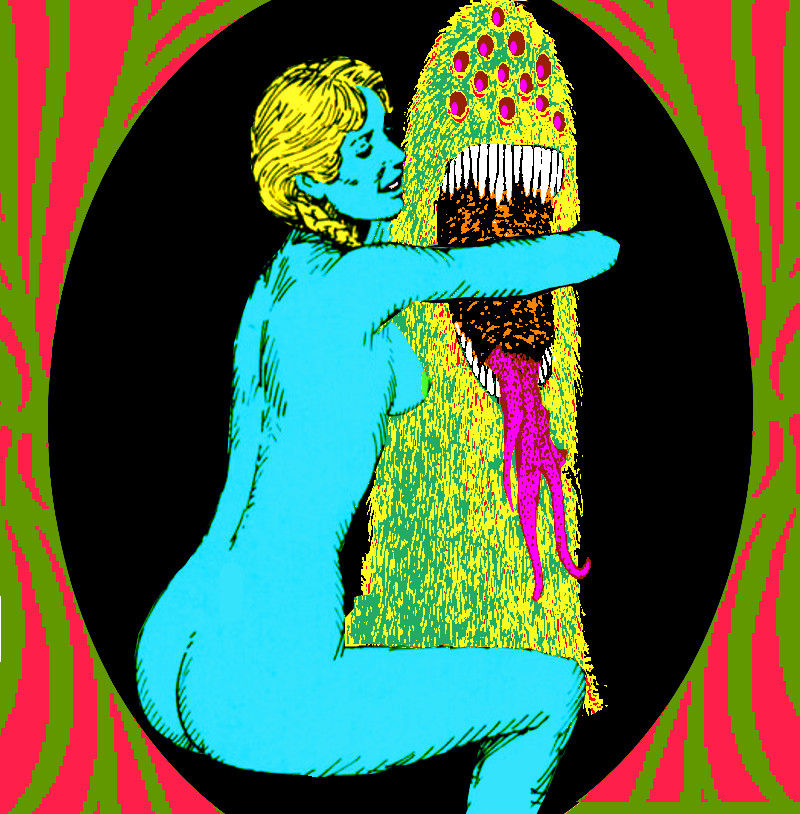
Moments later, in the fire’s glow, stood a girl … an ancient girl; from her gaunt, gangling body with her foolish, gentle face, she seemed old beyond years. Even the girl’s hair, a wild ashy thatch that hung almost to her ass, so bleached as to seem to be the white hair of old age, shook this way and that as the Qrmuhin glanced towards the open door, questioning.
Her mother stood silently for a long moment.
The girl finally shrugged hopelessly. She wrapped a thin arm was across her flat belly, her face was streaked with tears. “Mama-jan … it’s terrible to feel this way. My father lies sick in your bed and all I can think of is that I’m hungry.”
“If you do what I tell you,” with a sigh her mother took her daughter’s hand in hers, “we all shall have enough to eat.”
“Eat, Mama-jan?” There had been neither sin nor food in the house for well over a month.
The mother gestured to the distant figure sitting outside on the heap of stones. “This young lady has come for the Qrmuhin.”
“But mother, the Qrmuhin is … ”
The old woman looked into her daughter’s face. She tried to look intent, compassionate, yet fiercely resolute, but only ended up appearing irritated. “Shahani-jan,” she said, “you must go with the young lady.”
“Me?”
The girl was terrified, panic-stricken, freeing herself from her mother’s grasp. She began to beat the air like a child deprived of her toy.
“I couldn’t! I couldn’t! To eat a Turk’s sins …”
Her mother tried to get possession of her daughter’s flailing hands. “Hush now child, hush! Listen! Aren’t you are hungry?”
“But to eat off a dead man’s chest? I know what these people have done, their food will poison me.”
“Shahani-jan, they pay you, they will give you money.”
The girl only struggled and whimpered. “I’d rather starve … I’d rather starve!”
They were all starving. The massacres had left their little community devastated. Her husband had been ill for many weeks; the old woman dared not leave him long enough to try to earn or beg in the villages, the nearest town was eight miles away. Her daughter was too shell-shocked to send on such a task, ever since the Hamidiye had ridden into town; and with her own increasing illness the old woman had lost the will to try.
“If not for yourself, Shahani, for all of us. For your father.”
The poor girl’s vague eyes, unfocused, came at last to rest, looking wretchedly back, into her mother’s. “If he has no food … will he die?”
The old woman turned away her head from her daughter’s gaze. She knew that her husband must die, as all mortal things will eventually. But she simply answered, “yes, daughter, yes.”
“You said … that they will pay me?” The girl pressed her lips together, shivering. “To eat off the chest of a corpse! To take their sins!”
“Shahani-jan … this is what I am trying to say to you.” The old woman caught her daughter’s hands up, urgently whispering. “To get money for your father you must take their sins into your body, you must eat from their body. But listen, listen! You don’t really need to eat the food they present to you, you can bring it away …”
“Bring it away?”
“Eat nothing they give you, Shahani. Not one scrap, not one crumb! Say their queer prayers. Tell the people to let you alone with the body while you eat. But don’t eat anything they lay out for you. Bring all the food back with you.”
“Mother, I don’t understand. You want me to say the prayers but not eat what they give me? I am so hungry and all I’m to do is say prayers?”
“Yes.”
“But … to see a dead body covered in food … and to say the prayers, to wail and scream! Mother! Must I?”
The old woman bent all her strength to uphold her will against her girl’s, “Yes, child. You must go.”
“Bring the food back? Bring it here?” It was dreadful to see the bewildered face lose its purity, the dawn of what her mother was asking of her creeping upon her. “So the food is for father? Isn’t that what you are telling me?”
“The food?” The girl’s thin arms hugged the aching emptiness of her belly.
“The food is not for me,” her mother replied. “I shall not touch one crumb of it, not one crumb.”
That was, of course, the truth of the matter.
][][
Shahani went with the Turkish girl, trembling. Her mother had thrown a rough shawl about her head and shoulders so Hamiyet only saw the old-young face, hooded with wild white hair. The Widow, though, meeting them at the farmhouse door, held her lantern aloft and cried out, “What is this wretch that you’ve brought me? This is no Qrmuhin, fool, this is a Dhimmi girl!”
“She can eat as well as another, mother,” said the girl. But Hamiyet was mortified at having been deceived by an elderly Armenian woman, so she sought to recover herself. “She is better, perhaps. You know that girls are strong and born to bear the burden of their parents’ sins.”
“Do you call this strong?” The older woman said, pushing the Armenian girl before her into the lighted kitchen, turning the thin, dazed face to hers. You could see her heart sink within her. “As for young … is this wretched child to take on the evil of a grown man, a True Believer, in a whole day?”
“She is a Qrmuhin,” said the girl, shrugging. “Let her eat what she can.” Hamiyet threw herself down on the high-backed oak settle at the open hearth where, despite the oppressive heat of the night, a fire sputtered and sparked. “At any rate, there’s no other. I have searched three days; and, as it is, I had to walk all this way while your Qrmuhin rode upon my horse. I spent most of the time holding her to keep her from tumbling off the saddle.”
“She is weak,” said the older woman, looking at the girl with a mix of irritation and pity.
“I am hungry,” Shahani, her face slack with pan, finally announced.
][][
The corpse was laid out in the little parlor where candlelight glowed from the tall dresser reflected in a dozen mirrors. A white sheet was pulled up to the bearded chin, a Greek dish balanced upon the dead chest, heaped with food — thick slices of ham, blue and glistening cheese, aromatic with herbs, eggs boiled and shelled, raw garlic sliced across, fresh-baked lavish, spread thinly with the butter, great wedges of iced cake, sticky slabs of Australian vegemite … Shahani stood looking amazed at it all.
The family, hastily summoned, crowded in after the girl and stood with heads bent around the table; the naked flesh of the patriarch, now rotting, now useless in his pride … the young children of the family shying away like frightened foals in the firelight that flickered into the hideous shadows so that, beneath the dead man’s shroud, the corpse seemed to move. The Turks waited for the Armenian girl to speak and cast their sins away.
Shahani could not speak. Her heart was like shush-winter water flowing deep within her breasts at the sight of the food. An old grandmother said at last, “Shall we begin?”
The Widow had protected the girl from her hurry-scurry ancestor’s scrutiny, keeping the unbeliever in the shadows, muffling her old-young face into her Kurdish shawl the way one does with a horse to blind it from what it is about to charge into. Too late now to find another priestess willing to play along with this game; Hamiyet’s mother had done her best … she wanted no argument from her kinfolk. She prompted the Armenian girl, mouthing, fearful, the opening words of what she knew was the Qrmuhin’s terrible prayer for their sinful dead.
Shahani had heard her father rehearsing what she had to say often enough … the burbling nonsense in Turkish, the pauses while the food was gobbled down, bit by ceremonious bit, the climax of prayer, the storming of Allah’s paradise, the shriek of horror as the prayer at last was answered, the sins transmitted into worthless flesh, the hasty flight of the Dhimmi, eerily sobbing like the Wailing Wall, staying only to pick up the money, by custom flung after the pariah cast out of the True Believer’s household. But the words … the howl of the Ottoman beast all girls had heard but could not imitate … so she made the cry of the She-Wolf that she knew would cry back to her, made the hoot of the Sevan Owl, the scream of the Cinereous Vulture, but these sounds had no words; she knew no words … Shahani began to mumble desperately … imitating a meaningless babel of Turkish words, like the tower collapsing upon itself. The family of the dead man shifted uneasily their thick feet … only half listening, only half watching the damned girl, afraid of the moment that had to come, giving the heathen girl, deliberately, only a divided part of their attention; yet conscious, with a growing consciousness, that all was not as it should be. The Widow made small, urgent, hidden gesture towards the body of her husband.
Shahani blanched. The time had come to eat.
The butter was foul in the candlelight, gleaming yellow-white among the moldy batch four-day old loaves; inside the girl’s mouth her cheeks seemed to sweat saliva. She stretched out a shaking hand towards the food. But her mother’s voice hissed in her ear: “Not one scrap, not one crumb!”
Shahani’s hand dropped back, her bony fists crumpling the sides of her dress.
The old woman had counselled her daughter, feverishly coaching her in the part that she must play, knowing Shahani was not capable of ad-libbing. Now, obedient by a distant summons, Shahani stumbled through the simple sentences. “You must all go. I am the Qrmuhin who must eat alone.”
The family was astonished, protesting. “Yok! The Qrmuhin must eat before the True Believers! That is the whole point!”
The girl repeated, “I am one that must eat alone.”
“Witnesses must be present to see that the sin leaving the body and enters a Dhimmi!”
“You shall hear it when it happens,” the girl replied.
That was the whole point of the ceremony, wasn’t it? The shriek of mortal terror, the terrible wailing …
“If we stand in the next room,” urged the Widow, aiding to the girl’ request, “then we shall hear when the sin passes.”
This Qrmuhin was not like any other Dhimmi sin-eater they had ever seen; in her heart the Widow doubted the girl’s worth but the damned creature was the best that they could do; her husband must be buried the next day. The Widow prayed again for no argument from amongst her ill-tempered kinfolk, True Believers were such a pain in the ass. So, uneasy but resolute, she drove them all into the kitchen next door.
With ears pressed against the balsa, the toothless hoard listened with bated breath to the wild babel that they assumed must be Armenian. Shahani, obedient, stuffed her threadbare pockets with all the food; menemen and börek disappeared into the lining of her torn skirt; simit and kaymak hidden against her naked thighs all the goat fat fit to burst found a home against the green-white hue of her flesh; the glossy fat of calf meat mushed against her hard rib-cage. All the while Shahani set up a shrill chant, incoherently the way men wild with drink do; perhaps it was Dog-Greek and Pig-Latin; the sort of mumbo-jumbo that only amazes those who haven’t gotten beyond 3rd grade.
“When we hear the Dhimmi scream,” one Turkish grandmother said, passionately, “it will be when the sin passes.”
The chanting suddenly ceased. Within the little room Shahani attempted to nerve herself for the screaming bit; yet there is nothing for her to scream about. May Tsovinar bless us all. What divine goddess would ever want one of these daughters scream to? In a corner a German grandfather clock, looking like a great, long, red-legged scissorman, ticked away the minutes. Silently, beneath the shroud, pale against the gloom of old Mormon silver, the Turkish corpse seemed to shift slightly, as if coming awake.
Shahani’s mouth opened, dragging up from her laboring lungs a deep gasp. The girl lurched forward like Frankenstein’s Monster, sick and trembling with this one chance to keep her father alive, this one chance that will, of course, fail, since the villagers know that the Monster and the Monster’s Creator must both die if the unbeliever, the Dhimmi, could not for them what they believed must happen.
Then an odd thing happened.
The metal dish, once heavy with food, resting on the corpse’s chest, began to move. Now emptied of food Shahani saw the beginning of the slow slide. She flung out a hand to stop it and one finger brushed the rim as she leaned over the corpse, crushing the food even more so; but, slick and greasy with bacon fat, the dish continued and a moment later crashed with a metallic bang onto the scrubbed stones of the floor.
Shahani let out one startled shriek as the door burst open. The family stood gaping as the screaming Qrmuhin pushed her way through and dashed outside. Out into the night air, under the stars, fleeing down the mountain-side to the place she called her home. If the Widow flung gold after her, if Hamiyet recollected her promise to bring the girl back home, Shahani waited for neither. After the long panic of the night, terror held her fast. Faint with starvation the girl rushed blindly on and on, stumbling through the hanging, moss-covered forest pungent with tarmac, across the squelchy marshland with its hideous cadaver-hunting night-birds, plunging through the river Pekolot, through scrub and thorn again and so at last, collapsing, bawling, Shahani found herself outside her ruined house, clutching blindly at her mother’s feet.
The old woman could not wait even to comfort or assist her daughter. Instead she burst out, “have you brought the food?”
Shahani dragged herself painfully to her feet. Her old-young face was raw and there was blood around her nostrils. Her long white hair was tangled and dirty. As if in a dream she began to take off items of her clothing, to extract from the hiding places on her body all the poor, battered remnants of a dead man’s feast … the crushed hard-boiled eggs, the börek gone limp and greasy now from long contact with the sweating body, the kaymak and the menemen. Her mother took it all from her, silently, piece by piece, scraped with a cupped palm the melting butter from between the hollow of her daughter’s breasts, gathered it all onto a crust of flat bread, lavash. It was only when her daughter stood before her naked that the old woman at last asked, “are you sure this is all of it?”
It was everything. Shahani had eaten nothing, had carried everything back home. As her mother stood the girl’s heart rose with her … she had saved her father, temptation had been resisted. But even at this realization Shahani could tell something wrong was happening.
“Where are you taking it? It’s for father, you promised!” Ravenous, shattered, Shahani began to drag herself after her mother, crying, “You’re not going to eat it yourself? Why aren’t you giving it to father …?”
The sins of a Turk, what were they? The massacre had swept through the land and he had done nothing to stop it. The Sultan, the “Sick Man of Europe,” had issued orders and he had excitedly carried them out. He had coveted and then watched his neighbor’s house burn and lifted not a single finger to help. They were bad … but the sins of the Qrmuhin were far worse; the long accumulation of sin upon sin, all unshriven and unforgiven, the sins of a True Believer who could only enter paradise if a monster ate them. There was no one who would take on the sins of a Qrmuhin.
The old woman had known, all along, that her husband, Shahani’s father, was in the gray-lands of death; there was nothing that could be done about that, priestess or no priestess. Now Shahani’s mother took her naked daughter by the hand and led her into the ruined house where her husband lay and spread out all the food upon his naked chest.






 memories of my ghost sista