silver and copper

Tags

, , , , , ,

“The Goddess wept”
—- Amy Lowell

Amy, we should have freed her fluted wings
fastened to her sides, warmed her nude body,
dried her eyes. A goddess is weeping. Things
that should not happen are. In the city
market was where you found her. Men dickered
for her, bargained in silver and copper;
calling their bids across the dishonored
market air. Amy, we should have freed her;
her flash of wings, her shiver of saffron,
quartz and blue-indigo. Don’t hide your face.
Don’t flee along narrow streets
with the wind hissing behind you. These men
can be beaten bloody. We’ll restore grace
back to her. We’ll free all that man mistreats.

come away

Tags

, , , , , , , ,


But you’re not a fox-witch, so maybe
it wasn’t how you handed him your damp
bloomers, it was that you had on any
at all. Maybe it wasn’t your half-vamp
eyes, your toothy smile. Maybe that which
bewitched him was when you said: come away.
Maybe. You, who aren’t fox or witch,
had gone out in first light and found this stray
man-cub. “Come away, O human foundling,
to my den in the hills.”
All that fogbound
winter he slept naked in your arms. “My
little toy,”
you called the boy. “My play thing.”
Maybe he loved your wicked smile when he found
that your bloomers were damp. We all know why.

wet silk

Tags

, , , , , , , ,

The first time I slipped a finger inside
you was on a cross-country bus trip. You
sung “Me and Bobby McGee” to me, cried
when you climaxed. None of the sleepers who
sat all around us saw you lick your own
pleasure off my fingers. The second time
you were a new mother. We were alone,
you had just fed your baby. Your sublime
nipples called for sloppy seconds. Your milk
tasted sweet, warm, leaving a rapture smear
across my lips. As I sucked sucked greedy,
as I found your spot, melting like wet silk,
as you said, “suck hard, put your mouth right here,
put your tongue in me, put yourself in me …”

crude gospel

Tags

, , , , , , , , ,

What, you asked, goes with fright-wigs, kick boots, doll
pink smeared lipstick? —- Wear the blue nondescript

ones, they’re less immodest than none at all,
or would be if they weren’t just a touch ripped

down the middle of your sensitive groove.
Funk it ain’t: this kinderwhore look that you

took to like crude gospel, as if to prove
that you just didn’t give a schmuck-fuck who

saw what. We’ve all been there, once or twice. When
the earth was new —- faith still uninvented —-

passions of things hadn’t had time to cool —-
and we were loved —- before the rise of men.

I love you with or without your wig, blessed
because you are brave and funny and cruel.

][][

notes:

Looking back on certain fads and fashions that once seemed radical and important it amazes me at times of how we ever took things seriously. The kinderwhore look is one of those fads, consisting of torn, ripped baby-doll dresses, heavy makeup and leather Doc Martin boots of various colors. Various female punk/grunge musicians during the early to mid 1990s wore the look, including Kim Shattuck of the Muffs, Courtney Love and Kat Bjelland from Babes in Toyland. Why my friends and I thought that this was the greatest look since the invention of tight leather trousers I’m still not sure, but it seemed to make sense at the time.

the song of the witch from prague

Tags

, , , , , , , ,

“I beat you with a hazel rod,” the Witch
of Prague once sang. “Come to me in madness.”

Come, come, these are love-charms that will bewitch
any heart that you long for. Blasphemous

some call it, but what love is not born in hell?
“I beat you with a bloodstained rod,” the Prague

Witch once sang. “Come to me like a gazelle.”
Come, come, I was her student, her love-dog,

these love-charms works. “I beat you with a rod
from the Tree of Gehenna,”
my mother

witch once sang. “Come to me like a wild boar.”
I did—-I did—-I did—-with nails that clawed,

teeth that bit. These charms will make your lover
feel the sting on naked flesh and want more.

open mic poetry reading

Tags

, , , , , , ,

The rich, we’re told, suffer just like the poor,
except that they have paychecks from the New
Yorker and dental insurance. The war
of the classes, we are told by those who
were once poor but now rich, shouldn’t appear
in your work. What if the Academy
one day likes you? Like the war profiteer
fortune falls to the bold. Hypocrisy
is just sour grapes, they say. I love Open
Mics (not Slams, not Lectures), with the freedom
to read out loud, for that very reason.
I don’t care what books you’ve sold. Our fortune
falls to all who burn, Open Mic’s maxim,
we’re small town democracy in action.

counting games

Tags

, , , , ,

I wish to live while you can still love me,
while I can still hold you, while all that’s yours
lies on me. My love was once free, easy,
childish. I wish to live; take me to our
bed, our kisses, our heat; they will do no
good to me when I’m dead. I wish that you’d
love me now, since I’m healthy now. I know
enough to know. Death is misunderstood;
poor death has no place here, but death is all
that this world can give. I say that I wish
to live while you can still love me. My dear,
each day I feel cold and ill and so small
compared to your heat. Love me. It’s hellish
to count down all my passing days, months, years.

sister swallow

Tags

, , , , , , ,

scream, spit or swallow
–舔阴horny goat weed

swallow, my sister, o sister swallow
–Itylus, Algernon Swinburne

][][

Just as I swallow, just as I must close
my eyes and let it all trickle down my throat.
Call it doom. Gag and it spews out your nose
while up above you, with a sneer and gloat,
some blue, puffed face pats the top of your head,
says, “job well done.” And it was a good job,
getting it down, daring yourself, the dread.
Doing what you said, “never again.” Slob
that you are. Slob, coward: there’s a whole list
I keep in my head just in case. What doom
could get me this far except the sweat-stink
of raw despair? Because after this tryst
I will excuse myself to the bathroom
just to throw up everything in the sink.

martyr’s ancestors

Tags

, , , , , , , , , , ,

photo by katie aune

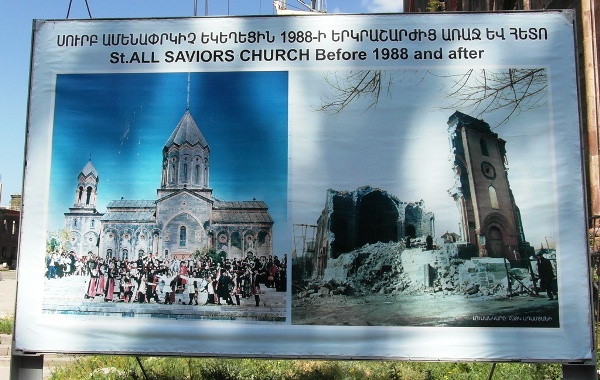
I lived near the ruins of All Saviors
Church. If this were an altar for the dead,
worshiped since 3000 BC, martyr’s
ancestors, then I would have prayed and fed
them as I once fed the dead of Ani’s
ruins, across the border, a different
city of ghosts. But it is not. What frees
all these dead from Arcadia’s ancient
curse? They entered into me, sick larvae
in a ripe fruit, and now I can’t leave it
alone. If I could call on some unknown
fury to heal this I would. But fury
and loss is what binds these cast-off spirits;
and now, like them, I can’t leave this alone.

][][

notes:

If metaphors are the engine that drives a poem then the problem with writing about a city that 98% of the free world has never heard of is, like trying to make sense of out-of-date pop cultural references, 98% of the free world won’t get what you’re trying to say. The metaphor, in other words, fails. I’m trying to avoid that here, but I realize that if I need to write several paragraphs in my notes explaining what each reference I use means then … perhaps I need to rethink how I can “talk right down to earth in a language that everybody here can easily understand.” (thank you, Living Color).

So, as a quick reference guide, here goes:

The poem is set in the earthquake-devastated city of Gyumri, Armenia; a part of the world that archaeologists have determined has been continually inhabited since 3000 BC. All Saviors Church was a ruined church down the street from where I once lived. Ani is an abandoned, ancient Armenian city just across the border between Armenia and Turkey. As a metaphor, Arcadia usually refers to the idea of an unspoiled, utopian wilderness; sort of like what your hippie parents (or grandparents) might talk about when someone mentions California in the 1960s. Needless to say, the 1960s have never been “all that,” in much the same way that modern-day Turkey has never been the cradle of anyone’s crescent civilization.

The photo I use here was taken by Katie Aune.

the heathen times

Tags

, , , , , , , , ,

Dry this stream bed, flowing through not desert
heat but Neolithic outcroppings, hills
they call them, marking the border. The dirt
here is sweet, sweeter than whatever spills
out on the other side. I have wandered
through these hills, down paths that even shepherds
couldn’t get their flocks to follow. I’ve heard
the sound of paw-pads on rock, like drunkards
kicking stones. Later my neighbors would tell
me ghost stories of the heathen times, back
when goddesses of wind, fire and shadow
roamed the hills. But I was under the spell
of youth, where having Cantor and Cossack
blood was all the safety I needed to know.

][][

notes:

It’s odd how one starts a poem about the river that divides Armenia from Turkey and ends up writing about being chased through the hills by unseen forces. I suppose it’s all about where the rhyme takes you.

This poem comes from my time spent in Gyumri, Armenia, as a Peace Corps volunteer. The city is surrounded on two sides by mountains and between the endless flat land the towering mountains are the foothills, which were bizarre when I first looked on them. The closest I’ve ever seen as a comparison is the Glastonbury Tor, in England, which looks like a huge burial mound. There were hundreds and hundreds of them, spanning the eastern and southern sides of the valley Gyumri is located in. It took around four hours to hike from the city center where I lived out to the hills, but I liked it because, for some odd reason, no one else seemed to venture out there. One night, though, having decided to go on a midnight stroll, I ended up getting lost and coming to the conclusion that something was following me. Perhaps I was hearing things, perhaps it was something as innocent as a wolf. Whatever it was I never found out, for even when I turned around and began looking for the source of the noise I couldn’t find anything. When I asked my neighbors why the hills were deserted they began telling me stories about the pre-Christian times of Armenia, with tales of fire whirlwinds, goddesses that caused goats to dry up and dragons that lived on the slopes of Mt. Ararat. I suppose they thought that since I was an American I’d be willing to believe in anything.

The Cantor and Cossack reference is personal, for as far as I can gather from the little information I have found, my grandfather’s father on my dad’s side were both holy singers and horse soldiers during the days of the Russian Tzar. But that’s just family lore, what I know is that he came from a small village in the Ukraine, near Minsk. The difficulty of pin-pointing my ancestors isn’t just that everyone on my father’s side is dead, it’s that since they were Jewish and everyone else in the surrounding villages during WWII the Nazis rounded them up and executed everyone, afterward burning down the villages. There is literally no literal trance of my father’s roots.