• hopilavayi: an erotic dictionary

memories of my ghost sista

~ the dead are never satisfied

memories of my ghost sista

Category Archives: Uncategorized

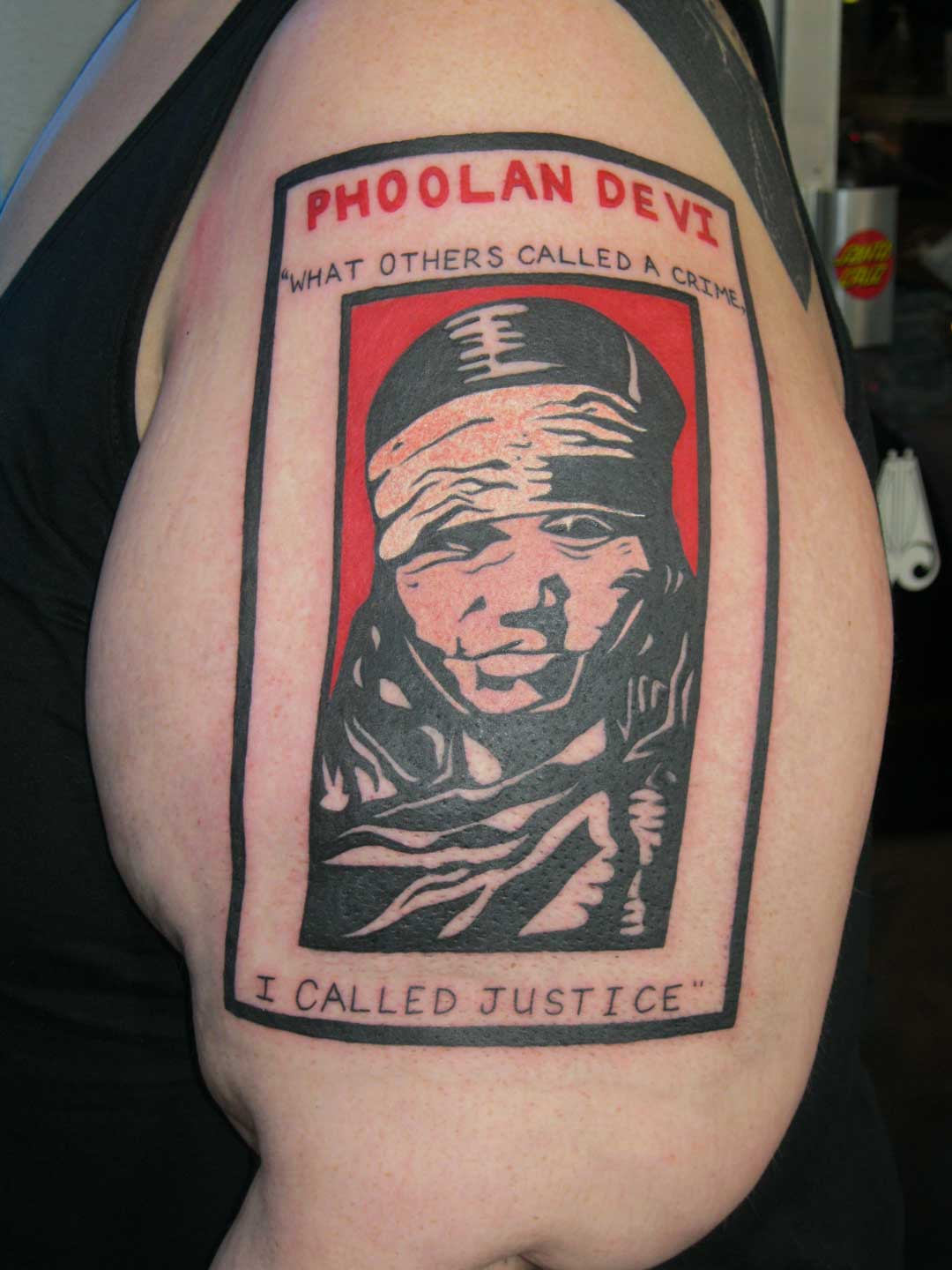
phoolan devi

26 Saturday Oct 2013

Posted by babylon crashing in Uncategorized

≈ Comments Off on phoolan devi

Tags

Bandit Queen, Behmai massacre, dacoi, Durga, Hindu goddess, India, Phoolan Devi, Samajwadi Party

phoolan devi  1

phoolan devi  2

phoolan devi  3

phoolan devi  5

phoolan devi  7

phoolan devi  6

phoolan devi  4

phoolan devi  8

phoolan devi 9

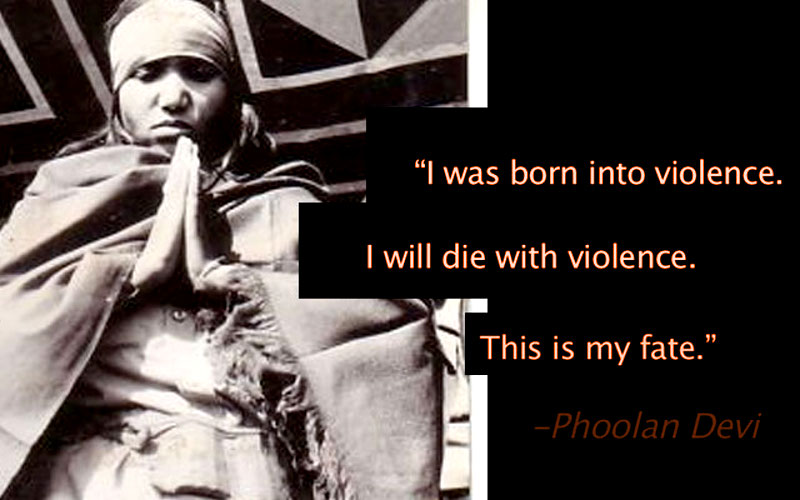
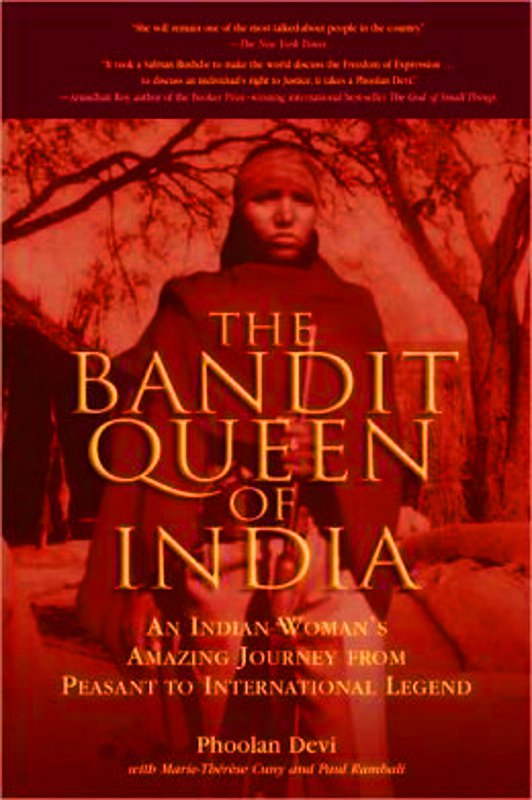
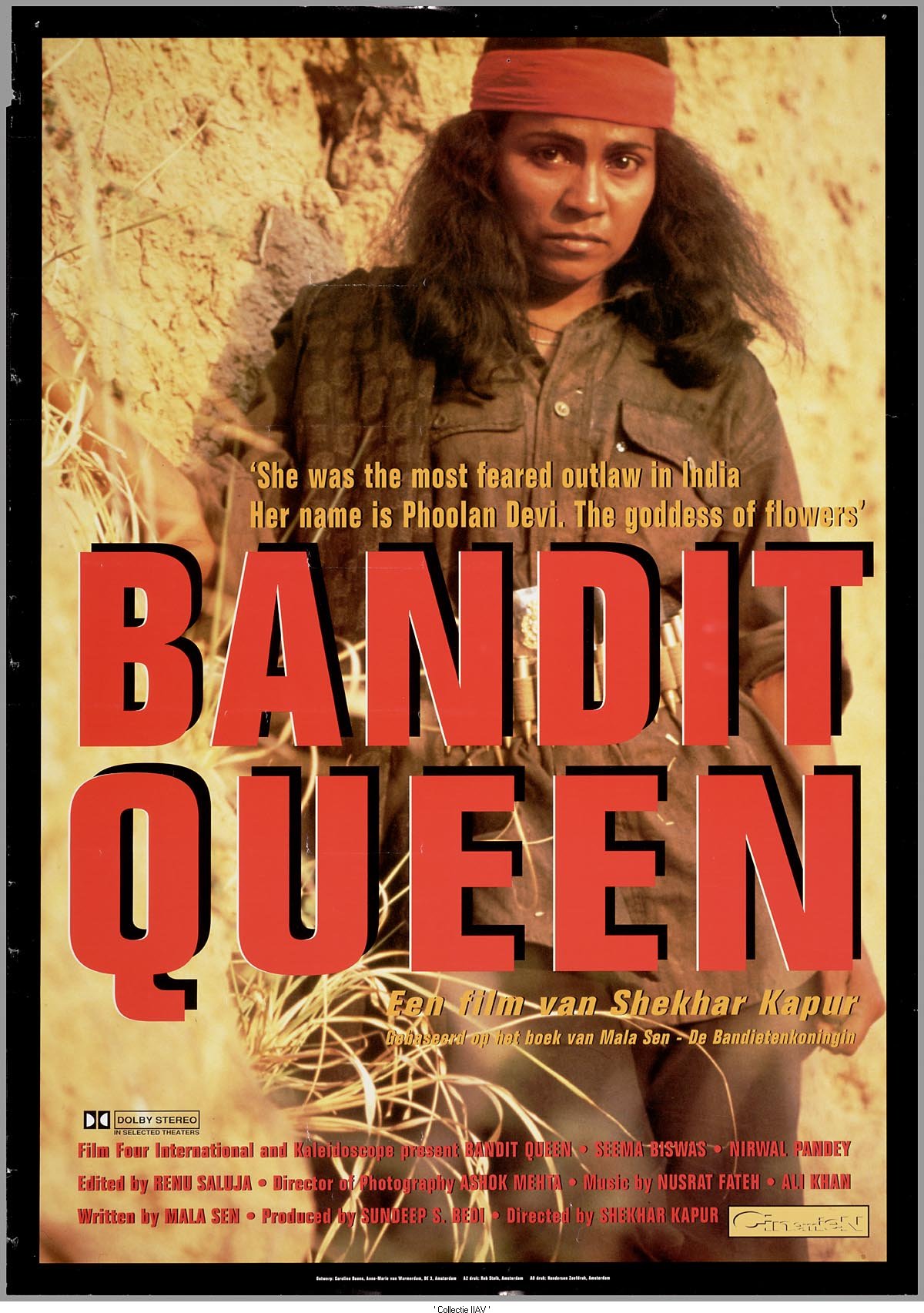
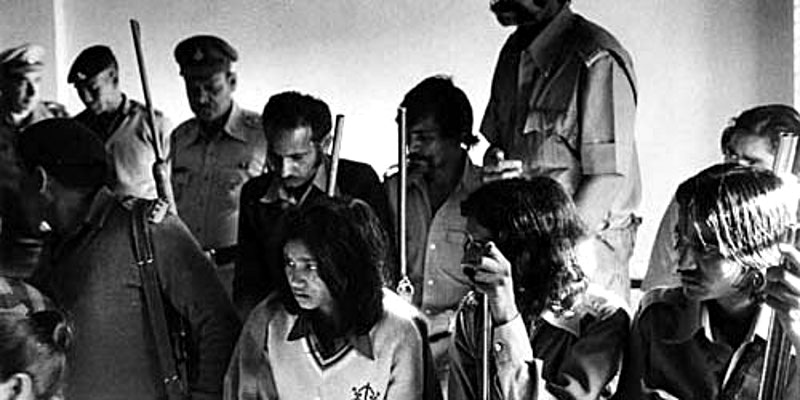
Phoolan Devi (10 August 1963 – 25 July 2001) popularly known as the “Bandit Queen,” was an Indian dacoit (armed bandit), and later a politician. She was born into a poor rural family belonging to the Mallaah caste. Married to a much older man at an early age, she was branded as a social outcast after she left her husband to escape domestic abuse. Kidnapped by a gang of bandits hired to kill her, she subsequently married one of them, Vikram Mallah. The group then murdered Phoolan’s ex-husband, carrying out several highly publicized robberies at the time. Later, a different group of bandits, belonging to the Thakur caste, murdered Vikram and gang-raped Phoolan. After escaping from them, in 1981, her gang raided the Thakur outlaw village, killing twenty-two Thakur men in what came to be known as the Behmai massacre. As a result she gained a fearsome reputation as the “Bandit Queen” and some villagers started calling her an incarnation of the Hindu goddess Durga, goddess of flowers. In 1983, she surrendered and spent 11 years in prison. The 1994 film Bandit Queen, made against her wishes, was a highly romantic take of her life. After she left prison she ran as a candidate for the Samajwadi Party, getting elected to parliament in 1996. In 2001, she was assassinated by gunmen claiming revenge for the Behmai massacre.

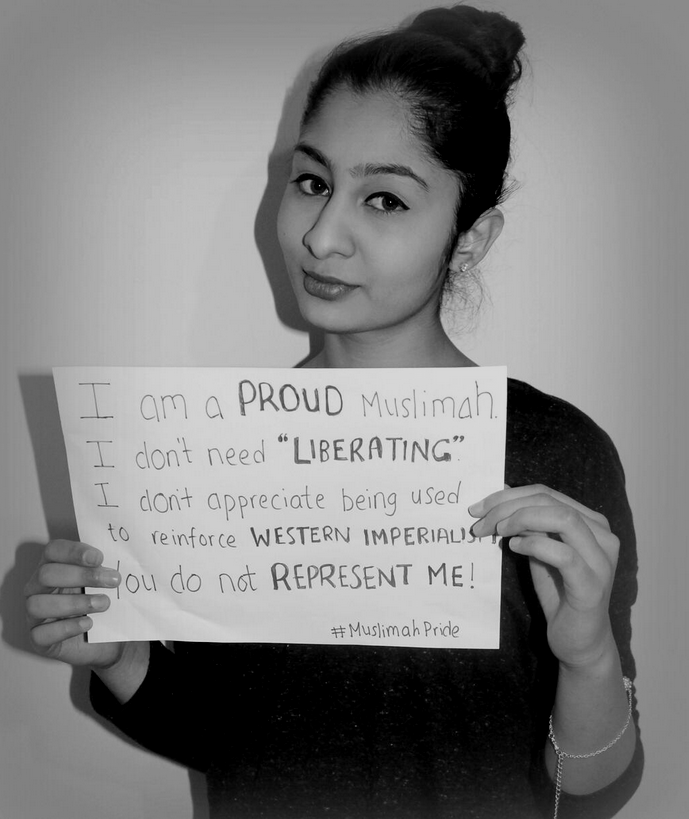
what a muslim feminist looks like

12 Saturday Oct 2013

Posted by babylon crashing in Feminism, Illustration and art, Uncategorized

≈ Comments Off on what a muslim feminist looks like

Tags

2013 World Muslimah, bell hooks, Colonialism, essay, freedom of choice, hijab, Imperialism, Islamophobia, Lifestyle Feminism, Lori Ginzberg, Muslim Feminism, Muslimah, Noor Al-Sibai, Obabiyi Aishah Ajibol, Patriarchy, Pro-Choice, racism, White Privilege, xenophobia

muslim feminist 1

muslim feminist 2

muslim feminist 3

muslim feminist 4

muslim feminist 5

muslim feminist 6

muslim feminist 7

][][

[the biography] Elizabeth Cady Stanton: An American Life, states that although Stanton is well-known for her involvement in the women’s rights movement, she descended to some rather ugly racist rhetoric along the lines of, ‘Only we educated, virtuous white women are more worthy of the vote’ … That is where my disagreement with Stanton is strongest: Whose rights are you going to put down in the process of demanding your own?”
—-Lori Ginzberg

There has always been racism within the various mainstream Feminist movements. From Suffragettes like Elizabeth Cady Stanton, who spent a lifetime advocating that black women should never have the same Constitutional rights as white women, all the way up to our modern age with Sarkozy’s France and FEMEN claiming that Muslim women should not have the right to choose how to dress themselves as they see fit.

I focus here on the debate over the hijab, the Islamic head-cloth that many Muslim women choose to wear, because for me it has direct parallels to the same logic and reasoning found in many Pro-Choice and Sexual Rights movements operating today; that is, that every woman should have the freedom to choose what they want to do with their bodies. Control over her body and the freedom to decide the course of her own life is critical not just to woman’s civil rights but all human rights as well. The fact that the people—-who seem blind to their own racial privileges and use xenophobia and Islamophobia to support their cause—-just happen to be women does not strengthen their arguments, it simply shows that we still live in a time and place where the dominate culture feels that it has the right to declare who gets to be called a Feminist and what a Feminist should look like.

Writing in her essay, Does Your Lifestyle Make You Unworthy of Feminism? Noor Al-Sibai says:

The term “Lifestyle Feminism” became a buzzword in the second wave of Feminism during the 1960’s and 70’s (in the Western-centric view of “Waves” of Feminism). The term, as defined by influential writer Bell Hooks in Feminism is For Everybody, is “the notion that there could be as many versions of Feminism as there were women”. It is the recognition—-or rather, the lack thereof—-of the fact that there is as much plurality within Feminism as there are Feminists that’s been troubling me recently. Many Feminists of all flavors (queer, fat, etc.) seem to be engaged in policing who can and can’t identify as a Feminist based purely on their own preferences and lifestyle choices. While this sort of internal division and conflict is nothing new (like when Black Feminism and Womanism split from mainstream Feminism, or the Feminist Sex/Porn wars of the 80’s and 90’s), it has reached a peculiar pinnacle when it comes to specific lifestyle choices such as the decision to engage in sex work (defined broadly as anything from webcam porn to stripping to escorting), or the decision to be a Muslim and wear a hijab …

I find the disassociation between fighting for the right of women to have freedom of choice over their own bodies when it comes to sexual reproduction but not when it comes to faith, fashion or lifestyle utterly bizarre. The fact that in 2013 there are still Feminists who are not only attacked and silenced by the larger “White Imperial Patriarchal culture,” as Bell Hooks points out, but also by members within their own struggle disastrous on all levels. I am not Muslim but as long as there are women in this world who choose to wear a hijab then I will help fight for their right to do so. That is, after all, what freedom of choice is all about.

][][

The photos I use here were taken from various Muslim Feminist websites I read as I was writing this essay. The last, of the woman wearing the tiara, is Obabiyi Aishah Ajibola, from Nigeria, who was crowned 2013 World Muslimah in Jakarta.

lowland: prelude of things to come

01 Tuesday Oct 2013

Posted by babylon crashing in Uncategorized

≈ Comments Off on lowland: prelude of things to come

Tags

fingers sticky, hands, masturbation, poem, Poetry, small death, sonnet

I am in love with your hands, your fingers,
they have brought you more pleasure than I will
ever. Swift movements in the night where blur
and swish is called for, touch and stir, until
a coast of flesh, repeated broken beat
your chants, your prayers, bombastic solitude
when no one else would have you. Your discreet
pleasure, because it always is. Prelude
of things to come – like you. Show me your hands,
let me praise what you do effortlessly.
Grasped at length stroked, stroked – liquid gasp, your breath
in twos, threes, fours. Downs. Down in your lowlands,
where no one goes, I call that mystery.
Show me how you pray. Show me your small death.

war queen

01 Tuesday Oct 2013

Posted by babylon crashing in Uncategorized

≈ Comments Off on war queen

Tags

alea iacta est, crossing the rubicon, Jezebel love, Julius Caesar, Orpheus was my godfather, poem, Poetry, shy girl, sonnet, war queen


Come, find me: others might have promised you
love but I’ll be the one who goes to hell
to win back your soul. Julius Caesar, who
crossed the Rubicon, loved a jezebel,
a war queen, a shy girl, promised as such
— “alea iacta est” — now the die is cast.
This is a promise I’m staking so much
on. War queen, Jezebel, Love: Hell is vast
and I am small, but I will go looking
for you. Orpheus taught me where to go.
I can fill the gods with tears. Our dreamland,
even our dreams, knows this song. I’m singing
you back, love. What is love to a shadow?
I’ll show you when I steal you from death’s land.

notes on other people’s hubris

20 Friday Sep 2013

Posted by babylon crashing in Uncategorized

≈ Comments Off on notes on other people’s hubris

Tags

hubris, humility, quotes

The moment someone starts talking about dualism, good vs evil, black vs white, female vs male, that’s the moment you need to stand up and leave the party.
― Yeva Anoush

Ancient societies had anthropomorphic gods: a huge pantheon expanding into centuries of dynastic drama; fathers and sons, martyred heroes, star-crossed lovers, the deaths of kings ― stories that taught us of the danger of hubris and the primacy of humility.
―Tom Hiddleston

We have no language that is free of the power dualisms of domination.
― Beverly Wildung Harrison

Carved on the temple [at Delphi] were the exhortation Know yourself … You are only human, so don’t try more than you are able (or you will pay the price). A recurring theme in Greek myth is the man or woman who loses sight of human limitations and acts arrogantly and with violence against forces he or she can never control, as if they too are immortal. And they always pay a terrible price.
― Barry B. Powell

You never really learn much from hearing yourself speak.
― George Clooney

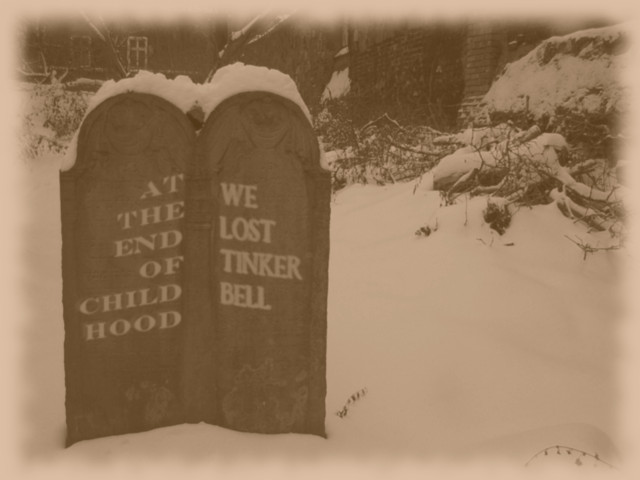
nihilism and the death of tinkerbell

18 Wednesday Sep 2013

Posted by babylon crashing in .gif, Uncategorized

≈ Comments Off on nihilism and the death of tinkerbell

Tags

adults are bastards, death of tinker bell, J. M. Barrie, loss of innocence, the boy who never grew up, the problem with nostalgia

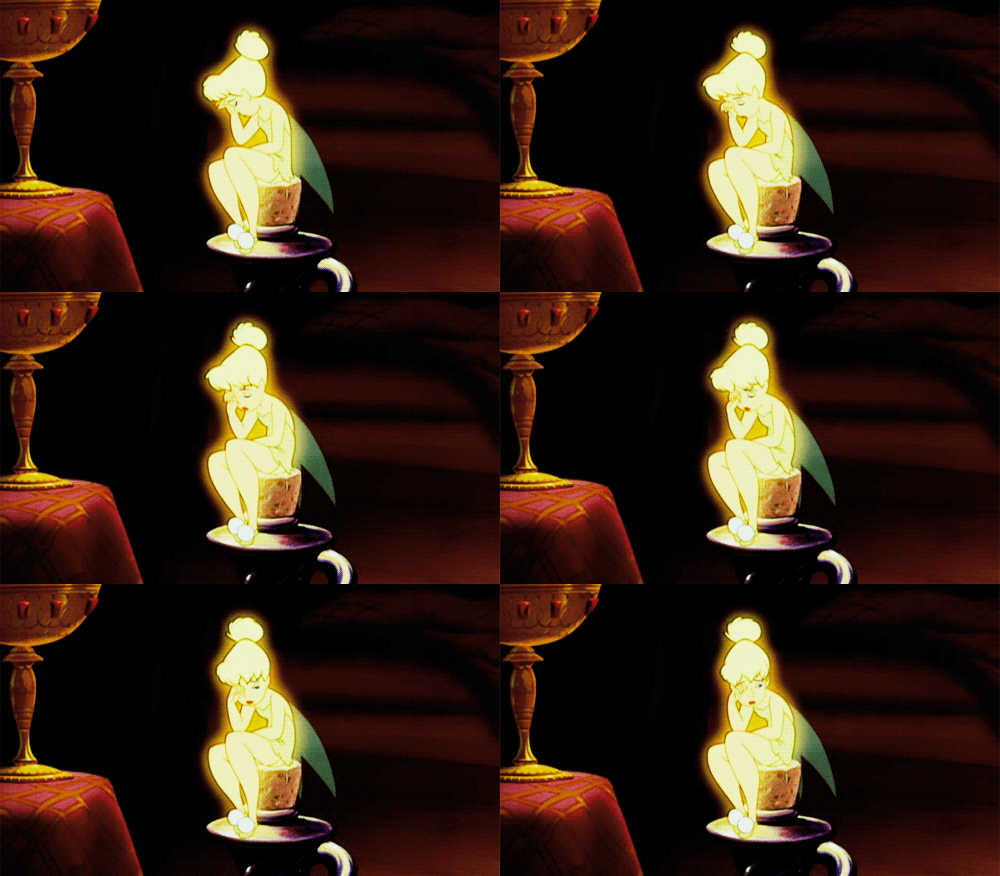
tink 1

tink 2

tink 3

4316663421_690fccb4c6_z

Michael believed longer than the other boys, though they jeered at him; so he was with Wendy when Peter came for her at the end of the first year. She flew away with Peter in the frock she had woven from leaves and berries in the Neverland, and her one fear was that he might notice how short it had become; but he never noticed, he had so much to say about himself.

She had looked forward to thrilling talks with him about old times, but new adventures had crowded the old ones from his mind.

“Who is Captain Hook?” he asked with interest when she spoke of the arch enemy.

“Don’t you remember,” she asked, amazed, “how you killed him and saved all our lives?”

“I forget them after I kill them,” he replied carelessly.

When she expressed a doubtful hope that Tinker Bell would be glad to see her he said, “Who is Tinker Bell?”

“O Peter,” she said, shocked; but even when she explained he could not remember.

“There are such a lot of them,” he said. “I expect she is no more.”

I expect he was right, for fairies don’t live long, but they are so little that a short time seems a good while to them.

Wendy was pained too to find that the past year was but as yesterday to Peter; it had seemed such a long year of waiting to her. But he was exactly as fascinating as ever, and they had a lovely spring cleaning in the little house on the tree tops.

Next year he did not come for her. She waited in a new frock because the old one simply would not meet; but he never came.

“Perhaps he is ill,” Michael said.

“You know he is never ill.”

Michael came close to her and whispered, with a shiver, “Perhaps there is no such person, Wendy!” and then Wendy would have cried if Michael had not been crying.

— from CHAPTER 17: When Wendy Grew Up.

][][

We desperately want to believe that nostalgia wins out in the end; that we won’t be forgotten when we’re gone. That even when we grow up there are still child-like spirits out in the world who will remember us as we once were before everything changed – be it puberty, a fall from faith or even death. This is reflected, especially in the later half of the 20th century, in the stories we told children: there is no death, if bad things happen it won’t be to you, we are all our own special snowflake.

If anyone ever tells you that J. M. Barrie’s story about the boy who refused to grow up is anything other than nihilistic horror then they have either only watched the sanitized Disney version or got their hands on a much later, American edition of the book that edited out the last chapter for, as the publishers pointed out, it was far too “dark” and dealt with “adult themes” that “[American] children are entirely unable to contemplate.” I have no idea if that is true, but I do know that this obsession by adults to shield children from the world is deeply rooted in Victorian values, where children weren’t seen as their own person but rather an extension of adult fears and superstitions.

Adults often try to second-guess when childhood ends and adulthood begins. For most of human history it was when the body became sexually able to sire and conceive the next generation. Then the modern world removed the sexual aspect from the question (for reasons entirely non-biological) and invented Psychology so that the line between childhood and adulthood would become much more murkier.

I say adulthood begins when the whole concept of nostalgia is finally embraced — that act of looking back with longing, that inability to live purely in the present. I am not the first to point out that childhood has no word for a better past or a frightening future. It is the here and now that childhood can only exist in and it’s only when we develop the cognitive ability to realize our impermanence that we begin to long for things as they once were. Nostalgia is adulthood, which is why many children stories, especially the ones where the protagonist, at the end, must make the choice of staying in Neverland or growing up, were never written for children. They’re written for adults mourning their own childhood. No child will ever end a story by deciding whether to stay or go. Why would they? That experience has yet to happen. The closest thing adults have to this is the endless debate over death. Every religion and branch of science has their theories, but they are just that – ideas, hopes and fears. And yet, like the child’s inability to grasp what comes next until it has happened, adults too must wait, patiently, for something our developing minds can’t even grasp.

I am, like everyone else, a product of my environment. I grew up having my mother read classics of children literature: Where the Red Fern Grows, The Lion, The Witch and the Wardrobe, Old Yeller, Where the Wild Things Are, The Giving Tree and Peter Pan. The theme that runs through all of these works is that the adult author introduces the loss of innocence in such a way that any child who wishes to travel to Neverland must also be faced with the concept that they must make a life-altering change that will forever bar them from re-entering paradise. Why did Sesame Street kill off Mr. Snuffleupagus? Because adults complained that children shouldn’t have imaginary friends. How does Sarah escape the Goblin King, Jareth, in the movie Labyrinth? When she realizes he is simply a story with no power over her. Very simply put: adults are bitter about childhood and almost every book written for children (see: every title that has won a Caldecott or Newbery book award) reflects this.

The issue that I have is the same issue I have with the whole “knowledge = fall from grace” cliche that is found everywhere in Western culture – from the Adam and Eve story to the Norse god Oden giving up his eye to attain wisdom to Max giving up his role as King of the Wild Things to return home for dinner. This concept is so ingrained into our belief system that there is no alternative.

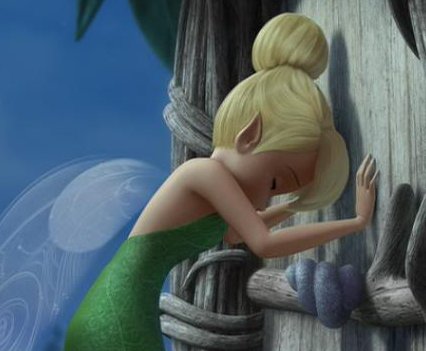
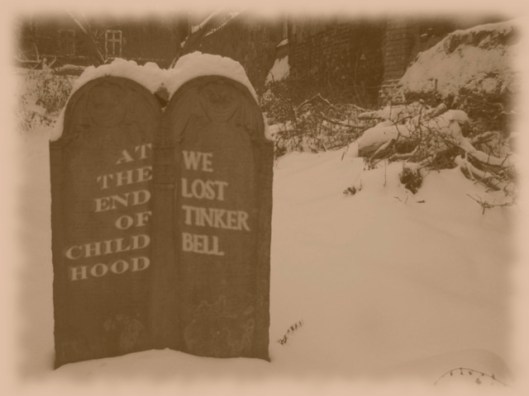
This is my definition of nihilism; that there is an Eden-like childhood in all of us and that we all, without exception, will be cast out from it. What a terribly bleak way to live and yet Christianity offers no alternative. It’s also why J. M. Barrie’s story is so frustrating. The last chapter was added on during one of his re-writes of the story. He had created the Garden without the Fall but later decided to burn it to the ground: we find that Tinkerbell had died and not only did Pan forget who she was but even his time spent with Captain Hook had never really happened. The Lost Boys were found and immediately (we are told in less than a year) turned their backs on Neverland. Wendy grows old and dies but Peter keeps returning, stealing first her daughter and then granddaughter, but always abandoning them once they reached a certain age. When Wendy Grew Up is bizarrely cynical for it attempts to say that there are monsters in this world, but they are the children who remain in a state of stagnant innocence.

For you and me, tonight, dear one, I will say a prayer on Tinkerbell’s grave.

the fine art of belly slicing

16 Friday Aug 2013

Posted by babylon crashing in Poetry, Uncategorized

≈ Comments Off on the fine art of belly slicing

Tags

art, Bushido, Chivalric Code, do got the guts?, Japan, katana, poem, seppuku

seppuku

in one artful stroke
she demonstrated
to all the loutish
and barren old men
that she had more guts
and honor than all
their empty boasts
combined cutting
through first
her muscles and then
into baby fat …

.
.
NOTE:

Here in the West it is easy to romanticize other cultures, especially ones separated by distance and time that we believe had higher moral codes than we do today. It’s the ignorant belief that “things were better in the good old days.” Take 14th century France’s so-called Chivalric Code, in theory a set of principles we generally associated with the iron-clad medieval knight. Except that history has shown to us that there was very little that was noble about that warrior class, most of whom were butchers and mercenaries who were considered by European peasants they exploited worse than the Black Plague that had just struck. As Barbara Tuchman pointed out in her excellent A Distant Mirror (1978): “Barbarism, however, no matter how much medieval Christianity insisted it was a sin, is a motor of mankind, no more eradicable from France’s knightly Order of the Garter than sex.”

Japan’s warriors, the samurai, were no different. They had their own code, Bushido, which is typically thought to have stressed blind loyalty to one’s lord and honor unto death. What samurai movie doesn’t have the scene where at least one grim warrior, sitting crossed legged on the floor, his kimono open, sword in hand as he prepares to plunge the blade into his stomach, in order to keep his honor? I might not know a lot about history but the idea of seppuku remained with me for a very long time.

The image I present here is of an Onna-bugeisha, a female samurai (there is debate whether or not this class of warrior women actually existed or functioned in the way today’s stories present them, for a person like me who loves the romanticized ideal I will say yes and yes to both questions). The whole concept that someone would willfully cut open their own belly and pull their own intestines out with their hands as a way of “saving face” is so alien a concept that it horrifies me to the point of fascination. I will say right now: I do not romanticize suicide, but I seem unable to turn my eyes away, either. One of my favorite authors,Yukio Mishima, killed himself in this manner a few months after I was born. It is a very long shadow to live in and at times I can hear it calling.

lilith from the book of splendor

15 Thursday Aug 2013

Posted by babylon crashing in Feminism, Uncategorized

≈ Comments Off on lilith from the book of splendor

Tags

Lilith, poem, Poetry, spinsterhood, The Book of Splendor, The Holy and the Profane

“… thou Lilith of the desert, thou hag, thou ghoul … naked art thou sent forth, unclad, with hair disheveled, and streaming down your back.” — part of a recovered Babylonian prayer to cast evil spirits out of one’s house.

I.
Out of sorts types of glamor of a good
death is a glamor of a good lay in
the wilderness where we once laid, for you
said it was tremendous to be that lost
gayly knowing that all that remains just
so, step out of my shallow depression.

II.
I took some vine and vined it through the glow
of her concealed, she was concealed at high
noon; you could see through her. Her glow was not
swamp flame, more blue iris, more moon flame if
the moon burned between her two dark shoulders.

III.
Spinsterhood, they called it. Torturous Tongue,
Woman’s Shame, Impure. They called it a lot
of queer and odd words. I dreamed of her owl
feet, her cat eyes and her four breasts. I dreamed
of that alien word for ecstasy.

IV.
Who could find me? She brought me a bastard’s
knife from out of the goldenrod, brought me
to a hut. She said, “arise,” and I did.
She said, “enter,” and I did deep inside
was a room full of tiny snakes all burned
to soft, small, nameless ash. Stir the coals then

V.
lie down in the field. Cut a door into
yourself and sprinkle the ash in. When it
opens a crow will caw out, over and
over. Outside jackal and hyena
will stop fighting and watch. Outside satyr
will stop singing and watch. All that moves, all
that flies, all that creeps. The sun returning
to this glamor death in the wilderness
where we laid all down now you must see that
all that remains here is a depression.
.
.
NOTE:

The Babylonian prayer I used in the beginning of the poem comes the book The Holy and the Profane (Gaster, 27)

Image

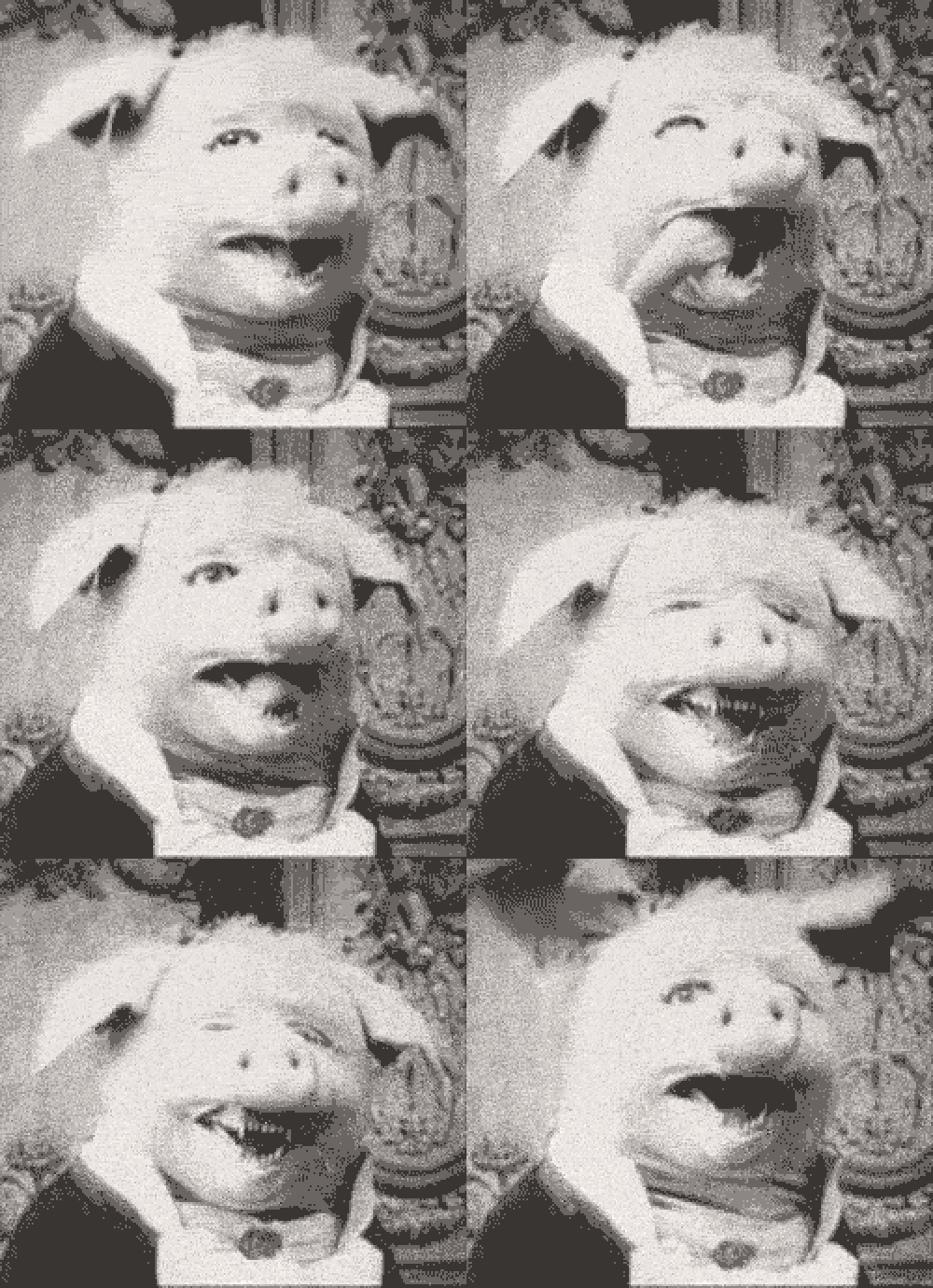
here be monsters

12 Monday Aug 2013

Tags

art, gif, here be monsters, pigs are evil, puppet, trippy

snow

snow

snow

snow

snow

monsters

Posted by babylon crashing | Filed under Uncategorized

≈ Comments Off on here be monsters

Image

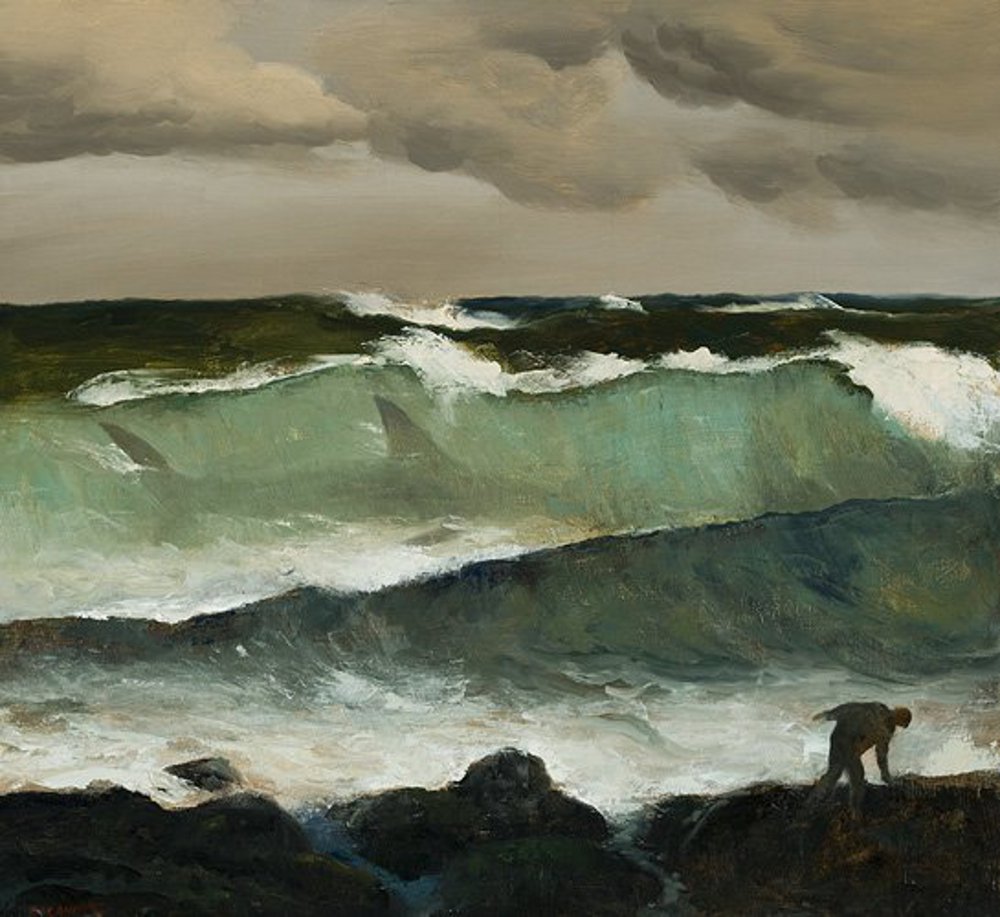
shark in a wave, rick amor

08 Thursday Aug 2013

Tags

amazing, art, Australia, Great White Shark, my dream, oil painting, rick amor, shark in the wave

Rick Amor Shark in a Wave 2002 Oil on canvas

Rick Amor, Shark in a Wave, 2002. oil on canvas.

After watching a rough cut of the 1982 film Blade Runner, author Philip K. Dick asked director Ridley Scott, in amazement, “how did you know what I saw in my head?”

That is what I thought when I first saw this painting. Standing on a jetty at Coos Bay, Oregon. Watching a shadow from the deep pass through the waves in front of me. Changing my life forever.

Brilliant, absolutely brilliant.

Posted by babylon crashing | Filed under Illustration and art, Uncategorized

≈ Comments Off on shark in a wave, rick amor

← Older posts
Newer posts →

age difference anal sex Armenia Armenian Genocide Armenian translation ars poetica art artist unknown blow job Chinese translation conversations with imaginary sisters cum cunnilingus drama erotic erotica erotic poem erotic poetry Federico Garcia Lorca fellatio finger fucking free verse ghost ghost girl ghost lover gif Gyumri haiku homoerotic homoerotica Humor i'm spilling more thank ink y'all incest Lilith Love shall make us a threesome masturbation more than just spilled ink more than spilled ink mythology ocean mythology Onna bugeisha orgasm Peace Corps photo poem Poetry Portuguese Portuguese translation prose quote unquote reblog retelling Rumi Sappho sea folklore Shakespeare sheismadeinpoland sonnet sorrow Spanish Spanish translation spilled ink story Taoist Pirate rituals Tarot Tarot of Syssk thank you threesome Titus Andronicus translation video Walt Whitman war woman warrior xenomorph

electric mayhem [links]

  • aimee mann
  • poesia erótica (português)
  • Poetic K [myspace]
  • discos bizarros argentinos
  • armenian erotica and news
  • sandra bernhard
  • cyndi lauper

Meta

  • Create account
  • Log in
  • Entries feed
  • Comments feed
  • WordPress.com

Blog Stats

  • 387,426 hits

Categories

ars poetica: the blogs a-b

  • afghan women's writing project
  • clair becker
  • stacy blint
  • sandra beasley
  • aliki barnstone
  • Alcoholic Poet
  • emma bolden
  • cecilia ann
  • mary biddinger
  • alzheimer's poetry project
  • sommer browning
  • kristy bowen
  • margaret bashaar
  • american witch
  • brilliant books
  • tiel aisha ansari
  • afterglow
  • all things said and done
  • wendy babiak
  • black satin
  • the art blog
  • megan burns
  • armenian poetry project
  • lynn behrendt

Enter your email address to follow this blog and receive notifications of new posts by email.

Join 44 other subscribers

Archives

ars poetica: the blogs c-d

  • juliet cook
  • linda lee crosfield
  • julie carter
  • lyle daggett
  • roberto cavallera
  • cheryl clark
  • natalia cecire
  • abigail child
  • michelle detorie
  • jackie clark
  • flint area writers
  • cleveland poetics
  • CRB
  • lorna dee cervantes
  • maria damon
  • jennifer k. dick

ars poetica: the blogs e-h

  • maureen hurley
  • sarah wetzel fishman
  • Free Minds Book Club
  • joy garnett
  • elisa gabbert
  • amanda hocking
  • liz henry
  • jane holland
  • carol guess
  • elizabeth glixman
  • pamela hart
  • julie r. enszer
  • hayaxk (ՀԱՅԱՑՔ)
  • ghosts of zimbabwe
  • herstoria
  • jeannine hall gailey
  • Gabriela M.
  • joy harjo
  • jessica goodfellow
  • human writes
  • maggie may ethridge
  • carrie etter
  • bernardine evaristo

ars poetica: the blogs i-l

  • diane lockward
  • IEPI
  • donna khun
  • dick jones
  • laila lalami
  • las vegas poets organization
  • miriam levine
  • maggie jochild
  • charmi keranen
  • renee liang
  • Kim Whysall-Hammond
  • meg johnson
  • irene latham
  • Jaya Avendel
  • sheryl luna
  • gene justice
  • lesley jenike
  • lesbian poetry archieves
  • joy leftow
  • a big jewish blog
  • amy king
  • emily lloyd
  • language hat
  • megan kaminski
  • kennifer kilgore-caradec
  • sandy longhorn

ars poetica: the blogs m-o

  • sophie mayer
  • ottawa poetry newsletter
  • january o'neil
  • sharanya manivannan
  • heather o'neill
  • majena mafe
  • My Poetic Side
  • michigan writers network
  • Nanny Charlotte
  • wanda o'connor
  • adrienne j. odasso
  • iamnasra oman
  • the malaysian poetic chronicles
  • marion mc cready
  • maud newton
  • motown writers
  • new issues poetry & prose
  • michelle mc grane
  • caryn mirriam-goldberg
  • mlive: michigan poetry news
  • nzepc
  • michigan writers resources

ars poetica: the blogs p-r

  • nikki reimer
  • joanna preston
  • helen rickerby
  • sophie robinson
  • kristin prevallet
  • nicole peyrafitte
  • split this rock
  • ariana reines
  • Queen Majeeda
  • maria padhila
  • rachel phillips
  • susan rich

ars poetica: the blogs s-z

  • vassilis zambaras
  • tim yu
  • ron silliman
  • shin yu pai
  • Stray Lower
  • scottish poetry library
  • womens quarterly conversation
  • Trista's Poetry
  • sexy poets society
  • tuesday poems
  • switchback books
  • southern michigan poetry

  • Subscribe Subscribed
    • memories of my ghost sista
    • Join 44 other subscribers
    • Already have a WordPress.com account? Log in now.
    • memories of my ghost sista
    • Subscribe Subscribed
    • Sign up
    • Log in
    • Report this content
    • View site in Reader
    • Manage subscriptions
    • Collapse this bar
 

Loading Comments...