• hopilavayi: an erotic dictionary

memories of my ghost sista

~ the dead are never satisfied

memories of my ghost sista

Category Archives: Disaster –- Pain –- Sorrow

ash and bone [1]

26 Saturday Jul 2014

Posted by babylon crashing in Armenia, Disaster –- Pain –- Sorrow, drama

≈ Comments Off on ash and bone [1]

Tags

Armenian Genocide, Ash and Bone, Constantinople, drama, play, The Young Turks, tragedy

memory is nothing but ash and bone
hishoghut’yan mokhir yev voskrayin
հիշողության մոխիր եւ ոսկրային
— Armenian proverb

ACT I:

FADE IN:
EXT. YENI BIR KADIN.1 FINISHING SCHOOL FOR YOUNG LADIES — DAY

[It is the age of the NEW WOMAN,2 July, 1914. YENI BIR KADIN SCHOOL is an experiment in Constantinople, the first of its kind, a brief, liberal attempt to dismantle the DHIMMI,3-caste system. The students are mainly from middle-class Turkish, Armenian and Greek families, a combination of Islamic and Christian faiths. Riot of girls cheering loudly, something that has never been seen before; wild-looking girls running at break-neck speed. The athletes wear a curious combination of head scarves, pantaloons and silky knickerbockers. Their classmates, in their official YOUNG TURKS’4 -sponsored school uniforms, cheer enthusiastically as the athletes race around on the immaculately-kept grounds. It is amazing enough to make even SUFFRAGETTE SALLY5 stand up and take note.]

[NARINE DILSIZIAN (27), an Armenian gardener, works on the school’s garden. A few feet away, her daughter, HASMIK (15), leans against a broken and bullet-pocked wall, watching the race.]

[ZELDA KIRKE, a 40-year old American English teacher, wife to a junior member of the American embassy, is enthusiastically cheering on her daughter, MATILDA (15), who, dressed in the same silly Edwardian-era fashion, leads neck-and-neck with another girl in the last lap of the race. The excitement increases as they approach the finish line. ZELDA is beside herself, encouraging her daughter with shouting and jumping up and down. A young Turkish teacher (though not a YOUNG TURK), ASIYE, stands next to ZELDA, shouting, “Bravo, Matilda!” over and over while clapping her hands.]

[MATILDA breasts the tape just ahead of the other girl; her head scarf unraveling, letting her long brown hair shine in the sun. The grounds are invaded by girls running to congratulate MATILDA and her rival. ZELDA hurries towards her happy but exhausted daughter, pushing her way through the mass of school girls.]

ZELDA:
This was your best race!

MATILDA [perspiring]:
I — I beat her, Mama.

ZELDA [proudly]:
You did daughter! [Laughing.] Come to the baths, we will get you cleaned up again.

[Mother and daughter walk happily towards the school buildings; MATILDA getting many kisses from her friends as they pass by. ZELDA stops to talk to NARINE, who jumps to her feet and looks nervous.]

ZELDA:
Narine, my dear, I hope you can make it. There isn’t much to do, you know, only caring for the tulips.

NARINE:
We’ll be there, Madam Zelda, bayan,.6 Hasmik-jan.7 will come to help me.

[ZELDA, who hadn’t realized HASMIK was there, turns to her.]

ZELDA:
How’s the calculus? Still confusing?

HASMIK [with respect]:
A little, Madam Zelda, bayan.

MATILDA [with a very fond look in her eye as she steps forward]:
Me too.

NARINE [straightening herself]:
My daughter works hard, Madam Zelda, bayan. Your money will not be wasted. Varton and I will always thank you.

ZELDA [gaily as she leaves]:
I hope to see you both later, darlings.

[NARINE returns to her work. A group of students, TURKISH GIRLS, laughing and pushing each other boisterously, amble by. As they near HASMIK, two girls nudge each other and giggle. Suddenly one of them trips HASMIK as she passes. The Armenian girl falls to the ground and jumps up aggressively, about to attack the Turkish girl. NARINE shouts “Hasmik-jan!”]

[The headmaster, OSMANOGLU BEY (65), despite his so-called liberal views, observes the incident but simply looks the other way.]

[HASMIK stands, suddenly blind with rage. With a snort she strides away towards the main school’s gate.]

NARINE [shouting angrily in Turkish]:
Nereye gidiyorsun?
(Where are you going?)

HASMIK turns to look at her mother then continues to storm off.


footnotes:

1. Turkish, literally, New Woman.↩

2. The New Woman was a Feminist ideal that emerged in the late 19th century and had a profound influence on Feminism well into the 20th. The term was popularized by writer Henry James, to describe the growth in the number of Feminist, educated, independent career women in Europe and the United States. According to historian Ruth Bordin, the term was, “intended by James to characterize American expatriates living in Europe: women of affluence and sensitivity, who despite or perhaps because of their wealth exhibited an independent spirit and were accustomed to acting on their own.”↩

3. Dhimmi and Dhimmitude are historical terms referring to non-Muslim citizens living in an Islamic state. Depending on the people and time period this “separate but equal” status has led to persecution, purges and, in extreme cases, genocide.↩

4. Officially known as the Committee of Union and Progress, the Young Turks were a Pan-Turkish nationalist reform party in the early 20th century, aligning themselves with Germany during WW1 and seeking to purge non-Turkish Muslims from the country. Originally favoring reformation of the absolute monarchy of the Ottoman Empire, their leadership, what historians have referred to as a “dictatorial triumvirate,” seized power in a coup d’état in 1913. Led by “The Three Pashas” (Enver, Djemal and Talaat), their dogma and policies led directly to humiliating defeat after defeat against Tsarist Russia and the ethnic cleansing of 1.5 million of their own people, the Ottoman-Armenians.↩

5. The title character in a novel by English author Gertrude Colmore (1911), written to help further the cause of the Women’s Movement.↩

6. Bayan is the Turkish word for lady.↩

7. -jan is a suffix in the Armenian language denoting affection.↩

making the bread that the dead call lavash

22 Tuesday Jul 2014

Posted by babylon crashing in Armenia, Disaster –- Pain –- Sorrow, Illustration and art, Prose

≈ Comments Off on making the bread that the dead call lavash

Tags

Armenian fairy tale, Armenian Genocide, art, Der Zor, Medz Yeghern, prose, the dead are always talking

lavash

The dead are always talking; it is the living, in every age of gizmos and thingamabobs, who have forgotten how to listen.

“I died like this …”

Contrary to what you might believe these stories are told to anyone who can hear, regardless of kinship curse, haunting or vague homicidal family blood ties. Why is it that those who worship ancestors the most turn a deaf ear to their own tribe, let alone the tribe of their neighbors? That is a darkening of the soul. That is something the dead will not abide.

“… far out in a desert, a wasteland of salt, in the heat and stink of what the Turks call Der ez Zor …”

If you can hear stars sing you can listen to the dead. It is simple, for the dead are always talking with red adder’s tongue and the blessed silver owl light. A kiss in your mouth that leaves sparks. Sparks. If you can rub amber’s essence between your fingers you can listen to anything.

…“I was a girl, fey-wristed with curly black hair. I will tell you. I will tell you everything …”

You know some things, but never all. Der ez Zor was a place of suffering during the starving times. During the long walks. During the annihilation. The dead can tell you this because they remember the names. Names for everything. Names that you have been taught to ignore, that you’ve forgotten.

“… we called it Medz Yeghern, the Great Calamity. Remember what I tell you. Remember when the first signs of destruction were blown to us in the wind …”

I tell you about the fourteenth year in the new century. I tell you what I’ve heard because I am nothing and nobody. I can’t speak their language or read from their books. But the dead don’t care about grammar or poor translation or how verbs are conjugated. All they need is a willing audience.

“… when the wild horsemen came and burned down our crops, killing our fathers and husbands and son, telling us that we must go south, to the camps, to follow the relocation orders …”

These are not my kith and kin. These are not my blood soaked lands. Still — Medz Yeghern, the Great Calamity — fills my dreams and will not let me rest. Ever since I returned home from Peace Corps. Ever since I first tasted that strange flat bread that the dead call lavash.

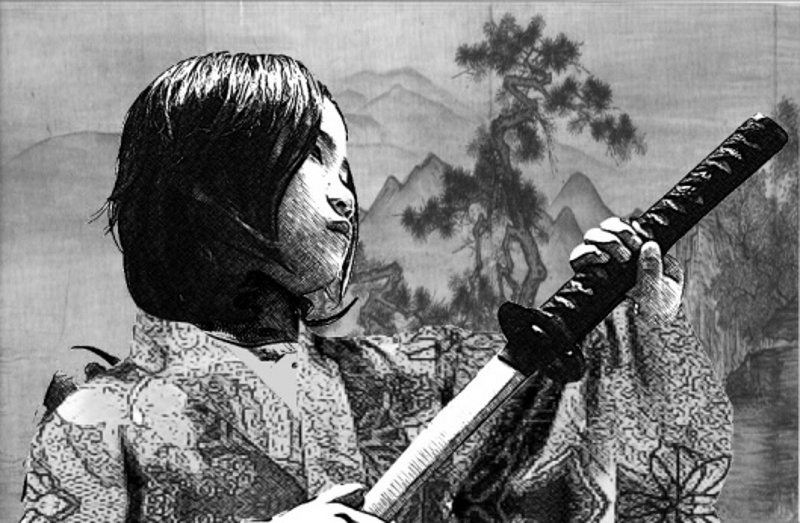
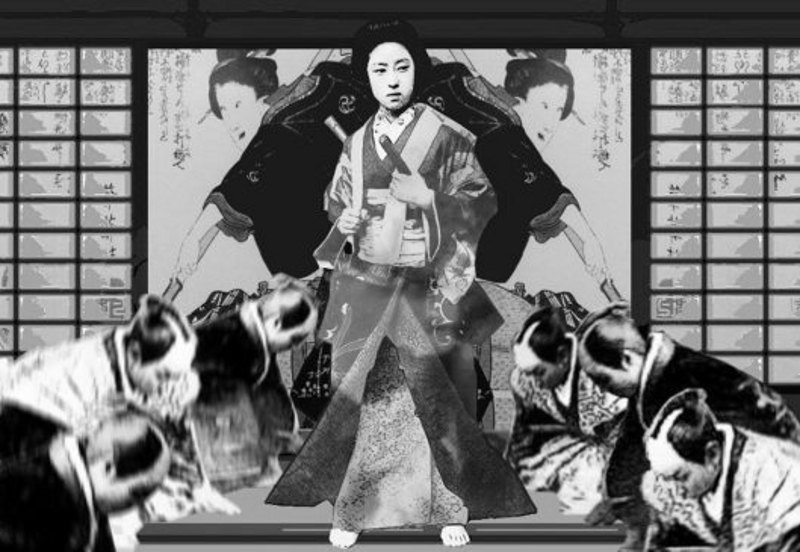
onna bugeisha: daughter mine

19 Wednesday Mar 2014

Posted by babylon crashing in Disaster –- Pain –- Sorrow, Feminism, Illustration and art, Poetry, sonnet

≈ Comments Off on onna bugeisha: daughter mine

Tags

art, daughter of love, Onna bugeisha, poem, Poetry, sonnet

March 19, 2014 (12)

March 19, 2014 (11)

March 19, 2014 (13)

Around the body, puddled, as you breathe,
I feel your heart beating softer, slower,

drying begins from heated bodies. We
play in puddles, this sweet-scented moisture

that glows, cools, as the friction-induced beads
of sweat evaporates. Sunlight slavers

upon hard muscles, what falls, slashed through, bleeds
through these dappled down drapes —- gypsum lovers,

soft, lithe —- our aftermath. The story we’re
leaving for new generations. Daughter,

learn the sword, battle plans, the dialect
of war, for then you’ll protect the queer,

daft and fabulous. A godling savior
no man has ever been: divine, perfect.

my heroes in the face of disaster, pain and sorrow

17 Monday Feb 2014

Posted by babylon crashing in Disaster –- Pain –- Sorrow

≈ Comments Off on my heroes in the face of disaster, pain and sorrow

Tags

American soldiers rape, disaster, Goddess save us all, my heroes, pain, photos, sorrow, stop rape, woman warrior

Feb 17, 2014 (1)

Feb 17, 2014 (2)

Feb 17, 2014 (3)

Feb 17, 2014 (4)

Feb 17, 2014 (5)

Let’s put faces on my heroes, the women who have dedicated their lives to making this miserable world better. Cathay Williams (September 1844 – 1892), a soldier, the first African-American woman to enlist in the United States of America. I have been told not to be ashamed of my military, that the My Lai Massacre, and all rapes and mutilations by Americans are a distant part of history …

… but Goddess Damn All Rapists, they are not.

For all my sisters who enlisted, who dedicated themselves to making the American idea better; for all those women and men who’ve been hurt, raped and killed by their fellow soldiers …

… you have been, you are now, and you will ever be my heroes. For now and forever. I can only give my blessings, for what that is worth, because you are braver than I will ever be.

Newer posts →

age difference anal sex Armenia Armenian Genocide Armenian translation ars poetica art artist unknown blow job Chinese translation conversations with imaginary sisters cum cunnilingus drama erotic erotica erotic poem erotic poetry Federico Garcia Lorca fellatio finger fucking free verse ghost ghost girl ghost lover gif Gyumri haiku homoerotic homoerotica Humor i'm spilling more thank ink y'all incest Lilith Lord Byron Love shall make us a threesome masturbation more than just spilled ink more than spilled ink mythology ocean mythology Onna bugeisha orgasm Peace Corps photo poem Poetry Portuguese Portuguese translation prose quote unquote reblog retelling Rumi Sappho sea folklore Shakespeare sheismadeinpoland sonnet sorrow Spanish Spanish translation spilled ink story Taoist Pirate rituals Tarot Tarot of Syssk thank you threesome Titus Andronicus translation video Walt Whitman woman warrior xenomorph

electric mayhem [links]

  • armenian erotica and news
  • sandra bernhard
  • poesia erótica (português)
  • aimee mann
  • discos bizarros argentinos
  • Poetic K [myspace]
  • cyndi lauper

Meta

  • Create account
  • Log in
  • Entries feed
  • Comments feed
  • WordPress.com

Blog Stats

  • 417,879 hits

Categories

ars poetica: the blogs a-b

  • all things said and done
  • wendy babiak
  • margaret bashaar
  • clair becker
  • mary biddinger
  • the art blog
  • sandra beasley
  • emma bolden
  • black satin
  • lynn behrendt
  • afterglow
  • Alcoholic Poet
  • aliki barnstone
  • kristy bowen
  • brilliant books
  • cecilia ann
  • armenian poetry project
  • afghan women's writing project
  • alzheimer's poetry project
  • sommer browning
  • american witch
  • stacy blint
  • megan burns
  • tiel aisha ansari

Enter your email address to follow this blog and receive notifications of new posts by email.

Join 44 other subscribers

Archives

ars poetica: the blogs c-d

  • cleveland poetics
  • jennifer k. dick
  • cheryl clark
  • michelle detorie
  • flint area writers
  • jackie clark
  • abigail child
  • lyle daggett
  • roberto cavallera
  • juliet cook
  • linda lee crosfield
  • lorna dee cervantes
  • maria damon
  • CRB
  • julie carter
  • natalia cecire

ars poetica: the blogs e-h

  • amanda hocking
  • herstoria
  • jessica goodfellow
  • liz henry
  • joy garnett
  • human writes
  • jane holland
  • sarah wetzel fishman
  • ghosts of zimbabwe
  • maggie may ethridge
  • julie r. enszer
  • Gabriela M.
  • elisa gabbert
  • hayaxk (ՀԱՅԱՑՔ)
  • maureen hurley
  • jeannine hall gailey
  • pamela hart
  • bernardine evaristo
  • Free Minds Book Club
  • carol guess
  • joy harjo
  • carrie etter
  • elizabeth glixman

ars poetica: the blogs i-l

  • charmi keranen
  • Jaya Avendel
  • language hat
  • miriam levine
  • meg johnson
  • Kim Whysall-Hammond
  • donna khun
  • sheryl luna
  • lesbian poetry archieves
  • gene justice
  • emily lloyd
  • sandy longhorn
  • lesley jenike
  • las vegas poets organization
  • kennifer kilgore-caradec
  • a big jewish blog
  • irene latham
  • joy leftow
  • laila lalami
  • amy king
  • renee liang
  • dick jones
  • megan kaminski
  • maggie jochild
  • diane lockward
  • IEPI

ars poetica: the blogs m-o

  • caryn mirriam-goldberg
  • ottawa poetry newsletter
  • nzepc
  • Nanny Charlotte
  • january o'neil
  • new issues poetry & prose
  • the malaysian poetic chronicles
  • marion mc cready
  • sophie mayer
  • maud newton
  • heather o'neill
  • michigan writers network
  • majena mafe
  • sharanya manivannan
  • adrienne j. odasso
  • michigan writers resources
  • motown writers
  • michelle mc grane
  • wanda o'connor
  • mlive: michigan poetry news
  • My Poetic Side
  • iamnasra oman

ars poetica: the blogs p-r

  • Queen Majeeda
  • nikki reimer
  • joanna preston
  • ariana reines
  • split this rock
  • maria padhila
  • rachel phillips
  • kristin prevallet
  • nicole peyrafitte
  • susan rich
  • helen rickerby
  • sophie robinson

ars poetica: the blogs s-z

  • Stray Lower
  • sexy poets society
  • Trista's Poetry
  • tuesday poems
  • ron silliman
  • scottish poetry library
  • southern michigan poetry
  • vassilis zambaras
  • shin yu pai
  • tim yu
  • womens quarterly conversation
  • switchback books

  • Subscribe Subscribed
    memories of my ghost sista
    Join 44 other subscribers

    Have a WordPress.com account? Log in now.

  • memories of my ghost sista
    View site in Reader
    Manage subscriptionsSign upLog in
    Report this content
    Collapse this bar
Loading Comments...