• hopilavayi: an erotic dictionary

memories of my ghost sista

~ the dead are never satisfied

memories of my ghost sista

Author Archives: babylon crashing

Image

lavash: food of the gods

21 Thursday Mar 2013

Tags

food of the gods, gif, lavash

smalllavish

What can be said about this soft, flat Armenian bread that sums up just how yummy it is? Let’s just say this: if you’ve ever been in the Southwest of America and fallen in love with Navajo, Zuni or Hopi fry bread then you’ll love lavash. If you haven’t then you need to get out more, I mean, really, damn.

Posted by babylon crashing | Filed under .gif, Armenia, Illustration and art

≈ 4 Comments

Image

we are mountains

21 Thursday Mar 2013

Tags

1967, Armenia, Nagorno-Karabakh, Sargis Baghdasaryan, Stepanakert, we are mountains

we are mountains

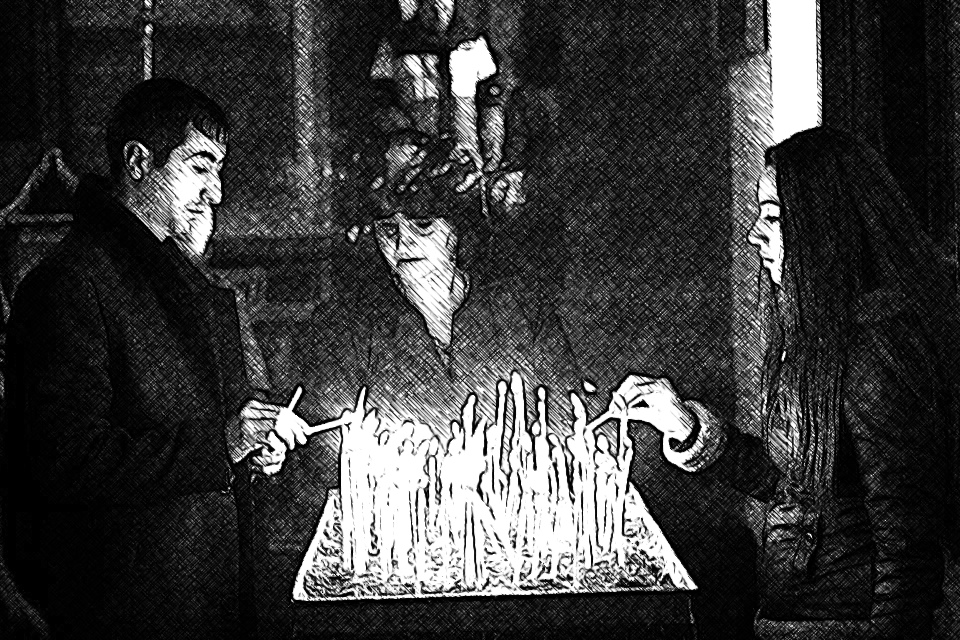
It is called the “We Are Our Mountains” statue, located north of Stepanakert, the capital city of Nagorno-Karabakh. Built in 1967 by Sargis Baghdasaryan.

Posted by babylon crashing | Filed under Armenia, Illustration and art

≈ 3 Comments

Image

the girl from shamakhi

21 Thursday Mar 2013

Tags

1913, Armenian Genocide, Azerbaijan, Shamakhi

1913 armenian girl

Based on a 1913 photo of an Armenian girl from the city of Shamakhi, Azerbaijan.

Posted by babylon crashing | Filed under Armenia, Illustration and art

≈ 10 Comments

the unwanted children’s house

20 Wednesday Mar 2013

Posted by babylon crashing in Armenia, Illustration and art

≈ 11 Comments

Tags

Armenia, grief, Gyumri, Mankatoon, orphan, մանկատուն, survivor's guilt, The Unwanted Children's House

my orphans

Here are my heroes. I was sent to Gyumri, Armenia, to teach English, but what consumed me instead was the Mankatoon (մանկատուն), The Unwanted Children’s House, the State-run Orphanage for, as the director once told me, “babies 0-5.”

The nurses you see here are my heroes. They were faced with the impossible task of taking care of children the locals didn’t even think were human. In 1996 we were faced with massive shortages in so much (food, medicine, etc) that plagued Gyumri. These women, who hadn’t been paid in months, perhaps years, were, on top of having to take care of their own families, ones who came every day to the orphanage with love enough to care for those who no one else would. And the mortality rate for these children was terrible. With no medicine and the only thing we could feed them was watery, emergency-aid soup, they died. All the children I took care of for two years are now dead, so I’ve been told. I was only 25 and not ready to face a world where children starved to death and I was powerless to do anything about it.

I think, one day, I will see my babies again and apologize to them. Because they died and I survived and I carry that guilt everywhere I go.

the lord byron #20

20 Wednesday Mar 2013

Posted by babylon crashing in Armenia, Illustration and art

≈ 10 Comments

Tags

1995-97, Armenia, first English-Armenian dictionary, Gyumri, Lord Byron, Peace Corps, School #20

lord byron 1

lord byron 2

lord byron 3

This was the reason I was sent to Gyumri, Armenia. To teach English at the Lord Byron school. It was a gift from the British government after the earthquake. Turns out that Byron helped to create the first English-Armenian dictionary. There was a statue of him outside the main building. My students had less of an idea of who Byron was, though. One day a boy, Aram, told me “please, next time you see Mr. Byron, tell him he is a very nice man.” I smiled and told him that I certainly would.

the city that lived

20 Wednesday Mar 2013

Posted by babylon crashing in Armenia, Illustration and art

≈ 10 Comments

Tags

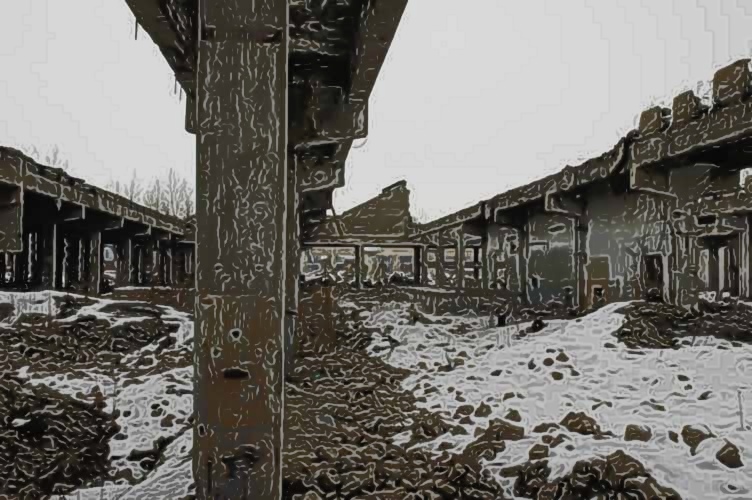
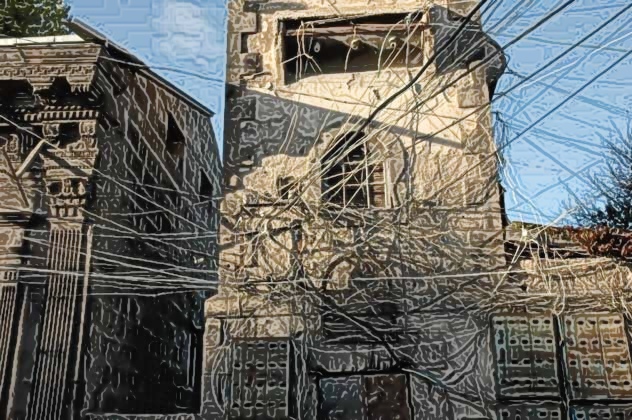
1995-97, Armenia, Gyumri, Peace Corps, ruined building

Gyumri building

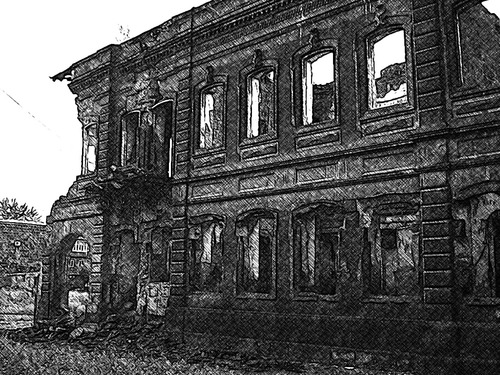
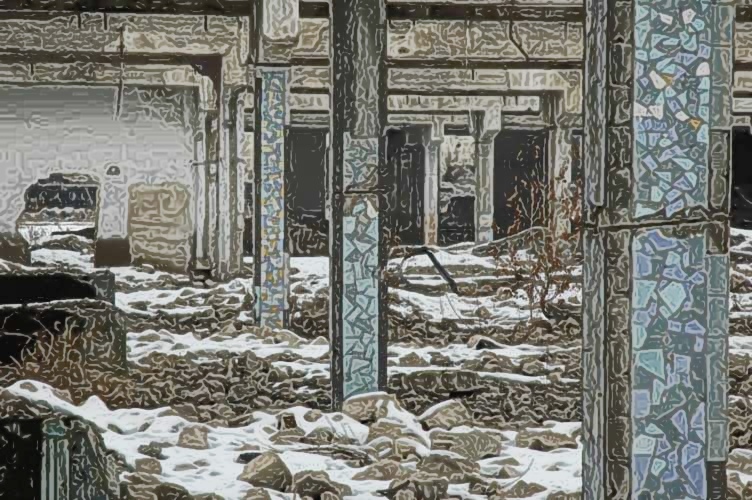
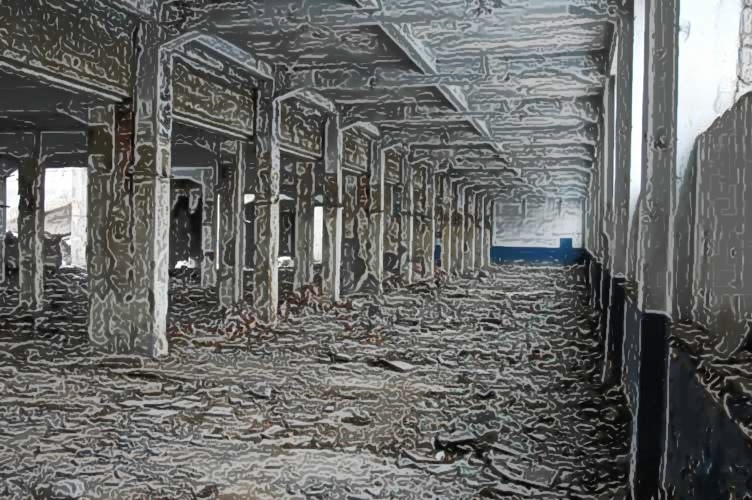
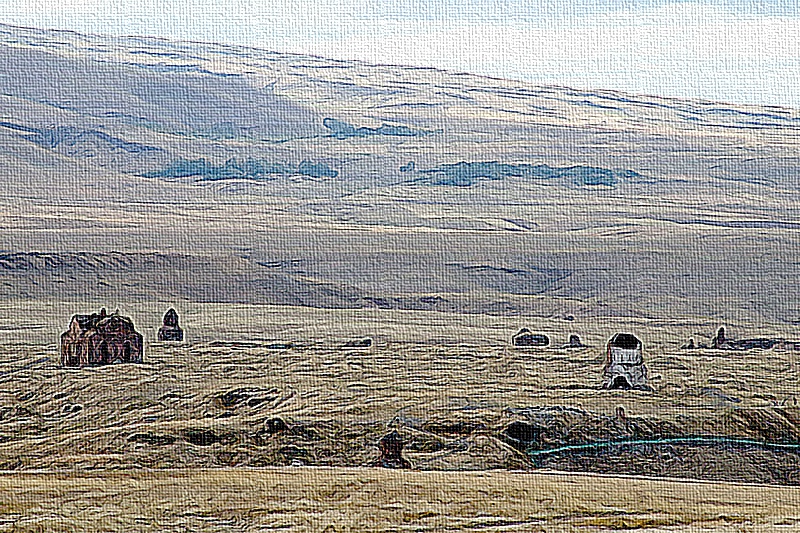
They say they’re rebuilding it, which is a blessing. It is located in northern Armenia, on the edge of this endless, flat valley surrounded by mountains. So flat and endless that you can’t even see the mountains on the far side. If you drained all the water out of the Red Sea and found a city at the bottom of it, that would be like living in Gyumri. In 1988 it was destroyed in an earthquake. Seven years I ended up living there for two years. Nothing had been rebuilt. Whole city blocks lay in ruins — factories collapsed, streets with ripples in them, schools where classes of hundreds of children were killed in an instant. They’re finally rebuilding the city, I’m told, which is good, but it shall always be a ghost city to me, devastated yet beautiful, like our souls.

Image

yot verk

20 Wednesday Mar 2013

Tags

1995-97, Armenia, Cathedral of the Holy Mother, Gyumri, Յոթ Վերք, Peace Corps, Yot Verk

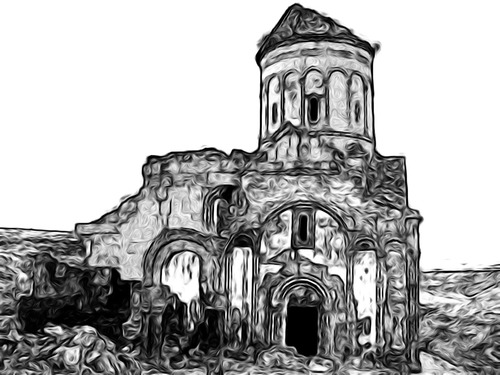
Yot Verk

This is the Cathedral of the Holy Mother, in my old stomping grounds of Gyumri, Armenia. Everyone called it Yot Verk (Յոթ Վերք) when I lived there. It is located at one end of the huge main square that makes up the heart of the city. There were only a few large buildings left (at least when I was there), this cathedral being one of them.A friend of mine got married in it and when you leave the building you are not suppose to turn your back on the center hall so we are had to slowly shuffle out walking backwards, trying not to trip.

Posted by babylon crashing | Filed under Armenia, Illustration and art

≈ 2 Comments

ΤΡΩΆΔΕΣ: EURIPIDES’ TROJAN WOMEN [part II]

19 Tuesday Mar 2013

Posted by babylon crashing in Translation

≈ Comments Off on ΤΡΩΆΔΕΣ: EURIPIDES’ TROJAN WOMEN [part II]

Tags

drama, Euripides, Τρωάδεσ, translation, Trojan Women

Translator’s Notes:

First produced in 415 BC, in the city of Dionysia, Euripides’ drama attests to the fact that the horror of war — which is to say, the horror visited upon the civilian population of the losing side, primarily women and children — has not changed for thousands of years. Written and produced in the same year as the Peloponnese War, critics have often considered it the playwright’s harsh comment on the capture of the Aegean island of Melos and the massacre and oppression of its citizen by Euripides’ own people, the Athenians. The boldness and “tener cojones” of Euripides shocked and shamed his fellow citizens who, as the winning side, felt they could do whatever they liked to the Aegeans. As a result of the play’s blatant political message of “might does not make right” the play, with very little change, enjoyed a resurgence in the late 1960s and 1970s as protest theater against the United States involvement with the Vietnam War.

In all the scenes of the play, it is this one, that I present as Act II, that the translator, Gilbert Murray, working in 1915, called the most “harrowing … scene [that] passes beyond the due limits of tragic art.” (6) Murray, I believe, was not being squeamish. Indeed, the nightmare that is and was the First World War was firmly in his mind when he wrote, “To be [with] the action of this play the imagination needs not to travel back over three thousand years of history. It can simply leap a thousand leagues of ocean.” (2) However, Murray, British (born 1866), was educated and came to see the role of what he calls tragic art in a vastly different way than I do. I am vaguely aware of the Victorian and pre-Modernist theories of Tragōidia, what the Greeks called “the he-goat song.” Sort of like the mountains of ink spilled defining the Victorian sonnet, they’re quaint ideas and if you’re getting a MFA in the Classics I’m sure the source of much inspiration. They’re also outdated to the point of uselessness.

If we’re talking about real horror and the art that has the task of commenting about it, then you must talk about this: I was born in 1970 (to use that as a point in time) and the rough number of genocides that have taken place during my brief lifetime comes in around 14. I list the perpetrators, location and estimated number dead as follows:

– Pol Pot (Cambodia, 1975-79) 1,700,000
– Kim Il Sung (North Korea, 1948-94) 1,600,000 (purges and concentration camps)
– Menghistu (Ethiopia, 1975-78) 1,500,000
– Yakubu Gowon (Biafra, 1967-1970) 1,000,000
– Leonid Brezhnev (Afghanistan, 1979-1982) 900,000
– Jean Kambanda (Rwanda, 1994) 800,000
– Saddam Hussein (Iran 1980-1990 and Kurdistan 1987-88) 600,000
– Tito (Yugoslavia, 1945-1987) 570,000
– Jonas Savimbi (Angola, 1975-2002) 400,000
– Mullah Omar – Taliban (Afghanistan, 1986-2001) 400,000
– Idi Amin (Uganda, 1969-1979) 300,000
– Yahya Khan (Pakistan, 1970-71) 300,000 (Bangladesh)
– Mobutu Sese Seko (Zaire, 1965-97) ?
– Charles Taylor (Liberia, 1989-1996) 220,000

What this means to me is that if your song — beseeching the gods on behalf of a sacrificial goat (Aristotle’s theory of where the origins of tragic art come from, thus “the he-goat song”) — cannot take in the very realness of ethnic cleansing, mass rape and murder, indeed, what we talk about when we talk about war, then you need to get a new song, my friend, craft a new art, find a new understanding of what truly is “harrowing;” for in 415 BC Euripides didn’t shy away from the simple fact that Tragōidia must talk about this and so must we all.

* * *

ACT II

THE CHORUS:
O!

THE CHORUS:
O! See to the poor woman! She has fallen!

THE CHORUS:
Who is looking after our queen?

THE CHORUS:
Who is this old woman’s guardian?

THE CHORUS:
Speak to us!

THE CHORUS:
Quickly, pick her up!

THE CHORUS:
Help me!

THE CHORUS TRIES TO PICK HECUBA UP, BUT SHE REFUSES THEIR HELP.

THE CHORUS:
Eh? Will we leave her here on the ground? Get up, you terrible women!

THE CHORUS:
Come on, pick the poor old woman up!

HECUBA: (STILL ON THE GROUND)
No, let me lay here. Unsolicited kindness is not kindness at all, my daughters. Leave me be. This body knows its proper place. It is here on the ground. Because of what I am suffering this is its rightful place. Ye Gods! I am calling upon you! What terrible superiors you are to us! My life was blissful back when I was a princess. I was married to a king. We had children; these were unique in all the Trojan world. No other woman, no Trojan nor Greek nor barbarian would boast to having children like mine. Yet, I, alone, saw every one of them die by a Greek spear. I, alone, have cut my hair at their tombs. It wasn’t by a divine messenger that I had received the news of the death of their father, my Priam. No! I saw that myself, with my own eyes. I was a with him when they slay him. They murdered him at the altar of our own house! I witnessed the destruction of our whole city! My daughters, my women whom I raised to be their husbands’ pride and joy. You beautiful virgins! You were all taken from me, forced into marriage to foreigners. Will I ever see you again? Will you ever see me again? No. No. No. I must now be a slave. I am an old, gray woman. I must go to Greece … as a slave. What will I be doing? What will Hector’s mother be doing? Will I be washing their doorways? holding their gates? working in their kitchens? baking their bread? My mangled body dressed in rags will have the hard ground as its bed. My body! A body that was used to a royal bed! Use to the clothes of a queen! Gods, how much must I suffer because of my marriage? How much have I suffered; how much more must I suffer still? You, my child, Cassandra! Cassandra, oracle of the gods in her frenzy! What dreadful fate will accompany you? My poor darling Polyxene! Where are you now? O, so many sons lost, so many daughters lost! All my children! All taken from me! No one can help us now. (THE CHORUS TRY AGAIN TO LIFT HER UP) Fools, why bother lifting me up from this ground? What do you think I can do? Drag me to a pile of stones that I may crash myself upon; with tears battering my heart, I die there. What hope is there left for Hecuba? Leave me be! My days are gone. I am a slave.

THE CHORUS:
Come Muses! Come help us sing a requiem!

THE CHORUS:
Help us tell this story of damned Troy! This song that is full of tears!

THE CHORUS:
The Greeks built a huge horse, wheeled into the city;. It was that horse which brought about our destruction. Our miserable enslavement.

THE CHORUS:
An enormous horse, whose cheeks were plated with gold.

THE CHORUS:
Whose belly was clogged with spears.

THE CHORUS:
They left that horse by the gates of our city. The men saw it from above the walls shouted with mirth.

THE CHORUS:
The fools called: “Trojans! Our troubles are over! Come, roll this holy statue to the temple of Athena, the daughter of Zeus!”

THE CHORUS:
So all the men came down from the walls.

THE CHORUS:
All the Trojans rushed out to the gates to drag this evil offering to the virgin goddess who rides the immortal stallion.

THE CHORUS:
That gift was fatal to Troy.

THE CHORUS:
So the celebrating went on all day until the night fell; the black night began but the sounds of Lybian flutes continued. Such a happy tune.

THE CHORUS:
The music flickered wide across the city; inside every home, it made the doomed eyes heavy enough to sleep.

THE CHORUS:
It was then, at the very moment when the virgins were dancing in the temple of Zeus’ daughter, Artemis, the goddess of the hills, it was then that the sound of murderous terror spun wildly through the night.

THE CHORUS:
Ares, the god of war emerged from his ambush.

THE CHORUS:
From Athena’s dire handiwork. At every altar, in every Trojan home: our blood was splashed.

THE CHORUS:
Young girls in their deserted beds shaved their heads in grief!

THE CHORUS:
The Greeks ran mad with slaughter.

THE CHORUS:
We were their offering; misery for Troy.

THE CHORUS SUDDENLY SEES ANDROMACHE IN THE DISTANCE.

THE CHORUS:
Hecuba, look! Look! Andromache is coming!

THE CHORUS:
She’s riding in a foreign wagon.

THE CHORUS:
At her breast hangs her beloved Astyanax.

THE CHORUS:
Hector’s baby boy.

ENTER ANDROMACHE WITH ASTYANAX ON A WAGON. HECTOR’S BRONZE SHIELD AS WELL AS OTHER TROJAN SPOILS OF WAR, ARE HANGING FROM THE SIDES OF THE WAGON. THEY ARE FOLLOWED BY GREEK GUARDS.

THE CHORUS:
Andromache, you poor woman!

THE CHORUS:
Where are they taking you?

THE CHORUS:
Look! Hector’s bronze shield!

THE CHORUS:
All the Trojan spoils of war, taken by the Greeks.

THE CHORUS:
Achilles’ son will adorn their Phthian Temples with them.

ANDROMACHE:
My Greek masters are taking me away!

HECUBA:
O, my darling girl!

ANDROMACHE:
Eh? Why groan for me, Hecuba?

HECUBA:
O, my girl!

ANDROMACHE:
Such suffering I must endure, Hecuba!

HECUBA:
O, Lord, Zeus!

ANDROMACHE:
Disaster!

HECUBA:
O, my child!

ANDROMACHE:
All gone now!

HECUBA:
Troy is gone! All our joy is gone!

ANDROMACHE:
Miserable fortune of our city!

HECUBA:
The smoke is choking Troy!

ANDROMACHE:
Come back, come back, my husband, my Hector!

HECUBA:
He is dead, my poor child, he is dead!

ANDROMACHE:
Come back my Hector! Come back, my love, my shield!

HECUBA:
Hector! Once you destroyed so many Greeks! Come now; take me down with you to the halls of Hades!

ANDROMACHE:
We both desire the very same thing, Hecuba. Both of us equally unfortunate, both of us equally beaten by one disaster after another. Our city was destroyed, Hecuba, because the gods were angry with your son. O, Paris, a man who should have been killed at birth. O, a man who, to satisfy his lust for a shameful woman, destroyed our Troy. Now the bloodied corpses of our heroes are strewn about all round Athena’s temple.

HECUBA:
O, my poor land!

ANDROMACHE:
The tears gush forth bitterly from you.

HECUBA: (INDICATING THE SMOKE BEHIND TROY’S WALLS)
Now, look now upon the abominable end! Look at the palace where I gave birth to all my children! O, my darlings. Your mother abandons you in the earth. Your mother leaves you behind in a ghost city of the dead. How painful is my grief! Only the dead can forget such grief!

THE CHORUS:
The damned find some solace in tears, in some wailing; in the singing of some requiems. But it does not heal. Nothing heals this grief.

ANDROMACHE: (INDICATING HER PLIGHT)
Hecuba! O, Hector’s mother! The mother of a man who killed many Greeks! Do you see all this?

HECUBA:
I see, my daughter! I see that this is the work of the gods who want to show us that they can tear down things that the mortals love in a second.

ANDROMACHE:
Look, here, Hecuba! Look at me! Look at my son! My son; I am carrying him away like nothing more than spoils of war.

HECUBA:
Fate is a terrible force, Andromache! Only a few minutes ago the Greeks took my Cassandra away!

ANDROMACHE:
O, poor soul! It seems that damned Ajax suddenly appeared to rob you of your daughter one more time. But you have more troubles to deal with.

HECUBA:
Troubles, indeed! Infinite troubles. No way to measure them, no way to count them! Troubles competing with other.

ANDROMACHE:
Hecuba, your daughter; your daughter, Polyxene is dead!

HECUBA:
What? What is that you said?

ANDROMACHE:
The Greeks have slaughtered her on Achilles’ tomb. Offered her life as a gift to his lifeless corpse.

HECUBA:
O, my darling girl! O, my poor daughter! My Polyxene! Talthybius told me this earlier. His words were cryptic but true!

ANDROMACHE:
I saw her there, on Achilles’ tomb, with my own eyes. I got down off this cart. I put my cloak over her face. Then I stayed there, Hecuba. I stay there and lamented her loss with my tears.

HECUBA:
Diabolical, ungodly death! O, my daughter!

ANDROMACHE:
Diabolical or not, Polyxene died and she is still luckier than me.

HECUBA:
Don’t say that, my daughter. Being dead is not the same as being alive. Being dead is to have nothing. Being alive is to have hope.

ANDROMACHE:
Hope? Come, come, mother! Hope? Mother of many children! Hope? To be dead, Hecuba, to be unborn it is the same thing. But if the choice is between a miserable life; if it is between a miserable life, then death, ai, death is always preferable. Because the dead feel no misery. They know nothing of grief. But we, we living mortals, we know. Hope? if a happy woman falls into misery she must deal with the memory of the joy she previously had. Her soul seeks the joys of the past. So, it is the same with Polyxene. It is as if she never was. I, on the other hand, Hecuba, yes, I have known joy! I have dreamed of achieving a good name. Yes, yes, hear me. I had known joy! In Hector’s house I had been a virtuous woman, behaving in every way like a modest, chaste woman should. What did it get me? Whatever it was that people expected from a married woman I did. I stayed inside the house because I knew that the gossiping tongues poison women who venture outside their homes. I had put aside all desire. I simply listened to my own council. It was good advice but what did it get me? It was the fame of my virtue that spread throughout all the Greek camp. Virtue that will destroy me because the moment he captured me Achilles’ son will make me his slave! So I’ll be a mistress in a murderer’s bed. They say that one night in a man’s bed erases all revulsion towards him. Ha! I think no woman is worse than the one who, having lost her husband, her family, her city, puts all memory of the past aside; turns to love the bed of another. O, Hector! My beloved Hector! You were enough for me! You had rich mind, a strong heart, a wealthy house! I was an innocent girl when you took me from my father’s; you were the first to know me in my maiden bed. But now, my Hector, now you are dead; now I am a slave; taken aboard a ship to Greece, to be raped until my body and soul give out. So, Hecuba, is Polyxene’s death — a death for which you’ve spilled so many tears — is that a more miserable fate than mine? Because, for me, mother of many children, for me, what you call hope is a thing which other human beings have but not me. I will not allow hope to deceive me. I know full well that I have no hope of ever seeing better days again. Do not talk to me of that word.

THE CHORUS:
Your misfortune, Andromache is similar to ours; you speak of your own fate, you speak of ours at the same time.

HECUBA:
Yet, yet I still cling to that word like a sailor clings to Fate when a storm threatens to destroy his ship. That’s what I feel now. The infinite misery that the gods have crashed upon me, overpowered my tongue; I cannot speak. The gods have sent too great a storm upon me. So, stop, my darling girl, stop talking of our Hector. Our tears cannot save him. (SHE NOTICES TALTHYBIUS APPROACHING IN THE DISTANCE) O, but one concern leads to another. Who is this Greek coming towards us? I wonder what new decisions he brings us?

ENTER TALTHYBIUS AND SOLDIERS

TALTHYBIUS:
Ah, Andromache, wife of the bravest of all the Greeks, wife of the dead Hector. I have bad news for you, news that I will give you against my wishes, so don’t hate me. These announcements are made by both the Greeks and the sons of Pelops.

ANDROMACHE:
How ominous your words, Talthybius! speak!

TALTHYBIUS:
It concerns your child, Andromache. (UNCOMFORTABLY) What words must I use?

ANDROMACHE:
What? This child will be separated from me? Will he be given to another master?

TALTHYBIUS:
No. No Greek will ever be his master.

ANDROMACHE:
What? Have you decided to leave him behind?

TALTHYBIUS:
Andromache, I don’t know how to break these awful news to you. I don’t know how to do this gently. But I must tell it, Andromache. The Greeks will kill your son!

ANDROMACHE:
O! I have never heard news more painful than these!

TALTHYBIUS:
It was Odysseus’ decisions. Voted in favor by the rest of the assembly.

ANDROMACHE:
Will my pains never end? Will the disasters never stop? One dreadful misfortune upon another!

TALTHYBIUS:
Odysseus had told the assembly that they should not let the son of a Trojan noble grow to be a man.

ANDROMACHE:
Would any of them be just as convincing if it concerned their own son?

TALTHYBIUS:
He’s convinced them to have the child thrown from the Trojan towers. So … let that happen, Andromache. You would be doing the wise thing. Bear this misfortune with the noble courage you have. Don’t insist on holding on to the boy. Understand, Andromache, that you are weak and powerless. There’s no one here to defend you. Think carefully about this, woman. Both your city and you husband are gone. Today your life is in the hands of another. Think of that, Andromache. Don’t fight against it. Do nothing shameful or outrageous. Throw no curses at the Greeks. I wouldn’t tolerate that at all. The moment you say anything against us, neither you nor your child will find any understanding from anyone. Stay silent; receive your fate like a good woman; and you, too, will be received by the Greeks more favorably.

ANDROMACHE: (TO ASTYANAX)
O, my sweet child! My darling son! They will murder you. You will leave your mother all alone. You will be killed because you are noble; the son of a noble, a noble man who has saved many but who cannot save you. Such disastrous marriage that brought me here, to Hector’s palace, not so that I’d bear a child … but a sacrificial victim for the Greeks. You’re crying, my darling? You understand the awful fate that awaits you? Hug me, my heart! For, my darling, you will be thrown mercilessly from a high cliff. Your neck will break. O, young, sweet child! It was all for nothing then! It was in vain that my breast suckled you while you were still in your birthing clothes. All my work, all my pain, all my concern for you, it was all for nothing! Come, darling! Come now, hug your mother tightly, for the very last time! Come, put your little arms around me! Come, kiss your mother on the lips, darling! (TO TALTHYBIUS AND HIS MEN) You! You monsters! You Greeks! The evil things you do! What has this child ever done to you? Why kill an innocent little boy? O, Helen! Look what these barbarians do! Your first love was Bloodshed; your next was Hate! Then came Murder; you breed every monstrous grief and pain that walks upon this earth! Look what you do! May the gods destroy you! Well then, come! Come and take him! Take my child. Throw him over the wall, if that is what you want! Come on, take him. Kill him. Gorge yourselves upon his young flesh! How can I save him when I can’t even save myself? Come, break my miserable body. What a splendid wedding I am heading to, now that I’m husbandless, childless, homeless!

A MEMBER OF THE CHORUS HANDS ANDROMACHE A BLACK SCARF WITH WHICH SHE USES TO COVER HER FACE WITH.

THE CHORUS:
Unfortunate Troy! The deaths are endless; all for the sake of one woman and her hideous lust!

TALTHYBIUS: (TO ASTYANAX, KINDLY)
Come, my son, leave your poor mother’s arms now. Come with me. We have to go to the tip of your father’s towers together. It is an order. (TO HIS MEN) Take him.

THE MEN TAKE ASTYANAX’S HAND AND LEAD HIM AWAY FROM HIS MOTHER. OTHER GUARDS SURROUND ANDROMACHE AND LEAD HER OUT.

TALTHYBIUS:
Such cruel messages ought to be delivered by harsher couriers. I have not the heart for them.

AS TALTHYBIUS AND THE SOLDIERS ARE LEADING ANDROMACHE AND ASTYANAX OUT, HECUBA CRIES OUT, RUSHES OVER TO ASTYANAX, CLUTCHING HIM, ADDRESSING HIM FOR THE LAST TIME.

HECUBA:
No! No! O, my son! Son of my ill fated son! These evil men have torn away your life from your mother. Ai, my little boy! How can I endure this? How can I help you, my poor boy, unfortunate boy?

AN ANGRY SCUFFLE ENSUES; THE SOLDIERS SEPARATE ASTYANAX FROM HECUBA.

HECUBA:
Our only help to you is to beat our heads until we bleed. That’s the only power left to us.

TALTHYBIUS, HIS MEN, ALONG WITH ASTYANAX AND ANDROMACHE ALL EXIT.

HECUBA:
O, my poor city! My poor, Troy! Miserable luck to you; to us both! What’s left for us? What misery is still to fall upon us to make our destruction complete?

THE CHORUS:
O, Telamon!

THE CHORUS:
King of Salamis, the island home of bees!

THE CHORUS:
An island, washed endlessly by the crashing waves.

THE CHORUS:
An island near the sacred rocks of Athena’s temple.

THE CHORUS:
Where she first revealed to the world the sacred sapling of the green olive.

THE CHORUS:
A heavenly garland for her; a gem for her dazzling city, Athens.

THE CHORUS:
It was you who came here, Telamon! Here in Troy!

THE CHORUS:
A long time ago! You had come here with Hercules, Alcmene’s son.

THE CHORUS:
Hercules, the master of the bow and arrow!

THE CHORUS:
He came all the way from Greece to sack our city, to raze our Troy to the ground.

THE CHORUS:
Cheated of his lovely steeds, Heracles set off with the finest flower of Greek men.

THE CHORUS:
When he reached the banks of Simois with its sparkling streams, he put down his seagoing oars, tied ropes to his sterns; stepped upon the land with his precise arrows, all ready to murder Laomedon.

THE CHORUS:
So, Hercules blasted all of Apollo’s work. All the stone walls, built by Apollo’s master builders, all of it, Hercules blasted with the roaring breath of fire. He devastated the Trojan land.

THE CHORUS:
So, it happened twice. Twice the slaughtering Greeks have destroyed our Dardanian walls.

THE CHORUS:
It was all for nothing, then. Laomedon! All for nothing that you ran gracefully about in Zeus’ halls topping his golden wine cups, a most virtuous occupation, for the sake of your city. Look about you now, Laomedon. What do you see? The land of your birthplace is burning.

THE CHORUS:
Listen! Hear that, Laomedon? Hear that groan? It is the groan of the sea. Her beaches groan with agony.

THE CHORUS:
Like birds calling for their missing young.

THE CHORUS:
Gone are your splendid bath houses.

THE CHORUS:
The race course you used to race your horses on.

THE CHORUS:
Here the whole of Priam’s land has been wiped out by the Greek fire.

THE CHORUS:
O, Eros! Eros, son of Zeus! You came once to the halls of our King Dardanus, to accomplish the will of the Heavens!

THE CHORUS:
What of Dawn? Dawn with her white wings, the goddess whose splendid light is loved by all mortals.

THE CHORUS:
She saw! She saw! The devastation of our land.

THE CHORUS:
She watched the ruin of our city, Pergamon’s city.

THE CHORUS:
She sat there. She watched it being destroyed even though it was this city that has given her a husband for her bridal chamber, a husband she once snatched from these parts; carried him away in a cart of sparkling golden stars.

THE CHORUS:
Alas! Our city is no more! Gone! The gods no longer love our Troy!

[cont.]

* * *

Work Cited

Murray, Gilbert. The Trojan Women of Euripides. New York: Oxford University Press (1915)

scar

18 Monday Mar 2013

Posted by babylon crashing in Feminism, Poetry, sonnet

≈ Comments Off on scar

Tags

cunnilingus, lifetime of love, lithic muscles, Lucky Strike, Moroccan patterns, pubic hair, scar, sonnet, woman warrior


When I trace the scars on her shoulders, thick
as my finger, grotesque tattoos that wrap
around each arm. When I kiss her lithic
muscles she starts to tremble. She could snap
my spine like that. She has killed thirty men
like that. When I play with her softest part,
the part I will not name, her talismen
I call a lifetime of love, my sweetheart
opens. It’s not words but other’s secrets
that that I won’t share. When I light her lucky
strike she groans the earth before volcano’s
blow. She clamps my face in place; her ringlets
tease my nose. I love her, from her forty
broadsword strokes to each of her missing toes.

lust’s fee

18 Monday Mar 2013

Posted by babylon crashing in Erotic, Illustration and art, Poetry, sonnet

≈ 6 Comments

Tags

ancient hellholes, divine orgasms, Jadis, lust's fee, maelstroms, mothers of war, Sexual Rage, She Of The-Cat-O-9-Tails, sonnet, The White Witch, Tilda Swinton, Venus Furo, witch-queen's knight

the divine Tilda Swinton as Jadis, the White Witch

I do not believe you — you claimed that you
somehow could own my ass? Pfft. What folly
claiming that you would try to go undo
the gifts that Venus Furo gave to me.
She Of The-Cat-O-9-Tails never blessed
hauteur; you know, gods hate pompous assholes.
These scars come from defending my dreaded
mothers of war. There are ancient hellholes
that none of you self-proclaimed subs and doms
could dream up. Don’t talk about pain unless
you lop off two of your fingers tonight.
Call it lust’s fee. The gods cum in maelstroms,
proud child. Could you survive such a caress?
I did; which is why I’m a witch-queen’s knight.

← Older posts
Newer posts →

age difference anal sex Armenia Armenian Genocide Armenian translation ars poetica art artist unknown blow job Chinese translation conversations with imaginary sisters cum cunnilingus drama erotic erotica erotic poem erotic poetry Federico Garcia Lorca fellatio finger fucking free verse ghost ghost girl ghost lover gif Gyumri haiku homoerotic homoerotica Humor i'm spilling more thank ink y'all incest Lilith Lord Byron Love shall make us a threesome masturbation more than just spilled ink more than spilled ink mythology ocean mythology Onna bugeisha orgasm Peace Corps photo poem Poetry Portuguese Portuguese translation prose quote unquote reblog retelling Rumi Sappho sea folklore Shakespeare sheismadeinpoland sonnet sorrow Spanish Spanish translation spilled ink story Taoist Pirate rituals Tarot Tarot of Syssk thank you threesome Titus Andronicus translation video Walt Whitman woman warrior xenomorph

electric mayhem [links]

  • sandra bernhard
  • armenian erotica and news
  • poesia erótica (português)
  • Poetic K [myspace]
  • discos bizarros argentinos
  • cyndi lauper
  • aimee mann

Meta

  • Create account
  • Log in
  • Entries feed
  • Comments feed
  • WordPress.com

Blog Stats

  • 396,121 hits

Categories

ars poetica: the blogs a-b

  • cecilia ann
  • alzheimer's poetry project
  • lynn behrendt
  • megan burns
  • brilliant books
  • aliki barnstone
  • stacy blint
  • afterglow
  • Alcoholic Poet
  • emma bolden
  • mary biddinger
  • clair becker
  • the art blog
  • black satin
  • all things said and done
  • margaret bashaar
  • kristy bowen
  • afghan women's writing project
  • tiel aisha ansari
  • armenian poetry project
  • sandra beasley
  • wendy babiak
  • american witch
  • sommer browning

Enter your email address to follow this blog and receive notifications of new posts by email.

Join 44 other subscribers

Archives

ars poetica: the blogs c-d

  • juliet cook
  • linda lee crosfield
  • jackie clark
  • lyle daggett
  • cleveland poetics
  • cheryl clark
  • julie carter
  • michelle detorie
  • CRB
  • maria damon
  • lorna dee cervantes
  • abigail child
  • natalia cecire
  • flint area writers
  • jennifer k. dick
  • roberto cavallera

ars poetica: the blogs e-h

  • pamela hart
  • maggie may ethridge
  • carol guess
  • jeannine hall gailey
  • ghosts of zimbabwe
  • hayaxk (ՀԱՅԱՑՔ)
  • sarah wetzel fishman
  • elizabeth glixman
  • Free Minds Book Club
  • elisa gabbert
  • maureen hurley
  • joy harjo
  • jessica goodfellow
  • bernardine evaristo
  • joy garnett
  • human writes
  • julie r. enszer
  • jane holland
  • liz henry
  • amanda hocking
  • Gabriela M.
  • herstoria
  • carrie etter

ars poetica: the blogs i-l

  • emily lloyd
  • meg johnson
  • kennifer kilgore-caradec
  • a big jewish blog
  • sheryl luna
  • lesley jenike
  • las vegas poets organization
  • sandy longhorn
  • renee liang
  • gene justice
  • language hat
  • irene latham
  • IEPI
  • Kim Whysall-Hammond
  • lesbian poetry archieves
  • megan kaminski
  • charmi keranen
  • maggie jochild
  • donna khun
  • joy leftow
  • diane lockward
  • Jaya Avendel
  • dick jones
  • miriam levine
  • amy king
  • laila lalami

ars poetica: the blogs m-o

  • adrienne j. odasso
  • new issues poetry & prose
  • Nanny Charlotte
  • heather o'neill
  • marion mc cready
  • sophie mayer
  • the malaysian poetic chronicles
  • caryn mirriam-goldberg
  • maud newton
  • michigan writers resources
  • michelle mc grane
  • mlive: michigan poetry news
  • nzepc
  • wanda o'connor
  • iamnasra oman
  • january o'neil
  • ottawa poetry newsletter
  • motown writers
  • My Poetic Side
  • michigan writers network
  • majena mafe
  • sharanya manivannan

ars poetica: the blogs p-r

  • Queen Majeeda
  • sophie robinson
  • split this rock
  • susan rich
  • kristin prevallet
  • helen rickerby
  • rachel phillips
  • ariana reines
  • maria padhila
  • nicole peyrafitte
  • nikki reimer
  • joanna preston

ars poetica: the blogs s-z

  • ron silliman
  • Stray Lower
  • shin yu pai
  • southern michigan poetry
  • Trista's Poetry
  • womens quarterly conversation
  • tuesday poems
  • switchback books
  • scottish poetry library
  • sexy poets society
  • tim yu
  • vassilis zambaras

  • Subscribe Subscribed
    • memories of my ghost sista
    • Join 44 other subscribers
    • Already have a WordPress.com account? Log in now.
    • memories of my ghost sista
    • Subscribe Subscribed
    • Sign up
    • Log in
    • Report this content
    • View site in Reader
    • Manage subscriptions
    • Collapse this bar
 

Loading Comments...