• hopilavayi: an erotic dictionary

memories of my ghost sista

~ the dead are never satisfied

memories of my ghost sista

Tag Archives: Poetry

snarls

19 Wednesday Aug 2026

Posted by babylon crashing in Erotic, Poetry, sonnet

≈ Comments Off on snarls

Tags

poem, Poetry, sonnet

There’s two blues, Lady Day claimed, the hot blues

and the cool blues. It’s August. Must be hot.

“I’m the people. The mob. The mass.” The news

reports downtown burns. Tear gas. And the fraught

stand-offs. Blues? you say. Hon, you ain’t peoples.

Just good with your tongue. Sirens, still distant,

strut, pout, put it out; your skull-fucked tonsils,

“my seed, my plow, my storm.” Where’s the blunt?

you grunt, while outside the hotel window

smoke still rises. Cool blues in late August’s

swelter. You call your husband. Somewhere Carl’s

ghost sighs. The Good Work comes, but it is slow,

like the blues. It sounds nothing like my thrusts,

your gasps; our meager cries and cum and snarls.

silt

16 Sunday Aug 2026

Posted by babylon crashing in Erotic, Poetry, sonnet

≈ Comments Off on silt

Tags

cunnilingus, erotic poetry, poem, Poetry, sonnet

Tongue tapped. Tasted blood. I abide in blood,

monthly lune; having no womb I must swim

elsewhere. I’m tomboy’s toy and you’re pure stud,

as in, Stone Butch with strap-on. “On a whim,”

you said, when I asked you how you had come.

“Gotta tongue tap that.” Pulling a muddy,

bloody tampon out with teeth; like I’ve swum

before. Scars on your amputated knee

smelt of cloves. Yes, you’re brutal but I’m built

like cake. What him-femme isn’t? “grrls with girth,”

your right tat spat. “Pussy Power,” your left

tit tat spat back. Ghost of mud-flow and silt.

Ghost of tampons to come. I still taste earth

in you. Ghost of whims and menstrual theft.

das

16 Sunday Aug 2026

Posted by babylon crashing in Erotic, Poetry, sonnet

≈ Comments Off on das

Tags

erotic poetry, poem, Poetry, sonnet

First I spoke to the dead. Dull. Then I spoke

to the gods and got cum over your face.

Fucking sober was different: without coke,

skag or das chronic, finding that hard grace

to fill you with jarred me out; as in, “freaked,”

and I streaked your cheek. The gods are vulgar,

being divine. They sound like a gasp shrieked

in pure need, unless that was me. “Gusher

force,” you called it. Whatever, Muse. Take this

with you, proof that someone once volunteered

for das ass. Back in primes, they say. Bad times,

I bone, drunk dead more and more without bliss.

Drunk dead moan. Lovers groan. Gods mumble weird

words, cum-crusted. Das ass; rhymes upon crimes.

violaceous

15 Saturday Aug 2026

Posted by babylon crashing in Erotic, Poetry, sonnet

≈ Comments Off on violaceous

Tags

cunnilingus, erotic poetry, poem, Poetry, sonnet, violaceous

Amethyst is thicc, phat like mulberries,

wet like mauve. Neighbor flavor; what I’ve missed

with these new memories. Bend of strange knees,

dimples, fat fists, lips you say that I’ve kissed.

Rewired. I forget names, tastes, even hues.

Had I been this age then, instead of nine,

then ‘wine dark’ would still be a reddish-blue.

Your plum to my peach. Your curls to my twine.

You said L.S.D. would set us all free.

You said, “tuck here, toy,” then cried for Jesus.

Love gone messy? So it seems. Like sweet ilk

and sweat. Lotus and loam. Cum foam and glee.

Said I filled your throat? Tickled your glottis

going down? Thicc like brine and buttermilk.

《狄安娜之树》(Árbol de Diana)

29 Thursday Jan 2026

Posted by babylon crashing in Chinese, Poetry, quote unquote, Translation

≈ Comments Off on 《狄安娜之树》(Árbol de Diana)

Tags

Alejandra Pizarnik, Árbol de Diana, Chinese translation, 狄安娜之树, English translation, 阿莱汉德拉·皮扎尼克, poem, Poetry, quote unquote

1) 我从自我中跃起,奔向黎明。我随光,遗下肉身,去歌唱那新生的,哀伤。I leap from myself toward dawn. I follow the light, leaving my body behind, to sing of the newborn, sorrow.

2) 这些是曾被提议的版本:一个空洞,一堵颤栗的墙…… These were the proposed versions: a void, a trembling wall…

3) 唯有干渴。沉默。绝无相遇。当心我,吾爱。当心那荒漠中沉默的女人,那手持空杯的旅人,以及她影子里的影子。Only thirst. Silence. No meeting. Beware of me, my love. Beware of the silent woman in the desert, the traveler with an empty cup, and the shadow within her shadow.

4) 致 奥萝拉与胡里奥· 科塔萨尔 (For Aurora and Julio Cortázar)

……然而:谁能不再伸手搜寻那给被遗忘女孩的贡品?寒冷将偿还。风将偿还。雨将偿还。雷鸣,将偿还。…AND YET: who can stop reaching out to search for the offering for the forgotten girl? Cold will repay. Wind will repay. Rain will repay. Thunder, will repay.

5) 为了这活着的一瞬,那唯一睁开的双眼。为了那一刻去看见,大脑里那些小花,如哑巴口中的文字,起舞。

For this living instant, the only eye that opens. For that moment of seeing, the little flowers in the brain, like words in a mute mouth, dancing.

6) 她在记忆的乐园里,赤裸全身。她无视自己异象中那可怕的宿命。她害怕无法去命名那一切,不存在的事物。She is naked in the paradise of memory. She ignores the terrible destiny in her vision. She fears being unable to name all that does not exist.

7) 她身着着火的衬衫,在星辰间飞跃。从影子,到影子。她死于一场遥远的死亡,这风之,爱人。She wears a shirt on fire, leaping among stars. From shadow, to shadow. She dies a distant death, this lover of the wind.

8) 记忆被照亮,在这长廊里,我所期冀的影子正四处徘徊。它会来,这不是真的。它不来,这也不是真的。Memory is illuminated, in this long hallway, the shadow I desire wanders. It will come, this is not true. It will not come, this is not true.

9) 这些在深夜里闪烁的白骨,这些如宝石般的字句,在石化之鸟鲜活的喉咙里。这备受眷恋的绿,这灼热的丁香紫,这颗唯有,神秘的心。These white bones gleaming in deep night, these jewel-like words, in the living throat of the petrified bird. This beloved green, this burning lilac, only this mysterious heart.

10) 一阵微弱的风,满是重叠的面孔。被我剪成,值得去爱的,万物之形。A faint wind, full of overlapping faces. Cut by me into the shape of everything worthy of love.

11) 此刻,在这纯真的时刻,我和曾经的那个我,坐在我目光的门槛上。Now, in this innocent moment, I and the one who was I, sat on the threshold of my gaze.

12) 不再有丝绸女孩的甜美蜕变,那迷雾边缘的梦游者。 她如同一只呼吸之手的苏醒,如同一朵在风中绽放的花。No more the sweet metamorphosis of the silken girl, the sleepwalker at the edge of fog. She is like the awakening of a breathing hand, like a flower that opens in the wind.

13) 用这世上的言语去解释:那艘船从我身上启航,并带走了我。To explain with the words of this world: the ship set sail from me and took me away.

14) 那首我无法言说的诗,我不配拥有它。镜中两条道路令我恐惧。某个在我体内沉睡的人,正以我为食,向我索取饮用。The poem I cannot speak, I do not deserve it. The two paths in the mirror frighten me. Someone sleeping inside me feeds on me, asks me for drink.

15) 我怀念那种距离,将我与出生的时刻隔开。我怀念不再去扮演,那初来乍到者的角色。I miss the distance that separates me from the moment of birth. I miss no longer playing the role of the newcomer.

16) 你已筑好了你的房屋,你已喂丰了你的群鸟,你曾用你自己的白骨,击碎狂风。 你已凭一己之力完成了,那无人曾开始过的。You have built your house, you have fed your birds, you have broken the fierce wind with your own white bones. You have accomplished, all alone, what no one ever began.

17) …一个僵硬金属丝筑成的巢,我在其中起舞,在我那无数场葬礼中独自哭泣。(她是她那面燃烧的镜子,她是她在冷火中的守望,她的神秘元素,她与那些在苍白之夜里孤绝显现的名字,私通。)…a nest of stiff wire where I dance, weeping alone at my countless funerals. (She is her burning mirror, she is her vigil in cold fire, her mysterious element, her fornication with names that appear isolated in the pale night.)

18) 如同一首觉察到万物缄默的诗,你开口说话,是为了不去看见我。Like a poem that perceives the silence of all things, you open your mouth so as not to see me.

19) 当你已看见,那些我纹在自己眼上的双眼。When you have already seen the eyes I have tattooed on my own eyes.

20) (致 劳拉·巴塔荣) (For Laura Batallon)

她说她不知道对爱之死的恐惧,她说她害怕爱的死亡,她说爱即恐惧即死亡,她说死亡即恐惧即爱,她说她不知道。She said she didn’t know about the fear of love’s death, she said she was afraid of love’s death, she said love is fear is death, she said death is fear is love, she said she didn’t know.

21) 我已出生了无数次,在那此岸与彼岸的记忆里,承受着双重的苦难。I have been born countless times, in the memory of this shore and the other, suffering a double grief.

22) 在深夜里,一面给那死去的小女孩的镜子,一面灰烬之镜。In deep night, a mirror for the dead little girl, a mirror of ash.

23) 从下水道望去,或许就是对这世界的一种愿景;反叛意味着凝视一朵玫瑰,直到你的双眼化为粉尘。 To look from the sewer is perhaps one vision of the world; to rebel is to gaze at a rose until your eyes turn to dust.

24) (根据沃尔斯的画作) (after a drawing by Wols)

这些细丝囚禁了阴影,并索求缄默的交待;这些细丝将你的视线,束缚于呜咽之中。These filaments imprison shadow and demand a silent accounting; these filaments bind your gaze to sobbing.

25) (戈雅画展后感) (after a Goya exhibition)

深夜里的一个空洞,被一名天使匆匆入侵。A void in deep night, hastily invaded by an angel.

26) (根据克利的画作) (after a drawing by Klee)

当深夜里的宫殿盛装燃起,我们将挤压镜子,直到我们的面孔如偶像般歌唱。When the palace in deep night burns in festive dress, we will press the mirror until our faces sing like idols.

27) 从花丛映出的黎明,令我沉醉于虚无与这淡紫色的微光中,沉醉于凝滞与笃定。Dawn mirrored in flowers intoxicates me with nothingness and this lilac glimmer, with stagnancy and certainty.

28) 你躲避着那些,在万物缄默中旋转着的,名字。You flee from the names that spin in the silence of all things.

29) (致 安德烈·皮耶尔·德·曼迪亚格) (For André Pieyre de Mandiargues)

正因如此,祈祷之声,听来宛若那爱慕着迷雾的双手。That is why the sound of prayer seems like hands that adore the fog.

30) 在这神话般的暴风雪中,雨里那羽翼的安魂曲;在水的记忆中,迷雾的指尖。In this mythical snowstorm, the requiem of wings in the rain; in the memory of water, the fingertips of fog.

31) …然而,借着紧闭的双眼与真切的苦难,我们诱哄着镜子,直到我们忘却了这些魔幻之语的声响。 …Yet, with closed eyes and true suffering, we coax the mirror until we forget the sound of these magic words.

32) 传递之所,在那里,沉睡的女人正缓缓吞噬她那子夜之心。Place of transmission, where the sleeping woman slowly devours her midnight heart.

33) 致 艾丝特·辛格 (For Esther Singer)

总有一天,也许总有一天,我会离去,且不带一丝停留;我会像一个离去者那样离去。One day, perhaps one day, I will leave, and without a trace of staying; I will leave like one who leaves.

34) 那小小旅人,正因向那些造访她温暖残骸的、怀旧而睿智的兽群解释她自己的死亡,而力竭而亡。The little traveler dies of exhaustion from explaining her own death to the nostalgic and wise beasts who visit her warm remains.

35) 生命,我的生命,让自己坠落吧,让自己受伤吧,我的爱。去将你自己缚于火焰,缚于那天真的缄默,缚于深夜之屋里的绿石;让自己坠落,让自己受伤,我的爱。Life, my life, let yourself fall, let yourself be wounded, my love. Bind yourself to the fire, to the innocent silence, to the green stone in the house of deep night; let yourself fall, let yourself be wounded, my love.

36) 致 阿兰·格拉斯 (For Alain Glass)

在时间的笼子里,那沉睡的女人凝视着她孤独的双眼;微风为她带回,叶群那微弱的回响。In the cage of time, the sleeping woman stares at her solitary eyes; the breeze brings her the faint echo of leaves.

37) 越过任何禁区的触碰,那里有一面镜子,映照着我们忧伤的透明。Touch that passes beyond any forbidden limit, where there is a mirror that reflects our sorrowful transparency.

38) 这支致歉之歌,我在这些诗作里的辩解:这首歌否定了我,它已令我哑口无言。 This song of apology, my vindication in these poems: this song negates me, it has left me speechless.

Electra [Armenian/ English translation]

04 Sunday Jan 2026

Posted by babylon crashing in Armenia, Armenian, Disaster –- Pain –- Sorrow, drama, Translation

≈ Comments Off on Electra [Armenian/ English translation]

Tags

Armenian translation, drama, Electra, Euripides, Poetry, tragedy

ACT I. THE LAND SPEAKS.
SCENE 1 – ELECTRA’S FIRST MONOLOGUE.

ELECTRA
Հա՛յր։
Father.

Քո անունը չեմ ասում բարձր,
որ պատերը չլսեն
և չսովորեն այն հնչյունը,
որ պիտի մաշեն իրենց լեզուներով։
I do not speak your name aloud,
so the walls will not hear it
and learn that sound
only to wear it down with their tongues.

Ես կանգնած եմ այստեղ
ոչ թե որովհետև սպասում եմ,
այլ որովհետև գնալու տեղ չկա
այն կնոջ համար,
որի ներսում հողը արդեն բացվել է։
I stand here
not because I wait,
but because there is no place to go
for the woman
inside whom the earth has already opened.

Գիշերները ես հաշվում եմ
քո ոսկորների թվով։
Առավոտները՝
քո արյանի չչորացած հետքերով
քարերի վրա։
At night I count
your bones.
By morning,
the still-wet tracks of your blood
on the stones.

Նրանք ասում են՝ «Ժամանակը բուժում է»։
Սուտ են խոսում։
Ժամանակը սովորեցնում է միայն,
թե ինչպես ապրել վերքի մեջ
առանց գոռալու։
They say, “Time heals.”
They lie.
Time only teaches
how to live in a wound
without screaming.

Ես սովորել եմ։
Ես չեմ լացում, երբ նրանք նայում են։
Ես չեմ աղաչում։
Ես չեմ ընկնում գետնին
ինչպես կանայք,
որոնք ուզում են մխիթարվել։
I have learned.
I do not cry when they watch.
I do not beg.
I do not fall to the ground
like women
who seek comfort.

Իմ մխիթարությունը հիշողությունն է։
Իմ աղոթքը՝ չմոռանալը։
My comfort is memory.
My prayer is not to forget.

Նրանք քայլում են քո տան մեջ
քո անունը բերանում,
ինչպես կեղտոտ հաց։
Նրանք քնում են քո անկողնում
և մտածում են՝ հողը լռել է։
Բայց հողը չի լռում։
They walk in your house
with your name in their mouths,
like dirty bread.
They sleep in your bed
and think the earth is silent.
But the earth does not remain silent.

Հողը լսում է ինձ։
Քարերը լսում են։
Գիշերը, երբ ոչ ոք չի համարձակվում շնչել,
ես խոսում եմ նրանց հետ։
The earth listens to me.
The stones listen.
At night, when no one dares to breathe,
I speak with them.

Ես ասում եմ՝ «Պահեք»։
Պահեք այն օրը։
Պահեք այն ժամը։
Պահեք այն ձեռքը,
որ պիտի բարձրանա։
I say, “Preserve.”
Preserve that day.
Preserve that hour.
Preserve that hand
which must rise.

Ես դեռ գիտեմ բառերը։
Ես դեռ գիտեմ անունները։
Ես չեմ շտապում։
I still know the words.
I still know the names.
I do not rush.

Ով շտապում է՝ մոռանում է։
Ամեն բան սպասում է ինձ։
Who hurries forgets.
Everything waits for me.

Ահա ես այստեղ եմ, հա՛յր,
որ չմոռացնեմ։
Here I am, Father,
so that I will not forget.

֎

ACT 1. WHEN SHADOWS SPEAK.

SCENE 2 – THE WATCHING WOMEN CHORUS.

WATCHING WOMAN I
Նայեցե՛ք նրան։
Look at her.
Նա չի շարժվում։
She does not move.

WATCHING WOMAN II
Երբ մարդը չի շարժվում,
կամ շատ ուժեղ է,
կամ արդեն քար է։
When a person does not move,
they are either very strong,
or already stone.

WATCHING WOMAN III
Նա չի լացում։
Սա ամենավտանգավոր նշանն է։
She does not cry.
This is the most dangerous sign.

WATCHING WOMAN IV
Լացը փրկություն է։
Լացը բաց է թողնում։
Ավելի լավ է բաց թողնել,
իսկ նա պահում է։
Crying is salvation.
Crying lets go.
It is better to let go,
but she holds on.

[All four step slowly forward, forming a semi-circle; light tightens on Electra at center stage.]

WATCHING WOMAN I
Նրա աչքերը փակ չեն,
բայց քուն չկա դրանց մեջ։
Her eyes are not closed,
but there is no sleep in them.

WATCHING WOMAN II
Նա լսում է այն,
ինչ մենք չենք լսում։
She hears what we cannot hear.

WATCHING WOMAN III
Գիշերը ես տեսա նրան
պատերի հետ խոսելիս։
At night I saw her
speaking with the walls.

WATCHING WOMAN IV
Չէ՛, նա չէր խոսում։
Նա հրաման էր տալիս։
No, she was not speaking.
She was giving orders.

[Short pause; all whisper, eyes fixed on Electra.]

WATCHING WOMAN I
Նա հոր անունը բերանում է պահում
ինչպես դանակ։
She keeps her father’s name
in her mouth like a knife.

WATCHING WOMAN II
Եվ չի օգտագործում։
And she does not use it.

WATCHING WOMAN III
Դանակը, որ չի օգտագործվում,
ավելի սուր է դառնում։
The knife that is not used
becomes sharper.

WATCHING WOMAN IV
Նա մեզ չի նայում,
որովհետև մենք արդեն մեռած ենք նրա համար։
She does not look at us,
because we are already dead to her.

WATCHING WOMAN I
Կինը, որ մոռանում է իր մարմինը,
վտանգավոր է։
The woman who forgets her body
is dangerous.

WATCHING WOMAN II
Կինը, որ հիշում է միայն հիշողությունը,
ավելի վտանգավոր է։
The woman who remembers only memory
is more dangerous.

WATCHING WOMAN III
Նա չի խելագարվել։
Դեռ ոչ։
She is not mad.
Not yet.

WATCHING WOMAN IV
Խելագարությունը աղմուկ է։
Սա լռություն է։
Madness is noise.
This is silence.

[They step back slowly, bow slightly, then freeze.]

WATCHING WOMEN [I-VI.]
Նա չի աղաչում։
Նա չի խնդրում։
Նա չի մոռանում։
And she does not beg.
She does not plead.
She does not forget.

Եվ ով չի մոռանում,
չի ներում։
And whoever does not forget
does not forgive.

[Light dims on the Watching Women; focus tightens on Electra center stage, alone, silent. Stone scraping fades. Soft wind continues.]

֎

ACT I. MEMORY BECOMES FLESH.
SCENE 3 – ELECTRA’S SECOND MONOLOGUE.

ELECTRA
Հիշողությունը
այլևս գլխումս չէ։
Memory
is no longer in my head.

[Steps forward, hands brushing over thighs and torso as if tracing an internal map.]

Այն իջել է ներքև,
ոսկորների մեջ,
ուր բառերը չեն հասնում։
It has descended down,
into the bones,
where words cannot reach.

[Breath deepens; slight tremor in knees; light flickers over her feet.]

Երբ քայլում եմ,
հողը ծանրանում է իմ տակ։
Երբ կանգնում եմ,
ծնկներս դողում են
ոչ հոգնածությունից —
այլ որովհետև ինչ-որ բան
ուզում է ծնվել ներսում։
When I walk,
the earth grows heavy beneath me.
When I stand,
my knees tremble
not from fatigue—
but because something
wants to be born inside.

[She leans forward, hands almost touching floor, as if feeling a pulse in the earth.]

Ես չեմ կարող երկար նստել։
Ես չեմ կարող պառկել։
Մարմինս գիտի մի բան,
որ լեզուս դեռ չի համարձակվում ասել։
I cannot sit for long.
I cannot lie down.
My body knows something
my tongue still does not dare to speak.

[Takes quick breath, chest heaving; slight shiver of shoulders.]

Գիշերը արթնանում եմ
քրտինքի մեջ,
և դա վախ չէ։
Դա հիշողություն է,
որ դուրս է եկել երակներիս վրա։
At night I wake
in sweat,
and it is not fear.
It is memory
that has risen through my veins.

[Hand rises slowly toward heart, then traces ribs; light glows slightly red over torso.]

Հա՛յր…
քո արյունը
ես չեմ տեսել։
Բայց իմ ձեռքերը
գիտեն դրա ջերմությունը։
Father…
I have not seen your blood.
But my hands
know its warmth.

[She clenches fists, nails digging slightly into palms; metallic scrape echoes softly.]

Երբ սեղմում եմ մատներս,
ինչ-որ բան խշշում է ներսումս,
ինչպես մետաղը՝ քարերին դիպչելիս։
When I clench my fingers,
something rustles inside me,
like metal striking stone.

[Pauses; lifts gaze to audience; voice softens, almost whispering.]

Նրանք ասում են՝
«Մոռացիր, աղջիկ»։
Բայց ես չեմ կարող մոռանալ
այն, ինչ հիմա
քայլում է իմ մեջ։
They say,
“Forget, girl.”
But I cannot forget
what now
walks inside me.

[Steps forward slowly, spreading arms slightly; light warms, highlighting face and torso.]

Ես քեզ կրում եմ
ոչ թե սրտումս —
այլ ազդրերիս մեջ,
մեջքիս լարումում,
ատամներիս սեղմման մեջ։
I carry you
not in my heart—
but in my thighs,
in the tension of my back,
in the clench of my teeth.

[Breath heavy, audible; pauses to inhale; hand brushes along ribs.]

Երբ շնչում եմ,
շունչս ծանր է։
Երբ բացում եմ բերանս,
բառերը դառն են։
When I breathe,
my breath is heavy.
When I open my mouth,
the words are bitter.

[Steps back, fists unclench, arms drop slowly.]

Ես այլևս չեմ խոսում հողի հետ։
Հողը խոսում է ինձնով։
I no longer speak with the earth.
The earth speaks through me.

Եթե ձեռք բարձրացնեմ,
դա իմը չի լինի։
Եթե գոռամ,
դա ձայն չէ —
դա ճեղք է։
If I raise my hand,
it will not be mine.
If I scream,
it is not a voice—
it is a rupture.

[Turns slowly, one hand extended, as if feeling invisible resistance.]

Ես չեմ շտապում։
Բայց մարմինս
սկսել է հաշվել։
I am not in a hurry.
But my body
has begun to count.

Օրերը՝
ոչ արևով,
այլ զարկերով։
The days—
not by the sun,
but by the beats.

[Pause; light flickers; shadow of wall stretches behind her.]

Եվ երբ թիվը լրացվի,
ես չեմ հարցնի։
And when the count is complete,
I will not ask.

[Step forward sharply; sudden tension in shoulders and hands.]

Ես կշարժվեմ։
I will move.

[Lights dim to near darkness; heartbeat sound grows louder and slower; scrape and metallic tinkle fade.]


֎

ACT II. THE VULTURE GROWS
SCENE 1 – THE WATCHING WOMEN [THE OMEN OF ELECTRA]

[The Watching Women enter from different sides, moving silently at first, like shadows pooling into the center. Each step is measured, yet the air trembles with urgency.]

WATCHING WOMAN I
Որտե՞ղ է թաքնվում Էլեկտրան։
Where is Electra hiding?

WATCHING WOMAN II
Սա Էլեկտրայի ժամը է։
Այն ժամը, երբ նա լաց է լինում հոր գերեզմանի մոտ,
մինչդեռ պատերը զրնգում են։
This is Electra’s hour.
The hour when she weeps at her father’s grave,
while the walls resound.

[A sudden metallic clink echoes; Electra darts out from the inner hall, unseen until now. Everyone turns toward her. She recoils like a wild animal, one arm shielding her face.]

WATCHING WOMAN I
Տեսա՞ր, թե ինչպես էր նա մեզ նայում։
Did you see how she looked at us?

WATCHING WOMAN II
Չարաճճի։ Նա վայրի կատվի նման է։
Mischievous. She is like a wild cat.

WATCHING WOMAN III
Այս պահին նա պառկած է և տնքում է։
At this moment, she lies and prowls.

WATCHING WOMAN I
Նա միշտ պառկում է և այդպես տնքում, երբ արևը մայր է մտնում։
She always lies and prowls like this when the sun sets.

WATCHING WOMAN III
Եվ հետո մենք չափազանց հեռու գնացինք։
Չափազանց մոտեցանք նրան։
And then we went too far.
We approached her too closely.

WATCHING WOMAN I
Նա չի կարող դիմանալ, եթե պարզապես նայես նրան։
She cannot bear it if you simply look at her.

WATCHING WOMAN III
Մենք չափազանց մոտեցանք նրան։
Հետո նա գոռաց մեզ վրա՝ ինչպես կատվի։
«Գնացե՛ք, ճանճեր, հեռացե՛ք», – գոռաց նա։
We approached her too closely.
Then she shouted at us like a cat:
“Go, flies, get away!”

WATCHING WOMAN IV
«Կեղտոտ ճանճեր, հեռացեք»։
“Filthy flies, get away.”

WATCHING WOMAN III
«Մի՛ բավարարվեք իմ վերքերով»։
[raises her hand, striking air as if the lash lands]
Եվ մեզ հարվածեց հանգույցված կաշվի կտորով։
“Do not settle for my wounds.”
And she struck us with a knotted piece of leather.

[Electra straightens. The laugh rises from her throat—harsh, chattering, not melodic, not human.]

ELECTRA
Դուք… դուք ինչ-որ բան մոռացել եք ասել։
You… you forgot to say something.

WATCHING WOMAN IV
«Սողալով հեռացեք», – գոռաց նա մեզ վրա։
«Քաղցր կերեք և ճարպ կերեք,
և գաղտնի պառկեք քնելու, դուք և ձեր ժողովուրդը…»
“Creep away,” she shouted at us.
“Eat sweet and fat,
and lie down in secret, you and your people…”

WATCHING WOMAN III
Մենք անգործ չէինք մնացել—
We did not remain idle—

WATCHING WOMAN IV
Մենք պատասխանեցինք նրան։
We answered her.

WATCHING WOMAN III
Այո՛։ «Եթե քաղցած ես, – պատասխանեցի ես Էլեկտրային, –
ուրեմն դու նաև կրքոտ ես»։
Yes. “If you are hungry,” I answered Electra,
“then you are also fierce.”

[Short silence. Electra steps forward, measured, controlled.]

ELECTRA
Կրքոտ…
Դուք սխալվում եք։
Ես քաղցած չեմ սննդի համար։
Ես քաղցած չեմ սիրո կամ մխիթարության համար։
Fierce…
You are mistaken.
I am not hungry for food.
I am not hungry for love or comfort.

WATCHING WOMAN II
Հետո ի՞նչ…
Then what…

ELECTRA
[Voice erupts, guttural, animal-like growl.]
Ես իմ փորի մեջ անգղ եմ կերակրում։
Ամեն օր։ Ամեն ժամ։
Եվ նա աճում է։
Նրա կտուցը սուր է իմ ներսից։
Նրա թևերը ճեղքում են իմ կողերը՝ դուրս գալու համար։
I feed a vulture in my belly.
Every day. Every hour.
And it grows.
Its beak is sharp inside me.
Its wings tear through my ribs to get out.

[She folds her hands toward her stomach, as if caressing and restraining the monstrosity within.]

Տեսնու՞մ եք նրան։
Նա սպասում է։
Ինչպես ես։
Do you see it?
It waits.
Like me.

WATCHING WOMAN I
[Half whisper, gasping.]
Դիակուտող…
Corpse-devourer…

ELECTRA
[Soft, almost intimate, metallic in tone.]
Այո՛։
Դիակուտող։
Ես նստում եմ այնտեղ, որտեղ կարող եմ զգալ դիակի հոտը։
Ես քերում եմ հողը վաղուց մեռածի հետևից։
Ինչո՞ւ…
Yes.
Corpse-devourer.
I sit where I can smell the corpse.
I scratch the earth behind the long-dead.
Why…

[Voice sharpens, metallic.]

Որովհետև դիակը սպասում է։
Եվ անգղը սպասում է։
Եվ ես…
ես միայն այն միջնորդն եմ, որ պետք է միավորի նրանց։
Because the corpse waits.
And the vulture waits.
And I…
I am only the mediator who must unite them.

[Short, frozen silence. The Watching Women are paralyzed.]

Այժմ գնացեք։
Գնացեք և պատմեք ձեր ժողովրդին։
Ասացեք, որ Էլեկտրան ոչ թե լաց է լինում…
Այլ կերակրում է։
Go now.
Go and tell your people.
Say that Electra does not weep…
She feeds.

[She turns, back to them. The Watching Women scatter quickly, clumsily, like shadows fleeing. Spotlight narrows to Electra, alone. Heartbeat softens, metallic echoes fade.]

֎

ACT II. THE HAUNTED MOTHER.
SCENE 2 – CLYTEMNESTRA ENTERS.

[Clytemnestra enters slowly from upstage right. Hair plastered to her forehead with sweat. Her body seems to carry a weight of unseen horrors. She stops mid-stage, breath ragged, glancing at Electra but not approaching.]

CLYTEMNESTRA
Ջուր տվե՛ք։
Give me water.

[Silence. Nobody moves. Her voice trembles slightly, but is commanding.]

Օդն այստեղ խիտ է։
Սա տուն չէ։
Սա փակված մարմին է։
The air is thick here.
This is not a house.
This is a closed body.

[She notices Electra. Stares but keeps distance.]

Դու այստեղ ես։
Ես գիտեի։
You are here.
I knew it.

Գիշերը,
երբ աչքերս փակեցի,
դու կանգնած էիր նույն տեղում,
և պատերը
քրտնում էին։
At night,
when I closed my eyes,
you stood in the same place,
and the walls
sweated.

[Pause. She wipes her neck with her hand.]

Իմ մարմինը չի քնում։
Այն հիշում է,
երբ ես չեմ ուզում։
My body does not sleep.
It remembers
when I do not want it to.

Երազներս չեն գալիս պատկերներով։
Նրանք գալիս են հոտով։
Մետաղ։
Հող։
Թաց մազ։
My dreams do not come as images.
They come as smell.
Metal.
Earth.
Wet hair.

Երբեմն
արթնանում եմ գոռալով,
բայց ձայն չկա։
Միայն բերանս է բաց։
Sometimes
I wake screaming,
but there is no sound.
Only my mouth is open.

[Pause. Breath ragged. She takes a tentative step toward Electra, then stops.]

Դու լռում ես։
Դու միշտ լռում ես
այնպես,
որ թվում է՝
իմ ներսը լսելի է դառնում։
You are silent.
You are always silent
in such a way
that it seems
my inside becomes audible.

Ասա մի բան։
Նույնիսկ անեծք։
Նույնիսկ սուտ։
Say something.
Even a curse.
Even a lie.

Լռությունը
կպչում է մաշկիս։
Silence
sticks to my skin.

[She steps closer, then halts.]

Ես թագուհի եմ։
Բայց գիշերը
թագը ծանրանում է գլխիս վրա,
ինչպես քար։
I am a queen.
But at night
the crown grows heavy on my head,
like stone.

Իմ մարմինը
չի հավատում իմ իշխանությանը։
My body
does not believe in my authority.

Ձեռքերս դողում են։
Ոտքերս հիշում են փախուստը։
My hands tremble.
My feet remember fleeing.

[Her voice cracks.]

Ես չեմ վախենում քեզնից։
I am not afraid of you.

[Short pause.]

Սա սուտ է։
This is a lie.

Ես վախենում եմ
քո հիշողությունից։
I am afraid
of your memory.

[She glances at Electra’s hands.]

Որովհետև այն
մարմին ունի։
Because it
has a body.

[Short, heavy silence. She stands, frozen, caught between dread and awe.]

Դու ոչինչ չես անում,
բայց տունը
այլևս չի ենթարկվում ինձ։
You do nothing,
yet the house
no longer obeys me.

Պատերը շնչում են քեզնով։
Հողը ծանրանում է։
The walls breathe you.
The earth grows heavy.

Ասա ինձ՝
դու ինչ ես սպասում։
Tell me—
what are you waiting for?

[Whispers.]
Ո՞վ է գալու։
Who is coming?

[Silence. Metallic scrape again, closer. A lantern flickers and dies. The wind moves the curtain but the door does not open.]

WATCHING WOMAN
[whispering from different corners.]
— Ճանապարհի հոտ կա։
— Օտար փոշի։
— Ոտքերի ձայն՝ առանց մարդու։
— There is the scent of a path.
— Foreign dust.
— Footsteps without a human.

[Clytemnestra shivers, sensing the presence.]

CLYTEMNESTRA
Ո՞վ է այստեղ։
Who is here?

[No answer. Only metallic scraping, slowly approaching. Her body tenses.]

WATCHING WOMAN
[deep, layered voices.]
Այն, ինչ հեռու էր,
այլևս հեռու չէ։
Այն, ինչ անուն չուներ,
մոտենում է։
That which was distant,
is no longer distant.
That which had no name,
approaches.

[All eyes on Electra. She stands calm, poised, the center of the stage.]

ELECTRA
[soft, almost gentle, voice steady.]
Երազը չի սպանում —
այն պարզապես բացում է դուռը։
The dream does not kill—
it simply opens the door.

[Lights slowly dim, leaving only shadows and faint outlines of the characters. The metallic echoes linger as the tension thickens.]

֎

ACT II. DREAMS BECOME FLESH.
SCENE 3 – CLYTEMNESTRA [CONTINUES.]

[Clytemnestra sits on a low platform or step. Her hands tremble. Sweat drips down her face. Every emotion is small, hesitant. She begins her fragmented monologue.]

CLYTEMNESTRA
Ես չեմ քնում։
I do not sleep.

Եթե աչքերս փակվեն,
այն քուն չէ —
դա ներս ընկնել է։
If my eyes close,
it is not sleep—
it is falling inward.

Երազներս
չեն գալիս պատմությամբ։
Նրանք գալիս են
մարմնով։
My dreams
do not come as stories.
They come
with a body.

Սկզբում՝
մի ձայն։
Ոչ անուն։
Ոչ խոսք։
Միայն ծանրություն,
ինչպես քայլ
թաց հողի վրա։
At first—
a sound.
No name.
No words.
Only weight,
like a step
on wet earth.

Հետո՝
ձեռքեր։
Then—
hands.

Ես չեմ տեսնում դեմք։
Ես տեսնում եմ միայն
ինչպես են ձեռքերը
իմնից մեծ։
I do not see a face.
I see only
how the hands
are bigger than mine.

Նրանք ինձ չեն խփում։
Դա ավելի վատ է։
They do not strike me.
It is worse.

Նրանք չափում են։
Իմ վիզը։
Իմ ուսերը։
Իմ քունքը։
They measure.
My neck.
My shoulders.
My sleep.

[Breathing quickens, almost panicked.]

Երբեմն
արթնանում եմ
իմ անունը բերանում,
բայց դա իմ ձայնը չէ։
Sometimes
I wake
my name in my mouth,
but it is not my voice.

Այլ ձայն է,
որ սովորել է
իմ բերանը։
It is another voice
that has learned
my mouth.

Երբեմն
ես վազում եմ երազի մեջ,
բայց ոտքերս
չեն հպվում գետնին։
Sometimes
I run in a dream,
but my feet
do not touch the ground.

Ես լողում եմ
արյան միջով,
և այն տաք է։
I swim
through blood,
and it is warm.

Չի այրում։
It does not burn.

Սա ամենասարսափելին է։
This is the most terrible.

[Short pause. Her hands clench, she looks at Electra almost pleadingly.]

Երեկ
երազում
տեսա ծառ։
Yesterday,
in a dream,
I saw a tree.

Չոր։
Արմատները՝ դուրս եկած։
Dry.
Roots torn out.

Երբ մոտեցա,
տեսա՝
արմատների տակ
մարմին կա։
When I approached,
I saw—
beneath the roots
was a body.

Ես գիտեի՝
եթե նայեմ դեմքին,
ես չեմ արթնանա։
I knew—
if I looked at its face,
I would not wake.

Ես չնայեցի։
I did not look.

[She speaks without tears; voice empty, almost metallic.]

Բայց մարմինը
բացեց աչքերը։
But the body
opened its eyes.

[Pause. She trembles slightly, voice softer, fragile.]

Ես թագուհի եմ։
Բայց գիշերը
ես պարզապես
միս եմ։
I am a queen.
But at night
I am only
flesh.

Եվ միսը
հիշում է։
And the flesh
remembers.

[Whisper, directed at Electra, almost a confession.]

Ասա ինձ…
սա պատիժ է՞,
թե հիշեցում։
Tell me…
is this punishment,
or remembrance?

[She leans forward slightly, eyes searching. A faint metallic clang offstage. Wind rustles the curtain; door remains closed.]

WATCHING WOMEN [I-VI.]
[whispering, from different corners.]
— Ճանապարհի հոտ կա։
— Օտար փոշի։
— Ոտքերի ձայն՝ առանց մարդու։
— There is the scent of a path.
— Foreign dust.
— Footsteps without a human.

[Clytemnestra shivers, senses the approach. Fear, awe, and guilt swirl into physical tension.]

CLYTEMNESTRA
Ո՞վ է այստեղ։
Who is here?

[Silence. The metallic scrape grows nearer, closer. Her body freezes. A single flickering lantern casts quick shadows.]

WATCHING WOMEN [I-IV.]
[deep, layered.]
Այն, ինչ հեռու էր,
այլևս հեռու չէ։
Այն, ինչ անուն չուներ,
մոտենում է։
That which was distant,
is no longer distant.
That which had no name,
approaches.

[All eyes on Electra, still and poised.]

ELECTRA
[soft, deliberate, almost gentle.]
Երազը չի սպանում —
այն պարզապես բացում է դուռը։
The dream does not kill—
it simply opens the door.

[Lights dim gradually, shadows swallowing the edges of the stage. Metallic echoes linger. Tension thickens, ready to erupt into the Straussian frenzy of Act III.]

֎

ACT III. THE BLOOD STANDS STILL.
SCENE 1 – ORESTES’ FIRST ENTRANCE.

[Door opens silently. Orestes stands at the threshold, body rigid, face unreadable. His presence is cold, almost spectral.]

ORESTES
Ես տուն եմ եկել։
I have come home.

[Silence. Clytemnestra trembles, Electra remains still, eyes fixed on him.]

CLYTEMNESTRA
Դու—
You—

ORESTES
[cutting, precise.]
Ես տուն եմ եկել։
I have come home.

CLYTEMNESTRA
Տունը… Այո՛, տունը…
[pleading, fragile.]
The house… Yes, the house…
Եկ… քո տեղը ներսում է…
Come… your place is inside…

ORESTES
Իմ տեղը միշտ այստեղ է եղել։
My place has always been here.

ELECTRA
[voice rises, then cracks.]
Դու ուշացար։
You were late.

ORESTES
Դու սպասեցիր։
You waited.

[Long silence. Orestes looks at Clytemnestra. She does not meet his eyes, only watches the crown fall slightly on her neck.]

֎

ACT III. LAST PLEA.
SCENE 2 – CLYTEMNESTRA ENTERS.

CLYTEMNESTRA
Կրկին լսե՛ք ինձ։
Hear me again.

Ես խոսում եմ, ոչ որպես թագուհի,
այլ որպես մարմին, որ դեռ ցանկանում է շնչել։
I speak not as a queen,
but as a body that still wants to breathe.

Արյունը իմն է, բայց ո՞վ է հանձնելը:
The blood is mine, but who shall surrender it?

Թող ձեր ձեռքը դառնա փափուկ,
Թող ձեր աչքը մի պայթի…
Let your hand become gentle,
Let your eye not burst…

Ես պատրաստ եմ՝
մատանիներ, ոսկի, հող, անուշաբույր…
I am ready—
rings, gold, soil, fragrance…

Լացեք, եթե պետք է,
բայց թող ինձ ապրելու թույլտվություն տաք:
Cry, if you must,
but grant me permission to live.

[Sharp, urgent, pleading.]

Վերադարձեք…
Թող շնչեմ…
Թող ես էլ ճեղքեմ լռությունը…
Return…
Let me breathe…
Let me break the silence as well…

[Electra remains cold, unyielding. Orestes’ presence is controlled, silent. Clytemnestra understands: time has run out. The crown slips from her head.]

֎

ACT III. – STRAUSSIAN FRENZY.
SCENE 3 – ELECTRA ENTERS.

ELECTRA
[with no warning, twisted smile.]
Դու մտածեիր, որ շանս ունես…
You thought… you had a chance…

[She moves toward Clytemnestra like a predator. Mother recoils.]

CLYTEMNESTRA
[screaming, merciless.]
Ազնիվ չէ՛…
You are not innocent…

ORESTES
[breathless, cold.]
Դու ժամանակ չունես։
You have no time.

[Clytemnestra runs, claws extended, feet sliding on the floor. Electra grabs her, tight but not tender. Orestes raises the knife.]

ELECTRA
[sharp, almost sensitive.]
Արդեն իսկ վերջ։
It is already over.

[Movement erupts—blows, grabs, knife. Clytemnestra cries, but not as queen—she is only body, realizing the inevitability. Short, muted silence. Electra’s small smile—the first crack of ecstasy.]

֎

ACT III. FINAL COLLAPSE.
SCENE 4 – ELECTRA ENTERS.

ELECTRA
[firm, whisper.]
Այս տունը… այլևս մերն է։
This house… is ours now.

[Orestes makes a small, precise motion. No enemy, no words. Lights fade gradually. Only the shadows of walls remain.]

֎

ACT III.– SHORT EPILOGUE.

SCENE 5 – ELECTRA ENTERS.

ELECTRA
Արյունը մնաց հողին,
ոչ ոք չի մաքրելու, ոչ ոք չի մոռանալու:
The blood remains on the earth,
no one will cleanse it, no one will forget it:

Անկարող է իմ շունչը մոռանալ տառապանքը,
անձրևը չի լվացնելու մեղքը,
սիրտը չի մոռանալու ծիծաղն ու լացը,
Եվ այս տունը…
այս տունը միշտ կհիշի այն, ինչ եղել է:
My breath cannot forget the suffering,
the rain will not wash away the guilt,
the heart will not forget laughter and tears,
and this house…
this house will always remember what has been:

Այս դատը… այս արյունը…
Այժմ մերն է,
բայց ոչ խաղաղություն։
Ոչ մեղք՝ չի մնացել, ոչ անմեղություն։
This judgment… this blood…
is now ours,
but there is no peace.
No guilt remains, no innocence.

[Silence. Electra and Orestes stand side by side, breaths balanced, eyes sharp. The room heavy, silent. Darkness.]

[FIN.]

taste

20 Monday Oct 2025

Posted by babylon crashing in Erotic, Humor, Poetry, sonnet

≈ Comments Off on taste

Tags

cunnilingus, erotic poetry, poem, Poetry, sonnet, Spanish translation

Now write about yourself. Not witches. Not

lust, but “i” – the gauntest part of myself.

Now write about your childhood – that distraught

grimoire, “vulval witch lore,” lost on the shelf.

Which lore? Exactly. “Witches gummed gristle”?

But of course! “Make a crone moan while sucking

her bone”? Bad rhyme. It must rhyme with “vulval.”

Offal? No. “Something-something … we’re kissing.”

La bruja me agarra,/ me lleva a su casa,/ me sienta en su regazo/ y me besa.

The witch grabs me,/ takes me to her house,/ sits me on her lap/ and kisses me.

Yes! You got it. The clap, I mean … the Witch

Clap. No! You said this would be in good taste.

¡Ay! dígame, dígame/ dígame usted/ ¿cuántas criaturitas/ se ha chupado usted?

Oh! Tell me, tell me,/ Tell me,/ how many babes have you drained the life from?

Cannibal humor slays me. It’s a niche

duffer; like porn for the boring and chaste.

Or this strange folk song you keep quoting from.

Ninguna, ninguna/ ninguna no sé,/ ando en pretenciones/ de chuparme a usted.

None, none,/ none, I don’t know/ but I’m planning to drain you next.

Drain who? You: kid. Me: booty witch like bomb.

Notes.

It’s a sonnet getting interrupted by a folk song. That’s the problem with short term memory loss, I keep forgetting what I wanted to write about. I’m thinking about my childhood and my broken home on the range and suddenly I find this Mexican folk song, “La Bruja,” which apparently was one of Frida Kahlo’s favorites and now I’m trying to work it in as if it’ll magically fit in 14-lines of poetry.

The new Agent Orange: dropping song fragments into crap verse from very far away just to watch it burn.

22 Sunday Jun 2025

Posted by babylon crashing in Chinese, Tarot, Translation

≈ Comments Off on

Tags

Chinese translation, 盲潮翁, ocean mythology, Poetry, sea folklore, Taoist Pirate rituals, Tarot, the hermit, Umibōzu

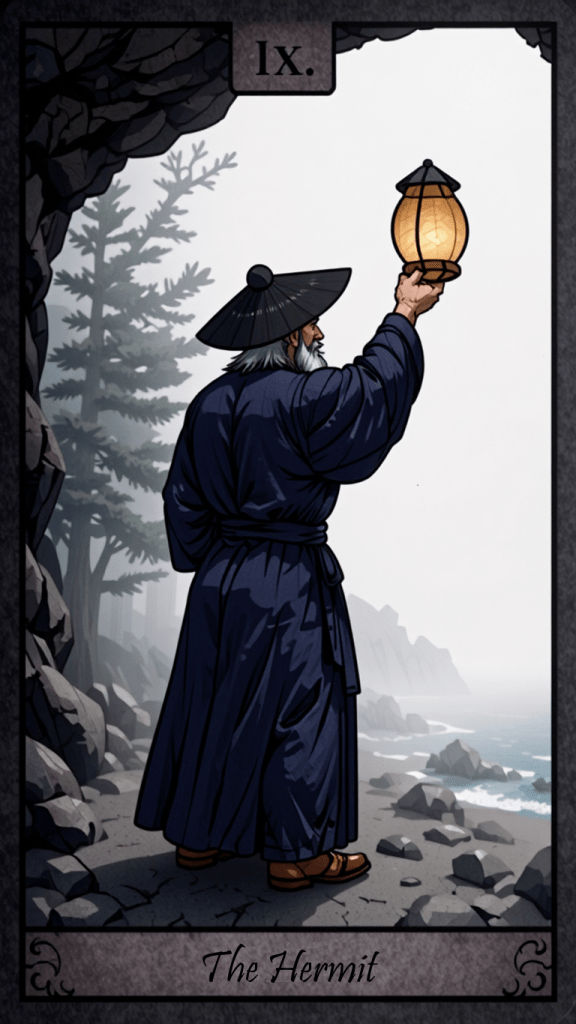
֍ The Hermit – Card IX

TITLE: The Blind Tide-Reader / 盲潮翁 (Máng Cháo Wēng)

MYTHIC ARCHETYPE: The Pirate Who Forgot His Name

TAOIST PARALLEL: Xu Fu (徐福), the alchemist sent by Qin Shi Huang to find immortality, lost at sea—merged with Zhuangzi’s Old Fisherman who knew the Way of tides.

PIRATE TWIST: He’s not just a hermit—he’s the admiral of a ghost fleet that sails in circles, forever seeking Penglai (蓬萊). His eyes were burned white by staring into the Black Tide Mirror (黑潮鏡, hēi cháo jìng) too long.

WHY THE HERMIT? He embodies wúwéi (無為) as driftwood—not seeking, but being sought by truth.

TAOIST PIRATE SYMBOLISM

KEYWORDS (Upright):

Cháo yīn (潮音, “tide-sound”)—hearing wisdom in wave patterns.

The forgotten compass (忘羅盤, wàng luópán)—navigation by soul, not stars.

“Crab-script” (蟹書, xiè shū)—reading truths in sand-writing.

KEYWORDS (Reversed):

Hǎi wàng (海忘, “sea-amnesia”)—lost in endless searching.

A salted tongue (鹹舌, xián shé)—wisdom that cannot be spoken.

The moonless ledger (無月賬, wú yuè zhàng)—records eaten by tides.

INTERPRETATION: This card is the lantern that blinds. The Tide-Reader’s light doesn’t guide—it reveals how lost you’ve always been.

RITUAL: THE BLACK TIDE MIRROR (黑潮鏡, Hēi Cháo Jìng)

(Inspired by Taoist dark meditation and Fujianese “shadow navigation”)

PURPOSE: To confront the self by becoming the abyss.

MATERIALS:

A black lacquer bowl (or ink-darkened water).

Three pinches of ashes (from incense or burnt paper).

A single iron nail (to “anchor” the vision).

A candle (white, to extinguish).

STEPS:

At midnight, place the bowl on a low table. Stir ashes into the water.

Press the nail into the table’s edge, chanting:

将潮水钉在沙滩上,将灵魂钉在大海上—你早已失去了你所追求的东西。

Nail the tide to the beach, nail your soul to the sea – you have already lost what you seek.

Light the candle, stare into the black water until the flame’s reflection drowns.

Blow out the candle. Sit in darkness until your breath matches the tide’s pull.

PARALLEL MYTHOLOGY

TITLE: The Monk of the Abyss / The Silence That Knows

MYTHIC ARCHETYPE: The Umibōzu (Japanese Yōkai)

REGION: Japan

FORM: A massive, shadowy, humanoid spirit that rises from the depths on calm nights. Its name translates to “sea monk,” as its head is large, round, and smooth like the shaven head of a Buddhist monk.

TALE: The Umibōzu is not a chatty oracle. It is a presence. It rises from a placid sea, a sudden, dark embodiment of the terrifying mystery and depth hidden just beneath the surface. It can be destructive if angered or disrespected, but its primary function in folklore is to be a figure of profound, awe-inspiring dread and mystery. To encounter the Umibōzu is to come face-to-face with the vast, unknowable soul of the ocean itself.

WHY THE HERMIT? The Hermit’s journey is a descent into the self. The Umibōzu is the personification of that deep, dark, silent inner space. It represents the intimidating but necessary step of confronting the vast unknown within. The wisdom it offers isn’t in words, but in the silence it commands. It forces a complete halt to the external journey, compelling the sailor (the seeker) to look into the abyss. It is the ultimate symbol of soul-searching and the profound truths found only in deep, contemplative solitude.

INTERPRETATION THROUGH THE UMIBŌZU: This card calls you to a profound retreat. It is time to turn off all external noise and face the silent, deep waters of your own consciousness. Like a sailor on a calm sea at midnight who suddenly sees the Umibōzu rise, you are being asked to stop everything and simply be with the immense mystery of your own being. It may be daunting, but the greatest wisdom you seek is not outside of you; it is waiting in your own personal abyss.

THE RITUAL OF THE DARK WATER LANTERN (For Seeking Inner Truth)

OBJECTIVE: To receive wisdom from your deepest subconscious by creating a space of absolute stillness and darkness, and listening to the silence.

MATERIALS:

A black or very dark-colored bowl.

Water.

A few drops of black ink or food coloring (optional, but effective).

One single candle (white or blue).

A room that can be made completely dark and silent.

STEPS:

CREATING THE ABYSS: In your darkened room, place the bowl before you. Fill it with water. If using ink, add a few drops until the water is an opaque, black mirror. This is the calm, midnight sea.

Lighting the Lantern: Light the single candle and place it beside the bowl. This is your Hermit’s lantern, the only light in the vast darkness. Turn off all other lights.

THE DESCENT: Sit in the silence. Stare softly at the reflection of the single flame on the surface of the black water. Breathe slowly, deeply. Let the silence of the room expand until it feels like the crushing, profound silence of the deep ocean. You are the lone sailor. The black water is your soul.

THE QUESTION: Whisper a single, deep question to the water. Do not ask “what should I do?” Ask “What wisdom do I need?” or “What truth am I avoiding?” Release the question into the deep.

THE VIGIL: Now, you listen. Do not expect a booming voice. The Umibōzu does not speak. Its wisdom rises from the quiet. Let your mind go still. An answer may come as a new feeling, a single word that surfaces in your mind, a forgotten memory, or a sudden, quiet understanding. You are not looking for an answer; you are creating the silence in which the answer that is already there can finally be heard.

THE RETURN: When you feel the vigil is complete, bow your head to the bowl in gratitude. Gently blow out the candle, plunging the room into total darkness for a moment. Acknowledge the abyss. Then, turn on the lights. Immediately write down any thoughts, feelings, or words that came to you in your journal.

SYNCRETIC BRIDGE

Umibōzu’s Silence → Taoist Mòzhì (默知, “silent knowing”) Both reject language for direct experience.

Black Water → Xuánmíng (玄冥, “dark profound”) The primordial sea before creation in Zhuangzi.

THE “SCHOLAR’S HEART” MANDATE:

Sources: The Umibōzu is a well-known yōkai in Japanese folklore. See: Toriyama Sekien’s Gazu Hyakki Yagyō and modern scholarly works on Japanese folklore, Michael Dylan Foster’s The Book of Yōkai: Mysterious Creatures of Japanese Folklore. For the ritual see:《東南海龍王經》(Scripture of the Southeast Dragon Kings), 1783 (Zhenjiang Taoist Temple Archive, Jiangsu).

18 Wednesday Jun 2025

Posted by babylon crashing in Chinese, Tarot, Translation

≈ Comments Off on

Tags

Chinese translation, 龍廷, Lóng Tíng, ocean mythology, poem, Poetry, Poseidon, sea folklore, Taoist Pirate rituals, Tarot

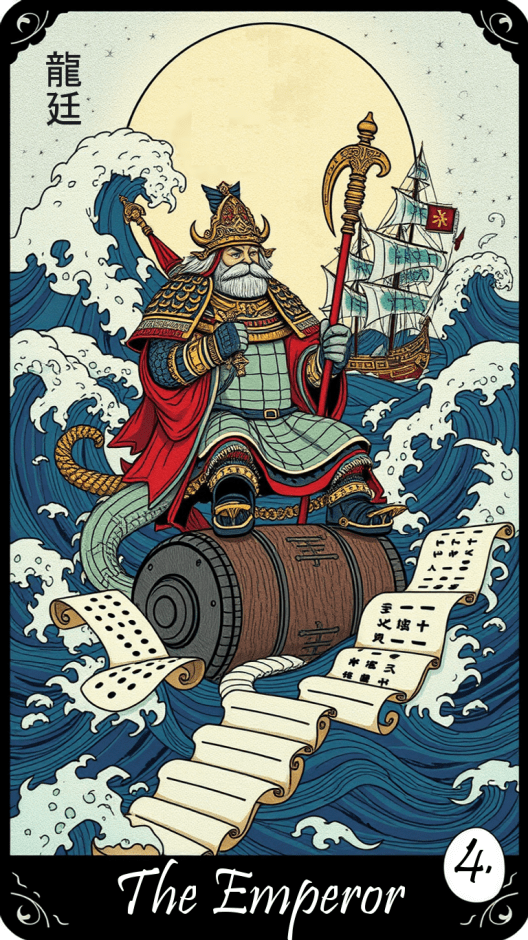
🜄 THE EMPEROR – Card IV

TITLE: The Dragon Throne / 龍廷 (Lóng Tíng)

MYTHIC ARCHETYPE: The Pirate Dragon King

TAOIST PARALLEL: Ao Guang (敖廣), the East Sea Dragon King, merged with Zheng Zhilong (鄭芝龍)—the real-life Ming dynasty pirate admiral who commanded 3,000 junks.

PIRATE TWIST: He’s not just a mythical ruler—he’s the admiral of the ghost fleet, enforcing hǎi shén fǎ (海神法, “Sea God’s Law”) from a throne of cannons and coral. His trident? A tide-cutting ji (戟) halberd that splits storms.

WHY THE EMPEROR? He doesn’t just control the sea—he is its justice. Cross him and your ship sinks paper-light (紙沉, zhǐ chén). Serve him, and he’ll guide you through fog-walled coves.

TAOIST PIRATE SYMBOLISM

KEYWORDS (Upright):

Lóngtíng lǜ (龍廷律, “Dragon Court Rules”)—code of the sea.

“Tides obey the Bagua” (潮隨八卦, cháo suí bāguà)—order in chaos.

The admiral’s seal (海帥印, hǎi shuài yìn)—stamped on waves.

KEYWORDS (Reversed):

A broken tide-table (破潮曆, pò cháo lì)—navigation failed.

“Dragon’s yawn” (龍哈欠, lóng hāqiàn)—complacency before disaster.

The sea tribunal (海審, hǎi shěn) where traitors walk the plank.

INTERPRETATION: This card is law written in saltwater. The Dragon Throne rewards loyalty and sinks oath-breakers. His power isn’t tyranny—it’s the certainty of the tide.

RITUAL: THE ADMIRAL’S SEAL (海帥印, Hǎi Shuài Yìn)

(Inspired by Ming naval codes and Daoist tide-summoning rites)

PURPOSE: To claim authority or stabilize chaos.

MATERIALS:

A wooden plank (driftwood or bamboo).

Red ink (or bloodroot pigment).

A knife (to carve).

Nine copper coins (for the Nine Dragons).

Saltwater.

STEPS:

Carve the Bagua into the plank at dusk.

Dip coins in ink, press them onto the wood like a seal, chanting:

东龙审判,西龙称重,

南龙焚烧,北龙付出代价。

East Dragon judges, West Dragon weighs,

South Dragon burns, North Dragon pays.

Bury the plank at a crossroads or fling it into the sea.

PARALLEL MYTHOLOGY
TITLE: Poseidon, Sovereign of the Sea’s Dominion / Keeper of the Trident
MYTHIC ARCHETYPE: Poseidon (Greek God of the Sea, Earthquakes, and Horses)
REGION: Ancient Greece and the wider Hellenic world
FORM: God of the sea, storms, horses, and earthquakes; wielder of the mighty trident
TALE: Poseidon is a formidable god whose temper mirrors the ocean’s tempestuous moods. As one of the Olympian siblings, he claimed dominion over the seas and all its creatures, as well as horses and the tremors beneath the earth. His trident symbolizes both creative and destructive power, capable of calming waves or shattering lands. Though sometimes seen as capricious and volatile, Poseidon also represents steadfast authority and governance over nature’s primal forces. His role as the Emperor in our oceanic Tarot is to teach the balance of control and power—how to rule with strength tempered by wisdom, and how to command loyalty and respect through firm, just leadership.
WHY THE EMPEROR? The Emperor stands for order, structure, protection, and leadership. Poseidon’s role as the sovereign sea god aligns perfectly, embodying authority grounded in the elemental power of water and earth.
INTERPRETATION THROUGH POSEIDON: When Poseidon appears, he calls forth the leader within you—the one who must wield power responsibly among tumultuous currents. He demands respect for the rules that hold worlds together but warns against becoming a tyrant who crushes rather than governs.
Poseidon asks: Where do you exert control? Are you a protector of your domain or a rigid despot? How do you balance power with compassion?
RITUAL: Invocation of Poseidon’s Command
PURPOSE: To call upon strength, leadership, or the power to establish order in chaos.
MATERIALS:
A trident-shaped object or symbolic representation (can be crafted or drawn)
Saltwater
Blue or sea-green candles
Shells or horse figurines (optional)
A strong, grounded space to perform the ritual
STEPS:
Place the trident or its symbol before you. Light the candles, representing the sea and its powers.
Sprinkle a few drops of saltwater around your space, envisioning Poseidon’s waves marking your territory.
SPEAK THE INVOCATION:

Poseidon, lord of sea and shore,
Keeper of waves, trident in hand,
Grant me the strength to lead and guard,
To rule with justice, firm but fair.

Visualize yourself standing tall like a pillar of rock amidst a stormy sea, unyielding but wise.
Close the ritual with gratitude, grounding yourself and honoring the ocean’s mighty ruler.
THE “BEST FIT” PRINCIPLE: Where Sedna is the deep, internal, life-giving source, Poseidon is the external, sovereign, structural power.

SOVEREIGNTY AND DOMAIN: The Emperor is the master of his realm. Poseidon’s authority over the sea is absolute and was established at the dawn of the Olympian age when the cosmos was divided among the three brothers (Zeus, Poseidon, Hades). This act of structuring the universe is a perfect Emperor concept.

THE TRIDENT AS SCEPTER: The Emperor holds a scepter, a symbol of his power to rule. Poseidon’s trident is one of the most famous symbols of divine authority in all mythology. It’s not just a weapon; it is the tool with which he enforces his will, creating earthquakes and calming storms. It is his law made manifest.

THE SHADOW SIDE: Poseidon’s infamous temper, his tyrannical rage against Odysseus, his stubbornness in his contest with Athena over Athens—these are all textbook examples of the Emperor’s negative traits: inflexibility, despotism, and the use of power for personal grudges rather than the good of the realm.

THE RITUAL OF THE TRIDENT’S STRIKE (To Establish a Foundation)

OBJECTIVE: To create a stable, protected foundation in a chaotic area of your life. Use this when starting a major project, fortifying your personal boundaries, or bringing order to your home or mind.

MATERIALS:

A staff, a sturdy branch, or even your own arm and fist. This is your “Trident.”

A bowl of saltwater.

Three stones, large enough to be stable. These represent the three points of the trident and the foundation you are building.

A piece of ground where you can perform the ritual (a yard, a park, or even a planter box).

STEPS:

SURVEYING THE DOMAIN: Stand before the piece of ground. This is your kingdom, the area you are about to bring into order. State your intention clearly and aloud. “I am here to bring order to my finances” or “I am here to establish a firm boundary of my personal time.”

CONSECRATING THE TRIDENT: Hold your staff (or arm) and dip its end into the saltwater. Raise it to the sky. DECLARE ITS POWER: “This is not wood, but bone of the Earth. This is not my arm, but the will of the Sea. This is the Trident that strikes the foundation and commands the deep.”

THE STRIKE: With all your focused intent, strike the ground firmly three times with the end of your staff. Each strike should be deliberate and powerful. With each strike, make a declaration:

(Strike 1): “By the power of the Earth Below, I set my foundation!”

(Strike 2): “By the power of the Sea Around, I set my boundary!”

(Strike 3): “By the power of the Sky Above, I declare my dominion!”

LAYING THE FOUNDATION: Place your three stones on the ground where you struck, forming a stable triangle. This is the physical anchor for the order you have created. Pour the remaining saltwater in a circle around the stones as a libation and a boundary of protection.

THE SOVEREIGN’S OATH: Stand straight, looking over your newly established “foundation.” Make a vow of responsible rulership. “I will rule this domain with strength and with wisdom. I will be its protector, not its tyrant. This order is established. So it is.”

CLOSING: Leave the stones in place for at least a full day and night. The act is complete. You have shifted from being a subject of chaos to the sovereign of your domain.

SYNCRETIC BRIDGE

Poseidon’s Trident → Dragon King’s Ji: Both split waves and enforce divine will.

Olympian Division → Fēngshuǐ of the Seas: The Dragon Kings divide the oceans like Bagua sectors.

THE “SCHOLAR’S HEART” MANDATE

Primary Sources: Homer’s Iliad and, most importantly, The Odyssey, where Poseidon’s role as a powerful, wrathful antagonist is central. Hesiod’s Theogony is essential for his origin and the division of the cosmos. The Homeric Hymn to Poseidon is a direct invocation that praises his power. For the ritual see: the biography of Admiral Zheng He’s (鄭和) navigation charts—they were ritual objects blessed by Mazu to command currents; as well as the Jiaolong myth in the 《述异记》 [Records of Strange Things], 6th century CE.

16 Monday Jun 2025

Posted by babylon crashing in Chinese, Tarot, Translation

≈ Comments Off on

Tags

Chinese translation, 默潮母, high priestess, Mò Cháo Mǔ, ocean mythology, poem, Poetry, sea folklore, Tarot

🜄 THE HIGH PRIESTESS – Card II

TITLE: The Silent Tide-Mother / 默潮母 [Mò Cháo Mǔ]

MYTHIC ARCHETYPE: Mazu’s Shadow—The Unseen Admiral

TAOIST PARALLEL: Mazu [媽祖] as the Veiled Oracle, but merged with Longmu [龍母, Dragon Mother]—a figure who raised five dragon kings as her sons and learned the ocean’s secrets from them.

PIRATE TWIST: She’s not just a benevolent goddess—she’s the phantom captain of a ghost junk that sails the Gengen Ocean [亙亙海, the Taoist “sea of subconscious”]. Her ship has no crew; it’s manned by paper sailors [剪水兵, jiǎn shuǐ bīng] who whisper prophecies in the wind.

WHY THE HIGH PRIESTESS? She navigates by moon-compasses and star-mirrors, charting courses only the drowned can read.

TAOIST PIRATE SYMBOLISM

KEYWORDS [Upright]:

Hai Di Shu [海底書, “Book of the Seabed”]—the unwritten knowledge of currents.

The moonwell [月井, yuè jǐng]—a ship’s hold filled with black brine for scrying.

“Listening to the tide’s qi” [聽潮氣, tīng cháo qì]—intuition as piracy.

KEYWORDS [Reversed]:

A muffled bell [啞鐘, yǎ zhōng]—ignoring omens.

“Sailing the Meng [夢, dream] tides” without a mirror—delusion.

The Dragon Mother turning her back [a storm coming].

INTERPRETATION: This card is for when you must steer by what isn’t there. The Silent Tide-Mother doesn’t speak—she shows. Her power is in the gaps: the pause between waves, the glint off a sunken sword, the silence before the monsoon.

RITUAL: THE GHOST JUNK’S MOONWELL [鬼船月井, Guǐchuán Yuèjǐng]

[Inspired by Fujianese sailor necromancy and Ming-era mirror magic]

PURPOSE: To scry for truths hidden in your own depths.

MATERIALS:

A black lacquer bowl [or any dark vessel].

Saltwater + a drop of ink [to darken it].

A silver coin [with a hole, if possible].

Seven blue threads [for the Dragon Mother’s sons].

A candle [white or blue].

RITUAL:

At dusk, light the candle and place it behind the bowl so it casts a shadow into the water.

Drop the coin into the bowl. Chant:

七龍守古井,

一錢付潮銀。

沉者終須浮,

示我月盜隱。

Seven dragons guard the well,

One coin pays the tide’s toll.

What sinks must rise again—

Show me what the moon stole.

Tie the threads around the bowl’s rim like rigging. Gaze into the ink-dark water until shapes form.

PARALLEL MYTHOLOGY

TITLE: Mother-of-Shells / Keeper of the Deep Waters
MYTHIC ARCHETYPE: Yemọja [Orisha of the Ocean, Yoruba Tradition]
MYTHOLOGICAL FIGURE: Yemọja [Yoruba & Diasporic Traditions]
REGION: Yoruba [West Africa], carried through the African diaspora into Brazil [Iemanjá], Cuba, Haiti, Trinidad.
FORM: Ocean mother, goddess of rivers that become the sea; patron of motherhood, secrets, and moon-touched water
TALE: Yemọja [also rendered Yemoja, Iemanjá] is the orisha of all waters—especially the rivers that flow to the ocean, which is her vast and sacred home. She governs fertility, mystery, prophecy, and the invisible connections between all living things.
She is the keeper of hidden knowledge and ancestral memory. Her name derives from, “Yeye omo eja”—“Mother whose children are fish.” She is also a lunar being, often depicted with silver adornments, veils, and mirrors.
WHY THE HIGH PRIESTESS? The High Priestess stands between worlds (the seen and the unseen) and calls us into inner silence, intuition, and sacred mystery. Yemọja embodies all this: she is the water that remembers, the ocean that dreams. Her temple is the shore at midnight, where truths are whispered between waves.
INTERPRETATION THROUGH YEMỌJA: This card reminds you to listen with your blood, not just your ears. Yemọja calls through dreams and symbols. If you are still, she will show you what you already know. She is not loud. She does not shout. But she never lies. To draw her card is to be invited to descend inward, to the moonlit pool where truth waits patiently to be seen.
RITUAL: Moonwater Mirror Rite
PURPOSE: To receive guidance, deepen intuition, or connect to ancestral memory through Yemọja’s current
MATERIALS:
Bowl of river or ocean water [or moon-charged spring water]
Small mirror or reflective dish
White cloth or scarf
Optional: silver jewelry or token
STEPS:
At night, ideally under a waxing or full moon, cover your space with the white cloth and place the mirror in the bowl of water so it floats or rests within.
Light a single candle. Sit quietly, allowing your breath to match the imagined rhythm of gentle waves.
Whisper this invocation:

Yemọja, mother of the fish,
Open the sea between my soul and the stars.
Let your waters carry my question to the deep,
And return with the answer I already know.

Gaze into the mirror. Let images arise. Let nothing be rushed. What you seek will come.
Afterward, wrap the mirror in the white cloth and keep it for future work. Pour the water into the earth or return it to a natural source.
This ritual blends traditional offerings to Yemọja [mirror, moon, water, white cloth] with meditative introspection. In many Afro-Caribbean traditions, white is her sacred color, and mirrors are used to commune with orisha energy.
SYNCRETIC BRIDGE

Yemọja’s Mirror → Taoist Jian [鑒, “mirror-divination”]:

Ancient Chinese mirrors were believed to reveal yao guai [妖怪, spirits]. Pirates used bronze mirrors to detect enemy ships in fog.

Dragonbone Oracles → Reading cracks in whale ribs.

Moonwater → Tide-Qi:

The Huangdi Yinfujing [黃帝陰符經] says water remembers—like Yemọja’s ancestral wisdom.

Salt-Script [writing questions on driftwood to let the sea erase/answer].

THE IMMEDIATE MATCH: The Drowned Man’s Conch Ritual [沉船螺術, Chénchuán Luó Shù]

Source: 《海盗陰法》 [Pirate Necromancy], 1798, salvaged from a waterlogged chest in the Thousand Ghost Reef.

WHY IT FITS: She is mother of drowned souls—this ritual forces kinship with them.

The conch’s spiral mirrors the cycle of life/death/revenge.

MOON CONNECTION: Performed at midnight, when lunar yin is strongest.

MATERIALS:

A conch stolen from a sunken ship’s corpse [must have barnacles still clinging to it].

Black salt [made from tidewater + ash from a burned ship’s log].

Three drops of your blood.

STEALING THE SHELL

Dive at low tide to pluck the conch from a drowned sailor’s hand [or where one should be].

Whisper:

借你耳舌,還你答案—

陰債暫欠,必以血還。

I borrow your ears and tongue, but promise repayment—

This ghost-debt I owe, will be paid in blood.

WARNING: If the corpse opens its eyes, leave the shell—it’s already claimed.

AWAKENING THE DEAD VOICE

Rub the shell with black salt until it whistles [like wind through rigging].

Spit into the spiral, then chant:

沉船冤魂,螺是你棺—

今日開棺,說我問事!

Shipwrecked ghost, this shell is your coffin—

Today I open it, speak my question!

Hold it to your left ear [the “ghost side”]. The answer will come as:

GARGLED WHISPER [truth].

SOUND OF CHOKING [lie].

YOUR OWN VOICE, BACKWARDS [the ghost has possessed you].

PAYING THE DEBT

Before sunset, you must:

Pour your blood into the sea where the shell was taken.

Burn a paper ship with the ghost’s name [if unknown, write “Unnamed Sailor of [Location]”].

If unpaid, the conch will fill with seawater in your hands and the drowned will claim your breath.

HISTORICAL CASE: In 1821, pirate Li Fan used this to find a Portuguese gold ship, but forgot to burn the paper ship. His crew swore the conch screamed all night before he walked overboard at dawn.

THE “SCHOLAR’S HEART” MANDATE:

Reputable Sources: Robert Farris Thompson’s Flash of the Spirit: African & Afro-American Art & Philosophy, Mari Silva’s Orishas: The Ultimate Guide to African Orisha Deities and Their Presence in Yoruba, Santeria, Voodoo and Hoodoo, along with an Explanation of Diloggun Divination and Lilith Dorsey’s Orishas, Goddesses, and Voodoo Queens The Divine Feminine in the African Religious Traditions. For the Taoist-Pirate rituals see:

《閩海幻視法》 [Fujian Sea Vision Magic], 1742.

《南海巫法秘本》 [Southern Sea Witchcraft Manual], 1809.

← Older posts
Newer posts →

age difference anal sex Armenia Armenian Genocide Armenian translation ars poetica art artist unknown blow job Chinese translation conversations with imaginary sisters cum cunnilingus drama erotic erotica erotic poem erotic poetry Federico Garcia Lorca fellatio finger fucking free verse ghost ghost girl ghost lover gif Gyumri haiku homoerotic homoerotica Humor i'm spilling more thank ink y'all incest Lilith Lord Byron Love shall make us a threesome masturbation more than just spilled ink more than spilled ink mythology ocean mythology Onna bugeisha orgasm Peace Corps photo poem Poetry Portuguese Portuguese translation prose quote unquote reblog retelling Rumi Sappho sea folklore Shakespeare sheismadeinpoland sonnet sorrow Spanish Spanish translation spilled ink story Taoist Pirate rituals Tarot Tarot of Syssk thank you threesome Titus Andronicus translation video Walt Whitman woman warrior xenomorph

electric mayhem [links]

  • poesia erótica (português)
  • armenian erotica and news
  • Poetic K [myspace]
  • aimee mann
  • discos bizarros argentinos
  • cyndi lauper
  • sandra bernhard

Meta

  • Create account
  • Log in
  • Entries feed
  • Comments feed
  • WordPress.com

Blog Stats

  • 414,017 hits

Categories

ars poetica: the blogs a-b

  • kristy bowen
  • wendy babiak
  • emma bolden
  • mary biddinger
  • the art blog
  • aliki barnstone
  • cecilia ann
  • alzheimer's poetry project
  • tiel aisha ansari
  • stacy blint
  • black satin
  • clair becker
  • sommer browning
  • megan burns
  • Alcoholic Poet
  • armenian poetry project
  • afterglow
  • margaret bashaar
  • all things said and done
  • american witch
  • sandra beasley
  • brilliant books
  • afghan women's writing project
  • lynn behrendt

Enter your email address to follow this blog and receive notifications of new posts by email.

Join 44 other subscribers

Archives

ars poetica: the blogs c-d

  • jennifer k. dick
  • michelle detorie
  • maria damon
  • lyle daggett
  • natalia cecire
  • lorna dee cervantes
  • julie carter
  • cleveland poetics
  • roberto cavallera
  • cheryl clark
  • linda lee crosfield
  • juliet cook
  • CRB
  • abigail child
  • jackie clark
  • flint area writers

ars poetica: the blogs e-h

  • elisa gabbert
  • bernardine evaristo
  • amanda hocking
  • jeannine hall gailey
  • jessica goodfellow
  • maggie may ethridge
  • human writes
  • maureen hurley
  • pamela hart
  • jane holland
  • ghosts of zimbabwe
  • sarah wetzel fishman
  • Gabriela M.
  • hayaxk (ՀԱՅԱՑՔ)
  • julie r. enszer
  • elizabeth glixman
  • herstoria
  • joy garnett
  • joy harjo
  • carrie etter
  • Free Minds Book Club
  • liz henry
  • carol guess

ars poetica: the blogs i-l

  • diane lockward
  • Jaya Avendel
  • donna khun
  • joy leftow
  • laila lalami
  • miriam levine
  • charmi keranen
  • meg johnson
  • irene latham
  • Kim Whysall-Hammond
  • sheryl luna
  • lesbian poetry archieves
  • gene justice
  • sandy longhorn
  • dick jones
  • IEPI
  • maggie jochild
  • renee liang
  • kennifer kilgore-caradec
  • lesley jenike
  • las vegas poets organization
  • language hat
  • a big jewish blog
  • emily lloyd
  • amy king
  • megan kaminski

ars poetica: the blogs m-o

  • heather o'neill
  • marion mc cready
  • iamnasra oman
  • caryn mirriam-goldberg
  • michigan writers resources
  • nzepc
  • sharanya manivannan
  • Nanny Charlotte
  • wanda o'connor
  • adrienne j. odasso
  • new issues poetry & prose
  • motown writers
  • My Poetic Side
  • majena mafe
  • ottawa poetry newsletter
  • january o'neil
  • mlive: michigan poetry news
  • sophie mayer
  • michelle mc grane
  • the malaysian poetic chronicles
  • maud newton
  • michigan writers network

ars poetica: the blogs p-r

  • rachel phillips
  • split this rock
  • ariana reines
  • maria padhila
  • helen rickerby
  • sophie robinson
  • nicole peyrafitte
  • joanna preston
  • kristin prevallet
  • nikki reimer
  • Queen Majeeda
  • susan rich

ars poetica: the blogs s-z

  • ron silliman
  • sexy poets society
  • scottish poetry library
  • Stray Lower
  • womens quarterly conversation
  • Trista's Poetry
  • tim yu
  • southern michigan poetry
  • switchback books
  • tuesday poems
  • shin yu pai
  • vassilis zambaras

  • Subscribe Subscribed
    memories of my ghost sista
    Join 44 other subscribers

    Have a WordPress.com account? Log in now.

  • memories of my ghost sista
    View site in Reader
    Manage subscriptionsSign upLog in
    Report this content
    Collapse this bar
Loading Comments...