• hopilavayi: an erotic dictionary

memories of my ghost sista

~ the dead are never satisfied

memories of my ghost sista

Author Archives: babylon crashing

low-tide

22 Sunday Sep 2013

Posted by babylon crashing in Poetry, sonnet

≈ Comments Off on low-tide

Tags

I love the drowned, love, low tide, ocean poetry, poem, Poetry, sonnet

Take me to the unexplored dark once more.
I know all about this pressure. Without
you with me I’ll never get to drift pure
in these deep waters again. Ignore doubt
and the shaking needle of the meter.
I do remember you holding your hands
out to the far surface, your face under
pressure was beautiful. Then failed commands,
screaming, rupture. Once love you kissed my skin,
breathed me in until I filled you. You should
have lived on love instead of air. Hell bound
you could only see yourself escape in
rising sea foam, while the rest of us stood
at our posts, watching you flee as we drowned.

ugliest words

22 Sunday Sep 2013

Posted by babylon crashing in Erotic, Poetry, sonnet

≈ Comments Off on ugliest words

Tags

death is love, lucid pleasures, naked lust, poem, Poetry, poor banshee, sex magic, sonnet, ugliest of words

It’s a weird world. She tells me of a date
and how later they both fornicated.
Yeah, that’s the word that she used, “fornicate,”
one of the ugliest words to describe naked
lust, sex magic, lucid pleasure. But she’s
foreign, recently dead and her English
broken. What do I know? I lost the ease
of my tongue when I passed, too. Her anguish
and fear with sex, especially anal,
remains, bit daft, since she’s lost her booty.
She’s more mist, more soul made froth. You living
call lust sin; but if you’re not a lustful
soul death tends to be … shocking. Poor banshee,
love won’t hurt you. That’s what death is: loving.

because it is love

21 Saturday Sep 2013

Posted by babylon crashing in Erotic, Poetry, sonnet

≈ Comments Off on because it is love

Tags

binding, bondage, death tastes of menstrual blood, drinking from demons, poem, Poetry, sonnet

What can bind us to another? Crimson’s
smear on the tongue. A stain no spell can break.
Blood is blood is blood. I’ve drunk from demons
like you before, felt that wild fiery ache
run all riot through me. I’ve begged, I’ve screamed,
I’ve been bled in turn, but not like that. Knives
reveal secrets, tell our fears. I blasphemed
when I took you inside me. Love survives
because it is love. Here are my secrets,
here are my fears. I’ll drink all that once ran
in your heart, all that you no longer need.
Call it greed or bondage, all that riots,
all that aches. It is where I first began,
where I’ll return. I’m hungry. I must feed.

every shuddering part

21 Saturday Sep 2013

Posted by babylon crashing in Erotic, Poetry, sonnet

≈ Comments Off on every shuddering part

Tags

Denton Welch, in youth is pleasure, last gasp, love is pain, poem, Poetry, sonnet

“in youth is pleasure,”
Denton Welch (1944)

Hold on, urgently try. But gasps become
moans; a fire in every shuddering part
of your lungs, your legs, your skull. Each spasm
quickens, then that flavor, salty and tart,
fills your mouth. Weeds wrap around collarbone,
making subtle curves. Your flesh unstained
by whips or teeth, even when your last moan
turns to silence. Accept this gift of pain.
They did not believe you. They who pursue
your flesh simply to condemn it. Amour
is pain, even while taking your last breath
it is pain. I was there, I believe you,
for when they dredged the lake it proved what your
blush claimed; that beauty lies in youth and death.

amazon, babylon, depravity

21 Saturday Sep 2013

Posted by babylon crashing in Erotic, Poetry, sonnet

≈ Comments Off on amazon, babylon, depravity

Tags

Amazon, Babylon, cult of the virgin, depravity, poem, Poetry, sonnet, taboo

I have never understood the allure
of so-called innocence, that mythical
state, like virginity, they ascribe, pure
and fresh, to others. Using a carnal
measuring stick is foolish, every kid
I have ever met knows what’s going on.
Adults call it taboo, and they forbid
descent. They fear a new dawn: Amazon,
Babylon, Depravity; for the cult
of the virgin will always kill Eros
once a few parents are shocked into rage.
Call it Fire, or the Erotic Occult,
Venus, or the Phallic Stage. All of us
are burning souls trapped in this fearful age.

without death

20 Friday Sep 2013

Posted by babylon crashing in Poetry, sonnet

≈ Comments Off on without death

Tags

coptic blade, poem, Poetry, sonnet, without death

I call on the forces higher then I,
to wake the guide that sleeps outside, inside
the North, the South, the East, the West, the sky,
the sea and the ground. I call on the guide
that knows of my need, come with assistance,
come with dire speed. Sanctuary will not
be found here: in crystals and light, essence
of rose hip, runes bought at a store. Who taught
you this? Without death there is no magic
or art or life. The gods aren’t toys. They won’t
jump up each time you say, “so mote it be.”
Here’s the blood of our bond. Here’s the coptic
blade that served. I call on forces that don’t
answer, I call on guides that don’t serve me.

Image

the girl in the cat mask

20 Friday Sep 2013

Tags

blur is beautiful, cat mask, Japanese mythology, katana

the girl in the cat mask

Posted by babylon crashing | Filed under Illustration and art

≈ Comments Off on the girl in the cat mask

notes on other people’s hubris

20 Friday Sep 2013

Posted by babylon crashing in Uncategorized

≈ Comments Off on notes on other people’s hubris

Tags

hubris, humility, quotes

The moment someone starts talking about dualism, good vs evil, black vs white, female vs male, that’s the moment you need to stand up and leave the party.
― Yeva Anoush

Ancient societies had anthropomorphic gods: a huge pantheon expanding into centuries of dynastic drama; fathers and sons, martyred heroes, star-crossed lovers, the deaths of kings ― stories that taught us of the danger of hubris and the primacy of humility.
―Tom Hiddleston

We have no language that is free of the power dualisms of domination.
― Beverly Wildung Harrison

Carved on the temple [at Delphi] were the exhortation Know yourself … You are only human, so don’t try more than you are able (or you will pay the price). A recurring theme in Greek myth is the man or woman who loses sight of human limitations and acts arrogantly and with violence against forces he or she can never control, as if they too are immortal. And they always pay a terrible price.
― Barry B. Powell

You never really learn much from hearing yourself speak.
― George Clooney

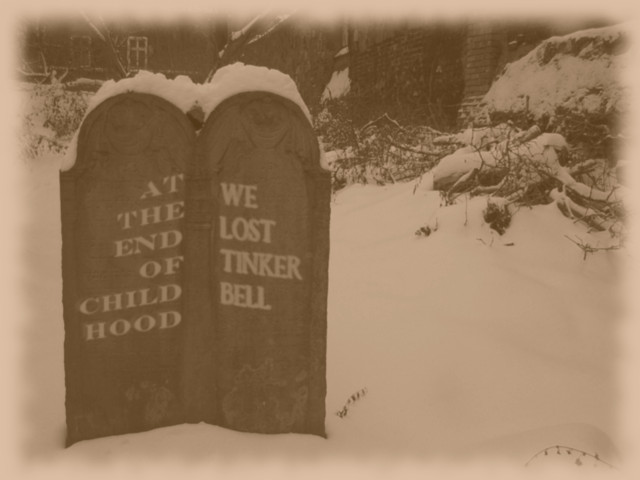
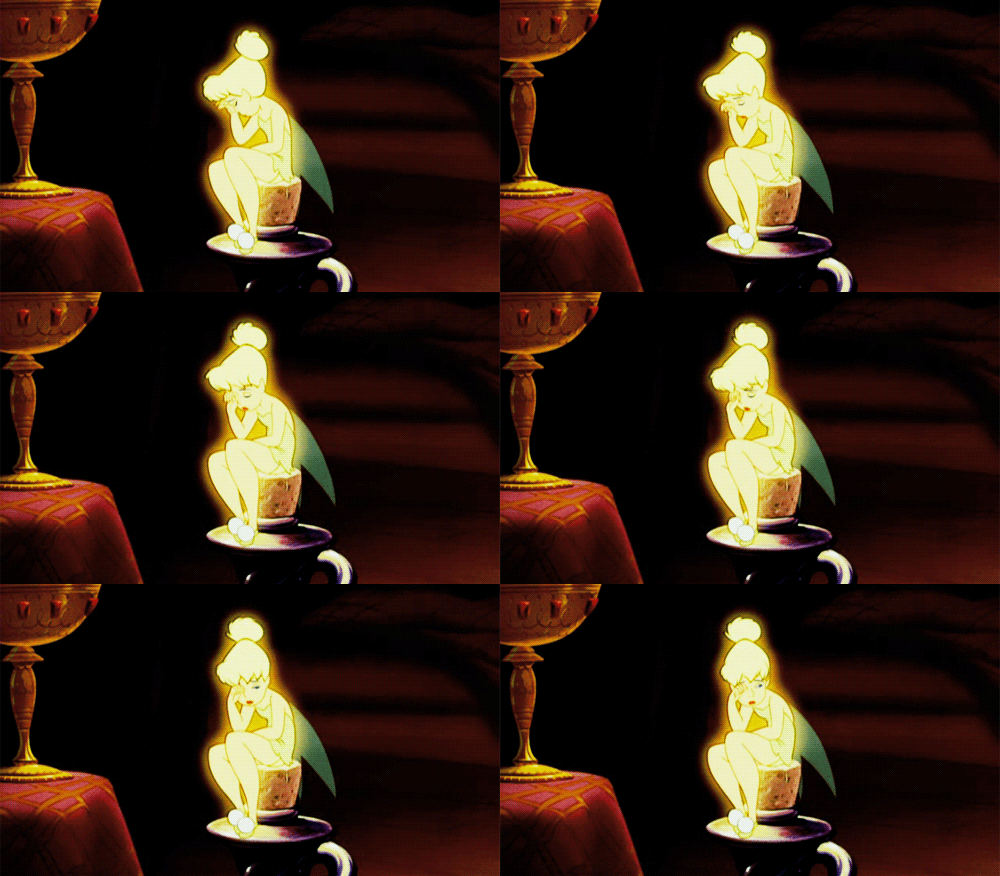
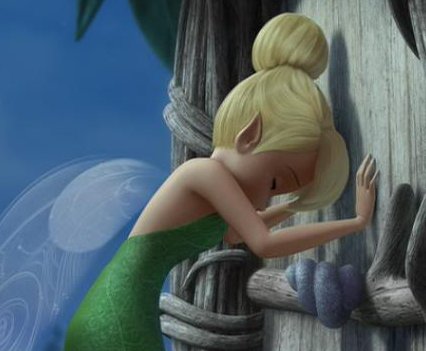
nihilism and the death of tinkerbell

18 Wednesday Sep 2013

Posted by babylon crashing in .gif, Uncategorized

≈ Comments Off on nihilism and the death of tinkerbell

Tags

adults are bastards, death of tinker bell, J. M. Barrie, loss of innocence, the boy who never grew up, the problem with nostalgia

tink 1

tink 2

tink 3

4316663421_690fccb4c6_z

Michael believed longer than the other boys, though they jeered at him; so he was with Wendy when Peter came for her at the end of the first year. She flew away with Peter in the frock she had woven from leaves and berries in the Neverland, and her one fear was that he might notice how short it had become; but he never noticed, he had so much to say about himself.

She had looked forward to thrilling talks with him about old times, but new adventures had crowded the old ones from his mind.

“Who is Captain Hook?” he asked with interest when she spoke of the arch enemy.

“Don’t you remember,” she asked, amazed, “how you killed him and saved all our lives?”

“I forget them after I kill them,” he replied carelessly.

When she expressed a doubtful hope that Tinker Bell would be glad to see her he said, “Who is Tinker Bell?”

“O Peter,” she said, shocked; but even when she explained he could not remember.

“There are such a lot of them,” he said. “I expect she is no more.”

I expect he was right, for fairies don’t live long, but they are so little that a short time seems a good while to them.

Wendy was pained too to find that the past year was but as yesterday to Peter; it had seemed such a long year of waiting to her. But he was exactly as fascinating as ever, and they had a lovely spring cleaning in the little house on the tree tops.

Next year he did not come for her. She waited in a new frock because the old one simply would not meet; but he never came.

“Perhaps he is ill,” Michael said.

“You know he is never ill.”

Michael came close to her and whispered, with a shiver, “Perhaps there is no such person, Wendy!” and then Wendy would have cried if Michael had not been crying.

— from CHAPTER 17: When Wendy Grew Up.

][][

We desperately want to believe that nostalgia wins out in the end; that we won’t be forgotten when we’re gone. That even when we grow up there are still child-like spirits out in the world who will remember us as we once were before everything changed – be it puberty, a fall from faith or even death. This is reflected, especially in the later half of the 20th century, in the stories we told children: there is no death, if bad things happen it won’t be to you, we are all our own special snowflake.

If anyone ever tells you that J. M. Barrie’s story about the boy who refused to grow up is anything other than nihilistic horror then they have either only watched the sanitized Disney version or got their hands on a much later, American edition of the book that edited out the last chapter for, as the publishers pointed out, it was far too “dark” and dealt with “adult themes” that “[American] children are entirely unable to contemplate.” I have no idea if that is true, but I do know that this obsession by adults to shield children from the world is deeply rooted in Victorian values, where children weren’t seen as their own person but rather an extension of adult fears and superstitions.

Adults often try to second-guess when childhood ends and adulthood begins. For most of human history it was when the body became sexually able to sire and conceive the next generation. Then the modern world removed the sexual aspect from the question (for reasons entirely non-biological) and invented Psychology so that the line between childhood and adulthood would become much more murkier.

I say adulthood begins when the whole concept of nostalgia is finally embraced — that act of looking back with longing, that inability to live purely in the present. I am not the first to point out that childhood has no word for a better past or a frightening future. It is the here and now that childhood can only exist in and it’s only when we develop the cognitive ability to realize our impermanence that we begin to long for things as they once were. Nostalgia is adulthood, which is why many children stories, especially the ones where the protagonist, at the end, must make the choice of staying in Neverland or growing up, were never written for children. They’re written for adults mourning their own childhood. No child will ever end a story by deciding whether to stay or go. Why would they? That experience has yet to happen. The closest thing adults have to this is the endless debate over death. Every religion and branch of science has their theories, but they are just that – ideas, hopes and fears. And yet, like the child’s inability to grasp what comes next until it has happened, adults too must wait, patiently, for something our developing minds can’t even grasp.

I am, like everyone else, a product of my environment. I grew up having my mother read classics of children literature: Where the Red Fern Grows, The Lion, The Witch and the Wardrobe, Old Yeller, Where the Wild Things Are, The Giving Tree and Peter Pan. The theme that runs through all of these works is that the adult author introduces the loss of innocence in such a way that any child who wishes to travel to Neverland must also be faced with the concept that they must make a life-altering change that will forever bar them from re-entering paradise. Why did Sesame Street kill off Mr. Snuffleupagus? Because adults complained that children shouldn’t have imaginary friends. How does Sarah escape the Goblin King, Jareth, in the movie Labyrinth? When she realizes he is simply a story with no power over her. Very simply put: adults are bitter about childhood and almost every book written for children (see: every title that has won a Caldecott or Newbery book award) reflects this.

The issue that I have is the same issue I have with the whole “knowledge = fall from grace” cliche that is found everywhere in Western culture – from the Adam and Eve story to the Norse god Oden giving up his eye to attain wisdom to Max giving up his role as King of the Wild Things to return home for dinner. This concept is so ingrained into our belief system that there is no alternative.

This is my definition of nihilism; that there is an Eden-like childhood in all of us and that we all, without exception, will be cast out from it. What a terribly bleak way to live and yet Christianity offers no alternative. It’s also why J. M. Barrie’s story is so frustrating. The last chapter was added on during one of his re-writes of the story. He had created the Garden without the Fall but later decided to burn it to the ground: we find that Tinkerbell had died and not only did Pan forget who she was but even his time spent with Captain Hook had never really happened. The Lost Boys were found and immediately (we are told in less than a year) turned their backs on Neverland. Wendy grows old and dies but Peter keeps returning, stealing first her daughter and then granddaughter, but always abandoning them once they reached a certain age. When Wendy Grew Up is bizarrely cynical for it attempts to say that there are monsters in this world, but they are the children who remain in a state of stagnant innocence.

For you and me, tonight, dear one, I will say a prayer on Tinkerbell’s grave.
was l.s.d. eliot’s

17 Tuesday Sep 2013

Posted by babylon crashing in Poetry, sonnet

≈ Comments Off on was l.s.d. eliot’s

Tags

Andy Warhol, Do I dare to eat a peach?, Modernism is funny, poem, Poetry, probelm with virgins, sonnet, The Factory, TS Eliot

But the Factory? They all pretended
to be limo rich, starlet junkies preaching
about Chelsea love and money. Acid
was LSD, Eliot’s peach, rotting,
lay in the sand and crabs was a disease.
Tonight the fucking world has forgotten
the phone next door rings off the hook. The sleaze
of this city knocks on my door —- like sin,
flesh will always be nu-vogue. Take my smut
pour yourself a glass —- Pop Art’s sticky glue
needs to be sucked, re-blown —- O, you virgin,
it’s cute the way you worship Warhol —- but,
darling, anything I can break with two
hands can hardly be called a religion.

← Older posts
Newer posts →

age difference anal sex Armenia Armenian Genocide Armenian translation ars poetica art artist unknown blow job Chinese translation conversations with imaginary sisters cum cunnilingus drama erotic erotica erotic poem erotic poetry Federico Garcia Lorca fellatio finger fucking free verse ghost ghost girl ghost lover gif Gyumri haiku homoerotic homoerotica Humor i'm spilling more thank ink y'all incest Lilith Lord Byron Love shall make us a threesome masturbation more than just spilled ink more than spilled ink mythology ocean mythology Onna bugeisha orgasm Peace Corps photo poem Poetry Portuguese Portuguese translation prose quote unquote reblog retelling Rumi Sappho sea folklore Shakespeare sheismadeinpoland sonnet sorrow Spanish Spanish translation spilled ink story Taoist Pirate rituals Tarot Tarot of Syssk thank you threesome Titus Andronicus translation video Walt Whitman woman warrior xenomorph

electric mayhem [links]

  • sandra bernhard
  • armenian erotica and news
  • discos bizarros argentinos
  • Poetic K [myspace]
  • poesia erótica (português)
  • aimee mann
  • cyndi lauper

Meta

  • Create account
  • Log in
  • Entries feed
  • Comments feed
  • WordPress.com

Blog Stats

  • 394,504 hits

Categories

ars poetica: the blogs a-b

  • margaret bashaar
  • emma bolden
  • tiel aisha ansari
  • american witch
  • alzheimer's poetry project
  • the art blog
  • black satin
  • kristy bowen
  • afterglow
  • megan burns
  • clair becker
  • sommer browning
  • armenian poetry project
  • afghan women's writing project
  • mary biddinger
  • brilliant books
  • Alcoholic Poet
  • sandra beasley
  • wendy babiak
  • lynn behrendt
  • all things said and done
  • stacy blint
  • aliki barnstone
  • cecilia ann

Enter your email address to follow this blog and receive notifications of new posts by email.

Join 44 other subscribers

Archives

ars poetica: the blogs c-d

  • natalia cecire
  • maria damon
  • lorna dee cervantes
  • juliet cook
  • jennifer k. dick
  • flint area writers
  • cleveland poetics
  • jackie clark
  • roberto cavallera
  • linda lee crosfield
  • cheryl clark
  • abigail child
  • lyle daggett
  • michelle detorie
  • CRB
  • julie carter

ars poetica: the blogs e-h

  • sarah wetzel fishman
  • maggie may ethridge
  • amanda hocking
  • jeannine hall gailey
  • jane holland
  • carol guess
  • liz henry
  • hayaxk (ՀԱՅԱՑՔ)
  • bernardine evaristo
  • maureen hurley
  • Free Minds Book Club
  • jessica goodfellow
  • carrie etter
  • elizabeth glixman
  • joy harjo
  • herstoria
  • elisa gabbert
  • julie r. enszer
  • human writes
  • joy garnett
  • Gabriela M.
  • ghosts of zimbabwe
  • pamela hart

ars poetica: the blogs i-l

  • joy leftow
  • amy king
  • maggie jochild
  • a big jewish blog
  • IEPI
  • sandy longhorn
  • diane lockward
  • dick jones
  • gene justice
  • meg johnson
  • sheryl luna
  • donna khun
  • language hat
  • Kim Whysall-Hammond
  • irene latham
  • lesley jenike
  • laila lalami
  • megan kaminski
  • lesbian poetry archieves
  • emily lloyd
  • renee liang
  • las vegas poets organization
  • kennifer kilgore-caradec
  • Jaya Avendel
  • charmi keranen
  • miriam levine

ars poetica: the blogs m-o

  • wanda o'connor
  • majena mafe
  • maud newton
  • ottawa poetry newsletter
  • Nanny Charlotte
  • heather o'neill
  • marion mc cready
  • january o'neil
  • new issues poetry & prose
  • motown writers
  • michigan writers network
  • michelle mc grane
  • nzepc
  • sophie mayer
  • caryn mirriam-goldberg
  • sharanya manivannan
  • My Poetic Side
  • iamnasra oman
  • michigan writers resources
  • the malaysian poetic chronicles
  • mlive: michigan poetry news
  • adrienne j. odasso

ars poetica: the blogs p-r

  • sophie robinson
  • Queen Majeeda
  • nicole peyrafitte
  • ariana reines
  • joanna preston
  • rachel phillips
  • split this rock
  • susan rich
  • helen rickerby
  • kristin prevallet
  • maria padhila
  • nikki reimer

ars poetica: the blogs s-z

  • Trista's Poetry
  • womens quarterly conversation
  • southern michigan poetry
  • switchback books
  • Stray Lower
  • sexy poets society
  • shin yu pai
  • ron silliman
  • scottish poetry library
  • tuesday poems
  • tim yu
  • vassilis zambaras

  • Subscribe Subscribed
    • memories of my ghost sista
    • Join 44 other subscribers
    • Already have a WordPress.com account? Log in now.
    • memories of my ghost sista
    • Subscribe Subscribed
    • Sign up
    • Log in
    • Report this content
    • View site in Reader
    • Manage subscriptions
    • Collapse this bar
 

Loading Comments...