
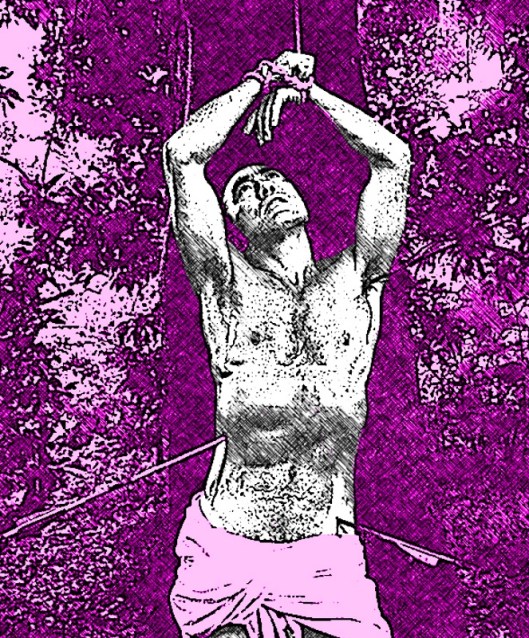
ice and sunfire 01
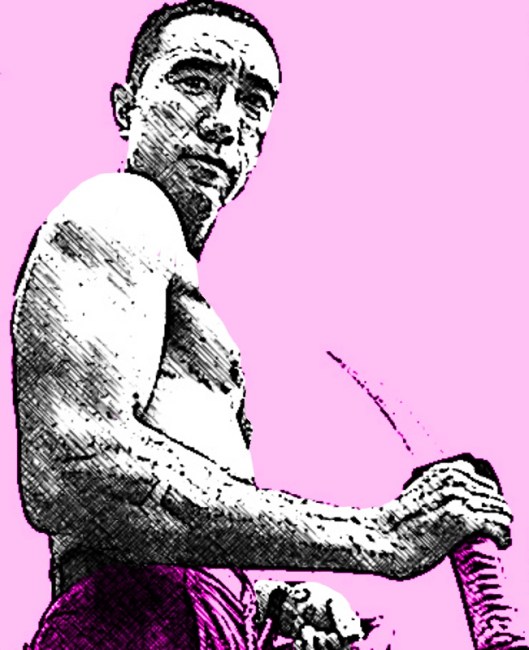
ice and sunfire 02
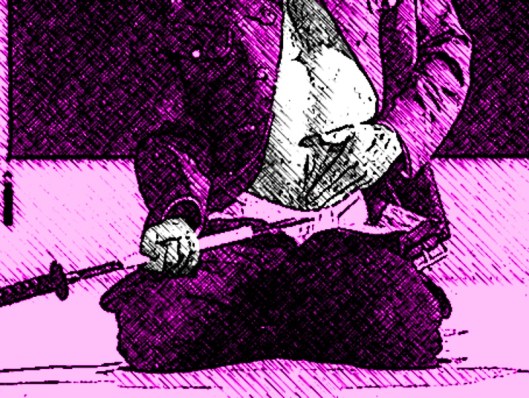
ice and sunfire 03

ice and sunfire 04

ice and sunfire 05
notes: Yukio Mishima (1925 – 1970) was a Japanese author, poet, playwright and film director. He had been nominated three times for the Nobel Prize in Literature. His visions were avant-garde, displaying a blending of modern and traditional that broke cultural boundaries, with a focus on his own sexuality. He was obsessed with the romanticism of the samurai, as well as that of Bushido, their warrior’s moral code. He once explained in an interview that after WWII Japan was now living in an age where there could never be an “honorable death:” for Mishima that meant dying either on the field of battle or by ritualistically cutting out one’s own intestines with a knife. In 1970, after a failed coup d’état, he committed suicide by doing just that, seppuku.
“got the guts for it?”
Tonight’s ordeal by roses, red poppies,
praying mantises. You left and I came.
You left me and now I am hot with fleas,
regret, none of us can survive the shame
of the morning wind. My love: memory
of things precious keeps me itchy, fevered,
ill. A tower of stone. Rough and lonely.
Darling Mishima: you were a bastard
in life, but god-like in death. I have traced
knife points across my stomach, too, all set
to spill my guts to you. We have debased
any honorable death, and yet — and yet —
Like sex, your love left me sad and obscene,
tending to your grave, clothed in tender green.

[remix]
Tonight’s
ordeal
by roses,
red poppies,
praying
mantises.
You left
and I came.
You left and
now I am hot
with fleas,
regret, who can
survive
the shame
of the morning
wind? My love:
memory of things
precious keeps me
itchy, fevered,
ill.
A tower of stone.
Rough and lonely.
You were a bastard
in life, but god
-like in death.
I have traced
knife points across
my stomach, too,
all set
to spill
my guts
to you.
Have we
debased
any honorable
death? and yet —
and yet —
Like sex,
your love
left me
sad and
obscene,
tending to
your grave,
clothed in
tender green.
 memories of my ghost sista