

• hopilavayi: an erotic dictionary

memories of my ghost sista

~ the dead are never satisfied

memories of my ghost sista

Category Archives: Feminism

Image

Happy Birthday Simone de Beauvoir!

09 Thursday Jan 2014

Tags

art, feminism, happy birthday, Second Sex, Simone de Beauvoir

Jan 09, 2014 (10)

Posted by babylon crashing | Filed under Feminism, Illustration and art

≈ Comments Off on Happy Birthday Simone de Beauvoir!

Image

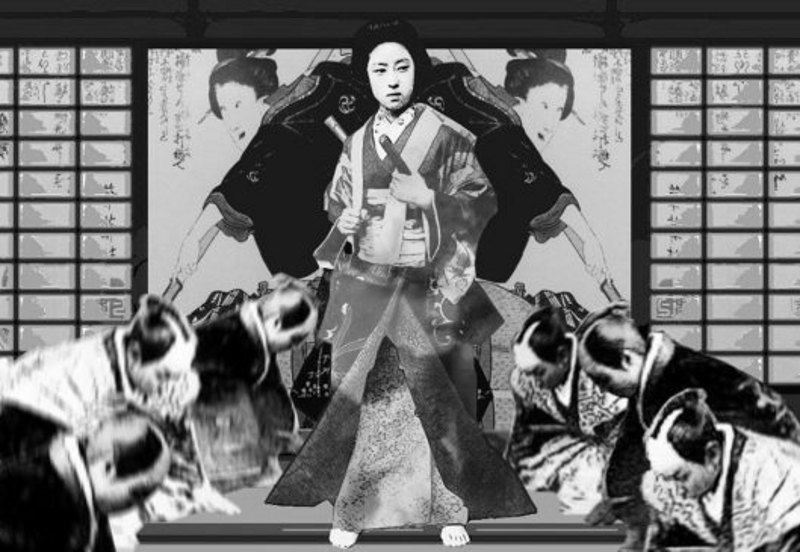
this is what a feminist looks like

24 Tuesday Dec 2013

Tags

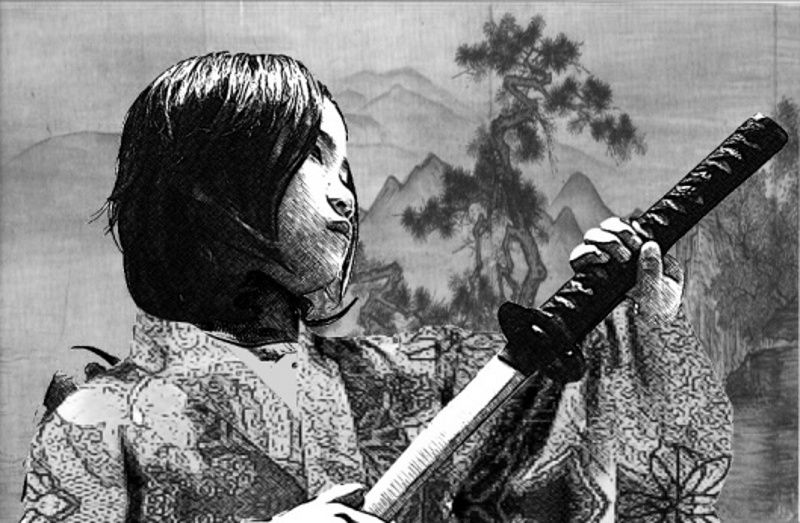
art, grrl power, katana, Onna bugeisha, this is what a feminist looks like

Dec 24, 2013 (7)

Posted by babylon crashing | Filed under Feminism, Illustration and art

≈ Comments Off on this is what a feminist looks like

midwives and the hemlock cure

24 Tuesday Dec 2013

Posted by babylon crashing in Feminism, Poetry, sonnet

≈ Comments Off on midwives and the hemlock cure

Tags

hemlock, Latin, male doctors, midwives, poem, Poetry, shamaness, sonnet, witchcraft

you who study Latin tend to make poor
doctors, restricted to just your little

world of what’s been tagged and named you ignore
all that’s unspoken and unconquerable

the realms that you must enter but cannot
name — you do not need to disrobe for me

to treat your affected areas — rot
hides in more places than just bones — dream tea

sedation, the hemlock cure, I will go
into the shadow realm for you, consult

that which protects you, that which is causing
you ill — cures might be nameless but I know

they’re still there, like germs even when the culte
des hommes
declared that there was no such thing.

][][

notes:

“Through the late Middle Ages [in Europe], the use of Latin, like the persecution of midwives as witches, became just one more safe-guard guaranteeing a strict hierarchy … with what would become, and still is, the modern male doctor at the top.”
— Chinarski, Harold. (1994). “Quand les femmes étaient sages: la chasse aux sorcières et de la hausse du médecin de sexe masculin moderne.” Journal calais d’Histoire de la Médecine 83 (1): 188–195.

“It’s commonly [known that] the midwife is meddlesome and has her [hand] in everything. That is why she busies herself so much with the art of witchcraft and superstitions and [moves] hither and thither, speaking of things no man can name.”
—Fragmented sermon by Martin Luther, translated and quoted in Diane Muliebris’ “Luther Und der weibliche Teufel,” first published in Marni Siskin and Brígida Rita Rocha (eds.), Gendercide: die Geschichte der europäischen Krieg auf Frauen. (Zenski Mudrost, ltd., Belgrade 1969), pp. 112-113.

zora neale huston

20 Friday Dec 2013

Posted by babylon crashing in Feminism, Illustration and art

≈ Comments Off on zora neale huston

Tags

Alice Walker, art, biography, Zora Neale Hurston

Dec 20, 2013 (8)

Dec 20, 2013 (9)

Dec 20, 2013 (7)

Dec 20, 2013 (10)

(January 7, 1891 – January 28, 1960) was an American folklorist, anthropologist, author, working during the time of the Harlem Renaissance. Of Hurston’s four novels and more than 50 published short stories, plays, and essays, she is perhaps best known for her 1937 novel Their Eyes Were Watching God.

Despite her skill and talent she did not receive the sort of fame and support other male members of the Harlem Renaissance. This was due to many factors. Readers at the time objected to the representation of African-American dialect in her novels, claiming it as a caricature of African-American culture rooted in a racist tradition. Critics such as Richard Wright and Ralph Ellison charged that her work wasn’t “political and as a result there are no theme, no message, no thought [in Hurston’s work].” Hurston last years were marked with extreme poverty, working as a maid and finally dying homeless.

Many years after her death an article, “In Search of Zora Neale Hurston,” by Alice Walker, revived interest in her work. Other authors such as Toni Morrison and Maya Angelou, championed her work as well. One modern critic has pointed out that “[Wright and Ellison], while interested in that which fit into their narrow view of ‘political’ but were quick to dismiss anything written by a woman, especially a woman who might question their own prejudices and views.” In 2002, scholar Molefi Kete Asante listed Zora Neale Hurston on his list of 100 Greatest African Americans.

daughters of the kaiten: female deep sea divers in art

20 Friday Dec 2013

Posted by babylon crashing in Feminism, Illustration and art

≈ Comments Off on daughters of the kaiten: female deep sea divers in art

Tags

art, deep sea female divers, Heaven Shaker, Kaiten, my heroes, Ocean Empress, Sarah Bernhardt, 回天

Dec 20, 2013 (1)

Dec 20, 2013 (2)

Dec 20, 2013 (3)

Dec 20, 2013 (4)

Dec 20, 2013 (5)

Dec 20, 2013 (6)

note:

The Kaiten (回天), a Japanese term, loosely translated means, “Heaven Shaker” or “Change the World.” Ultimately it was the term used to describe human-torpedoes and other suicide-craft used by the Imperial Japanese Navy in the final stages of World War II. I use it here because it has a far older meaning that has since been lost, that of doing something so spectacular it changes the heavens and the seas forever.

The images used here are of various experimental deep sea scuba diving suits, though the last is of the 1880 actress Sarah Bernhardt in a diving suit while playing the role of the Ocean Empress (photographer unknown).

the lie that runs

10 Tuesday Dec 2013

Posted by babylon crashing in Feminism, Poetry, sonnet

≈ Comments Off on the lie that runs

Tags

feminism, hellcat art, poem, Poetry, punk isn't dead just boring, queer cinema, smash the patriarchy, sonnet, the lie that runs, the problem with cinema, transgender films

A film, as in flick, as in cinema,
as in a tale, once told, that would change us,

change the world. But that’s not film’s role. Dogma
dictates that our art will make us famous,

that we’ll work in ivory towers, prattle,
publish and die beloved. I don’t want that.

Who makes films for the transgendered? muscle
women? tomboys? femme toys? Who makes hellcat

art? Who’ll smash the patriarchy with blood
money stolen from Hollywood? I touch

on this as if I had a clue; my lie
that runs on discontentment and hatred

of an art movement that promised so much
but gave so little while bleeding us dry.

][][

“buy my album and make me a millionaire. I want a house in the country.”
— Johnny Rotten from The Great Rock ‘n’ Roll Swindle (1980)

“punk isn’t dead, just boring”
— London graffiti (2009)

meditation at fifty yards

05 Thursday Dec 2013

Posted by babylon crashing in Feminism, Illustration and art, Poetry, sonnet

≈ Comments Off on meditation at fifty yards

Tags

art, Burst Angel, Gays with Guns, gun control, gun violence, Meditation at Fifty Yards Moving Target, Pink Pistols, poem, Poetry, reblog, Rita Dove, sonnet, Zardoz

Dec 05, 2013 (2)

Dec 05, 2013 (3)

Dec 05, 2013 (4)

Dec 05, 2013 (5)

“anger is an energy” — Public Image Ltd.

This is urgent. This poetic justice
concealed in the long gun’s long chamber.

I’ll turn to you since the peaceful chorus
rarely makes good Peace Keepers. This anger

turns us passive witness. Always after
our wars do we even hear a poet

condemn our bloodshed; a general slur
against violence. But this poem? I cut

it on a bullet and put the bullet
in the chamber; it’s a rhyme against bad

behavior. Now, goddess of the sonnet
and the bullet, Athena of the mad

blood, speak through this round black-eyed deterrent.
Help me cock this back. This is urgent.

][][

I wrote that poem back in 2008, back when there were still national conversations going on about the merits of gun-control and closing down Guantanamo and bring our troops back home. I don’t know what happened to the Anti-War crowd, perhaps the debacle that turned into Occupy Wall Street depressed them so much they went home or perhaps their trust-funds ran out and they were required to get 9 to 5 jobs to support their patchouli habits and SUVs (just kidding guys, you know I love you). Whatever the case, the dialogues about the state of our nation seem to be missing (or perhaps I’m just not looking in the right places, that happens too) which is sad since none of the issues have changed. We are, for example, still a nation that loves using guns. According to the United Nations Office on Drugs and Crime, “in 2010, there were 19,392 firearm-related suicide deaths, and 11,078 firearm-related homicide deaths in the United States.” According to a report by Heninger and Hanzlick, (2008) a “study of non-natural deaths in a large American city between 2007-08 revealed that half of such deaths in persons from 10 to 19 years of age were due to homicide, and firearms were involved in 88% of them.” I don’t know who Heninger and Hanzlick are, nor do they name the city, but regardless, the issue of gun violence is not going to go away in my lifetime, perhaps ever, at all.

I don’t own a gun, nor will I ever. I say that knowing it doesn’t take a lot of morals or energy or cojones to not own something. I also don’t own a factory that uses child labor to make Martha Stewart products either, but that doesn’t make me a virtuous person. In the same way, writing a poem about gun violence doesn’t actually stop people from killing each other. But it does have the potential to change minds, change attitudes, change whole ways of thinking. All art has that potential, poetry is no exception. And yet, having said that, there are so few well-written poems about the pros and the cons of guns. I am not sure why this is, since the current batch of poets living and writing today excel at writing about other things — broken hearts, failed relationships, their terrible life choices when dating — and yet somehow because the subject is about guns poets seem shy to touch the issue. How odd.

I saw the poet Rita Dove perform back in 2004, at the Dodge Poetry Festival. Her book, American Smooth, had just come out and she read Meditation at Fifty Yards. It blew my mind. When she got to the line, “one incandescent/ fingertip,” she traced a straight line in the air and it seemed to me like the pathway glowed. But it was the last section, where the bullet is given voice, that is the power of the poem. “O aperture O light straight is my verb I am flame velocity O beautiful body I am coming,” she read each line faster and faster and I found myself weeping in the audience, as I do when something I do not understand, something bigger than myself, touches me.

I know it is possible to have a conversation about gun control and gun violence. We tend to get caught up in soundbite quotes, which reduces complex issues into simple black and white ones. That does neither side any favors. Poetry can side-step that problem. It can bring a voice to a subject that is, for many people, taboo. Simply wishing for guns to go away solves nothing, likewise, ignoring the violence that guns bring to our communities is shameful. When the poets start tackling this issue that is when our national dialogue will start once more.

The art I used for this post came from simply googling the term “gays with guns.” Some of the images are a little more obscure. The first is from the anime Bakuretsu Tenshi (Burst Angel, in English), the second was an actual pink tank used during a Pro-Gay Marriage rally, the third from the website Pink Pistols (with a whole catalog of “femme pistols”), and last is Sean Connery in his, “red nappy, knee-high leather boots, pony tail and Zapata moustache” from the 1974 movie Zardoz. As with everything I do, it seemed like a good idea at the time.

][][

Meditation at Fifty Yards, Moving Target

— by Rita Dove

Safety First.

Never point your weapon, keep your finger
off the trigger. Assume a loaded barrel
even when it isn’t, especially when you know it isn’t.
Glocks are lightweight but sensitive;
the Keltec has a long pull and a kick.
Rifles have penetrating power, viz.:
if the projectile doesn’t lodge in its mark,
it will travel some distance
until it finds shelter; it will certainly
pierce your ordinary drywall partition.
You could wound the burglar and kill your child
sleeping in the next room, all with one shot.

Open Air.

Fear, of course. Then the sudden
pleasure of heft—as if the hand
has always yearned for this solemn
fit, this gravitas, and now had found
its true repose.

Don’t pull the trigger, squeeze it—
squeeze between heartbeats.
Look down the sights. Don’t
hold your breath. Don’t hold
anything, just stop breathing.
Level the scene with your eyes. Listen
Soft, now: squeeze.

Gender Politics.

Guys like noise: rapid fire,
think-and-slide of a blunt-nose sliver Mossberg,
or double-handed Colts, slugging it out from the hips.
Rambo or cowboy, they’ll whoop it up.

Women are fewer, more elegant.
They prefer precision:
tin cans swing-dancing in the trees,
the paper bull’s-eye’s tidy rupture at fifty yards.

(Question: If you were being pursued,
how would you prefer to go down—
ripped through a blanket of fire
or plucked by one incandescent
fingertip?)

The Bullet.

dark dark no wind no heaven
i am not anything not borne on air i bear
myself I can slice the air no wind
can hold me let me let me
go i can see yes
o aperture o light let me off
go off straight is my verb straight
my glory road yes now i can feel
it the light i am flame velocity o
beautiful body i am coming i am yours
before you know it
i am home
who heard you say no

04 Monday Nov 2013

Posted by babylon crashing in Erotic, Feminism, Poetry, sonnet

≈ Comments Off on who heard you say no

Tags

Baron Samedi, Dionysus, Don Juan, double standards, erotic, feminism, Freyja, poem, Poetry, Rati, sonnet, Venus

Baron Samedi, Dionysus, Don Juan,
these be the masks that men can slip into.

Every culture has its sex gods that spawn
the myth of great sex. What that means to you

ain’t my concern. Tell me, who do women
in your land have when lust’s fire burns within?

Venus? Rati? Freyja? Fuck that Virgin
and Whore dogma. You gonna say that Sin

be just another name for girl pleasures?
Absurd. A bee won’t stop being a bee

because you ignored it, lied about it,
tried to shame it, stupid. I love lovers

who break the rules, who laugh, who aren’t sorry,
who heard you say no and don’t give a shit.

][][

a note:

Most of the time when a writer name drops (especially names 90% of the rest of us haven’t heard of) or uses foreign words or phrases without translating them I end up getting turned off as a reader. Being well read shouldn’t be a license to be conceited. I say that because I use six names that probably most people haven’t heard of before. They are all love gods and goddesses from around the world. At first I tried to leave them out but the whole point of the poem was to show that there are more female erotic archetypes than what we have here in this modern world, which still teaches girls sex is bad, celibacy is good and anyone who actually likes pleasure must be a whore (unless you’re a man … men are never criticized for liking pleasure).

In Voodoo Baron Samedi is loa (spirit) of the dead, sex and resurrection.

In Greek myth Dionysus is the god of wine, ritual madness and homoerotic ecstasy.

Don Juan usually refers to a monster-long poem written by Lord Byron, but he based his story on old Spanish legends of the world’s greatest lover.

Venus is the Roman equivalent of the Greek goddess Aphrodite.

In Hindu mythology Rati the goddess of passion and lust.

Freyja, in Norse legend, is the goddess associated with love, magic, shamanism, sacrifice, war, death and sexuality.

whatever happened to amina?

24 Thursday Oct 2013

Posted by babylon crashing in Feminism

≈ Comments Off on whatever happened to amina?

Tags

Amina Sboui, FEMEN, feminism, Islamophobia, Koran burning, news, Riot Grrl, support Muslim women, Tunisia

FEMEN 1

FEMEN 2

FEMEN 3

FEMEN4

FEMEN 5

FEMEN 6

FEMEN 7

FEMEN8

The top and bottom photos are of Amina Sboui, a Tunisian feminist and political activist who sparked world-wide controversy by posting topless pictures of herself on Facebook, with the words, Fuck Your Morals, written in Arabic across her chest.

Her cause was taken up by FEMEN, a feminist protest group based in Paris, known for organizing controversial, topless public protests against sex tourists, religious institutions, international marriage agencies and other sexist topics. As someone who was raised to believe that Riot Grrl activism could solve many of the sexist, homophobic problems that plague the world, I really wanted to support FEMEN in what they were trying to do: show their support of a woman who was threatened with death by any means necessary. Then the self-styled “topless jihad” started and everything went to hell.

What I found troubling about FEMEN was that by turning the international spotlight upon themselves the whole question of what happened to Amina got lost. Indeed, if a person hadn’t been following the protests from the beginning one might rightly assume this had nothing to do with Tunisia or Amina and everything to do with the right to shout down Islamists while topless and bash Muslim women for being slaves to the patriarchy. As many, many critics pointed out (from Bell Hooks to Fatima Thompson to the late Audre Lorde) when First World, white, privileged women start telling women of color from developing nations what they can and cannot do that is oppression.

Apparently, it wasn’t just Muslim feminists who found FEMEN’S actions highly problematic, though. Yesterday, Amina Sboui, the very person that prompted the protest in the first place, denounced and distanced herself from the organization, accusing FEMEN of Islamophobia and a lack of financial transparency.

“I do not want my name to be associated with an Islamophobic organization,” she told the Maghreb edition of the Huffington Post. “I did not appreciate the action taken by the girls shouting ‘Amina Akbar, Femen Akbar’ in front of the Tunisian embassy in Paris.” The chants were a parody of Allahu akbar (God is great).

Amina also criticized the burning of the black Tawhid flag and a Koran in front of a mosque in Paris.

“That offends many Muslims and many friends of mine. We must respect everyone’s religion,” she added.

Amina, who now calls herself an anarchist, also criticized the lack of financial transparency of FEMEN.

“I don’t know how the movement is financed. I asked [FEMEN leader Inna Shevchenko] several times, but I didn’t get a clear answer. I don’t want to be in a movement supported by suspect money. What if it is financed by Israel? I want to know.”

At the end of May, three FEMEN activists — two French and a German — were arrested, and eventually freed, for bearing their breasts outside the main Tunis courthouse, in an earlier demonstration of support for Amina.

slut shaming

24 Thursday Oct 2013

Posted by babylon crashing in Erotic, Feminism, Poetry, sonnet

≈ Comments Off on slut shaming

Tags

bisexuality, feminism, Marquis de Sade, poem, Poetry, Sappho, silencing, slut shaming, sonnet, zipless fuck

Are you the one,/ who hates me in life,
but masturbates wildly/ in secret from your wife?

—-Esperanza Hidalgo

Never slut shame: whatever I might say
or do, how I love, why I love, beyond

asking you, “come to bed or stay away,”
lies my damned love. Damaged love, vagabond

love, lost love: but still love. If you can’t see
that then I’m not the damned one. “Cocks, cunts, juice

flowing freely,” as if it’s all just free.
That is both the freedom and the abuse

that these doggerel zipless fucks try to claim.
If the flesh is weak then the flesh is weak.

This is not your sweat-fuck poem. Don’t quote
boring de Sade to me, you still slut shame.

To me that’s neither wild, rare or unique.
“So, please, fuck off;” for you that’s all I wrote.

][][

notes

It’s curious how certain figures in history have had their names attached to things that rarely reflected who they were in life. For example, Sappho (as much as we know about her from scraps and fragments handed down over the centuries) was bisexual, at least by today’s understanding of the term. She was married to a merchant named Cercylas, had a daughter she called Celis. Despite all the wonderful love poems to women that she wrote legend has it that she killed herself by jumping off the Leucadian cliffs for her love of Phaon, a village fisherman. While in the 19th and 20th century her name has been attached to lesbianism, when Sappho wrote, “coming off heaven/ throwing off/ his purple cloak,” it was a love poem addressed to one of her male lovers. Of course the marginalization and silencing of bisexual artists in both the larger heterosexual and gay and lesbian communities is nothing new, and will continue as long as people only see the world in black and white dualism: you’re either gay or straight, there is nothing in-between, although Sappho wrote again and again, “your love can be any [gender] that the gods have chosen for you.” I would argue that all there is in this world is what’s in-between. Dualism is a myth that needs dismantling.

Donatien Alphonse François, better known as the Marquis de Sade, is another curious case. Even though he gave the world the word “sadism,” I’d rather poke my eyes out with a rusty fork than try to read what his admirers call “erotica” once again. This has nothing to do with subject matter. Yes, yes, I know he was, in theory at least, an advocate for extreme freedom, unrestrained by morality, religion or law (what hipster isn’t?) When I was in Peace Corps I brought two anthologies of his collected works with me, since he was an author I had heard a lot about but had read nothing that he had written. Sadly, when I was done, I had to conclude that de Sade is boring. He spent 32 years in prison, which was when he wrote most of his work. His writing style was to come up with an outline and every day simply rewrite and expand each paragraph until it collapsed under its own dry weight. There is no flow or poetry in his work. It has all the erotic sensibilities of a college term paper. I had made the mistake of watching Pier Paolo Pasolini’s Salò, or the 120 Days of Sodom (1975), which updated Sade’s novel by placing it in the fascist Salò Republic during WWII. As Italian snuff films go it was horrific. When I sat down to read the novel I wasn’t sure if I even wanted to … until I started and realized it really wasn’t a novel, more like long lists of what de Sade wanted to write about if he ever got around to do so. The legend goes that he actually did write 120 Days, but when the Bastille was liberated during the French Revolution the manuscript was lost. He never got around to producing a second draft. Justine and Juliette are vaguely interesting, if you can get beyond his utter loathing of women. The only work I enjoyed was the comedy Philosophy in the Bedroom, partly because it was short but mainly because it didn’t take itself seriously. It revolves around Eugénie, a 15 year-old girl who, at the beginning of the story, is a naive virgin of all things sexual but by the end has become a depraved libertine (of course she does). “Lewd women,” de Sade writes, “be heedless of all that contradicts pleasure’s divine laws … be as quick to destroy, to spurn all those ridiculous precepts inculcated in you by imbecile parents.” I suppose if French philosophy is your aphrodisiac then de Sade’s work will be highly titillating. It certainly got Michel Foucault excited, but since I despise Michel Foucault that really isn’t a plus in my book.

← Older posts
Newer posts →

age difference anal sex Armenia Armenian Genocide Armenian translation ars poetica art artist unknown blow job Chinese translation conversations with imaginary sisters cum cunnilingus drama erotic erotica erotic poem erotic poetry Federico Garcia Lorca fellatio finger fucking free verse ghost ghost girl ghost lover gif Gyumri haiku homoerotic homoerotica Humor i'm spilling more thank ink y'all incest Lilith Lord Byron Love shall make us a threesome masturbation more than just spilled ink more than spilled ink mythology ocean mythology Onna bugeisha orgasm Peace Corps photo poem Poetry Portuguese Portuguese translation prose quote unquote reblog retelling Rumi Sappho sea folklore Shakespeare sheismadeinpoland sonnet sorrow Spanish Spanish translation spilled ink story Taoist Pirate rituals Tarot Tarot of Syssk thank you threesome Titus Andronicus translation video Walt Whitman woman warrior xenomorph

electric mayhem [links]

  • discos bizarros argentinos
  • aimee mann
  • Poetic K [myspace]
  • sandra bernhard
  • poesia erótica (português)
  • armenian erotica and news
  • cyndi lauper

Meta

  • Create account
  • Log in
  • Entries feed
  • Comments feed
  • WordPress.com

Blog Stats

  • 389,999 hits

Categories

ars poetica: the blogs a-b

  • all things said and done
  • mary biddinger
  • the art blog
  • alzheimer's poetry project
  • brilliant books
  • Alcoholic Poet
  • lynn behrendt
  • emma bolden
  • cecilia ann
  • afghan women's writing project
  • black satin
  • american witch
  • megan burns
  • kristy bowen
  • aliki barnstone
  • sommer browning
  • afterglow
  • tiel aisha ansari
  • sandra beasley
  • margaret bashaar
  • armenian poetry project
  • stacy blint
  • clair becker
  • wendy babiak

Enter your email address to follow this blog and receive notifications of new posts by email.

Join 44 other subscribers

Archives

ars poetica: the blogs c-d

  • michelle detorie
  • linda lee crosfield
  • jackie clark
  • flint area writers
  • roberto cavallera
  • juliet cook
  • abigail child
  • cleveland poetics
  • cheryl clark
  • natalia cecire
  • jennifer k. dick
  • maria damon
  • lyle daggett
  • lorna dee cervantes
  • CRB
  • julie carter

ars poetica: the blogs e-h

  • Free Minds Book Club
  • Gabriela M.
  • jessica goodfellow
  • carol guess
  • jeannine hall gailey
  • ghosts of zimbabwe
  • jane holland
  • pamela hart
  • human writes
  • elisa gabbert
  • elizabeth glixman
  • herstoria
  • joy garnett
  • carrie etter
  • hayaxk (ՀԱՅԱՑՔ)
  • joy harjo
  • julie r. enszer
  • bernardine evaristo
  • maureen hurley
  • liz henry
  • sarah wetzel fishman
  • maggie may ethridge
  • amanda hocking

ars poetica: the blogs i-l

  • laila lalami
  • megan kaminski
  • miriam levine
  • meg johnson
  • lesley jenike
  • kennifer kilgore-caradec
  • IEPI
  • Kim Whysall-Hammond
  • a big jewish blog
  • dick jones
  • Jaya Avendel
  • sandy longhorn
  • irene latham
  • sheryl luna
  • renee liang
  • charmi keranen
  • maggie jochild
  • donna khun
  • emily lloyd
  • lesbian poetry archieves
  • las vegas poets organization
  • amy king
  • gene justice
  • language hat
  • joy leftow
  • diane lockward

ars poetica: the blogs m-o

  • My Poetic Side
  • sharanya manivannan
  • adrienne j. odasso
  • new issues poetry & prose
  • michelle mc grane
  • caryn mirriam-goldberg
  • nzepc
  • ottawa poetry newsletter
  • the malaysian poetic chronicles
  • michigan writers resources
  • maud newton
  • heather o'neill
  • wanda o'connor
  • michigan writers network
  • january o'neil
  • Nanny Charlotte
  • motown writers
  • majena mafe
  • sophie mayer
  • iamnasra oman
  • marion mc cready
  • mlive: michigan poetry news

ars poetica: the blogs p-r

  • kristin prevallet
  • joanna preston
  • susan rich
  • nicole peyrafitte
  • ariana reines
  • Queen Majeeda
  • sophie robinson
  • nikki reimer
  • maria padhila
  • split this rock
  • helen rickerby
  • rachel phillips

ars poetica: the blogs s-z

  • tuesday poems
  • sexy poets society
  • switchback books
  • Stray Lower
  • Trista's Poetry
  • scottish poetry library
  • womens quarterly conversation
  • ron silliman
  • vassilis zambaras
  • southern michigan poetry
  • tim yu
  • shin yu pai

  • Subscribe Subscribed
    • memories of my ghost sista
    • Join 44 other subscribers
    • Already have a WordPress.com account? Log in now.
    • memories of my ghost sista
    • Subscribe Subscribed
    • Sign up
    • Log in
    • Report this content
    • View site in Reader
    • Manage subscriptions
    • Collapse this bar
 

Loading Comments...